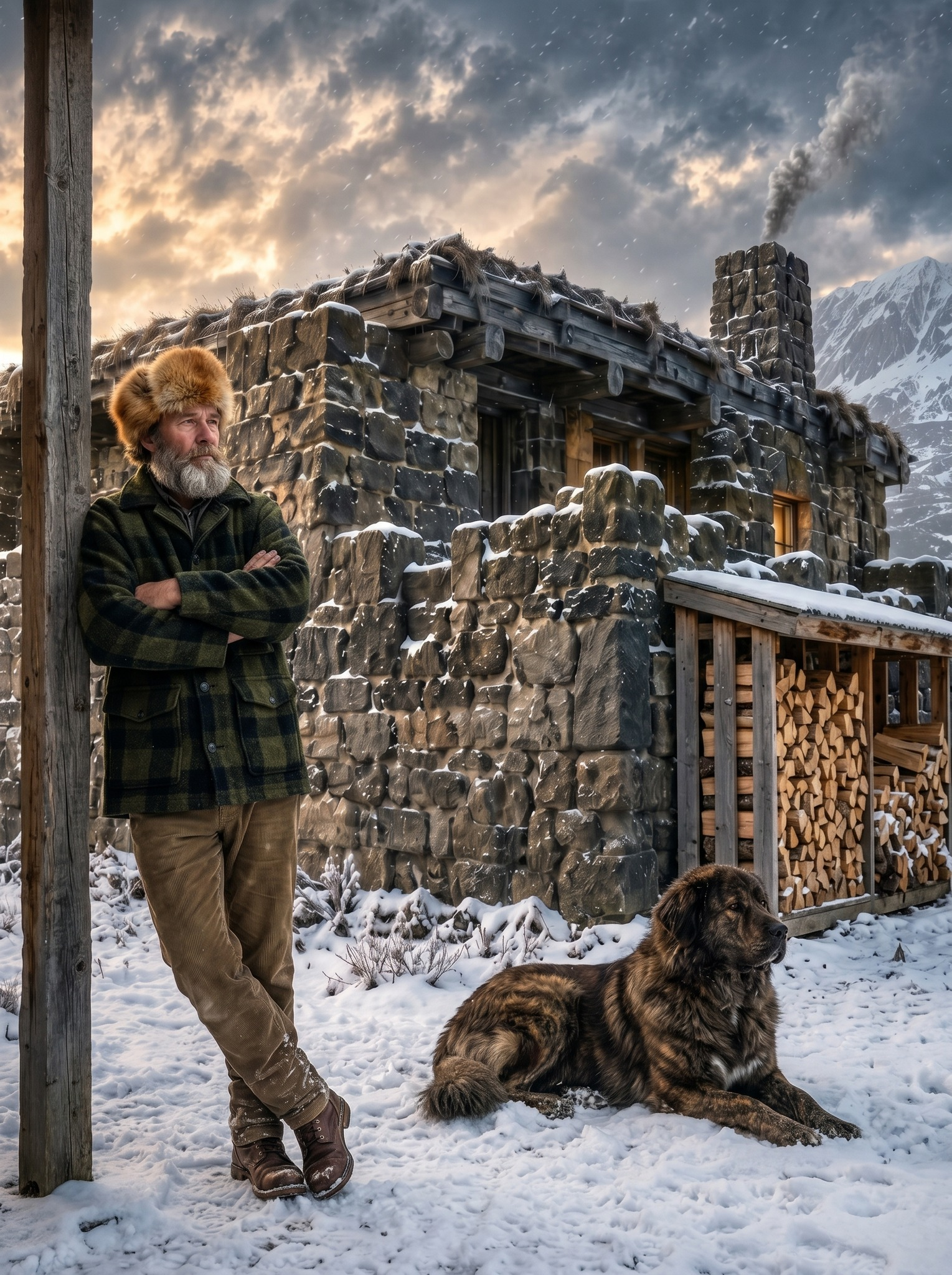
"Take your hand off that door!" Gideon Voss shouted.
The wooden latch stopped moving.
Outside, Nathaniel Crowe stood in the darkness with two men behind him.
Inside the unfinished fort, Bristle planted himself between Gideon and the entrance, his enormous brown shoulders stiff and his teeth showing.
Gideon held the old military document against his chest.
The attorney spoke through the door.
"Mr. Voss, I came to prevent a terrible mistake."
"Then you've come to the wrong place."
"You don't understand what you're holding."
"I understand enough."
Crowe lowered his voice.
"That paper could destroy more than one man's reputation."
Gideon looked toward the wooden box resting on the crate.
The brass fittings glimmered beneath the lantern.
"Then those men should have been more careful with their reputations."
For several seconds, nobody answered.
Then Crowe said something Gideon hadn't expected.
"Your wife could be in danger."
Gideon's grip tightened.
"Don't mention my wife."
"I'm trying to warn you."
"Then start telling the truth."
A long silence followed.
Outside, the wind pressed against the unfinished roof.
The first hard freeze was approaching, and the night air had already become painfully cold.
Crowe finally spoke.
"May I come inside?"
"No."
"Mr. Voss—"
"You can speak through the door."
The attorney sighed.
"Very well. The document you found is part of the original military land reservation. If it's authentic, the county's later property records may contain serious errors."
Gideon looked down at the faded paper.
He had read enough to know that the old fort's boundaries were different from those shown on the modern survey.
But the implications were still unclear.
"Who made the errors?" he asked.
Crowe hesitated.
"That is precisely what concerns me."
"Then give me a name."
"I can't."
"Won't, you mean."
Another silence.
Then a second voice spoke from outside.
"Enough of this."
Gideon recognized Calvin Rusk immediately.
The cattle buyer stepped closer to the door.
"Voss, you're making this harder than it needs to be."
Gideon's jaw tightened.
"You set fire to my roof."
Rusk laughed.
"That's a serious accusation."
"I found the oil barrel."
"Then perhaps you should report it to the sheriff."
"I intend to."
Rusk's voice became colder.
"Be careful what you report. Men who make accusations without proof sometimes find themselves answering questions of their own."
Gideon looked toward Bristle.
The dog had not moved.
His growl deepened.
Rusk continued.
"You bought a ruin. I offered you a fair price to take it off your hands. Instead, you've decided to make enemies."
"I didn't come to this valley looking for enemies."
"Then stop behaving like one."
Gideon placed the document inside the wooden box.
He closed the lid.
Then he approached the door.
"Listen carefully, Rusk. This land belongs to me until a lawful court says otherwise. You have no permission to enter it. Neither do your men."
Rusk laughed softly.
"Winter is coming, Voss."
"I noticed."
"You don't have enough money to fight a lawsuit and finish that house."
"Then I'll finish the house first."
"You think stone can protect you from everything?"
"No."
Gideon rested one hand against the thick wall beside the doorway.
"But it has already protected this place from more than you expected."
Outside, Rusk said nothing.
Then Crowe spoke.
"Mr. Voss, please consider keeping that document somewhere safe."
Gideon frowned.
The attorney's tone had changed again.
It sounded less like a threat.
More like genuine concern.
"Why?"
Crowe hesitated.
"Because if it disappears, the truth may disappear with it."
Before Gideon could respond, footsteps moved away from the door.
A wagon creaked.
Horses snorted.
Then the visitors departed into the darkness.
Gideon waited until the sounds faded.
Only then did he open the door.
The road was empty.
But something lay on the threshold.
A small folded note.
He picked it up.
Inside were six words written in hurried pencil.
DO NOT TRUST THE COUNTY RECORDS.
There was no signature.
Ruth Voss was still awake when Gideon returned to their rented cabin.
She sat beside the stove with a wool shawl around her shoulders.
The room was warm, but her hands were cold.
She had spent the evening listening to the wind and imagining every possible disaster that might have happened at the fort.
When the door finally opened, she stood so quickly that her chair scraped across the floor.
"Gideon."
He stepped inside.
Bristle followed, shaking rainwater from his coat.
Ruth crossed the room.
"Where have you been?"
"At the fort."
"I know that. I expected you hours ago."
He removed his coat.
"Something happened."
She looked at the wooden box beneath his arm.
"What is that?"
Gideon placed it on the table.
"Something I found inside the chimney."
Ruth stared at the old military stamp.
He opened the box and carefully unfolded the document.
Then he told her everything.
The hollow stone.
The hidden recess.
The original survey.
Crowe's midnight visit.
Calvin Rusk standing outside the door.
And the warning left on the threshold.
Ruth listened without interrupting.
When he finished, she sat down.
For a long moment, she simply stared at the papers.
Then she asked, "Why would an attorney warn you about his own client's intentions?"
"I don't know."
"Do you believe him?"
"Not entirely."
"But you believe the document matters."
"Yes."
Ruth examined the faded writing.
The paper was old.
The ink had browned.
The military seal was worn but recognizable.
Near the bottom was a signature.
Captain Elias Whitcomb.
Below it appeared the name of a civilian surveyor.
Jonathan Rusk.
Ruth looked up.
"Rusk?"
Gideon nodded.
"Calvin's father."
Her expression changed.
"His father surveyed this land?"
"Apparently."
"Then Calvin knew about the original boundaries."
"Maybe."
Ruth pointed to the paper.
"His father's name is right there."
"That doesn't prove Calvin ever saw the document."
She looked at him.
"You're being generous."
"I'm trying to be accurate."
Ruth leaned back.
She understood that about her husband.
Gideon was stubborn.
Sometimes painfully so.
But he was not reckless with facts.
He would not accuse a man of something merely because it seemed likely.
He wanted measurements.
Evidence.
Proof.
It was the same quality that made him such a careful builder.
And the same quality that sometimes made Ruth want to shake him.
She looked toward the stove.
"How much time do we have before the freeze?"
Gideon hesitated.
"Two nights. Perhaps less."
"And the house?"
"The roof is secure. The foundation needs another inspection. The stove isn't installed yet."
Ruth closed her eyes.
"We're running out of time."
"I know."
"No, Gideon. I don't think you do."
He looked at her.
She stood.
"We've spent nearly every dollar we have. Someone has tried to burn the house down. Another man is threatening to take the land. And now the weather is turning against us."
Gideon said nothing.
Ruth's voice trembled.
"I'm not afraid of hard work. I'm not afraid of living simply. But I'm afraid of waking up one morning and discovering that we've lost everything because neither of us knew when to stop."
The words hung between them.
Gideon looked at the papers.
Then at his wife.
"What do you want me to do?"
Ruth's eyes filled, but she refused to cry.
"I want you to tell me the truth."
"About what?"
"Can we survive the winter in that fort?"
Gideon drew a slow breath.
He could have spoken about thermal mass.
About the thickness of the walls.
About the old lime kilns that stayed warm long after the fire died.
But Ruth wasn't asking for a lesson in masonry.
She was asking whether the man she loved could keep them alive.
"I believe we can," he said.
She shook her head.
"That's what you've said since June."
"I know."
"And every time something goes wrong, you say you can fix it."
"Because I can."
"What if one day you can't?"
Gideon had no answer.
Ruth looked away.
For the first time since their arrival in Elcorn Basin, the silence between them felt heavier than the stone walls he had spent the summer repairing.
The next morning, Ruth woke before Gideon.
She dressed quietly, pinned her chestnut hair behind her head, and prepared breakfast.
Outside, frost covered the ground.
The water bucket beside the door had developed a thin layer of ice.
Ruth touched it.
Her stomach tightened.
The cold had arrived sooner than expected.
She looked toward the bedroom.
Gideon was still asleep.
He had returned so late that she hadn't had the heart to wake him at sunrise.
His hands were bandaged.
His face looked older than it had in the spring.
She remembered the man she had married.
Not a wealthy man.
Not an important man.
But a man who could look at a broken wall and see how to make it stand again.
That was one of the reasons she loved him.
He never seemed frightened by difficult work.
He saw problems as things to be understood.
Measured.
Repaired.
Yet Ruth knew something Gideon sometimes forgot.
Not every broken thing could be fixed with patience.
And not every risk was worth taking.
She poured coffee into a tin cup.
Then she looked at the wooden box on the table.
The old document lay inside.
She opened it carefully.
The handwriting was difficult to read, but the boundaries were clear enough.
The original military reservation included the northern access road and part of the creek crossing.
The newer county survey placed those features outside the fort property.
Ruth traced the lines with her finger.
Someone had changed the boundary.
Whether through error or deliberate fraud, she couldn't know.
But she understood what the change meant.
Calvin Rusk had purchased land that appeared to give him control over the road.
If the original survey was valid, that control might not exist.
And if Gideon proved it, Rusk could lose more than a small parcel of land.
Ruth closed the box.
She looked toward the bedroom again.
Then she made a decision.
She would speak to Samuel Bell herself.
The trading post was already busy when Ruth arrived.
Men were buying flour, salt, lamp oil, and winter supplies.
A wagon stood outside loaded with sacks of grain.
Inside, Samuel was arguing with a rancher over the price of oats.
He looked relieved when he saw Ruth.
"Mrs. Voss."
"Good morning, Samuel."
"How's Gideon?"
"Sleeping. For once."
Samuel smiled.
"About time."
Ruth waited until the rancher left.
Then she approached the counter.
"I need to ask you about the old fort."
Samuel's smile faded.
"What about it?"
"The original land records."
He glanced toward the doorway.
"Has Gideon found something?"
Ruth studied him.
"You already know, don't you?"
Samuel lowered his voice.
"I know there's been trouble."
"That's not what I asked."
The trader sighed.
He walked to the door and closed it.
Then he returned behind the counter.
"Ruth, I've lived in this valley for eleven years. I've seen men fight over cattle, timber, water, and land. But I've never seen Calvin Rusk take such an interest in a place he claims is worthless."
"Why does he want it?"
Samuel hesitated.
"Because of the road."
"The northern crossing?"
"Yes."
Ruth leaned closer.
"What about it?"
Samuel opened a drawer and removed a small ledger.
He turned several pages.
"Last spring, Rusk bought the property north of the creek. He told everyone he intended to expand his cattle operation."
"And?"
"Two months later, he began charging freight wagons to use the old crossing."
Ruth frowned.
"Can he do that?"
"According to the county map, the crossing lies on his land."
"But the original military survey says otherwise."
Samuel looked sharply at her.
"You've seen it?"
Ruth nodded.
The trader slowly closed the ledger.
"Then Gideon may have found something important."
"How important?"
Samuel looked toward the window.
"Important enough that Rusk could lose the right to collect those fees."
Ruth considered this.
"How much money are we talking about?"
Samuel gave a humorless laugh.
"More than Gideon paid for the fort. Much more."
Ruth felt a chill.
The old stone house wasn't merely standing in Rusk's way.
It threatened a source of income.
And perhaps a deception that had continued for years.
"Samuel," she said quietly, "do you think Rusk would hurt Gideon?"
The trader didn't answer immediately.
Then he said, "I think a man who sends others to damage a foundation is capable of more than he wants people to believe."
Ruth looked down.
She had hoped Samuel would reassure her.
Instead, he had confirmed her worst fear.
By noon, Gideon was back at the fort.
He had slept only a few hours, but the approaching freeze left him no choice.
The eastern foundation required another inspection.
The temporary door needed sealing.
And the stove had to be installed before the temperature dropped further.
Ezekiel Hart arrived shortly afterward.
He brought a used cast-iron stove in the back of his wagon.
Gideon stared at it.
"Where did you get that?"
"From an old hunting cabin."
"Does it work?"
"It did when I took it out."
Gideon examined the stove.
The firebox was sound.
The door closed properly.
The flue collar was intact.
There was some surface rust, but nothing serious.
"How much?"
Ezekiel shook his head.
"Don't start."
"I can't take it for nothing."
"Then pay me when you're rich."
Gideon looked at him.
"That may take a while."
"Then I'll have something to look forward to."
For the first time in days, Gideon laughed.
Ezekiel grinned.
Then he became serious.
"Let's get it installed before the weather turns."
They carried the stove inside.
The old chimney had been repaired during the summer, but Gideon insisted on checking the flue again.
He inspected the masonry.
Tested the draft.
Examined the connection.
Then he built a small fire to see how the smoke moved.
The flame caught slowly.
A thin column of smoke rose through the chimney.
No smoke entered the room.
Gideon watched carefully.
Ezekiel stood beside him.
"Good draw."
"Yes."
The carpenter looked around.
The interior was still unfinished.
The walls were bare stone.
The floor was packed earth covered in places with temporary boards.
The windows had simple wooden shutters.
But the roof was tight.
The chimney worked.
And the heavy walls blocked the wind.
Ezekiel rubbed his hands.
"Still cold in here."
Gideon nodded.
"It will take time."
"How much?"
"Longer than a wooden cabin."
Ezekiel raised an eyebrow.
"That doesn't sound promising."
"Stone warms slowly. That's part of the bargain."
"And the other part?"
Gideon looked toward the wall.
"It cools slowly too."
Ezekiel studied him.
"You really believe that."
"I've seen it."
"In kilns."
"Yes."
"But not in a house."
"Not yet."
The carpenter nodded.
Then he looked at the stove.
"Well, there's only one way to find out."
They spent the afternoon preparing the interior.
Gideon sealed gaps around the window frames.
Ezekiel reinforced the door.
They checked the roof for drafts.
They moved several stacks of dry firewood beneath the shelter beside the entrance.
Ruth arrived carrying blankets, food, and a small wooden chest.
Gideon looked surprised.
"What's all this?"
"Our things."
He stared at her.
"You're moving them here?"
"Some of them."
"Ruth—"
She set down the chest.
"I haven't decided we're sleeping here tonight."
Gideon nodded.
"But if we're going to test the house, we might as well make it feel like one."
She looked around the room.
The stone walls were rough.
The furniture was temporary.
The floor was unfinished.
Yet there was something comforting about the small fire burning inside the stove.
Ruth placed a folded blanket on a wooden bench.
Then she set a tin cup on the table.
Such small things.
But Gideon felt his throat tighten.
For months, he had imagined this moment.
Ruth bringing their belongings into the fort.
The room beginning to resemble a home.
He approached her.
"Thank you."
She looked at him.
"For what?"
"For not giving up on me."
Ruth's expression softened.
"I haven't decided whether you're right."
"I know."
"But I know how much you've worked."
He took her hand.
She squeezed his fingers.
Then she looked toward the stove.
"Let's see whether your walls remember anything."
The first real test began that evening.
Gideon built a steady fire.
Not an enormous blaze.
Not the roaring inferno Boone Mercer imagined would be necessary.
A controlled fire.
Enough to warm the room gradually.
He placed a thermometer near the center of the room and another against the interior stone wall.
The air temperature rose first.
The stone remained cold.
Ruth watched the readings.
"Nothing."
"Give it time."
An hour passed.
Then another.
The room became comfortable near the stove.
But the walls still felt cool.
Ruth wrapped a blanket around her shoulders.
Gideon added another log.
He knew what was happening.
The masonry was absorbing heat.
But twenty-four inches of stone represented an enormous mass.
Warming it would require time and fuel.
He had expected that.
Still, seeing the slow progress made him uneasy.
By nine o'clock, the interior surface of the wall had warmed slightly.
Not much.
But enough that Gideon could feel the difference beneath his palm.
He smiled faintly.
Ruth noticed.
"What?"
"Come here."
She approached.
He guided her hand toward the wall.
"Feel that."
She touched the stone.
Then looked at him.
"It's not as cold."
"No."
"Is that good?"
"It's a beginning."
Ruth studied the wall.
Then the stove.
Then her husband.
For the first time, she seemed genuinely curious rather than merely hopeful.
"How long before the whole room stays warm?"
"I don't know."
She nodded.
At least he was honest.
Outside, the temperature continued falling.
A thin layer of frost formed on the roof.
The wind moved across the basin.
The first snowflakes appeared near midnight.
Gideon and Ruth remained inside the fort longer than planned.
The stove burned steadily.
Bristle slept beside it.
The dog had chosen the warmest place in the room without needing any explanation of thermal mass.
Ruth laughed softly.
"He's convinced."
Gideon looked at the hound.
"Bristle has always had good judgment."
She sat beside the stove.
For a while, they listened to the wind.
Then Ruth spoke.
"Gideon."
"Yes?"
"Tell me something."
He looked up.
"If the fort works, what happens next?"
He considered the question.
"We finish the interior. Build proper floors. Improve the windows. Maybe add a small storage room."
"And after that?"
He smiled faintly.
"After that, we live."
Ruth looked toward the stone wall.
"Just live?"
"Wouldn't that be enough?"
She thought about the years they had spent moving from place to place.
The rented rooms.
The uncertain work.
The winters spent wondering whether the next job would come before the money ran out.
Then she nodded.
"Yes."
Gideon reached for her hand.
For several minutes, neither spoke.
The stove crackled.
The wind pressed against the walls.
And the stone house stood quietly around them.
Shortly before midnight, Gideon reduced the fire.
He wanted to observe how quickly the room cooled.
He recorded the temperature in his notebook.
Then he waited.
The air near the stove cooled first.
The walls remained slightly warmer than they had been earlier.
The change was modest.
But measurable.
Ruth watched him write.
"Well?"
Gideon looked at the thermometer.
"Promising."
"That's all?"
"Promising is a good word."
She smiled.
Then she looked toward the window.
Snow was falling more heavily now.
"We should go back to the cabin."
Gideon nodded.
He banked the fire safely.
Checked the chimney.
Secured the door.
Then helped Ruth gather her things.
They left the heavier chest inside.
Bristle followed them into the snow.
Outside, the cold struck immediately.
Ruth pulled her shawl tighter.
She looked back at the fort.
The thick stone walls stood beneath the dark sky.
A faint glow showed through the small window.
For the first time, she didn't see a ruin.
She saw the beginning of a home.
But as Gideon closed the door, she noticed something.
A narrow line of moisture running down the eastern wall.
She stepped closer.
"Gideon."
He turned.
"What?"
She pointed.
"Is that supposed to be there?"
Gideon raised his lantern.
The moisture had appeared near the repaired foundation.
A thin dark streak extended upward from the lowest stone.
He touched it.
Cold.
Wet.
His expression changed.
Ruth saw it immediately.
"What does it mean?"
Gideon didn't answer.
He crouched beside the wall.
The mortar joint felt damp.
He examined the floor.
Then the base of the chimney.
The moisture wasn't coming from the roof.
It was rising from below.
He looked toward the drainage channel outside.
The rain had stopped.
The channel should have been carrying water away.
But something was wrong.
He stood.
"Take Bristle to the wagon."
Ruth stared at him.
"Gideon—"
"Please."
She hesitated.
Then obeyed.
Gideon took the lantern and went outside.
The snow had begun collecting around the foundation.
He followed the eastern wall toward the drainage outlet.
At first, everything appeared normal.
Then he saw the water.
It was pooling beside the stone.
Not draining.
He knelt.
The channel opening was blocked.
Again.
But this time, the obstruction wasn't mud.
It wasn't roots.
It wasn't broken timber.
Someone had driven a heavy wooden plug into the outlet.
Gideon stared at it.
The plug had been cut to fit the opening.
A deliberate piece of work.
He reached for it.
The wood was wedged tightly between the stones.
He pulled.
Nothing.
He tried again.
Still nothing.
Then he noticed the iron ring attached to the end.
A rope had been tied through it.
The rope extended beneath the snow toward the creek.
Gideon followed it with his lantern.
The line disappeared into the darkness.
He stood slowly.
Someone had not merely blocked the drain.
They had arranged to control it from a distance.
He looked toward the road.
No lanterns.
No horses.
No voices.
Only snow.
Then Bristle began barking near the wagon.
Ruth called his name.
"Gideon!"
He turned.
She stood beside the horses, pointing toward the northern ridge.
A figure was moving between the trees.
Gideon raised his lantern.
The figure stopped.
For one brief moment, he saw the outline of a man holding something long and narrow.
Then the figure disappeared.
Gideon looked back at the rope.
He understood.
The plug could be pulled free from a distance.
Or tightened into place.
Someone had designed a trap.
And the rising water was already pressing against the foundation.
He reached for his knife.
Before he could cut the rope, a sharp cracking sound came from beneath the wall.
Gideon froze.
The stone beneath his hand trembled.
Then another sound followed.
Deeper.
Louder.
Ruth screamed from the wagon.
"Gideon!"
He turned toward her.
But the ground beside the eastern corner suddenly dropped.
A narrow section of soil collapsed into the drainage trench.
Water surged through the opening.
Gideon stumbled backward.
His lantern swung wildly.
For one terrifying moment, he thought the foundation stone would move.
Then the wall settled.
Silence.
Only the sound of rushing water remained.
Gideon stared at the exposed foundation.
The damage was worse than he had feared.
The lower support had been undermined.
And the first hard freeze was only hours away.
Ruth ran toward him.
"Are you hurt?"
"No."
She looked at the collapsed ground.
Her face went white.
"Is the wall going to fall?"
Gideon examined the foundation.
The main stones remained in place.
But the soil beneath one section had washed away.
He would need to stabilize it before freezing temperatures made the work impossible.
"I can repair it," he said.
Ruth stared at him.
For the first time, the words brought her no comfort.
"Gideon."
He looked up.
She was trembling.
Not from the cold.
From fear.
"You've said that every time something happens."
"I know."
"And every time, something worse follows."
He stood slowly.
"Ruth—"
"No."
Her voice broke.
"I need you to listen."
He stopped.
She looked toward the fort.
The house they had nearly finished.
The house she had begun to believe in.
Then she looked back at him.
"I love you. But I cannot keep watching you risk your life for these walls."
Gideon felt the words strike him.
He opened his mouth.
Nothing came out.
Ruth wiped her eyes with the back of her hand.
"I know what this place means to you."
"It means a home for us."
"Then why does it feel like it's taking you away from me?"
Gideon looked toward the damaged foundation.
He wanted to explain.
To reassure her.
To promise that everything would be all right.
But he had made too many promises already.
And the cold was coming.
He looked at his wife.
Then at the stone wall.
For the first time since buying the fort, he wondered whether determination had become something more dangerous.
Something that looked too much like pride.
He stepped toward Ruth.
"I'm sorry."
She stared at him.
He took her hands.
"I should have listened sooner."
Her expression softened.
But before she could answer, a wagon approached from the southern road.
Fast.
Too fast for the icy conditions.
The horses were nearly galloping.
Gideon turned.
The wagon skidded to a stop beside the entrance.
Samuel Bell jumped down.
His face was pale.
"Gideon!"
"What happened?"
Samuel held up a folded telegram.
"It's from the northern weather station."
Gideon felt his stomach tighten.
"Another warning?"
Samuel shook his head.
"It's worse."
He handed Gideon the paper.
The message was brief.
The temperature had fallen far faster than expected.
The mountain pass was already freezing.
Heavy snow was moving south.
And the valley could experience its first severe freeze before dawn.
Gideon looked toward the eastern foundation.
The exposed soil was wet.
The drainage channel was damaged.
The mortar had not fully cured.
If the water froze inside the foundation, the expanding ice could force the stones apart.
He had hours.
Not days.
Ruth read the message over his shoulder.
Her face drained of color.
Samuel looked toward the fort.
"Can you save it?"
Gideon didn't answer.
He was staring at the damaged wall.
Then he looked at Ruth.
For one terrible moment, he understood that the choice before him was no longer about proving the other settlers wrong.
It was about deciding how much risk he could ask his wife to bear.
He folded the telegram.
Then he spoke quietly.
"Ruth, take the wagon back to town."
She stared at him.
"What?"
"Stay with Samuel's family tonight."
"And you?"
Gideon looked toward the foundation.
"I have work to do."
Ruth shook her head.
"No."
"Ruth—"
"I'm not leaving you here."
He stepped closer.
"The ground could freeze before sunrise."
"Then we leave together."
Gideon looked at the wall.
The house was almost ready.
Months of work.
Their savings.
Their future.
Everything stood before him.
But Ruth was right.
A home was supposed to protect the people inside it.
Not demand their lives.
He drew a slow breath.
Then he made a decision.
"We'll go."
Ruth stared at him.
"You mean it?"
"Yes."
He looked toward Samuel.
"Help me secure the tools. We'll return when it's safe."
Ruth closed her eyes.
Relief washed across her face.
For the first time in weeks, she felt that her husband had chosen her over the impossible demands of the fort.
Gideon turned toward the entrance.
He would collect the documents.
Bank the stove.
Close the shutters.
Then leave.
But as he stepped inside, Bristle suddenly rushed past him.
The dog stopped beside the chimney.
His ears lifted.
A low growl rose from his chest.
Gideon froze.
"What is it, boy?"
Bristle stared at the stone floor.
Then began scratching at a narrow gap beside the chimney base.
Gideon raised his lantern.
The gap had not been there earlier.
A section of the floor had shifted.
He knelt.
Pressed his fingers against the stone.
It moved.
Only slightly.
But enough.
He lifted the edge.
Beneath it lay a second recess.
And inside the recess was another wooden box.
Smaller than the first.
Wrapped in dark oilcloth.
Gideon stared.
He had spent months examining every inch of the fort.
Yet this compartment had remained hidden.
He reached inside.
The box was surprisingly light.
He carried it toward the lantern.
Ruth appeared in the doorway.
"Gideon? What are you doing?"
He didn't answer.
He opened the box.
Inside lay a folded letter.
The paper was old.
The ink had faded.
But the handwriting was clear.
Across the front were four words.
TO THE NEXT OWNER.
Gideon unfolded it.
The first sentence made him stop breathing.
He read it again.
Then he looked toward Ruth.
She saw the expression on his face.
"What does it say?"
Gideon swallowed.
The letter had been written by Captain Elias Whitcomb, the officer who had commanded the fort before its abandonment.
And beneath the opening paragraph was a warning.
A warning about the eastern foundation.
A warning about the drainage channel.
And a warning about something hidden beneath the stone walls.
Gideon brought the lantern closer.
His eyes moved to the final line.
Then he whispered:
"Ruth... the soldiers didn't abandon this fort because of the cold."
She stared at him.
"Then why did they leave?"
Gideon looked toward the chimney.
The old stonework seemed suddenly different.
Not merely thick.
Not merely strong.
Deliberately constructed to conceal something.
He turned the letter over.
On the back was a hand-drawn diagram.
A narrow passage.
A sealed chamber.
And a mark beneath the eastern wall.
Ruth stepped closer.
"What is that?"
Gideon studied the drawing.
Then he noticed the date.
October 17, 1864.
Twenty years earlier.
The same year the fort had been abandoned.
He looked toward the damaged foundation.
The collapsed soil had exposed part of the original stonework.
And beneath the lowest course, something metallic was now visible.
A small iron plate.
Set into the foundation.
Gideon stared at it.
Then he heard a sound from outside.
A horse.
Approaching slowly.
He turned toward the entrance.
Samuel was standing beside the wagon.
His face had gone white.
"Gideon," he called.
"What?"
Samuel pointed toward the road.
"There's someone coming."
Gideon stepped outside.
Through the falling snow, a lone rider approached the fort.
The man wore a dark military coat.
His horse moved slowly through the frozen mud.
As he drew closer, Gideon noticed something unusual.
The rider carried no visible weapon.
Only a leather satchel.
And pinned to his coat was an old military insignia.
The man stopped beneath the entrance.
He looked directly at Gideon.
Then at the letter in his hand.
His expression changed.
"You found it," he whispered.
Gideon stared at him.
"Who are you?"
The stranger removed his hat.
His hair was almost completely white.
A long scar crossed his left cheek.
He looked toward the eastern wall.
Then he spoke.
"My name is Thomas Whitcomb."
Gideon felt the blood drain from his face.
The stranger continued.
"Captain Elias Whitcomb was my father."
He looked at the letter again.
Then at the damaged foundation.
And the next words made Gideon forget the freezing wind.
"My father left something beneath that wall."
Gideon tightened his grip on the paper.
"What?"
Thomas Whitcomb looked toward the iron plate exposed beneath the foundation.
His voice dropped to a whisper.
"Something Calvin Rusk has spent twenty years trying to find."
Then he stepped down from his horse.
And reached for the sealed compartment.






Comments 0