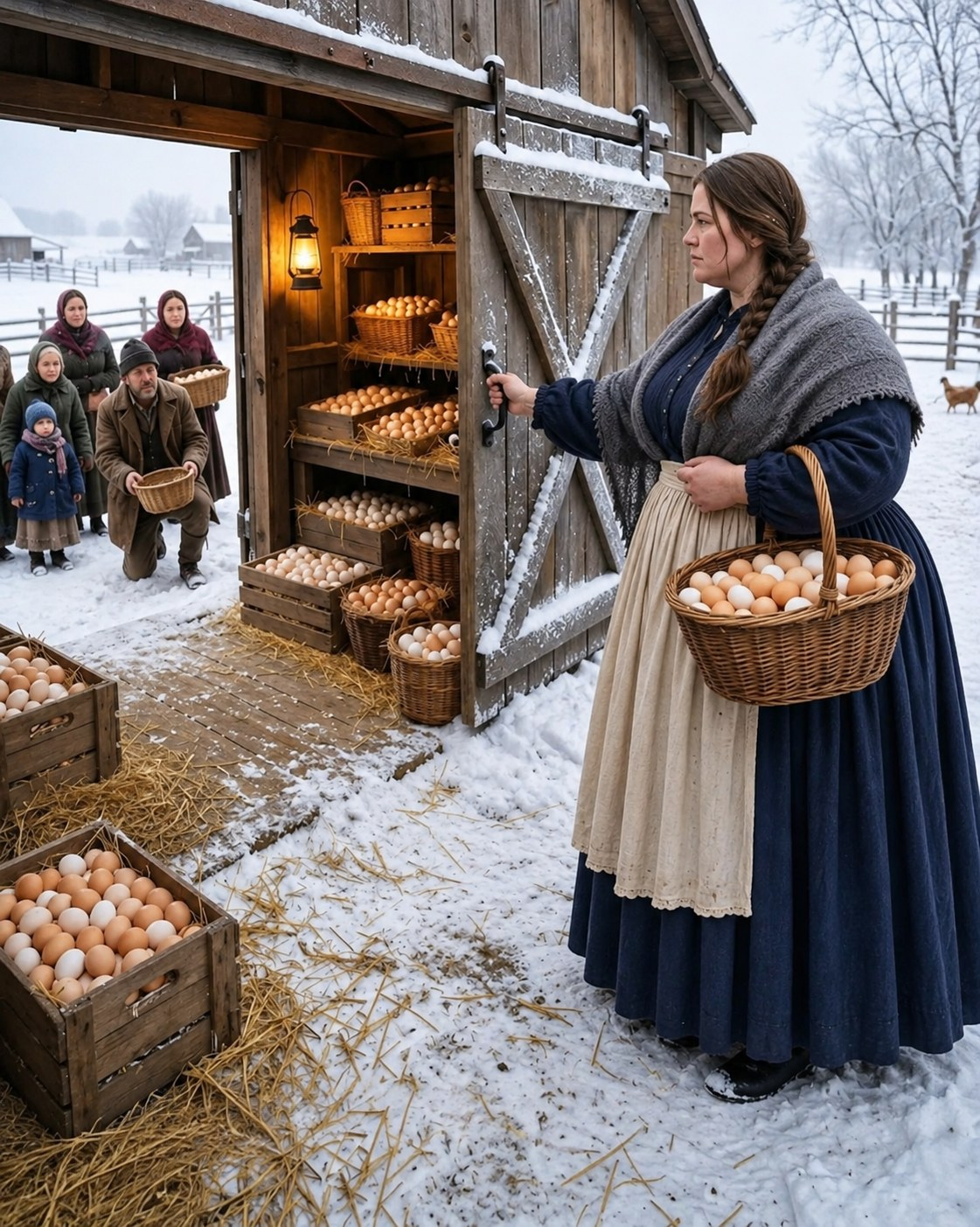
The town council meeting was scheduled for seven o'clock on a Thursday evening.
By six thirty, I had already changed my clothes twice.
It was not because I cared what people thought of my appearance. At sixty-eight, I had long since stopped worrying about whether someone approved of my coat or the way I arranged my hair.
I simply wanted to look presentable.
Thomas had always believed that important conversations deserved respect, even when the people listening did not.
I chose my dark green wool coat, a clean cream-colored blouse, and my brown leather boots. I pinned my silver-gray hair into a neat bun and placed my handwritten notes inside a folder.
Before leaving, I checked the chicken coop one more time.
The temperature was dropping.
I made sure the water containers were full, the bedding was dry, and the backup heating equipment was working properly.
Daniel was waiting near the fence.
He had his backpack over one shoulder and his hands tucked inside his jacket pockets.
"Are you going to the meeting?" he asked.
"Yes."
"Can I come?"
I looked at him.
"Don't you have homework?"
"I finished it."
"Your mother knows where you're going?"
He nodded.
"She said I could come, as long as I don't get into trouble."
I smiled.
"Then let's try not to disappoint her."
He followed me toward my old pickup truck.
The drive into Willow Creek took about fifteen minutes.
The streets were busy with people finishing their evening errands. Cars moved slowly through the intersections, and the lights from the diner illuminated the wet pavement.
At Miller's General Store, a delivery truck was being unloaded.
I noticed several people standing near the entrance, discussing the approaching winter system.
Nobody looked particularly worried.
That was one of the things that concerned me most.
People often believed danger had to announce itself loudly before it deserved attention.
But nature did not work that way.
Sometimes trouble began quietly.
A temperature dropping five degrees below normal.
A road becoming difficult to navigate.
A delivery arriving one day late.
And then, suddenly, ordinary life became something people could no longer depend on.
When we reached the municipal building, the parking lot was nearly full.
Daniel opened the passenger door and climbed out.
"There's a lot of people," he said.
"That's good."
"Do you think they'll listen?"
I looked at the building.
"I hope so."
Inside, the council chamber was warmer than I expected.
Rows of wooden chairs faced a raised platform where Mayor Richard Hale sat between two council members.
Richard was a handsome man in his early fifties.
He wore expensive suits, spoke with confidence, and had a habit of smiling whenever someone disagreed with him.
He had been mayor for six years.
During that time, he had overseen several construction projects, celebrated new business openings, and regularly appeared in the local newspaper.
Most people considered him a successful mayor.
I had never disliked him.
In fact, Thomas had once spoken highly of him.
But I had begun to notice something.
Richard preferred good news.
He liked ribbon-cutting ceremonies, business announcements, and photographs showing smiling residents standing beside newly painted buildings.
He seemed far less interested in conversations about what could go wrong.
Harold Whitcomb was already sitting in the front row.
He wore a navy suit and a burgundy tie.
When he noticed me, he leaned toward the man beside him and whispered something.
They both smiled.
I pretended not to notice.
Daniel and I found two seats near the back.
A few minutes later, Mayor Hale struck the wooden table with a small gavel.
"Good evening, everyone. Thank you for coming."
The room quieted.
He began discussing road maintenance, holiday decorations, and the progress of a proposed commercial development.
I listened patiently.
None of those subjects seemed particularly urgent.
Then he mentioned the weather.
"We have received some reports about an unusually cold winter system developing in the northern region," he said. "Our emergency services are monitoring the situation."
A few people nodded.
Richard smiled.
"However, there is no reason for unnecessary concern. Our local businesses remain well supplied, and our transportation network is operating normally."
I looked down at my folder.
That was exactly what I had been afraid of.
He was treating a possibility as though it were already under control.
When the mayor finished his remarks, he invited residents to speak.
I stood.
My knees were stiff from sitting, but I walked toward the microphone without hesitation.
"Good evening, Mayor Hale."
"Good evening, Martha."
Several people turned toward me.
I opened my folder.
"I would like to suggest that Willow Creek establish emergency food reserves before the winter system arrives."
A man near the front shifted in his chair.
I continued.
"We have elderly residents living alone. We have families with young children. Some people depend on regular deliveries of food and medicine. If the roads become blocked, those families may not be able to get what they need."
Mayor Hale nodded politely.
"Thank you for your concern."
I was not finished.
"I also think we should identify residents who may need assistance. We should check the emergency shelter, review our generator supplies, and establish a plan for distributing food if the supermarkets cannot receive deliveries."
Harold leaned back in his chair.
I could see the beginning of a smile.
Mayor Hale folded his hands.
"Martha, we appreciate your concern, but we have modern supply chains."
I looked at him.
"Modern supply chains still depend on roads."
"Of course."
"And roads can become impassable."
"That's true, but our transportation services are experienced."
"What happens if the trucks cannot get through?"
He smiled again.
"We have contingency arrangements."
"What arrangements?"
The mayor glanced at the council members.
"We have emergency procedures in place."
"Have they been tested?"
His smile weakened slightly.
"Excuse me?"
"Have the food distribution procedures been tested under prolonged road closures?"
The room became quieter.
Richard adjusted his jacket.
"Our emergency management department reviews these matters regularly."
I looked at the people sitting behind him.
"Then perhaps we should review them together."
Before the mayor could respond, Harold Whitcomb stood.
"Well, I suppose I can answer part of that question."
He turned toward the audience.
"My supermarket receives deliveries three times a week. We have established relationships with regional suppliers, and our distribution network is reliable."
He looked directly at me.
"Nobody is going hungry."
A few people nodded.
Harold continued.
"With all due respect, Martha, we cannot prepare for every imaginable disaster. Businesses have to operate based on realistic expectations."
I held my folder against my chest.
"A severe winter storm is not unimaginable."
Harold chuckled.
"Then I suppose we'll all come begging for your magical eggs."
Laughter spread through the room.
I heard someone behind me whisper, "The Egg Queen."
Daniel shifted in his chair.
I glanced toward him.
He looked embarrassed.
I gave him a small nod.
It was all right.
I had heard worse.
I turned back toward Harold.
"I hope you never have to."
My words were quiet.
For a moment, nobody laughed.
Then Mayor Hale cleared his throat.
"All right. I think we have heard Martha's concerns."
I looked at him.
"May I finish?"
He hesitated.
"Briefly."
I opened my folder again.
"I have been keeping records of my supplies and preparations. I have enough information to help establish a small community food reserve, at least for vulnerable residents."
I placed a copy of my proposed plan on the table.
It included estimated food requirements, storage considerations, and a list of residents who might need priority assistance.
I had spent three evenings preparing it.
"I am not asking the town to spend a fortune," I explained. "I am asking us to prepare before preparation becomes impossible."
One of the council members picked up the document.
She was a middle-aged woman named Eleanor Price.
Unlike the mayor, she read it carefully.
"This is quite detailed," she said.
"Thank you."
She looked at the mayor.
"Perhaps we should discuss this with emergency management."
Harold sighed.
"Are we seriously considering an emergency food program based on one woman's chickens?"
Eleanor looked uncomfortable.
"That's not what the proposal says."
"But that's what we're discussing."
Mayor Hale raised his hand.
"Let's remain professional."
I looked at him.
"Mayor, I am not asking anyone to believe that a disaster is certain. I am asking you to consider what happens if it becomes serious."
He nodded.
"I understand."
But his expression suggested otherwise.
He turned toward the council.
"We'll take the proposal under advisement."
I knew what that meant.
Nothing would happen tonight.
Still, I did not sit down immediately.
"There is one more thing."
The mayor sighed almost imperceptibly.
I continued.
"Some families cannot afford to keep extra food in their homes. If the stores close, they will have nowhere to turn. We should not wait until someone is hungry before deciding whether they deserve help."
This time, the room remained silent.
Then Harold stood again.
"My trucks arrive three times a week. My supermarket has backup arrangements. I don't see why we should frighten people with unnecessary predictions."
He glanced around the chamber.
"Willow Creek has managed winters for generations."
I looked at him.
"Not every winter is the same."
Harold shrugged.
"Then I suppose we'll all come begging for your eggs."
A few people laughed again.
I finally closed my folder.
"Harold, I hope you never have to."
I returned to my seat.
Daniel leaned toward me.
"Why won't they listen?"
I watched the mayor move on to the next item.
"Because listening would mean admitting they might be wrong."
Daniel looked toward Harold.
"He was being cruel."
"Yes."
"Doesn't that make you angry?"
I thought about it.
"Anger doesn't put food on a table."
He looked down.
I placed my hand gently over his.
"Remember that."
The meeting continued for another forty minutes.
People discussed road repairs, parking regulations, and the upcoming holiday market.
A woman asked whether the town would be decorating the central square.
Another resident complained about potholes near the elementary school.
The mayor answered every question with a smile.
But nobody returned to the emergency food proposal.
When the meeting ended, I gathered my papers.
Eleanor Price approached me near the doorway.
"Martha?"
I turned.
"Yes?"
She lowered her voice.
"I thought your proposal made sense."
I smiled.
"Thank you."
"I'll speak with the mayor privately."
"I would appreciate that."
She glanced toward the front of the room.
"He's under pressure from several business owners. They don't want people becoming nervous and buying unnecessary supplies."
I looked at her.
"People should be allowed to know what they're preparing for."
She nodded.
"I agree."
Then she added something that caught my attention.
"Between us, I don't think the town's emergency arrangements are as strong as Richard says."
I stared at her.
"What do you mean?"
She looked toward the council chamber.
"Some of the equipment hasn't been inspected recently."
"Which equipment?"
"Generators. Heating systems. Emergency storage facilities."
I felt my stomach tighten.
"Have the food reserves been checked?"
Eleanor looked uncomfortable.
"I don't know."
That answer troubled me more than anything else I had heard that evening.
"Then somebody should find out."
"I'll see what I can do."
Before she could say more, Mayor Hale approached us.
"Eleanor, everything all right?"
She straightened.
"Of course."
He turned toward me.
"Martha, thank you for attending."
"Thank you for listening."
He smiled.
"Try not to worry too much. We have excellent people working on these issues."
I looked directly at him.
"I hope you're right."
He nodded and walked away.
Daniel and I left the building together.
Outside, the air had become noticeably colder.
The parking lot lights reflected off the damp pavement.
Daniel zipped his jacket.
"That was disappointing."
"Yes."
"They didn't even discuss your proposal."
"They heard it."
"That's not the same thing."
I looked at him.
"No. It isn't."
We drove home slowly.
On the way, we passed Harold's supermarket.
The parking lot was full.
A large delivery truck was parked near the loading dock, and several employees were unloading boxes.
Harold stood beside the entrance speaking to a customer.
He looked completely relaxed.
I wondered whether he had ever considered what would happen if those trucks stopped arriving.
When we reached my farm, Daniel helped me unload the remaining feed bags.
He was quieter than usual.
Before leaving, he turned toward me.
"Mrs. Bennett?"
"Yes?"
"Do you really think something bad is coming?"
I looked toward the dark hills.
"I think we should prepare for the possibility."
He nodded.
Then he asked, "What if nobody else does?"
I looked at the barn.
"Then we do what we can."
Daniel seemed satisfied with that answer.
He waved and started down the road.
I watched until he disappeared beyond the fence.
Then I returned to the house.
I placed the council notes beside my weather reports.
The forecast had changed again.
The meteorologist was now discussing the possibility of an unusually powerful Arctic system moving south.
The expected temperatures were lower.
The projected snowfall was heavier.
I turned up the volume.
The reporter stood beside a regional map.
"Residents across the northern counties should pay close attention to developing weather conditions. Officials are advising people to prepare for possible travel disruptions and extended power outages."
I wrote the date in my notebook.
Then I circled the forecasted arrival period.
December fourteenth.
Two weeks.
Perhaps less.
I went outside and checked the generator.
It started immediately.
I checked the fuel supply.
I inspected the heating equipment.
I walked through the barn and counted the feed bags.
Everything was where it should be.
But something about the meeting continued bothering me.
It wasn't Harold's laughter.
It wasn't the mayor's dismissal.
It was Eleanor's comment about the emergency equipment.
If the town's preparations were incomplete, why had Richard Hale spoken so confidently?
And why had he seemed so determined to avoid discussing the food reserve?
I returned to the kitchen and poured myself a cup of tea.
Thomas's photograph stood on the shelf beside the window.
He was smiling in it, wearing his old brown jacket, with one arm resting on the wooden fence.
I touched the frame.
"You would have hated that meeting," I whispered.
For a moment, I could almost hear his familiar laugh.
Then my phone rang.
It was Daniel.
I answered immediately.
"Hello?"
"Mrs. Bennett?"
His voice sounded different.
"What happened?"
"I'm sorry to call so late."
"You're not bothering me. Is Lily all right?"
"She's fine. It's not that."
I waited.
He took a breath.
"Something happened at school today."
"What happened?"
"They made an announcement about the weather. The principal told everyone to take home a notice about possible school closures."
"That's sensible."
"Yes, but that's not what I'm calling about."
I sat down.
"Go ahead."
Daniel hesitated.
"One of the teachers said the town had already been discussing emergency supplies. She said the mayor had received a report about the food reserve."
My fingers tightened around the phone.
"When?"
"She didn't say."
"Did she mention whether the reserve was full?"
"No."
I looked toward the folder containing my council proposal.
"Daniel, did you hear anything else?"
He was quiet for several seconds.
Then he spoke.
"Mrs. Bennett, I think someone at the school knows something about the emergency food."
"What makes you think that?"
"Because when I asked about it, my teacher told me not to discuss it with anyone."
I stood up.
"Why would she say that?"
"I don't know."
I walked toward the window.
Outside, the first snowflakes of the season were drifting across the yard.
"Daniel, did she give you anything?"
He hesitated.
Then I heard paper rustling.
"There's something else."
"What is it?"
"I found a note in the school office. It had the mayor's name on it."
My heart began beating faster.
"What did it say?"
Daniel lowered his voice.
"It said the emergency food inventory had been completed."
I waited.
Then he added five words.
"But the numbers didn't match."
I gripped the edge of the table.
"What numbers, Daniel?"
He took another breath.
And then he whispered:
"Mrs. Bennett, the inventory says the town had enough food for six months, but someone crossed out the entire list and replaced it with one word..."






Comments 0