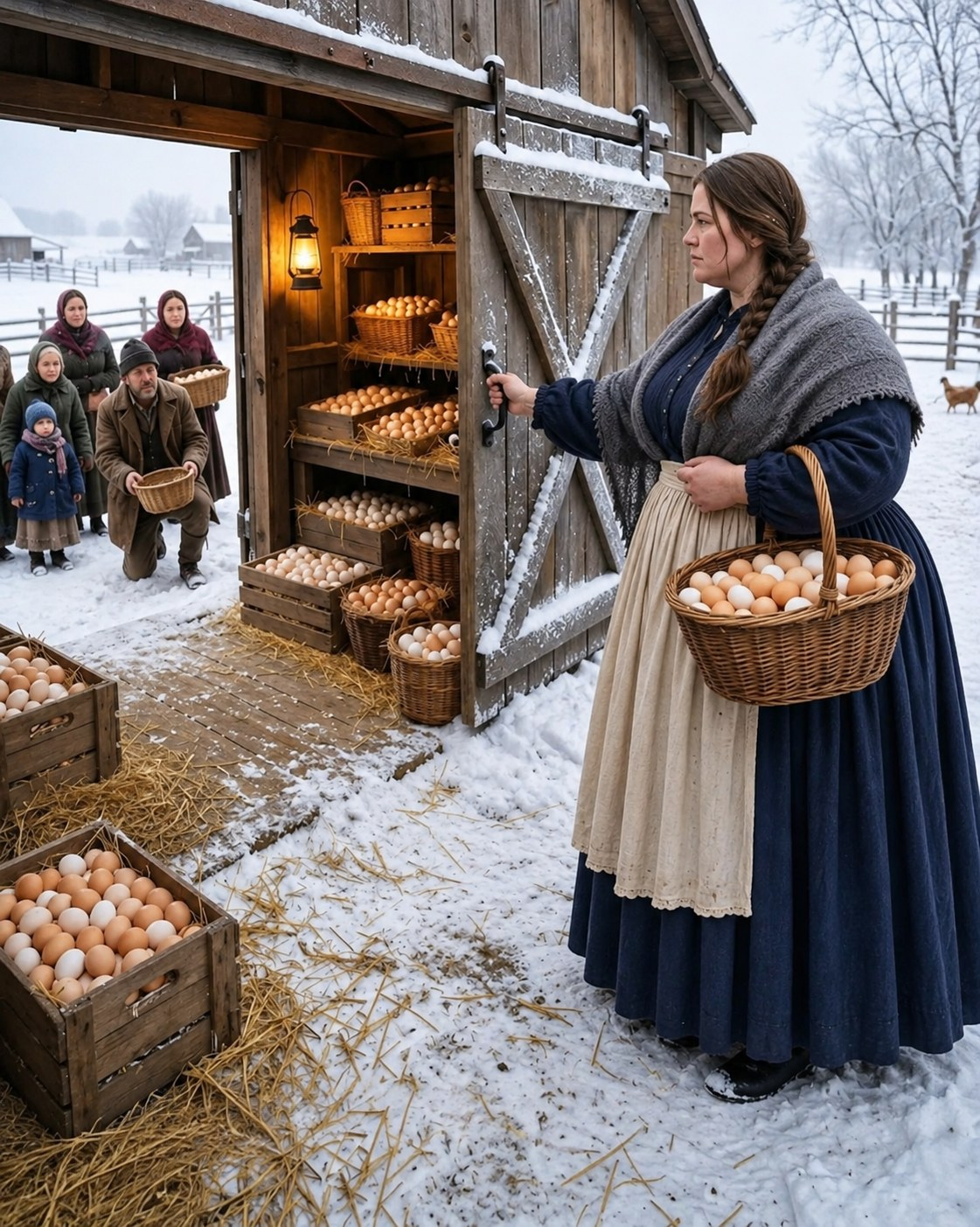
I had spent seven years believing my husband was buried beneath the white stone in Willow Creek Cemetery.
Now a police captain was standing in front of me, holding a photograph, telling me that Thomas Bennett might still be alive.
I could barely breathe.
"Where is he?" I asked.
Captain Miller looked at me carefully.
"Dr. Brooks says he can explain everything. But we need to hear his statement first."
I shook my head.
"I have waited seven years. I am done waiting."
Sarah stood beside me, still holding the photograph of her father.
Robert placed a hand on my shoulder.
"We'll go together."
I nodded.
Before leaving the orchard, I carefully placed Thomas's letters inside my bag.
The original trust document, the black ledger, and the photographs were now in police custody.
For the first time, we had enough evidence to expose what had happened.
But I wanted something more important than evidence.
I wanted my husband.
At the regional police station, Dr. Samuel Brooks was sitting in a small interview room.
He looked exhausted.
His expensive coat was gone.
His hair was disheveled, and his hands trembled as he held a paper cup of water.
When he saw me, he stood.
"Martha."
I stopped in the doorway.
"Where is Thomas?"
He lowered his eyes.
"I owe you an explanation."
"You owe me seven years."
He nodded.
"I know."
Captain Miller instructed everyone to sit.
Dr. Brooks took a breath.
Then he began.
"Seven years ago, Thomas discovered that emergency food supplies were being diverted from the municipal warehouse."
I had already heard that part.
"What happened next?"
"He confronted Harold Whitcomb and Richard Hale. At first, they denied everything. Then Thomas discovered that Peter Lawson had been altering the delivery records."
Robert leaned forward.
"Why was Lawson doing it?"
"Because he controlled the municipal inventory system. Harold provided the storage facilities. Richard approved the transfers. Peter changed the records to make the missing supplies appear delivered."
"And you?" Captain Miller asked.
Dr. Brooks looked down.
"I provided medical services to the emergency volunteers. Some of the supplies had been stored in unsafe conditions. Thomas became concerned when several workers developed respiratory problems."
My hands tightened.
"Was Thomas one of them?"
The doctor nodded.
"Yes."
I closed my eyes.
"Did you know what was making him sick?"
"Not at first. When he became seriously ill, I discovered that he had been exposed to contaminated material inside one of the storage facilities."
I looked at him.
"Why didn't you tell me?"
"Because I was afraid."
"Of Harold?"
"Of all of them."
His voice cracked.
"Richard had connections. Harold controlled several businesses. Peter had access to official records. They knew where I lived, and they knew my family."
I felt anger rising.
"So you let my husband die without telling me the truth?"
Dr. Brooks shook his head.
"No. Thomas survived."
The room became silent.
I stared at him.
"What?"
He continued.
"Thomas was critically ill. We believed he might not recover. When he regained consciousness, he told me that the people responsible would try to silence him."
I struggled to understand.
"But I attended his funeral."
Dr. Brooks nodded.
"I know."
"Then whose funeral was it?"
He looked at Captain Miller.
"Thomas was moved to a private medical facility under a protected identity. The official death documentation was falsified. The funeral was conducted using a sealed coffin."
I felt my knees weaken.
"Who was in it?"
"An unidentified patient who had died at the facility. The paperwork was manipulated."
Sarah covered her mouth.
Robert stood.
"You're saying Thomas Bennett was kept alive under another identity?"
"Yes."
"Who arranged it?"
"Edward Hale."
I remembered the photograph.
Richard's missing brother.
Dr. Brooks continued.
"Edward had discovered that his brother was involved in the theft. He had tried to stop the operation, but Peter Lawson had already altered the records. When Edward refused to cooperate, Richard arranged for him to disappear."
Captain Miller interrupted.
"Where is Edward now?"
"Under police protection."
I stared at the doctor.
"Then why didn't Thomas come home?"
Dr. Brooks looked directly at me.
"Because he believed you would be in danger."
I shook my head.
"He should have trusted me."
"I told him that."
"And what did he say?"
The doctor paused.
"He said he would rather have you hate him for being gone than watch someone hurt you because of what he knew."
Tears filled my eyes.
I looked away.
For seven years, I had wondered whether Thomas had been frightened, whether he had suffered, whether he had known how much I missed him.
Now I understood that he had made a terrible decision out of love.
But it was still a terrible decision.
"Where is he?" I asked again.
Dr. Brooks reached into his jacket and removed a folded paper.
He placed it on the table.
"Thomas is at a rehabilitation residence outside Willow Creek. He has been living there under the name David Bennett."
I stared at the name.
"David Bennett."
"Yes."
"Is he well?"
The doctor nodded.
"He's recovering. His health is much better now."
I stood.
"Take me to him."
Captain Miller looked at the doctor.
"First, we need to establish whether the information is accurate."
Dr. Brooks nodded.
"Of course."
He provided the address, the medical records, and the transfer documents.
He also handed over a signed statement describing his involvement in the false medical records and the payments made through North Ridge Logistics.
Then he revealed the final piece of the story.
"Thomas was never the person approving the illegal transfers," he said. "His signature was copied from an old trust document."
I looked at him.
"Why was it marked as verified?"
"Peter Lawson created a false verification record. He used a digital copy of Thomas's signature and attached it to the municipal authorization system."
Robert examined the paperwork.
"Can you prove that?"
Dr. Brooks nodded.
"The original computer logs are stored on a backup server. Edward knows where."
Captain Miller immediately contacted the regional investigators.
The operation was finally becoming clear.
Harold had diverted the supplies.
Richard had authorized the false transfers.
Peter had altered the municipal records.
Samuel had helped conceal the medical evidence.
And Thomas had discovered the operation before it could be exposed.
But the most important part was still missing.
Thomas was alive.
And I was going to see him.
Two hours later, we arrived at the rehabilitation residence.
The building was small and quiet.
A nurse greeted us at the entrance.
Captain Miller showed his identification.
"We're here to see David Bennett."
The nurse checked her records.
Then she looked at me.
"Are you family?"
I nodded.
"I'm his wife."
She paused.
Then her expression softened.
"He's been asking about you."
My heart stopped.
"Does he know I'm coming?"
"Not yet. But I believe he'll be very happy to see you."
She led us down a long hallway.
My hands were trembling.
I had imagined this moment a thousand times.
In some versions, Thomas was standing outside our farmhouse.
In others, he was sitting in his favorite chair.
Sometimes I heard his voice calling my name.
But I had never imagined walking through a medical facility to find him.
The nurse stopped outside a room.
"He's inside."
I looked at the door.
Then I turned toward Robert and Sarah.
"Please give us a moment."
They nodded.
I opened the door.
A man was sitting beside the window.
His hair was almost completely gray.
His shoulders were thinner.
There were lines around his eyes that I had never seen before.
But when he turned toward me, I recognized him immediately.
Thomas.
My Thomas.
For several seconds, neither of us spoke.
He stared at me as though he was afraid I might disappear.
Then he whispered:
"Martha?"
My knees nearly gave way.
I covered my mouth.
"Thomas."
He slowly stood.
His eyes filled with tears.
"I thought I'd never see you again."
I took one step forward.
Then another.
When I reached him, I touched his face.
It was warm.
Real.
Alive.
I began crying.
He wrapped his arms around me.
And for the first time in seven years, I was holding my husband.
I could hear his heartbeat.
I could feel his breathing.
He was not a photograph.
He was not a memory.
He was there.
"Why?" I whispered.
Thomas closed his eyes.
"I'm sorry."
"Why didn't you come home?"
He held me tighter.
"I was afraid."
"Of what?"
"Of losing you."
I pulled back enough to look at him.
"You already lost me. Every single day."
He lowered his head.
"I know."
I wiped my tears.
"Do you know how many winters I spent setting aside your favorite chair?"
He looked toward the floor.
"How many times I thought I heard your truck outside?"
His eyes filled.
"I heard your voice in my dreams."
I held his hands.
"You should have trusted me."
"I should have."
"You should have let me decide whether I was willing to face the danger."
He nodded.
"I know."
I looked at him for a long moment.
Then I leaned forward and kissed his forehead.
"We have a lot to talk about."
A faint smile appeared on his face.
"I was hoping we would."
I laughed through my tears.
It was the first time I had laughed without feeling guilty in seven years.
When Thomas was ready, I brought Sarah and Robert into the room.
Sarah approached slowly.
Thomas recognized her immediately.
"Sarah Carter."
She began crying.
"You remember me?"
"Of course."
He reached for her hand.
"Your father was one of the bravest men I ever knew."
Sarah sat beside him.
"He's alive."
Thomas closed his eyes.
"Thank goodness."
"We found records showing he was transferred to a private residence."
Thomas nodded.
"I know."
"Do you know where he is?"
Thomas looked toward the window.
"Edward helped arrange a safe place for him after the rehabilitation transfer. Daniel wanted to come home, but he was frightened that Richard would find his family."
Sarah wiped her eyes.
"Where is he now?"
Thomas looked at Robert.
"Have they found him?"
Robert shook his head.
"Not yet."
Thomas became serious.
"Then you need to contact Edward."
Captain Miller had already arranged for Edward Hale to be brought to the regional station.
Within an hour, he arrived.
He looked older than the man in the photograph.
His hair was white.
His face was thin.
But he was unmistakably the same person.
When Thomas saw him, he stood.
"Edward."
Edward smiled sadly.
"Hello, old friend."
They shook hands.
Then Edward looked at me.
"Martha, I'm sorry."
I studied him.
"Did you know Thomas was alive?"
He nodded.
"Yes."
"And you never told me?"
He lowered his head.
"I thought keeping you uninvolved would protect you."
I shook my head.
"Everyone seems to have made that decision for me."
Edward accepted the criticism.
"You deserved better."
Then he explained what had happened to Daniel Carter.
After leaving the rehabilitation center, Daniel had been transferred to a protected residence owned by Edward.
He had been given another identity to prevent Richard's associates from finding him.
But Peter Lawson had discovered the arrangement.
He had threatened Daniel and forced him to move again.
The old warehouse photograph, the financial ledger, and the medical transfer records had all been part of the same operation.
Daniel had been kept away from his family because he had evidence that could expose the entire scheme.
Edward handed Captain Miller a document.
It contained the address of a small farmhouse south of the county line.
"That's where Daniel is staying," he said.
Sarah immediately stood.
"Take me there."
Edward nodded.
"I will."
We reached the farmhouse shortly before sunset.
A woman answered the door.
She looked surprised to see the police officers.
Edward stepped forward.
"Is Daniel here?"
She nodded.
"Yes."
Sarah pushed past the doorway.
"Dad!"
A man appeared in the hallway.
His hair was gray.
His face was thinner.
But Sarah recognized him instantly.
Daniel Carter stopped.
For several seconds, he simply stared at his daughter.
Then he whispered:
"Sarah?"
She ran toward him.
He opened his arms.
And they embraced.
Sarah cried against his shoulder.
"You were gone for seven years."
Daniel closed his eyes.
"I'm sorry."
"Mom waited for you."
His face crumpled.
"I know."
"She died believing you were gone."
He lowered his head.
"I wanted to come home. I tried."
Sarah held him tighter.
Then she pulled back.
"Your grandson is waiting for you."
Daniel's eyes widened.
"Daniel?"
She nodded.
"He's here."
The sixteen-year-old stepped through the doorway.
For a moment, the two Daniels looked at each other.
The older man slowly approached.
"You're so grown up."
The boy smiled through his tears.
"You're supposed to be dead."
Daniel Carter laughed softly.
"I know."
The boy threw his arms around his grandfather.
And for the first time in seven years, three generations of the Carter family stood together.
I looked at Thomas.
He was crying.
I took his hand.
Some reunions are too precious for words.
The investigation continued over the following weeks.
The original black ledger, Thomas's letters, the protected trust documents, and the digital records provided the evidence investigators needed.
Edward gave a full statement.
Dr. Brooks admitted his involvement in falsifying the medical transfers and concealing the true records.
He cooperated with investigators and surrendered every remaining document connected to North Ridge Logistics.
Peter Lawson was found attempting to destroy the municipal backup records.
He was arrested before the destruction could be completed.
Harold Whitcomb's private warehouse was searched.
Investigators discovered emergency food supplies that had been purchased with public funds but never delivered to Willow Creek.
The financial records revealed years of unauthorized transfers.
Richard Hale was arrested after investigators established that he had approved the false emergency reports and participated in the scheme.
The forged signatures were traced to documents copied from Thomas's old records.
My name had also been used without permission.
The fraudulent property transfer was officially canceled.
The northern residence was returned to the family trust.
The people responsible faced criminal proceedings.
And Willow Creek finally learned what had happened.
The mayor's public statements were replaced by an official investigation report.
The town discovered that the emergency food reserves had been deliberately depleted.
Families who had been told not to worry learned that their supplies had been stolen.
But the most important discovery was that the food could be recovered.
Several warehouses contained unopened supplies.
Regional authorities arranged immediate distribution.
The hospital received emergency food deliveries.
The shelter was restocked.
Families with young children received groceries.
And elderly residents were given priority.
I volunteered to help organize the distribution.
Thomas joined me when his health allowed.
He was not as strong as he once had been.
But he insisted on carrying boxes whenever he could.
Daniel Carter helped too.
He knew the delivery routes better than anyone.
Sarah coordinated volunteers.
And young Daniel became the person everyone called when they needed help organizing the supplies.
The boy who had once watched me gather eggs in the mornings was now helping an entire town.
By the following spring, Willow Creek had changed.
The town council established an independent emergency food program.
No single person could approve a transfer without public documentation.
Every delivery was recorded.
Every warehouse was inspected.
And every family could request assistance without being embarrassed.
Harold's supermarket was no longer the center of the town's food distribution system.
The emergency program worked directly with local farmers, small businesses, and volunteers.
My farm became one of the collection points.
I donated eggs whenever the hens produced more than we needed.
Daniel Carter helped repair the old chicken coop.
His grandson worked beside him.
One afternoon, Thomas stood on the porch watching them.
I brought him a cup of coffee.
He smiled.
"Looks like that boy has inherited his grandfather's determination."
I laughed.
"He certainly has."
Thomas looked toward the yard.
Then he turned to me.
"Do you think the town will ever forgive us?"
I considered the question.
"We didn't steal anything."
"I know. But people suffered."
"Then we help them rebuild."
He nodded.
We stood together in the warm afternoon sunlight.
After a moment, he reached for my hand.
"I have something to ask you."
I looked at him.
"What?"
"Would you plant another apple tree with me?"
I smiled.
"Another one?"
"The old one has survived everything. I think it deserves company."
I laughed.
"Then let's plant two."
He smiled.
And for the first time in seven years, I could imagine growing old beside him again.
On the first anniversary of the historic winter storm, the town organized a community gathering.
It was held outside the newly restored emergency food center.
Families brought dishes.
Children played in the snow that remained along the edges of the park.
The volunteers served warm soup, fresh bread, and eggs donated by local farms.
Daniel Carter stood beside his daughter and grandson.
His health had improved.
He had moved back into his own home.
Sarah's mother was gone, but her photograph stood on the family table.
Daniel placed a small bouquet beside it.
Thomas and I stood near the entrance.
A young woman approached.
"Mrs. Bennett?"
I turned.
"Yes?"
She smiled.
"My children wanted to thank you."
Two little boys stood behind her.
One held a paper bag.
Inside were fresh eggs.
"We saved these for you," the younger boy said.
I laughed softly.
"That's very kind."
The woman looked at me.
"My husband lost his job during the storm. We didn't know how we would feed the children. Your supplies helped us get through those first days."
I felt my eyes grow warm.
"I'm glad we could help."
She hugged me.
Then she walked away with her children.
Thomas looked at me.
"Remember what you told Harold?"
I smiled.
"Which part?"
"That preparation wasn't about fear. It was about responsibility."
I nodded.
"I remember."
He squeezed my hand.
"You were right."
I looked across the gathering.
Daniel Carter was laughing with his grandson.
Sarah was helping serve food.
Robert and Eleanor were speaking with the new council members.
The old warehouse had been converted into a public food distribution center.
The records were displayed openly.
The town's emergency supplies were now protected by a transparent system that no single businessman or politician could control.
I thought about the first winter.
The laughter at Miller's General Store.
The jokes about the Egg Queen.
The people who had dismissed my warnings.
I remembered sitting alone at my kitchen table, packing cartons while everyone else insisted there was nothing to worry about.
I had never wanted to be right.
I had only wanted people to be safe.
And now, standing beside Thomas, I realized something.
The eggs had never been the real treasure.
The treasure was the people who had come together to protect one another.
That evening, after the gathering ended, Thomas and I returned to the farmhouse.
The chickens were settling into their coop.
The kitchen smelled of fresh bread.
I placed two cups of tea on the table.
Thomas sat in his old chair.
His favorite chair.
The one I had kept beside the window for seven years.
He looked around the room.
"You kept everything."
"Not everything."
"What did you change?"
I smiled.
"I replaced the broken kitchen clock."
He laughed.
Then his expression softened.
"Martha?"
"Yes?"
"Thank you for waiting."
I sat beside him.
"I didn't know what else to do."
He took my hand.
"I know I cannot give you back those seven years."
"No."
"And I know saying I'm sorry won't repair everything."
I looked at him.
"You're right."
He lowered his eyes.
"But I want to spend whatever time I have left making things right."
I leaned against his shoulder.
"Then start tomorrow."
He smiled.
"Tomorrow?"
"Yes. We have two apple trees to plant."
He laughed.
"Two?"
"Perhaps three."
For a moment, we sat quietly.
Outside, the last light of the day settled over the farmhouse.
I could hear the chickens moving in their shelter.
The generator was no longer needed.
The town's emergency supplies were secure.
And the people who had once laughed at my preparations had learned the value of helping one another.
Thomas reached for my hand.
I held it.
Seven years earlier, I had watched the town bury a man I believed was my husband.
Now I was sitting beside him, listening to his breathing, watching him smile, and planning another spring.
The old apple tree stood outside our window.
Its branches were beginning to show tiny green buds.
Thomas followed my gaze.
"Looks like it's going to bloom again."
I rested my head against his shoulder.
"Yes," I whispered.
"It always does."
And this time, when winter came to Willow Creek, nobody would have to face it alone.






Comments 0