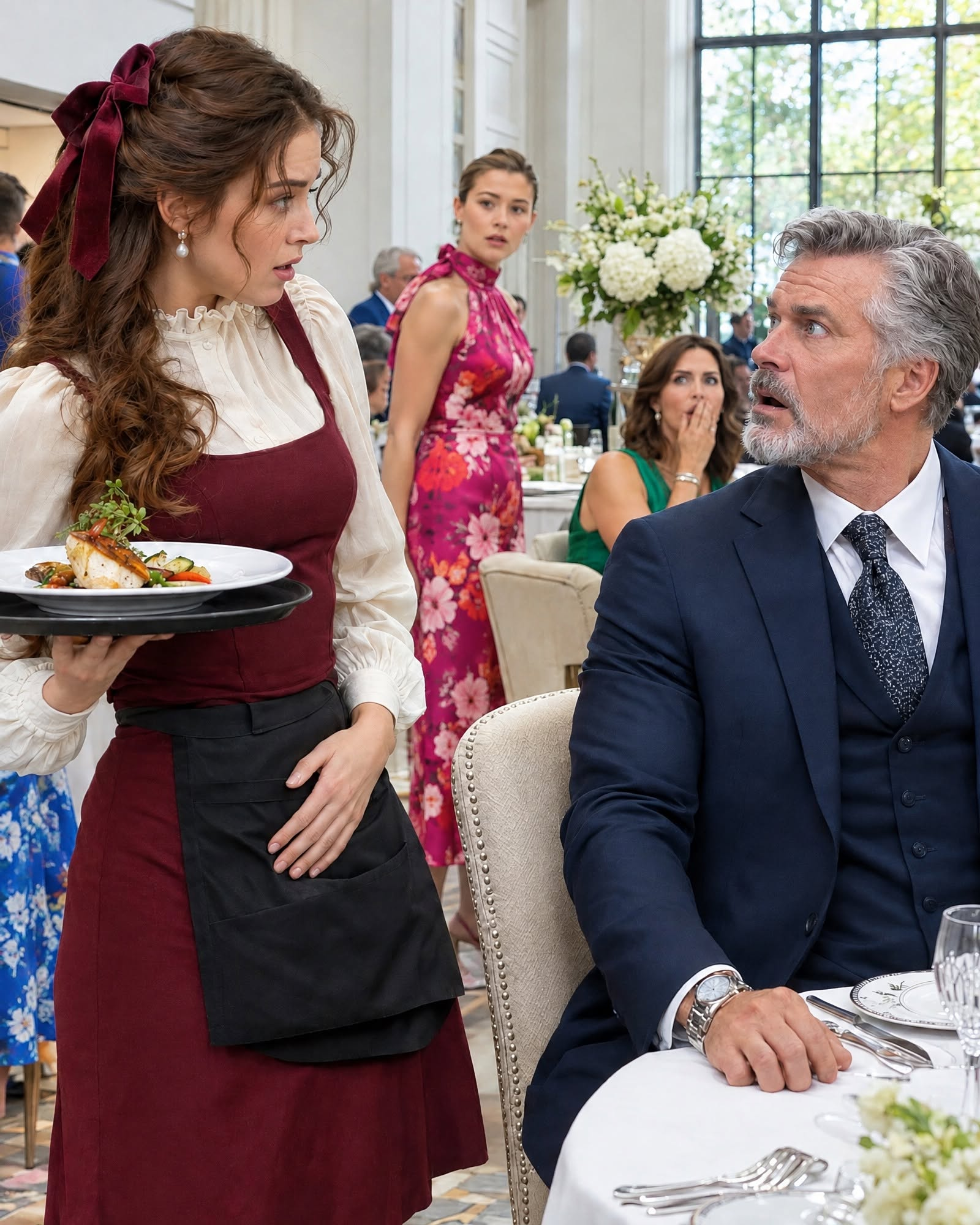
The man walking beside my son was Dr. Rafael Mendoza.
For six months, he had been telling me there was nothing seriously wrong with my health.
Now he was entering the restaurant with the man Lucía believed was trying to kill me.
"That's him," Lucía whispered.
Her fingers tightened around my arm.
"He's the one who helped Adrián throw me out."
I stared through the restaurant's glass entrance.
Dr. Mendoza was sixty-one, with neatly combed silver hair and the kind of reassuring smile that made patients trust him before he said a word.
He had been our family physician for almost fifteen years.
He had treated my late wife, Elena, during the final years of her life.
He had attended Adrián's wedding.
He had sat at my dining table, drunk my expensive whiskey, and assured me that my son's marriage was built on love.
And when my hands began trembling six months earlier, he had been the first doctor Adrián insisted I see.
"You're under tremendous stress, Ernesto," he'd told me. "Your body is asking you to slow down."
I had believed him.
I had believed everyone.
Except the woman standing beside me.
"Don Ernesto," Lucía whispered urgently. "Please don't let them see me."
I looked at her.
Her face was pale, and her breathing had become shallow.
She was holding her stomach with one hand.
The other clutched my sleeve so tightly that her knuckles had turned white.
I wanted to ask her a hundred questions.
Why had Mendoza been at her house?
What had he done?
Why had she never mentioned him before?
But Adrián was already approaching the reception desk.
I had seconds to decide.
"Jorge," I said quietly.
My business partner stepped closer.
"What's happening?"
"Take Lucía somewhere safe."
Jorge looked at her, then toward the entrance.
"Ernesto—"
"Please."
Something in my voice convinced him.
He nodded.
"Come with me, señora."
Lucía shook her head.
"I can't leave you with them."
"I'll be fine."
"You don't understand."
"Then help me understand later."
I placed my hand over hers.
"Right now, I need you and my grandson somewhere Adrián can't reach you."
Her eyes filled.
For one terrible second, I thought she might refuse.
Then she nodded.
Jorge guided her toward a side corridor leading to the restaurant's private event rooms.
I watched until they disappeared.
Only then did I turn around.
"Papá!"
Adrián's voice rang across the dining room.
I forced myself not to flinch.
My son was thirty-five years old, tall, handsome, and dressed in an expensive navy suit.
He had inherited his mother's dark eyes and my stubborn jaw.
For most of his life, people had told me how much he resembled me.
That evening, I wondered whether resemblance had blinded me to everything else.
He approached with a broad smile.
"There you are!"
He embraced me.
I stood perfectly still.
His familiar cologne reached me.
I remembered buying him his first bottle when he graduated from university.
"Jorge told me you were having dinner here," he continued. "I thought I'd surprise you."
Behind him, Mendoza smiled.
"Good evening, Ernesto."
"Doctor."
He studied my face.
"You look tired."
I almost laughed.
For months, that had been his favorite observation.
Tired.
Stressed.
Overworked.
Never seriously ill.
Never in danger.
"Long day," I replied.
Adrián glanced at the table.
"Where's Jorge?"
"Taking a phone call."
My son nodded.
Then his eyes moved toward the service corridor.
Just for a moment.
But I noticed.
"Something wrong?" I asked.
"No."
He smiled again.
"I thought I recognized someone."
My heart began pounding.
"Who?"
"Nobody important."
Mendoza placed a hand on my shoulder.
"Ernesto, have you been taking the supplements I recommended?"
I looked at him.
"Every morning."
"Excellent."
Adrián smiled.
"I make sure he never forgets."
The two men exchanged a glance.
It lasted less than a second.
Perhaps I would never have noticed it before.
Now it felt like watching two strangers communicate in a language I didn't understand.
"Sit down, Papá," Adrián said. "You look pale."
I lowered myself into my chair.
He took the seat opposite me.
Mendoza sat beside him.
A waiter approached.
Adrián ordered sparkling water.
Mendoza requested coffee.
The word made my stomach tighten.
Coffee.
I looked at the cup sitting beside my plate.
It was empty.
For the first time in my life, I was grateful I had ordered water with dinner.
"How was the meeting?" Adrián asked.
"Fine."
"Did Jorge agree to the revised payment schedule?"
"Not yet."
His smile weakened.
"Why not?"
"We're still reviewing it."
"Papá, we've been reviewing that contract for weeks."
"It's twelve million pesos."
"Exactly. We can't afford to lose it."
I looked at him.
"Since when do we sign contracts because we're afraid?"
His jaw tightened.
Then he laughed.
"You're right. Of course."
Mendoza leaned forward.
"Ernesto, perhaps Adrián has a point about reducing your responsibilities."
I turned toward him.
"Did I ask for your opinion about my company?"
The doctor's expression changed.
Only slightly.
But enough.
"Of course not," he said.
Adrián looked surprised.
I had rarely spoken sharply to Mendoza.
I had rarely spoken sharply to anyone in recent months.
My illness had made me tired.
My son had encouraged me to rest.
Somewhere along the way, I had stopped questioning decisions that once would have required my signature.
"Papá," Adrián said carefully, "we're only worried about you."
I looked into his eyes.
"Are you?"
He blinked.
"What kind of question is that?"
"A simple one."
He smiled.
But this time, it didn't reach his eyes.
"Of course we are."
I nodded.
Then I asked something I had never asked him before.
"Whatever happened to the investigation into Lucía?"
Silence.
Mendoza lowered his glass.
Adrián stared at me.
"What?"
"The money she supposedly stole."
My son leaned back.
"Why are we talking about her?"
"Because I was thinking about it."
"Papá, that woman destroyed our family."
"Did she?"
His face hardened.
"She stole from us."
"How much?"
He frowned.
"You know how much."
"Remind me."
"Almost two million pesos."
I remembered the figure.
One million eight hundred thousand, according to the report Adrián had shown me.
But now I wanted to hear him say it.
"And where did the money go?"
"Through a series of unauthorized transfers."
"To whose account?"
"An account she controlled."
"Which bank?"
Adrián stared at me.
"Why are you interrogating me?"
"I'm asking questions about company money."
"We already investigated."
"Who did?"
"Our internal finance team."
"Who led the investigation?"
He hesitated.
"Arturo."
Arturo Vega.
Our financial controller.
A quiet, meticulous man who had worked for us for twelve years.
I remembered something else.
Arturo had resigned shortly after Lucía disappeared.
Adrián told me he had accepted a better position in Guadalajara.
I had never spoken to him afterward.
"Did Arturo sign the report?" I asked.
"Of course."
"Then I'll ask him for a copy."
Adrián's expression went still.
"He's not with the company anymore."
"I know."
"There's no reason to bother him."
"I'd like to understand what happened."
My son leaned forward.
"Papá, why are you suddenly interested in Lucía?"
I held his gaze.
"Because she was my daughter-in-law."
"She betrayed us."
"Then the evidence should speak for itself."
Mendoza cleared his throat.
"Perhaps this conversation isn't good for your health."
I turned toward him.
"Doctor, my health has been poor for six months. One conversation isn't going to explain that."
He smiled tightly.
"Stress can affect the body in remarkable ways."
"So you've told me."
Adrián glanced at his watch.
I saw impatience flash across his face.
Then he reached for his phone.
"Excuse me a moment."
He typed something beneath the table.
I couldn't see the screen.
But I knew he was sending a message.
And suddenly I was afraid it might concern Lucía.
Eight months earlier, Adrián had arrived at my house just after midnight.
I remembered the sound of his car pulling into the driveway.
I remembered finding him in my study with his tie loosened and his eyes red.
"She's gone, Papá."
I had stood up immediately.
"Who?"
"Lucía."
He covered his face.
"She left me."
I had never seen my son look so broken.
Not since Elena died.
He told me Lucía had been having an affair.
He claimed she'd emptied their joint account, taken jewelry, and disappeared with a man whose name he refused to tell me.
When I demanded to speak to her, he shook his head.
"She doesn't want us to find her."
Then he showed me a printed message.
I can't keep pretending. I love someone else. Don't look for me.
The message appeared to come from Lucía's phone.
I remembered staring at those words.
They seemed cruel.
Uncharacteristically cruel.
Lucía had always been gentle with me.
Even during disagreements with Adrián, she had never spoken with that kind of coldness.
But my son was crying.
And grief can make a father foolish.
Two days later, Adrián brought me financial documents.
He said he'd discovered unauthorized transfers from our construction company.
The recipient account was allegedly connected to Lucía.
He showed me spreadsheets.
Bank references.
A summary prepared by Arturo.
I had asked whether we should contact the police.
Adrián had refused.
"She's still my wife, Papá. I don't want to destroy her life."
I remembered feeling proud of him.
Even after betrayal, my son seemed compassionate.
Now I wondered whether his refusal had been compassion at all.
Maybe he hadn't wanted anyone outside the company examining those records.
Maybe the investigation had never been real.
And maybe the message I had read hadn't come from Lucía.
The thought made my chest ache.
I had watched her grow close to our family.
I had welcomed her into my home.
And when she supposedly betrayed us, I had erased her from my life without asking a single question.
I had even instructed my housekeeper to put away the wedding photographs because they upset Adrián.
There was one photograph I remembered particularly well.
Lucía stood beside Elena's favorite rosebush, smiling in her wedding dress.
Adrián had his arm around her waist.
I stood behind them, proud enough to burst.
Three years after my wife's death, I had believed our family was finally healing.
I hadn't known how quickly that photograph would become evidence of something I had failed to protect.
"Papá?"
Adrián's voice pulled me back to the restaurant.
I looked up.
He was watching me.
"You disappeared for a moment."
"Just thinking."
"About Lucía?"
"About your mother."
His expression softened.
"Mom would hate seeing us like this."
I studied him.
He knew exactly which memories could weaken me.
Elena had died seven years earlier after a long illness.
She had been the heart of our family.
When Adrián was young, she was the one who made him apologize when he lied.
She was the one who reminded him that wealth did not make him better than anyone else.
After her death, I had tried to be both parents.
Perhaps I had tried too hard.
I gave him responsibilities before he earned them.
I excused his temper.
I defended him when employees complained that he was arrogant.
Whenever someone questioned his judgment, I told myself he was still learning.
And whenever I saw a flaw in his character, I remembered Elena's face and convinced myself that our son could not possibly become cruel.
"Your mother believed in telling the truth," I said.
Adrián frowned.
"What's that supposed to mean?"
"Nothing."
Mendoza checked his watch.
"Ernesto, I really think you should go home."
"Why?"
"You look unwell."
"I've looked unwell for months."
"Exactly."
I leaned forward.
"Then perhaps we should find out why."
He smiled.
"We've discussed that."
"Have we?"
"Your blood work hasn't shown anything alarming."
"What about additional testing?"
"We can consider it."
"I'd like to see an independent specialist."
For the first time, Mendoza's smile disappeared.
"That isn't necessary."
"Then it shouldn't be a problem."
Adrián interrupted.
"Papá, Dr. Mendoza knows your medical history."
"So do I."
"You're being difficult."
I looked at my son.
The words hung between us.
Difficult.
That was what Adrián called me whenever I refused to sign something.
Whenever I questioned an expense.
Whenever I wanted a second opinion.
He used to say it jokingly.
Lately, he said it more often.
"I'm going home," I announced.
Adrián immediately stood.
"I'll drive you."
"No."
"Papá—"
"Jorge will take me."
His eyes narrowed.
"Where is Jorge, anyway?"
I glanced toward the corridor.
"Still on his call, I suppose."
Adrián turned his head.
For one frightening second, I thought he might walk toward the private rooms.
Instead, his phone vibrated.
He read the screen.
His expression changed.
I couldn't tell whether he was angry or surprised.
Then he looked at me.
"Did you speak to one of the waitresses?"
My blood turned cold.
I forced myself to remain calm.
"Several."
"Anyone you recognized?"
I took a sip of water.
"Should I have?"
Adrián studied me.
Mendoza stopped moving.
The restaurant suddenly felt much too quiet.
Then my son smiled.
"No. Just asking."
I knew he was lying.
And I knew he suspected something.
Jorge returned five minutes later.
He approached the table with the relaxed expression of a man who had just finished an ordinary business call.
"Sorry, gentlemen. An issue with one of our suppliers."
Adrián shook his hand.
"No problem."
Jorge looked at me.
"Ernesto, ready?"
"Yes."
Adrián stepped forward.
"I'll take him home."
Jorge shook his head.
"Actually, I need him to review something at my office first."
My son frowned.
"At this hour?"
"Contracts don't respect bedtime."
Jorge smiled.
It was a good performance.
I'd seen him negotiate with men twice as ruthless as my son.
Adrián looked at me.
"Papá, you're exhausted."
"I'll be fine."
"Tomorrow morning, then?"
I hesitated.
He smiled.
"Breakfast. Eight o'clock. Don't forget."
I thought about the coffee.
The ceramic cup.
The strange taste.
The way my legs sometimes weakened before noon.
"Of course," I said.
My son embraced me.
His hand pressed against my back.
For the first time, I felt no comfort in his touch.
Only fear.
As we separated, he leaned closer.
"Take care of yourself, Papá."
His voice was warm.
Familiar.
Almost loving.
I wondered whether it was possible for someone to sound sincere while hiding something monstrous.
Then he stepped away.
Mendoza shook my hand.
"Call me if the dizziness gets worse."
I looked into his eyes.
"I will."
The doctor smiled.
But his fingers were cold.
I watched them leave.
Only after their car disappeared did Jorge speak.
"Lucía is waiting in my vehicle."
I turned toward him.
"Where?"
"In the underground parking area. My driver is with her."
I exhaled.
"Thank God."
Jorge looked serious.
"Ernesto, we have a problem."
"Only one?"
"Your son asked the restaurant manager whether a pregnant waitress worked here."
My stomach dropped.
"When?"
"While you were sitting with him."
I stared at Jorge.
"He knows."
"Maybe."
"No. He knows."
Jorge lowered his voice.
"We need to move quickly."
Lucía was sitting in the back seat of Jorge's SUV when we reached the parking garage.
She looked up as I approached.
"Are they gone?"
"Yes."
"Did Adrián see me?"
"I don't think so."
She closed her eyes.
Jorge opened the passenger door for me.
I sat beside her while he instructed his driver to take us to his private office building.
It was only a short drive, but I wanted to put as much distance as possible between Lucía and the restaurant.
"Why the office?" I asked.
"Private security," Jorge replied. "And cameras I control."
I nodded.
For the first time that evening, I felt grateful for his caution.
Lucía sat silently.
Streetlights passed across her face.
She kept one hand on her stomach.
I noticed her breathing had become uncomfortable.
"Are you all right?"
She nodded.
"Just tired."
"When did you last eat?"
She hesitated.
"At lunch."
I looked at Jorge.
He immediately reached for his phone.
"I'll have food waiting."
Lucía shook her head.
"You don't have to—"
"Yes," I said. "We do."
She looked away.
I wondered how many times she had been forced to say those words.
You don't have to.
How many meals had she skipped?
How many nights had she spent worrying about rent?
How many times had she rested her hands over her unborn child and wondered whether anyone would help her?
And where had I been?
Sitting in my beautiful house.
Drinking coffee.
Believing my son.
"I'm sorry," I whispered.
She looked at me.
"You already said that."
"I know."
"Then please stop blaming yourself long enough to help us."
Her words surprised me.
There was no cruelty in them.
Only urgency.
I nodded.
"All right."
She hesitated.
"Don Ernesto, there's something you need to understand about Adrián."
"I'm listening."
"He doesn't lose control the way people think."
I frowned.
"What do you mean?"
"When he's angry in public, he raises his voice. He slams doors. He makes people uncomfortable."
I nodded.
I'd seen it.
"But when he's truly dangerous, he becomes calm."
I looked at her.
"Calm?"
"Very calm."
She swallowed.
"He smiles. He speaks softly. He tells you everything will be fine."
A chill moved through me.
I remembered the restaurant.
The smile.
The embrace.
Take care of yourself, Papá.
Lucía continued.
"That's how he spoke the night he threw me out."
I turned toward her.
"Tell me what happened."
She stared through the window.
For several seconds, I thought she might refuse.
Then she began.
"Three weeks before he locked me out, I found a folder in his office."
Her voice was quiet.
"He'd asked me to print some documents for a meeting. His computer was open."
"What documents?"
"Company records."
I frowned.
"Why would he ask you to print those?"
"I helped him with administrative work sometimes. Nothing confidential, usually."
She paused.
"That day, I saw a file with your name on it."
My pulse quickened.
"What kind of file?"
"A medical summary."
I stared at her.
"Medical?"
"Yes."
"Why would Adrián have my medical records?"
"I asked him the same question."
"What did he say?"
"He told me he was helping Dr. Mendoza organize information for your appointments."
I looked down.
That sounded plausible.
Adrián had attended several appointments with me.
He had handled paperwork when I was too tired.
"But there was something strange," Lucía continued.
"What?"
"The file included a list of symptoms."
"Mine?"
She nodded.
"Dizziness. Weakness. Tremors. Confusion."
I felt the blood drain from my face.
"Those are my symptoms."
"I know."
"But eight months ago, I wasn't having them."
Lucía looked at me.
"Exactly."
I stared at her.
She continued carefully.
"I didn't understand it at the time. I thought perhaps the doctor was warning Adrián about symptoms to watch for."
"Then what happened?"
"I noticed another document."
"What document?"
"A draft of a power of attorney."
I closed my eyes.
I remembered Adrián mentioning one.
He said it would simplify business decisions if I became too ill to work.
I had refused to sign.
"He told me it was routine," I said.
"Did you sign it?"
"No."
Lucía nodded slowly.
"That explains something."
"What?"
"He was furious when he found out you'd refused."
I remembered the argument.
Adrián had accused me of not trusting him.
He had reminded me that he was my only child.
He had said everything I owned would eventually belong to him anyway.
At the time, I had dismissed his frustration.
Now I wondered whether that refusal had changed his plans.
"What else did you see?" I asked.
Lucía hesitated.
"An email."
"From whom?"
"I couldn't see the sender's full address."
"What did it say?"
She looked at me.
"Only one sentence."
I waited.
She swallowed.
"'The original timeline is no longer acceptable.'"
I stared at her.
"What timeline?"
"I don't know."
"Was there anything else?"
"An attachment."
"What kind?"
"A document with your name in the title."
My hands began trembling again.
"Did you open it?"
"No. Adrián came into the room."
"What happened?"
"He saw the screen."
Her voice weakened.
"He didn't shout."
I looked at her.
"He just walked over, closed the computer, and asked me how long I'd been reading."
"What did you say?"
"The truth. That I'd only seen a few lines."
"And?"
"He smiled."
Lucía's eyes filled.
"Then he told me that curiosity could destroy a marriage."
I felt sick.
"That night, he changed the password on his computer," she continued. "Two days later, he stopped letting me into his office."
"And three weeks later?"
"He threw me out."
I looked at her stomach.
"Did he hurt you?"
She shook her head.
"Not physically."
Then she looked away.
"But he made sure I had nowhere to go."
I wanted to reach for her hand.
I stopped myself.
She had already endured too many people making decisions about her body and her life.
Instead, I said, "You won't have to face him alone again."
She studied me.
Then nodded.
Jorge's office occupied the upper floors of a modern commercial building near the financial district.
His security supervisor met us in the private parking area.
We entered through a restricted elevator.
Within minutes, Lucía was sitting on a comfortable sofa with a plate of warm food and a bottle of water.
Jorge arranged for a trusted female staff member to remain nearby in case she needed anything.
I called a doctor who had no connection to Mendoza.
Dr. Isabel Robles.
She was an internal medicine specialist recommended years earlier by one of our engineers.
I explained my symptoms.
I told her I feared I might have been exposed to something harmful.
She didn't dismiss me.
She asked detailed questions.
Then she told me to seek urgent medical evaluation that night rather than waiting for another appointment.
"Don't drive yourself," she instructed. "And bring a complete list of everything you've been taking."
I promised I would.
After ending the call, I looked at Jorge.
"I need to get to a hospital."
He nodded.
"I'll take you."
Lucía stood.
"I'm coming."
I looked at her.
"You need rest."
"And you need someone who knows what Adrián was doing."
Jorge considered her.
"She's right."
I didn't argue.
But before we left, I asked Jorge for one more favor.
"Can you contact Arturo Vega?"
He frowned.
"Our former financial controller?"
"Yes."
"Why?"
"Because I want to know whether he actually investigated Lucía."
Jorge studied me.
Then reached for his phone.
"I still have his number."
He called.
No answer.
He tried again.
Still nothing.
Then he sent a message.
Arturo, this is Jorge Ibarra. Ernesto needs to speak with you urgently. Please call.
We waited.
A minute passed.
Then another.
Jorge placed the phone on his desk.
"We'll try again later."
I nodded.
Lucía finished eating.
She looked exhausted, but there was more color in her face.
I was about to suggest we leave when Jorge's phone vibrated.
He picked it up.
His expression changed.
"Arturo answered."
I stood.
"What did he say?"
Jorge read the message.
Then looked at me.
"Ernesto, I think you need to see this."
He turned the screen toward me.
The message contained only three sentences.
I never investigated Lucía Hernández.
I resigned because Adrián ordered me to falsify company records.
If Ernesto is still alive, tell him to check the original beneficiary documents before his son finds them.
I read the message twice.
Then a third time.
My mouth went dry.
"Beneficiary documents?" I whispered.
Jorge looked at me.
"Do you know what he means?"
I shook my head.
Lucía stood beside us.
Her face had gone pale again.
"Don Ernesto," she said, "there's something else."
I turned toward her.
"What?"
"Before Adrián threw me out, I heard him arguing with Dr. Mendoza."
My heart began pounding.
"About what?"
She looked toward the office door.
"Your life insurance."
I stared at her.
"Lucía, I don't have a personal life insurance policy."
She swallowed.
"That's what I thought."
Jorge's phone vibrated again.
Another message from Arturo.
This time, it was a photograph of a document.
Jorge opened it.
At the top was the name of my construction company.
Beneath it was a policy number.
And farther down—
My full name.
Ernesto Salazar.
The insured person.
I leaned closer.
The coverage amount made my knees weaken.
Forty million pesos.
I gripped the desk.
"I never authorized this."
Jorge scrolled down.
"There's a signature."
I looked.
It resembled mine.
But I knew I had never signed that document.
Then I saw the beneficiary.
My son.
Adrián Salazar.
For several seconds, none of us spoke.
I thought about my illness.
The morning coffee.
The medical records prepared before my symptoms appeared.
The forged documents.
The missing money.
The wife my son had forced into hiding.
And the forty-million-peso policy I had never authorized.
My hands shook so violently that Jorge reached for my arm.
"Ernesto, sit down."
I barely heard him.
Because another message had appeared beneath the photograph.
Arturo had sent one final warning.
There is a second document. It changes everything. I kept the original because I knew Adrián would destroy it.
Jorge immediately typed a reply.
Where is it?
Three dots appeared.
Arturo was typing.
Then his answer arrived.
In the old company archives. Basement storage room B-17. But don't go alone.
I stared at the screen.
Jorge looked at me.
"Why?"
Another message appeared.
Because Adrián knows someone has been asking questions.
Before Jorge could respond, his office telephone rang.
His assistant's voice came through the speaker.
"Señor Ibarra, I'm sorry to interrupt."
Jorge pressed the button.
"What is it?"
"There's a gentleman downstairs asking for Don Ernesto."
My heart stopped.
"Who?"
A brief silence.
Then she answered.
"Dr. Rafael Mendoza."
Lucía grabbed my arm.
Jorge slowly turned toward the security monitor.
The camera showed Mendoza standing alone in the lobby.
He was holding a black leather medical bag.
And he was looking directly into the camera.
Jorge's assistant spoke again.
"Sir, he says it's an emergency."
Jorge leaned toward the telephone.
"What kind of emergency?"
The assistant hesitated.
Then she repeated the doctor's message.
"He said Don Ernesto must come downstairs immediately because he knows what was put in his coffee."
A second later, the private elevator chimed.
Its doors began sliding open.
We hadn't called it.
Someone had overridden the security lock.






Comments 0