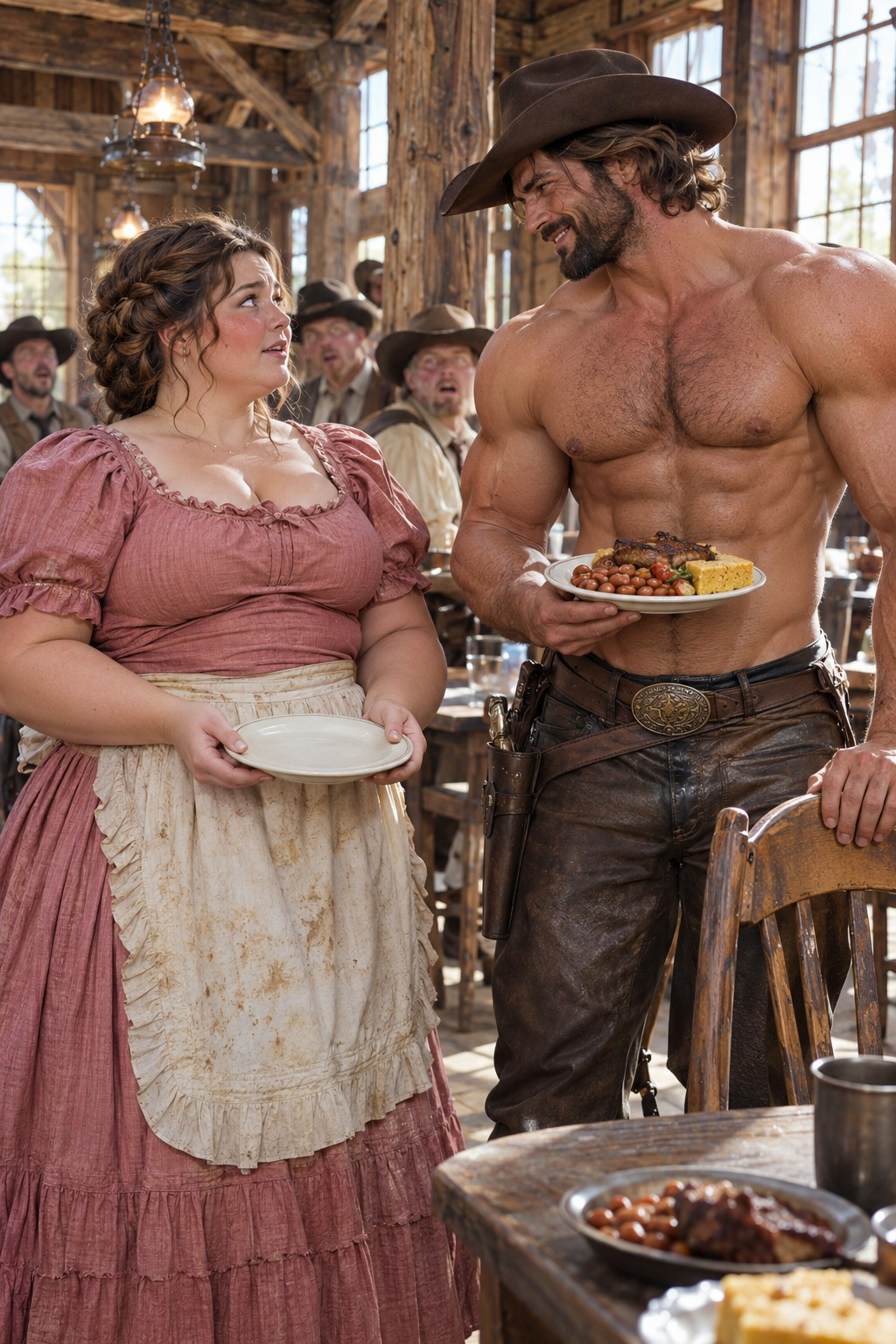
Mabel folded the attorney's letter.
She looked at Graham.
“Is it true?”
Graham took a breath.
“Part of it.”
Her heart sank.
“What part?”
“My father once worked at Black Ridge.”
She hadn't expected that.
Graham sat opposite her.
“Before Silas owned the entire property, my father managed cattle for the previous owner.”
“What happened?”
“He died during a winter cattle drive.”
Mabel remembered Graham telling her about his father's death.
She hadn't asked where it happened.
“Afterward,” Graham continued, “my mother tried to collect his unpaid wages. Silas had recently purchased the ranch. He claimed the previous owner's debts weren't his responsibility.”
“Was that true?”
“Maybe legally. Maybe not. We couldn't afford to challenge him.”
Graham looked at his hands.
“My mother worked herself nearly to death trying to support us.”
Mabel remained quiet.
“When I heard Black Ridge was hiring, I wanted to see the place.”
“Did you come for revenge?”
“No.”
He met her eyes.
“I came because I needed work. And because I wanted to understand what had happened to my father.”
“Why didn't you tell me?”
“Didn't seem important until I realized Silas was doing the same thing to you.”
Mabel considered his answer.
“Do you have a financial claim?”
“No. My father's wages were settled years ago through a small estate payment. There's nothing left for me to collect.”
“Then why would the attorney say otherwise?”
“To make you doubt me.”
She looked at the letter.
That was exactly what it had done.
Graham leaned forward.
“Mabel, you don't owe me trust just because I've helped you.”
She looked at him.
“You can ask anything you want.”
For several seconds, she studied his face.
Then she asked the only question that mattered.
“Would you have helped me if your father had never worked there?”
“Yes.”
He answered without hesitation.
She believed him.
Mabel placed the letter on the table.
“Then we'll tell the truth.”
The county courthouse opened proceedings two weeks later.
By then, the investigation had uncovered additional victims.
Agnes Miller had been located in Idaho.
She submitted a sworn statement describing withheld wages and accusations of missing supplies.
Ruth Dawson lived in another Montana town.
She agreed to appear in person.
The freight records established eighteen months of diverted goods.
Mercer's business ledger confirmed repeated purchases.
Henry Pike identified the forged signatures.
Tommy's statement explained how Martha's private account book had been hidden.
The two men hired to transport Mabel testified that Curtis and Silas had paid them.
The evidence was substantial.
Still, Mabel was terrified.
The courthouse benches were crowded.
She recognized ranch workers, merchants, church members, and townspeople.
Silas sat beside his attorney.
Martha wore a black dress.
Curtis avoided looking toward the witnesses.
Graham sat behind Mabel.
Clara sat beside him.
When Mabel's name was called, she stood.
Her hands trembled.
She walked toward the witness chair.
The county prosecutor asked her to describe her employment.
She explained the promised wages.
The deductions.
The shortages.
The hours.
The meals she had been forbidden to eat.
She described Graham's discovery of the freight receipt.
Then the threatening note.
The stolen sewing box.
The planted money.
The confession.
The cabin.
The wagon.
Her voice faltered several times.
But she continued.
The defense attorney rose.
“Miss Whitaker, you became acquainted with Mr. Boon shortly before these accusations began?”
“Yes.”
“And he encouraged you to question your employer?”
“He encouraged me to keep records.”
“Did he promise you financial compensation?”
“No.”
“Marriage?”
“No.”
“A share of the ranch?”
“No.”
The attorney walked closer.
“Would you agree that you developed personal feelings for this man?”
Mabel looked at Graham.
Then back at the attorney.
“Yes.”
“Could those feelings have influenced your testimony?”
Mabel took a breath.
“My feelings didn't change twelve sacks into seven.”
Several people murmured.
The judge called for order.
The attorney frowned.
“Please answer the question.”
“I have.”
He tried another approach.
“Your employer provided lodging?”
“Yes.”
“Employment?”
“Yes.”
“Food?”
Mabel looked directly at him.
“Food for everyone except me.”
The courtroom became silent.
The attorney glanced toward Silas.
Then he sat.
Henry Pike testified next.
He identified the freight receipts.
Mercer confirmed the sales.
Samuel described the nighttime wagons.
Tommy explained the missing supplies.
When Ruth Dawson entered, Mabel immediately recognized the exhaustion in her eyes.
Ruth told the court that Martha had deducted money for goods she never received.
She had been threatened with arrest when she attempted to leave.
She escaped after saving enough money to purchase a railway ticket.
Before leaving, she hid several records beneath the floorboards.
“I hoped somebody would find them someday,” Ruth said.
Mabel wiped her cheeks.
Agnes's statement described nearly identical treatment.
The defense attempted to blame Curtis alone.
Curtis then admitted that Silas had approved the transactions.
Martha claimed she merely followed her husband's instructions.
But her letters and account book established her own involvement.
Their united defense collapsed.
After several days of testimony and deliberation, the court returned its decisions.
Silas was found guilty on the principal fraud, forgery, and unlawful detention charges brought against him.
Curtis was convicted for his participation in the scheme and Mabel's detention.
Martha was held criminally responsible for her role in the false accusation, forged records, and conspiracy.
Each received a sentence appropriate to the court's findings.
Mercer faced separate penalties and was required to cooperate in recovering the diverted funds.
Civil proceedings established the amounts owed to the workers and former cooks.
Black Ridge's remaining assets would be sold under court supervision to satisfy debts and restitution.
Mabel sat motionless as the decisions were read.
She had imagined this moment repeatedly.
She expected to feel triumphant.
Instead, she felt tired.
The fight had consumed her life.
Now it was finally ending.
Outside the courthouse, Ruth approached her.
“Thank you.”
Mabel shook her head.
“You helped me.”
Ruth smiled.
“Then I suppose we helped each other.”
They embraced.
Samuel shook Graham's hand.
Clara wiped tears from her cheeks.
Tommy asked whether Mabel would return to Black Ridge.
She looked toward the mountains.
“I don't know.”
Graham approached.
“You don't have to decide today.”
She nodded.
Several weeks later, the court-appointed administrator informed Mabel of her compensation.
Unpaid wages.
Improper deductions.
Restitution for the false accusation and unlawful detention.
The total was more money than she had ever possessed.
She stared at the figures.
“What am I supposed to do with it?”
Clara laughed.
“Whatever you want.”
That evening, Mabel sat beside Graham on the boardinghouse porch.
She told him about her dream of opening a restaurant.
He listened.
“A place where people can eat without being ashamed,” she said.
“Sounds good.”
“And where employees receive proper wages.”
“Even better.”
She smiled.
“Would you visit?”
“Every day, if you'd let me.”
She laughed.
Then Clara appeared in the doorway.
“Mabel, there's someone here to see you.”
A well-dressed man stood behind her.
He introduced himself as the court-appointed property administrator.
He carried a sealed envelope.
“Miss Whitaker, we've discovered an additional document concerning the Black Ridge property.”
Mabel accepted it.
The man continued.
“It appears Mr. Vale pledged part of the ranch as security for obligations he never intended to pay.”
Graham stood.
“What does that mean?”
The administrator looked at Mabel.
“It means you have an opportunity to acquire something considerably more valuable than a restaurant.”






Comments 0