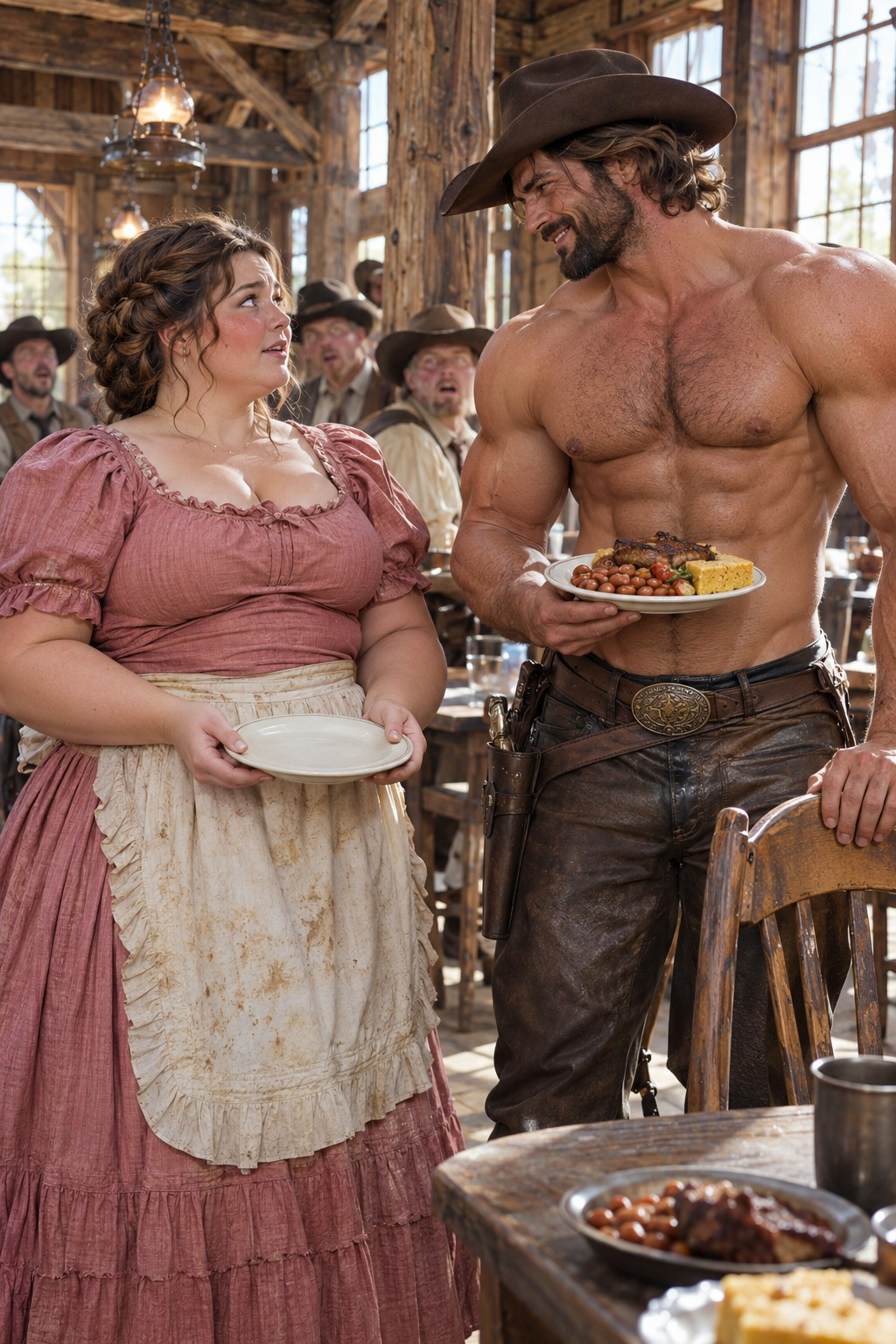
Mabel stared at the envelope in her hands.
The handwriting on the front belonged to Martha Vale.
For several seconds, she couldn't bring herself to open it. The last time Martha had summoned her, she had been threatened, humiliated, and accused of crimes she had never committed. Even now, after the court had delivered its judgment, the sight of that familiar handwriting brought back memories she had spent weeks trying to forget.
Graham stood beside her.
“Do you want me to read it first?”
Mabel shook her head.
“No. Whatever it says, I want to read it myself.”
She carefully unfolded the letter.
The words were written in a stiff, deliberate hand.
Miss Whitaker,
I have little reason to believe you will forgive me, and I do not expect you to. I have spent considerable time thinking about the things that happened at Black Ridge. I told myself that I was protecting my family, protecting the ranch, and maintaining standards. Those explanations were convenient, but they were not true.
I knew your wages were being reduced unfairly. I knew you were working beyond what anyone should have been expected to work. I knew you were hungry, and I chose to treat your hunger as an inconvenience.
I allowed Silas and Curtis to make you responsible for losses that were not yours. I participated in keeping records that concealed the truth. I cannot undo what happened.
I am returning something that should never have been taken from you.
I hope you will use it to remember the woman you were before Black Ridge made you afraid to stand up for yourself.
— Martha Vale
Mabel lowered the letter.
Her fingers trembled.
The deputy handed her a small wooden box.
It was her mother's sewing box.
The original one.
The one that had disappeared from her room and later been taken into evidence.
She recognized the little brass clasp, the scratches on the lid, and the faded blue ribbon tied around its handle.
For a moment, she couldn't speak.
She opened it.
Inside were her mother's needles, several spools of thread, a pair of small silver scissors, and a folded piece of yellowed paper.
Mabel lifted the paper.
It was a handwritten recipe.
Her mother's recipe for cinnamon apple bread.
At the bottom, in the familiar handwriting she had not seen in years, were six words:
Make enough for everyone, including yourself.
Mabel pressed the paper against her chest.
Her mother had written that note when Mabel was sixteen, long before either of them imagined she would spend her adulthood cooking for people who refused to let her eat.
Tears rolled down her cheeks.
Graham gently placed his hand on her shoulder.
“That's yours,” he whispered.
Mabel nodded.
“Yes. It is.”
She thanked the deputy, who explained that the sheriff had authorized the return of the personal belongings after the relevant evidence had been preserved.
Then he left.
Mabel remained on the porch, holding the sewing box.
Graham waited beside her.
“Are you all right?”
She smiled through her tears.
“I think I finally have everything back.”
He looked at the little box.
“Not everything.”
She glanced at him.
“What's missing?”
He smiled.
“The part where you stop believing you have to earn the right to be happy.”
Mabel looked down at the recipe.
Then she laughed softly.
For the first time, the memory of her mother brought more happiness than sadness.
That evening, she placed the sewing box on the shelf in her new farmhouse.
She carefully folded the recipe and put it inside her kitchen notebook.
Then she went to bed.
She slept peacefully.
The following morning was the opening day of The Open Table.
Mabel woke before sunrise, but this time the early hour brought excitement instead of dread.
She dressed in a clean dusty-rose dress, tied a fresh cream-colored apron around her waist, and pinned her dark brown hair into a neat braided bun.
The dress was new.
She had purchased it herself.
Nobody had selected it for her.
Nobody had told her what she was permitted to wear.
She looked in the mirror and smiled.
Then she walked into the kitchen.
The stove was ready.
The flour had been counted.
The ingredients were arranged neatly on the shelves.
Twelve sacks had arrived the previous afternoon, and all twelve were accounted for.
Her name appeared on the delivery receipt.
Her signature.
Her authority.
Her responsibility.
And this time, nobody could change the numbers behind her back.
She began preparing breakfast.
Fresh biscuits.
Scrambled eggs.
Fried potatoes.
Thick slices of bacon.
Coffee.
And, following her mother's recipe, cinnamon apple bread.
Graham arrived shortly after six.
He wore his familiar brown cowboy hat, a clean beige shirt, and his weathered leather trousers.
He stopped in the doorway.
“Something smells wonderful.”
Mabel glanced over her shoulder.
“It's called breakfast.”
“Looks expensive.”
“It's called having a proper kitchen budget.”
He laughed.
She handed him a wooden spoon.
“Since you're here, you can help.”
Graham examined the spoon.
“What am I supposed to do?”
“Stir.”
“I'm a cattleman.”
“Today you're a kitchen assistant.”
He looked toward the stove.
“Am I getting paid?”
“Depends on whether you burn anything.”
He grinned.
For the next half hour, Graham worked beside her.
He stirred the apples.
Carried trays.
Set the tables.
And managed to spill flour across his shirt.
Mabel laughed so hard she had to lean against the counter.
“I've seen you handle a frightened bull without blinking,” she said.
“A bull doesn't ask me to measure cinnamon.”
“Apparently, cinnamon is your greatest enemy.”
He shook his head.
“I should've stayed outside.”
But he continued helping.
By eight o'clock, the first customers arrived.
Samuel Reed came with Amos.
Tommy Ellis followed them, carrying a small bouquet of wildflowers.
Clara Bennett arrived with several boarders from her establishment.
Ruth Dawson came with her husband.
Agnes Miller had traveled from Idaho with her children.
The dining hall slowly filled.
The wooden tables were polished.
The windows were clean.
Fresh flowers stood in simple jars.
Sunlight illuminated the room.
Above the entrance hung the sign Graham and Samuel had built.
THE OPEN TABLE.
Mabel stood behind the counter.
For a moment, she felt overwhelmed.
All those people had come because they wanted to be there.
Not because they were required to eat her cooking.
Not because they were wealthy visitors expecting service.
They had come to celebrate something she had built.
Samuel approached the counter.
“Miss Whitaker, I believe we're ready for breakfast.”
Mabel smiled.
“Then let's feed everybody.”
The room filled with conversation.
People praised the biscuits.
Tommy declared the cinnamon apple bread the best thing he had ever eaten.
Amos requested another helping of potatoes.
Clara insisted on taking the recipe home.
Graham sat at the end of the largest table.
His plate was full.
But he kept watching Mabel.
She moved between the kitchen and dining room, greeting customers and checking meals.
She looked happy.
Not relieved merely because nobody was hurting her.
Genuinely happy.
At eleven, Mabel finally sat down.
Graham immediately moved a chair beside him.
“Your place is here.”
She looked at the empty chair.
Then at the table.
It was a simple wooden chair.
Nothing special.
But she remembered the many times she had stood in the kitchen doorway, watching other people eat.
She remembered Martha taking her plate.
She remembered the hunger.
The deductions.
The shame.
Now there was a place waiting for her.
She sat.
Graham placed a warm piece of cinnamon apple bread on her plate.
“Made this yourself?”
“With a little help.”
He looked offended.
“A little?”
“You spilled flour everywhere.”
“I contributed.”
She laughed.
Then she took a bite.
The bread tasted exactly as she remembered it from childhood.
Warm.
Soft.
Sweet.
And filled with cinnamon.
For a moment, she could almost hear her mother's voice reminding her to save a piece for herself.
Mabel swallowed.
Graham noticed her expression.
“Your mother's recipe?”
She nodded.
“I think she'd have liked this place.”
He reached across the table and took her hand.
“I think she'd be proud of you.”
Mabel smiled.
She believed that.
After lunch, Graham asked her to walk with him.
They stepped onto the porch.
The afternoon sun rested over the pasture.
Beyond the building, horses grazed near the fence.
The old farmhouse stood quietly beneath the cottonwood trees.
Graham removed his hat.
“Mabel, remember what I tried to ask you before the deputy arrived?”
She laughed.
“How could I forget?”
He reached into his pocket.
This time, nobody interrupted.
He removed a small velvet box.
Inside was a simple gold ring.
Not extravagant.
Not covered in enormous stones.
Just a beautiful, delicate band with a small diamond set in the center.
Graham looked nervous.
“I've spent most of my life moving from one ranch to another. I never thought I'd find a place that felt like home.”
Mabel's eyes filled.
“Then you found this one?”
He smiled.
“I found you.”
He took her hands.
“I don't want to rescue you, Mabel. I don't want to decide your future or tell you what to do. I want to stand beside you while you build whatever life you choose.”
He paused.
“I love you. Would you marry me?”
Mabel looked at him.
She thought about the frightened woman who had once believed that accepting a plate of food could cost her everything.
She thought about the man who had sat beside her and shared his supper without asking for anything.
Then she smiled.
“Yes.”
Graham exhaled.
“Really?”
She laughed.
“Yes, Graham. Really.”
He slipped the ring onto her finger.
Then he kissed her.
It wasn't a dramatic kiss.
It was gentle, warm, and filled with the promise of an ordinary life.
A life where nobody had to beg for kindness.
A life where love did not come with conditions.
Behind them, the dining hall door opened.
Tommy stepped outside.
He looked at the ring.
Then at Graham.
“Does this mean you're getting married?”
Graham smiled.
“Looks that way.”
Tommy grinned.
“Does that mean Miss Mabel gets to boss you around forever?”
Mabel laughed.
“Absolutely.”
Graham pretended to look concerned.
“I should've negotiated.”
Tommy ran back inside to announce the news.
Within minutes, Samuel appeared.
Then Clara.
Then Amos.
Everyone congratulated them.
The afternoon became an unexpected celebration.
Several customers stayed longer than planned.
Clara brought out a bottle of sparkling cider.
Samuel gave a toast.
“To Mabel Whitaker. The woman who built a place where nobody goes hungry.”
Everyone raised a glass.
Mabel stood.
She looked around the room.
At the people who had helped her.
At the tables she had chosen.
At the kitchen she controlled.
At Graham, who was smiling at her from beside the window.
She raised her glass.
“And to everyone who helped me get here.”
The room applauded.
Months passed.
The Open Table became one of the most beloved stops along the county road.
Travelers came for the food.
Ranch workers came for fair prices and generous portions.
Families came on Sundays.
Mabel hired two additional cooks and established regular working hours.
Every employee received a written agreement, a proper wage, and meals during their shifts.
No one was ever charged for eating.
The guest cabin became a modest shelter for women traveling alone or escaping difficult circumstances.
Clara helped manage it.
Ruth handled the guest register.
Samuel continued working with cattle, though he spent several afternoons each week helping repair fences around the property.
Tommy returned to school and worked weekends at the restaurant.
Amos became the unofficial guardian of the kitchen stove.
And Graham continued managing the neighboring ranch until he and Mabel married in a small ceremony beneath the cottonwood trees.
There was no grand display.
No wealthy guests.
No expensive decorations.
Just friends, family, good food, and sunlight.
Mabel wore a beautiful cream-colored dress.
Graham wore his dark brown hat and a clean suit.
When the minister asked whether she accepted him as her husband, Mabel looked into Graham's eyes.
“I do.”
Graham smiled.
“I do, too.”
After the ceremony, everyone gathered inside The Open Table.
Mabel had prepared enough food for twice the number of guests.
Graham teased her about it.
“You know we don't have to feed the entire county.”
She smiled.
“Maybe not. But we can.”
He kissed her cheek.
That evening, after the last guest departed, they sat together at the largest table.
Two plates of food rested before them.
The kitchen was quiet.
The stove had cooled.
The lanterns cast warm light across the wooden walls.
Mabel took Graham's hand.
“Do you remember the first night you brought me supper?”
He smiled.
“I remember you looked at that plate like it was something dangerous.”
“It was dangerous.”
“I know.”
She looked around the room.
“Sometimes I still can't believe this is real.”
Graham squeezed her hand.
“It is.”
She leaned against his shoulder.
On the shelf behind them stood her mother's sewing box.
Inside were the old needles, the silver scissors, and the recipe that had survived years of hardship.
Beside it rested the first kitchen notebook she had kept at Black Ridge.
She had not thrown it away.
It reminded her of what happened when people with power convinced someone that she deserved less.
But it also reminded her of the day she finally began recording the truth.
Mabel looked at the notebook.
Then at the restaurant.
Then at her husband.
She understood something she had once forgotten.
Feeding people had never been her weakness.
Her kindness had never been an invitation for others to exploit her.
And accepting help had never made her less independent.
She had worked hard.
She had survived injustice.
She had spoken when silence would have been easier.
And she had built something beautiful from the pieces of a life that other people had tried to take away.
Graham lifted his glass.
“To home.”
Mabel lifted hers.
“To a full table.”
They touched their glasses together.
Outside, the wind moved gently through the cottonwood trees.
Inside, the kitchen was warm.
There was food for tomorrow.
There was money in the payroll account.
There was a place for every worker at the table.
And there was no longer anyone standing in the doorway telling Mabel Whitaker that she did not deserve to eat.
She had spent years feeding everyone else.
Now she had a home where she would never go hungry again.






Comments 0