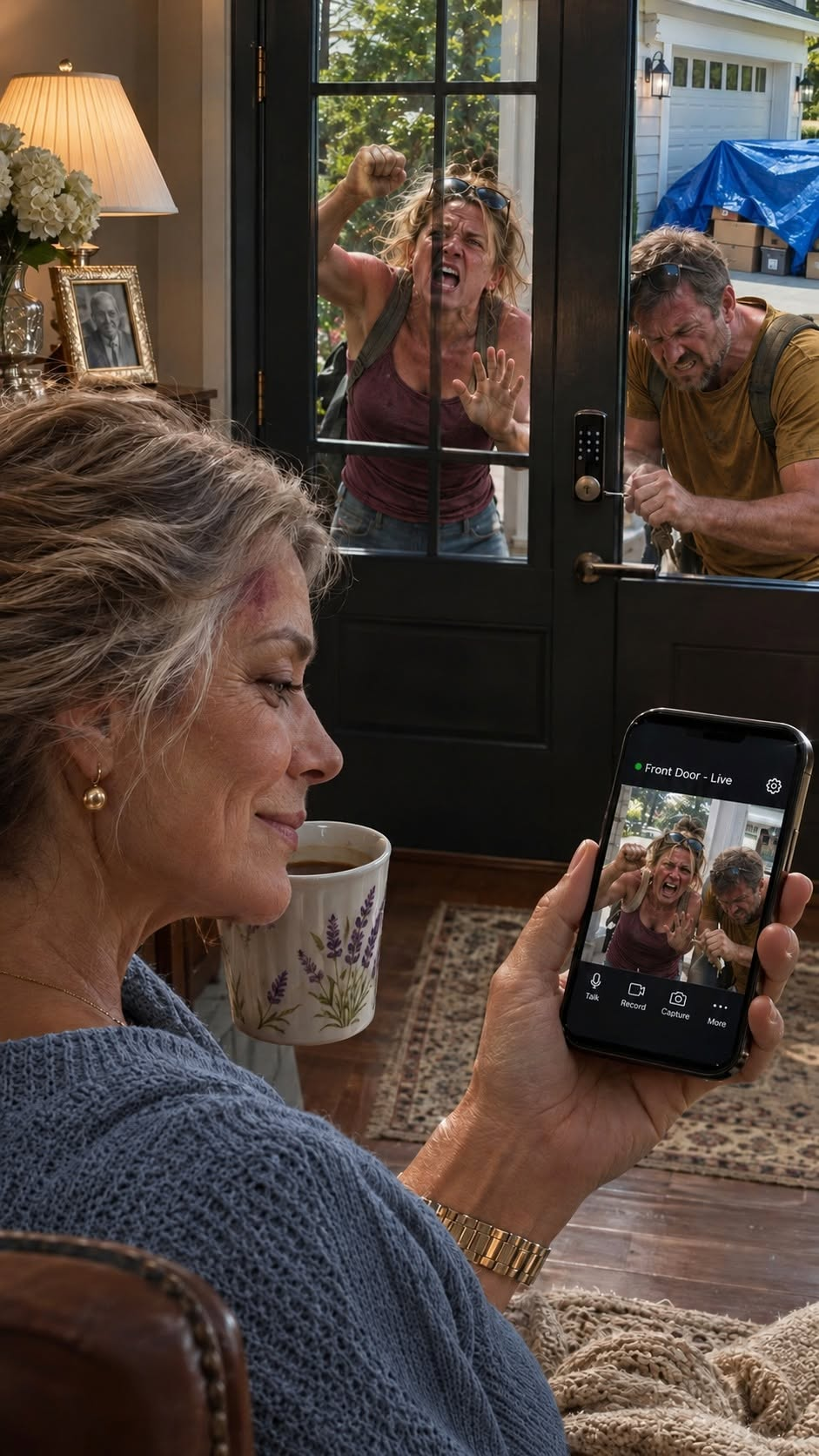
The banking alert remained on my screen as I sat at the kitchen island, trying to understand how far my daughter had intended to go.
Five thousand dollars in cash.
My primary credit card.
And now an attempt to reach my retirement savings.
I had told Sarah no.
She had responded by trying to take everything she could reach.
My first instinct was to call her.
That was the habit I had developed over nearly four decades of motherhood.
Whenever Sarah caused a problem, I tried to solve it through conversation.
When she was sixteen and damaged a neighbor's car, I had arranged the apology.
When she was twenty-two and missed rent payments, I had covered the balance.
When she married Greg and complained that their wedding expenses were overwhelming, Robert and I had paid for the flowers.
Each time, I told myself that helping her was what a good mother did.
But sitting there with a swollen head and an empty safe, I finally recognized something.
I had been helping her avoid consequences.
And she had come to believe consequences were something that happened only to other people.
I opened the banking security menu.
The unfamiliar device was still listed as pending.
I rejected it.
Then I changed my password.
I changed the security questions.
I signed out every device connected to my accounts.
My hands moved slowly, but they didn't shake.
Next, I selected the stolen credit card.
A menu appeared.
Report lost or stolen.
I pressed it.
The bank asked me to confirm.
I did.
The card was canceled.
I reviewed the recent transactions and reported the charges I hadn't authorized.
The airline upgrade was still pending.
I submitted the dispute and saved the confirmation number.
A warning appeared explaining that the bank would investigate and determine which charges qualified for reversal.
That was fine.
I wasn't interested in shortcuts.
I wanted a record.
For once, I wanted everything documented.
Then I opened the joint checking account.
I had created it when Sarah was in college.
Back then, it had seemed practical.
If she needed emergency money for textbooks or car repairs, I could transfer funds without delay.
Over the years, I had continued depositing small amounts into it.
Sarah treated the account as a convenience.
I had treated it as a safety net.
Now I wondered whether she had ever understood the difference.
I checked the balance.
There was still money in it.
Money I had deposited.
I called the bank's customer service number and explained that I needed to separate my finances from another account holder after a theft.
The representative explained which funds I could move, how joint ownership affected access, and what documentation would be required to close the account.
I followed her instructions.
I transferred the funds that were mine into a private account.
Then I requested the joint account's closure.
The representative confirmed that the request would be processed according to the bank's procedures.
When the call ended, I sat quietly for a moment.
I expected to feel guilty.
Instead, I felt exhausted.
There was one more account I needed to address.
The family cellphone plan.
Sarah and Greg had been on it for years.
At first, Robert and I had included Sarah because it was cheaper to keep everyone together.
Later, Greg joined.
After Robert died, I continued paying.
Every month, the charges came out of my account.
Every month, Sarah promised she would eventually take over her portion.
She never did.
I called the provider.
After verifying my identity and account ownership, I asked to suspend the two lines registered to Sarah and Greg.
The representative reviewed the consequences.
No cellular data.
No roaming service through the plan.
No ordinary calls or texts using those lines while suspended.
I confirmed.
The representative processed the request.
I thanked her.
Then I set my phone on the counter.
The kitchen was very quiet.
I looked toward the empty hallway.
For the first time since waking up, I allowed myself to acknowledge how frightened I had been.
Not because of the money.
Because I could have died.
My head had struck a solid oak table.
I had lost consciousness.
I had awakened dizzy and nauseated.
And the two people responsible had simply left.
I called my doctor's office.
When I described the injury, the nurse told me I needed urgent medical evaluation.
I followed that advice.
Before leaving, I photographed the scattered mail, the shifted coffee table, the open office drawers, and the empty safe.
I took pictures of the swelling near my hairline.
I saved the banking alerts.
Then I went to get medical care.
The doctor examined me, asked detailed questions about the fall, and evaluated my symptoms.
I told the truth.
Every word.
When he asked who had pushed me, I hesitated.
Only for a second.
"My daughter."
His expression changed.
He didn't ask why she had done it.
He didn't suggest that families sometimes argued.
He simply continued documenting what had happened.
That small act of professionalism nearly made me cry.
Not because he was unusually kind.
Because he treated the violence as violence.
Not as a misunderstanding.
Not as a family disagreement.
Not as something I should excuse because the person responsible shared my blood.
After the evaluation, I was given instructions about symptoms that would require immediate attention and the importance of monitoring my recovery.
I returned home tired, sore, and carrying paperwork I never imagined I would need.
I placed it in a folder.
Then I called the police non-emergency number to report the assault and theft.
An officer came to the house.
I showed him the living room.
The office.
The safe.
The photographs.
The banking alerts.
He asked whether Sarah had permission to take the money.
"No."
"Did she have permission to use your credit card?"
"No."
"Did she push you?"
"Yes."
"Did you lose consciousness?"
"Yes."
He wrote everything down.
When he asked whether I wanted the incident formally documented, I said yes.
He explained the next steps and gave me a report number.
I placed the number in the folder beside my medical paperwork.
The officer didn't promise an immediate arrest.
He didn't tell me that everything would be resolved by morning.
He explained that the information would need to be reviewed and investigated.
That was enough.
I wanted the truth recorded somewhere outside my own memory.
By the time he left, the afternoon light had faded.
I made tea.
Then I noticed the small ceramic bowl beside the front door.
Robert had bought it at a craft fair years earlier.
We kept our house keys there.
Spare keys.
Garage keys.
The little brass key for the garden shed.
I walked toward it.
Something was missing.
The spare front-door key.
I checked again.
I moved the remaining keys around.
I looked beneath the bowl.
Nothing.
I knew exactly where that key had been.
Sarah had taken it.
My daughter had stolen my money and my credit card.
Then she had taken a key that would allow her to return whenever she pleased.
I stood in the hallway, staring at the empty space in the bowl.
Suddenly, the house didn't feel safe.
I called a locksmith.
He arrived within the hour.
I explained that I needed every exterior lock replaced.
Front door.
Back door.
Garage entrance.
He didn't ask unnecessary questions.
He simply got to work.
While he changed the locks, I sat in the living room and watched.
The sound of his tools was strangely comforting.
Metal turning.
Screws tightening.
Old hardware being removed.
New hardware taking its place.
Each sound meant another way into my home was closing.
When he finished, he handed me the new keys.
I held them in my palm.
They were ordinary keys.
Small.
Silver.
Almost weightless.
Yet I couldn't remember the last time anything so simple had made me feel so relieved.
"Would you like me to test them again?" he asked.
"Please."
He checked each door.
Everything worked.
I paid him and thanked him.
Then I locked the front door behind him.
For a moment, I rested my hand against the wood.
Robert and I had bought this house when David was eight and Sarah was five.
We had painted bedrooms.
Planted trees.
Replaced windows.
Hosted birthdays and Thanksgiving dinners.
It had been the center of our family.
Somewhere along the way, Sarah had begun treating it as though it belonged to her.
As though I were simply keeping it ready until she decided she wanted something.
I looked down at the new keys.
Not anymore.
The following morning, I went downstairs to the basement.
Sarah had been using it as free storage for three years.
Plastic bins filled with clothes.
Old college furniture.
Boxes of decorations.
Greg's golf clubs.
A broken exercise machine.
I had asked them repeatedly to collect their belongings.
There was always an excuse.
They were busy.
The weather was bad.
Greg's truck needed repairs.
They would come next weekend.
Next weekend never arrived.
I stood at the bottom of the basement stairs, looking at the clutter.
My head still hurt.
I wasn't going to lift heavy furniture while recovering.
So I began with the smaller boxes.
I carried them outside one at a time, taking frequent breaks.
The heavier items stayed where they were until I could arrange help.
I placed the boxes beside the garage and covered them with a blue tarp.
I photographed everything and made a written inventory.
I knew that handling someone else's belongings could create legal complications, even when those belongings had been left in my home.
I wasn't going to give Sarah another opportunity to accuse me of wrongdoing.
I planned to arrange proper notice and a collection date.
But I was finished allowing her to treat my home as an extension of her own.
That evening, I sat at the kitchen island with a cup of tea.
My phone was beside me.
The bank had sent confirmation that my stolen card was canceled.
The cellphone provider had confirmed the line suspensions.
The locksmith's receipt lay beside my medical paperwork.
For the first time since the assault, I felt as though I had accomplished something.
Then my laptop chimed.
A new email had arrived.
The sender was Sarah.
I stared at her name.
My heart beat faster.
I hadn't heard from her since she left me unconscious on the floor.
No apology.
No question about my injuries.
No acknowledgment of what she had done.
I clicked the message.
The subject line appeared in capital letters.
URGENT CARD NOT WORKING. FIX IT NOW.
I read the first sentence.
Then the second.
And when I reached the final paragraph, I discovered that Sarah wasn't merely demanding money.
She had made a promise to the resort.
A promise involving my name.
And according to her email, the hotel was expecting me to honor it before midnight...






Comments 0