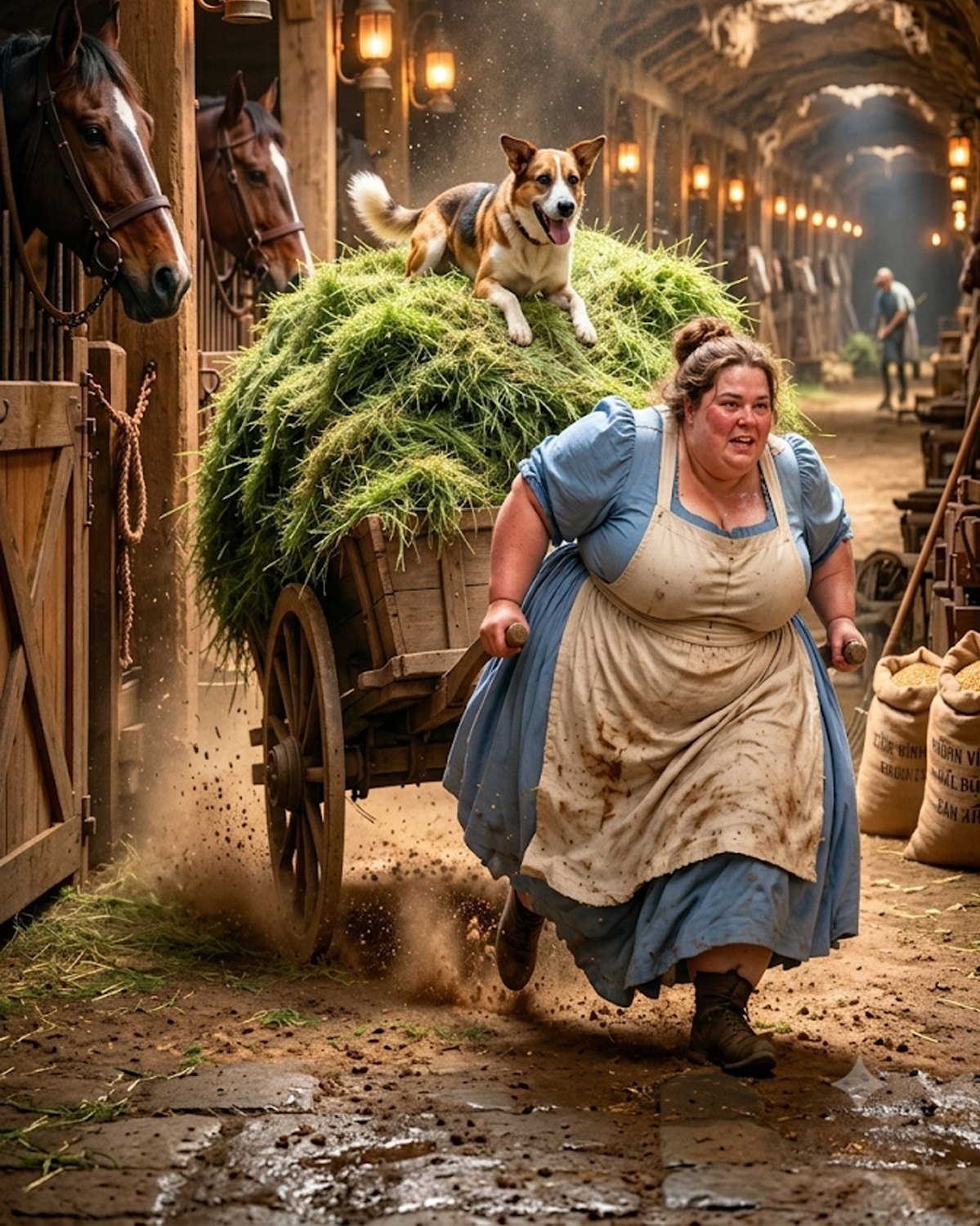
"Orson, you should have left that chamber alone."
The voice came from the darkness beneath the hillside.
Delphine Whitlock stood beside the damaged limestone entrance, holding her lantern with both hands.
The man emerging from the underground passage was old, perhaps seventy, with a narrow face, silver hair, and a thick coat stained with dust. His beard had grown unevenly, and his left hand trembled slightly as he held an old leather document case.
But his eyes were sharp.
He looked directly at Orson Blackwell.
Blackwell had gone completely still.
For the first time since Delphine had met him, the wealthy businessman appeared unable to find an answer.
"Walter Briggs?"
The old man nodded.
"Surprised to see me?"
Blackwell glanced toward the workers.
"You're supposed to be dead."
Walter gave a tired smile.
"That's what you told everyone."
A murmur spread among the men.
Gideon Thorne stepped forward.
"Is that really Walter Briggs?"
Elias Mercer, who had arrived moments earlier, moved closer.
He studied the man's face.
Then his expression changed.
"Good Lord. It is you."
Walter looked at him.
"Hello, Elias."
Delphine watched the exchange.
She knew the name.
Walter Briggs was the engineer who had installed the second control mechanism inside the underground drainage chamber.
According to the county records, he had died twenty years earlier.
Yet here he stood.
Alive.
And carrying a document case that might contain the answers everyone had been searching for.
Delphine stepped closer.
"Mr. Briggs, why have you been hiding beneath this hillside?"
Walter turned toward her.
His expression softened.
"Because, Miss Whitlock, your father asked me to protect something."
He opened the leather case.
Inside were several sealed envelopes.
One carried Samuel Whitlock's handwriting.
And another had Orson Blackwell's name written across it.
Nobody spoke for several seconds.
Blackwell recovered first.
"This is ridiculous."
Walter looked at him.
"Is it?"
"You're trespassing on private property."
Walter glanced toward the damaged entrance.
"Private property? You mean the hillside you've been trying to excavate without permission?"
Blackwell's jaw tightened.
"I have county authorization."
Walter gave a short laugh.
"You have a piece of paper signed by a man who doesn't understand the system he's authorizing."
Pembroke, the county official, stepped forward.
"Mr. Briggs, I must ask you to identify yourself and explain your presence."
Walter nodded.
"Of course."
He reached inside his coat and removed an old identification card.
The paper was worn, but the county seal remained visible.
"My name is Walter Briggs. I was employed as a civil engineering assistant during the original water system modifications."
Pembroke examined the card.
"Your records indicate that you died in 1865."
"I know."
"How do you explain that?"
Walter looked at Blackwell.
"Ask the man who arranged the report."
Blackwell stepped forward.
"That's an outrageous accusation."
Walter ignored him.
He turned toward Delphine.
"Your father knew I was alive. He helped me preserve the original records after I discovered that someone was attempting to alter the water system."
Delphine felt her heart beating faster.
"My father knew where you were?"
"Yes."
"Why didn't he tell me?"
Walter hesitated.
"Because he was afraid that if you knew too much, Blackwell would come after you."
She looked toward the old document case.
"Then why leave the records here?"
"Because your father believed this chamber was the safest place in the valley."
Delphine glanced at the damaged entrance.
"That doesn't appear to have worked."
Walter nodded sadly.
"No. It appears someone finally found the way inside."
He looked toward the broken limestone.
Then at the drilling machine.
"Who authorized this?"
Blackwell said nothing.
Pembroke took the document Walter offered him.
The old engineer pointed toward the second control mechanism.
"That machine has damaged the outer housing. If the pressure rises again, the lower gate could become unstable."
Gideon approached.
"Can it be repaired?"
Walter examined the mechanism.
"Yes. But not if they continue digging."
He turned toward the workers.
"Shut down that machine."
Nobody moved.
Then Delphine spoke.
"Turn it off."
The workers looked toward Blackwell.
For several seconds, the businessman appeared ready to argue.
But Walter had produced something he could not explain away.
Finally, Blackwell gave a reluctant nod.
The machine stopped.
The hillside became quiet.
And for the first time that evening, Delphine felt that someone other than Blackwell had control of the situation.
Walter sat at the farmhouse kitchen table.
Mabel brought him a cup of hot coffee.
He held it between his hands without drinking.
Delphine placed her father's notebook beside him.
"Please tell me what happened."
Walter studied the cover.
"Samuel kept this?"
"Yes."
He touched the leather gently.
"He was a good man."
Delphine sat opposite him.
"You knew him well?"
"Better than most people."
Walter explained that he had worked on the original underground water system long before Blackwell became influential in Kettle Draw.
The system had been designed to collect groundwater from the limestone formations and distribute it naturally through several channels.
The old collection chamber regulated excess water.
The main gate controlled the lower spring.
The emergency overflow prevented dangerous pressure from building beneath the hillside.
It was not a complicated system by modern standards.
But it had been carefully designed.
And it depended on cooperation between the adjoining landowners.
"Nobody owned the entire system," Walter explained. "The water crossed different properties, but the maintenance responsibilities were shared."
Delphine nodded.
"That's what the original survey says."
"Exactly."
Walter took a sip of coffee.
"Then Orson Blackwell came along."
Mabel sat down quietly.
She had heard enough about Blackwell's lending practices to understand what was coming.
Walter continued.
"At first, he wanted to invest in improvements. He offered money to several landowners and promised to repair the channels."
"Was that when the second control was installed?" Delphine asked.
Walter nodded.
"Yes. The second mechanism was intended to improve emergency water management. It was supposed to provide an additional route during heavy rainfall."
"Then why wasn't it included in the original records?"
"Because the modification was never formally approved."
Delphine leaned forward.
"Why?"
Walter looked at her.
"Because the mechanism could also be used to divert water away from the lower properties."
Elias, sitting beside the stove, frowned.
"Who authorized its installation?"
Walter hesitated.
"I did."
Everyone looked at him.
He lowered his eyes.
"I believed the additional control would make the system safer. Blackwell assured me that it would only be used during emergencies."
"And you believed him?" Delphine asked.
"At first."
He looked toward the window.
"Then I discovered that the control had been connected to a separate diversion channel."
Delphine remembered the unfamiliar lever.
The newer metal fittings.
The number B-17.
Walter continued.
"The diversion route could send water toward Blackwell's land while reducing the supply to several other properties."
Gideon shook his head.
"That would have destroyed the balance of the system."
"Yes."
"Why didn't you report it?"
Walter looked down at his hands.
"I tried."
Twenty years earlier, Walter had discovered that Blackwell was making private arrangements with several landowners.
The agreements appeared harmless.
They offered financial assistance in exchange for access to sections of the drainage system.
But the documents contained clauses that allowed Blackwell to maintain and modify certain underground channels.
Walter realized that the agreements were being used to establish control over the entire water route.
He confronted Blackwell.
The businessman denied everything.
He claimed the modifications were necessary to protect the valley from future water shortages.
Walter did not believe him.
He refused to certify the changes.
That decision cost him his position.
A few weeks later, a fire destroyed part of the engineering office where the original plans were stored.
Several important documents disappeared.
Then a county notice appeared announcing that Walter Briggs had died following an accident outside the valley.
But Walter had not died.
He had escaped.
He knew that someone had arranged the false report to prevent him from challenging the new agreements.
He went into hiding.
Only a few people knew where he was.
Samuel Whitlock was one of them.
"Your father found me several years later," Walter explained. "He had been investigating the spring after noticing changes in the water supply."
Delphine listened without interrupting.
"Samuel brought me food, helped me obtain copies of the original surveys, and promised to protect the records."
"Why didn't he expose Blackwell?"
"Because we didn't have enough evidence to prove that the diversion mechanism was being used."
Walter opened his case.
He removed a series of old engineering drawings.
"Your father spent years collecting these."
Delphine recognized the handwriting.
Samuel had marked the original channel, the collection chamber, and the lower spring.
But one drawing contained something different.
It showed the second control mechanism in much greater detail.
Beside it was a note.
Do not allow B-17 to be operated while the emergency overflow is blocked.
Delphine looked up.
"That's what happened during the collapse."
Walter nodded.
"Someone tried to operate the second control while the overflow was obstructed."
"Could that have caused the pressure?"
"Yes."
Gideon leaned forward.
"Then the collapse wasn't an accident."
Walter looked at him.
"No."
The room became silent.
The following morning, Walter accompanied Delphine to the hillside.
He wanted to inspect the damage before making any recommendations.
Gideon and Everett followed.
Elias remained at the farmhouse with the documents.
The eastern entrance had partially collapsed, but the main chamber remained accessible through a narrow opening.
Walter examined the broken supports.
He touched the limestone wall.
Then he crouched beside the metal control.
"Someone has forced this mechanism."
Everett examined the fittings.
"The linkage is damaged."
Walter nodded.
"That is not the original assembly."
He removed a small tool from his coat and examined the metal.
"These bolts were installed recently."
Delphine showed him the broken piece marked B-17.
Walter's expression became serious.
"Where did you find this?"
"Near the entrance."
He turned it over.
"This belongs to the diversion control."
"Can you restore it?"
"Not until we clear the emergency overflow."
Gideon looked toward the western passage.
"The obstruction is still there."
Walter examined the drawing.
"Then we begin with that."
They entered the chamber.
The water level had fallen slightly, but the floor remained wet.
The old wooden beams creaked.
Walter moved slowly, checking each section.
He seemed to know exactly where to look.
He pointed toward a narrow stone recess.
"There's another access point behind that wall."
Delphine approached.
She brushed away loose dirt.
A small iron plate appeared.
It was partly concealed beneath a layer of old mortar.
Walter examined the plate.
"Samuel showed me this."
He removed a small key from his pocket.
It was different from the brass key Delphine had found earlier.
He inserted it.
The plate opened.
Behind it was a narrow compartment containing several rolled papers.
Delphine carefully removed them.
The first was a maintenance diagram.
The second was a list of property owners.
The third was a handwritten statement.
Walter took it from her.
He read it silently.
Then his face changed.
"What is it?" Delphine asked.
He folded the paper.
"Something your father discovered shortly before he died."
"What?"
Walter looked toward the entrance.
"Blackwell wasn't simply trying to acquire the spring."
He paused.
"He was trying to acquire the entire eastern hillside."
Delphine stared at him.
"Why?"
Walter spread the documents across a dry section of stone.
One drawing showed a larger underground structure beneath the eastern slope.
It extended beyond the collection chamber.
There were several connected passages.
Some were natural.
Others appeared to have been modified by human construction.
Delphine traced the lines.
"What is this area?"
Walter pointed toward the deepest section.
"An old underground reservoir."
Gideon leaned closer.
"I thought that had collapsed years ago."
"Part of it did. But the main storage chamber remained intact."
Delphine examined the dimensions.
The chamber was significantly larger than the one beneath her barn.
It appeared to collect groundwater from several limestone channels.
Walter explained that the reservoir had been constructed decades earlier to stabilize the water supply during dry periods.
It was not designed for private ownership.
It served several farms.
But Blackwell had discovered that controlling the reservoir would give him enormous influence over the surrounding properties.
He could offer water when farmers needed it.
He could restrict access when they refused his terms.
And he could use financial agreements to acquire land from people who became desperate.
Mabel's experience suddenly made more sense.
So did the pressure Blackwell had placed on Delphine.
She had not simply refused a loan.
She had refused to surrender access to the most important part of the water system.
"Does the reservoir still work?" she asked.
Walter nodded.
"Partly. But the lower outlet is damaged."
"Can it be repaired?"
"Yes."
He looked at her.
"But it will take careful work."
Delphine examined the drawing again.
The reservoir was located beneath the same limestone formation where she had planned to build her barn.
She had purchased the property because she recognized the potential of the hillside.
Now she understood that the land contained something much more valuable than she had imagined.
And Blackwell had known it all along.
That afternoon, Blackwell returned.
He arrived with two men and another county official.
This time, he did not smile.
He approached the farmhouse and demanded to speak with Walter.
Delphine met him outside.
"He's busy."
"I don't care."
"Then you'll have to wait."
Blackwell looked toward the hillside.
"I want that man removed from the property."
Delphine folded her arms.
"On what grounds?"
"He is trespassing."
"He has identified himself as the engineer responsible for the original system."
"That is irrelevant."
Walter appeared in the doorway.
"Still afraid of old records, Orson?"
Blackwell turned.
Their eyes met.
For a moment, neither spoke.
Then Blackwell stepped forward.
"You should have stayed hidden."
Walter gave a tired smile.
"I tried. But you kept digging."
Blackwell looked toward the underground entrance.
"Whatever happened twenty years ago is finished."
"Not while the water system remains damaged."
"You have no authority here."
Walter lifted the old maintenance agreement.
"Neither do you."
Blackwell glanced at the document.
His face tightened.
"Those records are outdated."
"They're the original agreements."
"Several properties have changed ownership."
"That doesn't automatically terminate shared easements."
Blackwell turned toward Pembroke.
The county official looked uncomfortable.
Walter handed him a copy.
"These are the original engineering records. I suggest you compare them with the authorization you issued yesterday."
Pembroke accepted the papers.
He began reading.
Blackwell immediately interrupted.
"This is a private matter."
Pembroke continued reading.
Then he looked up.
"Mr. Blackwell, the emergency excavation order does not appear to authorize alteration of the diversion control."
Blackwell's jaw tightened.
"I explained the necessity of the work."
"You did not mention the underground reservoir."
Walter stepped forward.
"Because he doesn't want anyone inspecting it."
Blackwell turned toward him.
"Be quiet."
Delphine watched carefully.
The businessman was losing control of the conversation.
But she knew he would not surrender easily.
He had spent years building his influence in the valley.
He would not allow an old engineer and a young woman to destroy it in one afternoon.
The county official agreed to suspend the excavation.
He also ordered that the underground chamber be inspected by an independent engineer.
Blackwell protested.
He argued that the delay could endanger the water supply.
But Pembroke refused to change his decision.
The workers packed their equipment.
The drilling machine was loaded onto the wagon.
Before leaving, Blackwell approached Delphine.
"You think you've won something."
She said nothing.
He stepped closer.
"You're making a serious mistake by trusting this man."
Delphine looked at Walter.
Then back at Blackwell.
"I trust the records."
Blackwell's expression hardened.
"Records can disappear."
"Not all of them."
He studied her for several seconds.
Then he turned away.
As he climbed into his buggy, Walter called after him.
"Orson."
Blackwell stopped.
"The original reservoir records are still missing."
Blackwell looked back.
Walter continued.
"Samuel knew where they were."
For the first time, Blackwell appeared genuinely alarmed.
He climbed into the buggy without answering.
Delphine watched him leave.
Then she turned toward Walter.
"What did you mean?"
Walter looked at her father's notebook.
"Your father hid the original reservoir deed somewhere safe."
"Where?"
Walter shook his head.
"I don't know."
Delphine frowned.
"Then why did you tell Blackwell that?"
"Because I wanted to see his reaction."
She looked toward the road.
Blackwell's buggy was already disappearing.
Walter lowered his voice.
"Now we know he is still looking for it."
That evening, Delphine sat alone in the farmhouse.
She opened her father's notebook and began examining every page.
She searched the livestock records.
The construction drawings.
The old financial accounts.
She looked for references to the reservoir deed.
Nothing.
Then she remembered something.
Her father had always kept a small wooden box beneath his bed.
He called it his personal archive.
After his death, Delphine had packed it away with the other belongings.
She had never examined it carefully.
She stood and walked to the storage room.
The box was still there.
Its wooden surface was scratched, and one corner had been repaired with an iron bracket.
She carried it to the kitchen.
Inside were old receipts, family photographs, and several letters.
At the bottom lay a folded piece of cloth.
Delphine removed it.
Beneath the cloth was a small brass key.
It had the same number engraved on the surface as the key Walter had used inside the chamber.
17.
Her heart began beating faster.
She examined the box.
A small lock was hidden beneath the bottom panel.
She inserted the key.
It turned.
The panel opened.
Inside was a sealed envelope.
Her father's handwriting appeared across the front.
For Delphine. Only open this if Blackwell returns for the reservoir.
She stared at the words.
Her hands began trembling.
She carefully broke the seal.
Inside was a letter.
And beneath it was a photograph of Samuel standing beside two men.
One was Walter Briggs.
The other was Orson Blackwell.
But it was not the photograph that frightened her.
It was the date written on the back.
The photograph had been taken only two weeks before her father died.
Delphine turned it over again.
Below the date, Samuel had written a single sentence.
Orson knows where the reservoir deed is, but he doesn't know who has the second key.
Delphine looked toward the brass key in her hand.
Then she unfolded the letter.
The first line made her stop breathing.
My daughter, if you are reading this, it means Blackwell has already begun the final part of his plan.
She continued reading.
The letter described a second underground entrance.
Not the one beneath the eastern hillside.
A different entrance.
One located somewhere on the old family property Delphine had sold after her father's death.
And at the bottom of the page, Samuel had written the name of the person who had been entrusted with the original reservoir deed.
Delphine read it once.
Then again.
It was a name she had not expected.
A name belonging to someone she had trusted for years.
And at that exact moment, three hard knocks sounded against the farmhouse door.
Delphine folded the letter.
She approached the entrance.
A familiar voice spoke from the other side.
"Delphine, open the door. We need to talk about your father's letter."
It was Harold Whitlock.
Her cousin.
The man who had tried to sell her father's farm.
And he was holding an old photograph of the same underground reservoir.






Comments 0