At 8:06 Monday morning, a black SUV pulled into my driveway.
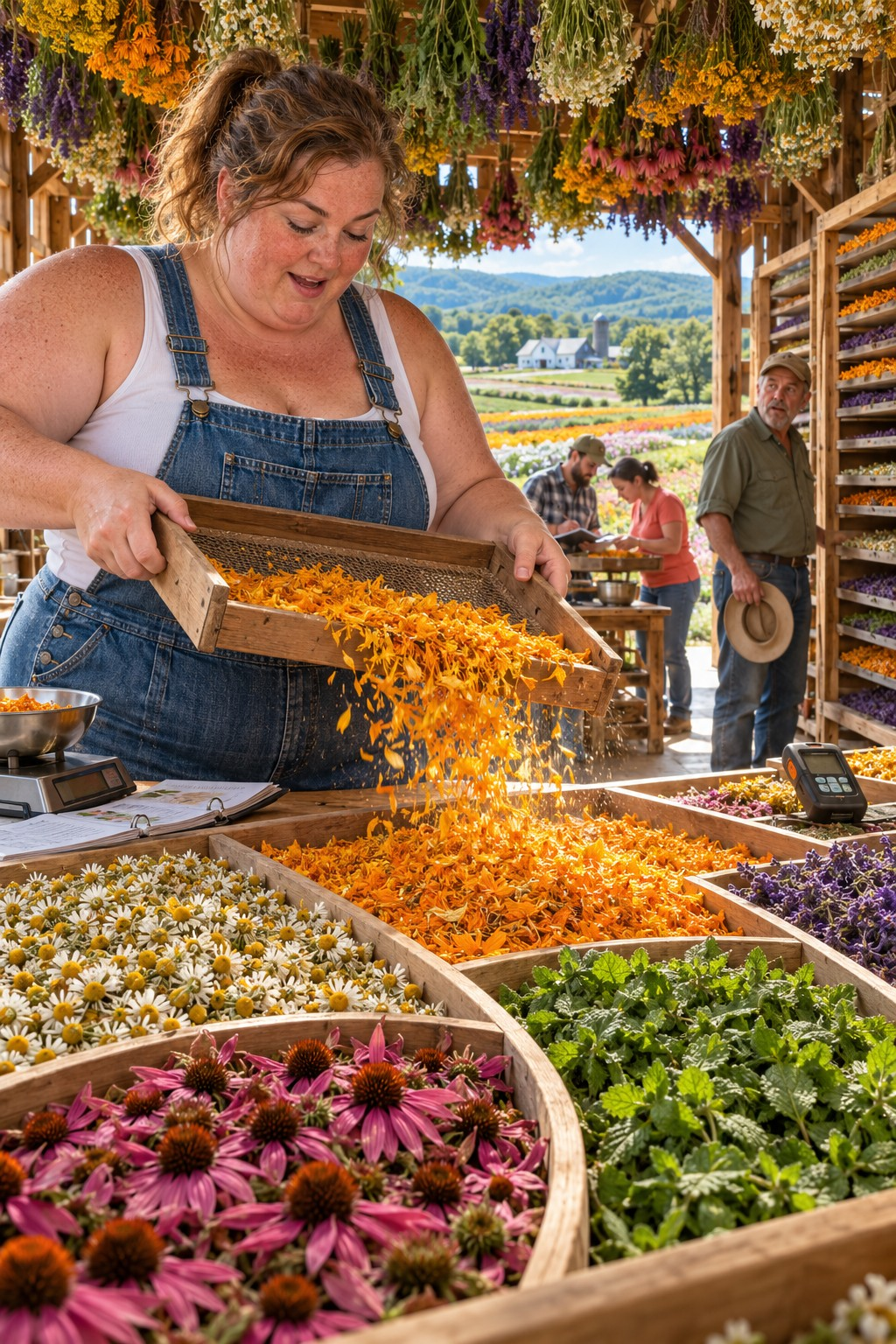
I was standing inside the packing barn, holding a clipboard and checking the moisture readings from our latest calendula batch.
Megan looked through the open barn doors.
"That's him."
I didn't need to ask who she meant.
The driver stepped out wearing a charcoal business suit, polished brown shoes, and an expression that suggested he had already made up his mind about something.
His name was Richard Coleman.
He was the quality director for the herbal products company that had requested the larger calendula shipment.
And he was the same man who had rejected my supplier application months earlier.
I remembered that rejection very clearly.
At the time, I had contacted the company because I wanted to understand its purchasing requirements. Richard had listened to my proposal, asked three questions about my production capacity, and then told me that a small farm without commercial processing experience would not be suitable for their supply chain.
His final email had been polite.
His decision had not been negotiable.
Now he was standing outside my barn.
Megan leaned toward me.
"Do you think he remembers you?"
"He probably does."
"Is that good?"
I looked at the black SUV.
"Let's find out."
I put down the clipboard, wiped my hands, and walked toward the entrance.
"Mr. Coleman?"
He turned.
"Sarah Whitmore?"
"Yes. Welcome to the farm."
He shook my hand briefly.
"Thank you for having me."
His eyes moved past me toward the interior of the barn.
He didn't comment on the hanging flowers, the wooden sorting tables, or the rows of carefully organized trays.
Instead, he checked his watch.
"I have about an hour before my next appointment."
I nodded.
"Then I'll make sure we use the time efficiently."
He gave a small, almost imperceptible smile.
"Good. That's what I prefer."
I led him inside.
The first thing Richard examined was the processing area.
He walked slowly between the tables.
He inspected the shelving, the containers, and the surfaces where we handled the harvested material.
He opened a cabinet.
Then another.
He looked at the cleaning supplies and the storage labels.
I followed him without interrupting.
Finally, he stopped beside the drying room.
"How much did you spend on this setup?"
I told him.
He looked at the equipment.
"Secondhand?"
"Some of it."
"Why?"
"Because I needed to control the initial investment."
He glanced toward me.
"Most new suppliers underestimate processing costs."
"I agree."
"Then why did you decide to build your own facility instead of outsourcing?"
I had expected that question.
"Because the buyers I contacted had different requirements. I wanted to understand the drying process myself, maintain batch records, and avoid relying entirely on another company's schedule."
He examined the moisture meter.
"Have you validated this equipment?"
"I checked its calibration against the manufacturer's reference sample. I also maintain readings for each batch."
He extended his hand.
"Show me."
I opened the production binder.
The pages contained dates, measurements, harvest information, and notes from our initial processing tests.
He began reading.
For several minutes, he said nothing.
Then he turned another page.
"Your first production batch was on June fourteenth?"
"Yes."
"Calendula?"
"Correct."
"Where was it harvested?"
I pointed toward the field map.
"Section two. The northern production beds."
He looked at the map.
"And the second batch?"
"Section two as well, but from a separate harvest."
He studied the records.
I watched his eyes move across the numbers.
I had spent hours preparing those pages.
Not because I expected an inspection.
Because I knew that if I wanted commercial buyers, I needed to operate like a supplier rather than a hobby gardener.
Richard closed the binder.
"Your records are more organized than I expected."
It wasn't exactly a compliment.
But I accepted it.
"Thank you."
He moved toward the main sorting table.
There were three shallow wooden trays containing dried calendula petals.
He picked up a small amount between his fingers.
He examined the color.
Then he looked at the petals against the light coming through the barn entrance.
"Where did these come from?"
"Yesterday's final sorting batch."
"How many times did you inspect them?"
"Twice before drying and once afterward."
"Who performed the inspection?"
"Me and my sister."
He looked toward Megan.
She was standing at the other end of the table, preparing another container.
"Your sister?"
"Yes."
"Does she have commercial processing experience?"
I answered honestly.
"Not before this project."
He returned his attention to the petals.
"Then how do you know she's following the same standards?"
I opened the binder again.
"We use written inspection criteria. We separate acceptable material from damaged or discolored material. Every batch is reviewed before packaging."
He examined the checklist.
"Who established these standards?"
"The buyer specifications where available, supplemented by the requirements we developed during our initial processing trials."
He looked at me.
"That's not the same as a formal quality management system."
"No. It isn't."
For the first time, he seemed slightly surprised by my answer.
I didn't pretend to have a certification I didn't possess.
I didn't exaggerate our production capacity.
And I wasn't going to tell him that my small operation was something it wasn't.
I had a farm.
I had a developing processing facility.
I had records.
I had a product.
The rest would have to be built over time.
Richard placed the checklist back on the table.
"Let's see the fields."
Outside, the sun was already warming the ground.
The rain damage was still visible in the lower section.
Some beds had been replanted.
Others remained empty while the drainage contractor worked through the remaining repairs.
Richard stopped beside the chamomile section.
"This is the crop that failed?"
"Part of it."
"How much?"
"Nearly half the original planting."
He looked toward the damaged rows.
"And you're still planning to sell chamomile this season?"
"At a reduced quantity, if the surviving crop meets the required specifications."
"Why not replace it entirely?"
"Because the remaining plants are healthy, and I don't want to waste viable production simply to preserve the original schedule."
He crouched and examined the soil.
"How long was this area underwater?"
"Several days."
"Did you document the damage?"
"Yes."
I showed him the photographs and field notes.
He studied them.
Then he looked toward the drainage ditch.
"Who designed this planting layout?"
"I did, with guidance from the county extension agent."
"An extension agent isn't a commercial crop consultant."
"I understand."
He stood.
"Your lower field has drainage problems. Your production capacity is inconsistent. Your processing operation is relatively new."
I waited.
He continued.
"Why should my company take the risk?"
There it was.
The question I had known was coming.
I looked across the property.
Thirty-eight acres.
Eight acres of mixed woods.
A damaged equipment shed.
A repaired packing barn.
Rows of plants that had survived more than I had expected.
And a woman who had spent almost all her savings trying to build a business from them.
I could have told him how hard I had worked.
I could have reminded him that I had invested in the property.
I could have explained how much the rain had cost me.
But none of those things would make his company accept a shipment.
So I answered the only way I knew how.
"You shouldn't take a risk on me because I bought a farm or because I worked hard."
He looked at me.
"You should evaluate the product."
I pointed toward the barn.
"If the material meets your specifications, consider buying it. If it doesn't, reject it. I won't ask you to accept something that fails your standards."
Richard watched me for several seconds.
Then he nodded once.
"That's a reasonable answer."
It was the closest thing to encouragement he had offered all morning.
When we returned to the barn, Richard asked to see the packaging area.
I showed him the containers we intended to use for finished material.
We had purchased food-grade storage containers and kept them separate from incoming fresh crops.
He checked the labels.
Then he examined the area where the finished product would be stored.
He asked about temperature.
Humidity.
Cleaning schedules.
Pest prevention.
Transportation.
I answered every question as accurately as possible.
Some of his questions exposed things we still needed to improve.
For example, our temporary storage arrangement was adequate for small batches but not for the larger volume he was considering.
I had already planned to purchase additional storage equipment, but I hadn't done it yet.
Richard noticed the limitation immediately.
"You're not equipped for the volume you proposed."
"Not yet."
"When will you be?"
"Before accepting a larger order, assuming we reach an agreement."
He raised an eyebrow.
"You would invest in additional equipment without a confirmed purchase order?"
"Only if the numbers make sense and the order terms are clear."
He looked at me.
"You're cautious."
"I can't afford not to be."
For the first time that morning, he laughed.
It was brief.
Almost reluctant.
Then he asked to see the original sample.
I brought out the container we had prepared for the company.
He opened it.
The calendula petals retained their orange color.
The material was clean.
The petals were separated rather than crushed.
He lifted a small amount and examined it closely.
Then he placed the sample on the table.
"How much of this quality can you produce consistently?"
I looked at the field map.
"That depends on the harvest conditions, but I can provide a realistic estimate after the next two picking cycles."
"Your original proposal was larger."
"Yes."
"Can you still meet it?"
I shook my head.
"Not responsibly."
Richard looked at me.
"Most suppliers would tell me they could."
"Most suppliers aren't paying for my mistakes."
He smiled slightly.
Then he closed the container.
"I'll need to take this sample back for laboratory review."
"Of course."
He wrote something on his clipboard.
"Assuming the results are acceptable, we may consider a limited trial purchase."
I felt my heartbeat quicken.
"A trial purchase?"
"Yes. Not the larger order we initially discussed. A smaller quantity. We would evaluate the consistency of the shipment before discussing a longer-term arrangement."
I nodded.
"That would be acceptable."
He looked toward the field again.
"Don't celebrate yet. The sample still has to pass."
"I understand."
He packed the container into his briefcase.
Before leaving, he turned toward me.
"One more thing."
"Yes?"
"Who handles your purchasing?"
I almost laughed.
"I do."
"Your supplier negotiations?"
"Me."
"Your production records?"
"Me."
"Your quality checks?"
"Mostly me, with my sister helping."
He shook his head.
"That's a lot for one person."
"I know."
"At some point, you'll need to hire someone."
"I agree."
He walked toward his vehicle.
Then he stopped.
"Sarah?"
I looked at him.
"Your original application was rejected because you didn't have an operating production facility or a history of commercial deliveries."
"I remember."
"Today, I saw something different."
He didn't elaborate.
He got into his SUV and drove away.
Megan came out of the barn.
She had been listening from the doorway.
"Was that good?"
I watched the vehicle disappear down the road.
"I think it was better than bad."
She laughed.
"That's not exactly a celebration."
"No."
I turned toward the table.
"But it's a start."
Three days later, Richard's company called.
I was in the lower field inspecting the replanted chamomile when my phone rang.
I recognized the number immediately.
"Sarah Whitmore."
"This is Richard Coleman."
I stood up.
"Good afternoon."
"We received the laboratory results for your calendula sample."
My grip tightened around the phone.
"And?"
"The sample passed our initial evaluation."
I closed my eyes briefly.
It was a small victory.
But after the rain, the damaged seedlings, and the inspection, it felt enormous.
"That's good news," I said.
"We're prepared to issue a trial purchase order."
I looked across the field.
Megan was carrying an empty tray toward the barn.
"Thank you. I'll review the terms as soon as you send them."
Richard continued.
"The initial quantity will be smaller than the amount we discussed. We also want a specific packaging format and a documented delivery schedule."
"That's fine."
"We'll send the specifications this afternoon."
I wrote down the details.
Before ending the call, he said something I hadn't expected.
"One other thing. I spoke with our purchasing manager after the inspection."
"All right."
"He mentioned that you have experience in procurement."
"I spent nineteen years in purchasing for a regional natural food store chain."
"That explains your documentation."
I smiled.
"Perhaps."
He paused.
"We'll be watching how you handle this first shipment."
"I understand."
"And Sarah?"
"Yes?"
"Don't promise us a quantity you cannot deliver."
I looked toward the damaged chamomile beds.
"I won't."
He ended the call.
I stood there for a moment, listening to the wind move through the surrounding trees.
Then I walked toward the barn.
Megan saw my expression.
"What happened?"
"We got a trial order."
She dropped the empty tray onto the table.
"You're serious?"
I nodded.
She came around the table and hugged me.
For a few seconds, neither of us said anything.
Then she stepped back.
"How much?"
I told her.
She looked at the figure.
"That's not bad."
"No."
"That's actually pretty good."
"It is."
She grinned.
"Then I think we need to celebrate."
I laughed.
"We need to read the specifications first."
She groaned.
"Of course we do."
The purchase order arrived that afternoon.
I printed it and placed it beside the production binder.
The company wanted the calendula delivered in a specific container size.
Each batch needed a unique identification number.
The delivery schedule was tight.
The material had to pass final inspection before shipment.
I read the document three times.
Then I called the purchasing manager to clarify two details.
The first concerned the delivery date.
The second concerned the payment schedule.
I wanted everything in writing before accepting the order.
After the conversation, I signed the acknowledgment.
For the first time, the farm had a real commercial purchase order.
Not a letter of interest.
Not a friendly conversation.
Not a promise that someone might buy something later.
A purchase order.
I placed it in the binder.
Megan took a photograph.
"Your first official customer," she said.
I looked at the document.
"First trial customer."
She rolled her eyes.
"You really don't know how to enjoy anything."
I smiled.
But I was already thinking about the harvest.
We had to increase the available calendula quantity.
We had to inspect every batch.
We had to make sure the drying room could handle the schedule.
And we had to purchase additional containers.
I began calculating the costs.
The order would bring in money, but the margin would be smaller than I had originally hoped.
The additional labor would reduce it further.
Still, it was worthwhile.
The trial could open the door to a longer arrangement.
And a successful delivery would give us something we didn't have before.
A commercial track record.
The following week, the farm became busier.
We harvested calendula early in the morning, when the flowers were dry.
Megan handled the initial sorting.
I checked the quality.
Our farm worker, Daniel, helped transport the trays into the barn.
We worked in shifts.
The flowers were spread carefully for drying.
I monitored the room conditions.
Every batch was weighed and recorded.
Some material failed inspection.
We removed it.
Some batches needed additional drying time.
We waited.
The process was slower than I had imagined when I first purchased the farm.
But the quality was improving.
By Friday, we had nearly enough material for the trial shipment.
I was preparing the final inventory sheet when Tom Keller appeared at the barn entrance.
He looked at the rows of labeled containers.
"Busy day?"
"Very."
He glanced at the drying room.
"What's all this for?"
"A wholesale order."
He looked surprised.
"Someone actually bought the flowers?"
I nodded.
"One company placed a trial order."
He stepped closer.
"How much?"
I told him.
He whistled softly.
"That's more than I expected."
"It's a beginning."
He looked at the containers again.
"How long did it take you to get that?"
"Several months."
He nodded.
Then his expression changed.
"Well, I suppose you might have something here."
It wasn't a complete change of heart.
I knew that.
But it was the first time Tom had acknowledged that my project might be more than an expensive hobby.
I returned to my inventory sheet.
He remained by the doorway.
After a moment, he said, "I heard you had some trouble with the lower field."
"Yes."
"That old drainage line I mentioned? I think I found where it connects."
I looked up.
"Really?"
He nodded.
"I walked the boundary yesterday. There's an old access cover beneath the grass near the southern fence."
"Can you show me?"
"Tomorrow morning."
"Thank you, Tom."
He waved his hand.
"Don't thank me until we know whether it's useful."
Then he left.
I wrote a note in my planner.
Inspect old drainage access point with Tom.
It was a small detail.
But if the old drainage line could be restored, it might help prevent another crop loss.
For the first time, I began to feel that the farm was becoming more than a collection of separate problems.
The buyer had approved our sample.
The trial order was moving forward.
The production system was improving.
And even Tom was beginning to offer useful information.
Then, late that evening, I received an email from Richard.
The subject line read:
TRIAL SHIPMENT — ADDITIONAL REQUIREMENT.
I opened it.
The company had updated its quality documentation requirements.
They wanted a revised batch report, a detailed drying log, and a signed declaration confirming the origin of every harvested lot.
I wasn't concerned about the records.
I had them.
But the final paragraph caught my attention.
It stated that the company had identified a discrepancy between the information in my original supplier application and a separate document submitted during the trial approval process.
I read the paragraph again.
I had not changed the farm's ownership details.
I had not altered the production records.
I had not misrepresented the harvest quantities.
So what discrepancy could they possibly have found?
I opened the attached document.
It was a copy of my original supplier application.
At the bottom of the page was a handwritten note that I had never seen before.
And beside the note was the name of the person who had rejected my application months earlier.
Richard Coleman.






Comments 0