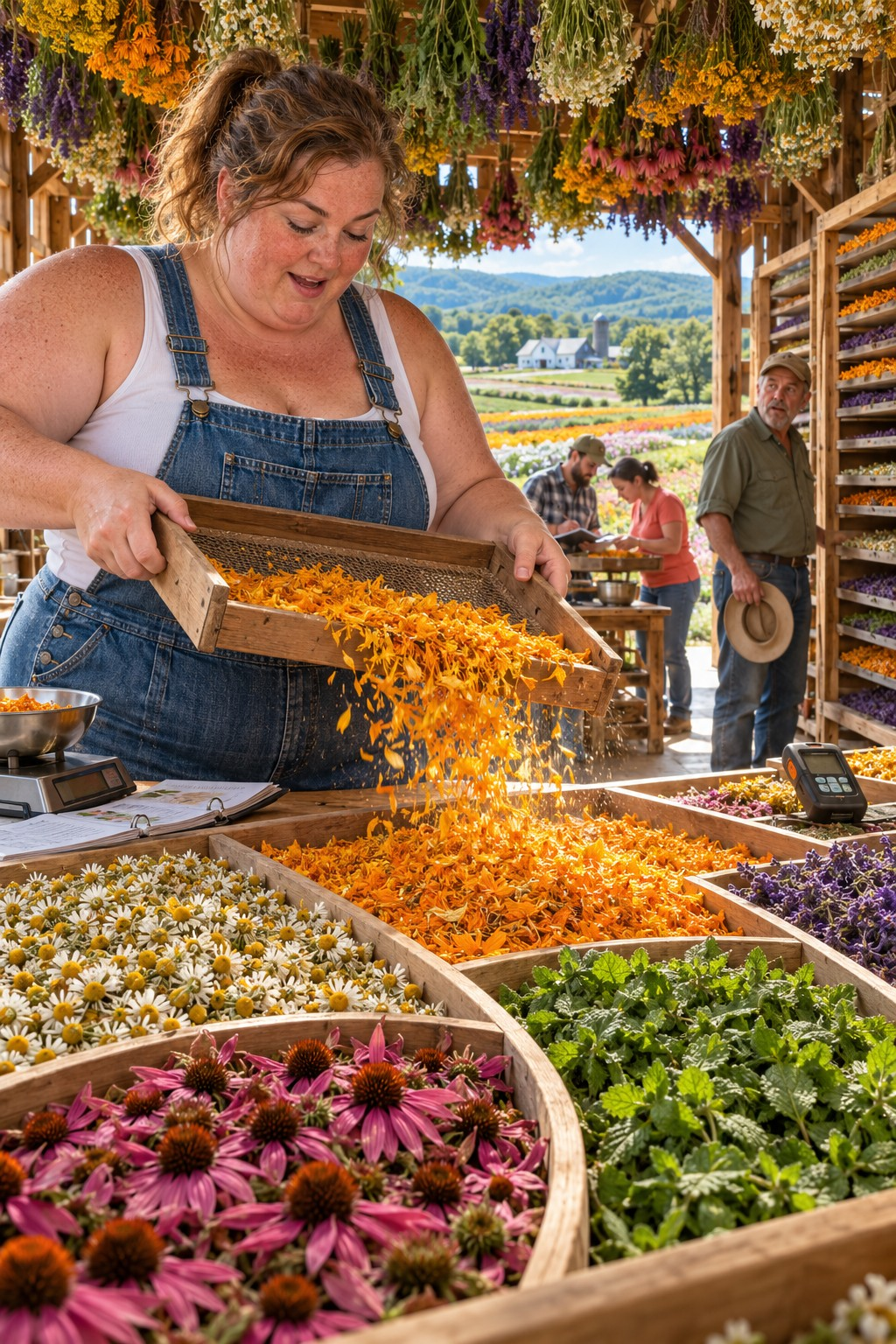
"There's something buried behind your packing barn, and if they're testing your land, they may find it."
Harold Bennett's words stayed with me long after the call ended.
I stood beside the sorting table, holding my phone, staring at the old newspaper clipping Tom had placed in front of me.
Megan was watching my face.
"What did he say?"
I lowered the phone.
"He wants to meet me."
"Harold Bennett?"
"Yes."
"The previous farmer?"
"Apparently."
Tom folded his arms.
"He's been gone from this property for a long time."
I looked at him.
"How long?"
"More than twenty years. He rented the fields before the last tenant."
"And you know him?"
"I knew of him. We weren't particularly close."
"Why?"
Tom hesitated.
"Because he had a reputation for keeping things to himself."
I looked again at the newspaper clipping.
The article was dated more than two decades earlier. It mentioned an investigation involving agricultural chemical storage on a property outside Chambersburg.
There was no photograph of Harold.
No explanation of what had happened.
Just a brief statement saying the investigation had been closed without a public explanation.
"Did you ever see anything unusual here?" I asked.
Tom looked toward the back of the barn.
"Not while the last tenant was working the fields."
"But before that?"
He rubbed his chin.
"I remember some old equipment being moved around. There was a concrete pad behind the barn. I assumed it was used for storage."
"Chemical storage?"
"Could have been. I don't know."
I felt a familiar pressure building in my chest.
The company had placed my shipment on hold because someone questioned the previous agricultural use of the property.
Now a former tenant was telling me that something was buried behind my barn.
I had spent nearly all my savings buying the farm.
I had worked for months preparing the land.
And just when I finally had a commercial buyer, an old investigation was threatening everything.
Megan picked up the newspaper clipping.
"We need to find out what happened."
I nodded.
"Tomorrow."
Tom looked at me.
"Be careful, Sarah. Don't start digging around until you know what you're looking for."
I agreed.
But I already knew one thing.
I wasn't going to let an unanswered question destroy the business I had worked so hard to build.
Harold Bennett agreed to meet me the following morning at a small diner outside Chambersburg.
He chose the location.
He also insisted that I come alone.
I didn't like that condition.
I told him I would meet him, but I wasn't going to discuss anything involving the property without bringing another person into the conversation eventually.
He accepted.
At 8:30 the next morning, I parked outside the diner.
Harold was already sitting in a booth near the window.
He was an older man, probably in his late seventies.
His hair was thin and completely white.
He wore a brown jacket and held a coffee cup with both hands.
When I approached, he stood.
"Ms. Whitmore?"
"Sarah."
He nodded.
"Thank you for coming."
I sat opposite him.
For a moment, neither of us spoke.
Then he looked at me carefully.
"You bought the Whitmore Road property?"
"Yes."
"Thirty-eight acres?"
"That's right."
He shook his head.
"I wondered who would eventually take it."
"Why?"
"Because of what happened there."
I placed my notebook on the table.
"Mr. Bennett, I need you to explain something."
He looked at the notebook.
"You're growing herbs?"
"Yes."
"Commercially?"
"I'm developing a specialty herb farm."
He seemed surprised.
"That's unusual."
"So I've been told."
He almost smiled.
Then his expression became serious again.
"Have you had your soil tested?"
"Yes. Before planting and during the first preparation stages. I'm arranging additional independent testing now."
"Good."
He stared into his coffee.
"Because there are things about that property you should know."
I waited.
He took a slow breath.
"More than twenty years ago, I rented those fields. I grew corn, soybeans, and some wheat. Nothing unusual."
"What happened?"
"A chemical supplier approached me about purchasing a large quantity of agricultural products. They offered favorable prices if I stored certain materials on the property."
"Which materials?"
"Crop treatment products. Herbicides, pesticides, things like that."
"Was the storage approved?"
He looked away.
"That's where things became complicated."
I waited for him to continue.
"Some of the products arrived before I had completed the storage arrangements. I was told the supplier would take care of the paperwork."
"Did they?"
"No."
He rubbed his forehead.
"An inspector came. There were questions about the storage area, the labeling, and the records."
I wrote everything down.
"Was the soil contaminated?"
"I don't know."
His answer came too quickly.
I looked at him.
"You don't know?"
He shook his head.
"At the time, the investigation focused on the storage arrangements. There were some samples taken, but I never received a complete report."
"Why not?"
"Because the company handled most of the communication."
I frowned.
"Which company?"
He hesitated.
Then he gave me a name.
It was a regional agricultural supply business that no longer operated under its original name.
I wrote it down.
"What happened to the materials?"
"Some were removed."
"Some?"
Harold looked at me.
"Not everything."
The diner suddenly seemed quieter.
I leaned forward.
"What does that mean?"
He looked toward the window.
"There was a concrete storage area behind the packing barn. Part of it was used for equipment. Another section was used temporarily for supplies."
"And?"
"After the investigation began, some containers were moved."
"Where?"
He looked directly at me.
"Behind the barn."
I felt my stomach tighten.
"Buried?"
He nodded slowly.
"That's what I was told."
"Who buried them?"
"I didn't do it."
"Who did?"
He looked down.
"I never saw the work being done. I was away when it happened."
I stared at him.
"You were renting the property."
"Yes."
"And you left without finding out what happened?"
His face tightened.
"I was advised not to interfere."
"By whom?"
He didn't answer.
I waited.
Finally, he said, "The supplier's representative."
I wrote that down.
Then I asked the question that had been troubling me since the previous evening.
"Why didn't you report it?"
Harold's hands tightened around the coffee cup.
"I was frightened."
"Of what?"
"Of losing everything."
He explained that the investigation had created serious financial pressure.
His crop sales were delayed.
His lease was under review.
He had borrowed money for equipment and needed the next harvest to pay his obligations.
The supplier had promised to resolve the matter.
Instead, the company stopped returning his calls.
Eventually, Harold left the property.
He never returned.
I sat quietly.
I understood financial pressure.
I understood what it meant to have an entire business dependent on a decision made by someone else.
But I also understood that he had left something unresolved.
And now I was the one paying for it.
"Mr. Bennett, did you know the materials were still there when you left?"
He looked at me.
"I suspected they were."
"Then why are you telling me now?"
He stared at his coffee.
"Because I saw your name in the local newspaper."
I frowned.
"My name?"
"There was a short article about the new herb farm. It mentioned your plans to grow ingredients for tea companies and local manufacturers."
He shook his head.
"I thought someone should tell you."
I closed my notebook.
"Do you have documents?"
He nodded.
"I kept some of the paperwork."
"Where?"
"At home."
"Can I see it?"
He looked uncomfortable.
"I need to find it first."
I stood.
"Then please do."
Before leaving, I turned back.
"Mr. Bennett, I need to ask you one more thing."
He looked up.
"How much of the property do you believe could have been affected?"
He thought for a moment.
"Only a small area behind the barn."
"You're certain?"
"No."
He looked down.
"That's the problem."
I returned to the farm shortly before noon.
Megan was waiting inside the barn.
She had been sorting the remaining calendula while I was away.
When she saw me, she immediately put down her gloves.
"Well?"
I explained everything.
The old storage arrangement.
The investigation.
The missing records.
The possibility of buried containers.
Megan listened without interrupting.
When I finished, she looked toward the rear of the barn.
"Are you serious?"
"Yes."
"Do you think the herbs are contaminated?"
"I don't know."
"Then we need testing."
"I've already contacted Robert."
She exhaled.
"Sarah, this could be serious."
"I know."
She walked toward the worktable.
"What happens to the shipment?"
I looked at the finished containers.
"Nothing leaves until we know what's going on."
"Even if it costs us the order?"
"Especially if it costs us the order."
Megan looked frustrated.
"That's a lot of money."
"I know."
"You've already spent so much."
"I know."
She lowered her voice.
"Are you scared?"
I didn't answer immediately.
Then I nodded.
"Yes."
It was the first time I had admitted it aloud.
I wasn't only afraid of losing the trial order.
I was afraid of losing the entire business.
If the land had a contamination problem, the consequences could reach far beyond the first shipment.
Buyers could withdraw their interest.
The county could require additional investigations.
The property might need expensive remediation.
And my savings were already stretched thin.
But there was no point pretending the problem didn't exist.
I opened my notebook.
"We need facts."
Robert Hayes arrived that afternoon.
I showed him the newspaper clipping and explained what Harold had told me.
His expression became serious.
"Did he identify the exact location?"
"Behind the packing barn. Near an old concrete storage area."
Robert looked toward the rear entrance.
"Don't disturb the ground."
"I wasn't planning to."
"Good. We need to understand what may be there before anyone attempts to investigate it physically."
I asked whether the county could conduct testing.
He explained that the first step would be identifying the suspected area and consulting the appropriate environmental professionals.
He also recommended obtaining historical records.
Old agricultural applications.
Property leases.
Storage permits.
Inspection documents.
Any correspondence connected to the previous tenant.
"Can the soil testing establish whether the rest of the farm is safe?" I asked.
"Properly designed sampling can help determine whether contamination is present in the areas tested. But we need a sampling plan. Randomly taking a few samples won't answer every question."
I nodded.
He continued.
"Don't let anyone pressure you into making a statement about the property's condition before the investigation is complete."
I looked at him.
"Richard Coleman is holding my shipment."
"Then tell him you're arranging an independent assessment."
"I will."
Robert examined the old newspaper clipping.
He read the article twice.
"This investigation should have generated records."
"Where?"
"County offices, environmental agencies, possibly the agricultural department."
"Can we find them?"
"We can try."
He looked at the date.
"Do you know the name of the original supplier?"
I told him.
He wrote it down.
Then he asked something I hadn't considered.
"Did Harold mention whether the storage area was ever inspected after the materials were removed?"
"No."
Robert frowned.
"That may be important."
He closed his notebook.
"I'll help you identify the correct offices to contact. But until we know more, keep everyone away from that area."
I agreed.
When he left, I felt both relieved and unsettled.
At least there was a process.
At least I didn't have to guess.
But the process would take time.
And time was something my first commercial order couldn't afford.
Over the next three days, I worked through the records.
I called the county clerk.
I searched the farm's old lease documents.
I contacted the real estate agent.
Daniel Price eventually located a folder containing historical property information that had been provided during the sale.
Most of it was ordinary.
Tax records.
Survey maps.
Previous agricultural leases.
Equipment descriptions.
But one document caught my attention.
It was a property sketch from the period when Harold had rented the land.
Behind the packing barn was a rectangular structure labeled:
TEMPORARY STORAGE PAD — NORTHWEST CORNER.
I compared it with the current property map.
The location was close to the area Harold had described.
I printed both maps and placed them side by side.
The outline of the old storage pad appeared to extend farther than the concrete section visible today.
There was a second rectangular area behind it.
It wasn't labeled.
I called Robert.
He asked me to email the maps.
After examining them, he suggested that the area should be included in the environmental assessment.
That afternoon, I received a call from the independent laboratory.
They could conduct preliminary soil sampling the following week.
The cost was higher than I wanted.
I reviewed the quote.
Then I accepted it.
I would rather spend money finding out the truth than save money and send a questionable product to a buyer.
Megan helped me reorganize the production schedule.
We postponed the next large harvest.
The healthy calendula beds would continue producing, but we would keep the finished material separate until the testing process was complete.
We labeled the existing containers:
HOLD — DO NOT SHIP.
Seeing those words on the products I had worked so hard to prepare made my stomach turn.
But they had to stay there.
Tom came by on Saturday morning.
He found me standing near the rear of the barn with the historical property map.
"Still investigating?"
"Yes."
He looked at the map.
"Did Harold tell you anything useful?"
I nodded.
"He says some materials may have been buried behind the barn."
Tom's expression hardened.
"I was afraid of that."
I turned toward him.
"You knew?"
"No. But I remember the storage pad."
He pointed toward the northwest corner.
"When I was younger, there used to be a locked enclosure there."
"How large?"
"Not very big. Maybe enough for several drums and a few storage containers."
"Did you ever see anyone using it?"
"Once or twice."
"Who?"
"I couldn't tell you."
He stared toward the old concrete section.
"I remember a delivery truck coming late one evening. It wasn't a regular farm delivery."
"What was unusual about it?"
"It had a covered trailer. Two men unloaded something. They were working in the dark."
I felt a chill.
"Did you report it?"
Tom shook his head.
"I didn't know what they were doing. Back then, people stored all kinds of agricultural supplies."
He paused.
"Besides, I wasn't the property owner."
I looked toward the barn.
"Did you ever see Harold afterward?"
"Once."
"When?"
"Several months after he left."
Tom's expression changed.
"He looked terrible. He told me he'd made a mistake trusting the wrong people."
I stared at him.
"Did he say who?"
"No."
Tom rubbed his jaw.
"Sarah, I should have mentioned this earlier."
"Why didn't you?"
He looked uncomfortable.
"Because I didn't think it mattered anymore."
I understood that.
But it mattered now.
"Do you remember the company name?"
Tom shook his head.
"Not clearly."
He studied the map.
Then he pointed to the unlabeled rectangular section.
"That's strange."
"What?"
"That second area wasn't on the old property map I remember."
I looked closer.
"Are you sure?"
"Pretty sure."
I traced the outline with my finger.
"Then what is it?"
Tom didn't answer.
On Monday, the laboratory technician arrived.
She introduced herself as Emily Carter.
She carried sampling equipment, sealed containers, and a set of documents explaining the testing procedures.
Robert had arranged for her to examine the suspected storage area and collect samples from selected agricultural sections.
I showed her the property maps.
She reviewed the historical information.
Then she marked several sampling points.
The first was near the old concrete pad.
The second was farther away.
The third was in the southern field.
Additional samples would be collected from the production beds that had been planted with calendula and chamomile.
I watched carefully as she worked.
Every sample was labeled.
Every location was recorded.
The containers were sealed.
The chain-of-custody forms were completed.
She explained that preliminary results would take several business days, depending on the analyses requested.
I thanked her.
Before leaving, she asked whether anyone had disturbed the suspected storage area recently.
"No."
"Good. Keep it that way."
I looked toward the rear of the barn.
"Do you think the materials could still be there?"
She paused.
"I don't know. That's why we're testing."
It was the same answer Robert had given me.
And I was beginning to understand how many things on the farm remained uncertain.
That evening, Richard Coleman finally returned my call.
I was reviewing the testing schedule when his name appeared on my phone.
"Sarah."
"Richard."
"I understand you've arranged independent environmental testing."
"Yes. A qualified laboratory collected samples today."
"Do you have an estimated completion date?"
"They expect preliminary results within several business days."
He was silent.
Then he said, "Our compliance department is concerned."
"I understand."
"If there is evidence of historical contamination, we may need to suspend the supplier approval process."
I looked at the containers marked HOLD.
"I understand that too."
"Can you provide the laboratory documentation directly to us?"
"Yes."
"Good."
He paused.
"Sarah, I want to be clear. This isn't necessarily a reflection on your operation."
I almost laughed.
It was difficult not to take a problem with the land personally when the land was the foundation of everything I owned.
"I appreciate that."
"Your sample passed our initial product evaluation. We don't want to dismiss the possibility of working with you."
That was encouraging.
But I wasn't ready to celebrate.
"Then I hope the testing provides some clarity."
"So do I."
The call ended.
Megan was sitting at the other end of the table.
"Did he say anything useful?"
"He hasn't canceled the trial."
"That's something."
"Yes."
She looked toward the field.
"Maybe this will all turn out to be nothing."
I hoped she was right.
On Wednesday afternoon, Harold called again.
His voice sounded different.
More urgent.
"Sarah, have you started testing?"
"Yes."
"Where?"
"Behind the barn and in selected field sections."
He exhaled.
"Did you test near the old concrete pad?"
"Yes."
There was a long silence.
Then he said, "You need to check the second storage area."
I looked at the property map.
"The area behind the pad?"
"Yes."
"Why?"
"Because that's where they moved the containers."
I felt my fingers tighten around the phone.
"You told me they were buried behind the barn."
"They were."
"Then what's different about the second area?"
Harold lowered his voice.
"The first area was only temporary storage. The second was where they took the materials they didn't want anyone to find."
I stood up.
"How many containers?"
"I don't know exactly."
"Mr. Bennett, you need to be specific."
"I saw the truck."
"What truck?"
"The same supplier's truck that delivered the materials."
"When?"
"The night before the inspection."
I looked toward Megan.
She had stopped working.
"Did you see them bury anything?"
Harold hesitated.
"Not everything."
"What does that mean?"
He took a breath.
"Sarah, there was a concrete cover behind the old storage pad. It looked like an ordinary utility access."
I stared at the map.
"Where exactly?"
"Near the northwest corner."
I looked toward the rear of the barn.
The unlabeled rectangle.
The second storage area.
"Are you saying there's something underneath that section?"
Harold's answer was barely audible.
"Yes."
I closed my eyes.
"Why didn't you tell me this before?"
"Because I was hoping it had been removed."
"By whom?"
"I don't know."
I looked at the old map again.
The second area was larger than I had originally thought.
"Did you ever see inside it?"
"No."
"Then how do you know what's there?"
Harold went silent.
For several seconds, I heard only his breathing.
Then he said:
"Because the night they buried the containers, I saw someone carry a metal case out of that storage area."
I felt my stomach tighten.
"What was in it?"
"I don't know."
"Who carried it?"
Harold hesitated.
Then he gave me a name.
It was a name I recognized from the paperwork Richard's company had sent me.
I looked at the supplier verification documents.
And suddenly, the old investigation seemed much closer to my present business than I had ever imagined.
"Sarah," Harold whispered, "there's one more thing you need to know."
I gripped the phone.
"What?"
He answered slowly.
"The person who ordered them to bury those containers wasn't the farmer."
A pause.
"It was the regional purchasing representative."
I looked down at the name on my paperwork.
And before I could ask another question, Harold said:
"His name was Richard Coleman."






Comments 0