"Your husband told me you'd come back."
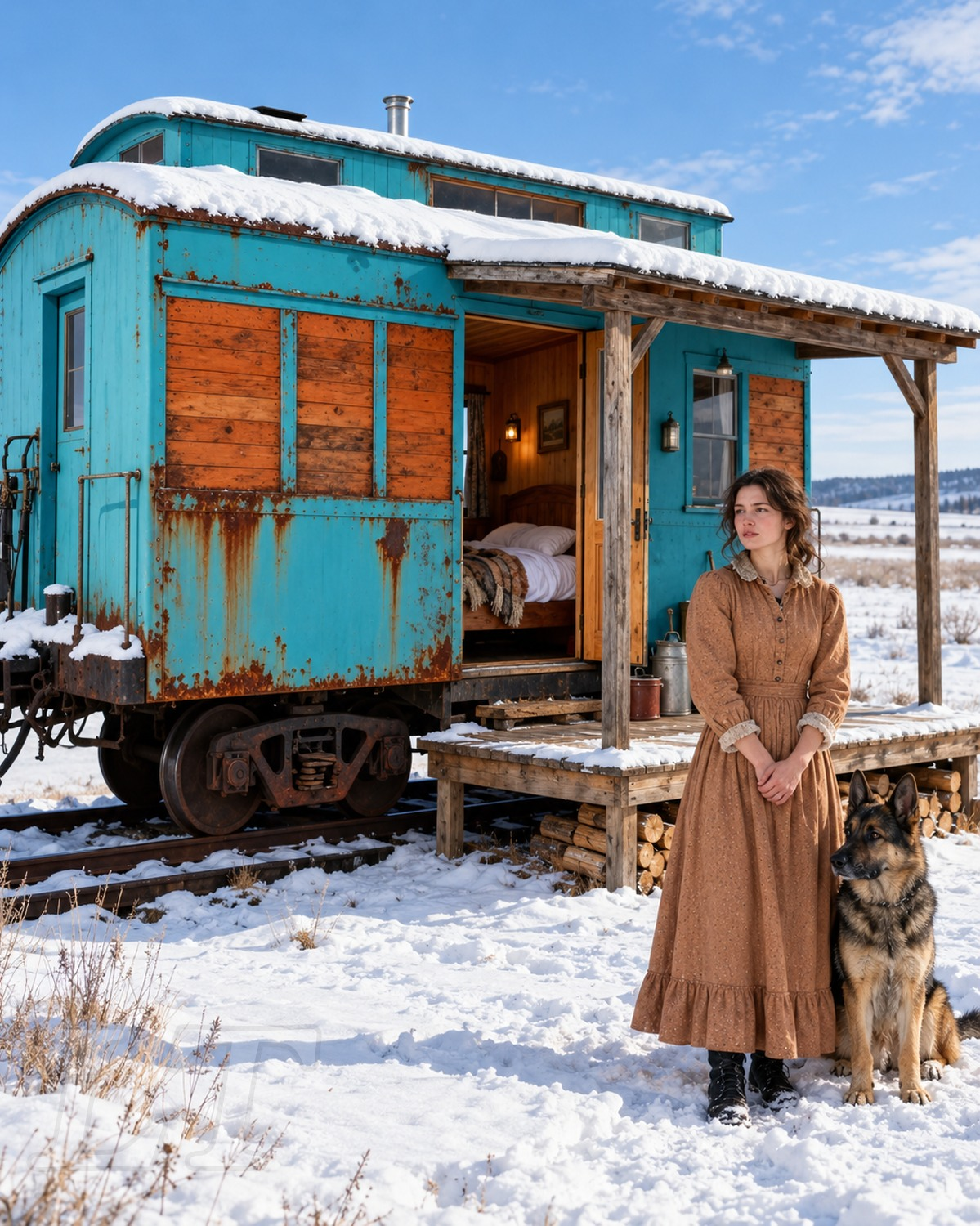
Margaret stood motionless in the middle of her bedroom.
The folded paper trembled between her fingers.
Kaiser positioned himself between her and the rear wall, his teeth exposed, a low growl vibrating in his chest.
For several seconds, Margaret could not speak.
Then she forced herself to ask the only question that mattered.
"Who are you?"
A faint metallic scrape came from beneath the floor.
The man answered.
"Someone who owes Thomas Gable his life."
Margaret's knees weakened.
Thomas had been dead for months.
And nobody in the mining settlement had ever mentioned a man who owed him anything.
"How do you know my husband?"
Silence.
Then the voice returned.
"Because he was the last man who came down here."
Margaret looked at the paper.
Five words had been written across the reverse side.
DO NOT OPEN THE LOWER DOOR.
She turned it over again.
The handwriting was unmistakable.
It belonged to Thomas.
She had seen those letters on hundreds of pages, from grocery lists to railway repair records.
She had watched him write them beside their kitchen table.
She had even kept his final letter beneath her pillow.
This was his handwriting.
There was no doubt.
But how could a message written by her dead husband have appeared beneath a railway car she had only recently claimed as her home?
Margaret moved closer to the rear wall.
"Tell me your name."
The man coughed.
"Samuel."
"Samuel what?"
"Reed."
Margaret searched her memory.
The name meant nothing.
But the man's next words made her grip the paper more tightly.
"Thomas said you would recognize the little brass key."
Margaret looked toward her wooden trunk.
Inside it was a small collection of her husband's belongings.
His watch.
His pocketknife.
A few old photographs.
And a brass key attached to a faded piece of blue string.
Thomas had told her never to throw it away.
He had never explained what it opened.
Margaret had assumed it belonged to some forgotten toolbox.
Now she understood that the key might have something to do with the strange chamber beneath the railway car.
She looked at Kaiser.
The dog was still growling.
"Stay here."
She walked to the trunk.
Her hands shook as she opened it.
She moved aside the folded clothes and lifted a small wooden box.
Inside lay the brass key.
The blue string was faded, but the metal remained intact.
Margaret picked it up.
Then she returned to the rear wall.
"Is this what you're talking about?"
A pause followed.
Then the man answered.
"Yes."
Margaret stared at the key.
"How did you know I had it?"
"Thomas told me."
"When?"
"Before he died."
Margaret felt as though the room had become smaller.
"What did he tell you?"
The man struggled to answer.
"He said if you ever found the lower door, I was supposed to make sure you didn't open it alone."
Margaret looked down at the wooden floor.
"Why?"
This time, Samuel did not answer immediately.
When he finally spoke, his voice was barely audible.
"Because there's something beneath this railway car that could save your life."
Margaret looked at the stove.
The flames moved gently behind its small iron door.
"Then why did my husband tell me not to open it?"
Samuel gave a weak, bitter laugh.
"Because he knew what happened the last time someone tried."
Margaret did not open the floor.
Not that night.
She had survived too many difficult situations to believe a stranger simply because he knew her husband's name.
She moved the wooden crate away from the concealed panel and examined the surrounding floorboards.
The old railway car had several structural supports.
She could not risk removing anything that might weaken the platform.
She also refused to descend into an unknown chamber without understanding what was beneath it.
Samuel continued speaking from below.
"Mrs. Gable?"
"Margaret."
"What?"
"My name is Margaret."
There was a brief silence.
"All right. Margaret."
She placed the lantern beside her.
"How long have you been down there?"
"I don't know."
"Hours?"
A weak laugh.
"Longer than that."
"Days?"
"Perhaps."
Margaret looked toward the damp section of the floor.
"Are you injured?"
"My leg."
"What happened?"
"Something collapsed. I got trapped behind the old access frame."
Margaret swallowed.
"How did you get beneath the railway car?"
"Through the maintenance entrance."
"Why?"
"Because I was looking for something."
"What?"
The man hesitated.
Then he said something that immediately made Margaret suspicious.
"Thomas's records."
Margaret stepped backward.
"My husband never kept records here."
"He did."
"You're lying."
"I wish I were."
Margaret walked toward the wooden partition.
She examined the narrow gap.
The concealed space behind it was larger than she had first realized.
It appeared to extend toward the rear of the railway car.
She could not see the bottom.
"Why would Thomas keep records beneath an abandoned railway car?"
"Because the railroad wanted them destroyed."
Margaret frowned.
"What records?"
"Construction records. Payment records. Inspection reports."
The words meant little individually.
Together, they suggested something serious.
Samuel continued.
"Thomas discovered that the company had been using inferior materials on the mountain line. They were charging for repairs they never completed. They were signing off on work that hadn't been done."
Margaret remembered Thomas's final winter.
He had returned home several times looking troubled.
He had mentioned disagreements with the railroad supervisors.
But he had never explained the details.
At the time, she had been too concerned about his worsening health.
Now those memories returned with uncomfortable clarity.
"Why didn't he tell me?"
"He didn't want you involved."
Margaret looked at the paper.
"Then why did he leave my name on this?"
Samuel did not answer.
Instead, he asked, "Did he give you a brass key?"
Margaret looked down at the object in her hand.
"Yes."
"Then you have what we need."
"Need for what?"
"To open the storage compartment."
Margaret looked toward the rear wall.
"Where is it?"
"Below the lower door."
She closed her fingers around the key.
"And what happens if I open it?"
The man took a shallow breath.
"Then you'll understand why someone came looking for Thomas after he died."
A chill moved through Margaret.
Outside, the wind pushed against the iron walls.
The railway car made a long, groaning sound.
Margaret looked toward the door.
"Who came looking for him?"
Samuel's voice dropped.
"Someone from the company."
"Who?"
"Mr. Harlan."
The name meant something.
Margaret had heard it before.
Edwin Harlan was the regional railroad supervisor.
He was a wealthy man who rarely visited the mining settlement but whose decisions affected nearly every worker along the mountain line.
Thomas had once mentioned him during dinner.
He had described Harlan as a man who smiled while making threats.
Margaret remembered asking why he had such a low opinion of the supervisor.
Thomas had simply replied that some people were dangerous because they never needed to raise their voices.
She had not thought about that conversation in months.
Now she understood that it might have been important.
"Did Harlan know about this place?"
Samuel answered immediately.
"Yes."
"Did he know Thomas left something here?"
"Yes."
"Then why hasn't he taken it?"
"Because he doesn't have the key."
Margaret stared at the brass object.
A small, cold piece of metal.
Something her husband had carried for years without explaining its purpose.
And now a stranger beneath her bedroom was telling her that it might contain evidence powerful enough to threaten a railroad supervisor.
She wanted to believe him.
But she could not.
"How do I know you're telling the truth?"
Samuel coughed again.
"You don't."
At least he was honest about that.
"Then tell me something only Thomas would know."
Silence followed.
Margaret waited.
Finally, Samuel spoke.
"Your husband had a habit of leaving the kitchen window open even in winter."
Margaret frowned.
"That proves nothing."
"He said the house needed to breathe."
Her expression changed.
Thomas had said those exact words.
Samuel continued.
"He also used to tap twice on the side of his coffee cup before drinking."
Margaret's throat tightened.
Nobody in the settlement knew about that habit.
It had been one of those little things she had loved about him.
Still, she refused to lower her guard.
"Anyone could have learned those details."
"Then ask me something else."
Margaret looked toward the old photograph inside her trunk.
She remembered the last day she and Thomas had spent together.
He had been sitting beside the bed, holding her hand.
He had asked her to forgive him for something.
At the time, she had thought he was speaking about his illness.
Now she wondered whether he had meant something else.
She returned to the opening.
"What was the last thing my husband said to you?"
Samuel's breathing became uneven.
Then he answered.
"He told me that if I ever saw you standing beside that railway car, I should tell you he was sorry."
Margaret stopped.
The lantern flickered.
Samuel continued.
"He said he was sorry he had made you carry the weight of something you never agreed to carry."
Margaret closed her eyes.
For a moment, the room disappeared.
She remembered Thomas sitting beside their bed.
His hand had been cold.
His voice had been weak.
He had looked at her with an expression she could not understand.
And he had said something very similar.
She had asked him what he meant.
He had only kissed her forehead.
Now, months later, she was beginning to understand that he had been keeping a secret.
The next morning, Margaret went to the settlement.
She needed supplies.
She also needed to find out whether Samuel Reed was a real person.
She left Kaiser inside the railway car with enough water and food.
Before leaving, she checked the stove and made sure the ventilation remained clear.
Then she locked the outer door.
She carried the brass key in her coat pocket.
The walk downhill took nearly forty minutes.
The air was bitterly cold.
Clouds were gathering over the western peaks.
The miners were already working near the supply yard.
Margaret approached the general store.
Inside, the owner was arranging several boxes.
His name was Walter.
He had known Thomas for years.
"Good morning, Walter."
He looked up.
"Margaret. How are you holding up?"
"Well enough."
She hesitated.
Then she asked, "Do you remember a man named Samuel Reed?"
Walter's expression changed.
It was subtle.
But Margaret noticed.
"Why?"
"Do you know him?"
Walter placed the box on the counter.
"Used to work for the railway."
"What happened to him?"
Walter glanced toward the window.
"That depends on who you ask."
Margaret felt her stomach tighten.
"What do you mean?"
"Some say he left the mountains. Others say he died in an accident."
"When?"
"Last year, I think."
"Where?"
Walter rubbed his chin.
"Somewhere along the unfinished line."
Margaret looked at him.
"Did he know Thomas?"
Walter stopped moving.
"Yes."
"How well?"
"Very well."
Margaret leaned closer.
"Did Thomas ever mention an underground maintenance chamber beneath the abandoned railway car?"
Walter's face went pale.
He glanced toward the store entrance.
Then he lowered his voice.
"Where did you hear about that?"
Margaret said nothing.
Walter stepped away from the counter.
"Margaret, listen to me. Whatever you've found, leave it alone."
"Why?"
"Because it isn't yours."
"The railway car is abandoned."
"That isn't what I mean."
Walter looked toward the window again.
A man was standing outside.
He wore a dark coat and a black hat.
He appeared to be watching the store.
Margaret turned slightly.
She could not see his face clearly.
Walter noticed her looking.
"Don't."
"Who is he?"
"Someone you don't need to know."
Margaret looked back at him.
"Is that Harlan?"
Walter did not answer.
That was answer enough.
She stepped away from the counter.
"I need to speak with you."
"Not here."
"Then where?"
Walter shook his head.
"Come back after sunset."
Margaret frowned.
"Why?"
"Because there are people listening."
The bell above the door rang.
A second customer entered.
Walter immediately returned to arranging his boxes.
Margaret understood the conversation was over.
She left the store without buying anything.
The man in the dark coat had disappeared.
But when she reached the end of the street, she noticed something lying beside the wooden fence.
A small piece of blue string.
Exactly like the string attached to Thomas's brass key.
She bent down.
There was a folded note beneath it.
She opened the paper.
Three words had been written in black ink.
HE IS NOT ALONE.
Margaret looked up.
Across the street, the blacksmith was closing his workshop.
A man stood beside him.
He was watching her.
When Margaret turned toward him, he quickly looked away.
She folded the note and placed it in her pocket.
Then she began walking uphill.
When she reached the railway car, Kaiser was waiting near the entrance.
He barked once.
Margaret opened the door.
The dog immediately approached her and sniffed her coat.
"All right, boy. I'm home."
She checked the stove.
The fire was low but still burning.
The bedroom remained dry.
The dampness beneath the floor had almost disappeared.
For a moment, Margaret felt relieved.
Then she noticed something.
The wooden crate she had placed over the concealed floor panel had moved.
Not much.
Perhaps two inches.
But she was certain she had left it directly against the wall.
She approached slowly.
Kaiser followed.
The dog began sniffing the floor.
Margaret lowered herself and examined the crate.
A fresh scrape marked the wood.
Someone had moved it.
She looked toward the outer door.
It was still locked.
The windows were undisturbed.
She turned toward the rear wall.
"Samuel?"
No answer.
She knocked twice.
"Samuel, are you there?"
A faint voice replied.
"Yes."
"Did you move the panel?"
"No."
Margaret stared at the floor.
"Then someone else did."
Samuel became silent.
She pulled the crate away.
The old iron ring was visible.
The panel had shifted slightly.
A narrow gap had appeared along one side.
Margaret knelt and looked inside.
The space beneath the floor seemed darker than before.
Then she noticed something caught between the wooden boards.
A small strip of fabric.
She reached down and pulled it free.
It was dark blue.
The material was familiar.
Thomas had owned a coat made from exactly the same fabric.
Margaret held it close to the lantern.
There was a small embroidered mark near the edge.
Two letters.
T.G.
Her husband's initials.
Her breathing became shallow.
"Samuel?"
"Yes?"
"Did Thomas come down here wearing a blue coat?"
A pause.
"Yes."
Margaret looked at the fabric.
"Is this his?"
"I can't see it from here."
She placed the fabric beside the paper.
Then she asked the question she had been avoiding.
"Did my husband come down here alone?"
Samuel answered quietly.
"No."
Margaret stared at the opening.
"Who was with him?"
The man hesitated.
"Me."
The room became silent.
Margaret felt her heart beating harder.
"You were with Thomas?"
"Yes."
"Then why didn't you come to his funeral?"
Samuel's voice cracked.
"Because I was hiding."
Margaret stood.
"From whom?"
There was a long pause.
Then Samuel answered.
"From the same man who came to the store this morning."
Margaret slowly turned toward the outer door.
She remembered the black-coated stranger.
The blue string.
Walter's warning.
And the note.
HE IS NOT ALONE.
She returned her attention to the floor.
"Samuel, what happened to my husband?"
For several seconds, she heard nothing.
Then came a faint scraping sound beneath the wooden platform.
Something heavy moved.
A metal latch clicked.
Samuel spoke again.
But his voice had changed.
He sounded terrified.
"Margaret, listen carefully."
She knelt.
"What?"
"Don't open the lower door."
"I wasn't planning to."
"Someone else has the second key."
Margaret froze.
"What second key?"
Before Samuel could answer, three sharp knocks struck the outside railway door.
Kaiser lunged toward the entrance.
A man's voice came through the iron.
"Mrs. Gable?"
Margaret recognized it.
It was the voice of Miller.
But when he spoke again, she heard another man standing behind him.
A much deeper voice.
"Open the door, Margaret."
She looked toward the floor.
Samuel whispered one final warning.
"That's Harlan."
Margaret stepped backward.
The knocking stopped.
Then the man outside spoke again.
"We know Samuel is underneath your bedroom."
And suddenly, the enormous iron door began sliding open from the outside.






Comments 0