"The signature belongs to someone who claimed to be you."
Laura Bennett's words remained in my ears long after the phone call ended.
I stared at the historical account documents on my laptop.
My father's name appeared as the beneficial owner.
My name appeared as the primary account holder.
And someone had apparently signed an amendment using an identity that wasn't mine.
For eleven years, I had believed my father was simply helping me understand money.
Now I was beginning to understand that he might have been using my identity to control money I had never known existed.
Officer Bennett stood beside my desk.
"Ms. Carter, I need you to tell me something."
I looked up.
"Have you ever lost your driver's license?"
"No."
"Has anyone ever reported one stolen?"
"No."
"Have you ever given your father permission to use your identification?"
I thought about it.
"When I was younger, he sometimes kept copies of my documents for tax paperwork. But I never gave him permission to impersonate me."
Bennett nodded.
"That's an important distinction."
I looked at the amendment again.
The document had been approved three days after my original savings account was opened.
November 17.
I remembered that week.
I had been working long hours at Meridian Electrical Systems. I had barely slept because I was preparing a technical report for a major project.
My father had called me twice.
He said he needed some information for the bank.
I had told him I was busy.
He had said not to worry.
He would handle everything.
I remembered those words now.
I'll take care of it, Megan.
At the time, they had sounded reassuring.
Now they sounded like a warning I hadn't understood.
"Can we establish who signed the amendment?" I asked.
Bennett looked at the document.
"That will require examination of the original records and possibly handwriting analysis. We shouldn't identify the person from the copy alone."
I nodded.
Then I noticed another detail.
The amendment contained a photograph identification reference.
It wasn't my driver's license number.
It was my father's.
I pointed to it.
"Why would the bank accept his identification on an account in my name?"
Bennett leaned closer.
"That's one of the questions the bank will need to answer."
I looked at the account information.
The original agreement had been incomplete.
The second page required my personal acknowledgment before the authority could become effective.
But three days later, someone had submitted an amendment that appeared to bypass that condition.
My father had become the beneficial owner.
And the bank had apparently accepted it.
I felt my stomach tighten.
"Officer, what if the bank made a mistake?"
"That may be part of what happened."
"And what if someone deliberately submitted false information?"
"Then the investigation will need to establish who submitted it and who benefited."
I looked at the screen.
The answer seemed obvious.
My father had benefited.
But I wanted proof.
Not another family argument.
Not another explanation about helping Rachel.
I wanted the original documents.
And I wanted every dollar accounted for.
At 5:20 p.m., Laura called again.
She said the bank's historical records department had located additional information about the second account.
I put her on speaker.
Officer Bennett listened.
"Ms. Carter," Laura began, "we've identified the source of several deposits into the account."
"What source?"
"Your former employer, Meridian Electrical Systems, submitted a payment through its employee compensation department."
I closed my eyes.
"The eighteen thousand dollars?"
"Yes."
"Was that payment intended for me?"
"The payment record identifies you as the employee beneficiary."
I looked at Bennett.
He wrote something down.
"Did the money go into the account controlled by my father?"
"According to the historical transaction record, yes."
I swallowed.
"What about the other deposits?"
"Some came from investment accounts. Others were identified as employment-related distributions."
"Who controlled those investments?"
Laura explained that the bank could not provide every detail during the call.
But she confirmed that the account's historical profile listed my father as the person authorized to manage the funds.
I asked whether I had ever been listed as an authorized person.
There was a pause.
"Your name appears as the primary account holder. However, the historical records show that most correspondence and management instructions were handled through your father's contact information."
I felt a bitter laugh rising.
"So I was the account holder, but he controlled everything?"
"That's what the records currently indicate."
I looked at the balance on my screen.
$417,862.19.
Then I looked at the transfer.
The entire amount had gone to my father.
I asked whether the bank could identify the destination account.
Laura said the receiving account was held at another financial institution.
"Was it a personal account?"
"Yes."
"Whose?"
"Robert Carter."
I closed my eyes.
My father had transferred the entire balance into his own personal account.
There was no longer any uncertainty about who had received the money.
I thanked Laura.
Before ending the call, she mentioned that the bank had discovered another transaction.
One that hadn't appeared in the photograph.
"What transaction?"
"A transfer instruction was submitted approximately two hours before the large withdrawal."
"How much?"
"Seventy-four thousand five hundred dollars."
I froze.
The same amount listed in the boutique's financial spreadsheet.
The same amount marked as a priority payment to M.K.
I looked at Officer Bennett.
He immediately leaned toward the phone.
"Was that transfer completed?"
Laura checked.
"No. It was rejected because the receiving account information did not match the authorization requirements."
I released a breath.
"Who was supposed to receive it?"
Laura paused.
"The account beneficiary information identifies Martin Keene."
I stared at the screen.
So Martin had been scheduled to receive $74,500 from the hidden account.
And when that transaction failed, my father had apparently transferred the entire balance into his own account instead.
I looked at Bennett.
"Can you preserve that transaction record?"
Laura confirmed that it would be documented.
Then she added:
"There's something else you should know."
My stomach tightened.
"What?"
"The rejected transfer was not the only instruction submitted that morning."
I leaned forward.
"What else?"
Laura lowered her voice.
"Someone attempted to transfer the remaining balance to a business account registered to Rachel Carter."
I couldn't speak.
Rachel.
My younger sister.
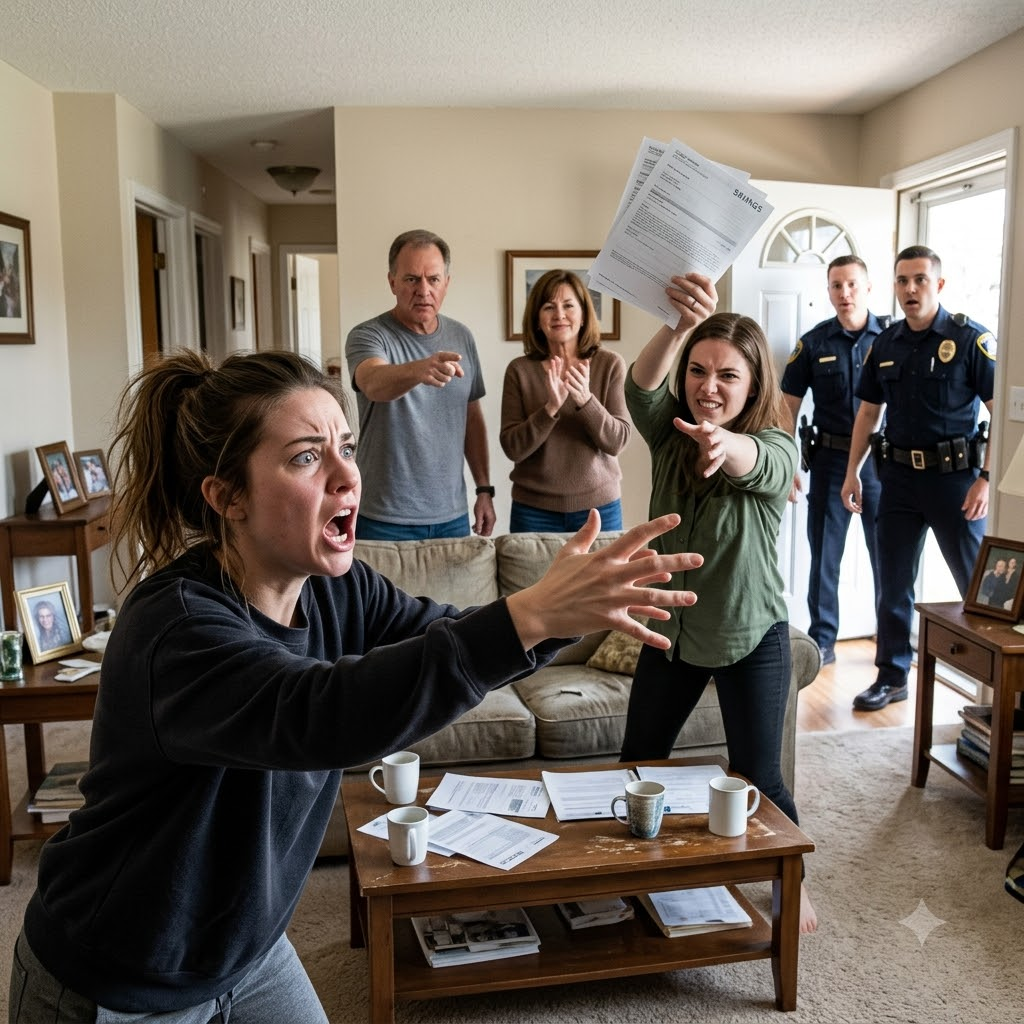
The same person who had waved my savings documents in my face.
The same person who had told me she needed money to keep her boutique open.
The same person who had insisted she didn't know about the hidden account.
I looked at Officer Bennett.
He was writing rapidly.
"How much was the attempted transfer?" I asked.
Laura checked.
"The amount requested was $186,000."
My stomach dropped.
Exactly the balance of my original savings account.
I repeated the number.
"One hundred and eighty-six thousand?"
"Yes."
"Was it successful?"
"No. The request was rejected."
I sat back.
The pattern was becoming impossible to ignore.
My father had transferred $417,862.19 into his own account.
Someone had attempted to send $74,500 to Martin.
Someone had attempted to send $186,000 to Rachel's business.
And all of it had happened before the family dinner.
Before my father announced that my savings would be transferred Monday.
Before I knew the second account existed.
I looked at Bennett.
"Did my father submit all those requests?"
"We need to establish that through the records."
"But the money was in an account with my name."
"Yes."
"And the requests were connected to the people involved in this family arrangement."
"Yes."
I pressed my palms against the desk.
"What was left?"
Laura answered.
"After the completed withdrawal, the account balance was zero."
I felt sick.
The money had disappeared from the account.
I didn't know whether it could be recovered.
I didn't know how much had already been spent.
But I knew my father had moved the money into his own account.
And I knew he had tried to distribute it.
I asked Laura whether the bank could freeze the receiving account.
She explained that the receiving institution would need to receive the appropriate legal request.
Officer Bennett took down the details.
When the call ended, he looked at me.
"We're going to need the complete transaction history."
I nodded.
Then I asked the question that had been bothering me.
"Why would my father send money to Martin before paying Rachel's business debts?"
Bennett didn't answer.
But I remembered the spreadsheet.
The $74,500 payment had been listed as the highest priority.
And now the bank had confirmed that Martin was supposed to receive exactly that amount.
I opened the file again.
There was a note beneath the payment entry.
Final settlement of private obligation.
I stared at the words.
Martin wasn't simply being paid for accounting services.
He appeared to be owed something.
Something substantial.
At 6:05 p.m., Rachel called.
I answered.
"Did you try to transfer $186,000 into your boutique's account?"
She didn't say hello.
She simply went silent.
"Rachel?"
"Where did you hear that?"
"From the bank."
She took a shaky breath.
"I didn't make that request."
"Then who did?"
"I don't know."
"Your business account was listed as the recipient."
"I know."
I sat forward.
"You know?"
She started crying.
"Dad told me the money was coming."
I closed my eyes.
"Did he tell you how much?"
"Yes."
"Did he tell you it was my savings?"
"He said it was a family contribution."
I stared at the phone.
"Rachel, we have already discussed this."
"I know."
"Then why are you still calling it a family contribution?"
"Because that's what he told me!"
I took a breath.
"Did you know about the $417,000 account?"
She didn't answer.
"Did you know Dad had withdrawn the entire balance?"
"I knew he was moving money."
"How much?"
"I didn't know the exact amount."
"Did you know it was under my name?"
She hesitated.
Then whispered:
"Yes."
My stomach tightened.
"How long?"
"About two years."
I felt something break inside me.
Two years.
She had known for two years that an account existed in my name.
She had known that it contained hundreds of thousands of dollars.
And she had never told me.
"Why didn't you tell me?"
"Because Dad said it was complicated."
"What was complicated about telling me I had an account with more than four hundred thousand dollars in it?"
She began crying.
"He said the money wasn't really yours yet."
I stared at the wall.
"Then whose was it?"
"He said it belonged to the family until everything was settled."
I almost laughed.
The family.
That word had become a hiding place for every dishonest decision they had made.
My father had used it to justify taking my savings.
My mother had used it to justify signing the paperwork.
Rachel had used it to justify keeping quiet.
And Martin had apparently used it to justify managing the money.
I lowered my voice.
"Did you know about the attempted transfer to your boutique?"
"Yes."
I felt my throat tighten.
"Who requested it?"
"Dad."
"Why?"
"He said he needed to pay the business debts."
"Why didn't he tell me?"
"Because he thought you would refuse."
I closed my eyes.
At least Rachel was finally being honest.
Then she said something else.
"There's something you don't know about the boutique."
I waited.
"My business didn't owe all that money to suppliers."
I frowned.
"What?"
"Some of the invoices were already paid."
I stared at the spreadsheet.
"Which ones?"
"The biggest supplier balance."
"How much?"
"Thirty-one thousand dollars."
I felt my stomach tighten.
"Then why was it listed as outstanding?"
Rachel began crying again.
"Because Dad told me to leave it there."
I looked at Officer Bennett.
He immediately motioned for me to continue.
"Why?"
"He said it would make the business look more desperate."
I couldn't believe what I was hearing.
"Why would he want that?"
"So he could justify moving more money."
I went completely still.
Rachel continued.
"Some of the debts were real. Some weren't. Dad said the paperwork had to show that the business needed an emergency rescue."
I looked at the spreadsheet.
The numbers.
The priorities.
The private settlement.
The account transfers.
This wasn't simply an attempt to save a failing boutique.
Someone had been creating a financial picture that made the transfer of my money appear necessary.
"Rachel, did you help prepare those figures?"
She whispered:
"Yes."
I closed my eyes.
"Did you know they were false?"
"Some of them."
"Which ones?"
She didn't answer.
"Rachel, I need the truth."
Finally, she said:
"I knew the supplier invoices were already paid."
I looked at Bennett.
He wrote something down.
Then I asked:
"Did you know Martin was receiving $74,500?"
She was silent.
Then:
"Yes."
"Why?"
"Because Dad said he owed Martin."
"For what?"
Rachel's voice became almost inaudible.
"Because Martin had been paying something for years."
"What?"
She took a shaky breath.
"Your father told me it was an insurance arrangement."
I frowned.
"Insurance?"
"Yes."
"What kind?"
"I don't know."
I waited.
Then she said:
"But I saw the policy."
My stomach tightened.
"What policy?"
Rachel whispered:
"It was a life insurance policy with your name on it."
At 6:42 p.m., I ended the call.
I couldn't process another revelation.
I looked at Officer Bennett.
"Did you hear that?"
He nodded.
"Yes."
"An insurance policy?"
"We'll need to establish what kind."
I sat down.
My father had apparently opened a second savings account using my information.
He had redirected employment compensation.
He had controlled the statements.
He had transferred the entire balance.
And now there was a life insurance policy connected to my name.
I felt cold.
I had never purchased life insurance through my father.
I had a basic policy through my employer.
It was part of my benefits package.
But I had never authorized a separate policy.
Bennett asked whether I knew of any other insurance arrangements.
"No."
"Have you ever signed a policy application?"
"Only through work."
"Did your father ever discuss insurance with you?"
I thought about it.
Once, when I was twenty-five, he had asked whether I had updated my beneficiaries.
I had told him that my employer handled the paperwork.
He had said I should be more careful.
I remembered him asking for a copy of my identification.
He had claimed he needed it for a tax document.
I had sent him a scan.
At the time, I hadn't thought anything of it.
Now I wondered what else he had done with it.
Officer Bennett asked me to search my email for insurance correspondence.
I opened my inbox.
There were several messages from my employer.
One contained the details of my workplace life insurance.
Another included annual benefit statements.
I opened the latest one.
My father wasn't listed anywhere.
My mother was my beneficiary.
I looked at the policy information.
It was legitimate.
Then I searched for the name of the insurance company Rachel had mentioned.
Nothing.
I tried another search.
Still nothing.
Then my phone vibrated.
An unknown number.
A message appeared.
You need to stop asking about the second account.
I stared at it.
Another message followed.
Your father has already made arrangements. Don't destroy what he built.
I showed Bennett.
He photographed the messages.
"Do you recognize the number?"
"No."
He asked me to preserve it.
Then another message arrived.
If you want to know why the policy exists, ask your mother what happened when you were twenty-two.
I felt my throat tighten.
I looked at Bennett.
He immediately contacted Officer Harris.
Then my phone rang.
My mother.
I answered.
"Mom?"
She sounded frightened.
"Megan, have you received any messages?"
"Yes."
"From whom?"
"An unknown number."
She started crying.
"Don't answer them."
"Mom, what policy?"
Silence.
"Mom?"
She whispered:
"I thought your father had canceled it."
"What policy?"
"The life insurance."
My stomach dropped.
"Why was there a life insurance policy in my name?"
She began crying harder.
"Your father said it was only for financial protection."
"Protection for whom?"
She didn't answer.
"Who was the beneficiary?"
A long silence followed.
Then she whispered:
"Your father."
I closed my eyes.
My father had been the beneficiary of a life insurance policy on my life.
I looked at Officer Bennett.
He had stopped writing.
"How much was the policy?" I asked.
My mother took a shaky breath.
"Five hundred thousand dollars."
I couldn't move.
Half a million dollars.
My father had been the beneficiary.
And I had never known.
"Mom, when was it opened?"
"Eleven years ago."
The same year I opened my savings account.
The same week.
I felt the room spin.
"Did I sign the application?"
My mother didn't answer.
Then she whispered:
"No."
I stared at the phone.
"Who signed it?"
She began crying.
And then she said:
"Megan, the person who signed your name wasn't your father."
At 7:15 p.m., Officer Bennett received a call from Officer Harris.
He listened carefully.
Then he looked at me.
"We've obtained preliminary information about the insurance policy."
I stood up.
"What information?"
Bennett put the call on speaker.
Harris explained that the insurance company had confirmed the existence of a policy opened eleven years earlier.
The insured person was Megan Carter.
The beneficiary was Robert Carter.
The policy amount was $500,000.
I felt sick.
"Was it still active?"
There was a pause.
"According to the records, it was canceled last year."
I released a breath.
But Harris wasn't finished.
"The cancellation request was submitted after a beneficiary dispute."
I frowned.
"What dispute?"
"Someone attempted to change the beneficiary."
"To whom?"
He checked his notes.
Then he said:
"Rachel Carter."
I stared at the phone.
My sister had attempted to become the beneficiary of a life insurance policy on my life.
And my father had canceled the policy only after the dispute began.
I looked at Bennett.
He asked Harris whether the insurance company had preserved the original application.
"They have."
"Who signed it?"
Harris paused.
"That's what we're trying to establish."
I sat down.
My father had spent eleven years controlling an account in my name.
He had hidden hundreds of thousands of dollars.
He had tried to transfer my savings.
He had arranged a life insurance policy without my knowledge.
And now my sister had apparently attempted to become its beneficiary.
I felt as though I were looking at a stranger's life.
Then Officer Harris said something that made my blood run cold.
"The insurance company has located the original application."
I swallowed.
"What's on it?"
"There's a photograph attached to the application."
I looked at Bennett.
Harris continued.
"It appears to show the person who submitted the paperwork."
"Can you identify them?"
There was a pause.
Then Harris said:
"Not yet. But the photograph was taken at the bank on the same day your savings account was opened."
I closed my eyes.
The same day.
The same building.
The same financial arrangement.
And possibly the same person who had signed my name.
Bennett asked Harris to send the image through the appropriate channels.
A few seconds later, a notification appeared on my phone.
An attachment.
I opened it.
The photograph showed a woman standing beside the bank's service counter.
She was holding a folder.
Her face was turned slightly toward the camera.
I recognized her immediately.
My mother.
Diane Carter.
But there was something else in the photograph.
Standing behind her was a second person.
Someone wearing a bank employee identification badge.
I zoomed in.
The name on the badge was barely visible.
Then I read it.
THOMAS BELL.
I stared at the photograph.
My mother had been there.
Thomas had been there.
And the insurance application had been submitted on the same day as my savings account.
But before I could ask Officer Bennett what it meant, another image arrived.
It showed the reverse side of the application.
There was a handwritten note.
And beneath the note was a signature.
Not my father's.
Not my mother's.
Not Rachel's.
It belonged to the person who had approved the policy.
THE INSURANCE UNDERWRITER HAD BEEN MY FATHER'S CLOSEST BUSINESS PARTNER FOR TWENTY YEARS.
Then Officer Bennett looked at the name and quietly said:
"Ms. Carter, I think we need to find this man before your father does."
At 7:28 p.m., my phone rang again.
This time, the caller ID displayed a name I hadn't seen in eleven years.
THOMAS BELL.
And before I could answer, a message appeared.
Don't let your father know I've contacted you. I have the original insurance application, and it contains something even worse than the forged signature.
I looked at Officer Bennett.
He motioned for me to answer.
I pressed the green button.
"Thomas?"
His voice was shaking.
"Megan, listen carefully. Your father wasn't the only person who knew about that policy."
I swallowed.
"Who else knew?"
He took a breath.
Then he said:
"Your mother wasn't the person who signed the insurance application."
I froze.
"Then who did?"
Thomas lowered his voice.
"It was the person who claimed to be you."
Before I could ask another question, he added:
"And Megan, that person is still using your identity."






Comments 0