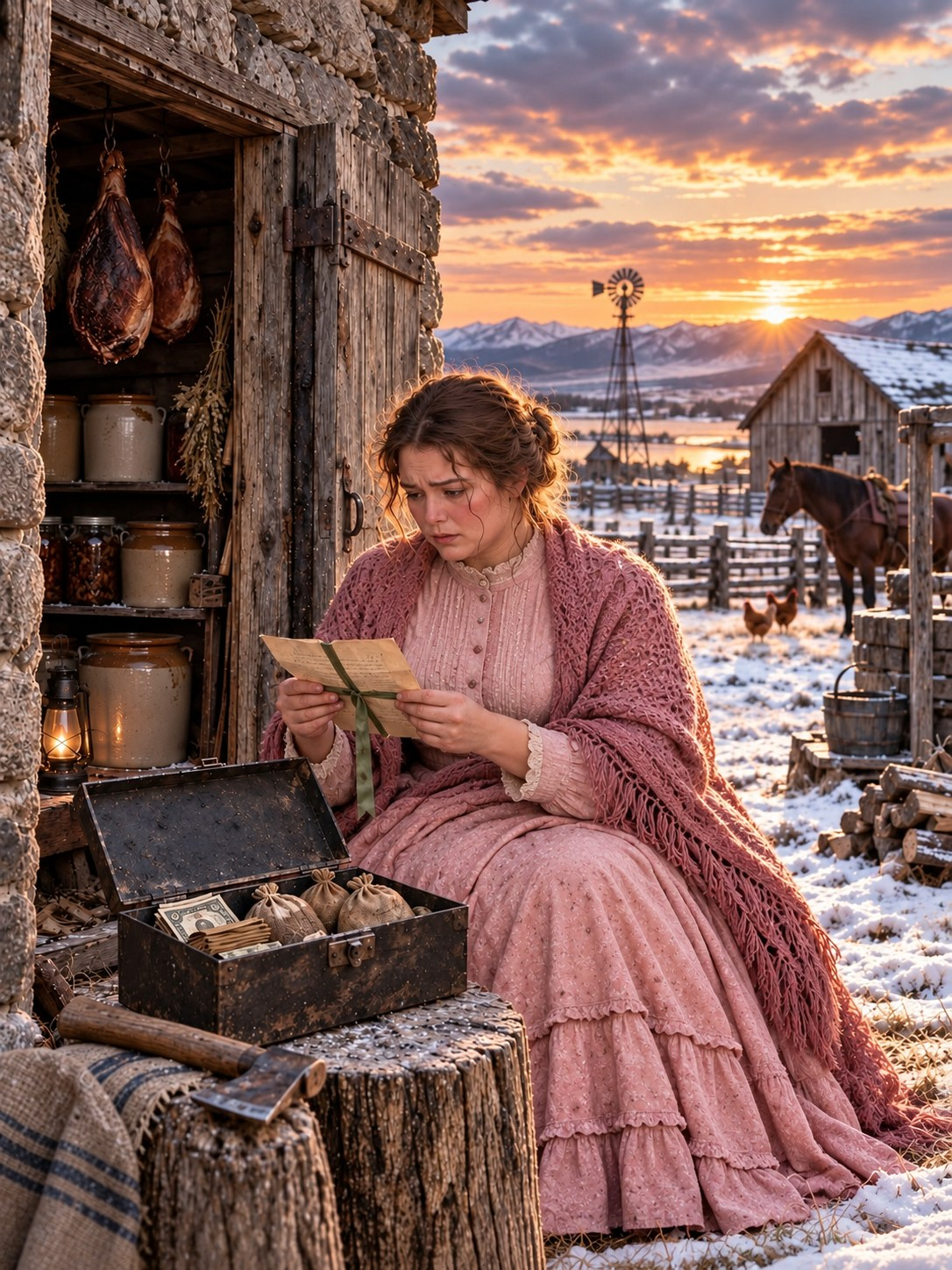
The gunshot echoed across the old Mercer cemetery.
Martha dropped behind the stone headstone as Samuel Reed pulled Eleanor and Clara toward the ground.
Thomas Mercer stood beside the open grave, clutching the small wooden horse.
At the cemetery gate, Arthur Mercer held a photograph in one hand and a revolver in the other.
The woman beside him stepped into the fading afternoon light.
Margaret Mercer recognized her immediately.
"Agnes."
The elderly woman smiled.
"Hello, Margaret."
For several seconds, the entire cemetery seemed to stop breathing.
Agnes Whitfield had been Margaret's younger sister.
She had disappeared thirty years earlier, shortly before Eleanor vanished. The family had been told she had died in a railway accident. Hannah Whitfield had even kept a small memorial photograph in her bedroom.
Yet there she stood.
Alive.
Martha looked from Agnes to Arthur.
"Why is she with you?"
Arthur laughed bitterly.
"Because she knows the truth."
Agnes looked toward Margaret.
"And because I am tired of watching this family destroy itself."
Arthur raised his revolver.
"Don't move."
Samuel slowly lifted his own weapon.
"Put it down, Arthur."
"You have no idea what you're dealing with."
Samuel's voice remained steady.
"I know exactly what I'm dealing with. A man who has spent thirty years hiding behind dead people, forged documents, and frightened children."
Arthur's expression twisted.
"You think this is about land?"
Martha stood slowly.
"Isn't it?"
Arthur looked directly at her.
"No, Martha. It's about what your family did to mine."
Agnes shook her head.
"Stop lying."
Arthur turned toward her.
"You promised you would remain silent."
"I promised nothing."
Agnes stepped away from him.
"I was a child when Edwin Pritchard began using our family. I was frightened. I believed him when he said the land would be returned."
She looked at Martha.
"But I never agreed to what happened to those children."
Arthur's revolver shifted toward her.
And Samuel fired.
The bullet struck the ground beside Arthur's feet.
His revolver fell from his hand.
Thomas rushed forward and knocked him away from the gate. Samuel reached them seconds later and secured Arthur's wrists.
The photograph dropped into the dirt.
Martha picked it up.
It showed seven children standing in front of an unfamiliar farmhouse.
Each child wore a different colored ribbon.
On the back were seven names.
And beneath them, in Ellery Booker's handwriting, was a sentence:
They all deserve to know where they came from.
Martha looked at the photograph.
For the first time, the number seven had faces.
And the mystery that had haunted her family for three decades was finally beginning to make sense.
Arthur was taken into custody before nightfall.
Caleb Harlan, who had been wounded during the confrontation, was also arrested after Samuel discovered that the county commissioner had never authorized his release.
The sheriff secured the cemetery and arranged for the documents to be transported under guard.
But Martha refused to leave until she had spoken to Agnes.
The older woman sat beside Margaret beneath a large elm tree.
They held each other's hands.
Neither seemed able to find the right words.
Finally, Margaret whispered, "I thought you were dead."
Agnes looked down.
"I know."
"I searched for you."
"I know."
"Why didn't you come home?"
Agnes took a long breath.
"Because I was ashamed."
Margaret frowned.
"Of what?"
"Of believing Edwin. Of helping Arthur. Of signing papers I didn't understand. Of staying away when I knew Eleanor was in danger."
Margaret's eyes filled.
"You were young."
"So were you."
Agnes looked toward the farmhouse.
"Hannah protected me for years. She told me that one day the truth would be strong enough to survive without destroying the people it was meant to save."
Margaret smiled sadly.
"That sounds like Hannah."
Agnes nodded.
"She never stopped loving you."
Margaret lowered her head.
For years, she had believed her sister's disappearance was another loss she would never understand.
Now she knew Agnes had survived.
It did not erase the years apart.
But it gave them something they had both believed impossible.
Time.
Martha approached them.
"May I ask you something?"
Agnes looked up.
"Of course."
"Why did Arthur bring you here?"
Agnes glanced toward the sheriff's vehicle.
"He wanted the photograph."
"Why?"
"Because it proves the seven children were moved under false identities."
Martha held up the photograph.
"Who were they?"
Agnes studied the names.
Then she explained.
Edwin Pritchard had controlled several land companies in Nebraska and neighboring states. His operation depended on acquiring properties through forged inheritance records.
When families challenged his ownership, he used threats, false guardianship documents, and corrupt officials to separate children from their relatives.
Seven children had been assigned new identities.
Some were placed with families who believed they were helping orphans.
Others were sent to distant towns.
A few were moved between households until even their original names became difficult to establish.
The children had been selected because their families possessed legal claims to valuable property.
Martha and Clara were among them.
Thomas had been another.
"Why did Edwin need to separate us?" Martha asked.
Agnes answered quietly.
"Because children grow up. They ask questions. They inherit. They remember things."
Martha looked at Thomas.
"And you?"
Thomas nodded.
"I was raised believing my parents had died."
"Did Ellery tell you?"
"Not until I was twenty."
He looked down at the wooden horse.
"She gave me this the day she told me my real name."
Martha recognized the toy.
It was almost identical to the one Clara had carried.
"Why did she keep you hidden?"
Thomas looked toward the cemetery.
"Because Edwin believed I was the last male heir of the Mercer line. He wanted me under his control."
Martha frowned.
"But the land could pass to a daughter."
"Not under the fraudulent trust Edwin had created. He had changed the inheritance rules in the company records."
Samuel joined them.
"And that is why the original deed matters."
He held up the recovered document.
"The fraudulent trust is invalid. Margaret's original ownership was never legally transferred."
Martha looked at her grandmother.
"So the ranch belongs to us?"
Margaret smiled.
"It always did."
The following weeks were filled with lawyers, investigators, and people who had once been too frightened to speak.
The state authorities opened a formal investigation.
Arthur Mercer was charged with kidnapping, conspiracy, fraud, unlawful confinement, and participation in the falsification of property records.
Caleb Harlan faced charges connected to Nathaniel's murder, Eleanor's disappearance, and the attacks on the ranch.
The investigation also exposed Edwin Pritchard's network.
Although Edwin had died years earlier, his financial records remained.
The authorities discovered payments to county officials, forged signatures, false birth certificates, and records showing that the eastern water rights had been transferred illegally.
Doctor Elias Ward's medical records were recovered from an abandoned office.
They contained evidence that Nathaniel Mercer had been deliberately given dangerous doses of medication.
A separate investigation established that Eleanor had been held against her will and that Ward had treated her under a false identity.
The truth about Nathaniel's death was finally confirmed.
He had not died from natural causes.
He had been murdered because he refused to surrender the original deed.
The county formally reopened the case.
And for the first time in thirty years, Nathaniel Mercer was recognized as the victim of a crime rather than the supposed accomplice described in the falsified records.
Martha attended the hearing.
She wore her best dress.
It was an old blue dress she had repaired herself.
She sat between Eleanor and Clara.
Margaret sat behind them with Agnes.
Thomas stood near Samuel.
When the judge announced that the original land transfer was fraudulent, Martha felt Eleanor's hand tighten around hers.
Then came the decision concerning the ranch.
The property was restored to the Mercer family under the original deed.
The eastern springs and northern pasture were included.
The false county boundary was corrected.
The water rights were returned.
And the company that had claimed ownership of the land was ordered to surrender its documents and financial records.
Martha thought of the seven hundred dollars she had paid at the tax auction.
She thought of the abandoned farmhouse.
The broken barn.
The sealed smokehouse.
The eleven dollars and forty cents she had possessed before arriving in Cotton Hollow.
She had believed she was purchasing a place to survive.
Instead, she had reclaimed the home her family had spent thirty years trying to recover.
The hardest part of the investigation was identifying the seven children.
Several had grown into adults under different names.
Two had been adopted by families who had never been told the truth.
One had died before the investigation began.
The remaining four were located through birth records, photographs, and the letters Ellery had preserved.
Martha refused to let their identities become another collection of legal documents.
She wanted them to meet.
So, with help from Samuel and the investigators, she arranged a gathering at the ranch.
They arrived one by one.
A woman from Iowa.
A schoolteacher from Kansas.
A retired mechanic from Missouri.
A quiet man from Colorado.
They were strangers.
Yet each carried some fragment of the same history.
One remembered a wooden horse.
Another remembered a woman who always left the porch light burning.
One had a photograph with the same faded fence.
Another remembered being told never to ask about the name written inside an old Bible.
They sat around the farmhouse dining table.
Martha placed Ellery's photograph in the center.
Seven children.
Seven lives.
Seven names.
Nobody spoke for a long time.
Finally, the woman from Iowa touched the picture.
"Did she know all of us?"
Martha nodded.
"Yes."
"Did she love us?"
Martha looked at the photograph.
"She did."
The woman began crying.
Martha reached across the table.
"She left everything she had to make sure we could find one another."
Thomas placed the wooden horse beside the photograph.
Clara added her matching toy.
The two small objects rested together.
For the first time, the children who had been separated by Edwin Pritchard were sitting in the same room.
And nobody was asking them to hide.
Eleanor stayed at the ranch.
At first, Martha found it difficult to call her Mother.
The word carried thirty years of absence.
Thirty years of unanswered questions.
Thirty years of birthdays celebrated without knowing whether the woman who had given birth to her was alive.
Eleanor never demanded affection.
She helped with the household.
She cooked.
She repaired clothes.
She walked with Martha through the orchard.
Sometimes they talked.
Sometimes they worked in silence.
One afternoon, Eleanor found Martha repairing the old kitchen door.
"Your father used to do that," she said.
Martha smiled faintly.
"Ellery taught me."
Eleanor picked up the hammer.
"May I help?"
Martha handed it to her.
They worked together.
After a while, Eleanor spoke.
"Do you remember anything about him?"
Martha nodded.
"His hands."
Eleanor smiled.
"He had enormous hands."
"He used to carry me on his shoulders."
"He did that with me too."
Martha looked at her.
"Tell me about him."
Eleanor sat on the porch step.
"He was stubborn. He hated wasting food. He could repair almost anything except a clock."
Martha laughed.
"Ellery hated clocks too."
Eleanor smiled.
"He used to sing while working in the barn. Terribly."
Martha sat beside her.
For the first time, the stories did not feel like explanations.
They felt like memories being returned to the person who had lost them.
Eleanor reached for her hand.
"I know I cannot give you back the years."
Martha looked at her.
"No."
"But I would like to be here for the years we have left."
Martha studied her mother's face.
The scar.
The silver hair.
The tired eyes.
Then she gently squeezed her hand.
"I would like that too."
Eleanor began to cry.
Martha leaned against her shoulder.
It was not a perfect reunion.
It was something better.
A beginning that neither woman had to pretend was an ending.
Margaret and Agnes moved into the farmhouse permanently.
They took the two upstairs bedrooms overlooking the orchard.
At first, the sisters argued over small things.
Who had used the last of the flour.
Who had moved the sewing basket.
Whether the old kitchen table should be repaired or replaced.
Martha found their arguments strangely comforting.
They sounded like family.
One morning, Margaret brought a small wooden box to Martha.
Inside were the original letters Nathaniel had written before his death.
Martha read them slowly.
There were letters about the ranch.
About the cattle.
About the apple trees.
And about a little girl he had loved more than anything.
One letter contained only a few lines.
My little Martha,
If you ever wonder whether you belonged here, remember this.
The first time I held you, I knew I would spend the rest of my life trying to make the world kinder for you.
I may not always succeed.
But you will never have to earn your place in this family.
Martha pressed the letter against her chest.
She finally understood.
Nathaniel had known the truth about the circumstances of her birth, even if he had never known the full arrangement.
He had chosen her.
Not because of a certificate.
Not because of a bloodline.
Because she was his daughter.
And no document could take that away.
The ranch slowly changed.
The farmhouse roof was repaired.
The barn received new boards.
The chicken house was rebuilt.
The old corral was strengthened.
Martha purchased six young cattle with money recovered through the legal settlement.
Samuel helped repair the eastern fence.
Thomas worked on the well.
Clara organized the accounts.
Eleanor planted vegetables behind the kitchen.
Rebecca took charge of the orchard.
Margaret and Agnes worked together in the smokehouse.
The sealed room was cleaned carefully.
The old crocks were removed.
The shelves were repaired.
And the hidden compartment was preserved.
Martha did not want to erase what had happened.
She wanted the next generation to understand why the room had been sealed.
On the wall, she placed a small wooden plaque.
It read:
THE HANNAH WHITFIELD SMOKEHOUSE
Built to preserve what others tried to destroy.
The first autumn harvest was better than anyone expected.
The apple trees produced enough fruit for cider, preserves, and pies.
The eastern well supplied the cattle.
The creek continued running.
And the ranch finally began to provide something more valuable than money.
Security.
Samuel Reed became a regular visitor.
At first, he came because of the investigation.
Later, he came to help with repairs.
Eventually, Martha noticed that he was finding reasons to remain after the work was finished.
He never hurried her.
He never asked her to forget what his father had done.
Instead, he told her the truth about his family.
His father had been a frightened man who had made terrible choices.
Samuel had spent years trying to live differently.
One evening, they stood beside the northern fence.
The sun was setting behind the hills.
Samuel looked toward the farmhouse.
"Your family seems happy."
Martha smiled.
"They've earned it."
He hesitated.
"Do you ever think about leaving?"
"Sometimes."
"Where would you go?"
Martha looked across the land.
"Nowhere."
Samuel smiled.
"Good."
She turned toward him.
"Why?"
He took a breath.
"Because I would like to build something here too."
Martha studied him.
"What exactly?"
He looked down, then back at her.
"A life. If you want one with me."
Martha was quiet for a moment.
Then she smiled.
Not because everything was perfect.
Because for the first time, she could imagine a future that belonged to her.
"I think I'd like that."
Samuel reached for her hand.
And she let him hold it.
The following spring, Martha and Samuel married beneath the oldest apple tree.
There was no grand ceremony.
No expensive decorations.
No important guests from the county.
Only family.
Eleanor walked Martha to the tree.
Rebecca held Clara's hand.
Margaret and Agnes sat together in the front row.
Thomas stood beside Samuel.
The seven children, now grown, attended as well.
The wooden horses were placed on a small table beside the wedding flowers.
When the ceremony ended, everyone gathered inside the farmhouse.
The old dining table was covered with food.
Fresh bread.
Roasted chicken.
Apple pie.
Preserved vegetables.
And a large cake Eleanor had made herself.
Martha looked around the room.
For years, she had believed she was an orphan without a home.
Now the farmhouse was filled with people who had once been separated by lies.
Some were connected by blood.
Others by promises.
Some by love.
All belonged.
Margaret raised her glass.
"To the people who kept the light burning."
Everyone lifted their glasses.
Martha looked toward Eleanor.
Her mother smiled.
Then she looked toward the doorway.
The smokehouse stood beyond the yard.
Its wooden door was open.
For the first time in decades, nothing inside it was hidden.
Years later, Martha would still remember the morning she claimed the abandoned ranch.
She would remember the eleven dollars and forty cents in her pocket.
The broken hatchet.
The sealed smokehouse.
The black tin box.
And the letter that began:
For whoever finds this.
She would remember how frightened she had been to spend the money.
How she had wondered whether the land truly belonged to her.
How she had almost walked away.
But she had stayed.
The ranch became a working farm again.
The cattle multiplied.
The orchard flourished.
The farmhouse became a place where family members gathered every holiday.
Children played in the yard.
The old smokehouse became a small family archive.
The seven recovered birth records were preserved there, alongside photographs, letters, and the original deed.
Nobody was forced to carry a false name again.
Arthur Mercer was convicted for his role in the conspiracy.
Caleb Harlan was convicted for the murders and attempted murders connected to the land fraud.
The corrupt officials lost their positions.
The original water rights remained with the Mercer family.
And the property was protected through a legal trust that could never again be controlled by a single outside company.
Eleanor lived long enough to see her daughters grow close.
Margaret and Agnes spent their remaining years together.
Thomas became the ranch's most dependable worker.
Clara built a successful bookkeeping business and continued helping Martha manage the property.
Samuel remained by Martha's side.
And every year, when the first apples ripened, the family gathered beneath the oldest tree.
They remembered Nathaniel.
They remembered Hannah.
They remembered Ellery Booker.
The woman who had taken in an orphaned girl and quietly protected seven children without asking for recognition.
Martha never forgot the woman who had taught her that waste was often laziness wearing a respectable face.
But she remembered something else Ellery had taught her.
A home was not simply the place where someone was born.
It was the place where someone was loved, protected, and given the freedom to become themselves.
One autumn evening, Martha stood inside the smokehouse.
She ran her fingers over the wooden shelves.
The old black tin box sat in its preserved compartment.
Beside it were the letters that had once threatened to destroy her family.
She closed the compartment gently.
Outside, Samuel called her name.
The dinner table was ready.
Eleanor was waiting.
Clara was laughing with Thomas.
Margaret and Agnes were arguing over whose apple pie had turned out better.
Martha looked once more at the room that had changed her life.
Then she stepped outside and closed the door.
Not to hide the truth.
But because there was nothing left to hide.
She walked toward the farmhouse, where the windows glowed warmly against the evening sky.
For the first time in three generations, the Mercer family had a home that belonged to them.
And this time, nobody would ever have to disappear to keep it.






Comments 0