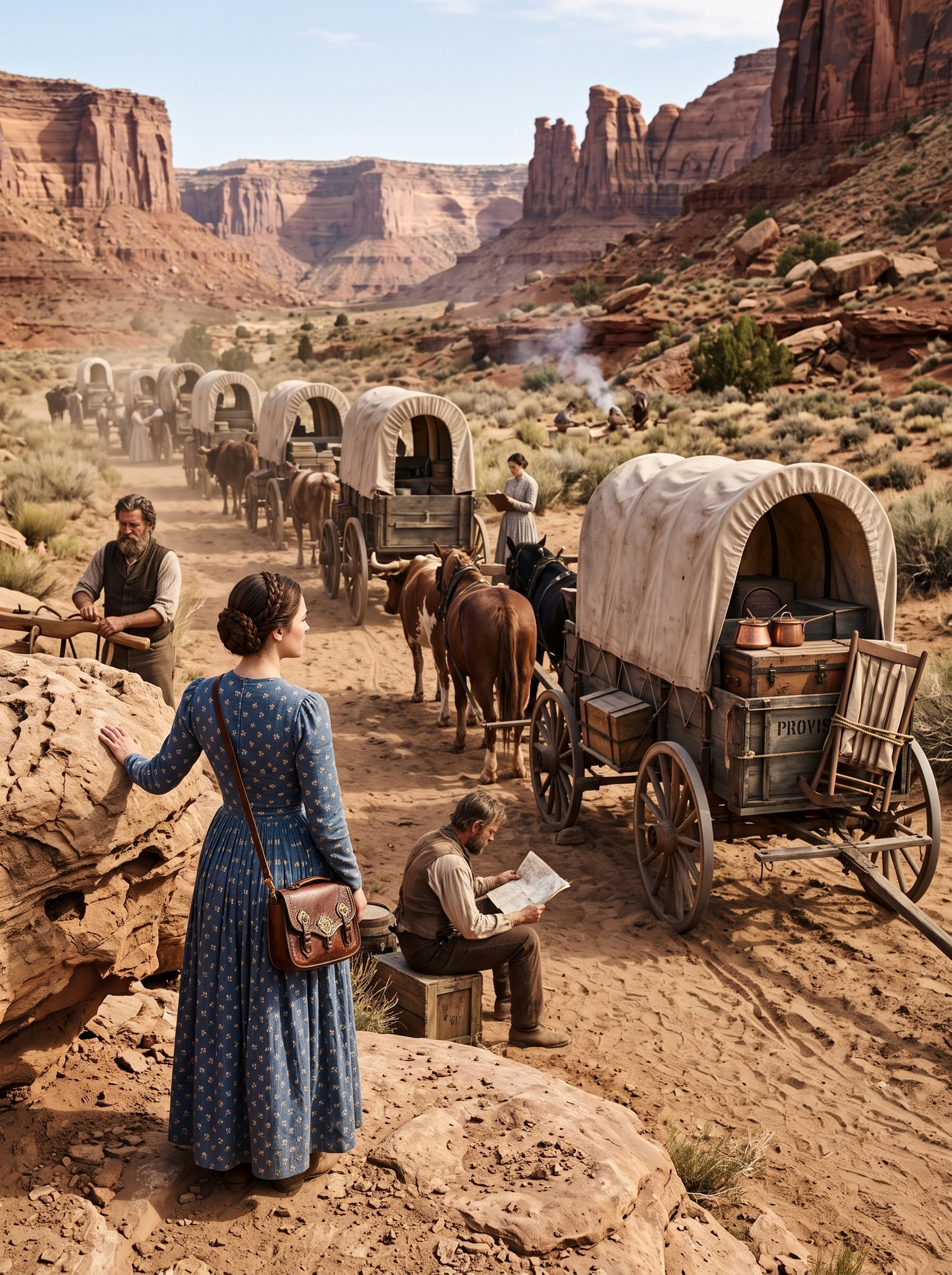
Margaret Cole shoved the twenty-dollar bill back across the kitchen table.
"Then tell me why my brothers get everything."
Her father, Thomas Cole, picked up the money and pressed it beneath a chipped coffee cup.
On the back of the bill, written in faded pencil, were three words: Whispering Winds Basin.
Thomas saw them.
His face changed.
And Margaret realized he hadn't destroyed everything.
"Where did you get that?" he demanded.
Margaret looked from the bill to her father's face.
"Get what?"
He snatched the money off the table, turned it over, and examined the writing as though the three words might disappear if he stared hard enough.
"Answer me."
"I haven't touched it."
"Don't lie to me, girl."
"I'm not lying."
For a moment, neither moved.
Behind them, Margaret's mother stirred a pot of watery beans over the stove. The spoon scraped the bottom in a slow, repetitive circle.
Thomas folded the bill so tightly that the paper nearly tore.
"Your grandfather filled your head with nonsense," he said.
Margaret felt something tighten beneath her ribs.
Grandfather Elias had been dead for almost six years.
Yet her father still spoke his name as though the old man might rise from his grave and steal something else from him.
"He taught me to read maps," Margaret replied.
"He taught you to chase ghosts."
"He taught me more than that."
Thomas slammed his palm against the table.
"Enough."
Margaret flinched before she could stop herself.
She hated that.
At twenty-four, she had survived three years of drought, two failed harvests, and the slow destruction of everything her family had worked to build. She had hauled water from a nearly dry well, patched fences under a punishing sun, and worked until her fingers cracked.
Yet one sharp movement from her father could still make her feel like a frightened child.
Thomas seemed satisfied by her silence.
"The farm is sold," he said. "The papers are signed. Mr. Whitcomb takes possession Monday."
"I know."
"Your brothers have employment waiting. Samuel will oversee the livestock. Henry will work the fields."
"And me?"
Thomas leaned back.
"You'll find your own way."
Margaret looked toward her mother.
"Ma?"
The spoon continued scraping.
"Ma, did you know?"
Her mother said nothing.
Margaret waited.
She had imagined many things about this conversation during the past week. She had imagined anger. She had imagined tears. She had even imagined her mother standing beside her and insisting that the family remain together.
She had not imagined that her mother would refuse to turn around.
"Please look at me," Margaret whispered.
The spoon stopped.
For one hopeful second, Margaret thought her mother might finally speak.
Instead, the stirring resumed.
Thomas pushed the bill toward her again.
"Twenty dollars. That's what I can spare."
Margaret stared at the money.
Three years earlier, her father had owned nearly four hundred acres of farmland, a modest herd of cattle, and enough equipment to keep the family comfortable.
Then the rain stopped.
The first year, they lost half the corn.
The second, the creek dried up.
By the third, the cattle were thin, the soil had hardened, and the bank had begun sending letters.
Margaret had watched her father sell the horses, then the machinery, then the land itself.
She had understood the necessity of those decisions.
What she did not understand was why her brothers had been included in the family's future while she had been quietly erased from it.
"Samuel gets a job," she said. "Henry gets a job. You and Ma get to stay in the house until spring."
Thomas said nothing.
"And I get twenty dollars."
"You're a grown woman."
"So are the women who work for Mr. Whitcomb."
"He doesn't need another worker."
"Did you ask him?"
Thomas's expression answered before he spoke.
"No."
"Why?"
"Because it wasn't part of the arrangement."
Margaret felt the words settle over her.
The arrangement.
Not the family.
Not the farm.
An arrangement.
She looked again at the faded pencil marks on the money.
"Where did you find that bill?"
Thomas's eyes narrowed.
"That's none of your concern."
"Grandfather wrote on everything. He used to mark the corners of receipts when he ran out of paper."
"Your grandfather wasted his life."
Margaret lifted her chin.
"He was the only person in this house who ever believed I could do something worth remembering."
The words landed harder than she expected.
Thomas's mouth tightened.
"You think a dead man's stories are going to feed you?"
"No."
"Then forget them."
He stood.
The chair scraped against the floor.
"There's a room at Mrs. Bell's boardinghouse in town. She might let you clean rooms in exchange for a bed."
Margaret stared at him.
"You already spoke to her?"
"I asked around."
"But you never asked Mr. Whitcomb whether I could stay."
Thomas turned toward the door.
"Take the money, Margaret."
She looked at her mother one last time.
"Ma, is that what you want?"
The woman at the stove lowered her head.
Margaret saw her shoulders move.
Just once.
Then her mother reached for another spoon.
That small movement hurt more than her father's words.
Margaret took the bill.
She folded it carefully.
Then she stood.
"I'll leave before sunrise."
Thomas did not try to stop her.
"See that you do."
Margaret spent the evening packing.
She owned fewer things than she had imagined.
Two spare blouses.
A charcoal-gray skirt.
A wool vest.
A sewing kit.
A small knife.
A tin cup.
A blanket.
A photograph of her grandparents standing outside their first house.
And a canvas satchel that had belonged to Elias Cole.
She laid everything across her narrow bed.
The satchel was old, with a repaired shoulder strap and a brass buckle worn smooth by years of use.
Elias had carried it across deserts, mountains, and abandoned mining roads.
When Margaret was a child, she had believed the bag contained the entire world.
Sometimes it had held fossils.
Sometimes unusual stones.
Sometimes pages covered with careful handwriting.
And once, when she was eleven, it had held a piece of wood so old and dry that it crumbled when Elias touched it.
"Found that where a road used to be," he had told her.
"What road?"
"One nobody remembers."
"Then how do you know it was there?"
Elias had smiled.
"Because the desert forgets nothing, Maggie. It only hides things."
She remembered those words now.
For six years, the satchel had remained beneath her bed.
Her father had tried to burn Elias's maps after the funeral.
Margaret had watched him carry a wooden box of papers behind the barn.
She had seen smoke rise.
She had heard him muttering about wasted money, foolish dreams, and the debts her grandfather had left behind.
What Thomas never knew was that Elias had given Margaret a copied route two weeks before his death.
"Keep this somewhere safe," he had told her.
"Why?"
"Because some people would rather destroy a possibility than admit they were wrong."
At the time, Margaret had not understood.
She understood now.
She knelt beside her bed and reached beneath a loose floorboard.
Her fingers found a narrow bundle wrapped in oilcloth.
She pulled it free.
Inside was a folded map.
The paper had yellowed along the edges. Several corners had been reinforced with cloth. The ink was faded but still legible.
Across the upper margin, Elias had written:
Silica Queen—1852.
Beneath it lay a winding route across the Mojave Desert.
Seven freight wagons.
That was what the records described.
Seven wagons loaded with mining equipment, tools, provisions, and cargo bound for a growing settlement.
The train had vanished somewhere between its last known water stop and a distant trading station.
Search parties had found dead oxen.
A shattered water barrel.
Tracks that disappeared beneath drifting sand.
But no wagons.
No drivers.
No bodies.
For decades, people had offered explanations.
Bandits.
Flash floods.
Quicksand.
A sudden change of route.
Some claimed the wagons had been dismantled and sold.
Others believed the entire story had been exaggerated.
Elias believed none of them.
He had spent years collecting old survey records, interviewing aging travelers, and comparing landmarks against forgotten trail journals.
Before his death, he had marked one location with a dark circle.
The Basin of Whispering Winds.
Margaret spread the map across her bed.
She traced the route with her finger.
A narrow canyon.
A black ridge.
Two low mesas.
A basin surrounded by sandstone cliffs.
The map contained no promise of treasure.
No guarantee of discovery.
Only a possibility.
But it was the first thing Margaret had looked at all day that made her feel as though her life might still belong to her.
She carefully refolded it.
Then she heard footsteps outside her door.
Margaret slid the map beneath her blanket.
A knock came.
"Margaret?"
It was Samuel.
"Come in."
Her older brother entered carrying a small paper parcel.
At twenty-nine, Samuel had their father's broad shoulders and the same habit of avoiding difficult conversations.
His eyes moved over the belongings on the bed.
"So you're really going."
"That's what Pa wants."
Samuel shifted uncomfortably.
"He's under a lot of pressure."
Margaret laughed once.
There was no humor in it.
"So am I."
"I know."
"Do you?"
Samuel lowered his gaze.
"I brought you something."
He placed the parcel on the bed.
Inside were two pieces of dried beef, a small packet of biscuits, and a tin of coffee.
Margaret stared at the food.
"Where did you get this?"
"Saved it."
"For me?"
Samuel nodded.
Her throat tightened.
For a moment, she wanted to embrace him.
Then she remembered that he had accepted his new position without asking whether she might be given one too.
"Thank you," she said.
Samuel sat on the edge of the bed.
"Mrs. Bell's place isn't so bad."
"I'm not going to Mrs. Bell's."
He looked up.
"Where are you going?"
"I haven't decided."
"Margaret."
She began wrapping the food.
"Don't start."
"You can't just walk into the desert."
Her hands stopped.
She looked at him.
"Who said anything about the desert?"
Samuel hesitated.
"Pa thinks you've been looking at Granddad's old papers."
Margaret felt her heartbeat quicken.
"Does he?"
"He said you were asking about the Silica Queen last month."
"I asked whether he remembered Grandfather's stories."
"Same thing, as far as Pa's concerned."
Margaret returned the food to her satchel.
Samuel leaned forward.
"Listen to me. Whatever Granddad believed, those wagons are gone."
"Nobody found them."
"Exactly."
"That doesn't mean they weren't there."
"It means people have been looking for nearly a century."
"Not in the right place."
Samuel stared at her.
Then his expression changed.
"You have a map."
Margaret said nothing.
"Margaret, don't."
She tightened the satchel buckle.
"Why?"
"Because people die out there."
"I know."
"No, you don't. You've never crossed that desert alone."
"Neither had Grandfather when he first went."
"And look what happened to him."
Margaret turned sharply.
"He died in his own bed."
"After spending years chasing something he never found."
She faced her brother.
"Maybe he didn't have enough time."
Samuel stood.
"Promise me you won't do anything foolish."
Margaret looked at him for a long moment.
Then she said, "I promise I'll be careful."
He recognized the difference.
But he did not argue.
At the door, he paused.
"Pa doesn't hate you."
Margaret looked down at the satchel.
"That doesn't make what he did any kinder."
Samuel left without answering.
The house grew quiet after midnight.
Margaret lay awake listening to the old wooden walls settle.
She thought of her mother.
Of the farm.
Of the creek that had once run clear behind the orchard.
She thought of the first summer when the rain failed and everyone had insisted it was temporary.
Then she thought of Elias.
She remembered sitting beside him beneath the cottonwood tree while he drew mountains in the dirt.
"Every map is a collection of questions," he had told her.
"Then where are the answers?"
"Usually somewhere inconvenient."
She smiled faintly at the memory.
Then she sat up.
There was something she had forgotten.
The old man had kept a second notebook.
Not the large leather journal her father burned.
A smaller one.
Black cover.
Broken spine.
Elias had used it to record distances between water sources.
Margaret remembered seeing it in the barn after his funeral.
Her father had used it to wedge a crooked shelf.
She slipped out of bed.
The house was dark.
She carried a candle through the back hallway and stepped outside.
The barn stood beyond the yard.
Its doors hung slightly crooked.
Inside, the air smelled of old hay, leather, and dust.
Margaret moved past empty stalls and abandoned tools.
The shelf remained against the far wall.
But the notebook was gone.
She knelt and searched beneath it.
Nothing.
Then she noticed a narrow gap behind a wooden support.
Something dark was wedged inside.
She reached in.
Her fingers touched leather.
Margaret pulled.
A small notebook slid free.
Its cover was stiff with age.
She opened it carefully.
Most pages contained numbers.
Distances.
Compass bearings.
Water estimates.
Descriptions of ridges and dry washes.
Then she found a page marked with a folded corner.
Across the top, Elias had written:
Final Approach—Whispering Winds.
Margaret leaned closer to the candle.
The page contained a rough sketch of two mesas.
Between them was a basin.
Beneath the drawing were three lines:
The black ridge must stand behind the traveler.
Look for green where green should not survive.
The last road is beneath the moving ground.
Margaret read the words twice.
Then she turned the page.
A second sketch showed the same basin from a different angle.
Near its center, Elias had drawn seven small rectangles.
Wagons.
Her pulse quickened.
For years, she had believed the map represented nothing more than her grandfather's final guess.
But this notebook suggested something else.
He had identified a specific approach.
A hidden water source.
A landmark.
And perhaps the exact place where the wagon train had disappeared.
She lowered the candle.
A sound came from outside.
Footsteps.
Margaret closed the notebook.
The barn door moved.
"Who's there?" she called.
No answer.
She stood.
The door opened farther.
Her father stepped inside.
His eyes went immediately to the notebook in her hand.
For several seconds, he said nothing.
Then he whispered, "Where did you find that?"
Margaret held it against her chest.
"It belonged to Grandfather."
"I know who it belonged to."
"You said you burned everything."
Thomas took a step toward her.
"Give it to me."
"No."
"Margaret."
"No."
His face hardened.
"You have no idea what that book cost this family."
"It didn't cost us the rain."
"Don't be clever."
He reached for it.
Margaret stepped backward.
The candle flame shook.
Thomas stopped.
Something in his expression shifted from anger to something she had never seen before.
Fear.
Not fear of her.
Fear of what she was holding.
"Pa," she said quietly, "what happened when Grandfather came back from his last trip?"
Thomas stared at her.
"Go to bed."
"He stopped talking about the wagons after that. Why?"
"Enough."
"Did he find something?"
Thomas's jaw tightened.
Margaret opened the notebook again.
She turned to the final page.
There, beneath a faded drawing of the basin, was a sentence written in Elias's careful handwriting.
She lifted the candle.
Thomas saw the words.
His face went pale.
Margaret began reading aloud.
"If the western dune has moved as far as I believe, then the first wagon should be directly beneath—"
A hand seized her wrist.
Thomas had crossed the barn before she could finish.
"Don't read another word."
Margaret looked into her father's frightened eyes.
Then she looked down.
The final line of the notebook had been crossed out.
But beneath the ink, another name was still visible.
And it wasn't Elias Cole.






Comments 0