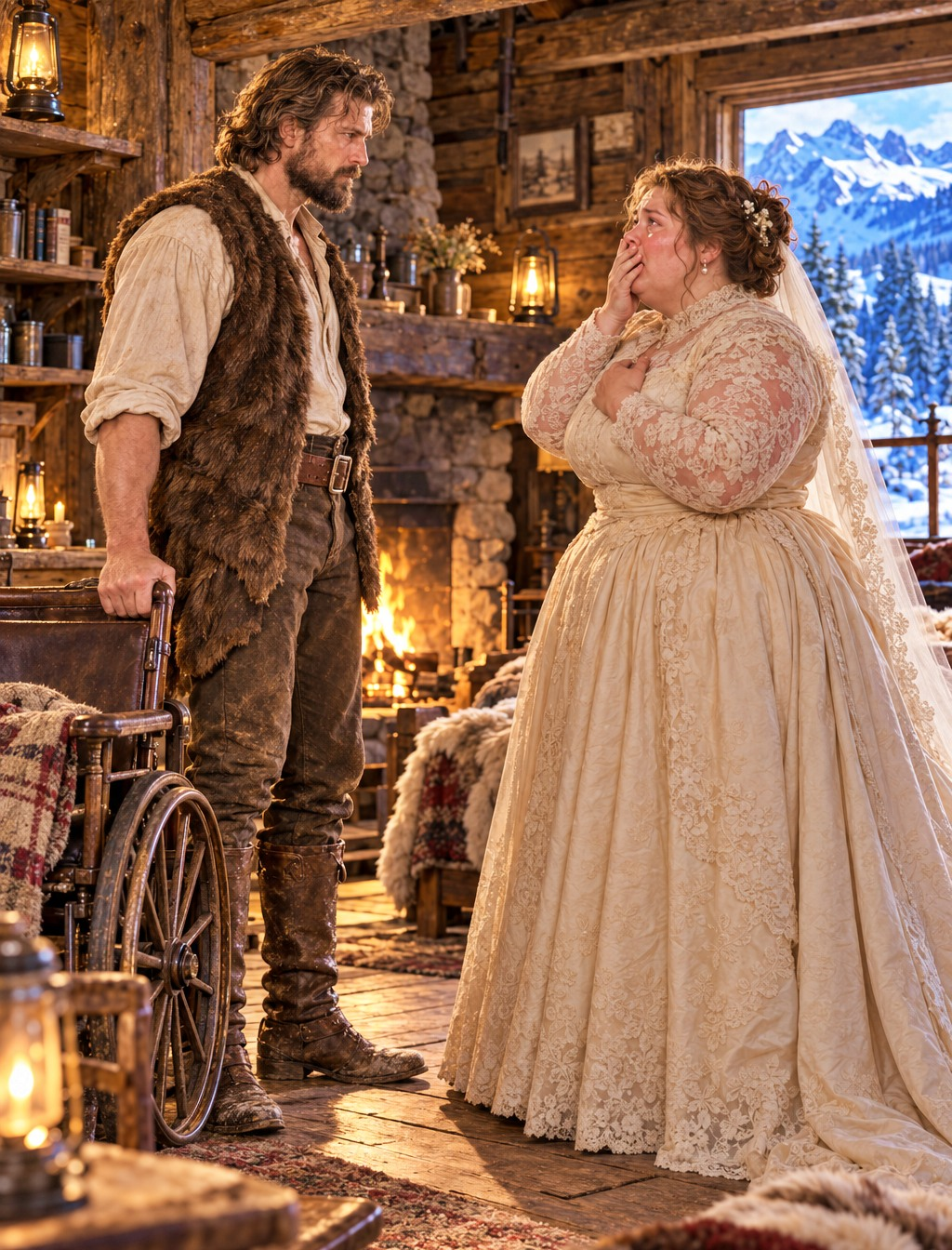
I stood motionless beside the freight wagon.
My father looked exhausted.
Dr. Mercer stood beside him, his expression unusually calm.
For a moment, I wondered whether I was seeing things.
Mercer had been arrested.
Vale had been arrested.
The territorial marshals had promised that everyone involved would remain under guard.
Yet here he was.
Standing beside my father.
Holding a leather medical bag.
Hollis moved between us.
"Stay behind me, Miriam."
Mercer smiled.
"Still playing the hero, Arden?"
Hollis did not answer.
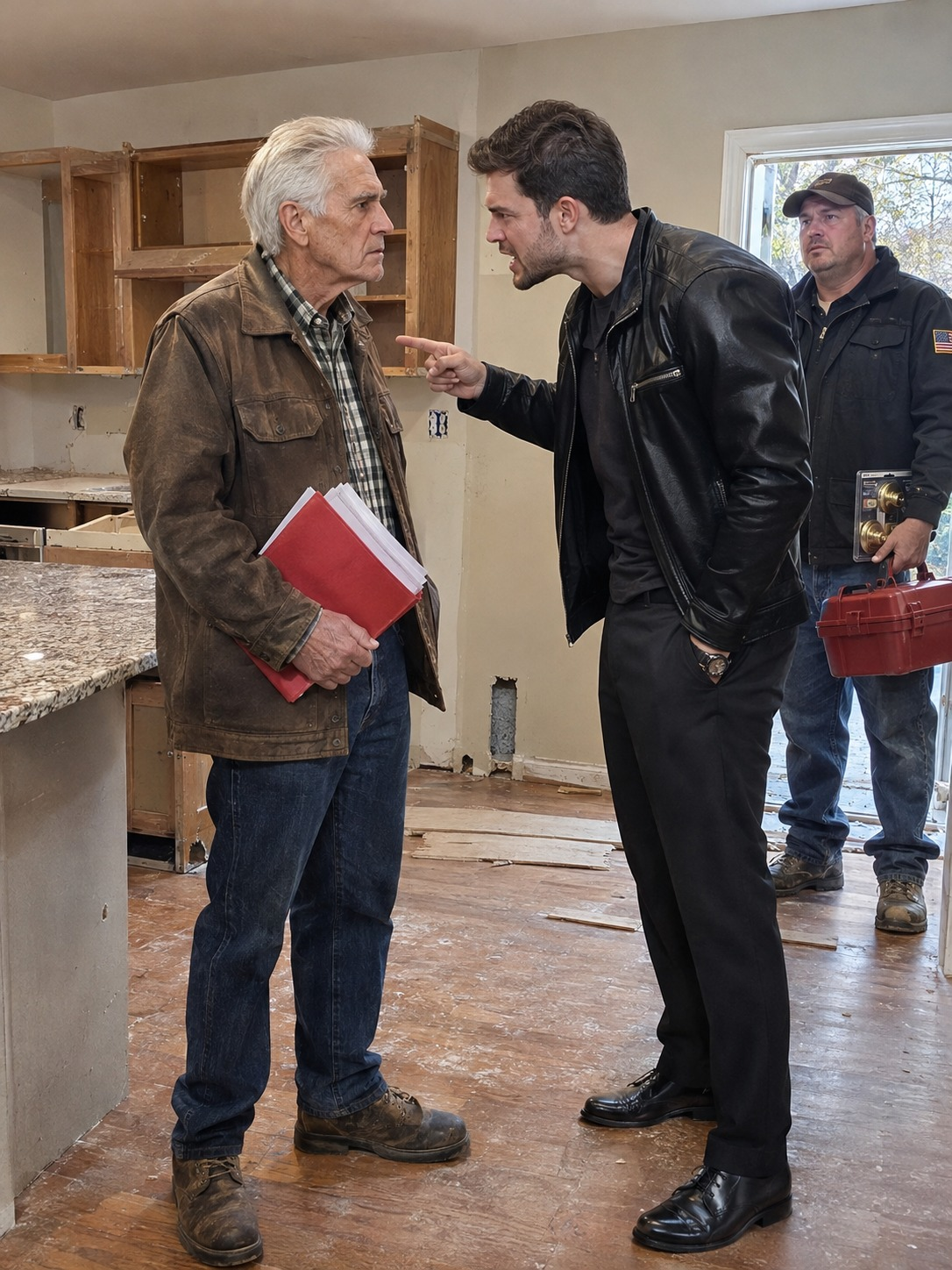
My father stepped forward.
"Listen to me. I know what happened to your mother."
I looked at him.
"You already told me."
"No. I told you what they wanted me to believe."
He looked at Mercer.
The doctor shifted his weight.
My father continued.
"Your mother discovered the payments. She confronted me. She told me she had proof that Vale was stealing land from families."
I swallowed.
"What happened?"
"Mercer came to the house the following morning."
I felt my hands become cold.
My father looked down.
"He told me she needed medicine. He said she had a serious infection and that the treatment would help her recover."
"And you believed him?"
My father nodded.
"I wanted to."
"Did you know the medicine was poisoned?"
He closed his eyes.
"No."
Mercer laughed.
"Your father was a fool, Miriam. He knew perfectly well what was happening."
My father turned toward him.
"Shut up."
Mercer smiled.
"You accepted the money."
"I thought it was payment for the timber lease."
"You accepted it after your wife died."
My father looked as though someone had struck him.
I turned toward him.
"After?"
He nodded slowly.
"Yes."
Mercer stepped forward.
"Enough."
Hollis raised his rifle.
"Don't move."
Mercer stopped.
Then my father reached inside his coat.
Hollis immediately aimed at him.
But my father pulled out a folded document.
He held it toward me.
"This belonged to your mother."
I took it.
The paper was old.
My mother's handwriting covered the first page.
I recognized the opening immediately.
My dearest Miriam,
If you are reading this, something has happened that I could not prevent.
I stopped breathing.
My father looked away.
I continued.
I have spent too many years believing that keeping the truth from you would protect you. Perhaps I was wrong. Perhaps the only thing a mother can truly leave her daughter is the courage to recognize the truth, even when it hurts.
I looked up.
"Where did you get this?"
"From the house," my father said. "I found it behind the kitchen cabinet after your mother died."
I continued reading.
The letter described the land records.
The payments.
The men who had threatened her.
Then I reached the final paragraph.
Your father has made mistakes, Miriam. Some are his own. Others were encouraged by men who knew his weaknesses. Do not let his failures become the measure of your worth. And never believe that the price someone places on you determines what you are worth.
My eyes filled.
The last sentence was underlined.
Forty-two dollars cannot purchase a human life.
I pressed the letter against my chest.
For years, I had wondered why my mother had stayed with my father.
Why she had tolerated his gambling.
Why she had continued trying to save a marriage that seemed to be falling apart.
Now I understood that she had been fighting several battles at once.
And she had been trying to keep me out of them.
Mercer took a step toward us.
"Give me the letter."
Hollis raised his rifle.
"Stay where you are."
Mercer looked at my father.
"Edmund, do something."
My father did not move.
Instead, he reached into his coat again.
This time, he removed a small revolver.
But he did not point it at Hollis.
He pointed it at Mercer.
"You're finished."
Mercer's smile disappeared.
"Edmund."
"You told me she was sick."
"She was."
"You told me the medicine would help."
"It was the best treatment available."
My father shook his head.
"You're lying."
Mercer tried to move.
My father fired.
The bullet struck the wooden platform beside the doctor's foot.
Mercer stumbled backward.
Hollis rushed forward and knocked the weapon from his hand.
One of the marshals seized Mercer.
The other secured my father.
Within minutes, the station was surrounded.
Judge Bell arrived shortly afterward.
He had been following the freight wagon after receiving a warning from the stationmaster.
He examined the letter.
Then he looked at my father.
"Edmund Oaks, you're under arrest for conspiracy, fraud, and the unlawful transfer of property."
My father nodded.
He did not resist.
As the marshals led him away, he turned toward me.
"Miriam."
I looked at him.
"I know I cannot ask you to forgive me."
"No," I answered.
He swallowed.
"But I am sorry."
I watched him for several seconds.
Then I nodded.
"I hope you become a better man, Father."
It was not forgiveness.
Not yet.
But it was the first honest thing I had said to him in years.
The investigation lasted several months.
Judge Bell took possession of the original documents, the survey ledger, the forged transfer agreements, and the medical payment records.
The small building where my mother had taught me to write contained the final missing evidence.
Beneath a loose floorboard, we found a metal box.
Inside were original land deeds, correspondence between Vale and Rusk, and a signed statement from Samuel Pike.
The statement confirmed that the boulder in the canyon had been deliberately released.
Samuel had witnessed the men preparing the trap.
He had attempted to escape.
He had been killed before he could testify.
The evidence also connected Dr. Mercer to the false medical reports and the medicine delivered to my mother.
Several months later, Nathaniel Vale, Gideon Rusk, and Dr. Mercer were formally charged.
The territorial authorities recovered the stolen properties and began returning the deeds to their rightful owners.
The Bitterroot Development Company's operations were suspended.
The families who had lost their land finally had someone willing to hear their claims.
Hollis testified about the canyon accident.
Caleb testified about the medical treatment and the attempts to conceal Hollis's recovery.
Clara presented Samuel's notebook.
And I testified about my father's agreement, the forged documents, and the letters my mother had left behind.
The courtroom was crowded on the day the judge announced the findings.
I sat beside Hollis.
He wore a clean white shirt and a dark brown coat.
He was not using the wheelchair.
He had not needed it for a long time.
When the judge finished reading the ruling, Hollis reached for my hand.
I looked at him.
He smiled.
It was a real smile.
Not the guarded expression I had first seen in the cabin.
Not the careful look of a man who was constantly calculating the distance to the nearest window.
Just a man who had finally been allowed to breathe.
Outside the courthouse, Clara embraced me.
Caleb shook Hollis's hand.
Judge Bell promised that the remaining property claims would be reviewed.
And for the first time, I felt that my mother's work had not been wasted.
There was still one matter left.
My marriage.
One afternoon, several weeks after the trial, Hollis and I sat together on the porch of the mountain cabin.
The wheelchair stood near the window.
It had become almost unnecessary.
I was holding a cup of coffee.
Hollis was repairing a leather saddle.
The afternoon sunlight fell across the clearing.
For a long time, neither of us spoke.
Then Hollis put down his tools.
"Miriam."
I looked at him.
"Yes?"
"I owe you an apology."
I set down my cup.
"For what?"
"For the way our marriage began."
I looked toward the mountains.
"You didn't sell me."
"No. But I made decisions about your life without giving you the information you deserved."
He was right.
He had protected me.
But he had also withheld the truth.
And protection without honesty could become another kind of prison.
"I understand why you did it," I said.
"That doesn't make it right."
"No."
He looked down at his hands.
"I don't want you to feel obligated to stay."
I turned toward him.
"Are you asking me to leave?"
"No."
"Then what are you asking?"
He took a breath.
"I'm asking whether you would choose to marry me again, knowing everything you know now."
I studied his face.
The man before me was no longer the mysterious trapper I had met on the porch.
I knew about the accident.
I knew about Samuel.
I knew about my mother's letters.
I knew about the deception.
I also knew that Hollis had spent months protecting people who could not protect themselves.
He had risked his life to uncover the truth.
And he had never once treated me as though I were worth forty-two dollars.
I reached for his hand.
"I would choose to know you first."
He nodded.
"That's fair."
"Then perhaps we can begin there."
His fingers closed gently around mine.
"There's something else."
I raised an eyebrow.
"What now?"
He smiled.
"I'd like to take you somewhere."
"Where?"
"Down the mountain."
I laughed.
"You mean to town?"
"Perhaps."
"Why?"
He stood and offered me his hand.
"Because I believe a proper wedding deserves flowers."
I looked at him.
"We're already married."
"I know."
"And you want to have another wedding?"
"I want you to have the one you should have had."
For several seconds, I couldn't speak.
Then I stood.
"All right."
He smiled.
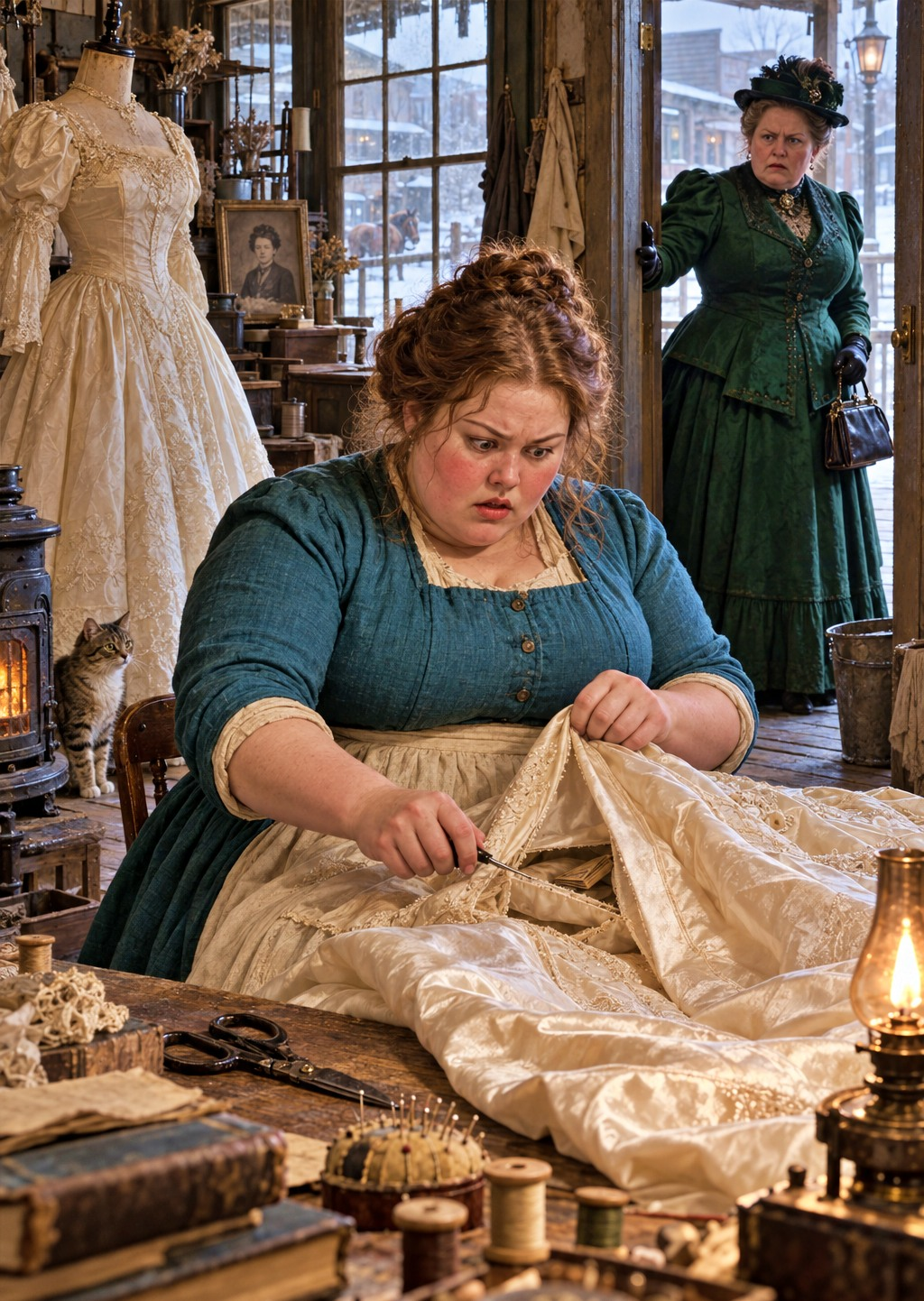
"But this time," I added, "I choose the dress."
"Naturally."
"And the preacher."
"Of course."
"And the flowers."
"Whatever you want."
I narrowed my eyes.
"And nobody gets to negotiate my price."
His expression softened.
"Nobody ever will."
We traveled to Cold Water Basin the following week.
The townspeople watched us enter the church.
Some recognized me.
Some recognized Hollis.
But nobody whispered about the forty-two dollars.
Not anymore.
Judge Bell attended.
Clara and Caleb stood beside us.
The ceremony was simple.
There were flowers.
There was music.
There were witnesses.
And when the preacher asked whether I wanted to remain Hollis's wife, I looked directly into his pale-gray eyes.
"I do."
This time, I meant something entirely different.
I was not agreeing to an arrangement.
I was not accepting a roof in exchange for obedience.
I was choosing a man.
And he was choosing me.
After the ceremony, we returned to the mountains.
The cabin had changed.
Hollis had repaired the porch.
I had planted flowers beside the windows.
We added another table, more chairs, and a proper bedroom with a window overlooking the valley.
Clara visited often.
Caleb began helping Hollis with the trapping business.
The two of them also established a small supply station for families living along the mountain trails.
I began keeping the accounts.
My ability to read contracts and calculate expenses turned out to be considerably more useful than anyone in Cold Water Basin had ever imagined.
Within a year, we had built a modest but successful trading business.
We purchased supplies directly from neighboring families and paid them fairly.
Nobody was forced to surrender property to settle a debt.
Nobody was treated as a commodity.
As for my father, he eventually received a reduced sentence after providing evidence against Vale and admitting his involvement in the fraudulent transfers.
I visited him once.
He looked older.
Quieter.
He apologized again.
This time, I believed he meant it.
But I did not return to live with him.
I understood that forgiveness did not require returning to the place where someone had hurt you.
It meant refusing to let that hurt control the rest of your life.
Years later, I found my mother's final letter tucked inside her old Bible.
It had been written shortly before her death.
I sat beside the cabin window and read it while Hollis worked outside.
My dear Miriam,
If you ever find yourself somewhere unfamiliar, surrounded by people who tell you what you are worth, remember that they do not get to decide.
You are not a debt.
You are not a payment.
You are not an obligation.
You are my daughter.
And that has always been enough.
I folded the letter carefully.
Then I looked through the window.
Hollis was standing beside the woodpile, splitting logs.
He noticed me watching and raised one hand.
I smiled.
He came inside a few minutes later, carrying a bundle of firewood.
"Something on your mind?"
I handed him the letter.
He read it quietly.
Then he placed it beside my mother's photograph.
"She would have been proud of you."
I looked at the picture.
"I hope so."
He pulled out a chair and sat beside me.
Outside, the wind moved through the pine trees.
The mountains stood beneath a clear blue sky.
The cabin smelled of fresh bread, wood smoke, and coffee.
There was a place at the table for two.
There was a warm bed waiting in the back room.
And beside the window stood the old wheelchair.
We had kept it.
Not because Hollis needed it anymore.
But because it reminded us of the years when people had mistaken appearances for truth.
I reached for his hand.
"Do you ever wish you had never married me?"
He looked genuinely surprised.
"Never."
"Even when I ask too many questions?"
"Especially then."
I laughed.
He kissed my forehead.
For the first time in my life, I understood what it meant to belong somewhere without being owned by anyone.
My father had once believed my life was worth forty-two dollars.
Dunore had believed he could purchase a wife for a disabled mountain trapper.
Vale had believed he could buy entire families with forged papers and stolen money.
They had all been wrong.
I had arrived at Hollis Vain's cabin carrying one canvas bag, my mother's Bible, and the belief that my future had already been decided.
But I had discovered something far more valuable than money, property, or revenge.
I had discovered that my life belonged to me.
And I had found a man who understood that love was never supposed to be another kind of ownership.
That evening, Hollis lit the lanterns.
I placed two plates on the table.
He sat beside me, took my hand, and looked toward the mountains beyond the window.
"Home?" he asked.
I smiled.
"Home."
And for the first time, it truly was.
Comments 0