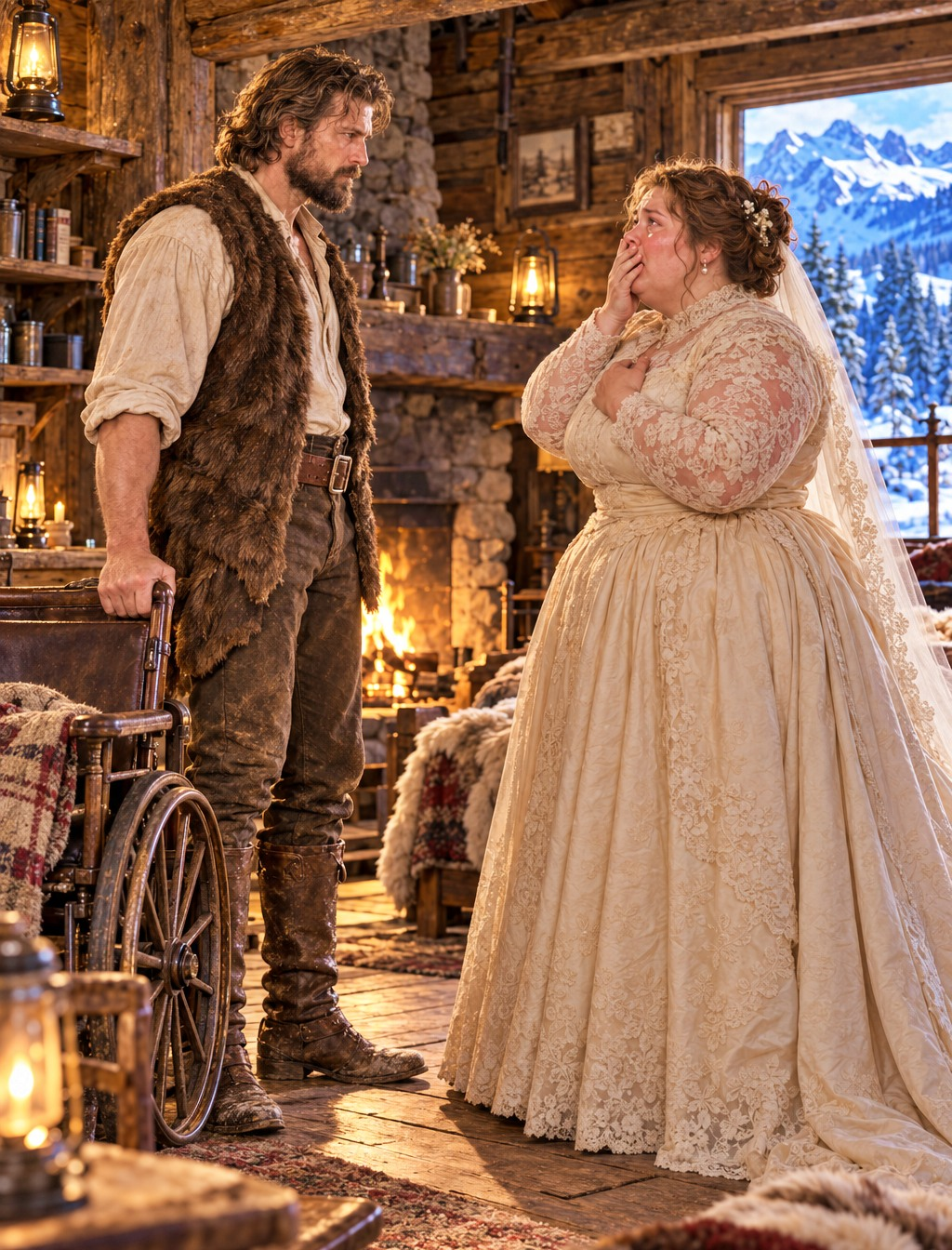
My father was pointing a gun at Judge Bell.
For several seconds, I couldn't understand what I was seeing.
The man who had once carried me on his shoulders through the town fair was standing in front of my mother's grave, threatening the only judge who might finally expose the people responsible for her death.
"Father," I whispered.
He didn't look at me.
His attention remained fixed on Bell.
"Put the documents down."
Bell slowly raised his hands.
"Edmund, think carefully."
"I've been thinking for eight years."
Hollis moved slightly.
My father immediately turned the gun toward him.
"Don't."
Hollis stopped.
I looked at my father's face.
He was sweating.
His hands trembled.
His eyes moved constantly between the people surrounding him.
He was not acting like a man who had planned this carefully.
He looked like a man who had finally run out of places to hide.
"Why?" I asked.
My father glanced at me.
"Miriam, stay out of this."
"Why are you doing this?"
"Because you don't understand."
"Then explain it."
He shook his head.
"You've always been like your mother. Always asking questions. Always believing that everyone owes you an explanation."
I felt tears forming.
"I just wanted you to be my father."
For one brief moment, his expression softened.
Then Vale's voice came from behind the chapel.
"Edmund! Don't let them take the papers!"
My father flinched.
I turned.
Nathaniel Vale was standing near the side entrance, holding a pistol.
He had disappeared during the confusion, but he had not left.
He was waiting.
And my father was still doing what he had always done.
Following the man who promised him money.
Bell spoke calmly.
"Edmund, put the weapon down. Whatever arrangement you have with Vale, it will not protect you."
My father laughed.
"You think I don't know that?"
"Then why are you helping him?"
My father looked at me.
"Because he has the original account book."
Hollis's expression changed.
"What account book?"
Vale smiled.
"The one Eleanor kept before she died."
I felt cold.
The cemetery documents were not the only evidence.
My mother had kept another book.
Perhaps the one containing the complete record of payments.
And Vale still had it.
My father lowered the gun slightly.
"He told me he would destroy it."
I stared.
"Why would he destroy it?"
"Because it proves everything."
I looked at Hollis.
He nodded almost imperceptibly.
The ledger we had found was only part of the evidence.
Vale possessed the original.
The one that could establish exactly who had been paid, when the money changed hands, and who had arranged the canyon accident.
"Where is it?" Hollis asked.
My father looked toward Vale.
"At the old mill."
Vale's expression hardened.
"Shut your mouth, Edmund."
But it was too late.
Bell signaled to the marshals.
One moved toward my father.
The other moved toward Vale.
Then a shot rang out.
The marshal beside the chapel fell behind a gravestone.
Everyone ducked.
Hollis pulled me to the ground.
I heard several shots.
The cemetery filled with shouting.
When I looked up, Vale was running toward the horses.
My father had dropped his gun.
Bell was struggling to rise.
Hollis handed me the documents.
"Keep these."
Then he ran.
I watched him cross the cemetery.
His movements were fast and controlled.
He reached Vale just before the man mounted his horse.
They collided beside the gate.
Vale swung his pistol.
Hollis caught his wrist.
The weapon fell.
They struggled briefly.
Then Hollis forced Vale against the wooden fence.
I started toward them.
But Bell grabbed my arm.
"Stay here!"
I looked back.
My father was kneeling beside the judge.
He had surrendered.
His hands were empty.
He looked smaller than I had ever seen him.
The marshals secured Vale.
Hollis returned a few minutes later.
His coat was torn.
There was a cut above his eyebrow.
But he was standing.
I approached him.
"Are you hurt?"
"No."
"You're bleeding."
"It's nothing."
I touched his face carefully.
He looked down at me.
For a moment, neither of us spoke.
Then he placed his hand over mine.
"We need to go to the old mill."
Bell shook his head.
"Not tonight. I'll send a proper escort."
Hollis looked at the judge.
"If Vale has the original ledger, he'll have people waiting."
"Then we'll take enough men."
I looked toward my father.
He was sitting on the ground beside a gravestone.
His face was buried in his hands.
I walked toward him.
He looked up.
"Miriam."
I stopped a few feet away.
"Why did you do it?"
He wiped his face.
"I owed them money."
"You owed everyone money."
He nodded.
"They told me they could erase the debt."
"By taking Mother's land?"
"Yes."
"And when that wasn't enough, you sold me."
He looked down.
"I thought they would keep you safe."
I stared at him.
"You thought selling your daughter would keep her safe?"
He began to cry.
Not loudly.
Not dramatically.
Just a broken, exhausted sound from a man who had finally run out of excuses.
"I didn't know what else to do."
I felt no satisfaction.
Only sadness.
"Mother knew."
He looked up.
"She knew what?"
"She knew what kind of man you were becoming."
He closed his eyes.
I walked away.
That night, we stayed at the territorial courthouse.
Bell arranged rooms for everyone involved.
Clara remained with Caleb.
The marshals guarded Vale and my father.
Hollis and I were given a small room at the back of the building.
It was the first time we had been alone without the cabin walls surrounding us.
I sat on the edge of the bed.
Hollis removed his coat.
His shirt was torn near the shoulder.
I found a clean cloth and water.
"Sit down."
He looked at me.
"I can do it."
"I know."
He sat.
I cleaned the cut above his eyebrow.
He remained still.
"You could have told me everything earlier," I said.
"Yes."
"Why didn't you?"
He thought for a moment.
"Because I was afraid."
I stopped.
"Of what?"
"That if you knew the truth, you would leave."
I looked at him.
"You thought I would leave because you could walk?"
"No. Because I married you without telling you why."
I lowered the cloth.
"That was wrong."
"I know."
"I don't want another husband who decides what I can handle."
He nodded.
"Neither do I."
I studied his face.
For the first time, he looked less like the mysterious trapper and more like a man who had spent years carrying a burden alone.
"I don't know whether I can trust you completely," I admitted.
He looked down.
"I understand."
"But I want the chance to find out who you really are."
He raised his eyes.
I placed the cloth on the table.
"Without secrets."
He nodded slowly.
"Without secrets."
Outside, the courthouse clock struck midnight.
A knock sounded.
Bell entered carrying a sealed envelope.
"We have a problem."
Hollis stood.
"What happened?"
"One of Vale's men has confessed that the original ledger was moved yesterday."
"Where?"
Bell looked at the envelope.
"To a freight wagon heading south."
Hollis examined the seal.
"How long ago?"
"Several hours."
I felt my stomach tighten.
Bell continued.
"The wagon is expected to reach Rivertown before sunrise."
Hollis looked toward the window.
"Then we leave now."
Bell shook his head.
"You can't go alone."
"I won't."
He looked at me.
I understood immediately.
I was going with him.
The journey south took several hours.
We traveled with two marshals and Caleb, who insisted his wound was sufficiently healed.
Clara remained in Cold Water Basin to help the judge organize the documents.
The road was muddy.
The horses moved carefully through the darkness.
By dawn, we reached the outskirts of Rivertown.
The freight station stood beside a narrow river.
Several wagons were parked near the loading platform.
Men moved crates and barrels.
A bell rang somewhere in the distance.
Hollis dismounted.
"Stay close."
I followed him toward the station.
We found the wagon in the far corner.
Its driver was missing.
One of the marshals examined the cargo.
Then he shook his head.
"Nothing."
I looked inside.
Empty crates.
Sacks of grain.
Several wooden barrels.
No ledger.
Hollis searched beneath the wagon.
Still nothing.
Then I noticed something.
A small metal plate had been attached to the side.
It bore a number.
17.
I crouched.
The plate was loose.
I pulled it away.
Behind it was a narrow compartment.
Inside lay a folded paper.
I opened it.
It contained a single sentence.
The original ledger is where Eleanor first taught her daughter to write.
I stared at the words.
My first school.
The little building beside the old church.
I looked at Hollis.
"That's where we need to go."
He nodded.
But before we could leave, someone shouted from the station entrance.
"Miriam!"
I turned.
My father stood beside a black carriage.
He was no longer wearing the same coat.
His hands were free.
And beside him stood Dr. Mercer.
The man who had escaped from the abandoned station.
My father looked directly at me.
Then he said:
"There's something your mother never told you about the day she died."
Comments 0