The key turned in the lock.
I stood beside my desk with the phone pressed against my ear, listening to the legal representative read my grandmother's statement. Somewhere beyond the bedroom, the apartment door opened with a soft click.
I had locked it.
I was certain I had locked it.
“I'm sorry,” the man on the phone said. “Did you hear that?”
“Yes.”
“Are you expecting someone?”
“No.”
The answer came out as a whisper.
I heard footsteps in the hallway.
One.
Two.
Then silence.
My hand tightened around the phone.
“Sir, someone is inside my apartment.”
“Can you get somewhere secure?”
I looked toward the bedroom door. The hallway was between me and the front entrance. I could retreat into the bedroom and lock myself inside, but I didn't know who had entered or whether the person had a key.
I didn't want to panic.
I also didn't want to pretend that everything was fine.
“I'm going to call for help,” I told him.
“Do that now. I'll remain available.”
I ended the call and reached for my phone's emergency function.
Before I could activate it, a voice came from the hallway.
“Maren?”
My mother's voice.
I froze.
She appeared in the doorway a moment later, carrying her black handbag. Her silver-blonde hair was perfectly arranged, and her midnight-purple coat hung neatly over her arm.
She looked as if she had arrived for an afternoon appointment.
Not as if she had entered her injured daughter's apartment without permission.
“Why didn't you answer my messages?” she demanded.
I stared at her.
“How did you get inside?”
“You gave me a key.”
“You weren't invited.”
“I'm your mother.”
“That doesn't answer my question.”
Her eyes moved toward the papers on my desk.
For a moment, she looked genuinely frightened.
Then she composed herself.
“What have you been reading?”
I stepped between her and the documents.
“Nothing that concerns you.”
Her expression hardened.
“Don't be childish.”
I almost laughed.
The woman who had spent my entire childhood dismissing my questions was standing in my apartment, demanding access to records about an injury she had denied ever happened.
And somehow, she still believed I was the one behaving unreasonably.
“Leave,” I said.
She blinked.
“What?”
“You heard me. Leave my apartment.”
Her gaze shifted toward the front door.
Then she looked back at me.
“You're making a terrible mistake.”
“Maybe. But it will be my mistake to make.”
For several seconds, neither of us moved.
Then my mother placed her handbag on the desk.
“You have no idea what those records could do to this family.”
I felt my pulse quicken.
“That's the second time you've said something like that. What exactly are you afraid of?”
She looked at the folder.
I followed her gaze.
The documents were arranged across the desk, including the childhood intake form, the hospital photograph, and the confirmation that the archive had been opened.
I had not shown her the sealed statement.
I had not told her that Evelyn's legal representative had called.
Yet she was looking at the papers as if she knew precisely what they contained.
“Did you know Grandma left a statement?” I asked.
Her face changed.
It was only a fraction of a second, but I saw it.
A tightening around the mouth.
A slight narrowing of the eyes.
Then she looked away.
“Your grandmother was confused near the end of her life.”
“Was she?”
“She became suspicious of everyone. She imagined things. She wrote letters that made no sense.”
“Then why are you so worried about what she wrote?”
My mother took a step toward the desk.
I stepped sideways, blocking her.
“Don't touch those papers.”
She stopped.
“You have no idea what you're doing.”
“Then help me understand.”
“I've spent years trying to keep you from being hurt.”
“You let me believe I had a minor childhood accident when I had a severe skull fracture.”
Her lips parted.
I had never seen my mother look so completely unprepared.
For the first time, she didn't have an immediate explanation.
She didn't tell me I was exaggerating.
She didn't accuse me of being jealous of Victoria.
She simply stared at me.
Then she said, “Who told you that?”
“Dr. Hayes.”
“And you believed him?”
“He showed me the scan.”
“Scans can be misinterpreted.”
“He consulted a neurologist.”
“Doctors don't know what happened twenty-one years ago.”
“Then tell me.”
She looked toward the window.
I waited.
“Mom.”
Her shoulders stiffened.
“You were a difficult child,” she said finally.
The words struck harder than I expected.
Not because they were new, but because she had chosen them now, when I was asking about a potentially catastrophic injury.
“You were always running around, always getting into things. You never listened. You scared me constantly.”
“I was eight.”
“And Victoria was twelve. I was raising two children, managing a household, and trying to keep everything together.”
I stared at her.
“Are you saying I caused my own injury?”
“I'm saying accidents happen.”
“Then why was there a settlement?”
She flinched.
I saw it.
A small movement, almost invisible, but enough.
“You don't understand the legal circumstances.”
“Then explain them.”
“I can't.”
“Or you won't?”
She picked up her handbag.
For one moment, I thought she was going to leave.
Instead, she pulled a chair away from the desk and sat down.
Her expression changed into the one she used whenever she wanted to make a conversation feel like a private family matter rather than a confrontation.
“Your grandmother had a great deal of money,” she said. “She was involved in several financial arrangements that you knew nothing about. Some of those arrangements required confidentiality.”
“Did one of them involve my medical bills?”
She looked at me.
“I don't remember.”
“You don't remember the hospital, but you remember the garden hose.”
Her face hardened.
“Enough.”
“No.”
The word surprised both of us.
I had never spoken to her that way.
My mother stared at me as if I had broken an unwritten rule.
“Excuse me?”
“No,” I repeated. “I'm not stopping. I'm not going to pretend that I don't remember the things you've said just because you don't want to discuss them.”
She rose slowly.
“You have always been dramatic.”
“And you have always expected me to apologize when you hurt me.”
“That is a disgusting accusation.”
“Then prove me wrong.”
Her hand tightened around the strap of her handbag.
For a moment, I thought she might slap me.
The possibility made my stomach twist, but I refused to step back.
She lowered her hand.
“You need to listen to me very carefully,” she said. “Whatever your grandmother wrote, whatever some retired nurse thinks she remembers, you cannot allow it to destroy the life you've built.”
“My life is already built on a story you told me that doesn't match the medical evidence.”
“Your life is built on the sacrifices I made for you.”
“I didn't ask you to hide my medical history.”
She looked away.
That was when I understood something important.
My mother wasn't trying to convince me that nothing had happened.
She was trying to convince me that whatever had happened, I had no right to question it.
“Leave,” I said again.
She shook her head.
“You'll regret this.”
“Perhaps.”
“You'll lose your sister.”
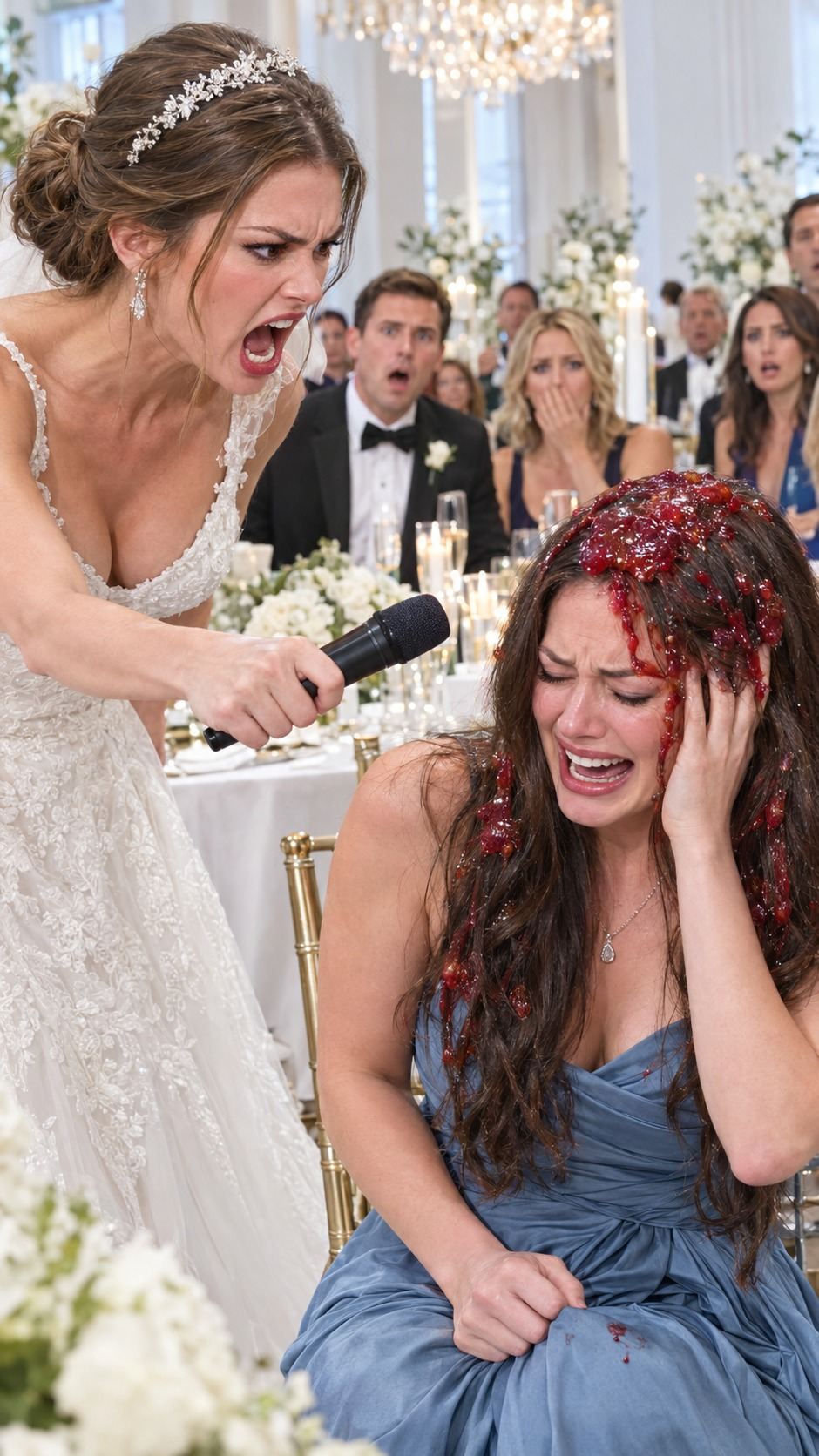
I thought of Victoria standing over me in her wedding gown, dismissing the blood on my face as an unfortunate accident.
“I may already have lost her.”
My mother's expression flickered.
Then she picked up her handbag and walked toward the door.
At the threshold, she turned.
“If you open that statement, don't come crying to me when you discover what your grandmother really was.”
I looked at her.
“I won't.”
She left without another word.
The door closed behind her.
I stood motionless until I heard the elevator doors shut down the hall.
Then I checked the lock and called Caroline.
When she answered, I told her what had happened.
She arrived twenty minutes later and helped me contact the building manager about replacing the lock. We also discussed the unauthorized entry and whether I wanted to make a formal report.
I decided to document it first and preserve any available building access records.
I didn't know whether my mother had entered the apartment because she was worried about me or because she wanted to find the documents.
But I knew she had come without permission.
And I wasn't going to pretend that didn't matter.
That evening, the legal representative called again.
His name was Martin Shaw. He explained that he had verified my identity and was prepared to read the relevant section of Evelyn's statement in full.
I sat at my desk with Caroline beside me.
The apartment door was locked.
The new lock had been installed that afternoon, and I had not given the replacement key to anyone.
“Before I begin,” Martin said, “I need you to understand that this is a statement written by your grandmother. It records her account and her beliefs. It is not a judicial finding, and some of its claims may require independent verification.”
“I understand.”
“Are you ready?”
“Yes.”
I placed the phone on speaker.
Martin began reading.
I, Evelyn Whitmore, make this statement because I believe my granddaughter, Maren, was denied the truth about the injury she sustained as a child.
My throat tightened.
I was present at the family residence on the evening of the incident. I heard a violent impact from the rear garden. When I arrived, Maren was on the ground, and Victoria was standing nearby, visibly distressed.
I closed my eyes.
A patch of wet grass.
A metallic sound.
Victoria crying.
The fragments from my memory seemed to move closer together.
Martin continued.
I did not witness the initial impact. I cannot state with certainty how the injury occurred. However, I saw evidence of more than one event, and I immediately requested medical assistance.
I opened my eyes.
At least my grandmother had acknowledged what she had not seen.
She wasn't claiming to know everything.
She was describing what she remembered.
Victoria accompanied Maren during the transfer to Mercy Regional. I remained responsible for the medical admission and provided information to the staff. When I asked for a full account of the injury, I was told that the matter would be handled privately.
My hands trembled.
Martin paused to turn a page.
Later that evening, a man arrived at the hospital and identified himself as a representative of the Whitmore family. He presented documents concerning liability and financial responsibility. He insisted that the incident be classified as an accident before the full circumstances had been established.
I looked at Caroline.
She had gone pale.
“Who was the man?” I whispered.
Martin continued reading.
I objected. I believed the medical record should reflect the facts available to the treating staff. The man told me that a public investigation would destroy the family and expose the children to unnecessary scrutiny.
My stomach tightened.
I refused to sign the proposed statement.
I leaned forward.
The following morning, I was informed that the hospital had received a liability settlement arrangement. I was told that the payment would cover the expenses associated with Maren's treatment and prevent a prolonged dispute over responsibility.
Martin's voice slowed.
I did not agree that payment should determine the description of the injury. I wrote to the hospital administration and requested that the original notes be preserved.
A pause followed.
Then he read the next paragraph.
Several weeks later, I discovered that an addendum had been entered into the record. It described the injury as an accidental fall. It also instructed staff not to contact the family about the circumstances of the admission.
I pressed my fingers against my lips.
The warning.
The restricted record.
The settlement.
They were all connected.
But the statement still didn't identify who had caused the injury.
Martin turned another page.
I attempted to challenge the amendment through the appropriate channels. I was informed that the matter had been closed and that the family had accepted the settlement. I was warned that further inquiries could jeopardize the financial security of both children.
“Both children,” I whispered.
Caroline nodded slowly.
Victoria had been twelve.
I had been eight.
Whatever had happened in the garden, both of us had been children when the adults began deciding what the official story would be.
Martin continued.
I did not pursue the matter publicly because I feared that doing so would expose Maren to further harm. I now believe that my silence allowed the false account to become part of her identity.
My eyes filled with tears.
I had spent years believing my grandmother had abandoned me emotionally in the final decade of her life.
Now I wondered how many times she had tried to reach me and been prevented from doing so.
I want Maren to understand that I never believed she was responsible for her injury. I never believed that she deserved to be blamed for what happened.
I lowered my head.
For years, I had carried a vague sense that I had somehow been at fault for the accident. My mother had repeatedly described me as careless, reckless, and difficult to supervise.
I had never consciously connected those accusations to the injury.
But the words had remained with me.
Martin read the final section.
I have preserved the correspondence available to me. I have also recorded the name of the person who signed the instruction to classify the injury as an accident. I did not disclose that name to Maren because I believed she needed to be old enough to understand the consequences of the revelation.
He stopped.
I waited.
“There's one final paragraph,” he said.
My heart pounded.
If this statement is being read to Maren, then the conditions I established have been met. She should now be given the original correspondence, including the signed instruction and the settlement agreement.
Martin paused.
Then he added, “The next page contains the name of the person Evelyn identified.”
I gripped the edge of the desk.
“Please read it.”
He was silent for a moment.
Then he said, “The person who signed the instruction was Daniel Whitmore.”
My father.
I stared at the wall.
My father had died when I was nineteen.
For most of my adult life, I had remembered him as a quiet man who rarely involved himself in family arguments. He worked long hours, traveled frequently, and left my mother to manage the household.
He had never been affectionate in an obvious way, but I had believed he loved me.
I remembered him teaching me to ride a bicycle.
I remembered him carrying me upstairs when I fell asleep on the couch.
I remembered the way he used to tap twice on my bedroom door before entering.
And I remembered the last time I saw him alive.
He had been sitting at the kitchen table, reading a newspaper while my mother prepared dinner. I had asked him whether he remembered my accident when I was eight.
He had lowered the newspaper and looked at me for a long moment.
Then he had said, “Your mother took care of everything.”
I had accepted the answer.
I had been nineteen, grieving my grandmother, and preparing to leave home.
I had never asked him again.
Now his name appeared in a statement describing an attempt to classify my childhood injury as an accident before the full circumstances had been established.
“Martin,” I said, “is there proof that my father wrote the instruction himself?”
“The statement identifies him as the signatory. The original document should allow us to verify the signature and the surrounding correspondence.”
“Can you send it to me?”
“Yes. The release is being processed. I expect the authenticated copies to be available shortly.”
I thanked him and ended the call.
For several minutes, Caroline and I sat without speaking.
Then she asked, “Did your father ever explain why he signed legal documents on your behalf?”
“No.”
“Did he ever talk about the accident?”
“Not directly.”
I looked at the papers.
My father had signed the instruction.
My mother had denied the hospital admission.
My sister had accompanied me to the hospital.
My grandmother had challenged the official account.
Each person had occupied a different place in the story.
But the central question remained unanswered.
What had actually happened in the garden?
And why had my father been so determined to call it an accident?
The next morning, I received an email from Martin.
The authenticated statement was attached, along with a copy of the original intake report and a set of correspondence concerning the settlement.
I downloaded the files and stored them securely.
The signature on the instruction matched my father's name, although I knew that the document would need independent examination before anyone could make a definitive claim about its authenticity.
The wording was more disturbing than I had expected.
The instruction stated that the injury should be recorded as an accidental fall and that further inquiries into the circumstances should be directed to the family's legal representative.
There was no explanation of the second impact.
No account of who had found me.
No description of what had happened before I was taken to the hospital.
The settlement agreement referred to a payment made through a restricted liability account.
A separate page listed the person authorized to manage the funds.
Diane Whitmore.
My mother.
I sat back in my chair.
The money had not simply appeared from an anonymous insurance provider.
My mother had been authorized to manage the account associated with the settlement.
That did not prove she had caused my injury or known exactly what happened in the garden.
But it meant she had been connected to the financial arrangement from the beginning.
I printed the relevant pages and added them to my folder.
Then I read the correspondence between my grandmother and the hospital administration.
Evelyn had written several letters challenging the description of the injury. She repeatedly requested that the original medical notes be preserved and that the record reflect the severity of the fracture.
The replies were formal and evasive.
One letter stated that the matter had been resolved through a private agreement.
Another said that the hospital could not discuss the case further without authorization from the designated representative.
A third contained a handwritten note in the margin.
Mrs. Whitmore has been advised to discontinue inquiries.
The note was signed with initials I didn't recognize.
I photographed it and added it to the timeline.
Then I opened the final attachment.
It was a scanned copy of an envelope containing a handwritten letter from my grandmother to my father.
The date was three weeks after my admission.
The first sentence read:
Daniel, I will not allow you to make Maren believe that she caused what happened to her.
I stopped breathing.
I read it again.
Then I scrolled down.
You know what I saw in the garden. You know why Victoria was frightened. And you know that the second impact occurred after Maren was already on the ground.
My hands began to shake.
The letter continued.
I will not accuse either child of something I cannot prove. But I will not accept a false account simply because it is easier for the adults to live with.
I pressed my fingers against my mouth.
My grandmother had not known exactly how the injury began.
But she had been certain that the second impact occurred after I was already on the ground.
I read the next paragraph.
If you insist on keeping the medical record restricted, then at least tell Maren the truth when she is old enough to understand it. Do not allow her to grow up believing she was careless, clumsy, or responsible for what happened.
My eyes blurred.
I had grown up believing exactly that.
I had been called careless whenever I forgot something.
Clumsy whenever I dropped a glass.
Difficult whenever I questioned an explanation.
And after every disagreement, my mother had reminded me that I had always been a child who caused trouble.
I had never connected those words to my childhood injury.
Now I wondered whether the story of the accident had become a way to define me before I was old enough to challenge it.
The final paragraph was shorter.
If you cannot tell her the truth, then I will.
I stared at the sentence.
My grandmother had intended to tell me.
She had tried to challenge the hospital record.
She had written to my father.
And somewhere along the way, the opportunity had disappeared.
I checked the date on the letter.
It had been written less than a month after the injury.
The next document was a reply from my father.
It contained only three paragraphs.
He acknowledged receiving the letter.
He said that he understood Evelyn's concerns.
And he insisted that further discussion would be harmful to the family.
At the bottom, he had written one final sentence.
Victoria has already said enough.
I read the words several times.
Victoria had already said enough.
My sister had been twelve years old.
She had been present when I was injured.
She had accompanied me to the hospital.
And my father had apparently decided that whatever she had said should be enough to close the matter.
I sat very still.
I didn't know whether Victoria had caused the injury, witnessed it, or tried to help me afterward.
I didn't know what she had told the adults.
But I knew that my father had believed her account was important enough to mention in a letter refusing further discussion.
I reached for my phone.
Victoria's name appeared in my contacts.
I could call her.
I could demand an explanation.
I could tell her what I had found and force her to respond.
But I remembered the last conversation.
You have no idea what it was like.
You need to stop before you destroy everything.
I didn't want another argument.
I wanted the truth.
So I sent one message.
I have Grandma's letter to Dad. It says you were in the garden when I was hurt, and that you told the adults something afterward. I'm not accusing you of anything. I want to know what you remember.
I watched the screen.
The message was delivered.
No response came.
Ten minutes passed.
Then twenty.
I set the phone down and returned to the documents.
At 4:16 p.m., the phone vibrated.
Victoria had replied.
Her message contained only six words.
I told them what Dad made me.
I stared at the screen.
Before I could type an answer, another message appeared.
And Maren, he wasn't the person who hurt you first.
A third message followed immediately.
The person who caused the first impact is still alive.
Then my phone began ringing.
Victoria.
I answered.
For several seconds, I heard only her uneven breathing.
Then my sister whispered, “You need to come to the apartment where Grandma kept her records.”
“Where is it?”
She gave me an address.
I recognized it immediately.
It was the old family apartment where my grandmother had lived during the final years of her life.
“Why are you there?” I asked.
“Because Mom is here, too.”
My stomach tightened.
“What does she want?”
Victoria's voice broke.
“She found the original photograph.”
I stood so quickly that the room spun.
“What photograph?”
“The one showing what happened after you fell.”
I gripped the desk.
“Victoria, tell me what you remember.”
She began to cry.
Then she whispered the words that made every sound in my apartment seem to disappear.
“Maren, I didn't hit you the first time—but I saw who did, and that person is standing beside Mom right now.”






Comments 0