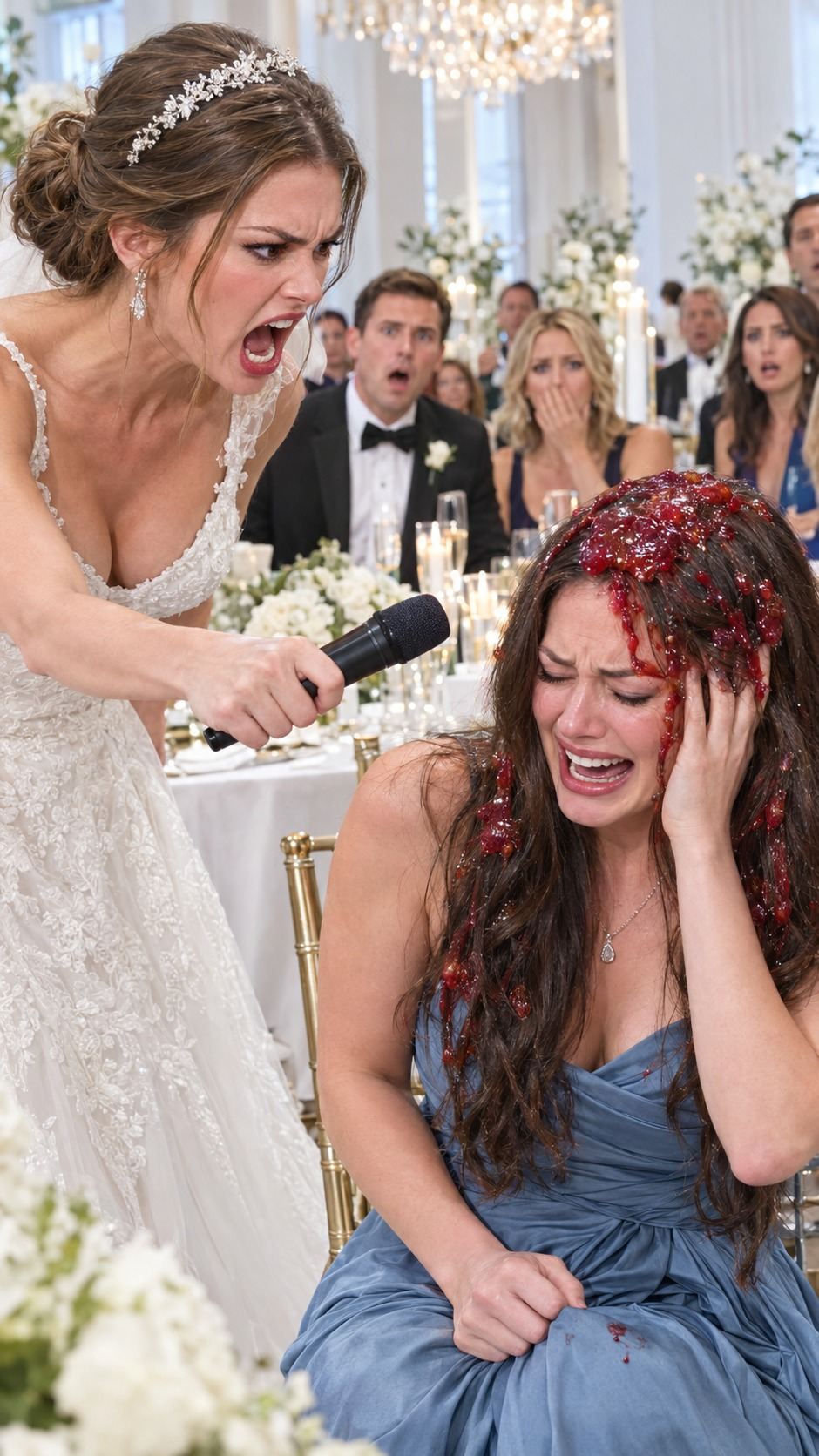
Dr. Hayes was still holding his phone when I asked the question that had been burning through my mind.
“Was it my mother?”
He didn't answer immediately.
The silence lasted only a few seconds, but I watched his expression closely enough to notice the moment he decided not to speculate.
“The caller identified herself as a family member,” he said. “The records office hasn't confirmed her identity. They contacted me because the request specifically mentioned your archived medical file and the settlement documents.”
“Did she know I was here?”
“I don't know.”
“Did she know about the fracture?”
“Again, I can't say.”
I pulled the blanket closer to my chest. The hospital room suddenly felt too bright, too exposed. I could hear a cart rolling along the corridor, the distant beep of a monitor, and someone laughing softly at the nurses' station.
Ordinary sounds.
Ordinary people.
And somewhere beyond those walls, someone was trying to find out what I knew.
“Can they give my records to her?” I asked.
“Not simply because she claims to be related to you. Your records are confidential, and access must follow the applicable procedures. I've documented your concerns, and the records office has been asked to preserve the available material.”
“Then why did they call you?”
“Because the request raised questions about a restricted historical file that is now relevant to your current treatment.”
I looked at the printed page on the bedside table.
D. W.
Two letters.
They could mean anything. A billing administrator. A lawyer. A person whose name I had never heard.
But my mother's initials were D. W., and she had spent twenty-one years insisting that my childhood injury was nothing more than a minor accident.
I had spent most of my life accepting her version because challenging it had always come with a price.
Now I wondered how much of my childhood I had surrendered simply because I wanted to remain part of my family.
“Can you tell me who originally restricted the record?” I asked.
“Not yet. The archive has returned a partial document, not the complete file. We need the original admission paperwork, the associated billing records, and any documentation explaining the restriction.”
“How long will that take?”
“I can't promise a specific timeframe.”
I nodded.
He was being careful, and I understood why. He was a physician, not an investigator. He could explain what the scan showed, preserve relevant medical information, and help me obtain records through the proper channels. He couldn't turn an unexplained billing code into proof of a crime.
Still, the distinction felt unbearable.
For twenty-one years, my family had offered me a simple story.
I fell.
I bumped my head.
I recovered.
There was nothing else to discuss.
Now the doctors had found evidence that the injury was far more serious than that story allowed.
And the first time I tried to investigate, someone called the hospital to ask whether I had discovered the settlement documents.
“Dr. Hayes,” I said, “if you were me, would you go home?”
He considered the question.
“I would make sure I had somewhere safe to recover, particularly after a head injury and an incident involving a family member. You don't have to resolve everything tonight.”
“I don't think I can go back to my mother's house.”
“Is that where you live?”
“No. I have my own apartment. But my mother has a key.”
His expression changed slightly.
“Do you believe she would enter without your permission?”
“I don't know anymore.”
It was the first honest answer I had given myself all evening.
Dr. Hayes explained that the team would continue monitoring my symptoms and would not discharge me until the medical staff considered it appropriate. He also encouraged me to tell the hospital's social worker about the messages I had received.
Before leaving, he placed the printed document inside a folder.
“We'll keep the medical information secure,” he said. “And I recommend that you preserve the messages on your phone. Don't delete anything that might help establish what happened tonight or explain the contact you've received.”
“I already saved screenshots.”
“Good.”
He paused at the door.
“One more thing, Maren. The old fracture is evidence of a serious past injury. It isn't, by itself, proof of who caused it or why. Whatever you discover, give yourself time to understand it.”
I looked at the bandage around my temple.
“I've spent twenty-one years being told not to look.”
He didn't argue.
Then he left me alone with the folder, the messages, and the growing suspicion that the people who knew my childhood best might be the people least willing to tell me the truth.
At 2:06 a.m., my phone began vibrating against the bedside table.
Victoria's name appeared on the screen.
I let it ring.
It stopped.
A moment later, it rang again.
I watched the screen until the call ended, then placed the phone facedown.
She had ignored me when I was bleeding at her wedding. She had continued the reception while I left alone. She had sent messages accusing me of ruining her evening.
What could she possibly want now?
The phone vibrated again.
This time, a text appeared.
Pick up. We need to talk about what you told the doctors.
I sat up so quickly that pain pulsed through my head.
What I told the doctors?
I had told them that Victoria struck me with a microphone. I had described the dizziness and the bleeding. I had answered questions about my childhood.
Nothing about the old fracture had been public knowledge.
I typed slowly.
What do you mean?
The reply came almost immediately.
Mom said you were asking about the past.
I stared at the message.
My mother had spoken to Victoria.
Of course she had. They were probably still together after the reception, sitting in a private room while the guests drank champagne and congratulated the bride.
But I hadn't told my mother about the scan.
I hadn't told Victoria.
I hadn't told anyone in the family about the settlement code.
I had barely had time to understand it myself.
I haven't told either of you anything about my medical records, I wrote.
Victoria called again.
This time, I answered.
“What did you tell them?” she demanded.
Her voice was low and hurried. I could hear noise behind her, perhaps people moving through the wedding venue.
“I told the doctors what happened at the reception.”
“I'm talking about the old records.”
I gripped the phone.
“How do you know about those?”
She fell silent.
“Victoria?”
“Mom said you were digging around in things that don't concern you.”
“Things that don't concern me? It's my skull.”
“Don't start.”
I closed my eyes.
There it was again. The familiar warning, delivered in the same tone she had used when we were children and I dared to question her.
Don't start.
Don't make trouble.
Don't ruin things for everyone else.
“Did you know I had a serious head injury when I was eight?” I asked.
She exhaled sharply.
“I don't remember.”
“You were twelve. You lived in the same house.”
“I said I don't remember.”
“Did Mom ever tell you I was taken to a hospital?”
“No.”
The answer came too quickly.
I waited.
She didn't add anything.
“Then why are you calling me about the records?”
“Because you're going to turn an accident into something ugly.”
I stared at the wall.
“Which accident?”
“The one when you were little.”
My heart began to pound.
I hadn't told her what Dr. Hayes had said about the fracture. I hadn't described the scan, the severity of the injury, or the settlement.
Yet Victoria was already defending a childhood accident that she supposedly didn't remember.
“What do you know about it?” I asked.
“Nothing.”
“Then why are you frightened of me asking questions?”
“I'm not frightened.”
“Your voice is shaking.”
“Because you're doing this on my wedding night!”
I pulled the phone away from my ear.
For several seconds, neither of us spoke.
Then I brought it back.
“Victoria, did you know that I had a depressed skull fracture?”
Her breathing changed.
It was subtle, but I heard it.
A short inhalation.
A pause.
Then she said, “You need to stop talking to those doctors.”
The line went dead.
I sat motionless, listening to the silence after the call.
Victoria had not answered my question.
She had not denied knowing about the injury.
She had told me to stop talking to the doctors.
I took a screenshot of the messages and wrote down the time of the call. Then I placed the phone on the bedside table and pressed both hands against my knees until the trembling subsided.
I wasn't going to call her back.
I wasn't going to beg her to explain.
If my sister knew something, I needed evidence, not another argument in which she could accuse me of being difficult.
A soft knock sounded at the door.
I looked up.
A hospital social worker introduced herself and asked whether she could come in. Her name was Elaine, and she carried a small notebook.
I told her about the assault, my mother's reaction, the messages from Victoria, and the anonymous warning about my childhood.
I also told her that my mother possessed a key to my apartment.
Elaine listened without interrupting.
When I finished, she asked whether I felt pressured to return home or speak to anyone in my family before I was ready.
“Yes,” I admitted. “I feel as if they'll make my life unbearable if I don't do what they want.”
“Has that happened before?”
I looked at my hands.
“Yes.”
I told her about the broken wrist when I was twelve, the money Victoria had taken when I was seventeen, and the years of being blamed whenever I refused to give in.
I had never put the incidents together before. I had treated each one as an isolated disagreement, something that could be resolved if I apologized, kept the peace, or tried harder to understand my sister.
Elaine didn't tell me what to think about my family.
Instead, she helped me consider practical steps: securing my apartment, identifying someone I trusted, preserving the messages, and avoiding confrontations while I was recovering.
She also explained that I could ask the hospital to document my account of the assault and that any concerns about the childhood injury could be addressed through appropriate medical and legal channels.
When she left, I felt exhausted.
But I also felt less helpless.
For years, I had believed that setting a boundary was the same as starting a fight.
Now I understood that I could refuse to participate in an argument without surrendering my right to ask questions.
I could say no.
I could wait.
I could protect myself.
And I could demand the truth without needing my mother's permission.
By morning, the pain in my head had settled into a persistent throb. The medical team reviewed my condition, discussed the risks associated with the recent injury, and gave me instructions for follow-up care.
The old fracture remained the greater mystery.
Dr. Hayes told me that the hospital had located a reference to a paper archive stored at a regional records facility. The original file would have to be retrieved and authenticated before anyone could draw conclusions about the restricted entry.
I asked whether I could receive a copy of my own records.
He explained the process and helped me submit the appropriate request.
I also asked for documentation of my current injury.
That request was straightforward.
The recent wound, the imaging, the treatment, and my account of the assault were all part of my current medical record.
The childhood injury was different. Its history was incomplete, and the settlement code raised questions that would require additional verification.
I understood the difference.
I wanted the truth, but I wanted a truth that could stand on its own.
Before I left the hospital, Caroline sent me a message.
I can drive you home if you need help. Just tell me where you are.
I accepted.
She arrived later that morning, wearing jeans and a gray sweater, her hair pulled into a loose ponytail. She looked as if she hadn't slept.
When she saw the bandage on my temple, she stopped walking.
“Oh, Maren.”
I tried to smile, but the movement hurt.
“I'm okay enough to leave.”
“That's not what I meant.”
She hugged me carefully, avoiding my injured side.
Then she stepped back.
“Have you heard from Victoria?”
“Yes.”
“What did she say?”
“That I should stop talking to the doctors.”
Caroline's expression tightened.
“That's not normal.”
“No,” I said. “It isn't.”
She helped me gather my belongings and drove me to my apartment. During the journey, she kept the conversation light, asking whether I needed water or whether the temperature was comfortable.
I was grateful.
I didn't want to spend the entire morning discussing my family. I wanted to sit in my own living room, close my curtains, and breathe without wondering what someone else expected from me.
But when we reached my building, Caroline noticed a black sedan parked near the entrance.
“Is that your mother's car?” she asked.
I looked through the windshield.
It was.
The vehicle belonged to Diane Whitmore. I had ridden in it hundreds of times as a child and recognized the small silver ornament hanging beneath the rearview mirror.
My stomach tightened.
“She knows where I live,” I said.
“Do you want me to stay?”
I hesitated.
Part of me wanted to go upstairs alone, lock the door, and pretend that nothing had changed.
Another part remembered the anonymous message.
You need to stop asking about what happened when you were eight.
“Yes,” I said. “Please stay for a little while.”
We entered the building together.
The elevator ride felt interminable. When the doors opened on my floor, I walked toward my apartment and stopped.
A white envelope lay on the doormat.
My name was written across the front in my mother's familiar handwriting.
No stamp.
No return address.
Just my name.
I looked down the corridor, but no one was there.
Caroline stood beside me.
“Do you want to open it?”
I picked up the envelope.
It was heavier than an ordinary letter. Something rigid rested inside, shifting slightly when I tilted it.
I unlocked the door and stepped into my apartment.
Everything appeared normal.
The curtains were drawn. The cushions were in place. The small framed photograph of my parents and me sat on the bookshelf where I had left it.
I placed the envelope on the kitchen counter.
For several seconds, I simply stared at it.
Then I opened the flap.
Inside was a folded sheet of paper and a small, faded photograph.
The photograph showed a hospital corridor.
A child sat in a wheelchair beside a woman whose face was partly obscured by the camera angle.
The child wore a pale hospital gown.
A thick bandage covered the right side of her head.
I recognized the shape of my own face.
I recognized the small birthmark near my left eyebrow.
It was me.
I turned the photograph over.
On the back, someone had written a date matching the year of my childhood injury.
Beneath it were five words.
ASK YOUR MOTHER WHO DROVE.
I unfolded the paper.
The message inside contained only two sentences.
You were not taken to the hospital because you fell.
You were taken there because someone found you after the second impact.
My fingers went numb.
Caroline read the words over my shoulder and whispered my name.
I couldn't answer.
The photograph had already changed everything I thought I remembered. But the phrase second impact suggested something far more disturbing than the accident my mother had described.
I turned the picture over again.
The woman beside the wheelchair wore a bracelet with a small silver charm.
I had seen that bracelet before.
I had seen it in photographs from my childhood, in the jewelry box my grandmother kept locked in her bedroom, and in a framed picture that had disappeared from my mother's house years ago.
It belonged to my grandmother, Evelyn Whitmore.
She had died when I was twenty-one.
For as long as I could remember, my mother had insisted that Evelyn had never been involved in my childhood injury.
I looked at the photograph again.
Then I noticed something I had missed the first time.
A second figure stood at the far end of the hospital corridor, partially hidden behind the open door of a treatment room.
The image was faded, but the person's face remained visible.
I brought the photograph closer to my eyes.
My breath caught.
The figure was a young woman with copper-red hair.
A young woman who looked unmistakably like Victoria.
And beneath the photograph, inside the envelope, lay a photocopy of an old hospital intake form with one handwritten name beside the words PERSON WHO BROUGHT THE CHILD—
Victoria Whitmore.






Comments 0