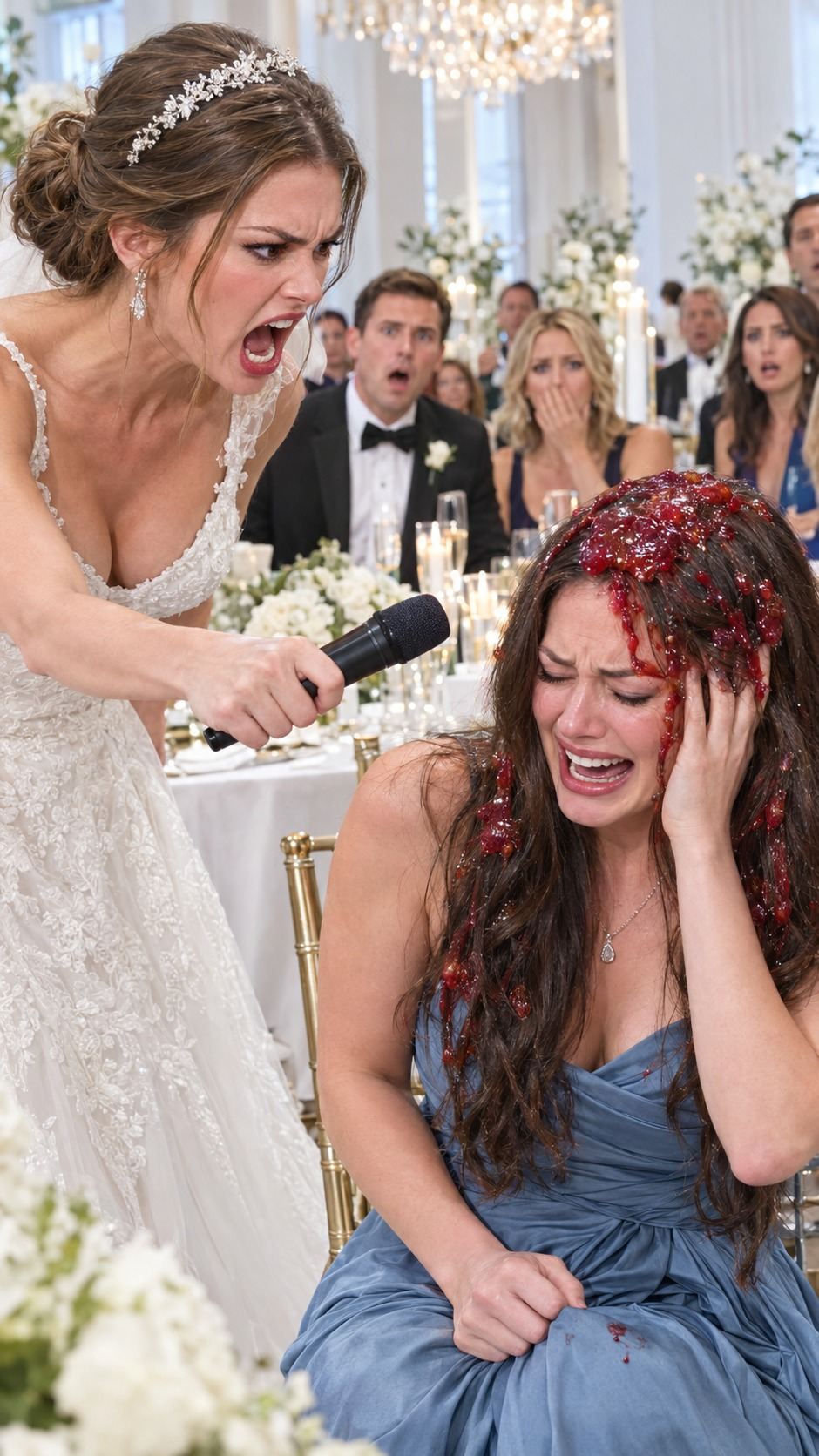
“Maren, I didn't hit you the first time—but I saw who did, and that person is standing beside Mom right now.”
Victoria's words echoed through my apartment.
I held the phone against my ear, staring at the copies of my father's letters spread across the desk. My sister was crying, but I couldn't tell whether she was frightened, ashamed, or finally exhausted from carrying a secret for twenty-one years.
“Victoria, listen to me,” I said. “I'm not going to accuse you of anything over the phone. I need you to tell me what happened.”
“I can't.”
“You just told me you saw who hurt me.”
“I know what I saw.”
“Then tell me.”
She drew a shaky breath.
“Mom found Grandma's original photograph. She's at the apartment where Grandma kept her records. She brought someone with her.”
“Who?”
“I can't say it while they're standing here.”
My stomach tightened.
“Then leave.”
“It's not that simple.”
“Why not?”
“Because Mom has the original file, and she says she'll destroy it before anyone else sees it.”
I looked at the documents on my desk.
The authenticated copies were safe. The hospital had confirmed the existence of the original admission report, and Martin Shaw had preserved my grandmother's statement. Even if my mother destroyed the photograph, she couldn't erase every record of what had happened.
But Victoria didn't know that.
“Don't touch anything,” I told her. “Don't argue with Mom. If you feel unsafe, leave and contact someone who can help you.”
“You don't understand. She says everything we did was to protect the family.”
“What did you do, Victoria?”
Her breathing stopped for a moment.
Then she whispered, “I lied.”
The call ended.
I stood motionless, holding the phone.
For years, I had imagined that the truth would arrive as a single, undeniable revelation. Someone would confess, a document would expose everything, and I would finally understand why my family had treated my childhood injury as a secret.
Instead, the truth had come in fragments.
A medical scan.
A restricted settlement.
My grandmother's letters.
My father's signature.
And now my sister's admission that she had lied.
I wasn't going to let fear decide what happened next.
I called Caroline and told her what Victoria had said. She arrived shortly afterward, bringing a folder containing copies of every document we had preserved.
We reviewed the evidence one final time before leaving.
The hospital records established that my childhood injury had been severe and that the official description had been amended. My grandmother's statement documented her objections to that amendment. My father's correspondence showed that he had participated in the decision to restrict further inquiries. The settlement paperwork identified my mother as the person authorized to manage the associated funds.
None of those documents, by themselves, established precisely who had caused the injury.
That was what remained.
I placed the copies in my bag.
“I'm going to hear what Victoria has to say,” I told Caroline. “But I'm not going there to forgive anyone.”
Caroline nodded.
“You don't owe anyone forgiveness just because they're finally willing to talk.”
“I know.”
“And you don't have to stay if you feel threatened.”
“I know that, too.”
We left together.
I had spent two days trying to solve the mystery of my childhood from a distance. Now I was going to confront the people who had shaped the story, but I would not go unprepared, and I would not allow anyone to take the evidence away from me.
For the first time, I wasn't entering a family confrontation hoping they would tell me the truth.
I was entering it knowing that the truth existed independently of what they chose to say.
The old apartment looked smaller than I remembered.
It had been my grandmother's home for years, filled with books, framed photographs, and the furniture she had collected throughout her life. After her death, my mother had kept the property and used it to store boxes of family records.
I remembered the narrow hallway, the wooden cabinet near the entrance, and the small room where Evelyn used to write letters.
When Caroline and I arrived, the apartment door was open.
Victoria stood in the hallway.
Her face was pale, and her copper-red hair was pulled back so tightly that it accentuated the dark circles beneath her eyes. She wore a simple black dress, a far cry from the extravagant wedding gown she had worn when she struck me with the microphone.
She looked older than she had a few days earlier.
Not physically, exactly.
She looked like someone who had finally run out of ways to avoid a conversation.
“Thank you for coming,” she said.
I didn't embrace her.
“Where's Mom?”
“In the living room.”
“And the other person?”
Victoria looked down.
“Dad's old attorney. Mr. Caldwell.”
I stopped.
“My father's attorney?”
“He handled the settlement.”
The pieces shifted again.
The man who had arrived at Mercy Regional after my injury. The person who had presented the liability documents. The representative my grandmother had challenged.
Mr. Caldwell had been part of the story from the beginning.
“Does he have the original photograph?” I asked.
“Mom does.”
“Then let's see it.”
Victoria stepped aside.
My mother stood beside the living-room table, holding a large brown envelope. Her expression was rigid, and her handbag rested on a chair.
Mr. Caldwell sat across from her.
He was an elderly man with silver hair and a dark suit. A leather briefcase lay beside his feet.
When I entered, he stood.
“Maren,” he said. “I'm sorry that circumstances have brought us together like this.”
“Then you should have helped my grandmother when she asked for the truth.”
He lowered his eyes.
My mother gave an irritated sigh.
“This is exactly why I didn't want you coming here.”
“You didn't want me asking questions.”
“I didn't want you being manipulated by people who have no idea what our family went through.”
I looked at the envelope in her hands.
“What's inside?”
“Old family photographs.”
“Then show me the one Victoria mentioned.”
My mother tightened her grip.
“No.”
I nodded once.
“Then we'll leave.”
I turned toward the door.
“Maren, wait,” Victoria said.
I stopped but didn't turn around.
“Please,” she whispered. “Just let me tell you.”
I faced her.
“Then tell me the truth.”
She looked at our mother.
Diane's expression became cold.
“Victoria, don't.”
My sister flinched.
That single movement told me more than any denial could have.
For most of her life, Victoria had been able to do whatever she wanted because my mother protected her from consequences. But protection had never been unconditional. It depended on Victoria following the rules my mother established.
Now my sister was trapped between the truth and the person who had taught her to fear it.
“I was twelve,” Victoria began. “We were in the garden. You were playing near the steps, and Mom was angry with you because you had broken something in the house.”
My mother interrupted.
“That is not what happened.”
Victoria's face crumpled.
“You told me to say I didn't remember!”
“I told you not to invent things.”
“You told me what to say at the hospital.”
“Enough!”
The shout reverberated through the room.
I remained still.
“Victoria,” I said, “what happened in the garden?”
My sister wiped her cheeks.
“You were standing near the old metal garden chair. Mom was arguing with you. You wanted to go inside, and she grabbed your arm.”
My mother's face had gone white.
“Stop lying.”
Victoria shook her head.
“I can't do this anymore.”
She looked at me.
“You pulled away. You stumbled and fell against the stone edge near the steps. You hit your head, and you weren't moving.”
My hands grew cold.
I could almost hear the metallic crack from the memory that had returned to me.
“What happened next?” I asked.
Victoria swallowed.
“Mom panicked. She kept telling you to get up. Then she tried to pull you by the arm.”
My breath caught.
“And the second impact?”
Victoria closed her eyes.
“She dragged you, and your head struck the metal base of the garden chair.”
The room fell silent.
I gripped the back of a chair.
My mother began shaking her head.
“She was hysterical. She doesn't know what she's saying.”
Victoria looked directly at her.
“I remember the sound.”
For the first time, my mother had no immediate response.
Victoria continued.
“You weren't conscious. I thought you were dead. I screamed for Grandma, and she came outside. She pushed Mom away from you and called for an ambulance.”
I could barely hear my own breathing.
“Why did the hospital form say you brought me there?”
“Because Grandma rode with you, but she told me to stay close to you. I held your hand when they took you inside. When the nurse asked who had accompanied you, I answered before Grandma could explain.”
She wiped her face.
“I thought if I told them what happened, Mom would go to prison. She said you had fallen, and Dad told me that if I changed the story, the family would be destroyed.”
I stared at her.
“You were twelve.”
“I know.”
“You were a child.”
“I know.”
“Why didn't you tell me when we grew up?”
Victoria's face twisted with shame.
“Because the longer I waited, the worse it became. At first, I thought I was protecting Mom. Then I was protecting Dad. After he died, I told myself that revealing the truth would only hurt everyone for no reason.”
She looked down at her hands.
“And then I got used to being the daughter who had done nothing wrong.”
The confession was not an excuse.
But it was the first time Victoria had admitted that she had chosen silence, year after year, because silence benefited her.
I took a slow breath.
“Did you know about the settlement?”
“Yes.”
“Did you receive any of the money?”
“No. Mom controlled it. She told us it was meant to cover your medical expenses and protect the family from a lawsuit.”
“Did you know the records had been changed?”
“I knew Dad had signed something. I didn't know the exact wording until recently.”
I looked at my mother.
“Is that true?”
She lifted her chin.
“I did what I believed was necessary.”
“To protect yourself?”
“To protect all of you.”
“By letting me believe I was careless and responsible for my own injury?”
“You were eight. You wouldn't have understood.”
“I understand now.”
My voice was quiet.
That seemed to frighten her more than shouting would have.
“You don't understand what would have happened if the truth came out,” she insisted. “Your father could have lost his position. Victoria could have been questioned. The family would have been dragged through a public investigation.”
“You were an adult. You were responsible for what happened to me.”
“I never intended to hurt you.”
I looked at the envelope.
“Intent doesn't change the injury.”
My mother stared at me.
For once, I didn't feel the urge to soften my words to make her more comfortable.
I had spent years protecting her from the consequences of her own behavior. I had mistaken her distress for evidence that I had been cruel.
I wasn't going to do that anymore.
“Show me the photograph,” I said.
She hesitated.
Then she placed the envelope on the table.
Inside were several photographs and a folded document.
The first image showed the garden.
I recognized the stone steps, the metal chair, and the narrow path leading to the kitchen.
The second showed my grandmother kneeling beside me while Victoria stood nearby, crying.
The third photograph had been taken moments later.
My mother stood over me, her face contorted with panic. My grandmother was holding a telephone. Victoria was reaching toward my hand.
The photograph did not prove every detail of the accident, but it confirmed that the family had documented the scene and that the event was not simply the harmless fall my mother had described.
Beneath the photographs lay a handwritten statement signed by Daniel Whitmore.
My father had written that I had suffered an accidental fall and that no further investigation was necessary.
The date was the morning after my hospitalization.
My grandmother's objections were attached behind it.
I read every page.
Then I placed the documents back on the table.
“I'm taking copies,” I said.
Mr. Caldwell cleared his throat.
“You're entitled to seek independent advice regarding your records and any potential legal claims. I would strongly recommend that you do so before making decisions.”
“I intend to.”
My mother looked at him sharply.
“You said this would remain private.”
He met her gaze.
“I said I would advise you on the documents. I did not promise to conceal evidence of a serious injury.”
For the first time, he looked ashamed.
He explained that he had prepared the settlement paperwork under instructions from my father and had failed to challenge the amended description as he should have. He admitted that he had prioritized preventing a public dispute over ensuring that the medical record accurately reflected what was known.
He did not claim that the settlement had been proper simply because it had been signed.
He did not ask me to forgive him.
Instead, he agreed to provide a complete copy of his retained correspondence to the appropriate authorities and to cooperate with any lawful review.
I thanked him without offering absolution.
Then I turned to my mother.
“I'm going to have the records reviewed independently. I'm going to speak to the hospital and get legal advice. I won't discuss this privately again if you continue trying to control what I can know.”
Her eyes filled with tears.
“Maren, please.”
I waited.
For years, that word had been enough to stop me.
Please don't tell anyone.
Please don't upset your father.
Please don't embarrass your sister.
Please don't make things harder for the family.
But this time, I heard the word without surrendering to it.
“I need you to understand that I am not doing this to destroy you,” I said. “I'm doing it because I deserve an honest account of my own life.”
My mother lowered her eyes.
“I know.”
It was the first time she had said those words without arguing afterward.
I didn't know whether she meant them.
I didn't need to decide that day.
The following months were difficult, but they were no longer governed by secrets.
The hospital completed its review of the historical file. The original intake report, the amended description, the billing records, and the settlement correspondence were preserved and authenticated. My grandmother's letters were included in the review, along with the photographs from the garden.
I met with an independent attorney who explained the legal options available to me, including the limits imposed by the passage of time. I chose to pursue the remedies that remained available and to cooperate with the appropriate review of the altered record.
The hospital corrected the historical summary where the evidence supported doing so. It documented the discrepancies and retained the original versions rather than pretending that the changes had never occurred.
My father's signature remained on the instruction.
My mother's name remained on the settlement account.
And Victoria's statement became part of the record.
None of those facts could restore the childhood I had lost. They could not erase the years I had spent believing that I was clumsy, difficult, or somehow responsible for the injury.
But they could stop the false account from being the only account that survived.
Victoria cooperated with the review.
She acknowledged that she had repeated the story her parents told her and that she had remained silent when she became an adult. She also provided a written statement describing what she remembered from the garden.
She did not ask me to forgive her.
Not at first.
She simply answered questions, provided the information she had withheld, and accepted that her choices had hurt me.
My mother initially resisted. She argued that the family had been under extraordinary pressure and that she had believed secrecy would protect everyone.
Eventually, she acknowledged that she had caused my second injury while trying to move me after the initial fall. She admitted that she had allowed the official description to conceal the severity of what happened and had encouraged both daughters to remain silent.
She also acknowledged that she had repeatedly blamed me for being careless because it was easier than confronting her own actions.
That admission did not undo the damage.
It did, however, remove the last excuse she had used to keep the truth hidden.
The financial settlement was reviewed separately. The available records established how the funds had been administered, and the relevant authorities determined what further action was appropriate. I did not recover every dollar that had been spent, nor did I expect money to repair what had happened.
What mattered most was that the account could no longer be used to silence me.
I changed the locks on my apartment permanently.
I established clear boundaries with my mother and sister, and I stopped accepting private explanations in place of documented facts. I continued medical follow-up for the old injury and the more recent wound from the wedding.
The physical recovery took time.
So did the emotional one.
Some nights, I still woke remembering the sound of metal striking stone. Other days, I found myself apologizing for things that weren't my fault.
When that happened, I reminded myself that a feeling was not a verdict.
I could be frightened without being guilty.
I could love someone without trusting them.
And I could refuse to forgive before I was ready.
Caroline remained beside me through the process. She never demanded that I be brave, never pushed me toward reconciliation, and never treated my uncertainty as weakness.
She helped me find a therapist who understood childhood trauma and family secrecy. With time, I began to separate the memories I could verify from the beliefs I had inherited.
I learned that healing did not require me to remember every detail.
It required me to stop allowing other people to decide what my memories meant.
Nearly a year after the night of Victoria's wedding, I received a letter from my sister.
It was handwritten.
I left it unopened on the kitchen counter for two days before deciding to read it.
Victoria wrote that she had spent much of her life believing silence was the same as loyalty. She had thought that protecting our mother meant keeping the family together, and that admitting the truth would make her responsible for everything that followed.
She acknowledged that she had benefited from the lie.
She had been allowed to remain the daughter who had done nothing wrong while I carried the identity of the careless child who had caused trouble.
She apologized for striking me with the microphone at her wedding. She did not call it an accident. She admitted that she had been angry with me before the toast and that she had lost control when I challenged her in front of the guests.
She also apologized for leaving me alone after the injury.
The letter ended with a sentence that I read several times.
I know you may never trust me again, but I won't ask you to pretend that what I did was harmless.
I folded the letter and placed it in a drawer.
I wasn't ready to forgive her completely.
But I appreciated that, for once, she had not asked me to make her feel better about what she had done.
Several weeks later, we met in a quiet café near my apartment.
Victoria arrived alone.
She looked nervous, and she kept her hands folded on the table.
“I don't expect you to forgive me,” she said.
“Good.”
She nodded, accepting the answer.
“I just wanted to say it to your face.”
“You already said it in the letter.”
“I know. But I owed you more than a letter.”
I studied her.
For the first time in our lives, she wasn't trying to win the conversation. She wasn't blaming our mother, our father, or the circumstances of our childhood for every choice she had made.
She was simply sitting with the consequences.
“I don't know what our relationship will look like,” I told her.
“I understand.”
“I won't cover for you again.”
“I know.”
“And I won't let you hurt me and then tell me that I imagined it.”
Her eyes filled, but she didn't look away.
“You shouldn't have had to.”
We didn't embrace.
We didn't pretend that everything was repaired.
But we finished our coffee, spoke honestly for the first time in years, and agreed that any future relationship would have to be built on truth rather than obligation.
It wasn't the sisterhood I had imagined when we were children.
It was the beginning of something more honest.
And that was enough.
On the anniversary of my grandmother's death, I returned to the old apartment one final time.
The property had been sold, and the new owners had agreed to let me collect the last box of Evelyn's personal belongings that had remained in storage.
Inside were her recipe books, several framed photographs, and the small wooden jewelry box I remembered from childhood.
The clasp was still broken.
I opened it carefully.
Beneath the velvet lining lay a folded note addressed to me.
The handwriting was unmistakably hers.
Maren, if you are reading this, I hope you have learned that the truth does not belong to the person who speaks the loudest. It belongs to the facts, to the memories we are brave enough to examine, and to the people willing to admit when they have been wrong.
I sat on the floor and read the note again.
You were never responsible for the adults' choices. Whatever happened in that garden, you deserved care, honesty, and protection. I am sorry that I could not give you all three when you needed them most.
Tears blurred the page.
My grandmother had not been perfect. She had remained silent for too long, hoping that she could protect me without exposing the family. Her caution had cost me years of confusion.
But she had eventually left a trail of evidence, and she had made sure that someone could help me follow it.
I folded the note and placed it in the jewelry box.
Then I carried the box out of the apartment.
I didn't need to keep the old house to preserve my grandmother's memory.
I didn't need my mother's approval to understand my childhood.
And I didn't need my sister to become the person I had once imagined before I could build a life of my own.
I had spent years believing that the truth would destroy my family.
Instead, the truth had shown me which parts of that family could survive without lies.
My mother and I remained distant. We exchanged occasional messages, but I no longer accepted guilt as a substitute for accountability. She began counseling and, over time, stopped demanding that I forgive her on her schedule.
I didn't promise that we would become close again.
I promised only that any future relationship would depend on honesty.
Victoria continued doing the work necessary to make amends. We spoke occasionally, and our conversations grew less guarded. Trust returned slowly, through actions rather than declarations.
My medical recovery continued, too. The wound from the wedding healed, leaving a small scar near my temple. The old fracture remained part of my history, but it no longer defined my identity.
I kept copies of the authenticated records in a secure place.
Not because I wanted to revisit the past every day, but because I refused to let anyone rewrite it again.
One spring morning, I stood beside the window in my apartment and watched sunlight spread across the floor.
My grandmother's jewelry box rested on the bookshelf.
Beside it stood a photograph of Caroline and me, taken on a day when I had laughed so hard that my eyes had closed.
For years, I had thought a happy ending meant recovering the family I had lost.
Now I understood that a happy ending could mean building something different.
I had my health, my independence, my friends, and the freedom to decide whom I trusted. I had a truthful account of my childhood, and I no longer had to defend my right to know what had happened to me.
The people who had hidden the truth could not return those lost years.
But they could no longer take any more from me.
I turned away from the window and went to prepare breakfast.
For the first time in my life, the quiet in my apartment felt like peace rather than the silence before someone told me what I was allowed to know.
And when I sat down to eat, I did not feel the need to apologize for taking up space at my own table.






Comments 0