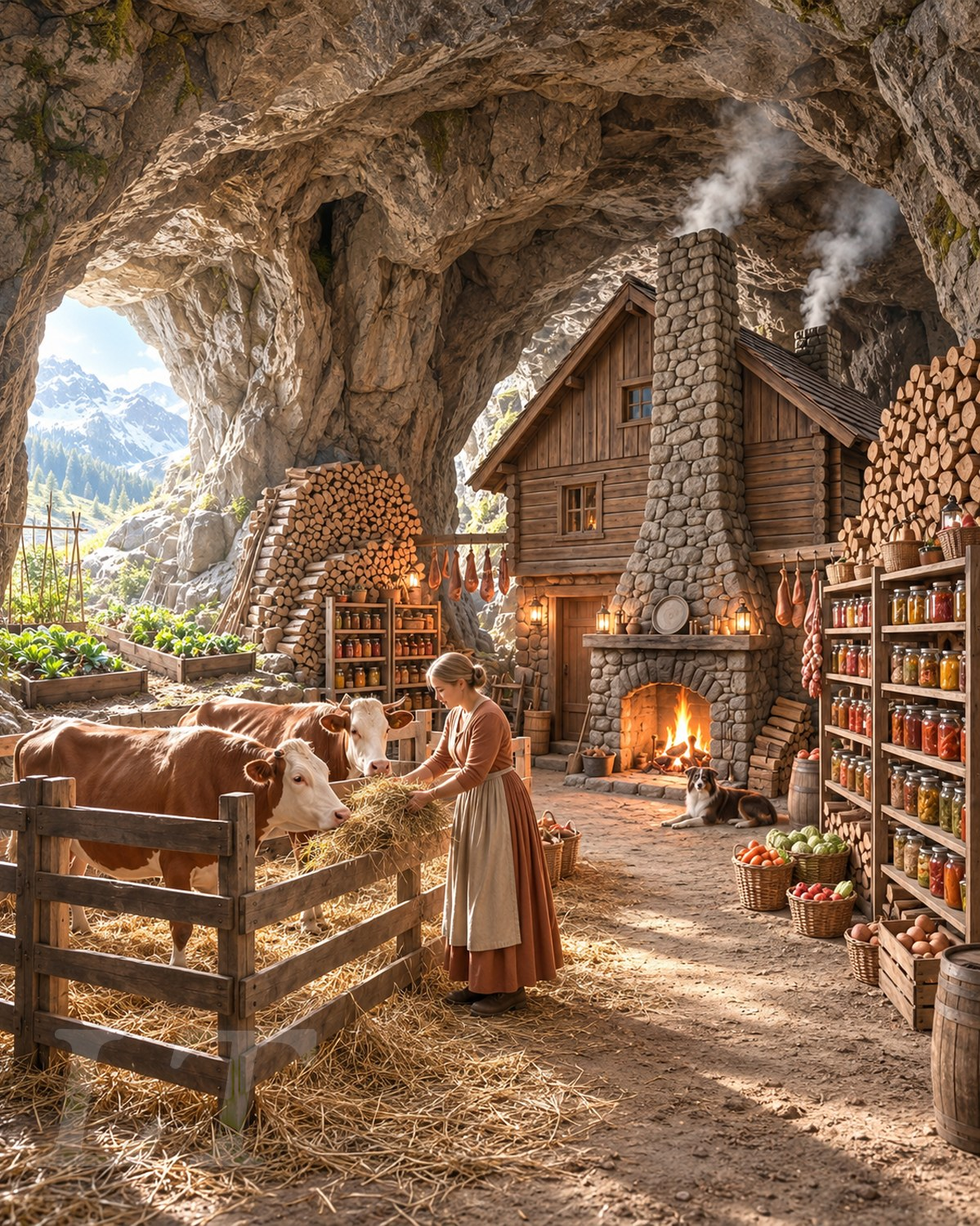
I was dragging my only suitcase down the frozen steps when my brother's wife shouted from the doorway:
"Get off this property. You are no longer family!"
Lafayette Foxwell stood behind her, holding a folded legal document.
On the back of my grandmother's old handkerchief, I had written three words:
"I will survive."
My brother watched me disappear into the snow.
And he never opened the door.
My name was Viola Foxwell, and I was thirty-six years old when I discovered that losing a husband was not the worst thing that could happen to a woman.
The worst thing was discovering that the people who shared her blood could look directly into her eyes and decide she was no longer worth protecting.
It happened in November of 1887, in Montana Territory.
I had been widowed for several months.
My husband, Emory, had died during a bitter cold spell while checking his trap line several miles north of our homestead. A sudden storm had caught him before he could return.
I still remembered finding him.
His body had been lying beside a snow-covered pine tree. One hand rested near his hunting rifle, and his coat was covered with a thin layer of white.
For a moment, I had thought he was asleep.
I called his name.
Then I touched his cheek.
It was colder than anything I had ever known.
That memory followed me everywhere.
After his death, I had continued working because stopping meant thinking, and thinking meant remembering the sound of my own voice calling for a man who would never answer again.
I chopped wood.
I carried water.
I repaired the fence.
I fed the animals and patched the holes in the roof.
Every morning, I woke before sunrise and worked until my hands could barely close.
The cabin Emory and I had built together was not beautiful, but it was ours.
We had raised its walls with our own hands.
He had taught me how to repair the roof, how to sharpen an axe, and how to recognize when a storm was coming.
Sometimes, when I walked across the wooden floor, I could almost hear his boots behind me.
I had believed that keeping our home standing would keep a small part of him alive.
I was wrong about many things that year.
The first warning came on a Tuesday morning.
Florentina, my brother Lafayette's wife, arrived carrying a leather document case.
She was a tall woman with carefully arranged blonde hair and a habit of speaking as if every sentence were a decision that could not be questioned.
She placed several papers on the kitchen table.
I was kneading bread when she did it.
"What are these?" I asked.
"Property documents."
I wiped my hands on my apron and looked down.
The first page contained Lafayette's full name.
The second contained a description of the homestead.
The third contained a legal statement concerning ownership.
I read it twice.
Then a third time.
Something inside my chest tightened.
"Why is Lafayette's name on this?"
Florentina removed her gloves.
"Because the property belongs to him."
I looked toward the door.
"That isn't possible."
She gave me a small, impatient expression.
"Emory placed the homestead claim in your brother's name years ago. You know that."
I knew.
Emory had explained it to me at the time. The land arrangements had been complicated, and he believed putting the claim under Lafayette's name would protect the family's interests.
Lafayette had been my brother long before he became the legal name on a piece of paper.
I had trusted him.
I had never imagined that the distinction would matter.
"Your brother has decided to make use of the property," Florentina continued. "We have family coming from Ohio. They will need the cabin."
I stared at her.
"What about me?"
She glanced at the bread dough on the table.
"You will have to make other arrangements."
For several seconds, I could not speak.
Then I turned toward the window.
Lafayette was outside, standing near the woodpile.
He was splitting a log.
He had been my closest companion when we were children. When our father died, Lafayette had promised he would always look after me.
I remembered him carrying me across a flooded creek when I was eight.
I remembered him giving me his coat when I was cold.
I remembered believing that there was nothing in this world that could make him abandon me.
I walked outside.
"Lafayette."
His axe stopped.
He looked up.
"Come inside."
He glanced toward the cabin.
"Not now, Viola."
"Did you know?"
He said nothing.
I approached him.
"Did you know Florentina was planning to put me out?"
His jaw tightened.
"We've discussed it."
"How long?"
He looked down at the axe in his hands.
"Lafayette, how long?"
"Four months."
The words seemed to strike harder than the winter wind.
Four months.
He had known for four months.
During those four months, I had been repairing the roof.
During those four months, I had been chopping wood and hauling water.
During those four months, I had been keeping the home that my husband and I had built.
I had been doing all of it while my own brother quietly prepared to remove me.
"You watched me work," I whispered.
He looked uncomfortable.
"I didn't know how to tell you."
"You could have told me the first day."
"Florentina handled the papers."
"You're my brother."
He rubbed his forehead.
"I have responsibilities now."
I looked toward the cabin.
Florentina was standing in the doorway.
She had heard everything.
"Family is coming," she said. "This arrangement is already settled."
I turned back to Lafayette.
"Where am I supposed to go?"
He looked at the ground.
There was my answer.
Not a word.
Not an offer of shelter.
Not even a suggestion.
Just silence.
I returned to the cabin and packed.
I owned very little.
A spare dress.
Two blouses.
A small bundle of personal belongings.
My grandmother's handkerchief.
Some salt pork.
A tin cup.
And Emory's old steel trap.
I wrapped the trap carefully in a piece of cloth.
It was heavy, but I could not leave it behind.
I also had eleven dollars and forty cents.
That was everything.
Eleven dollars and forty cents.
I counted the money twice before putting it into my pocket.
Florentina watched me from the kitchen.
"There's no reason to make this unpleasant," she said.
I did not answer.
She followed me toward the door.
"You should consider yourself fortunate that Lafayette is allowing you to leave peacefully."
I stopped.
For one moment, I wanted to turn around and tell her everything I had been holding inside.
I wanted to remind her that I had helped repair the fence after her arrival.
That I had cooked meals when she was sick.
That I had spent entire days preparing food for the winter while she sat near the fire discussing plans for a larger house.
But I knew she would not care.
Some people do not want to understand the pain they cause.
They simply want it to become inconvenient enough that everyone stops mentioning it.
I opened the door.
The cold air struck my face.
Behind me, Florentina said something I would remember for the rest of my life.
"There. That wasn't so difficult."
I stepped outside.
Lafayette stood behind the bedroom window.
I saw him.
He saw me.
For one brief moment, our eyes met through the glass.
I waited.
I do not know what I expected.
Perhaps I thought he would suddenly remember the creek, the childhood promises, or the years when we had only each other.
Perhaps I thought he would open the door and say that this had gone too far.
He did not.
I turned away.
The snow had begun to fall.
I walked down the frozen hillside with my belongings in one hand and Emory's old trap in the other.
The wind pushed against my back.
My boots slipped several times.
I did not look behind me.
If I had looked back at that cabin, I might have collapsed.
And I had no intention of dying on the land where my husband and I had once been happy.
The road west was almost empty.
Most settlers avoided the sandstone cliffs beyond the valley. They considered the ground useless for farming, the rock too difficult to work, and the surrounding slopes too dangerous during winter.
But I remembered something.
Six weeks earlier, a sudden hailstorm had forced me to leave the main trail.
I had taken shelter near the cliffs.
That was when I discovered the opening.
It was narrow, partially hidden behind a natural stone formation.
I had entered only far enough to escape the hail.
But I remembered the temperature inside.
It had been warmer than the air outside.
Not warm enough to be comfortable.
But noticeably different.
At the time, I had thought nothing of it.
Now, with nowhere else to go, I began walking toward it.
By late afternoon, my feet were numb.
The cloth sack rubbed against my fingers.
My stomach was empty.
I had eaten a small piece of bread that morning, and the cold seemed to make every hunger pain sharper.
The mountains appeared darker as the sun lowered.
I kept walking.
At one point, I stumbled and fell onto one knee.
The steel trap struck the ground.
I sat in the snow for several seconds.
My hands were shaking.
"Emory," I whispered.
I closed my eyes.
"I don't know what I'm doing."
The wind moved through the dry grass.
There was no answer.
I stood again.
I had to.
The opening appeared just before sunset.
I recognized the unusual formation of sandstone immediately.
A narrow entrance sat between two enormous rock walls.
I moved closer.
Four feet wide.
Perhaps six feet high.
I placed one hand against the stone.
It was cold, but not as cold as the rocks outside.
I stepped inside.
The chamber extended nearly thirty feet into the mountain.
The floor was dry.
The ceiling was solid.
The air was still.
I walked farther in, carefully examining the walls.
There were no obvious signs of recent habitation.
No abandoned campfire.
No animal bedding.
No broken tools.
Nothing.
I set down my sack.
For the first time that day, I allowed myself to sit.
I took out the handkerchief and unfolded it.
My grandmother Lou had given it to me when I was a girl.
She had always told me that survival was not about having the strongest body or the most money.
It was about learning to notice things other people ignored.
"The land tells you how to survive, child," she used to say. "But first, you have to learn to listen."
I looked around the chamber.
Then I examined the sandstone again.
The surface retained a faint warmth from the afternoon sun.
I pressed my palm against it.
The stone had absorbed heat throughout the day.
It would release that heat slowly.
I began thinking.
A wooden wall across the entrance could reduce the wind.
An insulating layer of dried grass and clay could block drafts.
A controlled fire could provide additional warmth.
If I could direct the smoke outside through a suitable passage, I might be able to keep a small fire burning.
The cave would not need to become a comfortable house.
It only needed to keep me alive.
That night, I wrapped myself in my coat and lay on the stone floor.
The ground was hard.
The darkness was complete.
Somewhere outside, coyotes began calling.
I pulled the handkerchief against my chest.
I thought about Emory.
I thought about the cabin.
I thought about Lafayette standing behind that window.
For the first time since his death, I felt completely alone.
But morning came.
And I was still breathing.
I sat up, rubbed my hands together, and looked toward the entrance.
The first thing I needed was wood.
Without wood, there would be no walls.
Without walls, the wind would enter freely.
And without protection, the cave would become nothing more than another place to freeze.
I remembered an abandoned surveying shack beside the old freight trail.
Its roof had collapsed during the previous spring.
I had passed it many times while traveling with Emory.
There might still be usable lumber.
I gathered my belongings, secured the steel trap to the side of my sack, and stepped outside.
The sky was pale.
The wind was beginning to rise.
I started toward the trail.
I had no proper tools.
No horse.
No money to hire anyone.
Only my hands.
But I had made a decision.
I would build something.
Even if it took every remaining ounce of strength in my body.
By the time I reached the old surveying shack, the sun was already climbing.
Most of the roof had fallen inward.
Several boards were buried beneath broken timber.
I pulled at the first piece.
It did not move.
I tried again.
A splinter tore into my palm.
I ignored it.
After nearly an hour, I managed to free one board.
Then another.
Then a third.
I worked until my shoulders burned.
When I finally gathered six usable boards, I stopped.
Six.
That was all I could carry.
I tied them together with a piece of old rope and dragged them toward the cave.
The journey back took nearly twice as long.
By the time I reached the entrance, my hands were bleeding and my legs were shaking.
I dropped the boards onto the stone floor.
Then I sat beside them.
Six boards.
A small sack of belongings.
Eleven dollars and forty cents.
And a mountain that nobody else wanted.
I looked at the boards for a long time.
Then I remembered Emory.
He had once spent an entire week repairing a section of fence after a storm.
I had complained that the damage was too large.
He had smiled and said:
"One piece at a time, Vi. That's how anything gets built."
I closed my eyes.
I could almost hear him saying it again.
When I opened them, I reached for the first board.
I was not going to give up.
Not that day.
Not the next.
Not while I still had strength in my hands.
I began measuring the cave entrance.
I had no ruler, so I used the length of my arm and marked the stone with a small piece of charcoal.
The first wall would need to be strong enough to resist the wind.
The second would create an insulating pocket of air.
I could fill the gaps with clay, dry grass, and whatever material I could gather.
It was not a perfect plan.
But it was a beginning.
I placed the first board against the stone.
Then I heard something.
A distant sound.
A horse.
I froze.
The hoofbeats came from the direction of the valley.
Someone was approaching the cliffs.
I stepped toward the cave entrance and looked through the narrow opening.
A rider had stopped on the lower trail.
The horse was dark.
The rider wore a long winter coat.
I could not see his face.
He looked toward the mountain.
Then, slowly, he turned his horse toward my cave.
I stepped backward into the shadows.
The rider began climbing the slope.
And when he reached the first rock formation, he called my name.
"Viola Foxwell!"
I knew that voice.
But I had never expected to hear it there.
Đã hoàn thành Chapter 1. Chapter 2 sẽ tiếp nối chính xác từ cảnh người cưỡi ngựa xuất hiện trước cửa hang, không quay lại kể lại nội dung cũ, giữ nguyên nhân vật, mốc thời gian và diễn biến câu chuyện.
Do giới hạn độ dài mỗi lượt trả lời, cần tiếp tục qua các lượt kế tiếp để bảo đảm mỗi chương có đủ độ dài và không bị cắt ngang.






Comments 0