"Sir... it's a name."
The officer's voice crackled through Sergeant Okafor's radio.
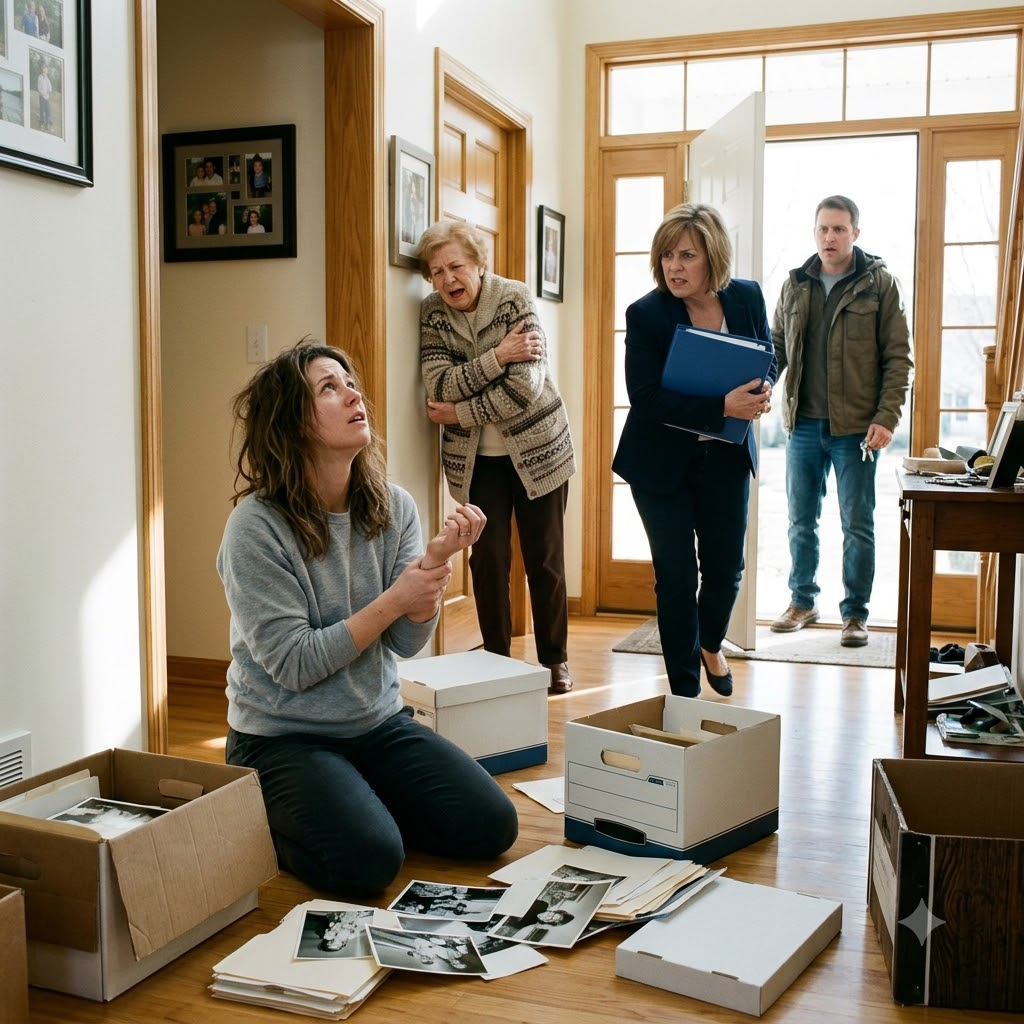
Christa reached for the front door.
"Nobody touch me!" she snapped.
Officer Bennett stepped toward the entrance, but Sergeant Okafor raised his hand.
"Mrs. Mercer, you're free to leave if you wish. But I'd appreciate it if you stayed while we clarify a few things."
Christa froze.
For the first time since I'd known her, my mother-in-law seemed unable to decide which lie would protect her.
The radio crackled again.
"Sergeant, the name on the envelope is Margaret Vale."
I felt the blood drain from my face.
Margaret Vale.
I hadn't heard that name spoken aloud in almost seven years.
She had been the Beaver Valley Historical Museum's senior collections conservator before retiring after a disagreement with Evelyn Price.
And she was the person who had taught me how to recognize the tiny pencil marks hidden beneath protective felt pads on old archival ledgers.
Christa looked at me.
I looked at her.
Neither of us spoke.
But I knew something had changed.
Because Margaret Vale wasn't just another name connected to the museum.
She was the woman who had once warned me that our collection records contained a secret someone was desperate to keep buried.
And until that moment, I had believed she'd been exaggerating.
"Harleen?"
Reed's voice sounded far away.
I turned toward him.
"What?"
"Do you know that person?"
I looked at the phone still in his hand.
Then at the radio.
"Yes."
Christa let out a short, nervous laugh.
"Of course she does. She knows everyone at that museum."
I ignored her.
"Margaret Vale worked with me for four years. She was the senior conservator."
Sergeant Okafor studied my expression.
"Is she someone we should contact?"
"Yes."
I hesitated.
"Although I don't know whether she'll speak to us."
"Why not?"
"She left the museum under difficult circumstances."
Christa immediately folded her arms.
"There. You see? More workplace drama."
Reed turned toward her.
"Mom, please stop talking."
She stared at him.
He didn't apologize.
That was new.
Okafor pressed the button on his radio.
"Preserve the envelope as found. Photograph both sides and document the location inside the luggage. Don't open it until the evidence team determines the appropriate procedure."
"Copy that, Sergeant."
I was grateful he hadn't ordered someone to tear it open immediately.
Whatever was inside, I wanted it handled properly.
I had spent eleven years teaching interns that evidence without documentation could become almost useless.
Now my entire future depended on that principle.
Christa shifted toward the door again.
"I have an appointment."
Reed looked at her.
"What appointment?"
"Something personal."
"Mom, it's barely morning."
"People have responsibilities, Reed."
I almost smiled at the absurdity.
The woman who had spent the last hour accusing me of violence suddenly needed to leave for an appointment she couldn't name.
But I didn't smile.
I was watching her hands.
She kept rubbing her right thumb against her index finger.
A nervous habit.
I had seen it before.
The first time was during a family dinner when I mentioned that the museum had begun reviewing old donation records.
The second was when I told Reed that three artifacts had disappeared from Drawer 14.
And the third was the previous evening, when Christa asked whether I had finished preparing my presentation for Chicago.
At the time, those moments had seemed unrelated.
Now I wasn't so sure.
"Christa," I said.
She turned sharply.
"What?"
"Did you know Margaret Vale?"
Her face hardened.
"No."
"Are you certain?"
"Of course I'm certain."
I nodded.
"Then why did you react when the officer said her name?"
"I didn't."
"You did."
"Harleen, you are imagining things."
I looked at Sergeant Okafor.
"Please make a note of that answer."
Christa's eyes widened.
"Excuse me?"
"She says she never knew Margaret Vale."
Okafor wrote something in his notebook.
Christa stared at him.
Then she turned toward Reed.
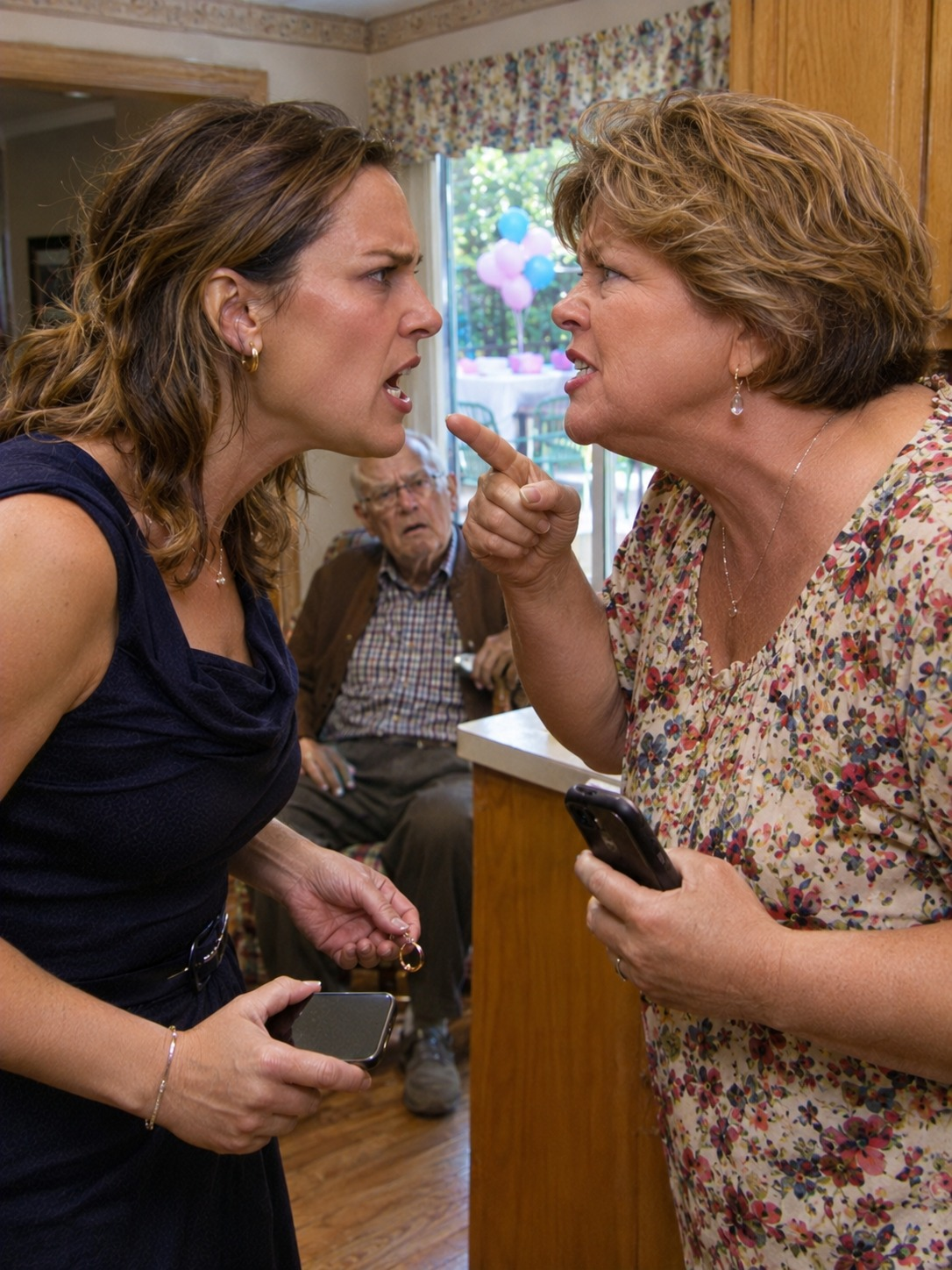
"Are you really going to stand there and let your wife humiliate me?"
Reed looked exhausted.
"Mom, I don't know what to believe anymore."
Those words seemed to hurt her more than any accusation.
She stepped backward.
Her face became strangely still.
And I recognized that expression.
It was the expression she wore when she was deciding how to punish someone later.
The first time Margaret Vale showed me the Roman brooch, I was twenty-four years old.
I had been working at the museum for less than six months.
My job title was assistant registrar.
My salary was modest.
My office was barely large enough for a desk and two filing cabinets.
But I loved every minute of it.
I loved the quiet storage rooms.
The smell of archival paper.
The careful process of identifying an object that had passed through dozens of hands before reaching ours.
Most of all, I loved the idea that ordinary people could preserve pieces of history for generations they would never meet.
Margaret understood that.
She was in her late fifties then, with silver-streaked hair and a habit of wearing colorful scarves beneath her conservation coat.
She could identify certain nineteenth-century metalworking techniques from a single photograph.
She could spot a forged signature almost instantly.
And she had absolutely no patience for sloppy records.
"An object without a reliable history is a story with half its pages missing," she used to tell me.
One afternoon, she called me into the study collection.
Drawer 14 was open.
Inside lay several small artifacts arranged in custom supports.
Among them was a bronze Roman brooch.
It was only two inches long.
The metal had darkened with age, and a raised ridge ran along its curved body.
There was nothing particularly glamorous about it.
But Margaret handled it with extraordinary care.
"This little thing has survived more than a thousand years," she said.
I leaned closer.
"How did it end up in Pennsylvania?"
"That's exactly the question we should always ask."
She showed me the accession number on the back.
Then she opened a leather-bound ledger.
The entry recorded the brooch as part of a private collection donated to the museum decades earlier.
Margaret tapped the page.
"Notice anything?"
I studied the handwriting.
"There's a correction beside the acquisition date."
"Good."
"And the donor's name looks like it was written in different ink."
"Very good."
I looked up.
"Does that mean the record was altered?"
"Possibly."
She closed the ledger.
"Never confuse a written record with the truth, Harleen. A record is evidence of what someone chose to write down."
That sentence stayed with me.
Years later, when the first artifact disappeared, I remembered it immediately.
But there was something else Margaret showed me that afternoon.
Something I hadn't understood at the time.
She turned the ledger over.
A narrow felt pad protected a metal fitting near the lower edge.
Margaret lifted one corner with a conservation spatula.
Underneath was a faint pencil mark.
Two letters.
A number.
And a tiny diagonal line.
"What is that?" I asked.
"An old cross-reference."
"To what?"
She smiled.
"That's what makes it interesting."
I expected her to explain.
Instead, she lowered the felt.
"Sometimes the most important information isn't on the page everyone reads."
I laughed.
"That sounds like something from a mystery novel."
Margaret didn't laugh.
She looked toward the storage-room door.
Then she said quietly, "Keep your own notes, Harleen."
I didn't understand why she sounded so serious.
Not then.
"Mrs. Mercer?"
Sergeant Okafor's voice brought me back to the present.
I realized I had been staring at the staircase.
"Yes?"
"You mentioned that the ledger might contain a reference connected to the missing artifacts."
"It might."
"Can you explain what kind of reference?"
I hesitated.
Christa was watching me.
So was Reed.
I didn't want to reveal everything I remembered while she was standing there.
Not because I wanted to play games.
Because she had already demonstrated that she would move evidence the moment she realized it mattered.
"I'd rather explain that at the station," I said.
Okafor studied me.
Then he nodded.
"That's reasonable."
Christa scoffed.
"How convenient."
I looked at her.
"What's convenient?"
"Every time someone asks you to prove something, you suddenly need privacy."
I held her gaze.
"Then give the officer the ledger."
She said nothing.
"Let him compare it with the museum photograph."
Her jaw tightened.
"Or tell us where you put it."
"Harleen, I have already told you—"
"You told us you didn't know which ledger we meant."
I paused.
"But you were holding it when Reed arrived."
Dot lifted her head.
"She was."
Christa turned toward her.
"Mother, please."
Dot's voice became firmer.
"I saw the book."
Reed looked at his grandmother.
"Grandma, are you sure?"
"Yes."
"What happened to it?"
Dot glanced toward the stairs.
"I don't know."
Then she added, "But Christa went upstairs with it."
My mother-in-law closed her eyes.
I could almost hear her calculating.
She had spent years treating Dot's age as a convenient reason to dismiss anything inconvenient the older woman remembered.
But Dot was proving much harder to silence than Christa expected.
Officer Bennett gently touched Dot's shoulder.
"Would you like some more water?"
"No, thank you."
Dot looked at me.
"I'm sorry, Harleen."
My throat tightened.
"You don't have anything to apologize for."
Her eyes filled with tears.
"I should have spoken sooner."
Christa's expression darkened.
"Mother, you don't know what you're saying."
Dot slowly turned toward her.
"Yes, I do."
The room went silent.
Then Dot said something that made Reed straighten.
"I heard you arguing with Evelyn on the telephone last week."
Christa stopped breathing.
I stared at Dot.
"What did you hear?"
The old woman looked frightened.
But she kept going.
"Christa was in the kitchen. She thought I was asleep in the living room."
Reed stepped closer.
"What were they arguing about?"
Dot swallowed.
"Something about a drawer."
My heart began pounding.
"What drawer?"
Dot looked at me.
"Fourteen."
Christa made a sharp movement.
"That's enough!"
Reed turned toward her.
"Mom!"
She stopped.
But her face was flushed now.
Dot's hands trembled.
"I remember because I thought it was strange. Why would anyone be arguing about a drawer?"
I felt a chill move down my spine.
Drawer 14.
The exact drawer from which three artifacts had disappeared.
The exact drawer that had contained the Roman brooch.
And my mother-in-law had been discussing it with my museum director before the gun appeared in my suitcase.
"Did you hear anything else?" I asked.
Dot hesitated.
"Christa said Evelyn had promised everything would be finished before the conference."
I stared at her.
Before the conference.
My conference.
The trip to Chicago.
The trip that would have put me in an airport security line with a gun and stolen museum property inside my carry-on.
Reed slowly lowered himself into a chair.
He looked as though the floor had disappeared beneath him.
"Mom," he whispered, "what did you do?"
Christa looked at him.
For a moment, her face softened.
"Reed, sweetheart..."
"Don't call me that."
She froze.
He looked up.
"Just tell me the truth."
Her eyes filled with tears.
Real tears, perhaps.
Or another performance.
I couldn't tell anymore.
"You have no idea what I've been protecting you from," she whispered.
Reed stared at her.
"What does that mean?"
Christa shook her head.
"I can't explain it here."
"Then where?"
She glanced toward Sergeant Okafor.
"I want to speak to my attorney."
Okafor nodded.
"You're entitled to legal advice."
Reed covered his face with both hands.
I looked away.
I couldn't comfort him.
Not yet.
At 10:18 that morning, I finally left Christa's house.
Officer Bennett arranged for me to have my wrist examined and photographed at a nearby medical facility.
Reed offered to drive me.
I refused.
He looked hurt.
But I couldn't bring myself to care about his feelings while mine were still being treated as an inconvenience.
"I'll call you," he said.
I nodded.
I didn't promise to answer.
As I stepped outside, I looked back at the house.
The front door stood open.
Dot was sitting near the hallway window.
Christa had disappeared upstairs again.
And Reed stood in the entrance, staring at me with an expression I had never seen before.
He looked like a man who had just discovered that the people closest to him were strangers.
For a moment, I almost felt sorry for him.
Then my wrist throbbed.
And I remembered how easily he had believed I was capable of hurting his grandmother.
I turned away.
At the medical facility, a nurse examined my wrist.
The bruise had spread.
There was swelling near the base of my thumb.
The nurse asked how the injury had occurred.
I told her.
She didn't look surprised.
She simply documented what I said.
Then she asked whether I felt safe returning home.
I hesitated.
"My husband and I don't live with his mother," I explained.
"Do you feel safe with your husband?"
That question was harder.
I thought about Reed's anger.
His accusations.
The way he'd blocked my path.
Then I thought about his face when he read Evelyn Price's message.
"I don't know," I admitted.
The nurse nodded.
She didn't pressure me.
She gave me information about support services and told me to seek help if I felt threatened.
I thanked her.
When I stepped outside, my phone showed eleven missed calls.
Six from Reed.
Three from an unknown number.
Two from the museum.
I stared at the screen.
Then another call came in.
Evelyn Price.
I let it ring.
A moment later, a voicemail appeared.
I listened.
"Harleen, this is Evelyn. I understand there's been some confusion regarding museum property. I need you to contact me immediately. It's important that we resolve this internally before any unnecessary damage is done."
Her voice was calm.
Professional.
Almost kind.
It was the same voice she'd used when she congratulated me on my promotion.
The same voice she'd used when she promised to investigate the missing artifacts.
And now she was asking me to resolve a criminal matter internally.
I saved the voicemail.
Then I forwarded it to Sergeant Okafor.
I wasn't going to have a private conversation with Evelyn Price.
Not after seeing her messages to Christa.
Not after finding the Roman brooch in my suitcase.
Not after discovering that someone had hidden an envelope inside a compartment I hadn't checked.
I needed answers.
But I needed them documented.
At 11:06, Sergeant Okafor called.
"Mrs. Mercer, are you somewhere safe?"
"Yes."
"Good. We have an update regarding the envelope."
My heart began pounding.
"Did you open it?"
"Investigators documented the exterior and obtained authorization to examine the contents."
I gripped the phone.
"What was inside?"
"Several folded pages."
"What kind of pages?"
"Photocopies of museum records."
I closed my eyes.
Of course.
More records.
More paper.
More evidence someone had tried to control.
"Anything else?"
"A handwritten note."
I waited.
Okafor continued.
"The note appears to be from Margaret Vale."
My throat tightened.
"What does it say?"
"I'd prefer to discuss the full contents with you in person."
"Sergeant, please."
He paused.
"There's one sentence I think you should know before we meet."
I held my breath.
He read it slowly.
"If Harleen is reading this, the missing brooch was never the real target."
I stared at the pavement.
"What?"
"That's what the note says."
I felt dizzy.
The brooch was never the real target.
Then why steal it?
Why scrape off its accession number?
Why plant it beside a handgun?
Why risk everything to make me look like a thief?
"There's more," Okafor said.
I pressed the phone closer.
"The note refers to an older acquisition record. It mentions Drawer 14 and a discrepancy that Margaret believed had been concealed for years."
My mind raced.
An older acquisition record.
The altered donor name.
The different ink.
The pencil mark beneath the felt.
Margaret had noticed something long before the recent thefts.
Something serious enough to make her leave a warning addressed to me.
"Sergeant," I whispered, "I think I know what she's talking about."
"Can you come to the station?"
"Yes."
"Bring any records you have that might help us identify the ledger."
"I will."
He paused.
"And Mrs. Mercer?"
"Yes?"
"Please don't contact Evelyn Price directly."
"I wasn't planning to."
"Good."
The call ended.
I stood outside the medical facility for several minutes.
Cars moved through the parking lot.
People came and went.
The ordinary world continued around me.
But my life no longer felt ordinary.
I had gone to sleep the previous evening expecting to board a flight to Chicago.
Now I was involved in a police investigation concerning stolen museum property, a planted firearm, and a possible conspiracy involving my mother-in-law and my employer.
And somewhere inside Christa's house was a ledger that might explain everything.
I opened my phone and searched through my old museum photographs.
Margaret Vale had taught me to document everything.
Even details that seemed unimportant.
Especially those details.
I scrolled through hundreds of images.
Storage drawers.
Artifact labels.
Inventory sheets.
Conservation reports.
Then I found it.
A photograph taken seven years earlier.
Margaret standing beside an open archival cabinet.
In her hands was a dark leather ledger.
I enlarged the image.
The cover was worn.
The corners were rounded.
And along the lower edge was a narrow strip of green felt.
My pulse quickened.
I zoomed in farther.
The felt had lifted slightly.
Just enough to reveal part of a pencil mark.
Two letters.
A number.
A diagonal line.
I stared at the screen.
Then I remembered something Margaret had said the day she showed me the brooch.
"Sometimes the most important information isn't on the page everyone reads."
At the time, I'd thought she was being mysterious.
Now I understood that she had been warning me.
I opened my notes.
The photograph was dated seven years earlier.
The same year Margaret left the museum.
The same year Evelyn Price became director.
And the same year the museum completed a major review of its acquisition records.
I felt my stomach tighten.
The timing couldn't be a coincidence.
I enlarged the photograph again.
This time, I noticed something else.
Behind Margaret, on the open cabinet door, was a handwritten label.
Drawer 14.
Below it was a smaller line of text.
I zoomed in until the letters became grainy.
Then I adjusted the brightness.
The words slowly became readable.
PRIVATE DONATION — RESTRICTED ACCESS
I stared at them.
Restricted access.
That label had not appeared on any of the current inventory records.
I knew because I'd reviewed every document associated with Drawer 14 after the first artifact disappeared.
Someone had removed the restriction.
Or replaced the original record.
I looked at the photograph again.
Margaret was smiling.
She had no idea that seven years later, I would be standing in a parking lot, studying that image while trying to understand why someone wanted me arrested.
I saved a copy.
Then I sent it to Sergeant Okafor.
A minute later, my phone rang.
Unknown number.
I hesitated.
Then answered.
"Hello?"
Silence.
I could hear faint breathing.
"Who is this?"
A woman's voice spoke.
"Harleen?"
I recognized it immediately.
My heart stopped.
"Margaret?"
A long pause.
Then the woman whispered,
"Don't go back to the museum."
I gripped the phone.
"Margaret, where are you?"
"Listen carefully."
Her voice trembled.
"The brooch wasn't stolen because it was valuable."
I closed my eyes.
"Then why?"
"Because it proves something about the original donation."
"What does it prove?"
She didn't answer immediately.
I heard movement in the background.
A door closing.
Then Margaret spoke again.
"Harleen, did you find the ledger?"
"No. Christa had it, but she hid it."
A sharp intake of breath.
"Christa Mercer?"
"Yes."
Margaret went silent.
Then she whispered something that made my skin turn cold.
"Oh, God. It's happening again."
I stared at the phone.
"What do you mean, again?"
"Harleen, you need to understand something about that family."
My heart hammered.
"What family?"
"Reed's family."
I felt the world tilt.
Margaret continued.
"The museum's old donation records weren't just altered to hide missing artifacts."
"Then what were they hiding?"
Her voice dropped.
"A name."
I looked down at the photograph on my screen.
The altered donor entry.
The faded felt.
The pencil mark.
The Roman brooch.
Everything seemed to be pointing toward the same secret.
"Whose name?" I whispered.
Margaret hesitated.
Then she said, "Before I tell you, promise me you won't confront Reed."
I stopped breathing.
"Why?"
"Because I don't know how much he knows."
My hand began to tremble.
"Margaret, what are you saying?"
A noise came through the phone.
Something heavy striking a surface.
Margaret gasped.
Then she whispered urgently,
"Someone's here."
I straightened.
"Margaret?"
"Don't tell anyone I called."
"Where are you?"
No answer.
"Margaret!"
I heard footsteps.
A door opening.
Then a man's voice in the background.
Low.
Controlled.
Familiar.
"Margaret, we need to talk."
My blood ran cold.
Because I knew that voice.
I had heard it across the dinner table.
I had heard it whisper goodnight.
I had heard it shout at me in Christa's hallway.
It was Reed.
I pressed the phone against my ear.
"Margaret, get away from him!"
But before she could answer, I heard Reed speak again.
This time, his words were perfectly clear.
"Where did you hide the original accession records?"
Margaret didn't respond.
Then came a sharp rustling sound.
The phone shifted.
And a second later, Reed said something that made me forget how to breathe.
"Harleen was never supposed to find out."
The call went dead.
I stood frozen beside my car.
My phone remained pressed against my ear.
For several seconds, I couldn't move.
Then a new message appeared.
It came from Margaret's number.
Only four words.
"HE FOUND THE ENVELOPE."
I stared at the screen.
The police had the envelope from my suitcase.
So what envelope was Reed looking for?
Before I could process the question, another message arrived.
This one contained a photograph.
A dark leather ledger.
A strip of green felt.
And a small white envelope tucked beneath its cover.
The photograph had been taken only moments earlier.
I enlarged it.
On the envelope, written in faded blue ink, were three words.
FOR HARLEEN ONLY.
Then my phone rang again.
Reed.
I watched his name flash across the screen.
Once.
Twice.
Three times.
I answered.
"Reed?"
His voice was strangely calm.
"Harleen, where are you?"
I didn't answer.
He took a slow breath.
"Whatever Margaret told you, don't believe her."
My heart pounded.
"Where is she?"
Silence.
"Reed, where is Margaret?"
He ignored the question.
"There's something about Drawer 14 you don't understand."
I gripped the phone.
"Then explain it."
Another pause.
Then he whispered,
"Come home. I'll show you."
I looked at the photograph again.
The ledger.
The felt.
The envelope.
And suddenly, I noticed something in the lower corner of the image.
A reflection.
A small section of a framed family photograph.
I recognized it.
It hung beside the basement staircase in Christa's house.
The photograph hadn't been taken at Margaret's home.
It had been taken inside Christa's house.
I stared at the screen.
Then I heard Reed speak again.
"Harleen, are you listening?"
I didn't answer.
Because another sound had reached me through the phone.
A woman's voice.
Weak.
Frightened.
"Please..."
It was Margaret.
Then came the unmistakable sound of a door being locked.
Reed lowered his voice.
"Harleen, you have thirty minutes."
The call ended.
And before I could dial Sergeant Okafor, a final photograph appeared on my screen.
Margaret Vale was sitting in a chair.
Her wrists were bound.
And standing behind her, holding the missing museum ledger, was someone I had never expected to see.
Someone who had been present at the museum when the first artifact disappeared.
Someone whose name had appeared on every inventory report I'd signed.
I enlarged the photograph.
The face came into focus.
And my phone began ringing again.
Comments 0