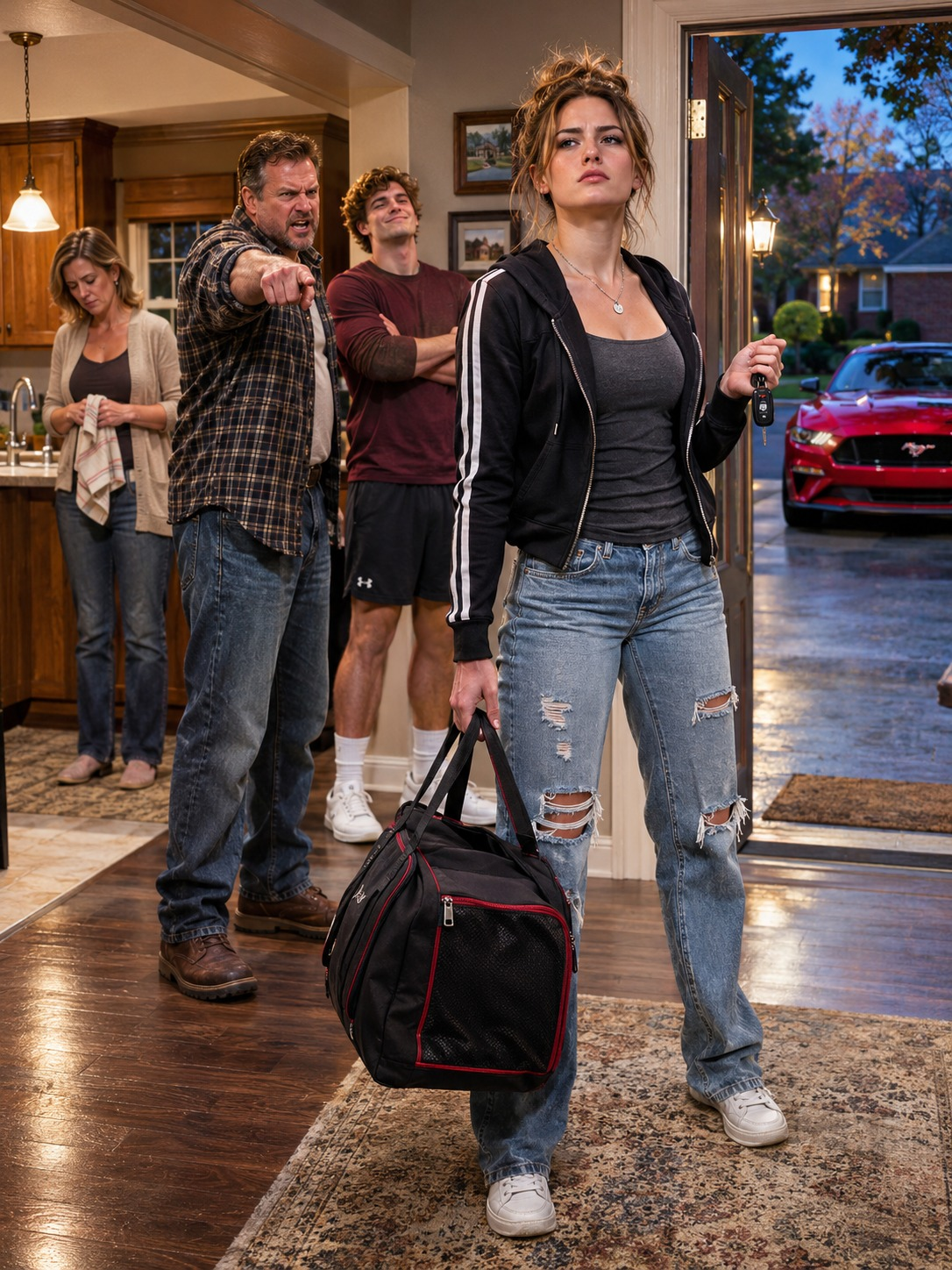
“Answer me, Brandon.”
My father's voice was barely above a whisper.
Brandon stared at the document in his hands.
“Dad, it happened a long time ago.”
“What happened?”
“I was trying to fix something.”
“Fix what?”
Brandon looked toward Mom.
She lowered her eyes.
I remained beside the dining table, watching my father struggle to understand the document Arthur Bennett had sent him thirteen years earlier.
It was a copy of a written authorization connected to the withdrawal of funds from an account associated with Grandma's financial arrangements.
Dad's name appeared at the bottom.
But according to Arthur's accompanying notes, there were serious questions about whether Dad had actually authorized the transaction.
My father pointed toward the signature.
“I didn't write this.”
Brandon said nothing.
Dad looked at him.
“I know my own signature.”
“I know.”
“Then explain it.”
Brandon rubbed his face.
“I needed money.”
Dad stared at him.
“For what?”
My brother hesitated.
Then he sat down.
“I owed somebody.”
Mom closed her eyes.
I looked at Brandon.
“Who?”
“Some people I knew back then.”
“What did you owe them money for?”
He shook his head.
“It doesn't matter anymore.”
Dad slammed the document against the table.
“It matters to me!”
Brandon flinched.
For once, my father's anger wasn't directed toward me.
I watched my brother struggle to find an explanation that would make everything sound reasonable.
Finally, he spoke.
“I got involved in some things I shouldn't have.”
Dad leaned forward.
“What things?”
“Gambling.”
The word hung in the air.
Mom began crying.
My father stared at Brandon.
“You told me you needed money for a training program.”
“I did need money.”
“For gambling?”
Brandon looked away.
“I thought I could get it back.”
Dad slowly lowered himself into his chair.
He looked at the documents spread across the table.
Then he picked up another page.
“How much?”
Brandon didn't answer.
“How much did you lose?”
“I don't remember exactly.”
Dad shook his head.
“Stop saying that.”
His voice cracked.
“Just stop saying you don't remember.”
I looked at him.
There was something unfamiliar in his expression.
Disappointment.
Not the kind he had always directed toward me whenever I refused to cooperate.
This was deeper.
More personal.
The disappointment of a man discovering that someone he had defended for decades had been deceiving him.
Brandon sighed.
“It started small.”
Dad stared at him.
“Then I lost more than I expected. I borrowed money from some friends. Things got complicated.”
“And you took money from your sister?”
Brandon glanced at me.
“I was going to replace it.”
I almost laughed.
That promise had apparently been his favorite financial strategy for thirteen years.
Dad picked up Arthur's letter again.
“You used my name?”
Brandon nodded reluctantly.
My father stared at him.
“You let me believe your mother had authorized everything.”
“I didn't want you to get angry.”
Dad laughed bitterly.
“Get angry?”
Brandon lowered his head.
Dad continued.
“I defended you.”
Nobody spoke.
“I told your mother you were a good kid who needed some help.”
Mom wiped her eyes.
“I told everybody you were going through a difficult period.”
He looked at Brandon.
“And you were lying to me?”
Brandon shifted in his chair.
“Dad, I was twenty.”
I looked at him.
“And I was fifteen.”
He turned toward me.
“I know.”
“Do you?”
He sighed.
“Madison, I'm not proud of what happened.”
I folded my arms.
“Then why did you keep doing it?”
He stared at me.
I pointed toward the recent documents involving my company.
“Those aren't thirteen years old.”
His expression hardened.
“That's different.”
“How?”
“I was trying to save my business.”
“And back then?”
He remained silent.
“You were trying to solve another problem you created.”
Dad looked between us.
I continued.
“Every time you get into trouble, somebody else's money becomes the solution.”
Brandon shook his head.
“You don't understand the pressure I was under.”
I stared at him.
“You're right.”
He looked surprised.
“I don't understand what it's like to assume somebody will always rescue me.”
Mom covered her mouth.
Dad looked down at the table.
Brandon's face reddened.
“You think you're perfect.”
“No.”
“You've been waiting years to do this.”
“To do what?”
“Make me look terrible in front of everybody.”
I looked around the dining room.
“Brandon, these are your documents. Your decisions. Your debts.”
He opened his mouth.
I continued before he could interrupt.
“I didn't create any of them.”
He leaned back.
For several minutes, nobody spoke.
The dinner had gone cold.
The chicken remained untouched on several plates.
A basket of homemade rolls sat between stacks of financial records.
It was a strange picture.
A family meal surrounded by evidence of everything that had destroyed the family.
Dad reached for Arthur's letter again.
He read another paragraph.
Then he turned toward Mom.
“How long have you known?”
She hesitated.
“Most of it since Arthur contacted me.”
“Why didn't you tell me?”
Her expression changed.
“I tried.”
“You should've made me listen!”
She stared at him.
Then something unexpected happened.
She laughed.
It wasn't a happy laugh.
It was the exhausted laugh of someone who had finally reached the limit of what she could tolerate.
“Made you listen?”
Dad frowned.
“Yes.”
She shook her head.
“Do you remember what happened when I questioned Brandon about the money?”
He remained silent.
“You told me I was embarrassing him.”
Dad looked away.
“Do you remember when I suggested we stop giving him money?”
He rubbed his forehead.
“You told me I didn't understand what it took to help a son become successful.”
Brandon stared at the floor.
Mom continued.
“And when Madison bought her Mustang, I told you it belonged to her.”
I turned toward her.
She looked at Dad.
“You told me to stay out of it.”
My father said nothing.
“I spent years trying to make you listen.”
Her voice began trembling.
“You just didn't want to hear anything that made Brandon look bad.”
Dad lowered his head.
I watched my mother.
For most of my childhood, I had mistaken her silence for agreement.
Sometimes it had been agreement.
Sometimes fear.
Sometimes exhaustion.
None of those explanations erased the damage.
But seeing her finally challenge Dad helped me understand how deeply the pattern had affected all of us.
She looked at me.
“Madison, I should've protected you.”
I nodded.
“Yes.”
“I know saying I'm sorry isn't enough.”
“No. It isn't.”
She wiped her eyes.
“But I'm going to stop hiding things.”
I looked at the metal document box.
“That's a start.”
Dad suddenly stood.
He walked toward the living room.
For several seconds, I thought he was leaving the conversation.
Instead, he stopped beside the wall of family photographs.
He stared at a picture of Brandon wearing his graduation gown.
Then he looked at another photograph showing the two of them standing beside a fishing boat.
His shoulders lowered.
“I wanted him to have opportunities.”
Nobody answered.
He continued.
“My father was hard on me. Never helped me with anything. I promised myself I'd do things differently with my children.”
I looked at him.
“With your children?”
He turned slowly.
I waited.
His eyes moved toward me.
Then he looked away.
I didn't need him to explain.
He had wanted to give Brandon everything he hadn't received.
Somewhere along the way, he had decided that providing those opportunities justified taking them away from me.
He returned to the dining table.
“Brandon, tell me something.”
My brother looked up.
“Did you ever intend to repay that money?”
“Yes.”
“When?”
“When I got established.”
Dad shook his head.
“You've been telling me you're getting established for fifteen years.”
Brandon became defensive.
“Starting a business isn't easy.”
I almost smiled.
Of all the people sitting at that table, I understood that better than anyone.
Dad looked at the recent financial documents.
“Did you use company money for gambling too?”
Brandon froze.
Mom looked at him.
I watched his expression carefully.
“Brandon?” Dad repeated.
My brother swallowed.
“Not exactly.”
Dad closed his eyes.
I felt a familiar sense of dread.
“What does that mean?” I asked.
Brandon rubbed his forehead.
“I made some investments.”
“What kind?”
“Things that were supposed to generate additional returns.”
I leaned forward.
“Were those investments connected to your company's actual operations?”
He hesitated.
“No.”
“Did you use borrowed business funds?”
He looked away.
“Some.”
Dad sat down heavily.
Mom whispered, “Oh, Brandon.”
He immediately became defensive.
“I was trying to increase our available cash!”
“By risking money you already owed?” I asked.
“I thought it would work.”
I shook my head.
That sentence explained more than any financial statement could.
He thought the training program would work.
He thought he could replace Grandma's money.
He thought his business would become profitable.
He thought another loan would solve everything.
And whenever his expectations failed, someone else was expected to pay.
Dad looked at him.
“How much?”
Brandon sighed.
“I'd have to check.”
“Then check.”
“Dad—”
“Get your computer.”
Brandon stared at him.
“What?”
“Get your computer!”
The sudden command made Mom jump.
Brandon slowly stood and disappeared upstairs.
My father remained seated.
He looked at the documents without touching them.
Then he turned toward me.
“Did you really sleep in that car?”
The question surprised me.
“Yes.”
“For how long?”
“Several nights before I found somewhere affordable to live.”
He stared at the table.
“Your mother told me you had a place.”
“Eventually, I did.”
He nodded slowly.
“Why didn't you tell me?”
I looked at him.
“Would you have let me come home without giving Brandon the Mustang?”
His lips parted.
Then he looked away.
I waited.
Finally, he whispered, “I don't know.”
I felt tears gathering behind my eyes.
Not because his answer surprised me.
Because even now, after everything we had uncovered, he couldn't honestly say he would have chosen me.
I looked toward the window.
The Mustang remained parked outside.
“That's why I didn't call.”
Dad lowered his head.
For several seconds, the house was completely quiet.
Then footsteps sounded on the staircase.
Brandon returned carrying a laptop.
He placed it on the table.
“What do you want to see?”
I moved several documents aside.
“Start with the company's current accounts.”
He opened the laptop.
His fingers moved across the keyboard.
After a few moments, he turned the screen toward me.
I examined the available information.
There were several business accounts.
Outstanding obligations.
Transfers between accounts.
Payments to suppliers.
Personal expenses that appeared to have been paid with company funds.
Some records were incomplete.
Others were difficult to reconcile without additional statements.
But the overall picture was clear enough.
The company was in serious trouble.
I asked Brandon to open several additional reports.
He complied reluctantly.
The more information I reviewed, the worse the situation appeared.
Dad watched me.
“Can it be saved?”
I didn't answer immediately.
I wanted to understand the numbers before offering an opinion.
Finally, I sat back.
“Based on what you've shown me, I wouldn't put money into this business.”
Brandon immediately objected.
“You haven't seen everything.”
“Then show me everything.”
He stared at the screen.
I continued.
“The company has substantial outstanding obligations, limited available cash, and no clear evidence that future revenue will cover its expenses.”
Dad looked confused.
“But there's inventory.”
“Yes.”
“Can't he sell that?”
“Possibly. But we need to establish what it's worth, whether it's already pledged as security, and what can realistically be recovered.”
Brandon shook his head.
“You're looking at this too negatively.”
I turned toward him.
“Your company is missing payments.”
“Temporarily.”
“Your parents' house is at risk.”
He looked away.
“You disappeared when people started demanding money.”
“I needed time.”
“And you submitted documents claiming my company would provide financial backing.”
He became quiet.
I closed the laptop halfway.
“Brandon, this isn't a temporary inconvenience.”
He stared at me.
“It's a financial crisis.”
Mom began crying again.
Dad looked toward the stack of notices.
“Then what are we supposed to do?”
“Get qualified independent advice immediately. Establish the complete financial position. Determine what assets can be sold and what obligations need to be addressed.”
He nodded slowly.
“And the house?”
I looked at Mom.
“That requires a separate discussion.”
Brandon leaned forward.
“If she gives us the hundred thousand, we can buy enough time.”
I turned toward him.
“No.”
“You don't know that.”
“I know I'm not giving you a hundred thousand dollars.”
Dad looked at me.
“Madison, please.”
I raised my hand.
“I'm willing to help you understand your options. I'm not willing to finance another attempt to avoid reality.”
Brandon laughed bitterly.
“Must be nice having enough money to decide who deserves help.”
I stared at him.
“Do you remember how much money I had when I left?”
He rolled his eyes.
“Here we go again.”
“Forty-eight hundred dollars.”
He looked away.
“I worked at a coffee shop and a dealership. Then I worked at a repair shop while attending evening classes. I rented a room because I couldn't afford an apartment.”
He remained silent.
“I saved money for years before opening my business. I was rejected for financing. I postponed purchases. I worked weekends. I worried about payroll.”
Dad listened without interrupting.
“And whenever something went wrong, I had to figure out how to solve it.”
I looked directly at Brandon.
“Nobody offered me their retirement savings.”
He lowered his eyes.
“Nobody pledged their house.”
Mom covered her face.
“And nobody demanded that you give me something you had worked for.”
The room became silent.
I continued.
“You had more support than I could have imagined. And somehow, you're still convinced that I had the easier life.”
Brandon stared at his laptop.
For the first time that evening, he didn't argue.
Dad reached toward the blue folder.
He picked up the original property agreement.
“Madison, what happens with this?”
I looked at the document.
“My attorney needs to review the complete records, including what Mom kept in the box.”
“Could you make a claim against us?”
“Possibly. There are still legal questions that need to be resolved.”
He swallowed.
“Would that make things worse?”
“I don't know.”
He stared at Grandma's signature.
I watched him.
Then I said, “Dad, I'm not here to take your house away.”
He looked up.
“I'm here because you asked me to come.”
He nodded.
“But I'm not going to pretend Grandma's arrangements never existed.”
His expression became strained.
“I understand.”
I wasn't sure he did.
But it was the first time he had said those words without immediately trying to dismiss the subject.
Mom reached for the metal box.
“There are more recent papers in here too.”
Dad turned toward her.
“What papers?”
She removed several envelopes.
“Things I found in Brandon's room after he left.”
Brandon immediately stood.
“You went through my room?”
She looked at him.
“You disappeared while people were coming to our house demanding money.”
He opened his mouth.
She continued.
“I needed to know what was happening.”
He stared at her.
Mom placed the envelopes on the table.
I examined the first one.
It contained correspondence concerning overdue obligations.
The second included information about a proposed financing arrangement.
The third contained a printed email exchange.
I read the messages carefully.
Several referred to additional security and potential financial support.
One mentioned my company.
Another referred to the family home.
Then I noticed something that made me stop.
There was a reference to a document Dad had supposedly approved several months earlier.
I turned toward him.
“Do you recognize this?”
He examined the page.
“What is it?”
“An email referring to your approval of another financial arrangement.”
He frowned.
“I signed some papers for Brandon.”
“Do you remember which ones?”
He looked toward his son.
Brandon suddenly became restless.
“Those emails aren't important.”
I ignored him.
“Dad, did you authorize any additional borrowing after the original loan secured against the house?”
He hesitated.
“I agreed to discuss some options.”
“Did you sign anything?”
“Not that I remember.”
I looked at Brandon.
“Can you open the documents connected to this email?”
He shook his head.
“I don't have them.”
“Where are they?”
“I don't know.”
Dad stared at him.
“Brandon.”
My brother looked toward the hallway.
I recognized that expression.
It was the same expression he had worn years earlier when Dad asked him to explain a damaged vehicle.
He was looking for a way out.
Mom reached into the metal box again.
“I think I have a copy.”
Brandon turned sharply.
“Mom!”
She removed a folded document.
He stepped toward her.
Dad stood.
“Leave her alone.”
Brandon stopped.
I looked at my father.
He was standing between Mom and Brandon.
Something he had never done for me.
The realization hurt more than I expected.
But I was glad he was finally doing it for someone.
Mom handed me the document.
I unfolded it.
It appeared to concern an additional financial obligation connected to Brandon's company.
There were references to a personal guarantee and existing property security.
I read the available pages carefully.
Then I looked at Dad.
“Did you sign this?”
He took the document from me.
His eyes moved toward the signature.
He shook his head.
“No.”
Brandon stared at the floor.
Dad looked at him.
“No,” he repeated.
“I didn't sign this.”
I felt the room change.
The old records had revealed that Brandon had used Dad's name thirteen years earlier.
Now there was reason to believe he might have done it again.
Dad turned toward his son.
“Tell me this isn't what I think it is.”
Brandon rubbed his face.
“Dad, I was trying to keep everything together.”
My father stared at him.
“Did you sign my name?”
Brandon didn't answer.
“Did you?”
“I thought you'd agree.”
Dad stepped backward.
For a moment, he looked as though he might fall.
Mom reached toward him.
He waved her away.
“You thought I'd agree?”
Brandon nodded reluctantly.
“You've always helped me.”
Dad stared at him.
Those five words seemed to destroy whatever remained of his confidence.
He sat down.
Then he looked at the document again.
“I trusted you.”
Brandon lowered his head.
“I know.”
“I gave you everything.”
“I know.”
“I used my savings.”
Brandon remained silent.
“I put this house at risk.”
His voice broke.
“And that still wasn't enough?”
Mom began crying.
I watched my father.
I had imagined this moment many times.
A moment when he finally understood that Brandon wasn't the person he believed him to be.
I had expected to feel satisfied.
Vindicated.
Perhaps even happy.
Instead, I felt sad.
Because it had taken the possible loss of everything he owned for my father to question the behavior that had cost him his relationship with his daughter.
Dad looked at me.
His eyes were wet.
“Madison…”
I waited.
He opened his mouth.
Then he closed it again.
I didn't help him find the words.
For once, he needed to find them himself.
Brandon stood abruptly.
“I can't deal with this.”
Dad turned toward him.
“Sit down.”
“No.”
He grabbed his laptop.
“Everybody's acting like I planned for this to happen.”
I looked at him.
“You may not have planned the consequences, Brandon. But you made the decisions.”
He shook his head.
“You're enjoying this.”
“No.”
“You finally get to prove Dad was wrong about me.”
I stared at him.
“I would have preferred to have a brother I could trust.”
His expression changed.
For a second, he looked almost ashamed.
Then he picked up his laptop and walked toward the staircase.
Dad didn't follow him.
He didn't tell me to apologize.
He didn't demand that Mom comfort him.
He simply remained seated.
Listening as Brandon disappeared upstairs.
A bedroom door slammed.
The sound echoed through the house.
Mom wiped her eyes.
Then she looked at Dad.
“What are we going to do?”
He stared at the documents.
“I don't know.”
It was the most honest answer he had given all evening.
I began gathering my papers.
Dad looked up immediately.
“Are you leaving?”
“Yes.”
“Already?”
“It's late.”
He looked toward the clock.
Nearly ten.
We had spent hours discussing things that should have been addressed years earlier.
“I'll contact my attorney tomorrow,” I said. “You and Mom need independent advice about the house. I'll help arrange that if you want.”
He nodded slowly.
“What about the money?”
I looked at him.
“I'm not making any financial commitments tonight.”
He swallowed.
Then, unexpectedly, he nodded again.
“All right.”
I placed Grandma's letter inside the blue folder.
Mom helped me collect the remaining records.
I photographed several unfamiliar documents with her permission and arranged to have the originals preserved for professional review.
When everything was organized, I closed the folder.
Dad watched me.
“Madison?”
“Yes?”
He looked toward the front door.
Then toward the Mustang outside.
“I'm glad you kept the car.”
I stopped.
For ten years, I had imagined hearing those words.
Now they had finally arrived.
Quietly.
Without anger.
Without conditions.
I looked at him.
“Thank you.”
He nodded.
His eyes filled again.
I picked up my handbag.
Mom walked me toward the hallway.
Then Dad's phone began ringing.
He glanced at the screen.
His expression changed.
He answered.
“Hello?”
I stopped beside the front door.
He listened.
“Yes, this is him.”
Mom turned around.
Dad's face gradually lost its color.
“What do you mean?”
He listened again.
Then he sat down.
“No. Nobody told me that.”
I exchanged a glance with Mom.
She walked back toward the dining room.
Dad pressed the phone against his ear.
“Monday?”
His voice trembled.
“That's impossible.”
I placed my handbag on the hallway table.
Something was wrong.
Dad looked toward the staircase.
“Brandon!”
There was no answer.
He called again.
“Brandon, get down here!”
Footsteps sounded upstairs.
My brother appeared at the top of the staircase.
“What?”
Dad stood slowly.
He was still holding the phone.
“Did you receive a notice last month?”
Brandon stopped.
“What notice?”
“About the house.”
My brother's expression changed.
Mom looked at him.
“Brandon?”
He gripped the stair railing.
Dad ended the call.
Then he looked at me.
His lips were trembling.
“Madison, they said the deadline to stop the foreclosure sale is Monday morning.”
I stared at him.
Monday.
Less than two days away.
Mom gasped.
Brandon took a step backward.
Dad looked toward the metal document box.
Then he turned to his son.
“They said somebody acknowledged receiving the notice.”
Brandon didn't move.
Dad walked toward the staircase.
“Where is it?”
My brother remained silent.
“Where's the notice, Brandon?”
Slowly, Brandon reached into his pocket.
He pulled out a folded envelope.
Dad took it.
He opened the notice and read the first page.
Then he turned it over.
His eyes widened.
He looked at me.
“Madison, there's something attached to this.”
I stepped closer.
He handed me the final page.
It wasn't a notice from the lender.
It was a separate document Brandon had prepared.
A proposed agreement concerning the money needed to prevent the sale.
My company's name appeared at the top.
My personal information appeared beneath it.
And beside the signature line was a handwritten instruction.
Have Madison sign before she finds out.
I looked up.
Brandon was no longer standing on the staircase.
The front door was open.
And his car keys were gone.






Comments 0