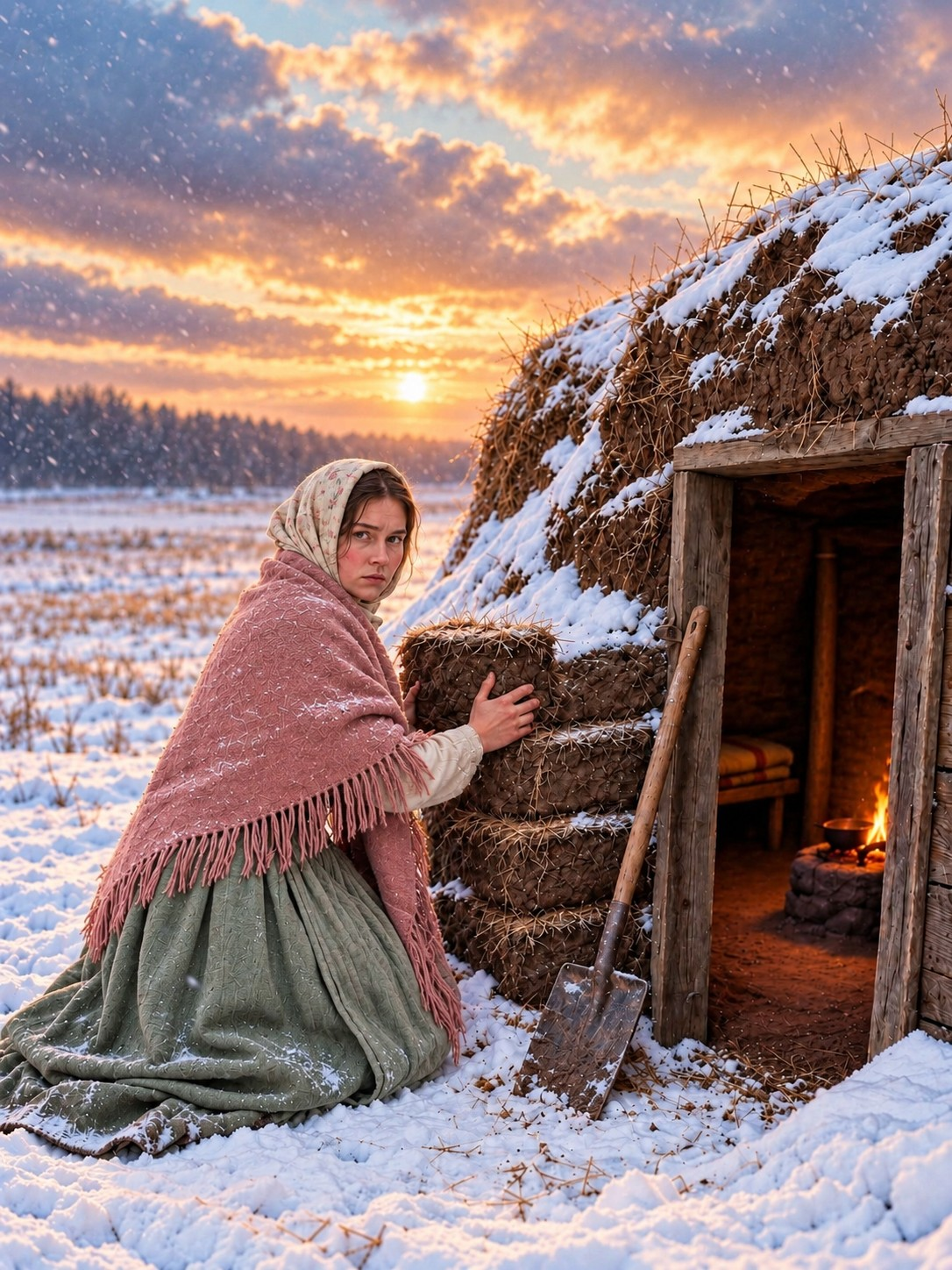
"Open the door, sweetheart."
I stopped breathing.
Nobody had called me sweetheart in that particular way since my mother died.
Not Walter.
Not my father.
Not even Diane.
It was the little pause before the word. The softness in the voice. The gentle downward movement at the end of the sentence.
My mother used to speak that way whenever she wanted me to stop worrying.
I stood in the middle of the small bedroom, staring at the door.
"Hannah?" the voice whispered again. "It's cold out here."
I took one step backward.
My mother was dead.
I had watched them lower her coffin into the ground that morning.
I had touched the wooden casket before they covered it with flowers.
I had stood beside her grave until everyone else had gone.
Whatever was outside my bedroom, it wasn't my mother.
"Who are you?" I asked.
Silence.
Then a quiet laugh.
"Honey, it's me."
I reached for the small flashlight on the dresser.
My fingers were trembling.
"Say something only my mother would know."
There was a pause.
Then the voice answered.
"Your grandfather used to hide peppermint candies inside the flour tin because he knew you would steal them before supper."
My knees nearly gave way.
That was true.
It was something nobody outside our family should have known.
My grandfather had kept peppermint candies in an old flour tin for years. When I was little, I used to sneak into the kitchen and take them.
My mother had discovered me every time.
She never told my grandfather.
Instead, she would quietly replace the candies and pretend not to notice.
I moved closer to the door.
"Who told you that?"
A soft knock followed.
"Hannah, please. We don't have much time."
I reached for the lock.
Then I heard another sound.
Footsteps.
Heavy boots moving quickly along the hallway.
"Hannah!"
Walter.
His voice came from the staircase.
"Don't open that door!"
I froze.
The person outside stopped speaking.
Walter reached the bedroom a second later.
He grabbed the handle and pulled the door open.
The hallway was empty.
The overhead light flickered.
A cold draft moved through the narrow space.
Walter looked in both directions.
Then he turned toward me.
"Did you see anyone?"
I shook my head.
"Someone was just here."
"I know."
"How?"
He pointed toward the staircase.
"Because the front door downstairs is open."
I stared at him.
"Where's my father?"
"Outside."
"And Diane?"
Walter's jaw tightened.
"She was there a minute ago."
I looked toward the empty hallway.
"She was speaking to me."
Walter walked slowly toward the staircase.
"Did she say anything?"
"She sounded like my mother."
He stopped.
For several seconds, he didn't move.
Then he looked back at me.
"What exactly did she say?"
I repeated the sentence about the peppermint candies.
Walter's expression changed.
He looked toward the office below.
"That's not something Diane should know."
"Why?"
"Because your grandfather never told anyone about those candies except Elizabeth."
I felt the hair rise on my arms.
Walter walked back toward me.
"Did you open the door?"
"No."
"Good."
He glanced at the floor.
Something white lay near the bedroom threshold.
A folded piece of paper.
I hadn't noticed it before.
Walter bent down and picked it up.
He opened it carefully.
There were only two sentences.
Your mother wasn't the first person who tried to protect you.
Ask Walter what happened in 2008.
I looked at him.
His face had gone pale.
"What's 2008?"
He folded the paper.
"Nothing you need to worry about tonight."
"That's not an answer."
He looked at me for a long moment.
Then he placed the paper in his coat pocket.
"You're right."
He glanced toward the staircase.
"But it's not something we should discuss while Robert is standing outside."
My father was beside the truck when we came downstairs.
Diane sat in the passenger seat.
The engine was running.
Walter locked the back entrance and stepped onto the gravel.
My father looked at me.
"There you are."
I stayed beside Walter.
"What do you want?"
He glanced at the duffel bag hanging from my shoulder.
"I want you to come home."
I almost laughed.
"You told me I couldn't."
"I've had time to think."
"Three hours?"
His expression tightened.
"Hannah, don't make this harder than it needs to be."
I looked at Diane.
She was holding something in her lap.
A photograph.
The same photograph she had shown me through the window.
My grandfather beside the old windmill.
I pointed toward it.
"Where did you get that?"
Diane looked down.
"Your mother kept it."
"Why do you have it?"
"Because your father asked me to bring it."
My father stepped forward.
"Give me the key."
I touched my necklace.
"No."
"That key belongs to the family."
"It belonged to Mom."
"Your mother is gone."
The words came out so casually that I felt something inside me harden.
"Then why are you still looking for her things?"
He looked at me.
For a second, I thought he might answer.
Instead, he turned toward Walter.
"Stay out of this."
Walter folded his arms.
"She's nineteen, Robert. She owns her own land. She can decide where she wants to live."
My father gave a short laugh.
"That land is nothing."
"Then why are you so interested in it?"
Silence.
Diane shifted in her seat.
My father looked toward her.
It was a small glance.
But I noticed.
He was checking whether she was listening.
Then he looked back at me.
"You don't understand the situation."
"Then explain it."
"Not here."
"Why not?"
"Because there are things you shouldn't know."
I stared at him.
"You threw me out of your house three hours after Mom's funeral. I think I've earned the right to know a few things."
His jaw tightened.
"Your mother made mistakes."
I felt Walter move slightly beside me.
"What mistakes?"
My father didn't answer.
He looked toward the necklace.
Then he said, "That key is not yours to use."
I took a step backward.
"It's mine now."
"Don't be stupid."
Walter moved between us.
"Robert, get in your truck."
My father stared at him.
Then he lowered his voice.
"If she goes to that property tomorrow, don't expect me to help when things go wrong."
Walter didn't blink.
"I wouldn't expect you to."
My father climbed into the driver's seat.
Diane remained still for several seconds.
Then she opened the passenger window.
"Hannah?"
I looked at her.
She lifted my mother's wedding ring.
"Your mother wanted me to have this."
I stared at the gold band.
"Then why didn't she give it to you herself?"
Diane's expression changed.
For the first time since I had known her, she seemed uncertain.
She closed the window.
The truck pulled away.
Walter watched until its taillights disappeared.
Then he turned toward me.
"Let's go inside."
I didn't sleep much that night.
Every time the building creaked, I opened my eyes.
I kept thinking about the voice outside my door.
The peppermint candies.
The note.
And the strange way Walter had reacted when he read the words about 2008.
At six in the morning, I gave up trying to sleep.
I dressed in the clothes I had worn the previous day.
My dark jeans.
A thick sweater.
My mother's old winter coat.
I went downstairs.
Walter was already in the store.
He stood behind the counter drinking coffee and reading a newspaper.
He looked up when I entered.
"Morning."
"Morning."
He poured another cup.
"Coffee?"
"Please."
I sat at the small table near the office.
The newspaper was open to the weather section.
A large red warning covered the bottom half of the page.
A major winter storm system was expected to move across western South Dakota.
Snowfall predictions had increased overnight.
Wind speeds could reach dangerous levels.
The forecast mentioned possible road closures and prolonged power interruptions.
I looked at Walter.
"How bad?"
He folded the newspaper.
"Bad enough that people should be preparing now."
"How many days?"
"Nobody knows exactly. The forecast keeps changing."
He pointed toward the window.
"The first serious snow should arrive tomorrow night. After that, we may not see the roads for a while."
I thought about the forty acres.
The collapsed windmill.
The shallow draw.
The red circle on the map.
"Can we go there today?"
Walter looked at me.
"That's why I got up early."
He placed a set of truck keys on the table.
"Eat something first."
We drove to the property in Walter's old Chevrolet.
My mother's Ford remained parked behind the store.
Walter said he wanted to check its tires and battery before we took it anywhere near the gravel track.
The sky was pale gray.
The ground had hardened overnight.
Dead prairie grass stretched across the fields.
Every few miles, we passed cattle standing close together near the fences.
Walter drove slowly.
He knew every turn in the road.
When we reached the entrance to my forty acres, he stopped.
A weathered wooden post stood beside the gravel track.
The number forty had been painted across it years earlier.
I got out.
The wind immediately caught my scarf.
I pulled it tighter.
"Welcome to your kingdom," Walter said.
I looked across the land.
There was nothing impressive about it.
No buildings.
No trees.
No electricity.
Just grass, frozen soil, and the old windmill leaning at an angle.
The property looked exactly as my father had described it.
Worthless.
But I remembered my grandfather walking here.
I remembered him telling me that land wasn't valuable simply because it looked expensive.
Sometimes its value depended on what a person knew about it.
Walter opened the truck's rear door and took out a shovel.
"Show me where you remember the shallow draw."
I pointed toward the northern side.
"Over there."
We walked across the frozen grass.
The wind became stronger as we moved away from the truck.
After several minutes, the ground dipped slightly.
The depression was shallow, perhaps six or seven feet below the surrounding rise.
Thick prairie grass covered its edges.
I could see why my grandfather had chosen it.
The northern side offered some protection from the prevailing wind.
The land also appeared to slope gently toward the lower end.
Walter studied the area.
"Your grandfather knew what he was doing."
I crouched beside a patch of grass.
The earth beneath it was firm.
There were several old wooden stakes partially buried in the ground.
I brushed away the snow.
One had a number carved into it.
417.
My breath caught.
I pulled the necklace from beneath my coat.
The brass key.
The three numbers.
Walter knelt beside me.
"That's the first marker."
"First?"
He nodded.
"Your grandfather mentioned a second one when he showed me the property years ago."
"Where?"
He looked across the draw.
"Somewhere along the northern rise."
We searched for nearly twenty minutes.
I moved through the grass, checking the old fence posts.
Walter examined the ground near the windmill.
Finally, I noticed a small piece of metal sticking out from beneath a mound of frozen earth.
I brushed away the dirt.
It was an old iron marker.
A small number had been stamped into it.
417.
Below it was a narrow metal slot.
I looked at Walter.
"Is this what we're looking for?"
He crouched beside me.
"I think so."
I took out the key.
It fitted into the slot.
But it wouldn't turn.
I tried again.
Nothing.
Walter examined the marker.
"Don't force it."
He brushed away more dirt.
Then he noticed something.
A second opening sat beneath the first.
It was much smaller.
He looked at the photograph from the previous night.
Then at the marker.
"Your grandfather made this complicated."
"Can we open it?"
"Not with that key."
I sat back on my heels.
"Then what's the point of bringing it here?"
Walter studied the metal.
"Maybe the key doesn't open the marker."
He tapped the lower slot.
"Maybe it opens whatever is underneath."
I stared at the ground.
For the first time, the idea of building a shelter seemed less like a desperate fantasy.
There was something here.
Something my grandfather had deliberately marked.
Something my mother had wanted me to find.
And something my father was terrified I might discover.
Walter spent the next hour examining the surrounding ground.
He found two more old stakes.
Both were marked with small scratches.
One pointed toward the windmill.
The other toward the lower end of the draw.
We walked between them.
A rough rectangle began to emerge.
The outline was almost invisible beneath the grass and snow.
"Was there ever a building here?" I asked.
"Not that I remember."
"Could it have been buried?"
Walter looked at the ground.
"Possibly. But I wouldn't start digging without knowing what we're dealing with."
I glanced toward the truck.
"We don't have much time."
"I know."
"Then we need to figure it out."
He studied me.
"Your grandfather used to say something about this land."
"What?"
"That the safest place on the property was the place nobody would think to look."
I looked at the shallow depression.
A secret shelter.
A buried storage space.
A protected entrance.
The possibilities were endless.
Then Walter asked me something unexpected.
"Hannah, if you had to stay here for twelve days without going back to the farmhouse, could you do it?"
I stared at him.
"Twelve days?"
"That's what I'm asking."
I looked across the prairie.
The storm was coming.
My father had locked me out.
I had forty-three dollars.
A broken truck.
And a piece of land that everyone except my grandfather seemed to think was worthless.
I looked back at Walter.
"I don't know."
He nodded.
"That's an honest answer."
"Why twelve days?"
"Because that's how long the worst-case forecast suggests this storm could keep people isolated."
I swallowed.
"Could someone survive out here?"
Walter didn't answer immediately.
Then he pointed toward the northern rise.
"If your grandfather built what I think he built, yes."
I stared at him.
"What do you think he built?"
He picked up the shovel.
"Let's find out."
We returned to the store just after noon.
Walter checked the forecast again.
The warning had become more severe.
A twelve-day period of dangerous winter conditions was now being discussed by local meteorologists, although the exact duration remained uncertain.
He placed a map on the counter.
"We need supplies."
I took out my wallet.
Forty-three dollars.
Walter noticed.
"Put that away."
"I can pay for food."
"I didn't say you couldn't. I said you shouldn't spend everything you have on the first day."
He began writing a list.
Drinking water.
Canned food.
Dry beans.
Rice.
Matches.
Candles.
Batteries.
Blankets.
Heavy canvas.
Rope.
A hand shovel.
A larger shovel.
First-aid supplies.
He circled several items.
"We'll start with the essentials."
I looked at the list.
"How much?"
"More than forty-three dollars."
"I'll find a way."
Walter looked at me.
"Your grandfather taught your mother how to survive winter?"
"Yes."
"And your mother taught you?"
"She taught me everything she could."
He nodded.
"Then we have something to work with."
I looked at the shelves.
For the first time, I noticed how many things in the store could be used to construct a shelter.
Hay-bale twine.
Tarps.
Fence posts.
Insulation.
Hand tools.
Wooden supports.
My father had spent years telling me that I wasn't capable of doing anything useful on the ranch.
But my mother had never agreed.
She had taught me how to repair a fence, drive a tractor, mend clothes, preserve food, and recognize when the weather was about to turn dangerous.
I had never considered those things valuable.
Now they were all I had.
Walter placed a thermos on the counter.
"Your mother used to bring me soup in this."
I picked it up.
It was old and scratched.
The lid had a small dent.
I remembered it.
She had carried it to the ranch every winter.
"Keep it," Walter said.
I looked at him.
"I can't take your things."
"It's not mine."
He turned it over.
There was a small inscription underneath.
For Walter, when winter comes. E.
I ran my thumb across the letters.
My mother had written them.
Walter looked away.
"She gave it to me years ago. Said I'd need it one day."
I placed the thermos carefully in my duffel bag.
Then I noticed something else on the counter.
An old photograph.
Walter and my grandfather stood beside the feed store.
Both were smiling.
My grandfather had one hand on Walter's shoulder.
I picked it up.
"How long did you know him?"
Walter looked at the picture.
"Forty years."
"Did he ever tell you why he left the land to me?"
Walter leaned against the counter.
"He said you had your mother's patience and his stubbornness."
I smiled faintly.
It was the first time I had almost smiled since the funeral.
Then Walter added something.
"He also said your father would eventually come looking for the property."
My smile disappeared.
"Why?"
Walter looked toward the office.
"I asked him that once."
"What did he say?"
Walter was quiet for several seconds.
Then he answered.
"He said Robert had already lost something important because he couldn't leave well enough alone."
I felt a chill.
"What had he lost?"
Walter shook his head.
"Your grandfather never told me."
He took the photograph from my hands and placed it facedown.
"But he made me promise something."
"What?"
"If you ever came here alone, I was supposed to ask you one question before helping you."
I looked at him.
"What question?"
Walter studied my face.
Then he spoke slowly.
"Hannah, do you know why your mother never wanted you to inherit the farmhouse?"
I stared at him.
My mother had loved that house.
She had planted flowers along the porch.
She had baked bread in its kitchen.
She had spent twenty-six years making it feel like home.
"She never said she didn't want me to inherit it."
Walter nodded.
"That's what I thought."
He reached beneath the counter and pulled out another envelope.
This one was newer.
My name was written across the front.
Hannah.
Not Hannah Elizabeth.
Just Hannah.
I recognized the handwriting.
My mother's.
I took it.
My fingers trembled as I opened the flap.
Inside was a single sheet of paper.
The message was short.
My darling girl,
If you are reading this, then Robert has done exactly what I feared.
Don't fight him for the farmhouse.
Don't ask him for your mother's things.
And whatever you do, don't let him convince you that the forty acres are worthless.
I read the final sentence twice.
Then I turned the paper over.
There was another line.
The house was never the inheritance I wanted you to have.
My throat tightened.
I looked at Walter.
"Then what was?"
He didn't answer.
Instead, he walked to the front window.
A vehicle had just entered the gravel lot.
It was my mother's old Ford F-150.
I recognized the dent in the passenger door.
But I hadn't driven it.
Walter stepped closer to the glass.
The truck stopped directly outside the store.
The driver's door opened.
A woman climbed out.
She was wearing my mother's old brown winter coat.
She walked toward the entrance.
Then she looked through the glass and raised one hand.
I knew that face.
I had seen it every day for nineteen years.
But there was one thing that made my blood run cold.
The woman standing outside the store was holding a photograph of my mother.
And written across the back, in large black letters, were the words:
HANNAH, YOUR MOTHER DID NOT DIE OWING ROBERT ANYTHING.
Walter turned toward me.
"Hannah," he whispered.
"Do you know who that is?"
I shook my head.
Then the woman reached for the door handle.
And Walter said a name I had not heard in years.
"Elizabeth."






Comments 0