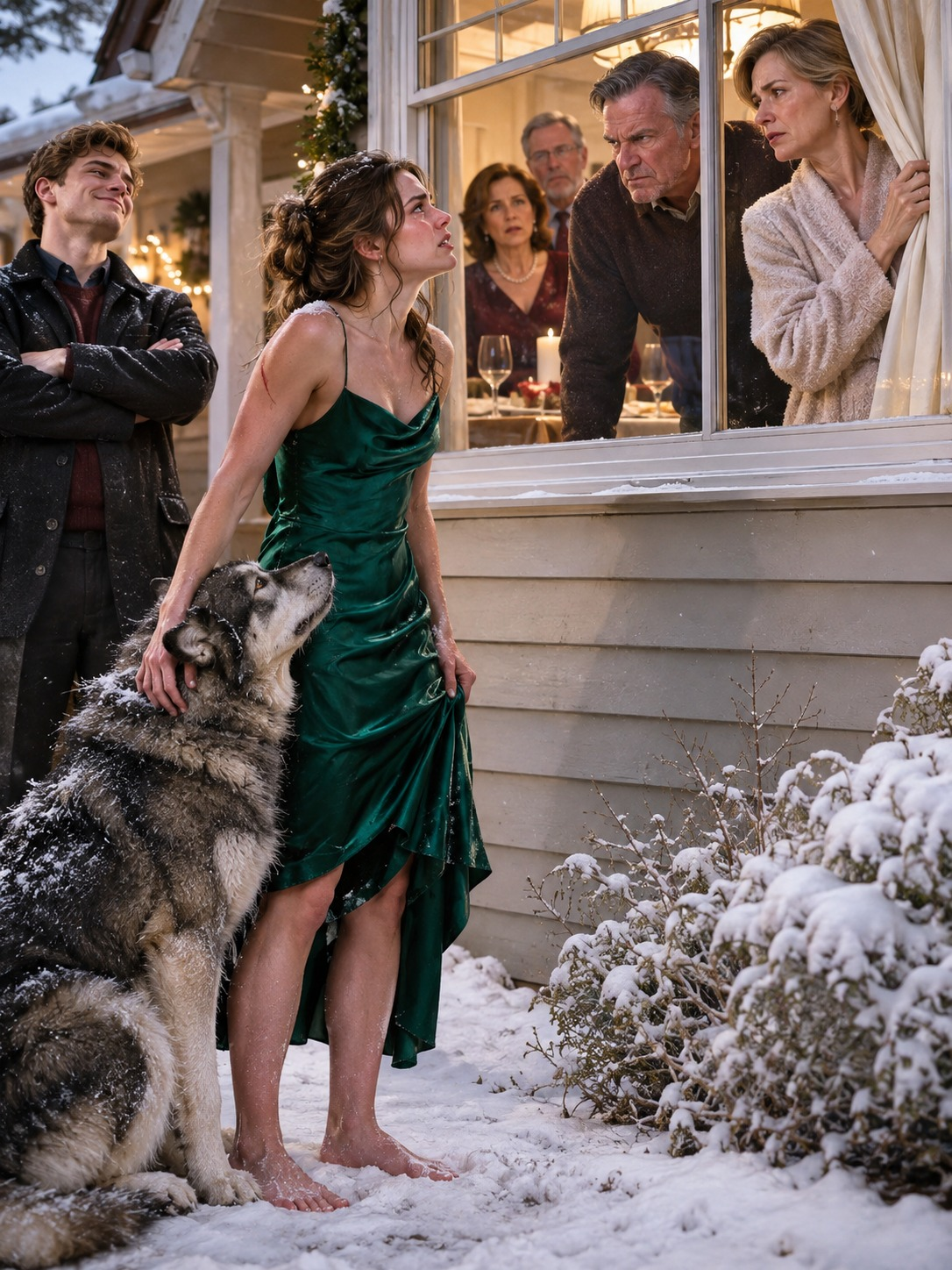
The moment my father reached for me, I remembered something my grandmother had said three years earlier.
"One day, they'll ask you to give up what belongs to you. Promise me you won't."
At the time, I thought she was talking about money.
Standing beside that open window, with my father's fingers closing around my arm, I finally understood that she had been talking about something much more valuable.
My freedom.
My future.
My right to say no.
Grandma Tony had understood my family long before I did.
And perhaps the greatest mistake I ever made was believing that her death would somehow make them kinder.
Three years before that terrible New Year's Eve, I had been sitting in Grandma's kitchen, watching her struggle to open a jar of strawberry preserves.
"Give me that," I said, reaching across the table.
She pulled the jar away.
"I'm old, Laney. I'm not useless."
"I didn't say you were."
"Your face did."
I laughed.
She laughed harder.
Eventually, she handed me the jar.
That was Grandma.
Stubborn, independent, and completely unwilling to let anyone decide what she could or couldn't do.
Her house stood on half an acre in northern Minnesota, surrounded by apple trees, vegetable gardens, and a wooden fence that needed repainting every other summer.
There was a cedar sauna behind the house and a sunroom overlooking the backyard.
During winter, snow gathered along the windowsills.
During summer, the entire property smelled like fresh grass, tomatoes, and the sourdough bread Grandma baked every Sunday.
To everyone else, it was an aging property with considerable market value.
To me, it was the only place where I had ever felt completely welcome.
I spent most of my childhood there.
Whenever Dad became angry or Mom decided that Vince's needs were more important than mine, Grandma somehow found a reason to invite me over.
Sometimes she needed help picking apples.
Sometimes she claimed she couldn't remember how to operate her television.
Once, she called my mother and announced that she desperately needed someone to help her reorganize the pantry.
When I arrived, the pantry was already organized.
Two mugs of hot chocolate were waiting on the kitchen table.
Grandma pointed toward a chair.
"Sit down, sweetheart."
I sat.
She didn't ask why I had been crying.
She didn't demand an explanation.
She simply placed a warm mug between my hands and started telling me a ridiculous story about a squirrel that had stolen one of her gardening gloves.
By the time she finished, I was laughing.
That was how Grandma loved people.
She noticed what they needed without making them feel ashamed for needing it.
My parents loved differently.
Their affection always seemed to come with conditions.
Good grades earned approval.
Obedience earned temporary peace.
Helping Vince earned compliments.
Refusing him earned silence.
When I was thirteen, I saved eighty dollars from babysitting for a pair of winter boots.
The ones I owned had developed a hole near the heel, and melted snow soaked my socks whenever I walked home from school.
One Saturday, I discovered that the envelope containing my savings was empty.
Mom was standing in the kitchen.
"Have you seen my money?" I asked.
She continued washing dishes.
"Vince needed it."
"For what?"
"He's going skiing with his friends."
I stared at her.
"But those were my savings."
"He'll pay you back."
"When?"
"Laney, don't start."
I looked down at my wet socks.
I didn't understand how my brother's skiing trip had become more important than keeping my feet dry.
Grandma noticed my boots the following weekend.
She didn't ask many questions.
She drove me into town, bought me a sturdy pair, and took me out for pancakes.
When I told her what had happened to my savings, she stopped eating.
"Your mother took your money without asking?"
I nodded.
Grandma placed her fork beside her plate.
"Listen to me carefully. Being someone's daughter doesn't mean everything you own belongs to them."
I remembered those words for years.
I just hadn't learned how to live by them.
Vince was four years older than me.
He wasn't always cruel.
Sometimes he could be charming, funny, and surprisingly generous when generosity cost him nothing.
He knew how to make people laugh.
He knew how to make my mother feel needed.
And he knew exactly which words to use whenever Dad questioned one of his decisions.
By the time we were adults, Vince had mastered the art of turning his problems into family emergencies.
When he needed money, everyone contributed.
When he needed help moving, everyone canceled their plans.
When he made a mistake, someone else was expected to absorb the consequences.
Usually, that someone was me.
Grandma saw it happening.
She challenged my parents more than once.
But Dad hated being criticized, especially by his own mother.
Their arguments often ended with him leaving the house and refusing to speak to her for several weeks.
Grandma never apologized simply to restore the peace.
"Peace that requires one person to suffer isn't peace," she once told me.
I didn't appreciate the significance of that sentence until much later.
Yukon arrived during the summer I turned twenty-four.
Dad had acquired him from a man who could no longer care for a wolfdog.
He was supposed to become a guard animal for the property.
Vince thought having an enormous wolfdog would make him look impressive.
Dad liked the idea of an intimidating animal roaming the yard.
Neither of them seemed particularly interested in the responsibilities involved.
When Yukon arrived, he was still young, frightened, and painfully uncertain around strangers.
He spent his first afternoon hiding behind a wooden shelter.
Vince tried calling him.
Dad shouted at him.
Yukon refused to move.
I sat on the ground several feet away and waited.
Grandma brought me a folding chair.
"You're going to be there awhile," she said.
"That's okay."
For nearly an hour, I sat quietly, occasionally placing a small treat on the grass.
Eventually, Yukon emerged.
His ears were lowered.
His enormous paws moved cautiously toward me.
When he reached my hand, he sniffed my fingers before resting his chin against my knee.
I barely breathed.
Grandma watched from the porch.
"Looks like somebody made his choice."
From that day forward, Yukon followed me whenever I visited.
I brushed his thick coat, helped maintain his enclosure, and spent hours teaching him to respond to gentle commands.
When Grandma worked in the garden, Yukon stretched out beside her.
When I baked bread, he waited near the back door.
Whenever my car pulled into the driveway, his entire body seemed to come alive.
Dad complained that I was making him too friendly.
Vince complained that Yukon listened to me more than he listened to him.
Grandma thought it was wonderful.
"Animals know who takes care of them," she said.
"They don't care who's supposed to be important."
I had no idea that Yukon would eventually become the reason I survived.
During Grandma's final year, her health deteriorated faster than any of us expected.
Her hands became weaker.
Her breathing became more difficult.
Some mornings, walking from her bedroom to the kitchen exhausted her.
I began spending nearly every weekend at the house.
I cleaned, cooked, collected prescriptions, and drove her to appointments.
On Friday evenings, I would arrive after work with groceries and fresh flowers.
Grandma always complained about the flowers.
"You're wasting your money."
"You like them."
"That's beside the point."
Then she would arrange them in her favorite blue vase and admire them for the rest of the weekend.
My parents were living in her house by then.
Dad had convinced her that maintaining the property alone was becoming too difficult.
Mom said moving in would allow them to provide constant assistance.
In reality, Grandma continued depending heavily on me.
Dad spent much of his time watching television, working on personal projects, or complaining about expenses.
Mom prepared meals occasionally, but she rarely accompanied Grandma to medical appointments.
Vince visited when he needed something.
One afternoon, I arrived to find Grandma sitting alone in the sunroom.
She was holding a photograph of herself and her late husband.
Her eyes were red.
"What's wrong?" I asked.
She quickly wiped her cheeks.
"Nothing."
I sat beside her.
"Grandma."
She looked toward the dining room.
"Your father wants me to sell the house."
I frowned.
"Why?"
"He says it's too much responsibility."
"Would you want to move?"
"No."
Her answer came immediately.
"Then don't."
She smiled sadly.
"If only everyone understood things as simply as you do."
I took her hand.
"It's your house."
"Yes," she whispered. "It is."
She squeezed my fingers.
"And I'm going to make sure nobody forgets that."
Two weeks later, Grandma asked me to drive her into town.
She wore her best navy-blue coat and carried a brown leather handbag she had owned for decades.
I assumed we were going to another medical appointment.
Instead, she gave me the address of a law office.
"Are you in some kind of trouble?" I asked.
She chuckled.
"Not yet."
I waited in the reception area while she met privately with an attorney.
The appointment lasted almost ninety minutes.
When she emerged, she looked tired but strangely relieved.
"Everything okay?"
"Everything's exactly where it needs to be."
She refused to explain further.
On the drive home, she watched the trees passing outside the passenger window.
After several minutes, she spoke.
"Your brother will always have people looking after him."
I glanced at her.
"What do you mean?"
"Your mother worries about him constantly. Your father thinks the sun rises and sets around him."
I said nothing.
Grandma continued.
"But you, Laney girl, you've been looking after yourself for a long time."
"I'm doing fine."
"I know you are."
She reached across the center console and rested her hand on my arm.
"That doesn't mean you should have to do everything alone."
I swallowed.
Grandma rarely spoke directly about the differences between how my parents treated Vince and me.
Hearing her acknowledge them made something inside my chest ache.
I had spent years wondering whether I was imagining things.
Whether I was too sensitive.
Whether expecting equal treatment somehow made me selfish.
Grandma had noticed everything.
She had simply been waiting for the right moment to do something about it.
Three months later, she was admitted to the hospital.
Her condition worsened overnight.
I drove there immediately.
Dad arrived several hours after I did.
Mom brought a bag containing Grandma's personal belongings.
Vince sent a text saying he was busy but would try to visit the following day.
He never made it.
That evening, Grandma asked everyone except me to leave the room.
Dad looked offended.
"Whatever you need to say, you can say it in front of us."
Grandma turned her head toward him.
"I'd like a moment with my granddaughter."
Something in her voice made him obey.
When the door closed, I moved my chair closer to her bed.
She looked smaller than I had ever seen her.
Her hands were cold.
Her voice was barely above a whisper.
"Don't cry yet, sweetheart."
I tried smiling.
"I'm not crying."
"You're a terrible liar."
A tear escaped before I could stop it.
She brushed my cheek with her thumb.
"There's something I need you to remember."
I leaned closer.
"That house is going to cause trouble."
"What house?"
"Mine."
I shook my head.
"Grandma, don't worry about that right now."
"I'm not worried about the house. I'm worried about you."
Her fingers tightened around mine.
"I've made arrangements. Your parents will always have somewhere to live. Your brother will receive his share."
She paused to catch her breath.
"And so will you."
I stared at her.
"I don't need anything."
"I know."
"Please, Grandma."
"That's exactly why I want you to have it."
She closed her eyes briefly.
When she opened them again, her expression was unusually serious.
"Your father won't like my decision."
I felt a sudden chill.
"What decision?"
"You'll understand when the time comes."
She looked toward the closed hospital door.
"One day, they'll ask you to give up what belongs to you. Promise me you won't."
I began crying.
"Grandma, please don't talk like this."
"Promise me, Laney."
I nodded.
"I promise."
She smiled.
"Good girl."
Those were among the last words she ever spoke to me.
She passed away the following morning.
I held her hand until the nurse gently told me that she was gone.
For weeks afterward, I felt as though someone had removed the foundation beneath my life.
I continued working.
I paid my bills.
I answered messages.
I performed every ordinary task expected of an adult.
But sometimes I would reach for my phone to call Grandma before remembering that she would never answer again.
I missed her voice.
Her terrible jokes.
Her bread.
Even the way she complained when I bought flowers.
The reading of her will took place several weeks after the funeral.
Dad arrived confident.
Mom looked nervous.
Vince seemed almost cheerful.
I wanted the meeting to end before it began.
The attorney explained that Grandma had made detailed arrangements concerning her estate.
Her personal belongings would be distributed according to her written instructions.
Her savings would cover remaining expenses.
Then he reached the section concerning the house.
"The property is to be inherited equally by her grandchildren, Vincent and Laney."
Dad sat forward.
"What?"
The attorney continued.
"Subject to the provision granting her son and daughter-in-law the right to reside in the property for the remainder of their lives."
Nobody spoke.
I looked at Vince.
He appeared surprised but satisfied.
Mom pressed a tissue against her mouth.
Dad's face darkened.
"That's ridiculous."
The attorney remained composed.
"Those were her instructions."
"I'm her son."
"Yes."
"That house should belong to me."
"Your mother chose a different arrangement."
Dad turned toward me.
"What did you tell her?"
I blinked.
"What?"
"All those weekends you spent there. What did you tell her about us?"
"Nothing."
"Don't lie to me."
The attorney interrupted.
"Your mother's decisions were made privately and voluntarily."
Dad stood so abruptly that his chair struck the wall.
"This isn't finished."
He walked out.
Mom followed him.
Vince lingered beside the conference table.
He looked at me and smiled.
"Guess we're business partners now, little sister."
I didn't smile back.
For nearly three years, the arrangement remained intact.
Our parents continued living in Grandma's house.
I visited on weekends, maintained the garden, cared for Yukon, and helped with repairs.
I never demanded rent.
I never attempted to force anyone out.
I never asked Vince to sell me his share.
I believed respecting Grandma's wishes would eventually become enough.
Then, one Saturday in early autumn, Vince appeared while I was digging potatoes in the garden.
He wore expensive sunglasses and carried a glossy real estate brochure.
"Got a minute?"
I wiped my hands against my jeans.
"What's up?"
He handed me the brochure.
Inside were photographs of a beautiful three-bedroom condominium.
Modern kitchen.
Large windows.
Private balcony.
"Christa loves it," he said.
"It's nice."
"We're thinking about starting a family."
I smiled.
"That's exciting."
He nodded toward Grandma's house.
"So we're going to sell this place."
My smile disappeared.
"We?"
"Mom and Dad can move into something smaller. We'll split whatever's left."
I handed back the brochure.
"I'm not selling, Vince."
He laughed.
Then he realized I wasn't joking.
"You're serious?"
"Yes."
He began explaining that because he and Christa intended to have children, he deserved a larger portion of the proceeds.
I listened until he finished.
Then I refused again.
His expression hardened.
"Watch yourself, Laney. I'm asking you nicely."
He walked away before I could answer.
Over the following weeks, my mother's phone calls stopped.
Dad barely acknowledged me during my visits.
Vince disappeared whenever I arrived.
Then, in November, my phone rang.
It was Mom.
Her voice was unusually warm.
"Sweetheart, we'd love to have you home for New Year's Eve."
I hesitated.
"Is Dad still angry?"
"Your father wants to have a family talk. Calmly, no yelling."
I looked at Grandma's photograph on my bookshelf.
Against my better judgment, I agreed.
After we hung up, I remembered something I had forgotten in the garage during my previous visit.
I drove back to the house that afternoon.
Vince's car was parked outside.
Through the kitchen window, I saw him sitting beside Dad.
A woman I didn't recognize sat across from them.
She wore a professional-looking coat and had a folder spread open on Grandma's kitchen table.
I approached the back door.
Before I could knock, I heard Vince speaking through the slightly open window.
"Don't worry about my sister."
The woman asked him something I couldn't hear.
Dad answered.
"She'll sign."
I stopped moving.
Vince lowered his voice.
"And if she refuses again?"
My father leaned across the table.
He opened the folder.
"That's why we're bringing her here on New Year's Eve."






Comments 0