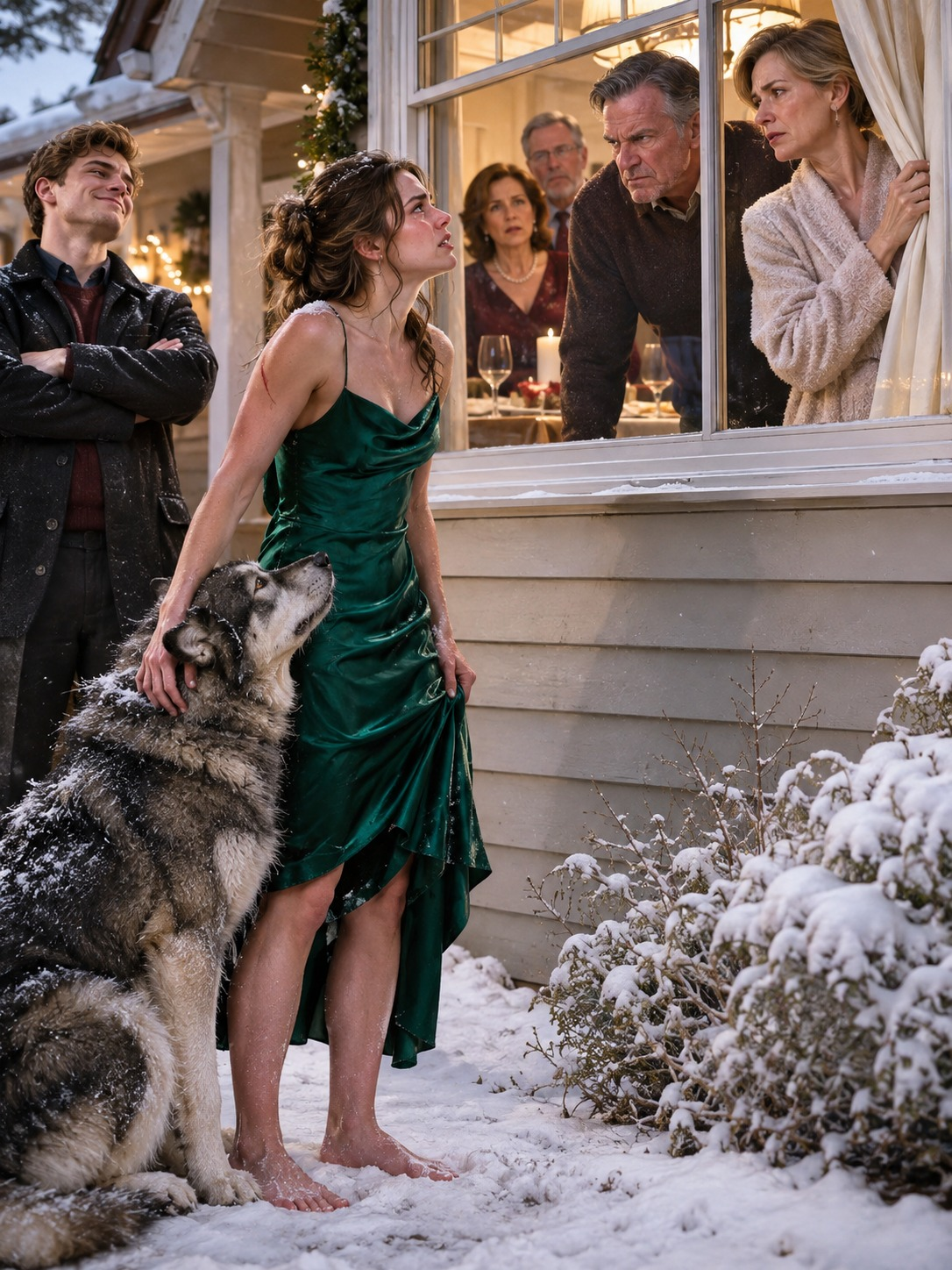
"What kind of document?"
Detective Harris hesitated.
"It appears to be a statement concerning your grandmother's intentions for the property."
I frowned.
"Her intentions?"
"According to the document, she intended for Vincent to receive full ownership of the house."
I stared at Grandma's photograph.
"That's not true."
"We understand that it conflicts with her recorded estate documents."
"She left us equal shares."
"Yes."
I tightened my grip on the phone.
"Did Grandma sign it?"
"There's a signature bearing her name. Your father signed beneath a declaration stating that he had personally witnessed her approval."
I felt sick.
"When was it supposedly signed?"
"Approximately two weeks before your grandmother passed away."
I closed my eyes.
Two weeks before Grandma died, I had been helping her eat, arranging her medications, and sitting beside her whenever she became frightened during the night.
She had been physically weak, but she still knew exactly what she wanted.
She had made me promise not to surrender my inheritance.
There was no possibility that she had secretly intended to give everything to Vince.
"That's impossible," I whispered.
Detective Harris explained that investigators would examine the document and compare it with authenticated records.
They would also determine whether anyone had attempted to use it in connection with the proposed sale.
"Your attorney should be informed," she added.
"I'll call her."
After we ended the conversation, I sat motionless.
Until that moment, I had believed my father's betrayal began when he decided to pressure me into surrendering my ownership.
Now I wondered whether he had been preparing to disregard Grandma's wishes before she was even buried.
I remembered him standing beside her hospital bed.
His hand resting on her shoulder.
His voice telling her not to worry about anything.
She had looked so tired.
Had he been thinking about the house even then?
I pressed my fingers against my forehead.
There were questions I wasn't sure I wanted answered.
Margaret arrived at my apartment later that morning.
I explained everything Detective Harris had told me.
She listened carefully.
Then she opened the blue folder containing Grandma's estate documents.
"Whatever this newly discovered document claims, it doesn't automatically invalidate the recorded ownership arrangements."
I nodded.
"But why would Dad have it?"
"Possibly to create the appearance that your grandmother intended something different."
She examined several pages.
"If he couldn't persuade you to transfer your share voluntarily, he may have intended to challenge your entitlement another way."
I thought about the voicemail.
If Laney doesn't sign, we'll deal with that too.
Then I remembered Mom's warning about the other paperwork.
Everything was beginning to make sense.
My father hadn't merely prepared one way to take my inheritance.
He had prepared alternatives.
Pressure.
Deception.
Forged authorization.
And apparently, a document intended to undermine Grandma's final wishes.
Margaret contacted Grandma's former attorney, who still maintained records concerning the estate.
By late afternoon, she had obtained confirmation that the disputed document had never been part of the legitimate estate planning process.
Grandma's attorney also remembered speaking with her during the final weeks of her life.
She had consistently expressed the same intention.
Equal ownership for Vince and me.
No changes.
No secret instructions.
No special entitlement for her grandson.
I felt an enormous sense of relief.
But underneath that relief was anger.
My father had been willing to put false words into the mouth of a woman who was no longer alive to defend herself.
His own mother.
The woman who had raised him.
The woman who had allowed him to live in her house.
The woman whose generosity had made his entire scheme possible.
That evening, Uncle Mitch called.
He had heard about Dad's arrest.
When I told him about the newly discovered document, he became unusually quiet.
"She knew he'd try something," he finally said.
"Grandma?"
"Yes."
He explained that during one of their final conversations, Grandma had expressed concern about Dad challenging her decisions after her death.
That was one reason she had insisted on keeping copies of everything with her attorney.
"She was protecting you even then," Mitch said.
I looked toward the blue folder.
"She shouldn't have had to."
"No," he agreed. "She shouldn't have."
For several minutes, we talked about her.
Not the house.
Not the inheritance.
Just Grandma.
Her terrible singing voice.
Her habit of buying too many tomatoes at the farmers' market.
The way she insisted that homemade pie counted as breakfast if it contained fruit.
We laughed.
Then we cried.
And for the first time in weeks, remembering her didn't feel entirely painful.
The following day, Detective Harris contacted me with an update concerning the criminal proceedings.
My father faced serious charges related to the assault and the danger in which he had placed me.
My mother and Vince were also facing charges connected to their respective conduct, including matters involving the false statements and property documents.
The precise allegations against each person differed.
The detective reminded me that the court process would take time.
There would be hearings.
Evidence would be reviewed.
The accused would have opportunities to respond.
Nothing would happen overnight.
I understood.
But knowing that my family could no longer dismiss everything as a private disagreement brought me a kind of relief I hadn't experienced before.
Dad had always insisted that what happened inside our family belonged to him.
His house.
His rules.
His decisions.
Now those decisions were being examined in a courtroom.
And he couldn't close the curtains to make them disappear.
A victim advocate contacted me shortly afterward.
Her name was Susan.
She explained the court process, discussed safety arrangements, and helped me understand what to expect during the coming months.
She also asked whether I wanted to be informed about hearings and changes in custody status.
I said yes.
I didn't want any more surprises.
For too long, my family had made decisions behind my back.
I wanted to know what was happening.
Even when the information was difficult.
At Dad's initial court appearance, I chose not to attend in person.
Susan arranged for me to receive an update afterward.
Conditions restricting contact with me were imposed as part of the proceedings.
My father was no longer free to call, visit, or pressure me whenever he wanted.
Similar protections were established concerning the others as their cases progressed.
When Susan explained everything, I thanked her.
Then I sat beside my apartment window and watched the snow fall.
For the first time since leaving the hospital, I didn't feel compelled to check every unfamiliar vehicle in the parking lot.
I knew the fear wouldn't disappear immediately.
But I could finally begin learning what safety felt like.
Meanwhile, Vince's financial situation continued deteriorating.
The prospective buyers pursued the return of their thirty thousand dollars.
The condominium reservation he had made was canceled.
Christa had moved out and begun separating her finances from his.
The expensive lifestyle he had spent years displaying was becoming increasingly difficult to maintain.
Margaret informed me that Vince's attorney had contacted her regarding a possible resolution of the property dispute.
"What kind of resolution?" I asked.
"Your brother wants to discuss selling his ownership interest."
I stared at her.
"To whom?"
"That's still being negotiated."
She explained that Vince needed money to address his mounting financial obligations.
His half of Grandma's house represented one of his most substantial remaining assets.
I felt a strange mixture of amusement and disbelief.
After everything he had done to obtain my half, he was now considering surrendering his own.
"Does he expect me to buy it?"
"His attorney has raised that possibility."
I leaned back.
"I don't have that kind of money sitting around."
"I know."
Margaret explained that there might be other ways to structure an eventual agreement, depending on the property's value, the outstanding occupancy rights, and the various claims arising from what had happened.
But nothing would be decided without my approval.
I nodded.
For once, someone was asking what I wanted before making plans involving my inheritance.
That alone felt extraordinary.
Several weeks passed.
Winter gradually began loosening its grip on northern Minnesota.
The snowbanks became smaller.
Water dripped from rooftops.
The afternoons grew longer.
My recovery continued.
I still had difficult days.
Sometimes my feet hurt so much that I became frustrated with everything.
Sometimes I woke in the middle of the night convinced I was back outside Grandma's house.
But I was walking farther.
I was becoming more independent.
And I was finally able to spend longer periods with Yukon.
Denise helped me understand what arrangements would be necessary before I could bring him home permanently.
My apartment wasn't suitable for an animal his size, especially considering his particular needs.
I knew that.
Still, every time I left him, my heart ached.
One afternoon, I sat beside him in the secure outdoor area while sunlight warmed the snow.
He rested his enormous head against my knee.
I stroked the thick fur behind his ears.
"Someday we're going to have our own place."
His tail moved slowly.
"Somewhere with trees."
He looked toward the fence.
"And nobody's ever going to send you after somebody again."
He leaned against me.
I smiled.
Mac was standing nearby, talking with Denise.
When he returned, he sat beside us.
"You two look pretty comfortable."
"We are."
He looked at Yukon.
"Big fella's probably wondering why you're taking so long."
I laughed.
"Tell him real estate is complicated."
Mac grinned.
"Pretty sure he doesn't care."
Yukon lifted his head and rested it against Mac's leg.
We both laughed.
The dog who had once frightened everyone around him had become part of the family I was slowly building for myself.
Not a family connected entirely by blood.
A family connected by kindness, patience, and the simple willingness to show up.
As spring approached, the criminal cases moved forward.
The investigators authenticated Dad's voicemail.
The original recording matched the copy Mitch had provided.
The medical records supported the severity of my injuries.
The revised statements from Nina and Carl contradicted the original accusations.
The financial documents established that my family had been pursuing the sale before New Year's Eve.
And examination of the disputed documents raised serious concerns about their authenticity.
The story Dad had constructed was no longer sustainable.
His attorney eventually began discussing a negotiated resolution with prosecutors.
Susan explained that I would have an opportunity to express my views before any final agreement was considered.
I spent several evenings thinking about what I wanted to say.
At first, I wanted Dad to understand exactly how frightened I had been.
I wanted him to know what it felt like when my feet became numb.
What it felt like to beg my mother for help.
What it felt like to wake in a hospital and discover that my family had accused me of attacking them.
But the more I thought about it, the more I realized that I didn't want to spend the rest of my life trying to make my father understand something he had deliberately chosen to ignore.
I wanted accountability.
I wanted protection.
I wanted the truth acknowledged.
And I wanted the freedom to move forward.
When the time came to prepare my victim impact statement, I wrote it myself.
I didn't use dramatic language.
I didn't exaggerate anything.
I simply described what happened.
The dinner.
The document.
The window.
The snow.
The closed curtains.
Yukon.
Mac.
The hospital.
The surgery.
The months of rehabilitation.
Then I wrote about the things that couldn't be measured in medical records.
The fear of unexpected knocks.
The difficulty trusting people.
The grief of discovering that my own mother had been willing to lie about my suffering.
I ended with a sentence I had rewritten several times.
"I refused to give away something that belonged to me, and I should never have been punished for that decision."
When Margaret read it, she quietly nodded.
"That's exactly what needed to be said."
Months after New Year's Eve, I entered the courthouse with Mac and Uncle Mitch beside me.
I was walking without the wheelchair.
I still moved carefully, and I carried a cane for support.
But I walked through those doors on my own feet.
That mattered to me.
Inside the courtroom, I saw Dad for the first time since the night he threw me outside.
He looked older.
His shoulders seemed smaller.
His hair had grown noticeably grayer.
For a moment, I almost felt sorry for him.
Then I remembered his laughter.
He turned toward me.
Our eyes met.
I waited for the familiar expression of anger.
Instead, he looked away.
The man who had once demanded that everyone listen to him was sitting quietly while other people discussed the consequences of his actions.
Under the negotiated resolution, he admitted criminal responsibility for the assault and for leaving me in dangerous conditions.
The court imposed a substantial custodial sentence, along with other requirements and continuing restrictions on contact.
I listened carefully as the judge spoke.
Dad remained silent.
When it was my turn to deliver my statement, my hands trembled.
I unfolded the pages.
Then I began reading.
My voice shook during the first few sentences.
But as I continued, it became steadier.
I didn't look at Dad.
I didn't need to.
For once, I was speaking without worrying about his reaction.
When I finished, the courtroom was quiet.
I returned to my seat.
Mac squeezed my hand.
Uncle Mitch nodded.
I took a deep breath.
It was over.
At least that part of it.
My mother's and Vince's cases were resolved through separate proceedings.
Their consequences reflected their individual roles, including their involvement in the deceptive property arrangements and the false accounts surrounding the incident.
The court imposed penalties, supervision requirements, financial obligations, and restrictions intended to prevent further interference with my life.
Nina and Carl also faced consequences arising from their false statements and related conduct.
Their eventual cooperation mattered, but it didn't erase their earlier decisions.
Nobody was allowed to pretend that telling the truth months later made the original betrayal disappear.
I didn't celebrate anyone's punishment.
There was nothing joyful about watching my family fall apart.
But I no longer believed that protecting them from consequences was my responsibility.
One afternoon, Susan informed me that Mom had expressed interest in sending me a letter through an approved channel.
I agreed to receive it.
I wasn't sure why.
Perhaps some small part of me still wanted an apology that didn't come with a demand.
The letter arrived several days later.
I opened it at my kitchen table.
Mom wrote that she regretted the way things had happened.
She said she wished she had made different choices.
She mentioned how difficult the past several months had been.
Then, near the end, she wrote something I hadn't expected.
"I should have opened the window."
I stopped reading.
Those six words brought tears to my eyes.
They were the closest she had ever come to acknowledging the moment that had changed my life.
But the next paragraph reminded me why I needed distance.
"I hope someday you will understand the pressure your father and I were under."
I folded the letter.
I could accept that she regretted certain decisions without accepting responsibility for her feelings.
I could recognize her apology without returning to the relationship that had nearly cost me my life.
I placed the letter inside a drawer.
I didn't respond.
Not yet.
Perhaps not ever.
That decision belonged to me.
As the legal proceedings progressed, Margaret continued working on the property dispute.
Vince's financial obligations were becoming impossible for him to manage without liquidating assets.
The prospective buyers had obtained an enforceable repayment arrangement.
Additional civil claims connected to my injuries and the fraudulent property dealings were also being negotiated.
My parents' right to reside in Grandma's house remained a separate legal issue that required careful resolution.
I didn't want another prolonged fight.
I wanted a lawful arrangement that would finally separate our lives.
Margaret explained that negotiations were moving toward a comprehensive settlement.
Vince would surrender his ownership interest under agreed financial terms.
My parents would relinquish their occupancy rights as part of the broader resolution.
The various payments, credits, and obligations would be documented rather than left to informal family promises.
I listened carefully.
"Would that mean the house could eventually belong entirely to me?"
"Potentially, yes."
I stared at her.
"Really?"
She smiled.
"We're not finished yet. But we're closer than we've ever been."
That night, I barely slept.
I imagined returning to Grandma's kitchen.
Opening the windows on a warm summer morning.
Planting tomatoes beside the fence.
Restoring the garden.
Watching Yukon run across the backyard.
For months, I had been fighting to keep half of something precious.
Now there was a possibility that I could protect all of it.
But I refused to celebrate too early.
I had learned how dangerous promises could be when they weren't supported by actions.
Several weeks later, Margaret called me.
"The settlement documents have been signed."
I stopped moving.
"All of them?"
"Yes. We still need to complete the recording and final administrative steps, but the agreement is in place."
I covered my mouth.
"What about Mom?"
"She's arranged to live elsewhere."
"And Vince?"
"He's moving out as well."
I looked toward Grandma's photograph.
Tears began sliding down my cheeks.
Margaret continued.
"We'll arrange for you to inspect the property before the final handover."
I thanked her.
Then I called Mac.
"We're getting the house back."
He laughed.
"Well, would you look at that?"
I called Mitch next.
He became quiet.
Then he said, "Your grandmother would be smiling right now."
I looked toward her photograph.
"I hope so."
A few days later, I returned to the property for the first time since New Year's Eve.
Mac drove.
Uncle Mitch followed in his own vehicle.
As we approached the familiar road, my stomach tightened.
The trees.
The fence.
The driveway.
Everything looked almost exactly as I remembered.
But the snow was gone.
Grass was beginning to appear beneath the apple trees.
The sunlight was warm.
When we reached the gate, I noticed that the chain and padlock had been removed.
Mac stopped the vehicle.
"Ready?"
I looked at the house.
My hands began trembling.
"I think so."
He helped me out.
I walked slowly toward the front porch.
Each step brought back a different memory.
Grandma welcoming me home.
Yukon waiting beside the fence.
Dad standing near the dining room table.
Mom closing the curtains.
I stopped halfway across the yard.
Mac waited beside me.
"You don't have to go inside today."
I shook my head.
"Yes, I do."
I continued walking.
When we reached the porch, Margaret was waiting with the property representative.
She handed me a set of keys.
"The house is vacant. Everything appears to be ready for inspection."
I looked at the keys resting in my palm.
Then I unlocked the front door.
The house smelled different.
Stale air.
Dust.
Old wood.
Most of the furniture remained, although several rooms looked unusually empty.
I walked toward the kitchen.
Grandma's cabinets were still there.
Her old clock hung above the doorway.
The familiar scratches remained on the wooden table.
I touched the surface gently.
Then I looked toward the sunroom.
My chest tightened.
I wasn't ready to enter it.
Not yet.
Instead, I continued toward Grandma's former bedroom.
Uncle Mitch followed me.
We found several boxes stacked inside the closet.
Old blankets.
Photographs.
Kitchen utensils.
Things my parents apparently hadn't considered valuable enough to take.
Mitch knelt beside one of the boxes.
Then he stopped.
"Laney?"
I turned.
"What?"
He removed a small wooden box from beneath a folded quilt.
I recognized it immediately.
Grandma had kept it inside her bedroom dresser for as long as I could remember.
It had a tiny brass lock and a faded floral pattern carved into the lid.
"I thought that was gone," I whispered.
Mitch examined the bottom.
Then he reached inside his jacket pocket.
"I think I have the key."
I stared at him.
"You do?"
"Your grandmother gave it to me years ago."
He inserted the key.
The lock clicked.
Inside were several envelopes, a photograph, and a small velvet pouch.
One envelope was larger than the others.
My name was written across the front.
Laney.
Beneath it, in Grandma's unmistakable handwriting, were seven words.
"Open when the house is finally yours."
My hands began shaking.
Mitch placed the envelope in my lap.
I carefully broke the seal.
A folded letter slipped into my hands.
Behind it was another document.
I recognized the name of Grandma's attorney.
Then I saw the words she had written at the top of her letter.
"My darling girl, there is one last thing I never told your father."






Comments 0