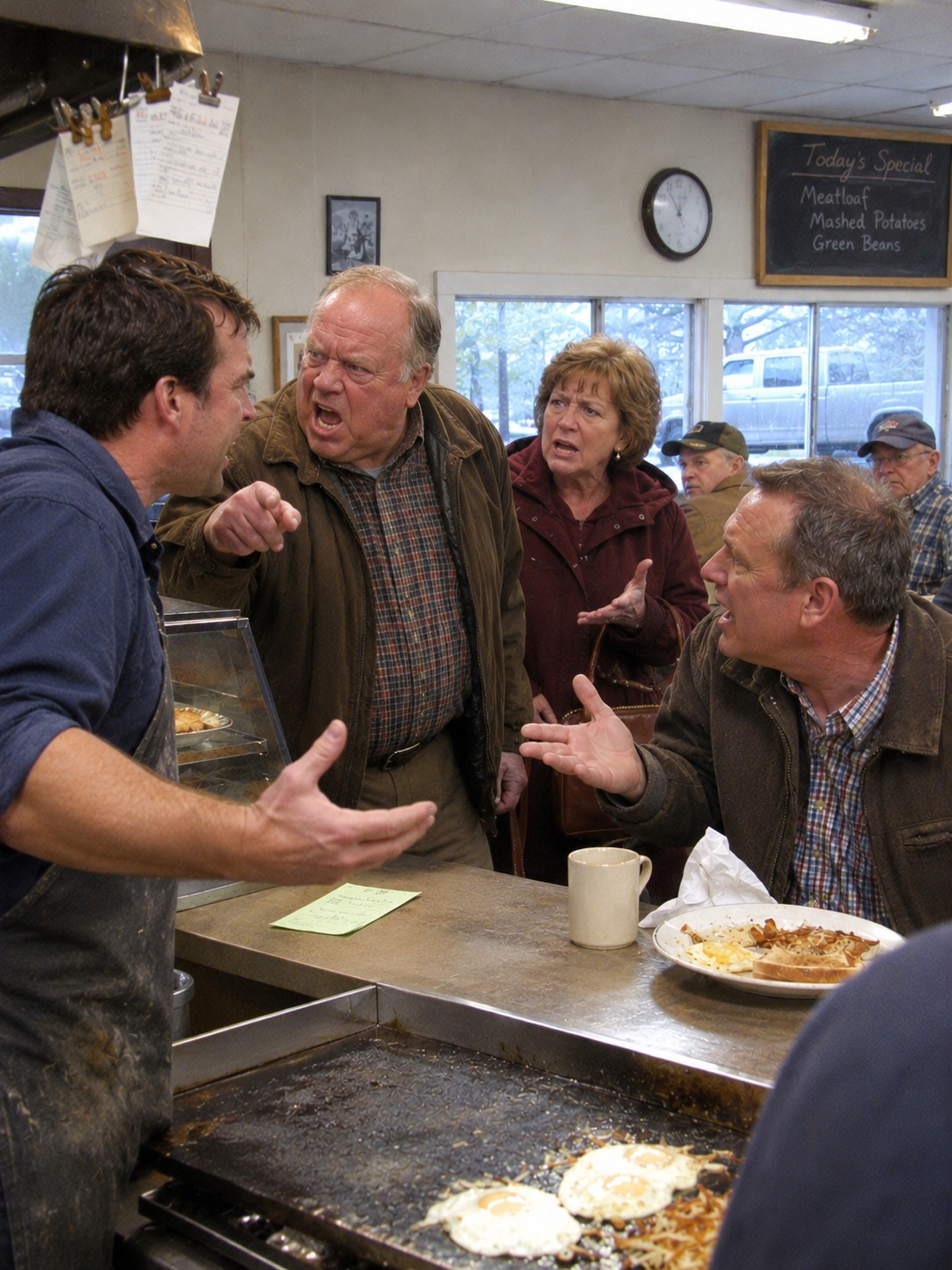
“Mom?”
I stared at the recipient's name.
Elaine Ziegler.
Bertel nodded.
“The funds were transferred into an account held solely in your mother's name.”
I read the document again.
There had to be something I was missing.
My mother had been the person who taught me to separate my birthday money into envelopes. She had encouraged me to save for my first truck. When I started working longer hours at the diner, she'd told me that responsible young men didn't spend everything they earned.
Apparently, she'd been saving some of it for herself.
“How much?”
Bertel turned another page.
“Thirty-seven thousand, eight hundred and sixty dollars.”
I sat perfectly still.
At twenty-one, I had been driving a twelve-year-old pickup with a transmission that slipped whenever I accelerated uphill.
I'd worked double shifts to replace it.
I'd eaten leftovers from the diner because groceries were expensive.
I'd postponed moving out of my parents' house because I couldn't afford a security deposit.
And somewhere, there had been nearly thirty-eight thousand dollars with my name attached to it.
“Where did that money come from?”
“Your grandfather established the account while you were still a minor. There were periodic contributions connected to your work at the diner, along with additional deposits he made personally.”
“Did my parents know?”
“They were involved in administering it before you reached adulthood.”
I looked at the withdrawal authorization.
“Then why did they need my signature?”
“Because by the time these funds were withdrawn, you were an adult and the account required your authorization.”
I felt suddenly nauseated.
“Who processed it?”
Bertel removed his glasses.
“A former employee. She retired several years ago.”
“Did anybody verify the signature?”
“There should have been additional verification. We're examining the archived records.”
I pointed toward the document.
“That's not my handwriting.”
“I understand.”
“The other signatures weren't mine either.”
“I understand that, Ford.”
His voice softened.
“And I'm sorry.”
I leaned back.
Outside his office, somebody laughed near the teller counter. A printer hummed. The ordinary business of a small-town bank continued while my understanding of my childhood fell apart.
“Can I get copies?”
“Of the records concerning your account, yes. We'll coordinate the rest with your attorney.”
He began gathering documents.
Then he stopped.
“There's something I remember that isn't in these records.”
I looked up.
“Your grandfather came here with you once.”
“When?”
“You were probably fifteen. Maybe sixteen.”
I vaguely remembered visiting the bank with Grandpa. He had bought me a chocolate milk afterward.
“He told me you were saving for your future,” Bertel continued. “He said he wanted you to have choices.”
I swallowed.
“Choices?”
“He didn't want you trapped behind that griddle simply because you couldn't afford to leave.”
I looked toward the window.
All those years, I had believed Grandpa wanted me to inherit the diner because it was my obligation.
Now I understood that he wanted me to inherit it because it was supposed to be my opportunity.
There was a difference.
A tremendous one.
“Your grandfather was proud of you,” Bertel said.
I nodded.
I couldn't trust myself to speak.
He gave me a folder containing copies of the relevant records and explained that the bank would conduct a formal review of the disputed transactions.
I thanked him and left.
I made it halfway across the parking lot before I stopped.
Thirty-seven thousand dollars.
At twenty-one.
I thought about everything that money could have changed.
Then I thought about everything I'd been told.
That I needed to work harder.
That I wasn't ready to live independently.
That my sister needed more assistance because I was naturally better at managing money.
My parents had praised my financial discipline while quietly benefiting from it.
I sat in my truck and called Nora.
She answered during her lunch break.
“Everything okay?”
“No.”
I told her about the account.
She didn't interrupt.
When I finished, she asked, “Where are you?”
“The bank.”
“Come home.”
“I should call Mom.”
“Come home first.”
I looked at the folder on the passenger seat.
For once, I didn't argue.
Nora arrived home shortly after I did.
She had arranged for a coworker to cover the remainder of her shift.
We sat at the kitchen table.
She examined the withdrawal authorization and the transfer record.
“Ford, this wasn't an accident.”
“I know.”
“This wasn't somebody forgetting to repay a loan.”
“I know.”
She reached for my hand.
“You were their son.”
That was the part I couldn't get past.
If a stranger had stolen money from me, I would have been furious.
With my mother, I felt something worse.
I felt foolish.
I remembered bringing her flowers on Mother's Day. Buying her a new washing machine when hers stopped working. Covering Dad's expenses when he took her on an anniversary trip.
Had she looked at me during those moments and remembered the account?
Had she ever considered telling me?
Or had the money simply become hers in her mind?
At two fifteen, I called her.
“Ford?”
Her voice sounded cheerful.
“I was just about to call you.”
“Do you remember an account Grandpa established for me?”
Silence.
“What account?”
“The one you emptied after my twenty-first birthday.”
She didn't answer.
I waited.
Finally, she said, “You've been talking to Bertel.”
“Yes.”
“He had no business discussing family finances.”
“It was my account.”
“Your father and I managed that money.”
“Until I became an adult.”
“Ford, you don't understand what was happening back then.”
“Explain it.”
She sighed.
“We had expenses.”
“So did I.”
“We were raising two children.”
“I was twenty-one.”
“You were still living under our roof.”
“Because I couldn't afford to move out.”
She became quiet again.
I looked at Nora.
“Did you sign my name?”
Mom's voice sharpened.
“I'm not having this conversation over the telephone.”
“Did you?”
“Your father approved the withdrawal.”
“That wasn't his money.”
“We're your parents!”
She shouted it as though parenthood settled every question.
I closed my eyes.
“Where did the money go?”
“Things the family needed.”
“What things?”
“Bills. Household expenses. Your sister's education.”
There it was again.
Tara.
I wondered whether there was a single major expense in my sister's life that I hadn't helped finance.
“Did she know?”
“Of course not.”
“Did Dad know?”
Mom hesitated.
“We made decisions together.”
I looked at the document.
“I'm giving everything to Margaret Keller.”
Her tone changed instantly.
“Ford, don't.”
“Why?”
“You'll embarrass your father.”
I almost laughed.
Even now, that was her concern.
Not the money.
Not the forged signature.
Not the years I'd spent struggling unnecessarily.
My father's embarrassment.
“Mom, I need you to understand something.”
“What?”
“I'm not responsible for protecting you from the consequences of what you've done.”
She began crying.
I ended the call.
My hands were trembling.
Nora moved closer.
I sat there for several minutes, listening to Lucy singing in the living room.
Then I called Margaret.
She asked me to send the documents immediately.
After reviewing them, she called back.
“This changes the situation considerably.”
“Can we recover the money?”
“We need to investigate the circumstances, applicable deadlines, and whether the concealment affects your options. But these records raise serious questions.”
“What about the recent signatures?”
“Those are especially important because they're current. Preserve everything.”
I told her about Mom's admission.
She asked me to write down the conversation while it was fresh in my memory.
I did.
Every word I could remember.
By the time I finished, it was nearly four.
My phone began vibrating again.
Dad.
I answered.
“What the hell did you say to your mother?”
“I asked about my money.”
“She hasn't stopped crying.”
“Did you authorize the withdrawal?”
“That's ancient history.”
“Did you?”
“We needed money at the time.”
“So you knew.”
“Ford, we kept a roof over your head.”
“And apparently charged me thirty-seven thousand dollars for it.”
“Don't be disrespectful.”
I stared at the wall.
“Did Grandpa know what you did?”
“He was already gone.”
The answer came too quickly.
I felt another piece fall into place.
They had waited until Grandpa couldn't object.
“Dad, I'm not coming back to work.”
“You've made that abundantly clear.”
“And I'm not signing anything.”
“Fine.”
“I'm also requesting a complete accounting of the succession reserve.”
He went silent.
Then he said, “You'd better be careful what you ask for.”
“What does that mean?”
“Not everything your grandfather did was as wonderful as you think.”
He hung up.
I sat staring at the phone.
Nora asked what he'd said.
I told her.
She frowned.
“Sounds like he's trying to scare you.”
“Maybe.”
But something about his words bothered me.
Dad had always avoided discussing Grandpa's business arrangements.
Now he was suggesting there were things I didn't know.
I returned to the metal box.
We spent the next hour examining the ledger and correspondence again.
Near the back of Grandpa's ledger, Nora discovered a series of references to numbered financial statements.
Several corresponded to documents in the box.
Others were missing.
“Look at this,” she said.
One entry read:
Gerald advised that household withdrawals must be recorded separately. Business obligations take priority.
Another read:
Discussed Elaine's bookkeeping practices. Requested independent review.
I remembered Mom sitting at the office desk every Thursday afternoon, surrounded by receipts and deposit slips.
Nobody was allowed to disturb her.
Dad called it her quiet time.
Apparently, Grandpa had called it something else.
At five thirty, Margaret phoned.
“Ford, I've located part of my father's archived file.”
“Anything useful?”
“Yes. There was an independent financial review commissioned by your grandfather.”
I looked at Nora.
“When?”
“Shortly before his death.”
“What did it find?”
“The report itself isn't in the folder.”
My heart sank.
“But there's correspondence indicating that a copy was delivered to your grandfather and another was retained by the accountant.”
“Is the accountant still alive?”
“I believe so.”
She gave me his name.
Arthur Lindstrom.
I remembered him immediately.
He had been a quiet man who ordered oatmeal every Wednesday morning and always left exactly two dollars beneath his coffee cup.
I hadn't seen him in years.
Margaret said she would attempt to contact him.
After we hung up, I called Vern.
“Do you remember Arthur Lindstrom?”
“Art? Sure.”
“Know where he lives?”
“Moved into an apartment near the old elementary school. Why?”
I explained.
Vern became unusually quiet.
“Leo used to meet with Art after closing.”
“Did you know why?”
“Figured it was taxes.”
He paused.
“But there was one night Gerald came looking for them. He was madder than I'd ever seen him.”
“When?”
“Not long before Leo died.”
I wrote down the address Vern gave me.
The following morning, Margaret confirmed that Arthur had agreed to speak with us.
We drove to his apartment together.
Arthur answered the door wearing a brown cardigan and slippers.
He recognized me immediately.
“Little Ford.”
I smiled.
“Not so little anymore.”
He invited us inside.
Margaret explained why we had come.
Arthur listened carefully.
Then he looked directly at me.
“Your grandfather suspected money was being taken from the business.”
“By my parents?”
He didn't answer immediately.
Instead, he walked toward a filing cabinet beside his bedroom door.
“I kept a copy of the report because Leo asked me to.”
He removed a thick red folder.
“Your mother came here looking for this three days after his funeral.”
My stomach tightened.
“Did you give it to her?”
“No.”
He placed the folder on the table.
Margaret opened it.
The first page contained a summary of unexplained withdrawals.
The second listed discrepancies in payroll records.
Then Arthur stopped her.
“Before you read any further, there's something Ford needs to see.”
He removed a sealed envelope from the back of the folder.
My father's name was written across the front.
Beneath it was a date from the week before Grandpa died.
Arthur handed it to me.
“Your father signed a confession, Ford.”
I broke the seal.
Margaret leaned closer.
Arthur pointed toward the first paragraph.
“That's the part your mother has spent twenty years trying to hide.”






Comments 0