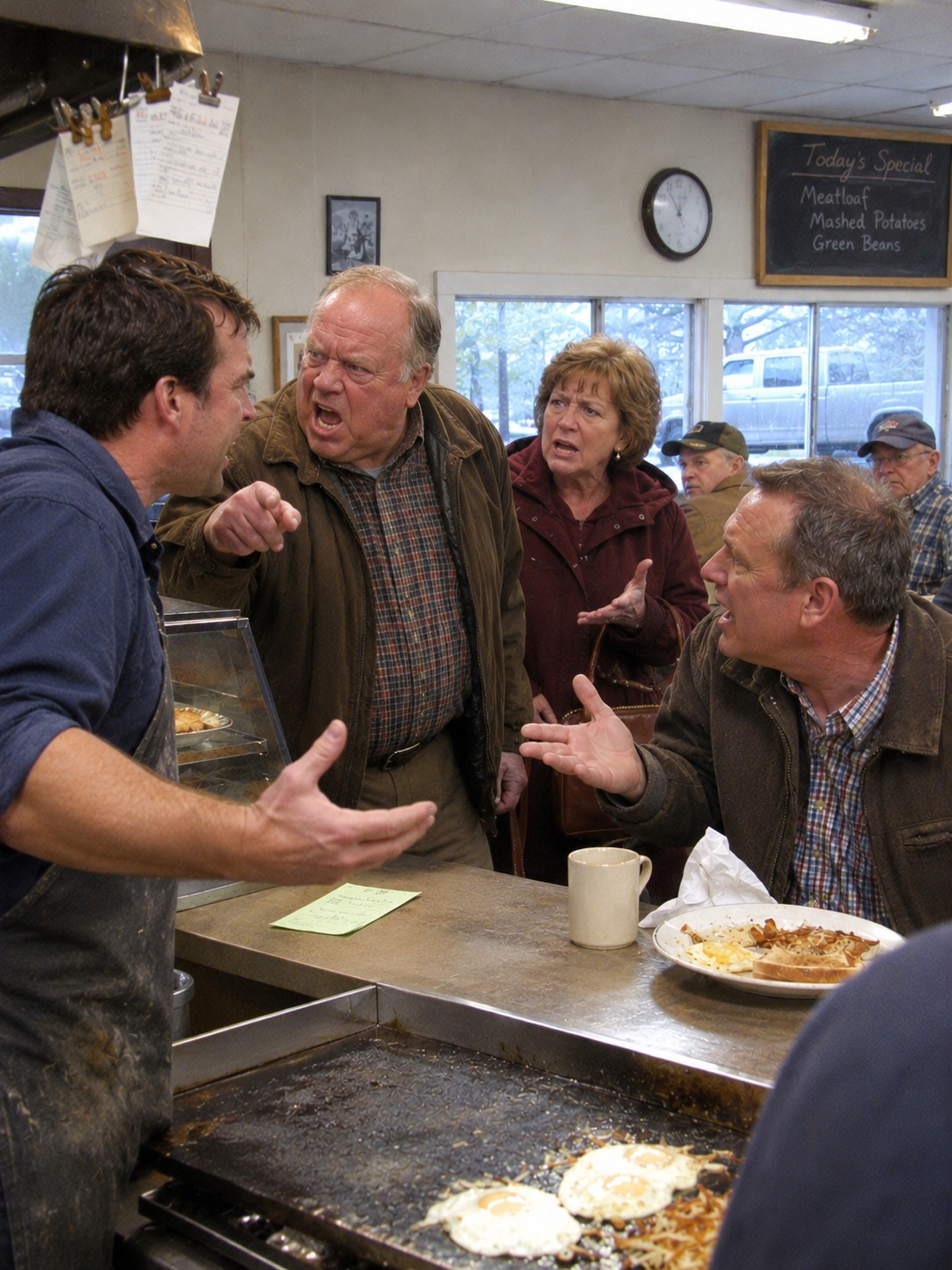
“Six months?”
I said it so quietly that Nora leaned closer.
On the other end of the phone, Tara laughed.
“Well, approximately. Garrett says we should be profitable before then.”
I turned off the truck's engine.
“Tara, I have a mortgage.”
“I know that.”
“And a daughter.”
“Ford, everybody has expenses.”
I looked in the rearview mirror. Lucy was playing with the zipper on her little pink jacket, completely unaware that her aunt had just suggested her father work half a year without bringing home a paycheck.
“Did Dad actually tell you I agreed to this?”
There was a pause.
“He said you'd do whatever it took to keep the business going.”
“That isn't an agreement.”
“Look, we're investing in the future. Garrett's putting together a whole new concept. We need everybody to make sacrifices initially.”
“What's your sacrifice?”
Another pause.
“What?”
“Are you working without a salary?”
“That's different. I'll be managing the business.”
“And I'll be cooking the food.”
“Ford, please don't make this difficult.”
I looked through the windshield at the diner.
Dad was visible through the front window, laughing with two men beside the register. Mom was wrapping leftover cake in aluminum foil.
I wondered whether either of them understood what they'd just done.
“I'm not working for free, Tara.”
Her voice changed.
“Then you need to discuss that with Dad.”
“No. I'm discussing it with you.”
“Garrett's already included your contribution in our financial projections.”
“My contribution?”
“Your labor.”
She said it as casually as someone describing a refrigerator that came with a furnished apartment.
I hung up.
For several seconds, neither Nora nor I spoke.
Then she reached over and took my hand.
“Drive home, Ford.”
I started the truck.
We passed the courthouse, the hardware store, and the little Lutheran church where Mom had spent thirty years telling people how proud she was of her children.
I wondered how many of those people knew what pride looked like behind closed doors.
At home, Nora carried Lucy inside while I remained in the driveway.
Our house wasn't much. Three bedrooms, one bathroom, aluminum siding, and a garage door that complained every time the temperature dropped below freezing.
But it belonged to us.
We had earned every square foot.
I had repaired the kitchen cabinets myself. Nora had painted Lucy's bedroom while seven months pregnant, despite my objections. We had bought our dining table from a retired schoolteacher who threw in four mismatched chairs because she was moving to Arizona.
Nothing about our life had come easily.
And now my parents expected me to risk it because Tara needed another opportunity.
I went inside.
Nora had already put Lucy to bed. She was sitting at the kitchen table with a calculator, a notebook, and two cups of coffee.
“Sit down,” she said.
I sat.
She pushed the calculator toward me.
“How much do you make in six months?”
“Before taxes?”
“After.”
I entered the numbers.
“About eighteen thousand.”
She nodded.
“Add the ninety-four hundred.”
I did.
“Now add the espresso machine.”
I looked at her.
“Nora.”
“Add it.”
Twenty-nine thousand seven hundred dollars.
That didn't include unpaid overtime, missed bonuses, or the countless little expenses I'd covered because somebody had forgotten to bring a checkbook.
Nora turned the calculator toward herself.
“Your family isn't asking you to make a sacrifice. They're asking our family to finance theirs.”
I stared at the number.
It looked different when it wasn't spread across twenty years.
“I thought the diner would eventually be mine.”
“I know.”
“I thought everything I was putting into it would come back to us someday.”
“I know that, too.”
She reached across the table.
“But they knew what you believed, Ford. That's what bothers me.”
I took out my wallet again.
The green guest check lay between our coffee cups.
Nora photographed both sides with her phone.
Then she brought a plastic document sleeve from the filing cabinet and carefully placed the original inside.
“Tell me about the day he signed it.”
I remembered almost everything.
The fire inspector had arrived on a Tuesday morning. His name was Curtis Madsen. He ordered scrambled eggs before conducting the inspection, which struck me as a decent thing to do.
He spent forty minutes examining the kitchen.
When he finished, he asked Dad to join us near the griddle.
“The suppression system isn't compliant anymore,” he explained. “You've got thirty days to replace it.”
Dad looked at the ceiling.
“That thing's been working since Reagan.”
“That's part of the problem, Gerald.”
Curtis wasn't unreasonable. He explained the requirements, gave us the paperwork, and recommended that we contact a licensed installer immediately.
The estimate arrived two days later.
Nine thousand four hundred dollars.
Dad read it in the window booth.
Then he covered his face.
“We don't have it.”
I had never seen him look so defeated.
He talked about closing temporarily. About laying off the waitresses. About customers finding somewhere else to eat.
He mentioned Grandpa.
That was what finally got me.
I couldn't imagine the diner sitting dark while people drove past on their way to breakfast somewhere else.
So I offered to pay.
Dad cried.
At least, I thought he did.
He wiped his eyes with a napkin and told me Grandpa would have been proud.
I transferred the money directly to the installation company.
When I asked Dad to acknowledge the debt in writing, he acted almost offended.
“It's going to be yours anyway.”
Nevertheless, he signed.
I had considered that signature a promise between two men who trusted each other.
Looking at it now, I wondered whether I'd misunderstood which one of us needed protection.
Nora turned the document sleeve over.
“What do these numbers mean?”
There were six digits beside Mom's handwriting.
Underneath them was the date.
Four years earlier.
Three days before Dad claimed the business couldn't afford the replacement system.
“I don't know.”
“Could it be a transaction number?”
“Maybe.”
“Did Tara receive money around that time?”
I tried to remember.
She had been living in Madison. She was renting an apartment with a woman she'd met through work. There had been some trouble with a hospitality consulting course she wanted to take.
Mom had mentioned tuition.
Dad had mentioned an opportunity.
Neither had mentioned an amount.
“I need to see the books,” I said.
Nora shook her head.
“You need to decide whether you're going to work tomorrow.”
That was the question I'd been avoiding.
Sunday breakfast was our busiest morning after Saturday.
Church families arrived in waves. Farmers came before seven. Vern and Hollis would probably be fighting over the first pancake before the coffee finished brewing.
There were employees depending on me.
Customers who had done nothing wrong.
A lifetime of habits telling me to set my alarm for four fifteen.
“If I don't go, they'll be in trouble.”
Nora looked at me steadily.
“Then they should have considered that before giving away your job and your future.”
I rubbed my forehead.
“I don't want to hurt anybody.”
“Neither do I.”
She paused.
“But I don't want our daughter growing up believing that loving someone means letting them take everything.”
That sentence stayed with me.
At eleven forty-three, Dad called.
I answered.
“Your sister says you're upset.”
“I'm not working without a paycheck.”
“Nobody said anything about forever.”
“Six months, Dad.”
“It's a transition period.”
“For whom?”
He exhaled heavily.
“Garrett thinks the business needs breathing room.”
“Then Garrett can work without a salary.”
“Don't be ridiculous.”
I laughed.
I couldn't help it.
Dad didn't appreciate that.
“You know, Ford, I expected a little more maturity from you.”
“I expected you to keep your promise.”
He went silent.
Then he said something that hurt more than the announcement itself.
“Maybe this attitude is why your mother and I decided Tara was the better choice.”
I looked at Nora.
She could hear him.
Her expression hardened.
I took a breath.
“I'm not coming in tomorrow.”
Dad laughed once.
“Sure you are.”
“No.”
“Ford, we open at five thirty.”
“I know.”
“Who's going to cook?”
“You own the diner. That's your decision.”
His voice rose.
“You can't just abandon your family.”
I looked at the photograph of Lucy on the refrigerator.
“I'm sitting with my family right now.”
I ended the call.
My hands were shaking.
Nora didn't congratulate me or tell me I'd done the right thing. She simply took my empty coffee cup and put it in the sink.
Five minutes later, Mom sent a message.
Your father is extremely disappointed. Please don't embarrass us any further.
I didn't respond.
Another message arrived.
We have always treated you and your sister equally.
Then another.
Grandpa would be ashamed of this behavior.
That one nearly made me call her.
Instead, I turned off my phone.
I went into Lucy's bedroom.
She was sleeping beneath a blanket covered with yellow ducks. One little hand rested beside her cheek.
I stood there longer than I intended.
For years, I'd told myself I was building something for her.
Something solid.
Something she could inherit if she wanted it.
But I hadn't owned a single chair in that diner.
Not the griddle.
Not the coffee machine.
Not even the hook where I hung my apron.
I had built my future around a promise somebody else could withdraw whenever it became inconvenient.
At midnight, I returned to the kitchen and opened my laptop.
I wrote a short notice stating that I would not continue working under the proposed unpaid arrangement. I also requested repayment of the $9,400 loan and a written accounting of any outstanding compensation.
I printed two copies.
Then I remembered the spare key.
Dad had given it to me when I was seventeen.
I removed it from my key ring.
The little brass key had worn smooth along one edge.
For twenty years, it had opened the same door before sunrise.
I placed it inside an envelope with the notice.
Nora watched me seal it.
“Are you sure?”
“No.”
It was the most truthful answer I'd given all evening.
“But I'm doing it anyway.”
We drove back to the diner shortly after midnight.
The parking lot was empty.
I unlocked the rear entrance one final time and walked inside.
The kitchen smelled of coffee, onions, and the cleaning solution we'd used since Grandpa's days.
I placed the envelope beside the register.
Then I set the key on top.
As I turned toward the door, I noticed a light beneath the office doorway.
Someone had left the computer running.
I stepped closer.
The office door was slightly open.
On the desk lay a thick blue folder marked TRANSITION DOCUMENTS.
My name appeared on the first page.
I picked it up.
It was an employment agreement identifying me as the diner’s unpaid kitchen manager for six months.
At the bottom was a signature.
My signature.
Except I had never seen the document before.
Behind me, the rear entrance suddenly opened.
“Put that down, Ford.”
It was my mother.






Comments 0