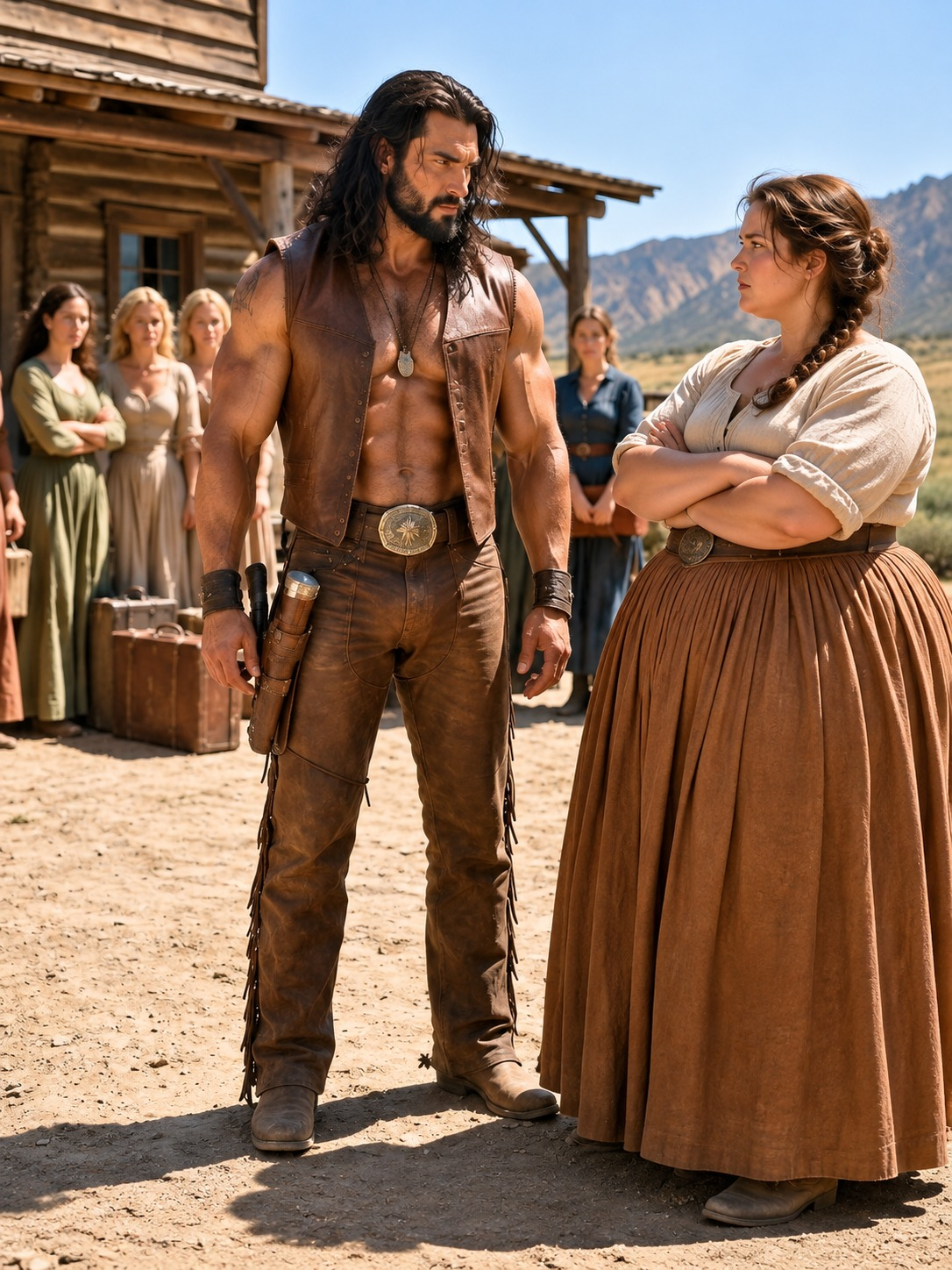
Mason dismounted before Harlon finished speaking.
"What did you say?"
Harlon removed his hat.
"Bracken has filed against your water rights."
Mason stood beside the corral, holding the reins of his horse.
For several seconds, he didn't move.
Then he reached for the documents.
"Let me see."
Harlon handed him the folder.
I watched Mason read the first page.
His expression hardened with every line.
"What does he claim?"
"That your father's original water claim was never properly recorded."
Mason looked up.
"My father filed that claim in 1861."
"I know."
"Amos Dutton witnessed it."
"I know that too."
"Then what the hell is this?"
Harlon lowered his voice.
"The original document has disappeared from the county records."
Mason stared at him.
"Disappeared?"
"That's what the clerk says."
"That clerk has worked for Bracken for three years."
"I know."
Mason folded the document.
His hands were shaking.
It was the first time I had seen him lose control of his emotions.
Not through shouting.
Not through violence.
Through the terrible realization that someone had quietly arranged the destruction of everything he had spent his life protecting.
I stepped closer.
"What happens now?"
Mason didn't look at me.
"Nothing."
Harlon shook his head.
"That's not true, Mason."
He opened the folder again.
"Bracken has already started proceedings. If he wins, he can claim the spring and challenge your right to use the water."
Mason looked toward the distant mountains.
The spring was somewhere beyond the northern pasture.
I imagined clear water running beneath the rocks, feeding the cattle, filling the troughs, and keeping the ranch alive.
It suddenly seemed impossible that a man could steal something so essential with nothing more than ink and paper.
"Can't you challenge the filing?" I asked.
Mason gave a bitter laugh.
"With what?"
"With the original claim."
"Which is missing."
"Then the witness."
Harlon looked at the ground.
"Amos Dutton."
Mason turned toward him.
"Have you spoken to him?"
"Yesterday."
"And?"
Harlon took a breath.
"He's afraid."
Mason's jaw tightened.
"Afraid of what?"
"Bracken owns the note on his farm. Amos owes him money for medical bills, repairs, and a loan he took out after his son died."
"That has nothing to do with what happened in 1861."
"It does if Bracken decides to call the debt."
Mason gripped the corral rail.
His knuckles turned pale.
"He can't do that."
Harlon looked at him sadly.
"He can. And he told Amos exactly what would happen if he testified for you."
For a moment, the only sound was the wind moving through the grass.
Then Mason spoke.
"He bought the only man who can save this ranch."
Harlon didn't disagree.
I looked at the documents.
There were official seals, printed statements, and signatures.
The paper looked ordinary.
Yet it carried the power to take a man's home.
I understood why Mason had never opened the bank notices.
He had known that sooner or later, the fight would reach his front door.
And now it had.
Mason spent the rest of the morning walking the northern fence.
I followed him as far as the barn.
He didn't ask me to come.
But he didn't tell me to stay behind either.
That was progress.
We reached a small rise overlooking the pasture.
From there, I could see the ranch house, the barn, and the narrow stream that ran toward the lower fields.
"Is that the spring?" I asked.
"No. That's runoff."
He pointed farther uphill.
"The spring is beyond those rocks."
"Does it really run all year?"
"Even in winter."
"Then I understand why Bracken wants it."
Mason looked at me.
"Most people don't understand."
"Water is more valuable than gold in a dry valley."
He nodded.
"My father used to say that."
"Your father sounds like a wise man."
"He was."
He looked away.
For a while, we watched the cattle.
Then Mason spoke.
"I was twelve when he first showed me the spring."
I waited.
"He told me the land wasn't worth much without it. Said a man could own a thousand acres and still starve if he couldn't water his cattle."
He kicked a small stone from the path.
"He made me promise I'd never sell it to someone who would use it to control the valley."
I looked toward the mountains.
"And you intend to keep that promise."
"I don't have much choice."
He said it without pride.
Only exhaustion.
I wanted to reach for his hand.
But I wasn't sure he would accept it.
So I stood beside him instead.
Sometimes presence was the only comfort a person could bear.
That evening, Harlon stayed for supper.
He sat at the kitchen table while I served stew.
Mason barely touched his food.
"How much time do we have?" he asked.
"Three weeks before the first hearing."
"Three weeks?"
Harlon nodded.
"Bracken wants the matter settled before the next payment comes due."
Mason pushed his plate away.
"He's been planning this for years."
"Six years, according to the notices."
"Longer."
I looked between them.
"Why didn't you sell?"
Mason stared at me.
"Because my father left me this land."
"That isn't what I meant."
He frowned.
I continued carefully.
"If the ranch is becoming impossible to maintain, wouldn't selling part of it be better than losing everything?"
Harlon looked uncomfortable.
Mason's expression became cold.
"The spring isn't something I can sell in pieces."
"I understand."
"No, you don't."
He stood abruptly.
The chair scraped against the floor.
"My father worked his whole life for this place. He built the house, the barn, the fences. He filed that claim when this valley was barely settled."
His voice tightened.
"And now a man with a gold watch thinks he can take it because he has more money."
I remained seated.
"I understand more than you think."
He looked at me.
"I didn't come here because I wanted a comfortable house, Mason. I came because I wanted a life that meant something."
He said nothing.
I looked toward the window.
"If that spring belongs to you, then perhaps protecting it matters to everyone who depends on it."
Harlon nodded slowly.
"She's right."
Mason turned away.
For a moment, I thought he would leave.
Instead, he sat down again.
He picked up his glass.
"Amos is the problem."
"Yes," Harlon answered.
"He's eighty-one. He can't fight Bracken."
"He doesn't have to fight him," I said.
Both men looked at me.
"He only has to tell the truth."
Mason shook his head.
"Bracken will take his farm."
"Then we need something that makes Amos's testimony unnecessary."
Harlon leaned forward.
"Like what?"
I looked at the papers on the table.
"Another copy of the claim."
Mason stared at me.
"The county has lost the original."
"Then perhaps your father kept another."
His expression changed.
I continued.
"Did he keep his own records? Letters? Receipts? Copies of the documents he filed?"
Mason was silent.
Then he looked toward the ceiling.
"There's a trunk."
Harlon leaned closer.
"Where?"
"In the loft."
"What kind of trunk?"
"My father's things."
Mason rubbed his forehead.
"After he died, I put everything upstairs. I never went through it."
"How long ago?"
"Eleven years."
The words settled over the kitchen.
Eleven years.
I thought about the photograph on the mantel.
The old man standing beside his son.
The life they had built together.
The papers Mason had been unable to touch.
"Would there be records inside?" I asked.
"Maybe."
"Then we should look."
Mason shook his head.
"I don't know."
"Why?"
He stared at his hands.
"Because I haven't opened that trunk since the day we buried him."
I understood.
It wasn't simply a collection of papers.
It was the last untouched part of his father's life.
Opening it meant confronting everything he had spent eleven years avoiding.
Harlon stood.
"I'll give you two some time."
He put on his hat.
Before leaving, he turned toward Mason.
"Don't let Bracken win before you've even tried."
Mason nodded.
The old postmaster walked outside.
I heard his mule moving toward the gate.
Then the ranch fell quiet.
That night, Mason sat alone at the kitchen table.
The bank documents lay in front of him.
I brought him a fresh cup of coffee.
He looked up.
"Thank you."
I sat opposite him.
"Are you thinking about the trunk?"
"Yes."
"Would you like me to help?"
He looked at me for a long time.
"I don't know what's in there."
"That's why we should look."
He rubbed his thumb along the edge of the bank notice.
"My father kept everything. Receipts, letters, old maps. He never trusted anyone else to keep his records."
"That sounds useful."
"He was particular about things."
A faint expression crossed his face.
"He'd have hated the way I've let that loft become a storage room."
I smiled slightly.
"Then perhaps he'll forgive you if we find something useful."
Mason looked down.
For a moment, I thought he might say something about his father.
Instead, he asked:
"Do you ever regret coming here?"
The question caught me off guard.
I considered it carefully.
"The road was difficult."
"That isn't what I asked."
I looked directly at him.
"No."
He seemed unable to accept the answer.
"Nine women left."
"I know."
"You might find things here you don't like."
"I know that too."
He leaned back.
"Then why?"
I placed my hands on the table.
"Because I didn't come looking for a perfect man. I came looking for someone willing to build a life with me."
He stared at me.
I continued.
"But building a life takes two people. You can't keep giving someone a locked room and expect them to feel married."
He lowered his eyes.
"I'll try."
It wasn't a grand promise.
But coming from Mason Callahan, it meant more than a hundred beautiful speeches.
The following morning, Mason brought a ladder into the house.
He placed it beneath the narrow opening leading to the loft.
I stood beside him.
"Are you ready?" I asked.
He looked toward the ceiling.
"No."
I nodded.
"Neither am I."
He almost smiled.
Then he climbed.
I followed.
The loft smelled of old wood, dust, and cedar.
A narrow window let in a pale beam of morning light.
Several boxes stood along the far wall.
Old tools rested beneath a canvas sheet.
And in the corner, beneath a heavy blanket, sat a large wooden trunk.
Mason stopped.
He didn't move toward it.
I stepped beside him.
"Is that it?"
He nodded.
His face had gone pale.
He reached into his coat and removed a small brass key.
For eleven years, he had carried it without using it.
He held it in his palm.
Then he looked at me.
"Whatever's inside," he said quietly, "I don't know if I'm ready to see it."
I placed my hand gently beside his.
"We don't have to do it alone."
He looked at my hand.
Then at the trunk.
Slowly, he bent down and inserted the key into the lock.
It turned.
A small metallic click echoed through the loft.
Mason lifted the lid.
And beneath the folded blankets, the first thing we saw was an envelope bearing his father's handwriting...






Comments 0