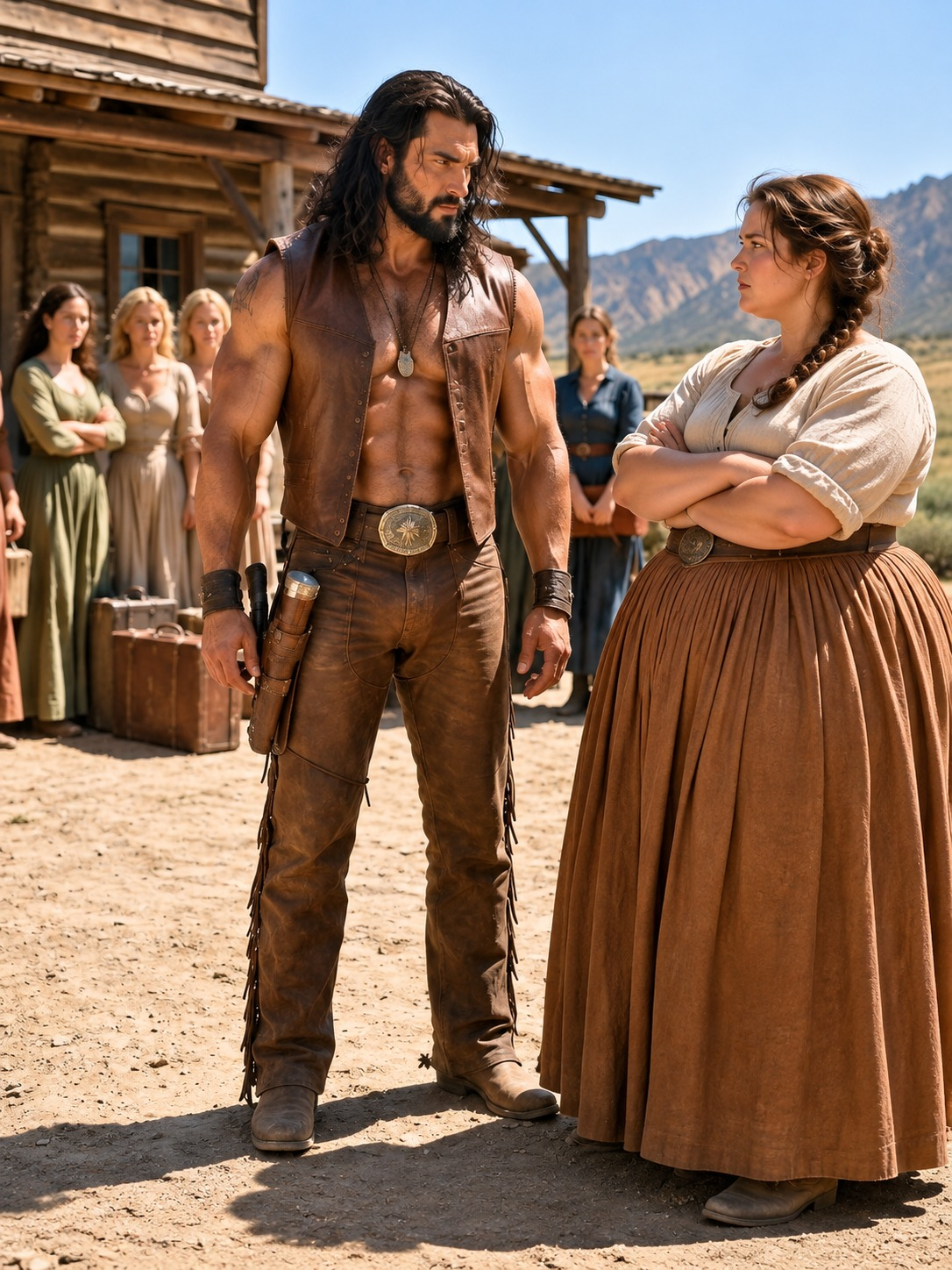
Silas Bracken wanted control of the spring before the hearing.
If the judge approved his request, he would become the temporary receiver of the disputed water.
That meant every rancher in Red Hollow would have to answer to him.
Mason read the filing again.
"He wants to own the water without winning the case."
Harlon nodded.
"That's exactly what he's trying to do."
I placed the document on the table.
"Then we need to make sure the judge understands what that would mean."
Mason looked at me.
"How?"
"By showing him who depends on that spring."
Harlon leaned forward.
"She's right."
I continued.
"Bracken is telling people that Mason wants to keep the water for himself. We need to show the opposite."
Mason considered the idea.
Then he stood.
"We'll invite every rancher in the valley."
By the following afternoon, the ranch yard was full of horses.
Men and women arrived from neighboring properties.
Some came because they trusted Mason.
Others came because they wanted to hear whether the rumors were true.
A few came simply because Silas Bracken had told them to be suspicious.
Mason stood beside the corral.
He wore his usual dark green ranch coat.
His expression was serious.
But he wasn't hiding behind the barn or avoiding the crowd.
For once, he was willing to face the entire valley.
I stood beside him.
Harlon had brought several copies of the certified survey extract.
Walter Finch carried the original register.
Amos Dutton sat on a wooden chair near the porch.
He looked nervous.
But he had come.
That mattered.
Mason waited until everyone had gathered.
Then he began.
"I know what you've heard."
The crowd became quiet.
"You've been told that I'm trying to take the spring for myself."
A man near the front raised his hand.
"Isn't that what the claim does?"
Mason shook his head.
"No."
He pointed toward the mountains.
"My father filed that claim in 1861. It established the boundaries of this property and protected the spring from being taken by anyone who wanted to control the valley."
He looked around.
"That doesn't mean I intend to keep the water from my neighbors."
Another rancher spoke.
"Then why are you fighting Bracken?"
"Because he wants to own it."
Mason paused.
"And because he intends to charge you for something your families have depended on for years."
The crowd began murmuring.
Silas Bracken had told them a different story.
He had claimed Mason was protecting his own interests.
Now they were hearing something else.
Mason continued.
"My father believed water should keep this valley alive. I believe the same thing."
He stepped aside.
Walter Finch opened the register.
The old clerk explained the original filing.
He showed the date.
The signatures.
The territorial survey reference.
Then he presented the certified extract.
Several ranchers leaned forward.
One recognized the boundary description.
Another remembered the stone marker.
Amos Dutton stood slowly.
His hands trembled.
But his voice was clear.
"I was there."
The crowd turned toward him.
"I was twenty years old when Thomas Callahan filed that claim. I watched him sign the document. I signed as a witness."
He looked toward Mason.
"His father was a good man. He didn't try to take anything from this valley. He wanted to protect the spring so the ranches could survive."
A woman near the back asked:
"Then why did you sign that statement for Bracken?"
Amos lowered his eyes.
"Because I was frightened."
He explained the bank threats.
He showed the original loan agreement.
He showed the missing payments.
Then he produced the corrected affidavit.
"I made a mistake. I let a man frighten me into denying something I knew was true."
The crowd fell silent.
Mason walked toward him.
"You don't owe anyone an apology for being afraid."
Amos looked at him.
Mason placed a hand on his shoulder.
"But I'm glad you came."
The meeting continued for nearly two hours.
Several ranchers asked questions.
Walter answered them.
Harlon explained the filing history.
I helped organize the loan records and pointed out the missing payments.
The more evidence we presented, the less certain the crowd became about Bracken's claims.
Then a rider appeared at the gate.
He carried a message from town.
The emergency hearing had been scheduled for the following morning.
The judge would decide whether to appoint a temporary receiver.
Mason took the notice.
His face tightened.
"We need to go."
I looked at the crowd.
"Then everyone who depends on that spring should come with us."
A rancher near the barn nodded.
Another agreed.
Within minutes, people were offering to ride into town together.
For the first time, Mason wasn't standing alone.
That evening, I found him in the barn.
He was checking the horses.
I leaned against the doorway.
"You have an entire valley behind you now."
He looked up.
"I hope they know what they're getting into."
"They know enough."
He returned to tightening a saddle strap.
After a moment, he spoke.
"Do you ever think about the life you left behind?"
I considered the question.
"Sometimes."
"Do you miss it?"
"I miss my parents. I miss the little house where I grew up. I miss certain things."
He nodded.
I stepped closer.
"But I don't miss being alone."
Mason stopped working.
I continued.
"Before I came here, I thought marriage meant finding someone who would share the difficult parts of life. I didn't expect everything to be easy."
He looked at me.
"I don't want you to regret marrying me."
"I don't."
He lowered his eyes.
"I know I haven't made it easy."
"Neither has Bracken."
He gave a faint smile.
I laughed.
Then he reached for my hand.
"Stay with me tomorrow."
"Of course."
"No matter what happens?"
I looked directly into his eyes.
"No matter what happens."
He held my hand for a long moment.
Then he leaned forward and kissed me.
This time, he didn't hesitate.
And this time, I knew he wasn't afraid of what the gesture meant.
The next morning, we rode into Red Hollow together.
The ranchers followed behind us.
Their horses filled the road.
Mason rode beside me.
His shoulders were straight.
His expression remained serious.
But there was something different about him.
He no longer looked like a man waiting for another person to leave.
He looked like someone who had finally found a reason to stand his ground.
The courthouse stood at the far end of town.
A crowd had gathered outside.
Silas Bracken was already there.
He wore an expensive black coat and carried a leather briefcase.
When he saw the line of ranchers behind us, his expression changed.
He turned toward his attorney.
They spoke quietly.
Then Bracken approached.
"Quite a gathering, Callahan."
Mason dismounted.
"People deserve to know what happens to their water."
Silas looked at me.
"Mrs. Callahan. Still determined to interfere in matters you don't understand?"
I stepped down from my horse.
"I understand enough."
He smiled coldly.
"You should consider your position carefully. Your husband may lose everything today."
I looked at the courthouse.
Then back at him.
"Then perhaps you should be worried about what happens if he doesn't."
His smile disappeared.
Inside the courtroom, the judge took his seat.
The room was crowded.
Ranchers filled the benches.
Harlon sat beside Walter Finch.
Amos waited near the front.
Mason and I sat together.
Silas occupied the opposite table.
His attorney stood first.
He argued that the original county filing could not be verified.
He claimed that the survey records were incomplete.
He presented Amos's earlier affidavit.
Then he requested immediate control of the disputed water.
Mason's attorney objected.
Walter Finch was called to explain the territorial records.
He presented the certified extract.
The judge examined the seal.
Then he looked at the original register.
Amos testified next.
His voice shook at first.
But when he described standing beside Thomas Callahan in 1861, he became more confident.
He identified the spring.
He described the stone marker.
He confirmed the filing.
Then he explained how Bracken had pressured him to sign the later affidavit.
Silas's attorney objected repeatedly.
But the judge allowed the testimony.
Finally, the accountant's report was presented.
It showed that Amos's loan balance had been incorrectly calculated.
Several payments had not been credited.
The courtroom became restless.
Silas leaned toward his attorney.
I watched him.
His confidence was beginning to disappear.
But then he stood.
He requested permission to introduce one final document.
The judge allowed it.
Silas walked toward the bench carrying a folded sheet of parchment.
He placed it before the judge.
Then he turned toward Mason.
"I believe this changes everything."
Mason looked at the document.
His expression went completely still.
Because the paper carried Thomas Callahan's signature.
And beneath it was a statement that appeared to transfer the entire spring to the Bracken family...






Comments 0