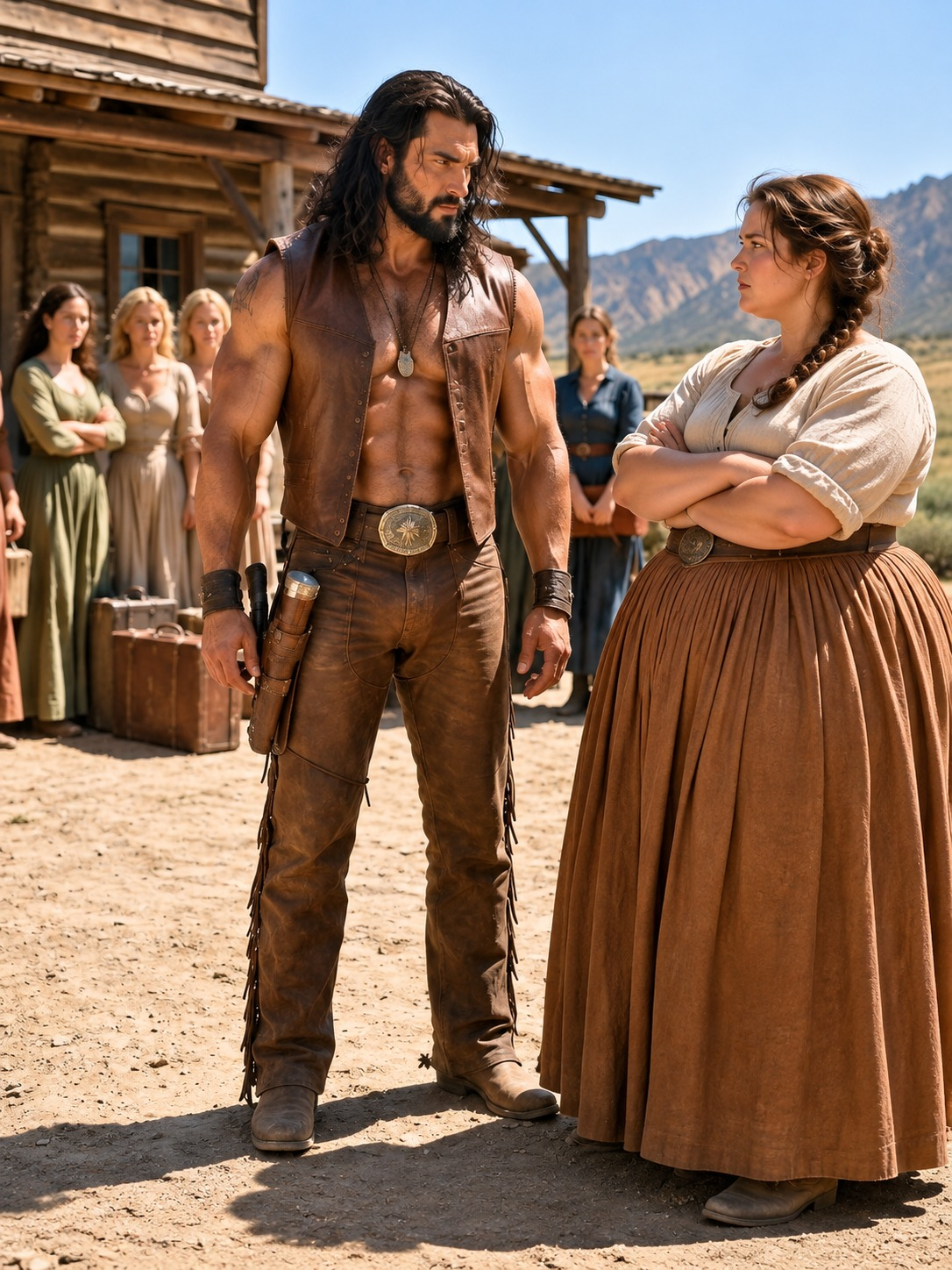
Mason held the second document beneath the lantern.
His expression changed.
I moved closer.
"What does it say?"
He didn't answer immediately.
The parchment was thinner than the first document. Its edges were darkened with age, and a crease ran through the middle.
At the top was a date.
1861.
Below it were several lines of handwriting.
Mason read them silently.
Then he looked at me.
"Bracken's father."
I examined the signature.
The name was written in a firm, deliberate hand.
"Was he involved in the original filing?"
Mason shook his head.
"Not officially."
"Then why is his name here?"
He turned the document toward the lantern.
It appeared to be a private acknowledgment.
A statement confirming that Thomas Callahan had established the spring claim before several neighboring landowners.
One of those landowners had been Silas Bracken's father.
The document contained no transfer of ownership.
No sale.
No agreement to surrender the water.
Only a statement acknowledging the original claim.
Mason read the final lines.
Then his jaw tightened.
"His father knew."
"Knew what?"
"That my father had filed the claim. He knew the spring belonged to this property."
I stared at the signature.
"Then Silas cannot honestly claim the water was never registered."
Mason folded the parchment carefully.
"Honesty has never stopped him."
He placed both documents inside his coat.
For the first time since Harlon had arrived with the bank notice, Mason looked as though he had a chance.
Not a guarantee.
A chance.
And that was enough to change the way he stood.
We returned to the ranch shortly before sunset.
Mason carried the documents inside and placed them on the kitchen table.
He examined them again.
I prepared supper.
Neither of us spoke much.
When the food was ready, I placed two plates on the table.
Mason was still studying the seal.
"Eat before it gets cold," I said.
He looked up.
"Sorry."
He pushed the papers aside.
We sat together.
After a few minutes, he finally spoke.
"I should have opened that trunk years ago."
I considered his words.
"Perhaps."
He looked at me.
I continued.
"But perhaps you weren't ready."
He stared at his plate.
"My father trusted me with everything."
"You were young when he died."
"I was thirty-one."
"That doesn't mean losing him was easy."
Mason didn't respond.
I took a sip of water.
"Grief doesn't follow a calendar."
He looked toward the mantel.
The photograph of Thomas Callahan stood beside the clock.
"I used to think if I left everything untouched, it would stay the way he had left it."
I understood then.
The trunk had not been abandoned because Mason didn't care.
He had preserved it because he cared too much.
He had kept his father's belongings exactly where they were, hoping that some part of the man might remain close.
I reached across the table.
My hand rested near his.
"You don't have to leave everything untouched to remember him."
Mason looked down at my hand.
He didn't move away.
The next morning, we rode to the lower pasture.
Mason wanted to inspect the spring channel and compare the land descriptions in the document with the actual boundaries.
He carried the original parchment in a leather case.
I brought the drawing from the trunk.
We followed the narrow trail toward the northern ridge.
The spring was flowing steadily.
Water moved over the rocks and into the channel below.
Mason knelt beside it.
He checked the wooden markers his father had placed along the boundary.
Several were still standing.
Others had fallen.
I helped him measure the distance between them.
We worked until noon.
Then we found something unusual.
A wooden marker near the eastern edge had been replaced.
The old post was lying in the grass.
A new one stood several feet farther uphill.
Mason examined the ground.
"Someone moved this."
"Could it have fallen?"
"No."
He pointed to the fresh soil.
"The ground was dug recently."
I looked toward the ridge.
"Who would do that?"
Mason didn't answer.
He walked around the marker.
Then he found a small metal tag attached to its base.
The tag carried a number.
It wasn't the number on his father's map.
It was a survey reference used by Bracken's bank.
Mason pulled it free.
His face darkened.
"He's already marking the property."
"Can he do that?"
"Not legally."
"Then why?"
"Because he wants me to know he thinks he can."
I looked at the marker.
A small piece of metal.
A few numbers.
Yet it represented something much larger.
A man was trying to convince Mason that his home had already been taken.
I placed the tag in my pocket.
"We'll keep it."
Mason looked at me.
"Why?"
"Because if he has someone moving boundary markers, that's something the court should know."
He studied my face.
Then he nodded.
That evening, Harlon returned.
He brought fresh news from town.
The courthouse had scheduled the first hearing for the following week.
Mason placed the two documents on the table.
Harlon examined them carefully.
When he saw the territorial seal, he removed his glasses.
"Where did you find this?"
"In my father's storage chamber."
Harlon looked up.
"Your father kept the original?"
Mason nodded.
"Or a certified copy. We haven't had it examined yet."
The postmaster carefully inspected the signatures.
Then he looked at the second document.
His expression changed.
"Thomas had this too?"
"Yes."
Harlon leaned back.
"Well, I'll be."
"What?"
"Silas's father signed this acknowledgment before the territorial clerk."
Mason pointed to the signature.
"That's what it looks like."
Harlon shook his head.
"Silas has spent years telling people that your father never established ownership."
He looked toward me.
"Now we have evidence that his own family knew the truth."
I felt a quiet sense of relief.
But Harlon wasn't finished.
"There's still Amos."
Mason's expression fell.
"Yes."
"The documents are strong. But Bracken will challenge the signatures, the filing date, and the location of the spring. Amos was there. He can confirm what happened."
Mason stood.
"I'll go see him."
Harlon shook his head.
"That might make things worse."
"He's my father's witness."
"And he's a frightened old man with a debt hanging over his head."
Mason looked toward the window.
"Then what do you suggest?"
Harlon hesitated.
"Let me speak to him first."
Mason didn't look convinced.
But he finally nodded.
Two days later, Harlon returned with an answer.
It wasn't a good one.
Amos Dutton had refused to testify.
The old man lived in a small farmhouse near the eastern edge of the valley.
His wife had died several years earlier.
His only son had been buried in a cemetery outside town.
He had no family nearby.
Bracken held the mortgage on his land and had already threatened to demand immediate repayment.
"He said he remembers your father," Harlon explained.
"He remembers the day they filed the claim."
Mason gripped the table.
"Then why won't he speak?"
"Because he thinks he'll lose everything."
Mason walked to the window.
"That farm is all he has."
"I know."
"Thomas helped him build the first barn."
"I know that too."
Mason turned around.
"Then how can he let Bracken take the spring?"
Harlon spoke quietly.
"Fear makes a man protect what little he has left."
I looked at Mason.
He seemed to understand.
But understanding didn't make the situation easier.
That night, I found Mason sitting on the porch.
The bank documents were beside him.
The old photograph of his father had been placed on the table.
I sat in the chair opposite him.
"Have you thought about visiting Amos?"
"Yes."
"Then why haven't you?"
"Because Harlon is right. If I go there, Bracken will say I'm pressuring him."
"Perhaps."
Mason looked toward the pasture.
"I won't make an eighty-one-year-old man lose his farm for mine."
I considered that.
"Then don't ask him to choose between his farm and your ranch."
He looked at me.
"How?"
"Find out exactly what Bracken has threatened. Find out whether the debt is legitimate. Find out whether he has any legal way to delay repayment."
Mason was silent.
I continued.
"Perhaps Amos needs someone to stand beside him before he can stand beside you."
He stared at me.
"You think we can help him?"
"I think we should try."
Mason looked down at the photograph.
For a long time, he said nothing.
Then he reached for the second coffee cup.
He placed it on the table beside mine.
"I'll ride to his farm tomorrow."
I nodded.
"Good."
He looked at me.
"Will you come?"
The question surprised me.
"Yes."
He seemed relieved.
Then, from somewhere beyond the barn, a horse suddenly whinnied.
We both turned.
A lantern was moving near the northern fence.
Someone was standing beside the newly replaced boundary marker.
Mason rose slowly.
He reached for his rifle.
And when the stranger stepped into the moonlight, I recognized the polished black boots before I saw his face...






Comments 0