"Avis... don't let him see the last page."
The whisper came from behind the cabinet.
I turned.
An elderly man slowly emerged from the narrow space between the stone wall and the wooden shelves. His white hair was disheveled, his face deeply lined, and one hand rested against the wall for support.
Thomas dropped the photograph.
"Grandfather?"
The old man looked at him.
"Hello, Thomas."
For several seconds, nobody moved.
William Hale was alive.
The man whose signature appeared on the original agreement had been hiding beneath the storage building, just as Daniel had once hidden beneath the house.
Arthur's footsteps sounded above us.
"Open the hatch!" he shouted.
William raised one trembling finger toward the document in my hands.
"Whatever happens, don't give him the last page."
I looked down.
The final page was still folded beneath the original agreement.
"What does it contain?"
William looked at Daniel.
"The truth about the night the agreement was signed."
Daniel closed his eyes.
Then he nodded.
"She deserves to know."
I unfolded the paper.
At the top was a handwritten statement dated twenty-five years earlier.
It explained that the original agreement had not been signed under pressure, deception, or financial coercion.
Every person had signed voluntarily.
But the most important paragraph concerned a child.
Margaret Hale.
According to the document, Margaret had been entrusted to Clara Bellwether's care after her biological mother became seriously ill. The arrangement had been temporary, intended to protect the child until her family could safely reunite.
The agreement also stated that Margaret would remain a beneficiary of the shelter regardless of what happened to her parents.
I looked at her.
"Your mother?"
Margaret nodded.
"She was Clara's closest friend."
William continued.
"Arthur wanted to remove Margaret from the agreement because he believed the property would become easier to sell without her family's involvement."
Thomas looked at his grandfather.
"Why would my father do that?"
William's expression became sorrowful.
"Because your father believed he was entitled to everything his family had once controlled."
I turned another page.
There was a second statement.
This one had been signed by Arthur himself.
I recognized his handwriting from the note he had left in the cabinet.
The statement admitted that he had attempted to alter the property records.
It also acknowledged that Daniel had never stolen the project funds.
I looked at Thomas.
"Your father knew."
Thomas lowered his head.
"Then he lied to everyone."
William nodded.
"He did."
Above us, the hatch shook.
Arthur shouted again.
"William! I know you're down there!"
Thomas stepped toward the staircase.
I caught his arm.
"Wait."
He looked at me.
"That's my father."
"And this is the evidence that could protect the house."
Thomas stared at the papers.
For several seconds, he seemed unable to decide what to do.
Then he slowly nodded.
"You're right."
William reached into his coat and removed a small envelope.
"This is the final piece."
He handed it to me.
Inside were three certified copies of the original agreement, together with a letter from a county judge confirming that the property could not be transferred without the consent of all protected beneficiaries.
The letter had been prepared years earlier.
But it had never been filed.
"Why didn't Clara submit this?" I asked.
William answered quietly.
"Because she was waiting for you."
I looked at the documents.
My mother had not simply hidden the truth.
She had preserved the legal protection that would allow the house to survive.
I folded the papers carefully.
Then I looked toward the staircase.
"Let's open the hatch."
Daniel moved beside me.
Ruth joined him.
Thomas stepped forward.
Together, we pushed.
The wooden hatch opened.
Arthur stood above us.
His face changed when he saw William.
For the first time, he looked genuinely afraid.
"William?"
The old man climbed the stairs slowly.
"Hello, Arthur."
Arthur stepped backward.
"You should be dead."
William looked at him sadly.
"You said the same thing about Daniel."
Thomas stood beside his grandfather.
"Father, what have you done?"
Arthur looked at his son.
"Thomas, get away from them."
"No."
"You don't understand."
"I understand enough."
Thomas removed the altered county documents from his bag.
"I found these in your office. I know you changed the records. I know you copied Eleanor's signature. And I know you tried to transfer the spring rights without the beneficiaries' permission."
Arthur's expression hardened.
"Those documents are confidential."
"They're evidence."
Arthur looked toward me.
"Give me the original agreement."
I held the folder against my chest.
"No."
"You have no idea what you're involved in."
I looked directly at him.
"I know exactly what I'm involved in."
I raised the documents.
"This house protected my mother. It protected Ruth. It protected Margaret. It protected families who had nowhere else to go."
Arthur shook his head.
"That arrangement is outdated."
"Then why have you spent twenty-five years trying to destroy it?"
He didn't answer.
Daniel stepped forward.
"Because he never wanted to protect the land. He wanted to control it."
Arthur turned toward him.
"You should have stayed hidden."
Daniel looked at his brother.
"I did that long enough."
William approached Arthur.
"Your own signature is on the original statement."
Arthur stared at the paper.
Then his shoulders dropped slightly.
He understood.
There was no longer any way to deny what he had done.
Thomas took a step forward.
"Father, come with me. We can explain everything to the county."
Arthur looked at his son.
For a moment, I thought he might refuse.
But he finally lowered his head.
"All right."
There was no dramatic struggle.
No shouting.
Just an old man realizing that the people he had tried to silence had finally found their voices.
Thomas accompanied him outside.
William followed with the documents.
Daniel remained beside me.
When the door closed, I looked toward the old wooden cabinet.
The original agreement was safe.
For the first time, nobody was trying to take it away.
The following morning, we traveled to the county office.
The rain had stopped.
The road was still muddy, but the sky had begun to clear.
Thomas provided the altered documents.
William gave his sworn statement.
Daniel explained the original spring system and identified the missing maintenance records.
Eleanor confirmed that her signature had been copied without permission.
Margaret presented the original letters Clara had entrusted to her.
And I submitted the agreement, together with the certified copies my mother had preserved.
The county officials examined everything carefully.
It took several hours.
At first, I was afraid that another document would appear, another person would challenge us, or another signature would be questioned.
But the evidence was complete.
The original agreement was valid.
The attempted transfer was invalid.
The property could not be sold privately.
Arthur's fraudulent filings were referred for formal investigation, and he was required to surrender the records he had altered.
Thomas cooperated fully.
He also provided information about the private development company that had approached his father.
Without the altered documents, the company had no legal basis to claim the spring.
By the end of the afternoon, the county clerk placed a certified copy of the original agreement in front of me.
"Miss Bellwether," she said, "the property is protected under the original trust arrangement."
I stared at the document.
"Does that mean the house is safe?"
She smiled.
"It means nobody can take it from the people the agreement was created to protect."
I looked toward Daniel.
He was standing beside Eleanor.
Ruth held his arm.
Margaret was smiling quietly.
For the first time in decades, the family was standing together without fear.
I signed the final acknowledgment.
Avis Bellwether.
My name.
My decision.
My mother's promise.
The next weeks were filled with work.
The spring chamber needed repairs.
The upper drainage channel had to be cleared.
Several wooden supports required replacement.
The roof needed attention.
And the old storage building needed a new door.
Daniel supervised the repairs.
Although he was still weak, he knew the water system better than anyone.
He taught me how to read the old maps and identify the different channels.
Ruth organized the maintenance records.
Margaret contacted the families listed in the original agreement.
Eleanor helped prepare the main room.
Thomas returned with tools and materials.
He never asked for praise.
He simply worked.
One morning, I found him repairing the old wooden steps.
"Why are you helping us?" I asked.
He stopped hammering.
"Because I owe you an apology."
"For what?"
"For what my father tried to do."
I shook my head.
"You didn't make his decisions."
"No. But I knew something was wrong, and I waited too long to speak."
I looked at the steps.
"Then don't wait anymore."
He nodded.
"I won't."
Over the following days, several families arrived.
Some brought food.
Others brought lumber, nails, blankets, and tools.
An elderly farmer named Samuel Cooper brought a handwritten letter from his father.
It described how Clara had helped his family during a difficult winter.
A woman named Mary brought two jars of homemade preserves.
She said her grandmother had once received shelter in the house.
Another family brought a small wooden rocking chair.
It had belonged to a little boy who had stayed there decades earlier.
I listened to their stories.
Every person seemed to know something about my mother.
A kind word.
A warm meal.
A repaired coat.
A place to sleep.
A little help when everything else had failed.
I realized that Clara had never measured her life by what she owned.
She measured it by what she had been able to give.
And now I understood why she had left me the house.
One evening, Daniel asked me to walk with him toward the creek.
The spring water was running clearly.
The repairs had restored the main channel, and the water flowed through the stone without obstruction.
He stopped beside a large oak tree.
"I need to tell you something."
I looked at him.
"What is it?"
He reached into his coat and removed a small photograph.
It showed my mother holding me as a baby.
Daniel stood beside her.
We were all smiling.
I had never seen the photograph before.
"Your mother took this the day we decided to build the house," he said.
I examined it.
"Why?"
"Because she wanted to remember the beginning."
He pointed toward the hillside.
"We had almost nothing then. A little money, a few tools, and an idea."
I looked at the photograph.
"She never told me."
"She wanted you to remember her as your mother, not as someone who spent her life fighting."
I felt tears gather in my eyes.
"Did she ever regret it?"
Daniel shook his head.
"Never."
He paused.
"She regretted that she couldn't give you an easier life. But she never regretted helping those families."
I looked toward the water.
"Did she forgive you?"
Daniel's eyes filled.
"Yes."
"How do you know?"
He smiled sadly.
"Because she kept writing to me."
He removed a final envelope from his pocket.
It was addressed to him.
I recognized my mother's handwriting.
He opened it.
Inside was a short letter.
"Daniel,
If Avis ever finds her way home, please don't ask her to understand everything immediately.
Let her be angry.
Let her ask questions.
And when she is ready, tell her that we loved her enough to build a place where she would always belong.
I hope you will both forgive yourselves.
Clara."
Daniel lowered the paper.
For several moments, he couldn't speak.
Then he looked at me.
"I wish I had been there."
I took his hand.
"I wish you had too."
He nodded.
"I can't give you those years back."
"No."
"But I would like to be here for the years we still have."
I looked at him.
Then I nodded.
"That's enough for now."
He held my hand.
And we walked back toward the house together.
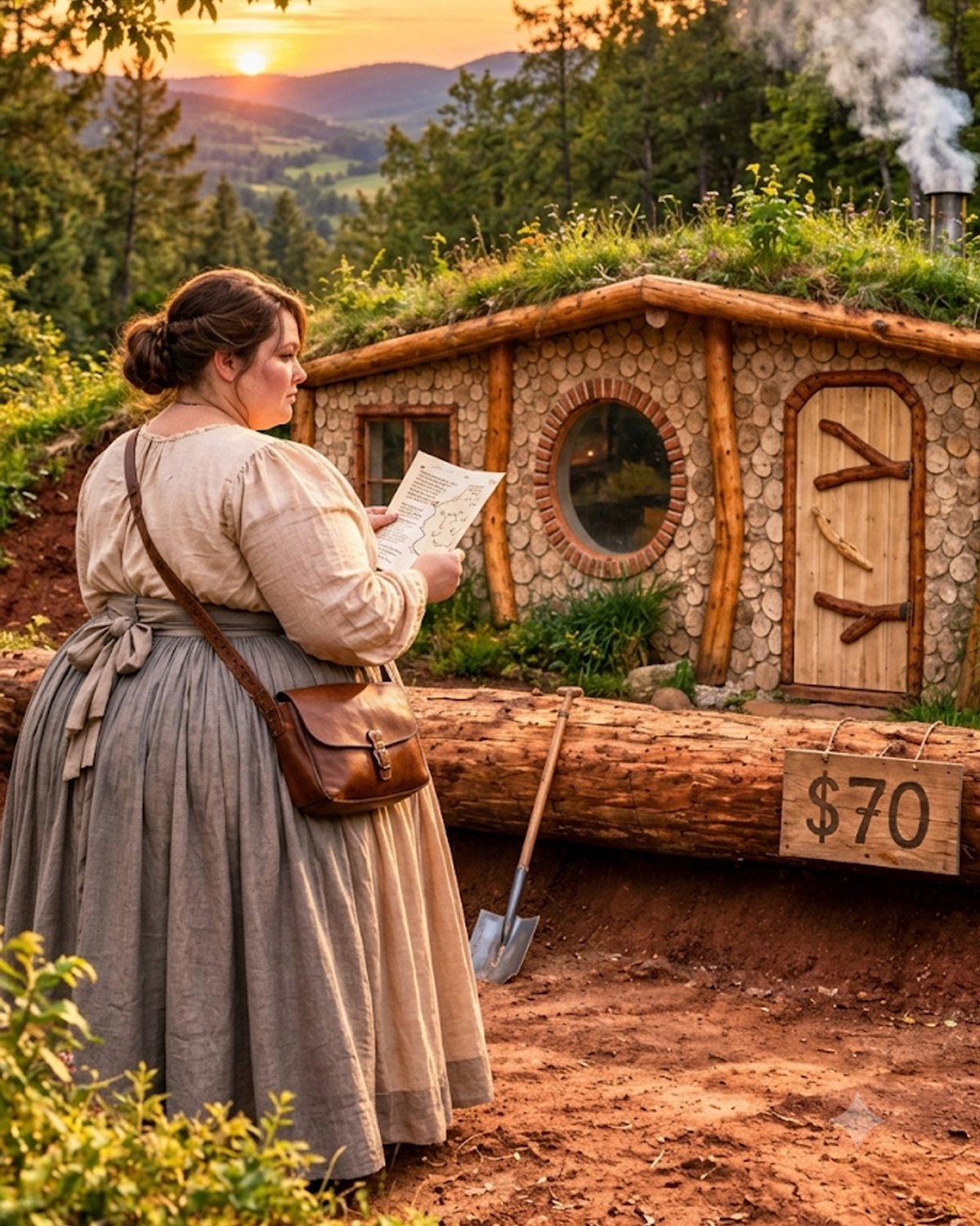
Three months later, the hillside dwelling no longer looked abandoned.
The roof had been repaired.
The drainage system worked.
The spring flowed cleanly.
The storage building had been restored, and the old records were kept in a dry cabinet.
The circular window had been cleaned.
A new wooden table stood in the main room.
But I had refused to remove the old one.
Its rounded edges still carried the marks Clara had made while teaching children to sew and bake.
The blue apron remained on its wooden peg.
Beside it hung another apron.
A new one.
I had made it myself.
The first families arrived at the beginning of winter.
A widow with two young children needed somewhere to stay while her home was repaired.
A farmer had lost his savings after an illness.
An elderly couple needed help accessing clean water.
We welcomed them all.
The house became what it had always been intended to become.
A place where people could rest without feeling ashamed of needing help.
Ruth eventually settled nearby.
She and Eleanor rented a small cottage not far from the creek.
They spent their mornings together, making bread and repairing clothes.
Sometimes they argued.
Sometimes they laughed.
But they never went another day without seeing each other.
Margaret began managing the original records.
She also organized a small fund for families who needed emergency assistance.
William stayed with Thomas.
The two of them visited the house every Sunday.
Thomas had left his father's business and begun working with the county's water conservation program.
He became one of our most reliable volunteers.
Arthur was required to answer for the fraudulent property filings and the misuse of official documents. He lost his claim to the land and was no longer permitted to represent the property in county matters.
Daniel slowly regained his strength.
He moved into the small room beside the kitchen.
Every morning, he checked the spring.
Every evening, he sat near the stove and read the old letters.
Sometimes he spoke about Clara.
Sometimes he spoke about the years he had lost.
And sometimes he simply sat beside me without saying anything.
I didn't expect our relationship to become perfect overnight.
It didn't.
There were difficult conversations.
There were painful memories.
There were questions neither of us could answer.
But we kept talking.
That was enough.
On the first anniversary of my arrival, we gathered around the old wooden table.
The room was full.
Eleanor had prepared a large meal.
Ruth brought fresh bread.
Margaret brought flowers.
Thomas carried a basket of apples.
William sat near the window, laughing at something Daniel had said.
The children who were staying at the house ran between the chairs.
One little girl stopped beside the blue apron.
She pointed toward it.
"Whose is that?"
I knelt beside her.
"It belonged to my mother."
"Was she nice?"
I smiled.
"She was very kind."
The little girl looked at the fabric.
"Can I touch it?"
"Of course."
She carefully touched the faded pocket.
I watched her face.
Then I noticed the small brass button sewn near the hem.
The same kind my mother had hidden for me.
I removed a second brass button from my pocket.
It had been polished clean.
I placed it in the child's palm.
"Keep this."
She looked at it.
"What does it mean?"
I glanced toward Daniel.
He smiled.
"It means that when something is broken, we don't have to throw it away. We can try to repair it."
The little girl closed her fingers around the button.
Then she ran back toward the table.
I stood and looked around the room.
The wooden shelves were full.
The stove was warm.
The windows were clear.
The water continued flowing beneath the floor.
And the people sitting around the table were no longer strangers.
They were a family.
Not because we all shared the same name.
Not because our lives had followed an easy path.
But because we had chosen to stay.
Later that evening, after everyone had gone to bed, I stepped outside.
The sky was clear.
Stars appeared above the hillside.
I walked toward the small stone path and stopped beside the creek.
The water moved quietly through the channel.
I thought about the six nights I had spent sleeping outside.
I remembered the mud.
The cold.
The empty feeling of having nowhere to go.
I remembered paying my last seventy dollars for a house I wasn't even sure I could enter.
And I remembered the faded blue apron hanging inside.
For a long time, I had believed that my mother had left me with almost nothing.
I had been wrong.
She had left me a home.
She had left me a family.
She had left me the truth.
And most importantly, she had left me the freedom to decide what kind of life I wanted to build.
Daniel came outside and stood beside me.
"Cold?"
"A little."
He placed his coat around my shoulders.
We looked toward the circular window.
A warm light glowed inside.
"Your mother would be proud," he said.
I looked at the house.
"She would be happy that it's full again."
Daniel nodded.
"Yes."
I took his hand.
"Let's go inside."
He smiled.
We walked back together.
Behind us, the spring continued flowing through the hillside, carrying clean water to the families who depended on it.
The house was no longer abandoned.
The letters had finally been delivered.
The daughter who had been lost had returned.
The father who had disappeared had come home.
And the promise Clara Bellwether had made twenty-five years earlier had finally been fulfilled.
That night, I hung my mother's blue apron beside the new one I had made.
Two generations.
Two promises.
One home.
For the first time in my life, I no longer wondered where I belonged.
I was home.






Comments 0