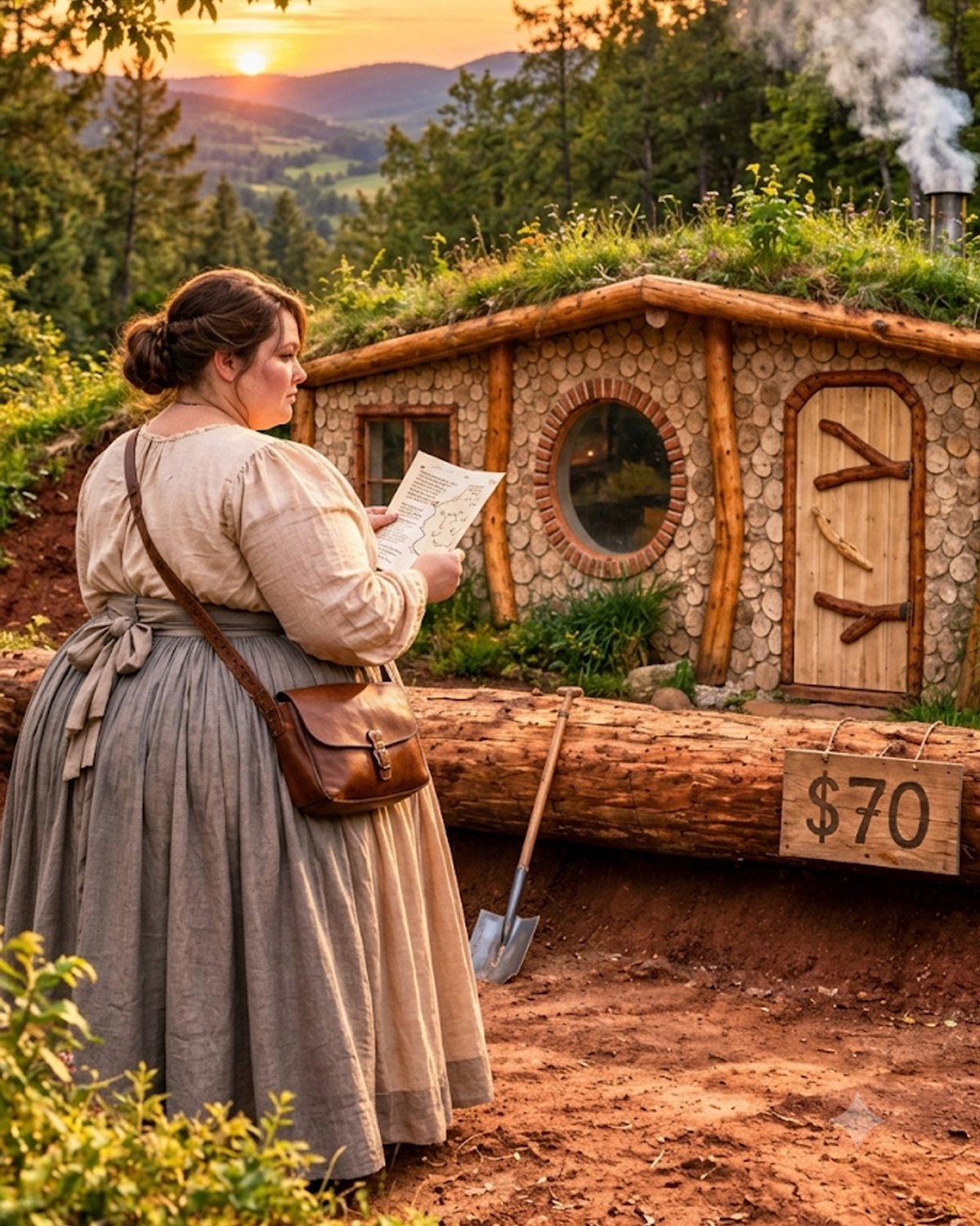
"Your father is waiting for you."
I stared at the wooden panel.
For several seconds, I couldn't move.
The voice had come from somewhere beyond the sealed passage. It was weak, rough, and strangely familiar, although I had never heard my father's voice before.
Ruth grabbed my arm.
"Don't go near it."
Eleanor was already moving toward the stairs.
"We need to get out of here."
I looked at her.
"Why?"
"Because that passage was sealed for a reason."
"But someone just spoke to me."
Eleanor shook her head.
"That doesn't mean your father is alive."
The words struck harder than I expected.
I looked back at the panel.
"Then who was it?"
Neither woman answered.
The lamp flickered on the stone ledge. Shadows moved across the damp walls.
I took one cautious step forward.
"Hello?"
Silence.
I waited.
Then I heard a faint scraping sound.
Something moved behind the wood.
I raised my voice.
"Who are you?"
A few seconds passed.
Then the voice returned.
"Avis..."
My knees nearly gave way.
"Yes?"
"Don't let them open the wrong door."
I looked at Ruth.
She had gone completely pale.
Eleanor covered her mouth.
The voice continued.
"Find the letter... before Margaret does."
Then came a metallic click.
Silence.
I stared at the panel.
"What letter?"
There was no answer.
I stepped closer and examined the narrow opening.
A faint line of light appeared behind the wood.
It was not natural light from outside. It seemed to come from a small room beyond the passage.
Someone was down there.
Someone had heard us.
And someone knew my name.
Ruth pulled me away.
"We need to leave."
I turned toward her.
"Not until someone explains what is happening."
"Avis, please."
"You told me my father disappeared. Eleanor told me he was involved in the original agreement. Now someone behind a wall is speaking to me as though he knows me."
Ruth looked toward the floor.
"I don't know whether it's your father."
"Then who do you think it is?"
She hesitated.
"Someone who has been protecting the original records."
Eleanor suddenly spoke.
"Enough. We are leaving this chamber."
Her voice was unusually firm.
She picked up the lamp.
I reluctantly followed them toward the stairs.
Before climbing, I looked back one final time.
The wooden panel remained closed.
But beneath it, I noticed something I hadn't seen before.
A narrow strip of paper had been pushed through the opening.
It lay partly submerged in the water.
I crouched and picked it up.
The paper was damp.
Only a few words remained readable.
"Third shelf. Behind the flour jar."
I folded it and slipped it into my coat.
Neither woman noticed.
Or perhaps they did.
I couldn't tell.
When we returned to the main room, the evening had completely disappeared.
The house felt colder.
Eleanor closed the pantry door and turned the small iron key in the lock.
Ruth placed the photograph beside the notebook.
Nobody spoke for several minutes.
I stood near the table, looking at the two women.
"Who is Margaret?"
Ruth rubbed her forehead.
"Margaret Hale."
"Thomas Hale's relative?"
"His mother."
I remembered the name on the original agreement.
Margaret Hale.
The little girl in the photograph.
The woman who supposedly knew where my father's letter was hidden.
But the photograph had been taken five years earlier, and Margaret had appeared to be a child.
Something didn't fit.
"How old is she now?"
"Thirty-two," Ruth answered.
"Then why does the photograph show her as a little girl?"
Ruth looked toward Eleanor.
Eleanor lowered herself into a chair.
"Because the photograph is older than the note written on its back."
I frowned.
"What note?"
Ruth picked up the photograph.
"Clara added that message later. The picture itself was taken when Margaret was about seven."
I examined it again.
"Then why did my mother write that she knew where the original letter was?"
"Because she did."
"Who is Margaret really?"
Eleanor folded her hands.
"She was the daughter of a woman Clara helped many years ago. Margaret grew up knowing about the house, but she never understood why her family had been connected to it."
"Is she dangerous?"
Ruth took a long breath.
"Not necessarily."
"That's not an answer."
"Margaret has spent years trying to recover documents she believes belong to her family."
"Which documents?"
"The original property agreement. Your father's letter. And the records concerning the spring."
I looked toward the pantry.
"Why would she want them?"
"Because those papers may establish who has legal rights to the water system."
I remembered Mr. Hale's visit.
The official document.
The warning not to disturb the spring chamber.
"Does Thomas work for her?"
Ruth nodded.
"He's her son."
I felt a chill.
"So the man who came here earlier was representing his own family."
"Yes."
"And he told me the house might not belong to me."
"Because he believes Margaret has a stronger claim."
I looked at the seventy-dollar notice on the table.
My money.
My mother's house.
My last chance.
It was becoming clear that I had walked into a dispute that had existed long before I was born.
"Why didn't you tell me all this when you arrived?"
Ruth looked genuinely ashamed.
"Because I was afraid you'd leave."
I stared at her.
"You thought I would leave?"
"You had already lost your mother. You had nowhere to go. I didn't want the first thing you discovered here to be another reason to feel unwanted."
I looked away.
Her explanation was understandable.
But it didn't make the secrets easier to accept.
Eleanor rose and approached the stove.
"We should eat something."
I almost protested.
But my stomach reminded me that I hadn't had a proper meal all day.
Ruth helped unpack the supplies I had brought.
There was flour, a little salt pork, dried beans, coffee, and a small bottle of oil.
Eleanor examined the bag.
"Clara would have approved."
I looked at her.
"Of what?"
"Of the way you brought provisions instead of unnecessary things."
I gave a tired smile that disappeared almost immediately.
"She didn't leave me much choice."
Eleanor nodded.
"She knew what it meant to begin with nothing."
We prepared a simple meal.
Ruth washed the beans in a small basin while Eleanor examined the stove.
I checked the note again.
The inlet must be opened before lighting the stove.
I didn't want to ignore it.
"How do we know the stove is safe?"
Eleanor pointed toward a small metal lever beside the pipe.
"That controls the draft. But we should check the chimney first."
She opened a narrow iron hatch.
A faint current of air moved through it.
"Good," she said. "The passage is clear."
Ruth added the kindling.
We lit the fire carefully.
For several minutes, the flames struggled.
Then the wood caught.
Warmth slowly spread through the room.
I stood beside the stove, holding my hands toward the heat.
For the first time since arriving, I felt something close to relief.
I had a roof.
I had food.
I had people beside me.
But the thought of the voice beneath the floor wouldn't leave my mind.
After supper, Ruth opened her handbag and removed a small bundle of papers.
"I brought these because I thought you might need them."
She placed them on the table.
They were copies of letters Clara had written over several years.
I picked up the first one.
The date was five years earlier.
The handwriting was unmistakable.
"Dear Ruth,
The spring has begun making the same sound it made before you left. I have inspected the upper channel twice, but something continues to interfere with the lower release.
I fear someone has entered the old storage building.
If Margaret contacts you, do not give her the key.
I will explain everything when we meet."
I looked up.
"Did you meet her?"
Ruth nodded.
"Once."
"When?"
"About five years ago."
"Was that when the photograph was taken?"
"Yes."
I looked at the photograph again.
My mother had been sitting beside Margaret.
She had looked tired but peaceful.
"Why didn't you bring me with you?"
Ruth's face tightened.
"Because Clara asked me not to."
I lowered the letter.
"She knew I would eventually come here."
"Yes."
"Then why did she keep me away?"
Ruth looked at Eleanor.
Eleanor finally answered.
"Because your father had enemies."
I stared.
"What enemies?"
"People who wanted the land and the water rights."
"Why would they care about my father?"
Eleanor sat opposite me.
"Daniel believed the spring belonged to the families who depended on it. He wanted the water system protected by an agreement that no single person could sell."
I listened carefully.
"That sounds reasonable."
"It was. But some people believed the land could be worth a great deal if the spring were controlled privately."
"Who?"
"People connected to the old mill."
I remembered the map.
The abandoned mill site.
The logging trail.
The creek.
"Was the mill still operating when my mother lived here?"
"No," Eleanor said. "But the property had been purchased by several investors. They wanted to use the land for commercial purposes."
Ruth continued.
"Your father discovered that the spring fed several properties beyond the hillside. If the original channels were redirected, those families could lose their water supply."
I looked toward the pantry.
"And that's why he hid the records?"
"Yes."
I picked up another letter.
This one was addressed to Eleanor.
"Clara, I know you are frightened. But Daniel was right about the spring. We cannot allow the channel to be controlled by someone who doesn't understand what it means to the families living here.
Keep the original agreement safe.
Keep Avis away from the dispute.
And if Ruth returns, tell her the promise has not changed."
I read the letter again.
"Which promise?"
Ruth looked down.
"That the house would always remain a safe place."
I turned toward her.
"Then why did you leave?"
Her eyes filled.
"Because I was seven years old, Avis. I didn't understand any of this. I only knew that one night the house filled with water, my mother disappeared, and Clara told me to run."
Eleanor reached across the table and held her daughter's hand.
Ruth continued.
"I spent years believing I had caused everything. I thought I had done something wrong. I thought my mother had abandoned me."
Eleanor squeezed her fingers.
"I never abandoned you."
"I know that now."
Ruth looked toward the window.
"But when I finally learned the truth, I was afraid to come back."
I understood something then.
The house had hurt both of them in different ways.
For Eleanor, it represented a daughter she had lost.
For Ruth, it represented a childhood interrupted by fear.
For me, it represented the mother I had buried and the father I had never known.
And yet all three of us were sitting at the same table.
I waited until Eleanor and Ruth began sorting the remaining documents.
Then I quietly walked toward the shelves.
The flour jar stood on the third shelf.
Behind it.
The message from the hidden passage returned to my mind.
I moved the jar carefully.
A small wooden board covered the space behind it.
I pressed the edge.
It shifted.
A narrow compartment opened.
Inside was a folded piece of cloth.
I removed it.
Beneath the cloth lay a thin leather notebook.
Its cover was marked with my father's initials.
D.B.
I glanced over my shoulder.
Eleanor was reading one of the letters.
Ruth was examining the photograph.
Neither had noticed me.
I opened the notebook.
The first page contained a short message.
"Avis, if you have found this, then Clara has done what I could not."
My throat tightened.
I turned the page.
The handwriting was different from my mother's.
It was stronger, more deliberate.
"Your mother wanted you to grow up believing that you had a simple life. I wanted that for you too. But there are things about your birth that she never explained."
I stopped.
My birth.
I read the sentence again.
The next line was even more disturbing.
"You were not supposed to inherit this house alone."
I looked up.
Ruth was watching me.
She had noticed the notebook.
"What did you find?"
I hesitated.
Then I handed it to her.
She read the first page.
Her face changed.
"Where was this?"
"Behind the flour jar."
She looked toward Eleanor.
"Mother."
Eleanor turned.
"What?"
Ruth held up the notebook.
Eleanor stood so quickly that her chair moved backward.
"Where did you get that?"
"Behind the shelf."
Eleanor approached.
When she saw the initials, she stopped.
For several seconds, she seemed unable to breathe.
"Daniel's notebook."
I looked at her.
"You knew it was there?"
She shook her head.
"No."
Ruth opened the second page.
There was a small drawing of the house.
Beneath it was a list of names.
Clara Bellwether.
Daniel Bellwether.
Eleanor Whitcomb.
Ruth Whitcomb.
Margaret Hale.
And then another name.
A name I recognized.
Thomas Hale.
I stared.
"Why is Thomas on this list?"
Ruth turned another page.
A short paragraph had been written beneath the names.
"These are the people who know the original location of the letter. No one else must be told until the water rights are secured."
I looked toward Eleanor.
"How many people know?"
She shook her head.
"I thought only Clara and Daniel knew."
Ruth looked at the page.
"Then someone else must have discovered the secret."
I continued reading.
The final page contained a sentence written in darker ink.
"If Thomas has come to the house, do not trust the documents he carries."
My stomach tightened.
The man who had visited earlier.
The man who had presented the county notice.
The man who had claimed that the property transfer might be invalid.
My father's notebook had specifically warned against trusting him.
I looked at Ruth.
"Does Thomas know about this notebook?"
She shook her head.
"I don't think so."
"Then why did he come here?"
"To find the original letter."
I closed the notebook.
A strange feeling settled over me.
Someone had been searching the house.
Someone had entered while I was in the spring chamber.
Someone had left a message near the front door.
And now I had discovered that the man claiming to represent the county might have been looking for the same documents my mother had spent years hiding.
I returned the notebook to the table.
"We need to find the original letter before he does."
Ruth nodded.
"Agreed."
Eleanor looked toward the pantry.
"But we still don't know who was speaking behind the wall."
I turned toward her.
"Could it have been my father?"
She didn't answer.
Then Ruth quietly said something.
"There's one way to find out."
I looked at her.
"What?"
She opened the notebook to the back cover.
A small drawing had been tucked beneath it.
It showed the spring chamber from the side.
A narrow passage extended beyond the sealed panel.
At the end was a small room.
Inside the room, the drawing showed a chair, a table, and a ventilation pipe.
Beside the illustration, Daniel had written:
"Listening chamber. Access through the lower stone."
I felt my heartbeat quicken.
"Someone can live in there?"
Ruth nodded slowly.
"Apparently."
I looked at Eleanor.
Her face had gone pale.
"Did you know about this?"
She shook her head.
"No."
Ruth examined the drawing.
"There's another entrance."
I leaned closer.
A small mark appeared beneath the illustration.
Three circles.
Then a line.
Then a word.
"Third stone."
I remembered the message.
Find the letter.
I remembered the hidden box.
The wheel.
The passage.
Everything was connected.
But before we could decide what to do, a loud knock struck the front door.
We all froze.
The knock came again.
Then a man's voice called from outside.
"Mrs. Whitcomb!"
I recognized it immediately.
Thomas Hale.
Ruth moved toward the window.
I followed.
Outside, Thomas stood beside the entrance with his leather case.
But he wasn't alone.
A second man stood behind him.
He was older, tall, and dressed in a dark wool coat.
He held a folded document in one hand.
Thomas looked toward the circular window.
Then he spoke loudly enough for everyone inside to hear.
"Miss Bellwether, I have brought someone who can settle the ownership question tonight."
I felt Eleanor's hand close around my arm.
"Who is he?" I whispered.
Ruth looked through the glass.
Her face turned completely white.
"That's impossible."
I stared at her.
"Who?"
She swallowed.
Then she whispered:
"That's the man who took me away from this house when I was seven."
The stranger outside slowly raised his head.
His eyes met mine through the window.
And then he lifted the document.
At the top, written in large black letters, were four words:
NOTICE OF IMMEDIATE EVICTION.






Comments 0