The rescue rope went slack.
Dorothy Vance stared at it.
For one terrible second, nobody moved.
Then Silas Grant shouted, "Pull!"
Two rescue workers grabbed the rope and hauled with all their strength. It came upward slowly, dragging against the edge of the narrow opening.
When it finally emerged, the end was empty.
No food container.
No message.
No signal from the twenty-eight men beneath the mountain.
Grant turned toward Joseph Harlan.
"How long?"
The engineer looked at the flooded passage diagram.
"If the water gate is fully open, the lower chamber could fill within an hour."
"Then close it!"
Harlan shook his head.
"The mechanism is on the other side of the old water channel."
"Can we reach it?"
"Not through the eastern passage. The supports are already shifting."
Dorothy looked at the drawing again.
The creek.
The old channel.
The hidden chamber.
And the narrow ventilation opening.
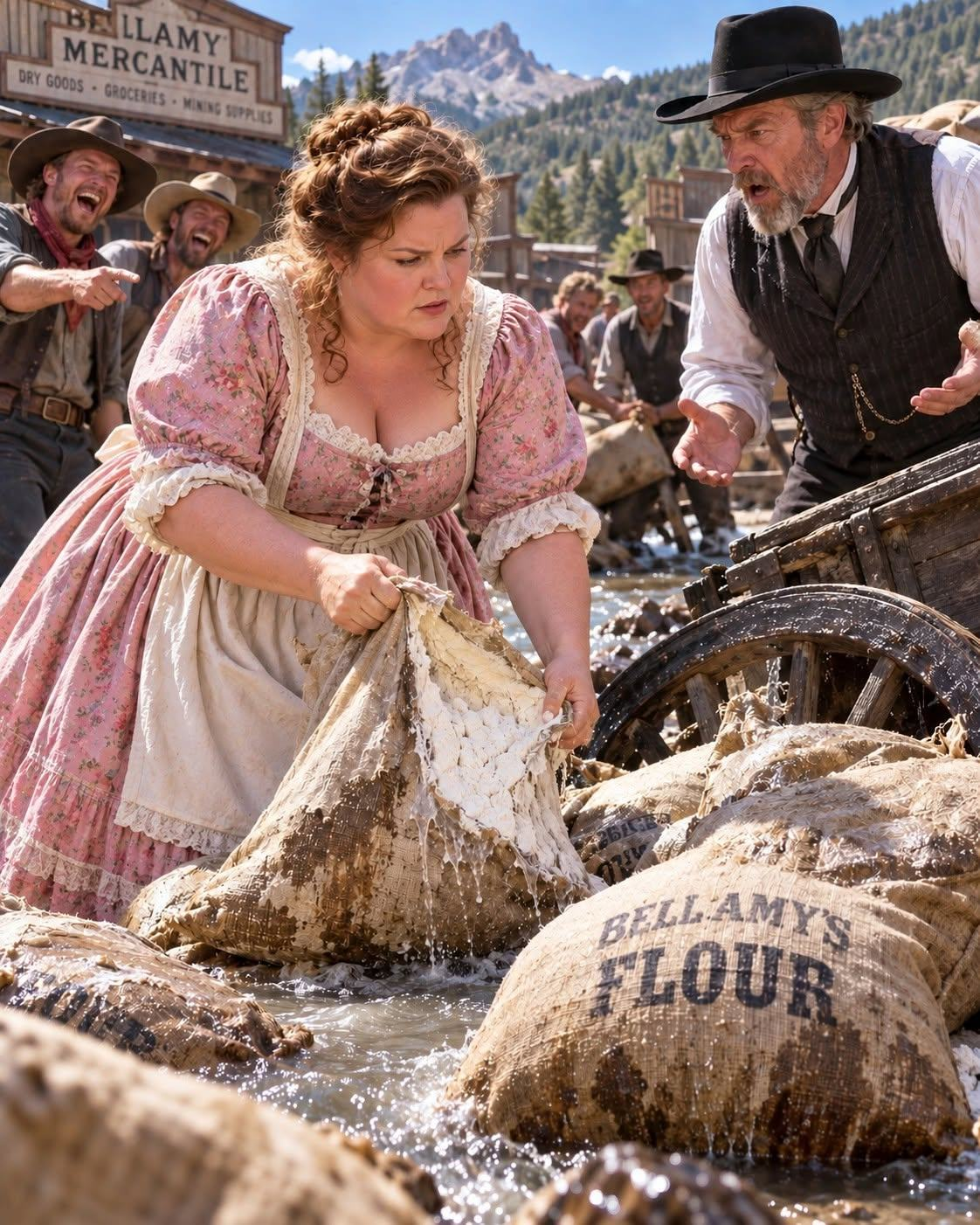
She remembered the first time she had examined the flour sacks beside Copper Jack Creek. Bellamy had seen ruined merchandise. She had seen different categories of material, different conditions, and different possibilities.
Now she was looking at another problem everyone had decided was impossible.
"Mr. Harlan."
He turned.
"What?"
"How wide is the old water channel?"
"Why?"
"How wide?"
"About eighteen inches in the narrowest section."
Dorothy examined the map.
"Can someone crawl through it?"
"No. The current would make it too dangerous."
"Can water be diverted?"
Harlan stared at her.
"Possibly. But we'd need to reach the gate."
"From the creek?"
He looked down at the diagram.
Then slowly nodded.
"There may be an access point near the old freight crossing."
Dorothy turned toward Grant.
"Take me there."
Grant frowned.
"Absolutely not."
"Then tell me how you're planning to save twenty-eight men."
"Miss Vance, this is dangerous."
"So is leaving them underground."
Grant looked at Harlan.
The engineer studied the map again.
"We can reach the creek entrance from the surface. But we need someone who knows the old channel."
Briggs, who had remained silent since the discovery of the water gate, finally spoke.
"I know it."
Everyone turned.
Grant stepped toward him.
"Then start talking."
Briggs lowered his head.
"Bellamy and I used that passage to move equipment into the hidden chamber. The old gate was supposed to remain closed. We opened it to drain water away from the storage area."
"Why?"
"Because the lower chamber was flooding."
Dorothy looked at him.
"And you never told anyone?"
Briggs did not answer.
Grant's voice became cold.
"Twenty-eight men are trapped because you hid an illegal operation."
Briggs looked toward the mountain.
"I know."
"How do we close the gate?"
Briggs pointed toward the northern slope.
"There's a handwheel inside the creek entrance. It controls the lower sluice."
Harlan examined the map.
"Can it still be operated?"
"Yes. But the passage is flooded."
Grant looked at the rescue crew.
"Get the equipment ready."
Then Dorothy noticed something on the diagram.
A small rectangular space sat beside the gate.
She pointed to it.
"What's this?"
Briggs looked down.
"An inspection chamber."
"How large?"
"Large enough for one person to stand."
"Is there a second exit?"
"No."
Dorothy looked at the narrow line connecting it to the creek.
"Then whoever enters has to come back the same way."
Briggs nodded.
Grant turned toward Harlan.
"Can you reach the gate?"
The engineer studied the dimensions.
"Not safely with a breathing apparatus. The passage is too narrow."
Dorothy looked at the creek entrance.
Then at the rescue equipment.
"Could someone reach it without going underwater?"
Harlan hesitated.
"Not if the water level has risen above the access ledge."
Briggs spoke again.
"There's a maintenance platform halfway through. If the water hasn't covered it, someone could move along the upper wall."
Grant stared at him.
"Why didn't you say that before?"
Briggs looked ashamed.
"Because I didn't want anyone knowing the passage existed."
Dorothy stepped closer.
"Show us."
The old creek entrance was hidden behind a cluster of pine trees and a weathered timber wall.
The opening had been covered with wooden boards.
Several were recently replaced.
Harlan removed them carefully.
Cold air escaped from the darkness.
The sound of moving water echoed inside.
A narrow stone passage extended beneath the mountain.
Dorothy stood outside while the rescue workers examined the entrance.
Grant approached her.
"You are not going inside."
She looked at him.
"I didn't say I was."
"Good."
"But I can help organize the rescue."
He nodded.
"That's what I need you to do."
Dorothy immediately began assigning tasks.
She asked Eddie to bring the food packets.
She instructed two workers to prepare clean cloth containers and narrow water vessels.
She asked Harlan to mark the safest positions along the passage.
Then she turned toward Briggs.
"How long does it take to reach the handwheel?"
"Twenty minutes, if the platform is clear."
"How long to close it?"
"Five minutes, perhaps."
"And how long before the lower chamber floods?"
Briggs looked away.
"Less than an hour."
Dorothy nodded.
"Then we don't have time to argue."
Grant selected three experienced workers.
Briggs would lead them.
The rescue team secured ropes around their waists and prepared lanterns.
Before entering, Briggs turned toward Dorothy.
"Miss Vance."
She looked at him.
"I know you have no reason to trust me."
"That's correct."
He swallowed.
"But I can get them out."
Dorothy studied his face.
"Then do it."
He entered the passage.
The others followed.
Grant remained outside with Harlan.
Dorothy watched the lanterns disappear.
The first twenty minutes passed slowly.
The rescue crew maintained contact through the ropes.
Every few minutes, a worker pulled twice to signal that the team was still moving.
Then the signal stopped.
Grant grabbed the rope.
"Briggs!"
No answer.
Harlan looked toward the opening.
"Something is blocking the passage."
Dorothy stepped closer.
"Can they turn around?"
"Not easily."
Grant shouted into the tunnel.
"Briggs! Report!"
A weak response came.
"Water's higher than expected!"
Dorothy felt her stomach tighten.
"Can they reach the platform?"
Another pause.
Then three knocks.
The signal.
The workers were alive.
Harlan leaned toward the opening.
"Can you see the handwheel?"
Briggs answered.
"Yes!"
"Can you reach it?"
"One of the supports has shifted!"
Grant looked at the engineer.
"What does that mean?"
"It means the gate may be jammed."
Dorothy examined the rope.
"Can you pull it from here?"
Harlan shook his head.
"Not without breaking the mechanism."
She looked toward the mountain.
Twenty-eight men were trapped behind a wall.
The water was rising.
The only people who could reach the gate were now trapped in the access tunnel.
Then a second rope moved.
A short pull.
A pause.
Three rapid pulls.
Harlan grabbed it.
"That's the emergency signal!"
Grant shouted.
"What happened?"
A voice came through the tunnel.
"The handwheel is damaged!"
Briggs answered again.
"We need a lever!"
Dorothy looked toward the equipment scattered beside the entrance.
A heavy iron bar lay near a stack of timber.
She picked it up.
"Will this work?"
Harlan examined it.
"Possibly."
"Then send it."
The rescue workers attached the bar to a rope.
They lowered it into the passage.
Minutes passed.
Then the rope moved.
Once.
Twice.
Then a long pull.
Harlan looked at Grant.
"They have it."
Inside the passage, Briggs and the rescue workers forced the iron bar against the damaged handwheel.
The mechanism resisted.
Water surged around their boots.
One worker slipped.
Briggs caught his arm.
"Hold on!"
The man regained his footing.
They tried again.
The bar moved slightly.
Then stopped.
Briggs gritted his teeth.
"Together!"
All three men pushed.
A metallic crack echoed through the passage.
The handwheel turned.
Not completely.
But enough.
A second movement followed.
The water level began to change.
Outside, Dorothy noticed the difference first.
The sound of the creek entering the mountain weakened.
Harlan checked the water channel.
"Something's changing."
Grant stepped closer.
"Is it closing?"
Harlan listened.
Then nodded.
"I think so."
A moment later, the rope moved.
Three knocks.
Then three more.
The emergency signal had changed.
The rescue team was returning.
Briggs emerged from the passage with two workers supporting him.
His coat was soaked.
His left arm was bleeding again.
But he was alive.
Grant approached.
"Did you close it?"
Briggs nodded.
"Mostly. The lower gate is nearly shut."
"Why nearly?"
"The mechanism broke."
Harlan examined the equipment.
"Can it hold?"
"For now."
Grant looked toward the mine.
"Then we need to move quickly."
The rescue crew prepared to reopen the ventilation passage.
The water was no longer rising.
But the lower chamber remained partially flooded.
The trapped miners still had limited air and little food.
Dorothy looked at the food baskets.
"How many packets do we have?"
"Twenty-eight," Eddie answered.
"Prepare another twenty-eight."
Eddie stared at her.
"Another batch?"
"Yes."
He nodded and hurried toward the cookhouse.
Dorothy turned toward Grant.
"We need to tell them the water is going down."
Grant looked toward the ventilation opening.
He leaned close.
"Samuel! Can you hear me?"
Three knocks answered.
Grant smiled for the first time in hours.
"The water gate is closing! We're coming for you!"
A weak voice responded.
"About time!"
Dorothy recognized Samuel's humor.
She felt a wave of relief.
But the work was far from finished.
The next six hours were the longest in Copper Jack's history.
The rescue crew reinforced the northern tunnel.
They removed loose stones.
They installed new timber supports.
They used ropes to pull away damaged beams.
Every movement had to be carefully calculated.
One wrong decision could trigger another collapse.
Dorothy remained near the rescue station.
She prepared food.
She organized water.
She checked the number of supplies being sent below.
She also maintained the cookhouse for the workers who were still on the surface.
Some men had been working without rest.
Others had not eaten since morning.
She refused to let the rescue crew collapse from exhaustion.
Eddie helped her prepare hot broth.
The women from the hotel brought bread and clean cloth.
Peter's mother arrived with several blankets.
She looked at Dorothy.
"How many are still down there?"
"Twenty-eight."
"Will they come out?"
Dorothy looked toward the mine.
"They will."
The woman nodded.
Then she handed over the blankets.
"For the injured."
Dorothy accepted them.
"Thank you."
More townspeople arrived.
Some brought food.
Others brought tools.
Even people who had laughed at Dorothy's flour purchase were now helping carry supplies.
Nobody mentioned the jokes.
Nobody mentioned the bets.
They simply worked.
Shortly after midnight, the rescue crew reached the first trapped miners.
Samuel Price was among them.
His face was covered in dust.
His clothes were torn.
But he was standing.
When he saw Dorothy, he stopped.
"Miss Vance."
She stepped forward.
"Samuel."
He looked at the food basket beside her.
"Did you bring biscuits?"
She almost smiled.
"Of course."
He laughed weakly.
"Then I knew we'd survive."
Dorothy handed him a small packet.
He opened it carefully.
Inside was a biscuit.
He broke it in half.
Then he looked at her.
"Still tastes like home."
Dorothy felt her eyes grow warm.
She did not cry.
She simply nodded.
"Then eat."
The rescue workers guided him toward the medical tent.
One by one, the miners began emerging.
Some walked.
Some needed assistance.
Five were injured.
One had a broken leg.
Another had suffered a serious head injury.
The others were exhausted, dehydrated, and covered in dust.
But they were alive.
All twenty-eight.
Grant counted them twice.
Then a third time.
Twenty-eight.
He removed his hat.
For a long moment, he simply stood there.
Then he turned toward Dorothy.
"We got them."
She looked at the men.
"Yes."
Grant shook his head.
"No, Miss Vance. We got them because you refused to accept that there was nothing we could do."
Dorothy looked down.
"I only asked questions."
"And sometimes that's what saves people."
The investigation began the following morning.
Walter Briggs gave a full statement.
He admitted that he had helped Bellamy move equipment and supplies into the hidden chamber.
The operation had begun months earlier.
Bellamy had discovered an unrecorded gold deposit near the abandoned eastern section.
Rather than report it, he arranged to extract the ore secretly.
Briggs had used his position to move timber, tools, lamp oil, and other supplies through the old passage.
The flour shipments were used to disguise the movement of materials.
The six hundred pounds Dorothy had purchased were part of that arrangement.
The creek accident had disrupted the operation.
Bellamy had sold the damaged shipment because he feared an inspection would expose the hidden deliveries.
Briggs admitted that he had signed documents using Grant's name.
He also admitted that he had helped conceal the damaged supports.
He had not intended to trap twenty-eight men.
But his decision to keep the passage open had contributed to the collapse.
Bellamy was arrested two days later.
The hidden chamber was sealed under official supervision.
The gold deposit was recorded as property of the mine's legitimate owners.
Briggs was dismissed from his position and held for a formal investigation.
Grant was cleared of the forged authorizations.
The supply records were reconstructed.
And the town finally learned why so many deliveries had disappeared.
Dorothy's flour had never been the real mystery.
It had simply been the first piece of evidence that brought everything into the open.
Winter arrived early.
Snow covered the mountain slopes.
The freight road became difficult to travel.
But Copper Jack was prepared.
The mine had reorganized its supply system.
Every delivery was recorded.
Every shipment was inspected.
No single supervisor could authorize large purchases without a second signature.
And the cookhouse had a new manager.
Dorothy Vance.
She had negotiated a better salary.
She had also received a small room beside the kitchen and full control over the food budget.
But she did not intend to spend the rest of her life working for somebody else.
During the weeks following the rescue, she had continued testing the flour that had passed her inspections.
Much of the shipment had been discarded.
Some had been unsuitable for food.
But several sacks had contained dry flour that could be safely separated and used after proper inspection and preparation.
She never treated the entire damaged shipment as usable.
Instead, she recorded exactly what had been recovered.
She used the clean portions for controlled batches.
The results were good.
Very good.
The miners began asking for her biscuits.
The hotel requested her recipes.
The women of Copper Jack started bringing their own flour to learn how she organized a kitchen.
Dorothy kept careful notes.
She also began teaching Eddie how to manage a pantry.
He was becoming an excellent cook.
One evening, he approached her with a small notebook.
"Miss Vance, I think I have an idea."
She looked up.
"What?"
He placed the notebook on the table.
"I've been calculating the cost of opening a bakery."
Dorothy examined the figures.
The numbers were not perfect.
But they were promising.
She looked at him.
"Why a bakery?"
"Because people keep asking for your biscuits."
Dorothy smiled faintly.
"People ask for many things."
"Not like this."
He pointed toward the dining room.
"Samuel says he'd buy them every day."
Dorothy laughed quietly.
"Samuel would buy anything if it came with enough gravy."
Eddie grinned.
"Then perhaps we should give him the chance."
Dorothy looked at the notebook again.
For twelve years, she had cooked in other people's kitchens.
She had worked long hours.
She had accepted unfair wages.
She had listened to men explain why her body made her unsuitable for work she knew better than they did.
Now she was being offered something different.
A business of her own.
She closed the notebook.
"Let's find a building."
By the following spring, Dorothy had saved enough money to rent a small storefront near the eastern road.
The building had once been a tailor's shop.
It had a large front window, a narrow kitchen, and enough room for several tables.
She repaired the roof.
Repainted the walls.
Installed a proper oven.
Eddie became her assistant.
Peter's mother helped with the laundry and cleaning.
Samuel Price volunteered to build the shelves.
The bakery opened on a bright morning in May.
A wooden sign hung above the door.
DOROTHY VANCE'S TABLE
Underneath, in smaller lettering, were the words:
Good Food. Fair Prices. Everyone Welcome.
The first customers arrived before sunrise.
Miners.
Shopkeepers.
Women from the boardinghouses.
Children carrying coins in their pockets.
Dorothy served biscuits, bread, stew, and coffee.
She charged fair prices.
She never reduced portions to increase profits.
And she never turned away anyone who genuinely needed a meal.
Peter's mother eventually found steady work in the bakery.
Peter returned to school.
Eddie became a partner in the business.
And Samuel, who had survived the collapse, became one of Dorothy's most loyal customers.
He came every morning.
He always ordered two biscuits.
And he always claimed the second one was for later.
Nobody believed him.
One afternoon, Rufus Bellamy appeared outside the bakery.
He looked older.
His clothes were less expensive.
The confidence that had once made him so difficult to challenge had disappeared.
Dorothy saw him through the front window.
She was preparing a fresh batch of dough.
For a moment, she considered ignoring him.
Then she wiped her hands and stepped outside.
"Good afternoon, Mr. Bellamy."
He removed his hat.
"Miss Vance."
They stood quietly.
Finally, he spoke.
"I came to apologize."
Dorothy waited.
"I treated you unfairly when you first arrived. I judged you before I knew anything about your abilities."
She looked at him.
"Yes, you did."
He lowered his eyes.
"I thought I was protecting my business."
"You were protecting your pride."
Bellamy nodded.
"Perhaps."
He glanced toward the bakery.
"People tell me it's doing well."
"It is."
"Good."
He hesitated.
"I don't expect you to forgive me."
Dorothy studied him.
Forgiveness was not something she gave simply because somebody asked.
But neither did she need to carry every insult for the rest of her life.
"Mr. Bellamy, I don't intend to spend my days remembering what you said to me."
He looked up.
"Thank you."
"That doesn't mean I want to work with you."
He nodded.
"I understand."
Dorothy opened the bakery door.
"Would you like something to eat?"
Bellamy looked surprised.
"If you don't mind."
"That will be two cents."
He almost smiled.
"Of course."
She served him a biscuit and a cup of coffee.
He paid.
Then he sat at the table near the window.
Dorothy returned to the kitchen.
There was no dramatic reconciliation.
No grand speech.
Just a man who had finally learned that respect could not be purchased after the damage was done.
And a woman who no longer needed his approval.
The following autumn, Copper Jack held a celebration for the twenty-eight miners who had survived the collapse.
The town gathered near the mine entrance.
Families stood together.
Children carried flowers.
The rescued men were honored for their courage.
Grant gave a short speech.
He thanked the rescue workers.
He thanked the miners.
He thanked the families who had waited through the long night.
Then he called Dorothy forward.
She looked uncomfortable.
"I don't need to make a speech," she whispered.
Grant smiled.
"You don't have to."
He handed her a small wooden plaque.
It read:
TO DOROTHY VANCE
FOR COURAGE, RESOURCEFULNESS, AND THE REFUSAL TO GIVE UP WHEN OTHERS SAW NO HOPE.
Dorothy read the words.
For a moment, she could not speak.
Samuel stood near the front.
He raised his hand.
"Tell them about the biscuits!"
The crowd laughed.
Dorothy finally smiled.
"Those biscuits nearly caused as much trouble as the mine."
Samuel called back.
"Best trouble I ever tasted!"
More laughter followed.
Peter stood beside his mother.
He was taller now.
He looked at Dorothy with quiet admiration.
She remembered the thin boy who had come to her shed with a message from Bellamy.
She remembered giving him bread.
She remembered the first time he had asked why she kept working with the damaged flour.
Now he was carrying a small basket of fresh biscuits for the celebration.
He approached her.
"Miss Vance."
She turned.
"Yes, Peter?"
"My mother says I should thank you again."
Dorothy looked at him.
"You don't have to thank me."
"I know."
He handed her a folded piece of paper.
Inside was a drawing.
It showed a woman standing beside a bakery.
Above the door was a sign.
Dorothy Vance's Table.
Beneath the drawing, Peter had written:
For the woman who saw something good when everyone else saw nothing.
Dorothy folded the paper carefully.
Then she placed it inside her apron pocket.
"That's a beautiful drawing, Peter."
He smiled.
"I want to be an engineer someday."
"Then study hard."
"I will."
She rested a hand on his shoulder.
"And remember to look carefully at things before deciding what they are worth."
Peter nodded.
That evening, Dorothy returned to her bakery.
The celebration had ended.
The town was quiet.
She lit the kitchen lamps and began preparing dough for the next morning.
Eddie was cleaning the last table.
Samuel had already taken his usual two biscuits home.
The bakery smelled of warm bread and coffee.
Dorothy opened her old canvas case.
Inside were the six kitchen knives she had carried into Copper Jack when she had only thirty-seven dollars to her name.
She touched the wooden handles.
They had traveled with her through twelve difficult years.
They had survived cattle camps, freight stations, hotel kitchens, and boardinghouses.
They had been there when people told her she had few choices.
Now they rested in a kitchen that belonged to her.
Eddie looked over.
"Everything all right?"
Dorothy nodded.
"Everything is fine."
He glanced at the canvas case.
"Remember when you arrived?"
"Of course."
"You had two dresses, a bedroll, and six knives."
"And thirty-seven dollars."
He smiled.
"Now look at you."
Dorothy looked around.
The tables.
The shelves.
The oven.
The clean flour containers.
The little sign in the front window.
She thought about the men beneath the mountain.
The water gate.
The rescue ropes.
The terrible night when nobody knew whether twenty-eight people would see daylight again.
And she thought about the six hundred pounds of damaged flour.
She had not become wealthy overnight.
She had not discovered a magical recipe.
She had simply examined what others had discarded, worked carefully, refused to waste what could be saved, and built something useful from what remained.
It had taken patience.
It had taken courage.
And it had taken far more than three dollars.
Eddie put on his coat.
"Good night, Dorothy."
"Good night."
He left.
Dorothy finished the last tray of biscuits and placed it near the oven.
Outside, the lights of Copper Jack glowed beneath the dark mountain.
The same mountain that had nearly taken twenty-eight lives.
The same town that had once laughed when she purchased ruined flour.
Now its people came to her bakery every morning.
Not because they felt sorry for her.
Not because they wanted to prove anything.
They came because she made good food.
Because she treated people fairly.
Because she had earned their trust.
Dorothy turned off the kitchen lamp.
Then she looked once more at the wooden sign above the door.
DOROTHY VANCE'S TABLE.
She had arrived in Copper Jack with thirty-seven dollars and no place to belong.
She had found a home, a business, a community, and people who valued her for what she could do and who she was.
And when the next morning came, there would be fresh bread waiting for everyone who walked through her door.
For Dorothy, that was more than success.
It was the life she had spent twelve years trying to build.






Comments 0