I stared at the signature until the letters began to blur.
Martha MacLeod.
My hands trembled.
For several seconds, I couldn't hear the wind, the creaking porch, or even the distant sound of the creek.
All I could see was her name.
The woman who had brought bread when I had nothing left.
The woman who had held Sarah while I worked.
The woman who had told me she wanted to help protect my daughter.
Her name was now written beneath a request to have my home inspected and my ability to raise Sarah questioned.
I looked at Silas.
"Why would Martha do this?"
He shrugged.
"Perhaps she finally came to her senses."
"Did you speak to her?"
"Everyone knows about the meeting."
"That wasn't my question."
Silas smiled.
"Maybe you should ask your sister-in-law."
I folded the paper.
"Get off my property."
His smile disappeared.
"Careful, girl. I'm trying to help you."
"No. You're enjoying this."
He stared at me for a moment.
Then he laughed and walked toward his horse.
Before mounting, he turned.
"Tomorrow morning, the county representative will see what you've done to that house."
I said nothing.
Silas climbed into the saddle.
"And if I were you, I'd start putting those wooden boards back."
He rode away.
I closed the door and leaned against it.
Sarah was awake.
She made a small sound from her cradle.
I crossed the room and lifted her into my arms.
Her tiny fingers wrapped around mine.
I held her close.
"Mama is going to figure this out," I whispered.
But for the first time, I wasn't entirely sure how.
I did not sleep much that night.
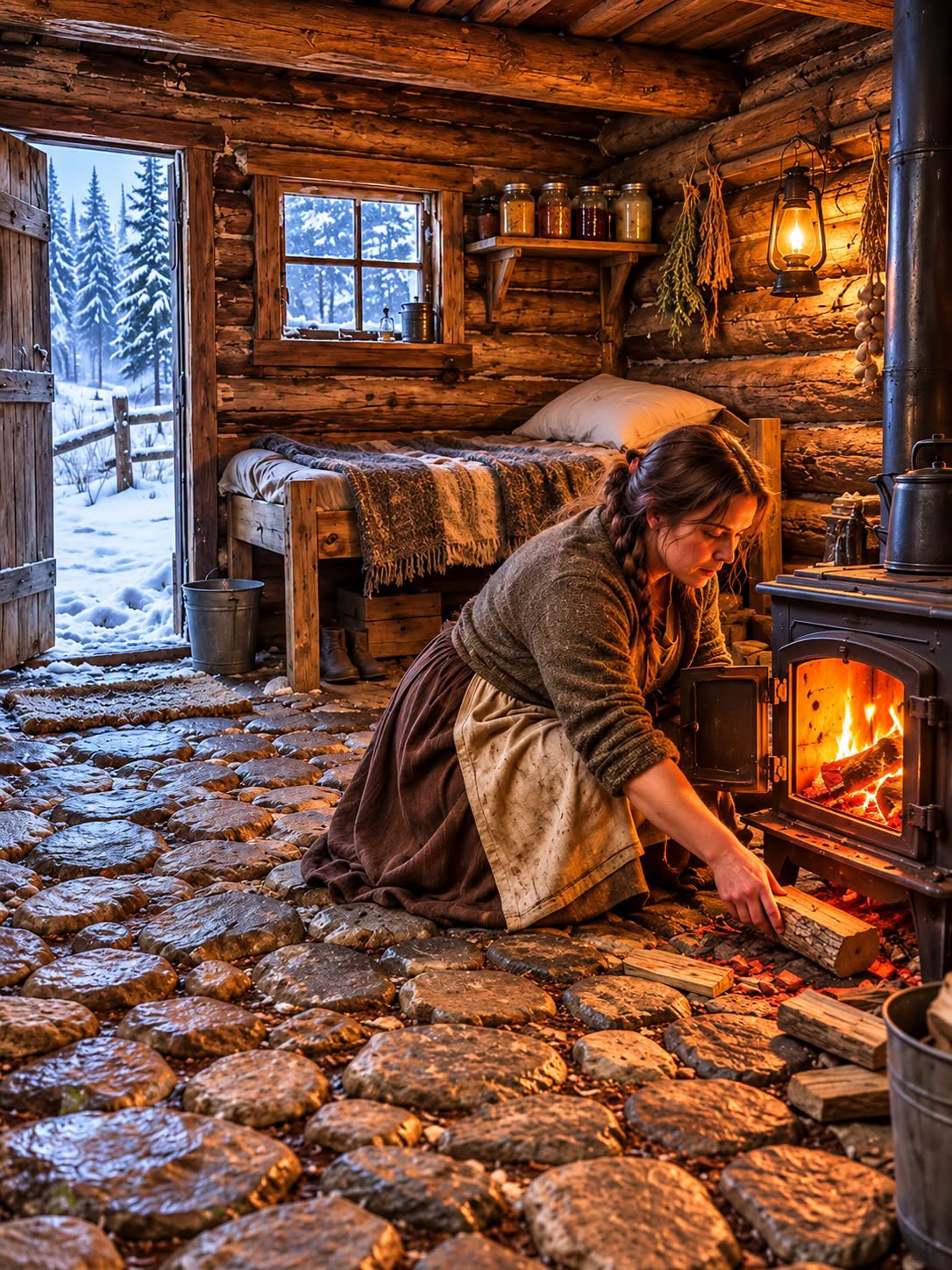
I sat beside the stove with the inspection notice on my lap.
Every few minutes, I looked toward the door, expecting Martha to arrive and explain why she had signed the document.
She never came.
I tried to remember our last conversation.
She had warned me about the rumors.
She had brought Sarah's clothes.
She had told me that people were questioning my judgment.
But she had never said she believed them.
Why would she sign something that could be used against me?
Perhaps Silas had pressured her.
Perhaps she had been frightened.
Or perhaps she had finally decided that I was making a terrible mistake.
I didn't know.
And not knowing hurt more than I expected.
Near midnight, I placed the notice on the table and opened Tom's old wooden box.
His wedding ring lay inside.
I picked it up.
It was small enough to disappear inside my palm.
I remembered the day he placed it on my finger.
We had very little money.
He had apologized for not being able to afford something more expensive.
I had laughed and told him that I didn't want anything else.
He had kissed my hand.
"Then I'll spend the rest of my life making sure you never regret choosing me."
I closed my fingers around the ring.
He had kept that promise.
Even in his final days, when he could barely breathe, he had worried about my future and Sarah's safety.
Now I was facing a different kind of danger.
People who had never held my daughter were discussing whether I deserved to raise her.
I put the ring back.
Then I looked at the floor.
Hundreds of stones.
Months of work.
Every one of them had been carried from the creek by my own hands.
I could not allow fear to make me abandon the only plan I had.
At dawn, someone knocked.
I opened the door.
Martha stood outside.
Her eyes were red.
She held a small basket against her chest.
For a moment, neither of us spoke.
Then I lifted the inspection notice.
"Why?"
She looked at the paper.
Her face tightened.
"Elspeth, please let me explain."
"You signed this."
"I know."
"Did you ask them to inspect my home?"
She stepped inside.
"Yes."
I closed the door.
"Why?"
Martha placed the basket on the table.
"I thought it might prevent something worse."
I stared at her.
"What could be worse than having someone question whether I should keep my own daughter?"
She lowered her head.
"Silas has been making accusations. He says your floor is dangerous. He says you're refusing advice from people who know better. He even suggested that Sarah should be placed with another family until you can prove the cabin is safe."
I felt anger rising.
"And you believed him?"
"No!"
"Then why did you sign?"
Martha looked toward Sarah's cradle.
"Because I thought an official inspection might stop the rumors."
I didn't answer.
She continued.
"I thought if someone came here, examined the cabin, and found Sarah safe, people would have to leave you alone."
I looked at the paper.
"Did you read what you signed?"
She hesitated.
That was enough.
I felt something inside me break.
"You didn't read it."
"I trusted the reverend."
"And now my name is attached to a statement saying I may be incapable of raising my daughter."
Martha's eyes filled with tears.
"I didn't understand that was what it meant."
I turned away.
For a long time, I looked at the stone floor.
Then I spoke.
"You should have asked me."
"I was afraid."
"So was I."
Martha began crying.
I wanted to comfort her.
Part of me still wanted to believe she was the same woman who had sat beside me after Tom died.
But I couldn't forget the signature.
"I won't stop the inspection," I said.
She looked up.
"What?"
"If they want to see the cabin, let them come."
"Elspeth..."
"But I want you to understand something. Sarah is not a problem for the community to solve. She is my daughter."
Martha nodded.
"I know."
"I promised Tom I would keep her safe. I intend to keep that promise."
Martha wiped her face.
Then she reached into her basket and removed a small loaf of bread.
"I brought this for you."
I looked at it.
"Thank you."
She placed it on the table.
Before leaving, she turned back.
"There's something else you should know."
I waited.
"Jedediah has been asked to give a report about your floor."
My heart tightened.
"Who asked him?"
"Silas."
I looked toward the door.
"Did Jedediah agree?"
Martha nodded.
"He said he would tell them what he found."
I lowered my eyes.
The old carpenter had warned me that the stones could cause problems.
He had also acknowledged that I had considered drainage.
But I didn't know what he would say in front of the community.
And tomorrow, his words might matter more than mine.
The inspection began just after nine.
A small wagon stopped outside the cabin.
Three people stepped down.
The first was a middle-aged man wearing a dark wool coat and carrying a leather case.
The second was Reverend Abernathy.
The third was a woman I recognized from the trading post.
Her name was Mrs. Colby.
She had lived in the valley for nearly twenty years and was known for her careful judgment.
I opened the door.
"Good morning."
The man introduced himself as Mr. Harlan, a county representative responsible for examining the reported living conditions.
He was polite.
But his expression was serious.
"We've received concerns about the safety of this property and the welfare of your child."
I stepped aside.
"Please come in."
He entered first.
His boots stopped when he reached the stone floor.
He looked down.
Then he looked at me.
"This is the floor everyone has been talking about?"
"Yes."
He opened his leather case.
"I'll need to examine the structure and ask a few questions."
"Of course."
Reverend Abernathy remained near the doorway.
Mrs. Colby went toward Sarah's cradle.
She smiled when she saw the baby.
"She's a lovely little girl."
"Thank you."
Mr. Harlan began inspecting the walls.
He checked the window frames.
He examined the stove.
Then he walked across the floor.
"How long have you lived here?"
"Since Tom and I arrived in the valley."
"Your husband built the cabin?"
"With help from Jedediah Croft."
He wrote something down.
"And when did you remove the wooden floor?"
"Three months ago."
"Why?"
"Because the cabin was losing heat too quickly, and we couldn't afford enough firewood to survive another winter."
He looked at the stones.
"So you replaced wood with rocks?"
"River stones."
"Why?"
I explained my father's work as a stonemason.
I explained the heat-storage principle he had taught me.
I described the gravel bed, the sand, and the drainage channels.
Mr. Harlan listened without interrupting.
Then he asked:
"Are you claiming that this floor can heat the cabin without a fire?"
"No. The stove heats the stones. The stones release that stored warmth gradually."
He raised an eyebrow.
"How long?"
"I haven't measured the full limit yet."
"Then you don't know."
"Not precisely."
He wrote something down.
Reverend Abernathy shifted his weight.
"That is what concerns us."
I looked at him.
"Does it concern you that my daughter is warm?"
He didn't answer.
Mr. Harlan walked toward the stove.
"How much firewood have you used this week?"
I told him.
He stopped writing.
"That little?"
"Yes."
He looked toward the woodpile.
Then back at the stove.
"May I examine the stones?"
"Certainly."
He crouched and touched the surface.
His fingers remained there for several seconds.
He looked at me.
"These aren't cold."
"No."
"Why?"
"Because the stove has been heating them."
He stood.
Then he turned toward Reverend Abernathy.
"I'd like to examine the foundation before making any judgment."
The reverend nodded.
"Of course."
But I noticed something.
For the first time that morning, the county representative didn't look convinced that I was foolish.
Outside, Jedediah Croft arrived carrying his measuring tools.
He greeted Mr. Harlan.
Then he looked at me.
I searched his expression for some indication of what he intended to say.
He gave me a small nod.
That was all.
The men walked around the cabin.
Jedediah examined the lower foundation.
He checked the drainage outlet.
He studied the ground near the place where I had noticed the small trickle of water.
Mr. Harlan asked several questions.
Jedediah answered them carefully.
"She used gravel beneath the stones," he said.
"And that is sufficient?"
"It may be."
"May be?"
"I haven't examined the entire drainage system."
Mr. Harlan looked toward the ground.
"Do you believe the floor is unsafe?"
Jedediah rubbed his beard.
"I believe it is unconventional."
"That isn't what I asked."
The carpenter glanced toward me.
Then he looked at the foundation again.
"I haven't seen enough evidence to call it unsafe."
I felt a small wave of relief.
But Mr. Harlan wasn't finished.
"Could water beneath the cabin damage the foundation?"
"Yes."
"Could the old spring be responsible?"
Jedediah's expression changed.
He looked toward me.
Then back at the representative.
"It is possible."
The words made my stomach tighten.
Mr. Harlan noticed.
"What old spring?"
Jedediah explained what he had discovered in his notebook.
He described the underground channel and the original drainage work.
The representative listened carefully.
Then he asked whether the spring had been inspected recently.
Jedediah shook his head.
"Not in years."
Mr. Harlan wrote something down.
"Then I want that examined before winter."
I nodded.
"That's reasonable."
Jedediah looked at me again.
This time, there was something like concern in his eyes.
By noon, the inspection was nearly finished.
Mr. Harlan had examined the cabin, checked Sarah's sleeping arrangements, and questioned me about food, firewood, and the condition of the property.
He did not accuse me of neglect.
He did not tell me to replace the floor.
But he also refused to declare the entire structure safe.
He wanted further examination of the old water channel.
Before leaving, he stood beside the table.
"Mrs. MacLeod, I want you to understand that this visit is not a judgment of your character."
I nodded.
"But if a child's safety is questioned, we have to investigate."
"I understand."
He closed his case.
"Until the foundation is examined, I would advise you not to make further structural changes."
"I won't."
He looked toward Sarah.
"Keep her warm."
"I will."
He walked toward the door.
Reverend Abernathy followed.
Mrs. Colby stopped beside me.
"I hope things work out for you."
"Thank you."
She glanced at the floor.
"Those stones are beautiful."
I looked down.
For some reason, that small comment almost made me cry.
When the wagon disappeared down the road, Jedediah remained outside.
He was studying the ground near the foundation.
I stepped onto the porch.
"Do you think the floor is safe?"
He didn't answer immediately.
"I think you've done more careful work than I expected."
I waited.
"But I don't know enough about the old spring."
"Can we find it?"
"Perhaps."
He looked toward the creek.
"We'll need to trace the water."
I nodded.
"Then let's do that."
He placed his tools beside the porch.
"Not today. I have another concern."
"What?"
He looked at the dark patch of earth near the foundation.
"That water shouldn't be coming out there."
I felt my stomach tighten.
"Could it be from the spring?"
"Possibly."
"Could it damage the foundation?"
He nodded slowly.
"Eventually, if it continues."
I looked toward the stones.
For weeks, I had worried about firewood.
Now I had to worry about water.
But I would not allow fear to make me careless.
"Tell me what to do."
Jedediah crouched and examined the damp ground.
"First, we need to find where the water is coming from."
He pushed his measuring rod into the soil.
Then he stopped.
Something beneath the earth had shifted.
He pulled the rod out.
The tip was wet.
But it wasn't ordinary muddy water.
There was a dark mineral stain along the metal.
Jedediah stared at it.
"That's strange."
I knelt beside him.
"What is it?"
He rubbed the stain between his fingers.
Then he looked toward the cabin.
"Elspeth, when you dug beneath the floor, did you find any unusual stones?"
I thought for a moment.
"Some were darker than the others."
"How dark?"
"Almost black."
He stood abruptly.
"Where did you put them?"
I pointed toward the lower side of the cabin.
Jedediah walked there.
He examined the stones nearest the wall.
Then he found one with a narrow reddish mark running across its surface.
He touched it.
His expression changed.
"Good Lord."
"What?"
He looked at me.
"These stones didn't all come from the same place, did they?"
"Most came from the creek."
"Most?"
I remembered the final trips I had made when the creek bank became difficult to reach.
Some stones had been collected farther upstream.
A few had come from the exposed ground near the old foundation.
I nodded.
"Some came from higher up the valley."
Jedediah stared at the dark stones.
Then he looked toward the place where the old spring had once run.
"Elspeth, I need you to show me exactly where you collected every one of these."
I felt a chill that had nothing to do with the weather.
"Why?"
He didn't answer.
Instead, he hurried toward his workshop tools.
Then he returned carrying the leather notebook.
He opened it to the old drawing.
His finger moved across the page.
He compared the marked channel with the dark stones beside my cabin.
Suddenly, his expression became almost frightened.
"What's wrong?" I asked.
He looked at me.
"These markings."
He pointed toward the foundation.
"Tom and I found something here years ago. Something we never understood."
I leaned closer.
"What did you find?"
Jedediah turned the notebook toward me.
There was a small drawing of a black stone with a reddish vein running through its center.
Beneath it were three words.
THE OLD SPRING BED.
Then he looked toward the lower wall of my cabin.
"Elspeth, I think your stones may have come from the very ground we were trying to avoid."
Before I could respond, a loud crack sounded beneath the floor.
Sarah began crying.
Jedediah froze.
Then another crack followed.
This one came from beneath the cradle.
He grabbed my arm.
"Get the baby away from that wall!"
I rushed toward Sarah.
And just as I lifted her from the cradle, the stone floor beneath us shifted.
A narrow line opened between two rows of river stones.
From beneath it came the unmistakable sound of moving water.
Then Jedediah whispered something that made my blood run cold.
"That isn't the old drainage channel."
He stared at the widening gap.
"It's the spring itself."






Comments 0