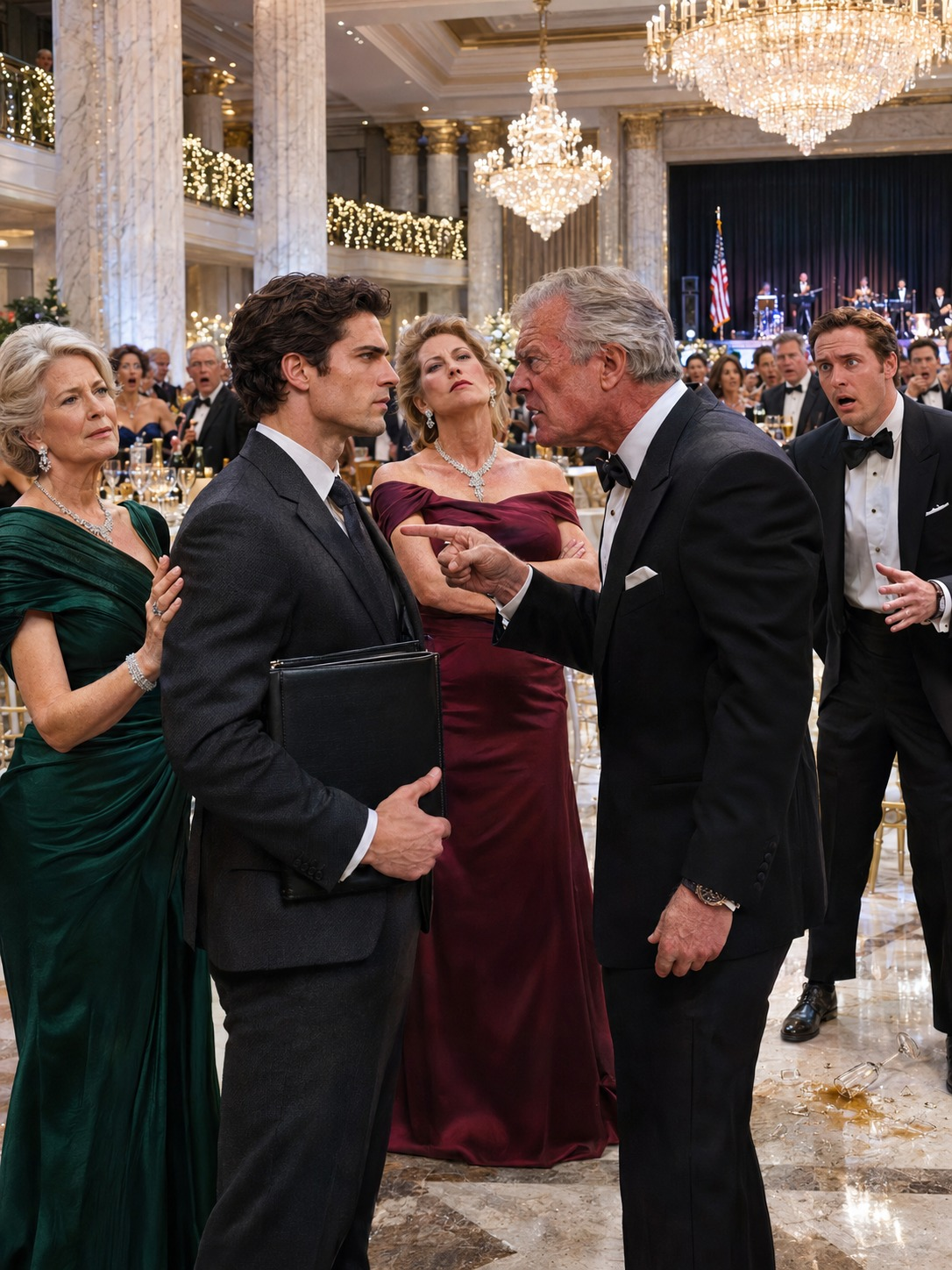
"Why do you have Wyatt's letter?"
Richard looked at the envelope.
Then he looked at me.
"Because your brother never received it."
Marshall pulled out a chair.
"Perhaps we should begin with the settlement proposal."
My father's attorney, a man named Lawrence Whitmore, sat beside him.
He adjusted his glasses and opened a leather portfolio.
"That would be preferable."
I sat across from Richard.
But my attention remained fixed on the envelope.
My mother's handwriting was unmistakable.
The slightly curved letters.
The familiar way she underlined a name.
I had spent weeks examining documents she had left behind.
Now another piece of her final intentions was sitting less than three feet away.
And Richard was using it as leverage.
"What does the letter say?" I asked.
My father placed it beside his chair.
"We'll get to that."
Marshall looked at him.
"Richard, if the document is relevant to Nolan's interests, withholding it during settlement discussions would be inappropriate."
Richard sighed.
"Everything has become inappropriate according to you."
"Then let's proceed carefully."
Lawrence opened the settlement proposal.
"My client wishes to resolve the outstanding disputes without prolonged litigation or further disruption to Crestwood Industries."
I listened.
He described a proposed financial settlement involving a substantial cash payment, several investment assets, and the transfer of a residential property.
Then he mentioned the total estimated value.
Twelve million dollars.
I stared at him.
Marshall remained expressionless.
Richard leaned back.
"That should get your attention."
I looked at the proposal.
Three weeks earlier, my father had offered me ten thousand dollars.
Now he was offering twelve million.
Apparently, the value of my silence had increased considerably.
"What would I be giving up?" I asked.
Lawrence turned several pages.
"The proposed agreement would resolve all disputed beneficial ownership claims and associated voting and consent rights."
"And the investigation?"
"There would be certain confidentiality provisions and limitations concerning future civil claims."
Marshall interrupted.
"Nothing in this agreement could legitimately prevent cooperation with lawful investigations."
"Of course," Lawrence replied.
Richard shifted impatiently.
"Nobody's asking you to break the law, Nolan."
I looked directly at him.
"You're asking me to surrender what Mom established."
"I'm offering you financial security."
"I already had financial security."
He laughed.
"On your salary?"
"Yes."
"You've got to be kidding."
I shook my head.
"I pay my bills. I have savings. I don't owe anyone money."
Something changed in his expression.
Perhaps the last sentence had struck closer to home than I intended.
Richard folded his arms.
"Twelve million dollars would change your entire life."
"Probably."
"You could retire tomorrow."
"I don't want to retire."
"You could buy whatever house you wanted."
"I like my apartment."
He stared at me.
"You can't possibly be serious."
Marshall began examining the proposed asset transfers.
"Several of these assets appear to have financing obligations attached to them."
Lawrence nodded.
"Those matters would be addressed during implementation."
"Using what funds?"
Richard looked irritated.
"That's a technical detail."
Marshall shook his head.
"It's a rather significant one."
He turned another page.
"Particularly considering the financial concerns currently being examined."
My father struck the table with his fingertips.
"Can we stop pretending this is some elaborate conspiracy?"
Nobody answered.
He looked at me.
"Nolan, I'm offering you more money than most people earn in several lifetimes."
"And in return, you regain the ability to control the company without my involvement."
"Exactly."
The word escaped before he could reconsider it.
Lawrence glanced at him.
Marshall stopped turning pages.
I leaned back.
"At least we're finally being honest about something."
Richard's face reddened.
"Don't be clever."
"I'm not trying to be."
"Then recognize what I'm giving you."
I looked at the envelope beside his chair.
"First, tell me why you have Wyatt's letter."
Richard became quiet.
For several seconds, he studied me.
Then he picked up the envelope.
"Your mother wrote this during her final weeks."
"Why didn't Wyatt receive it?"
"Because circumstances changed."
"What circumstances?"
He opened the envelope.
Inside were three handwritten pages.
My heart tightened.
Another letter.
Another conversation with a woman who had been gone for five years.
Richard unfolded the pages.
"Your mother was concerned about Wyatt's involvement in certain decisions."
"I know."
"She believed he had allowed himself to be influenced."
"By you?"
Richard ignored the question.
"She wanted him to correct several mistakes."
He slid the letter across the table.
I began reading.
My dear Wyatt,
I know how badly you want your father to be proud of you. I understand that desire more than you realize. But there are things a parent should never ask of a child, and there are things a child must learn to refuse.
I stopped.
My throat tightened.
I continued reading.
You have opportunities that many people will never receive. Please do not mistake those opportunities for permission to disregard the rights of others, especially your brother.
The next paragraph addressed the June 18 agreement.
Eleanor wrote that she knew Wyatt had participated in arrangements involving my purported consent.
She asked him to correct the record.
She urged him to speak honestly, even if doing so disappointed Richard.
Then I reached a sentence that made my hands tremble.
I have protected Nolan's interests because I fear they may otherwise disappear. But protecting him does not mean I love you less.
I lowered the letter.
Richard watched me carefully.
"Keep reading."
I did.
My mother explained that Wyatt had received separate financial provisions during her lifetime.
She wanted both of us to have meaningful opportunities.
But she refused to allow one son's future to be built upon the removal of the other's rights.
Near the end, she wrote something that made tears gather in my eyes.
I hope there will come a day when neither of you measures his worth by what your father gives him. You are brothers before you are business partners, shareholders, or competitors.
Please remember that when I am no longer here to remind you.
Love, Mom.
I placed the letter on the table.
For several moments, nobody spoke.
I looked at Richard.
"Why did you keep this from him?"
My father sighed.
"Wyatt was already under considerable pressure."
"She was asking him to tell the truth."
"She was asking him to jeopardize his future."
"No. She was trying to save it."
Richard shook his head.
"You don't understand what she was doing."
"I understand exactly what she was doing."
I pointed toward the letter.
"She was giving Wyatt a chance to correct what happened."
My father's expression hardened.
"She was prepared to expose him."
"Because he had done something wrong."
"He was young."
"So was I."
The room became silent.
Richard looked away.
I stared at him.
For years, he had justified Wyatt's mistakes by describing him as ambitious, inexperienced, or under pressure.
My mistakes had never received similar consideration.
Even mistakes I hadn't made had somehow become evidence of my inadequacy.
"Did Wyatt know this letter existed?" I asked.
"No."
"Then he needs to see it."
Richard reached for the pages.
"That depends on what happens here today."
I pulled my hand away.
Marshall immediately spoke.
"Richard, are you suggesting that access to Eleanor's correspondence depends on Nolan accepting your settlement?"
My father looked irritated.
"I'm suggesting we resolve everything together."
"Those are separate matters."
"They're family matters."
I shook my head.
"No, Dad. They're not yours to control."
He stared at me.
I could see his anger returning.
But beneath it was something unfamiliar.
Desperation.
He had expected the letter to change my position.
Perhaps he believed I would feel responsible for protecting Wyatt from the consequences of his actions.
Perhaps he thought I would accept the settlement to preserve whatever remained of our family.
Instead, the letter had made my decision even clearer.
My mother hadn't asked me to destroy my brother.
She had asked him to stop participating in his own destruction.
Richard had prevented him from receiving that message.
And now he was attempting to use it against both of us.
Marshall requested a copy of the letter.
Lawrence looked toward Richard.
After a long silence, my father nodded.
"Fine."
Lawrence arranged for a copy to be made.
Then he returned to the settlement proposal.
"Perhaps we can discuss alternative terms."
Richard leaned forward.
"Fifteen million."
I looked at him.
"What?"
"Fifteen million dollars. We can restructure the arrangement."
Marshall raised an eyebrow.
"Again, we would need to establish the source and availability of those funds."
Richard ignored him.
"Think about it, Nolan. Fifteen million dollars, and you never have to deal with Crestwood again."
I stared at my father.
"That's what you want?"
"I want this situation resolved."
"You want me gone."
He didn't answer.
I looked down at the proposal.
There had been a time when I would have accepted almost anything in exchange for his approval.
A promotion.
An invitation to dinner.
A simple acknowledgment that I had done something well.
Now he was offering me millions of dollars, and all I could hear was the same message he had delivered throughout my life.
Disappear.
Make things easier for everyone else.
Stop asking questions.
Accept whatever I decide you're worth.
I pushed the proposal away.
"No."
Richard stared at me.
"Twenty million."
Lawrence turned toward him.
"Richard, perhaps we should discuss—"
"Twenty million!"
His voice echoed through the conference room.
I remained seated.
"No."
He stood abruptly.
"Are you insane?"
Marshall closed his folder.
"I believe Nolan has made his position clear."
My father pointed toward me.
"You'll never get an offer like this again."
"That's fine."
"You think you're going to walk into Crestwood and take over?"
"I haven't said that."
"You don't have the experience."
"Then I won't pretend I do."
"You don't understand what it takes to run a company of this size."
"Maybe not."
I looked directly into his eyes.
"But I understand that the people running it shouldn't need false signatures to maintain their authority."
Richard froze.
Lawrence removed his glasses.
Nobody spoke.
Then my father slowly returned to his chair.
For the first time since I arrived, he looked genuinely defeated.
"You have no idea what I sacrificed to build that company."
I thought about my mother standing beside their first truck.
Her savings.
Her loan.
Her years of work.
"I know what Mom sacrificed."
Richard's jaw tightened.
"She wasn't perfect."
"I never said she was."
"She made mistakes."
"Everyone does."
"She didn't understand how difficult things had become."
"Then explain them."
He looked toward Lawrence.
His attorney remained silent.
Richard rubbed his forehead.
For several seconds, I thought he might refuse to speak.
Then he began.
"There were investments that didn't perform as expected."
I listened.
"Opportunities that should have generated significant returns. Development projects. Partnerships."
"Your personal investments?"
He nodded reluctantly.
"Some of them."
"Did Crestwood become responsible for those obligations?"
He looked at Marshall.
Lawrence interrupted.
"Richard, I would advise caution regarding statements about matters currently under review."
My father sighed.
"I'm not discussing specific transactions."
He turned back toward me.
"The merger would have solved several problems."
"Your problems?"
"Crestwood's problems."
"Are they the same thing?"
He didn't answer.
I remembered Samuel's records.
Howard's involvement.
The payments to Westbridge.
The financing arrangements that had exposed Crestwood to additional risks.
My father had built an image of extraordinary success.
But behind the expensive house, the luxury cars, and the confident speeches was apparently a man struggling to maintain commitments he could no longer comfortably support.
"How bad is it?" I asked.
Richard stared at the table.
"Bad enough."
The admission was quiet.
Almost inaudible.
For the first time, I saw the man beneath the reputation.
He looked older.
Smaller.
Tired.
I remembered being eight years old and watching him carry heavy boxes inside Crestwood's first warehouse.
Back then, he had laughed easily.
He had eaten sandwiches beside employees.
He had occasionally come home exhausted but happy.
I wondered when enough had stopped being enough.
When building a successful company had become less important than appearing to be the most successful man in every room.
"Why didn't you ask for help?" I asked.
Richard looked up.
"From whom?"
"Mom. The board. Anyone."
He laughed bitterly.
"You don't ask people for help when they're waiting for you to fail."
"Maybe they weren't waiting for you to fail."
He shook his head.
"You wouldn't understand."
There it was again.
His favorite explanation.
But this time, it sounded less like arrogance and more like fear.
I leaned forward.
"Did you ever think about what would happen to the employees if those financial arrangements failed?"
Richard looked offended.
"Everything I did was intended to keep Crestwood successful."
"Even the payments to Westbridge?"
Lawrence raised a hand.
"We should not discuss individual transactions in this setting."
I nodded.
"Then let the independent investigators examine them."
Richard looked at me.
"You're really going to allow this to continue?"
"Yes."
"Even if it destroys me?"
The question caught me off guard.
For several seconds, I didn't know how to answer.
I had imagined this moment many times since discovering my mother's letter.
I thought I would feel satisfaction when Richard finally understood that he couldn't control the outcome.
Instead, I felt grief.
Grief for the father I had wanted.
Grief for the relationship we might have had.
Grief for the years we had wasted competing for something that should never have required competition.
"I'm not trying to destroy you," I said.
"That's exactly what you're doing."
"No. I'm refusing to protect you from the consequences of your decisions."
He looked away.
I continued.
"You can cooperate with the review. You can correct the records. You can help protect Crestwood's employees."
"And lose everything?"
"Maybe you'll lose some things."
I looked at my mother's letter.
"But you might still save something that matters."
Richard didn't respond.
Marshall gathered his papers.
"The proposed settlement is unacceptable. If Richard wishes to discuss a resolution that preserves Nolan's legitimate interests and addresses the company's concerns transparently, we're willing to consider it."
Lawrence nodded.
"I understand."
I stood.
Richard remained seated.
As I reached the door, he spoke.
"Nolan."
I turned.
"Your mother would have hated seeing us like this."
I felt a sharp pain in my chest.
He was right about that.
She would have hated the arguments.
The accusations.
The broken relationship between her sons.
But she would have hated the dishonesty even more.
"Then we should have listened to her when she was alive."
I walked out.
Marshall followed me into the hallway.
Neither of us spoke until we reached the elevator.
Then he looked at me.
"Twenty million dollars."
I smiled faintly.
"Apparently, I've become more expensive."
He laughed.
It was the first genuine laugh I had heard from him in weeks.
Then his expression became serious.
"You understand that refusing this offer doesn't guarantee a better financial outcome?"
"I do."
"The process could take considerable time."
"I know."
"And there will be difficult decisions ahead."
I nodded.
"I didn't start this because I wanted a payout."
Marshall studied me.
"Your mother would have understood that."
We returned to his office.
The first thing I did was contact Wyatt.
I told him about the letter.
He became completely silent.
"She wrote to me?"
"Yes."
"What did she say?"
"I think you should read it yourself."
He arrived at Marshall's office less than an hour later.
I handed him the copy.
He sat near the window and began reading.
At first, his expression remained controlled.
Then his shoulders started trembling.
By the time he reached the final paragraph, tears were running down his face.
He pressed the pages against his chest.
"She knew."
I sat beside him.
"Yes."
"She knew what I'd done."
"Yes."
He wiped his eyes.
"And she still loved me."
I looked at him.
"Of course she did."
Wyatt lowered his head.
For several minutes, he cried without speaking.
I remembered the little boy who had once helped me climb a tree in our backyard.
The teenager who taught me how to drive.
The brother who had gradually become someone I barely recognized.
Perhaps there was still a chance for us.
Not because the past could be erased.
Because, for the first time, he seemed willing to confront it.
"I wish I'd seen this five years ago," he whispered.
"So do I."
He looked at me.
"Why did Dad keep it?"
I shook my head.
"You'll have to ask him."
Wyatt folded the letter carefully.
Then he said something I hadn't expected.
"I'm going to give the investigators everything I have."
I studied his expression.
"Everything?"
"Yes."
"Even if it affects you?"
He nodded.
"Especially if it affects me."
I didn't immediately respond.
Then I placed my hand on his shoulder.
It wasn't forgiveness.
Not completely.
But it was a beginning.
Later that afternoon, Martha arrived with encouraging news.
The independent reviewers had identified several financial arrangements that required immediate intervention.
The board had voted to restrict Richard's authority over disputed transactions while the investigation continued.
Howard had temporarily stepped away from his committee responsibilities.
Brenda's consulting arrangements were undergoing separate examination.
Most importantly, Crestwood's ordinary operations were continuing.
Employees were still being paid.
Orders were still being shipped.
Customers were still receiving their products.
The company my mother built was not beyond saving.
Not yet.
Marshall also informed me that the independent trust administrator had provided further confirmation supporting my mother's arrangements.
The original beneficial interest of thirty-eight percent remained central to the legal review.
The disputed surrender agreement could no longer be treated as unquestionably valid.
"We're getting closer," he said.
"To what?"
"Establishing the practical authority attached to your mother's provisions."
Martha looked at me.
"Which may become important sooner than we anticipated."
I frowned.
"What do you mean?"
She exchanged a glance with Marshall.
"The board is discussing leadership alternatives."
I leaned back.
"I hope you're not suggesting that I become CEO."
Martha smiled.
"No. Crestwood needs experienced operational leadership and independent oversight."
"Good."
"But your involvement could help determine what happens next."
I thought about my mother's instructions.
Protect what mattered.
Protect the people.
Don't confuse justice with revenge.
For the first time, those words felt less like a personal message and more like a responsibility.
Then Marshall's receptionist entered.
"There's a courier here with documents from the trust administrator."
Marshall accepted the package.
He opened it carefully.
Inside was a certified collection of historical trust records and supplementary agreements.
He began examining them.
Martha moved closer.
Wyatt remained beside the window, still holding his mother's letter.
Marshall turned several pages.
Then he stopped.
"That's unusual."
I looked at him.
"What is?"
He removed a separate document attached to the original trust schedule.
It contained provisions concerning voting authority under specific circumstances.
He read the first paragraph.
Then the second.
His expression changed.
"Martha, take a look at this."
She leaned over his shoulder.
Her eyes widened.
"Is that still effective?"
"According to the accompanying certification, it appears to be."
I stood.
"Would someone please explain?"
Marshall turned the document toward me.
"Your mother didn't simply establish a beneficial interest, Nolan."
He pointed toward a clause near the bottom.
"She also anticipated what might happen if someone attempted to remove those protections improperly."
I stared at the page.
"What happens then?"
Before Marshall could answer, Martha's phone rang.
She looked at the caller's name.
"It's the board secretary."
She answered.
For several seconds, she listened without speaking.
Then she slowly lowered herself into a chair.
"Richard did what?"
Marshall looked up.
Wyatt stepped away from the window.
Martha ended the call.
Her face had gone pale.
"Richard has just submitted an emergency proposal to transfer several of Crestwood's most valuable assets."
I felt my stomach drop.
"Can he do that?"
Marshall looked down at my mother's certified agreement.
Then he reached for his phone.
"Not if this provision means what I think it means."
He turned the final page.
My mother's signature appeared beneath a previously undisclosed appointment of voting authority.
Beside it was the name of the person empowered to stop Richard.
Marshall looked directly at me.
"Nolan, I don't think you understand what Eleanor has just put into your hands."






Comments 0