"Read the name," Marshall said.
I leaned over the conference table.
There, beneath my mother's signature, appeared my full legal name.
Nolan.
I looked at Marshall.
"What does this mean?"
He adjusted his glasses and examined the accompanying certification again.
"Eleanor established a conditional appointment of voting authority connected to the interests held for your benefit."
Martha stood beside him.
"And the conditions?"
Marshall pointed toward several paragraphs.
"An attempt to improperly extinguish Nolan's interests, a material dispute concerning his purported consent, or certain proposed transactions threatening the protected assets."
I stared at the document.
"She anticipated all of this?"
"Perhaps not these exact circumstances," Marshall answered. "But she clearly anticipated the possibility that someone might attempt to circumvent her arrangements."
Wyatt approached the table.
"Someone meaning Dad?"
Nobody answered.
We didn't need to.
Marshall continued reading.
"The appointment requires confirmation from the independent trust administrator before the authority can be exercised."
He lifted the accompanying certification.
"And that confirmation appears to have been issued."
I felt suddenly lightheaded.
"What authority are we talking about?"
"The ability to exercise voting rights associated with the protected interests under the specified conditions."
"Thirty-eight percent?"
"Subject to the precise terms of the arrangement, yes."
Martha looked at me.
"Richard doesn't have the unquestioned control he's been claiming."
I lowered myself into a chair.
For years, my father had told me I didn't belong at Crestwood.
He had removed me from the company.
He had excluded me from important decisions.
He had publicly declared that I owned nothing.
And all that time, my mother had left behind a mechanism designed to ensure that my voice could not be permanently silenced.
I looked at her signature.
"Why didn't she tell me?"
Marshall considered the question.
"Perhaps she hoped these provisions would never become necessary."
Wyatt stared at the document.
"She knew what Dad might do."
His voice sounded hollow.
"She knew, and none of us listened."
Martha's phone vibrated again.
She checked the message.
"The emergency board meeting has been scheduled for four this afternoon."
Marshall looked at the clock.
It was shortly after two.
"What assets is Richard proposing to transfer?"
Martha opened an attachment.
"Two distribution facilities, certain equipment holdings, and interests in a logistics subsidiary."
I stood.
"Those facilities are operational?"
"Yes."
"How many employees?"
"Several hundred across the affected operations."
My stomach tightened.
"Where would the assets go?"
"An outside holding company."
Samuel's warnings returned to me.
Richard's personal investments.
The financing obligations.
The proposed merger that would have addressed problems he had refused to explain.
"Is that holding company connected to Dad?"
Martha shook her head.
"We don't have sufficient information yet."
Marshall reached for his phone.
"Then we need to establish whether this proposal falls within the transactions requiring additional consent."
He contacted the independent trust administrator.
While he spoke, Martha forwarded the emergency proposal to Crestwood's outside counsel.
Wyatt stood beside the window.
I could see his reflection in the glass.
He looked frightened.
But this time, he wasn't running away.
"Can I help?" he asked.
Martha turned toward him.
"Do you recognize the holding company?"
She showed him the document.
Wyatt examined the name.
His expression changed.
"I've seen it before."
"Where?"
"In materials connected to Dad's development projects."
Marshall ended his call.
"What did you say?"
Wyatt looked at him.
"I think this company was involved in one of Dad's outside financing arrangements."
"Can you establish that?"
"I might have emails."
Marshall nodded.
"Contact your attorney. Preserve anything relevant and arrange for it to be provided to the independent reviewers."
Wyatt immediately took out his phone.
I watched him walk into the hallway.
A month earlier, he would probably have called Richard.
Now he was calling his own attorney.
It was a small change.
But it mattered.
Marshall turned toward me.
"The administrator has confirmed that the conditional voting appointment is currently effective."
I looked down at the certified documents.
"So what happens now?"
"We notify the relevant parties and formally object to the proposed transaction."
Martha nodded.
"And we make certain the board understands that Richard cannot simply proceed as though Nolan's rights don't exist."
I took a deep breath.
For the first time since finding the lockbox, I wasn't merely responding to something my father had done.
I had the opportunity to prevent him from doing something else.
And I intended to use it.
At three thirty, Marshall and I arrived at Crestwood's headquarters.
The building looked exactly as I remembered it.
The glass entrance.
The polished floors.
The enormous company logo behind the reception desk.
But something about walking through those doors felt different.
Five years earlier, I had left carrying a cardboard box after my position was eliminated.
Three weeks earlier, I had entered with a temporary visitor badge to remove my mother's belongings.
Now I was returning with independently verified documents establishing rights my father had spent years denying.
The receptionist recognized me.
"Mr. Nolan?"
"Good afternoon."
She looked toward Marshall.
"You're expected upstairs."
As we approached the elevators, I noticed several employees watching us.
One woman smiled.
Another quietly nodded.
Nobody said much.
The uncertainty surrounding Crestwood had made everyone cautious.
I couldn't blame them.
They had mortgages, families, and responsibilities that didn't disappear simply because executives were fighting over ownership.
Inside the elevator, Marshall looked at me.
"Remember, you are not required to prove everything today."
"I know."
"Our immediate objective is to prevent an inadequately reviewed transaction."
I nodded.
"And protect the company."
"Exactly."
The elevator doors opened.
Martha was waiting.
"The directors have received the documents," she said.
"How did Richard react?"
She gave me a tired smile.
"About as well as you'd expect."
We entered the boardroom.
Richard sat at the head of the long conference table.
Howard occupied a chair near the far end, although he was no longer participating in matters involving his suspended committee responsibilities.
Several directors were reviewing documents.
Crestwood's general counsel stood beside a presentation screen.
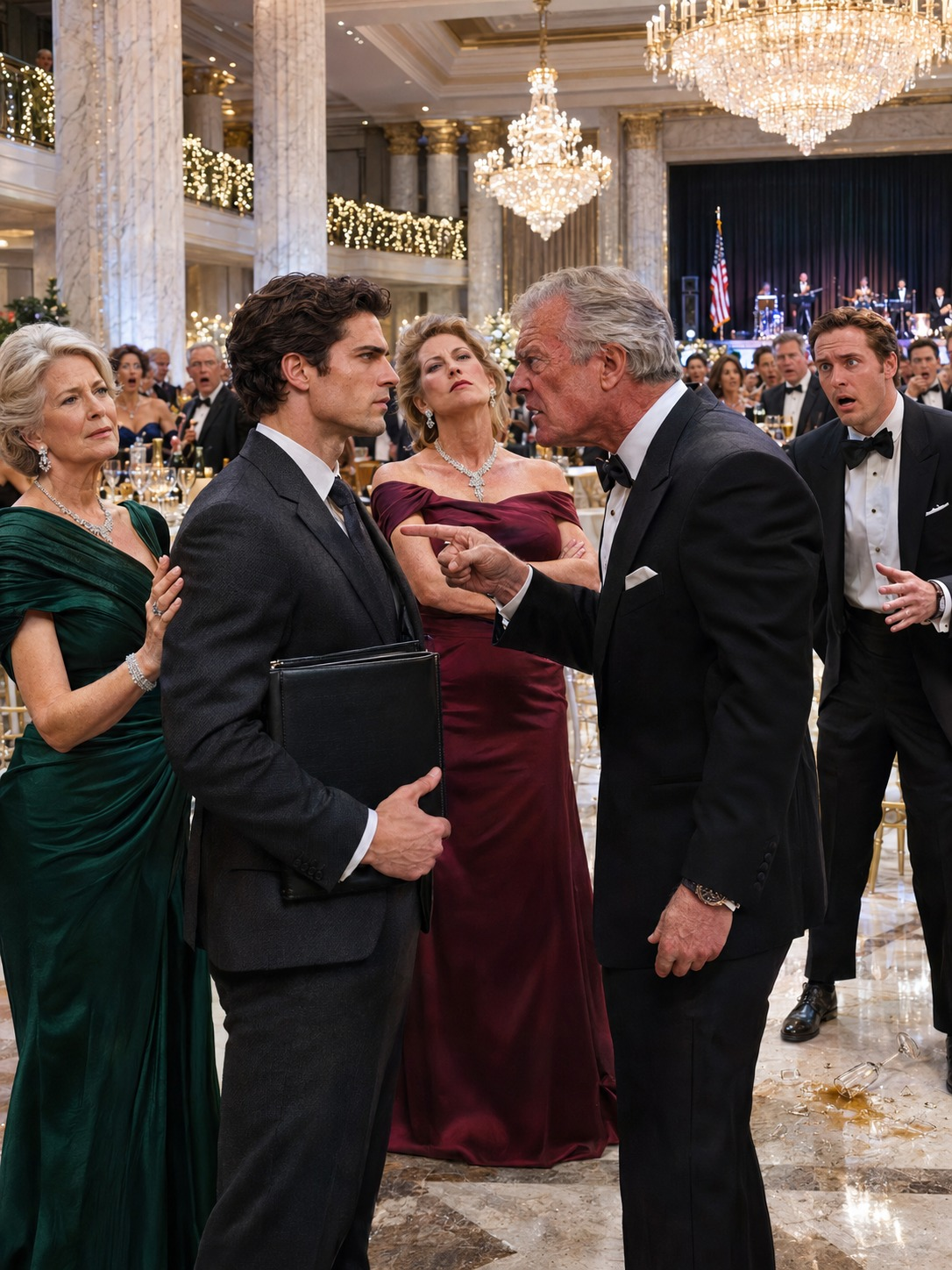
My father looked up.
His expression immediately hardened.
"What is he doing here?"
Martha answered.
"Nolan is attending with his attorney concerning the proposed transaction and his verified voting appointment."
Richard laughed.
"Verified by whom?"
Marshall placed a certified copy on the table.
"The independent trust administrator."
Richard stared at the document.
Then he looked at me.
"This is becoming ridiculous."
I took a seat.
"Good afternoon, Dad."
He ignored the greeting.
"You're not a director."
"No," I answered.
Marshall continued.
"But Nolan has authority relevant to the proposed transaction. His presence for this portion of the meeting has been arranged with counsel."
Richard looked toward Crestwood's general counsel.
"You're allowing this?"
The attorney remained calm.
"The documentation requires consideration before any further action is taken."
My father shook his head.
"This company cannot operate if every decision becomes subject to a family argument."
Martha opened the emergency proposal.
"Transferring multiple operational facilities is hardly an ordinary decision."
Richard leaned forward.
"It's a restructuring measure."
"Then explain the benefits."
He gestured toward the presentation screen.
The proposal described a transaction that would supposedly generate immediate liquidity while allowing Crestwood to continue using the facilities under separate agreements.
On paper, it sounded convenient.
But several important details were missing.
The independent valuation.
The full financing terms.
The identities of the ultimate beneficiaries.
The long-term costs Crestwood might incur.
Martha asked the first question.
"Has an independent valuation been completed?"
Richard shook his head.
"We don't have time for unnecessary delays."
Another director spoke.
"Who negotiated the proposed terms?"
"My office."
"Was outside counsel involved from the beginning?"
Richard hesitated.
"Not every preliminary discussion requires legal participation."
Marshall opened the certified trust documents.
"Has the proposed recipient disclosed all relationships involving current executives and directors?"
Richard looked at him.
"That's irrelevant."
Crestwood's general counsel interrupted.
"Actually, Richard, it is highly relevant."
My father became visibly irritated.
"We need liquidity. That's the immediate concern."
I looked at the proposal.
"How much liquidity would remain available to Crestwood after the associated obligations are addressed?"
Richard turned toward me.
"What?"
I repeated the question.
He stared at me.
"You wouldn't understand the financial structure."
"Then explain it."
Several directors looked toward him.
He glanced at the presentation screen.
"The details are still being finalized."
I leaned forward.
"You're asking the board to approve the transfer of operational assets without finalized financial details?"
Richard's face reddened.
"I've been running this company since you were a child."
"And Mom helped build it before I was born."
He froze.
I continued.
"Those facilities employ hundreds of people. What protections exist for their jobs if the proposed arrangement fails?"
Richard looked away.
"The operations will continue."
"Under what guarantees?"
He didn't answer.
Martha closed the proposal.
"I cannot support this transaction in its current form."
Another director agreed.
Then another.
Richard looked around the table.
"You're all making a serious mistake."
Marshall placed the formal objection beside the certified appointment.
"Nolan does not consent to the proposed transfer. Given the applicable provisions and unresolved questions, proceeding would expose the company to substantial additional risk."
My father stared at the documents.
For several seconds, he appeared unable to speak.
Then he turned toward me.
"You're blocking it?"
"Yes."
"Do you have any idea what that means?"
"It means the proposal needs independent examination."
"You could bankrupt this company!"
I looked at him.
"Then show us the complete financial records so we can determine how to prevent that."
The room became silent.
Richard opened his mouth.
Then closed it.
For the first time, he couldn't dismiss my question by reminding everyone that I was merely his disappointing younger son.
The other directors wanted answers too.
After a lengthy discussion, the board voted against proceeding with the emergency transfer.
The proposal would not move forward without independent valuation, full disclosure, and confirmation that the necessary approvals had been obtained.
Richard remained motionless.
Martha turned toward the board secretary.
"Please ensure the minutes accurately reflect the objections and the decision."
I remembered her earlier descriptions of revised meeting records.
Objections disappearing.
Questions being transformed into agreements.
This time, every relevant statement would remain documented.
My father stood.
"Are we finished?"
Crestwood's general counsel looked at him.
"There's another matter requiring discussion."
Richard slowly turned.
"What matter?"
"The independent reviewers have requested temporary restrictions on certain executive activities while they complete their work."
Martha opened another folder.
"The board needs to consider those recommendations."
Richard stared at her.
"You're trying to remove me."
"We're trying to protect Crestwood."
"From its founder?"
Martha's expression hardened.
"From decisions that haven't been adequately explained."
He looked toward Howard.
"Say something."
Howard lowered his eyes.
Richard laughed bitterly.
"Unbelievable."
He turned toward the other directors.
"After everything I've done for this company."
Nobody responded.
I watched him search their faces.
For decades, those people had applauded his speeches.
They had approved his proposals.
They had accepted his explanations.
Now they were beginning to understand the cost of that unquestioning loyalty.
The board entered a separate executive session.
Marshall and I waited outside while the directors considered the recommendations.
I stood beside the hallway windows.
Below us, trucks moved through Crestwood's distribution yard.
Employees walked between buildings.
Everything appeared ordinary.
Yet upstairs, the leadership structure that had controlled those operations for years was undergoing a fundamental change.
Marshall joined me.
"How are you feeling?"
"Strange."
He smiled faintly.
"Understandable."
"I thought stopping him would feel better."
"Sometimes doing the necessary thing doesn't feel particularly good."
I watched a truck pull away from the loading dock.
"I don't want those people losing their jobs because of this."
"Then keep that concern at the center of your decisions."
I nodded.
Nearly an hour later, Martha emerged from the boardroom.
Her expression was serious.
"The board has voted to place Richard on administrative leave from his executive duties pending the independent investigation."
I stared at her.
"He's no longer running Crestwood?"
"Not for the time being."
She continued.
"An experienced interim executive will oversee operations. Major financial decisions will require additional independent approval."
I released a long breath.
"What about Brenda?"
"Her executive responsibilities have also been suspended while her consulting arrangements and potential conflicts are reviewed."
"And Howard?"
"His participation in relevant decisions remains restricted."
I looked toward the boardroom.
Richard was still inside.
Through the glass, I could see him gathering his papers.
Nobody was helping him.
He placed his documents inside a briefcase and walked toward the door.
When he saw me, he stopped.
For a moment, we simply looked at each other.
"You got what you wanted," he said.
I shook my head.
"No."
He laughed.
"Still pretending?"
"I wanted you to stop making decisions that could hurt the company."
He stepped closer.
"You have no idea what happens next."
"Neither do you."
His expression tightened.
Then he walked toward the elevator.
I watched him leave.
There was no applause.
No celebration.
No triumphant announcement.
Just an aging man carrying a briefcase through the hallway of a company he had once believed would always belong to him.
The elevator doors closed.
I felt a surprising sadness.
Not because the board had made the wrong decision.
Because my father had been given so many opportunities to make a different one.
Over the following weeks, Crestwood began the difficult process of rebuilding.
The independent investigation expanded.
Financial records were examined.
Questionable contracts were suspended or renegotiated where appropriate.
The company worked with its lenders to address immediate obligations without sacrificing essential operational assets.
Samuel agreed to assist the reviewers.
Wyatt continued cooperating through his attorney.
Howard provided additional information concerning historical board decisions.
Brenda initially denied responsibility for the disputed payments, although her explanations became increasingly difficult to reconcile with the available documentation.
Richard remained publicly defiant.
But his ability to control Crestwood's decisions had ended.
Meanwhile, Marshall worked to resolve the ownership dispute.
The evidence supporting my mother's arrangements was overwhelming.
The independent records.
The certified amendments.
The handwriting assessment.
Wyatt's corrected statement.
Together, they established a picture that could no longer reasonably be dismissed.
Eventually, the relevant parties reached an agreement recognizing the protected beneficial interests my mother had established.
Thirty-eight percent.
The number that had appeared on television at midnight was no longer merely a disputed historical figure.
My rights were formally recognized under the trust arrangements, along with the associated protections.
Marshall called me when the final confirmation arrived.
"It's done, Nolan."
I sat at my kitchen table.
"Really?"
"Yes."
I looked toward the brass lockbox.
For several seconds, I couldn't speak.
Then I whispered, "Thank you."
"You should thank Eleanor."
My eyes filled with tears.
"I wish I could."
After the call, I opened my mother's letter again.
I traced the edge of the paper with my fingertips.
She had protected something I hadn't known existed.
She had fought battles I hadn't known were happening.
And she had done it while facing the knowledge that she might not live long enough to see the outcome.
I wished she could have been there.
Not to witness Richard's downfall.
To see that her efforts hadn't been wasted.
Several days later, Martha invited me to Crestwood's headquarters.
The board wanted to discuss my future involvement.
I arrived expecting another complicated legal conversation.
Instead, Martha introduced me to the interim chief executive, a woman named Catherine Ellis.
She had spent more than twenty years managing manufacturing and distribution operations.
She was direct, practical, and refreshingly uninterested in family politics.
"I've reviewed your professional background," she told me.
"Have you?"
"Your experience in supply chain management is relevant to several operational improvements we're considering."
I smiled.
"That's encouraging."
She leaned forward.
"But I want to be clear. Your ownership interests don't automatically qualify you for an executive position."
I nodded.
"I agree."
She looked pleasantly surprised.
"Good."
We discussed opportunities for me to contribute to an operational improvement initiative under appropriate oversight.
There would be defined responsibilities.
Measurable objectives.
Independent evaluation.
No special title simply because my last name was connected to Crestwood's founders.
It was exactly the kind of opportunity my mother would have wanted me to receive.
I accepted.
Martha smiled.
"Eleanor always believed you'd find your way back here."
I looked around the conference room.
"I just wish it hadn't taken all this."
"So do I."
That afternoon, I visited the original distribution facility.
Frank Harris was waiting near the maintenance office.
When he saw me, his face broke into a smile.
"Well, look who's back."
I laughed.
"Good to see you, Frank."
He shook my hand.
Then he pulled me into a brief hug.
"Your mother would have been something else today."
I felt my throat tighten.
"She would probably be asking why the loading area hasn't been reorganized."
Frank laughed.
"That's exactly what she'd be doing."
We walked through the warehouse together.
Employees greeted me.
Some remembered me from years earlier.
Others knew me only from the news.
I made a point of listening more than I spoke.
They told me about equipment problems.
Scheduling difficulties.
Training opportunities that had disappeared.
Ideas that had been ignored.
None of those concerns were glamorous.
But they were real.
And addressing them mattered considerably more than hosting another extravagant gala.
Later, I asked Catherine whether we could examine the possibility of restoring Eleanor's employee education assistance program.
She agreed to review the financial requirements.
Martha suggested establishing transparent eligibility rules and independent oversight.
Frank nearly cried when I told him.
"My daughter wouldn't be a nurse without your mother."
I smiled.
"Then perhaps someone else's daughter deserves the same opportunity."
For the first time in months, I felt something resembling hope.
Not the fragile hope that Richard might finally approve of me.
Something stronger.
The possibility of building a life that no longer depended on his approval.
That evening, Wyatt came to my apartment.
He brought dinner from a restaurant we had loved as children.
We ate at my small kitchen table.
For a while, we talked about ordinary things.
Sports.
Old school memories.
Our mother's terrible attempts at making pancakes shaped like animals.
We laughed.
It felt unfamiliar.
But good.
Eventually, Wyatt became serious.
"I've been thinking about what I'm going to do next."
I looked at him.
"What have you decided?"
"I'm not going to ask for my old position back."
I nodded.
"I need to figure out what I'm capable of without Dad arranging everything."
"That's probably a good place to start."
He looked down.
"Do you think we'll ever be okay?"
I considered the question.
"I think we're doing better than we were."
He smiled faintly.
"I'll take that."
Before leaving, he stopped beside my mother's photograph.
He looked at it for a long time.
Then he turned toward me.
"There's something I haven't told you."
I felt my stomach tighten.
"What?"
He reached inside his jacket and removed a small silver key.
"I found this while collecting some of my personal belongings from Dad's house."
I stared at it.
A tiny engraved letter appeared near the top.
E.
"Where was it?"
"In an old envelope inside Dad's safe. My name was written on the outside."
I thought about the brass lockbox.
Its missing key.
The careful way I had opened its hinges.
"Is that Mom's?"
"I think so."
He placed the key on the table.
"But there's something else."
He removed a folded note.
The handwriting belonged to my mother.
When both of my sons are ready to listen, give them the final recording.
I looked up.
"Recording?"
Wyatt nodded.
"There was an address written beneath the message."
He handed me the note.
It belonged to a private records storage facility.
The following morning, Marshall contacted the facility and confirmed that Eleanor had established a small private deposit arrangement years earlier.
The necessary authorization could be verified.
Wyatt and I went there together.
An employee escorted us into a private viewing room and brought out a sealed container.
The silver key fit perfectly.
Inside was a small digital recorder and a handwritten instruction.
For Nolan and Wyatt. Together.
My hands began trembling.
Wyatt sat beside me.
Marshall examined the device.
Then he placed it on the table.
I pressed the playback button.
Static filled the room.
A familiar breath followed.
Then I heard my mother's voice for the first time in five years.
"Nolan. Wyatt. If you're listening to this, there's one last thing you need to know about your father."
Wyatt grabbed my arm.
The recording continued.
And then my mother said something neither of us had ever imagined hearing.






Comments 0