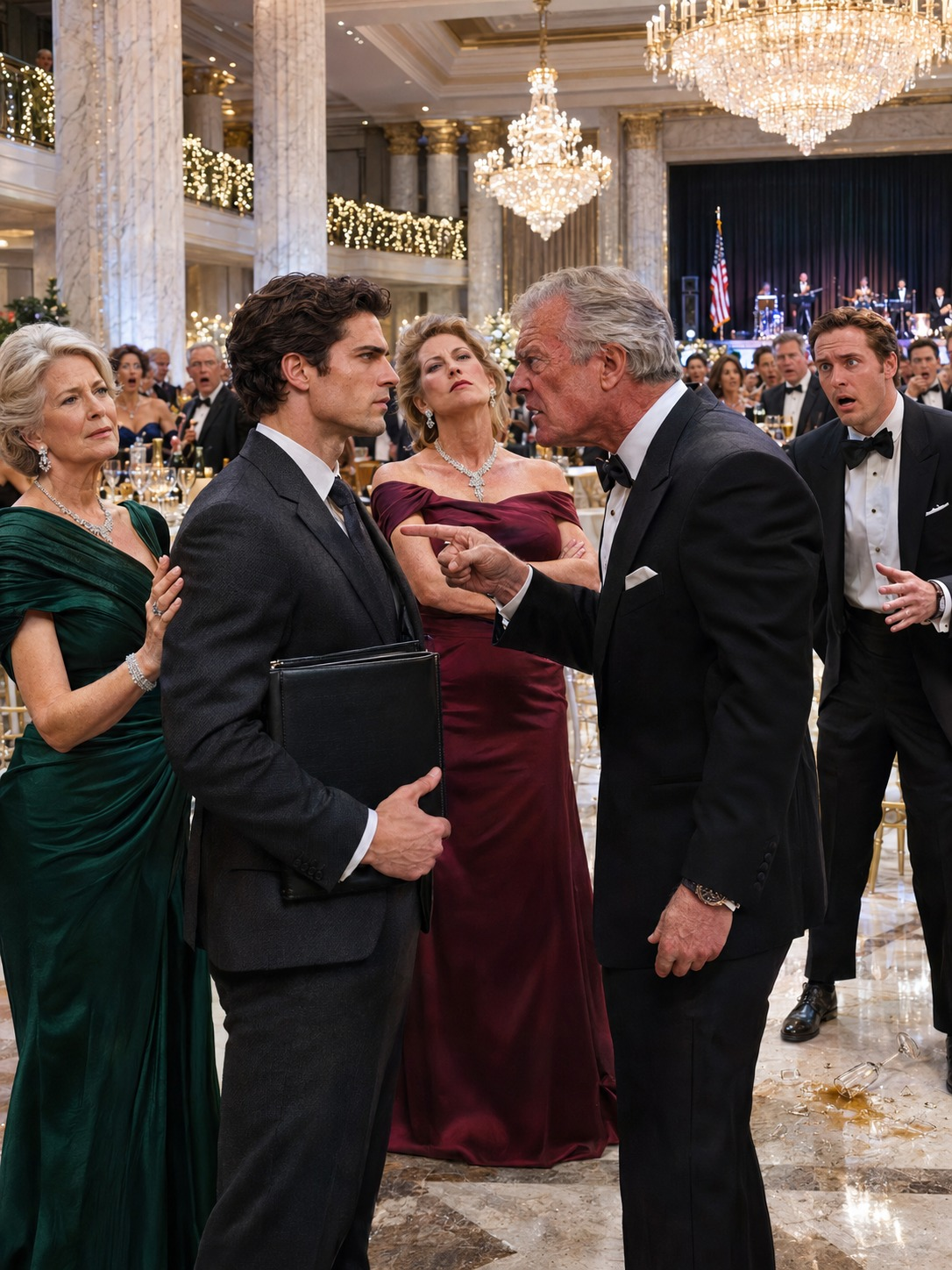
"Open the door, Nolan."
My father's voice carried through the apartment.
I stepped away from the peephole.
Marshall was still on the phone.
"Who's there?" he asked.
"My father. And Wyatt."
"Did you invite them?"
"No."
"Then you don't have to let them inside."
Another knock shook the door.
"Nolan, I know you're home."
I looked toward the kitchen table.
My mother's letter, the ownership documents, and the sealed envelope addressed to Marshall were scattered across its surface.
If Richard walked inside, he would see everything.
"I need a minute," I called.
My father responded immediately.
"For God's sake, we're family. Open the door."
Family.
It was remarkable how convenient that word became whenever he wanted something.
I carried the documents into my bedroom, placed them inside the brass lockbox, and put everything in my closet.
Then I returned to the living room.
"Marshall, I'll call you back."
"Don't sign anything," he said.
"I won't."
"And don't surrender those documents."
"I understand."
I ended the call and slipped my phone into my pocket.
Then I opened the door.
Richard stood there wearing a dark overcoat, his expression somewhere between irritation and impatience.
Wyatt stood slightly behind him.
Neither smiled.
"What took you so long?" my father demanded.
"I wasn't expecting visitors."
Richard stepped forward.
I remained in the doorway.
He looked at me.
"Are you going to invite us inside?"
"What's this about?"
Wyatt glanced toward the neighboring apartment.
"Come on, Nolan. Let's not do this in the hallway."
I considered refusing.
But I wanted to know why they had come.
I stepped aside.
Richard entered first.
His eyes immediately began moving around my apartment.
He examined the kitchen counter, the coffee table, and the cardboard boxes stacked beside the wall.
Then he looked at my furniture.
"You still live like a college student."
"Good evening to you too, Dad."
Wyatt closed the door.
My father walked toward the cardboard boxes.
"Brenda said you removed quite a few things from Eleanor's office."
"She told me to."
"Yes, but there seems to have been a misunderstanding."
"What misunderstanding?"
He reached into the nearest box and removed one of my mother's notebooks.
"Some materials may have been taken that shouldn't have left the building."
"Which materials?"
"That's what we're trying to determine."
He opened the notebook.
I watched him flip through the pages.
He wasn't interested in the memories.
He was searching for something specific.
Wyatt wandered toward the kitchen.
"Got anything to drink?"
"Water."
"Never mind."
My father returned the notebook to the box.
"Did you find any legal agreements?"
"No company files left the filing cabinets."
"That's not what I asked."
I looked directly at him.
"Why are you so interested in legal agreements?"
His expression hardened.
"Because I run a multimillion-dollar company, Nolan. I can't afford to have confidential information floating around."
"Then perhaps you shouldn't have asked me to empty an office without supervising the process."
Wyatt laughed awkwardly.
Richard didn't.
"Your mother kept things she shouldn't have kept."
The sentence hung between us.
I wondered whether he realized what he had just admitted.
"What things?"
He looked away.
"Outdated records. Irrelevant correspondence. Draft agreements."
"Anything involving me?"
Wyatt stopped moving.
Richard slowly turned back toward me.
"What makes you ask that?"
I shrugged.
"Curiosity."
"Well, don't concern yourself with matters you don't understand."
There it was.
The same dismissive tone he had used throughout my childhood.
But something had changed.
His words no longer made me feel inadequate.
They made me suspicious.
I folded my arms.
"Did Mom ever arrange for me to receive shares in Crestwood?"
Wyatt looked sharply at our father.
Richard's face remained remarkably controlled.
"Who told you that?"
"Did she?"
"Your mother's estate was settled years ago."
"That's not an answer."
"It is the only answer you need."
I almost smiled.
He had spent five years treating me like someone incapable of understanding business.
Now he seemed frightened by a single question.
Wyatt stepped closer.
"Nolan, whatever you're getting at, just say it."
I looked at him.
"Did you ever witness me signing a corporate agreement?"
His face changed.
Only for a second.
But it was enough.
"What?"
"A corporate agreement. Something involving ownership."
Richard interrupted.
"That's enough."
I kept my attention on Wyatt.
"Do you remember anything like that?"
My brother rubbed the back of his neck.
"We signed lots of things over the years."
"I didn't."
"Maybe you forgot."
"Maybe."
Richard stepped between us.
"You're clearly confused."
I looked at him.
"Then explain it."
"There's nothing to explain."
"Then why are you here?"
For several seconds, nobody spoke.
My father stared at me as though he were seeing someone unfamiliar.
Perhaps he was.
The Nolan he knew would have apologized by now.
The Nolan he knew would have surrendered whatever he requested simply to avoid another argument.
But that Nolan hadn't read Eleanor's letter.
He hadn't seen Wyatt's signature.
He hadn't discovered that his entire understanding of the past might have been deliberately constructed.
Richard reached inside his coat.
He removed a folded document.
"Actually, there is something we need you to sign."
My stomach tightened.
Marshall's warning returned to me immediately.
Don't sign anything.
Richard placed the document on the kitchen counter.
"It's a standard acknowledgment confirming that the materials you removed today were personal belongings."
I unfolded it.
The first paragraph appeared harmless.
It stated that I had collected personal property belonging to my late mother.
The second paragraph was different.
It referred to corporate records, historical ownership arrangements, and the release of potential claims.
I read it twice.
Then I looked up.
"This isn't just an acknowledgment."
Richard sighed.
"It's standard legal language."
"It says I'm releasing claims connected to documents I may have discovered."
"That's routine."
"Routine for someone collecting photographs?"
Wyatt looked uncomfortable.
"Dad, maybe we should—"
"Be quiet."
Richard pointed toward the document.
"Sign it, Nolan."
"No."
The word came out calmly.
My father blinked.
"What did you say?"
"I said no."
His face reddened.
"Don't be difficult."
"I'm not signing something I haven't had reviewed."
"Reviewed by whom?"
"An attorney."
Wyatt's eyes widened.
Richard stared at me.
"Since when do you have an attorney?"
"Since someone asked me to sign a legal document I don't understand."
He snatched the paper from the counter.
"You're making a ridiculous mistake."
"Then it should be easy to explain tomorrow."
"Tomorrow?"
"After I've had someone review it."
Richard folded the document aggressively.
"You think you're clever, don't you?"
I said nothing.
"You think a few years working at some insignificant distribution company makes you qualified to challenge me?"
"No."
"Then stop behaving like an ungrateful child."
I looked at him for several seconds.
Then I asked him to leave.
Wyatt stared at me.
Richard appeared genuinely stunned.
"What?"
"I have work tomorrow. It's getting late."
"You don't throw your father out of your home."
"You don't arrive uninvited and demand that your son sign legal documents."
The silence that followed felt enormous.
My father took a step toward me.
For a moment, I thought he might raise his hand.
Instead, he pointed at my chest.
"You're going to regret this."
He turned and walked toward the door.
Wyatt hesitated.
His eyes moved toward the cardboard boxes.
Then he looked at me.
"Nolan, you really don't know what you're getting into."
"Then tell me."
He opened his mouth.
Richard shouted from the hallway.
"Wyatt!"
My brother lowered his eyes and followed him.
I closed the door.
Then I locked it.
My knees felt weak.
I leaned against the wall and released a long breath.
For thirty-two years, I had feared disappointing my father.
That evening, I had discovered something unexpected.
Standing up to him was frightening.
But surrendering to him would have been worse.
I retrieved my phone and called Marshall.
He answered immediately.
"What happened?"
"They wanted me to sign something."
"What kind of document?"
"A release. Something involving historical ownership arrangements."
"Did you sign?"
"No."
"Good. Did they leave a copy?"
"No. Richard took it."
Marshall was silent for a moment.
"Nolan, I want you to bring those records directly to my office tomorrow. Don't stop anywhere else."
"Do you think they know what I found?"
"I think they're worried about what you might have found."
I glanced toward my bedroom.
"Is there a difference?"
"A significant one. Right now, they may still be guessing."
I remembered Wyatt's expression when I mentioned the agreement.
"I don't think my brother is guessing."
Marshall sighed.
"Get some rest if you can. We'll start early."
After ending the call, I returned to my bedroom and retrieved the lockbox.
I checked every document.
Nothing was missing.
Then I sat on the edge of my bed, holding my mother's letter.
I wondered how many times she had experienced conversations like the one I had just survived.
How many times Richard had demanded obedience instead of offering explanations.
How many times she had been told that questioning him was unreasonable.
Perhaps she had spent years fighting a battle nobody else could see.
And perhaps, when she realized she couldn't finish it herself, she had left me the only protection she could provide.
The truth.
I barely slept that night.
Every time I closed my eyes, I saw Wyatt's signature.
By seven the following morning, I was dressed and ready to leave.
I placed the documents inside a plain black folder and packed the remaining records into a secure bag.
Marshall's office occupied the second floor of a modest brick building downtown.
It wasn't particularly impressive.
There were no marble fountains or enormous reception desks.
Just wooden furniture, framed professional certificates, and shelves filled with legal books.
His receptionist greeted me warmly.
"Mr. Marshall is expecting you."
She led me into a conference room.
Marshall entered a few moments later.
He was in his late sixties, with silver hair, thin glasses, and the patient expression of someone who had spent decades listening to people explain complicated problems.
He shook my hand.
Then he looked at the folder.
"Let's see what Eleanor left us."
I placed everything on the table.
For the next hour, Marshall examined the documents without interruption.
He read slowly.
Occasionally, he made notes on a yellow legal pad.
Several times, he removed his glasses and rubbed his eyes.
I watched him carefully.
His expression became increasingly serious.
Finally, he picked up the June 18 agreement.
"This is the document you mentioned?"
"Yes."
"And you are certain you didn't sign it?"
"Absolutely."
I handed him the printed records from my training program.
He examined the hotel confirmation, registration details, and photographs.
Then he compared the disputed signature with several examples of my genuine handwriting.
"I'm not a handwriting expert," he said. "But there are obvious differences."
He pointed toward the final stroke.
"Someone qualified will need to examine this properly."
I nodded.
"What does the agreement actually do?"
Marshall leaned back.
"It purports to surrender certain beneficial interests and waive associated consent rights."
"In English?"
He removed his glasses.
"It suggests that you voluntarily gave up protections your mother established for you."
I stared at the document.
"Could Dad have done that without my permission?"
"Not legitimately under the arrangements I'm familiar with."
"Then why would anybody accept this?"
"Because it appears to contain your permission."
He pointed toward the witness line.
"And because someone represented that they saw you provide it."
Wyatt's name seemed darker than the surrounding text.
I looked away.
"Can this be reversed?"
"Possibly. But first, we establish exactly what happened and which documents were relied upon."
Marshall reached for the ownership summary.
"Your mother established a trust while she was alive. She wanted certain shares protected from unilateral changes."
"Why?"
"Because she understood your father's ambitions."
He paused.
"And because she had become increasingly concerned about his financial decisions."
I leaned forward.
"What financial decisions?"
"At the time, there were disagreements involving expansion, borrowing, and transactions with outside companies."
"Was he stealing money?"
Marshall raised a hand.
"We don't know that. And we won't make accusations until we have evidence."
I nodded.
My mother would have approved of his caution.
He turned several pages.
"The trust was separate from Richard's personal estate. That distinction is important."
"How important?"
"Very."
He looked directly at me.
"Your father could remove you from his will tomorrow, and that alone would not eliminate rights you already possess through your mother's trust."
I sat perfectly still.
For years, Richard had used inheritance as a threat.
Whenever I disagreed with him, he reminded me that my financial future depended on remaining in his good graces.
Now Marshall was telling me that at least part of my future might never have belonged to Richard to control.
"Why didn't I know about this?"
"Your mother intended to explain the arrangements when the relevant conditions were satisfied. Some were connected to your age and professional development."
"But she died."
"Yes."
"And nobody contacted me afterward."
Marshall's expression darkened.
"That's one of the matters we need to investigate."
He pulled the ownership summary closer.
"These figures are historical. We need current records before determining precisely what remains enforceable."
He pointed toward my name.
"However, if these arrangements were never validly altered, your interest is substantial."
"How substantial?"
"Potentially enough to prevent certain major corporate transactions from proceeding without your consent."
I thought about Wyatt's comments in the parking lot.
The major deal.
The unnecessary distractions.
Suddenly, those words sounded less like casual warnings and more like genuine concerns.
"There's a merger coming," I said.
Marshall looked up.
"How do you know?"
"Wyatt mentioned a major deal. Dad's been talking about expansion for months."
Marshall reached for his computer.
After searching through several public business announcements, he found a recent article discussing Crestwood's anticipated strategic partnership.
The details were limited.
But the article suggested that a significant announcement would be made at the company's annual New Year's Eve gala.
Marshall read it carefully.
Then he looked at the ownership documents again.
"Interesting."
"What?"
"If this proposed transaction involves a transfer of control, the original consent provisions could become extremely important."
I felt my pulse accelerate.
"You're saying Dad might need my permission?"
"I'm saying we need to determine whether he has been representing that your permission is unnecessary."
I remembered the document Richard had brought to my apartment.
The release.
The demand for my signature.
"That's why he came last night."
"Possibly."
"He wanted me to sign away whatever rights were left."
Marshall didn't immediately respond.
Instead, he picked up the sealed envelope.
The one addressed to him.
The one my mother had instructed him to open only in my presence.
He examined the handwriting.
His expression softened.
"Eleanor always did insist on being precise."
He turned the envelope over.
The seal appeared intact.
"Are you ready?"
I nodded.
Marshall opened it carefully.
Inside were three documents and a short handwritten note.
He read the note first.
His eyebrows drew together.
Then he unfolded the first document.
For several minutes, he said nothing.
I watched his eyes move across the page.
"Marshall?"
He held up a finger.
Then he examined the second document.
Finally, he reached for the third.
His hand stopped.
He looked at me.
"Where exactly did you find this envelope?"
"Inside the lockbox. Beneath the other records."
"And Richard never had access to it?"
"Not that I know of."
Marshall slowly removed his glasses.
"Nolan, your mother was even more careful than I realized."
He turned the first document toward me.
It was an executed amendment to the trust, accompanied by a written confirmation of specific voting and consent protections.
My mother's signature appeared at the bottom.
There were additional signatures from witnesses and an independent administrator.
Marshall pointed toward the execution date.
"This was completed after the June 18 agreement."
I looked at him.
"What does that mean?"
"It means Eleanor took further steps after discovering the disputed document."
He moved to the next page.
"She formally reaffirmed your beneficial interest and disputed the purported surrender."
My chest tightened.
"She protected it?"
"She certainly attempted to."
He continued reading.
"And she established additional safeguards concerning how any future release of your rights would have to be executed."
I thought about the paper Richard had demanded I sign.
"He can't simply make those rights disappear?"
"Not if these provisions remain effective."
Marshall picked up the handwritten note.
"She also requested that independent records be retained outside Crestwood."
"Where?"
"That's what we're going to find out."
He made several notes.
Then he looked at me with an expression I couldn't quite interpret.
"Your father may have spent years relying on a document your mother had already challenged."
I stared at her signature.
One signature.
Written by a woman who had known her health was deteriorating.
A woman who understood that she might not live long enough to confront everyone responsible.
Yet she had refused to surrender.
I felt an overwhelming mixture of grief and gratitude.
"She knew what he was doing."
Marshall nodded slowly.
"She knew enough to be concerned."
He gathered the documents into separate piles.
"We need independent verification. Original trust records, current ownership information, transaction histories, and a proper examination of the disputed signature."
"How long will that take?"
"Longer than either of us would like."
"The gala is in three weeks."
"I know."
He looked at the calendar.
"We'd better get started."
For the next two hours, we discussed the records Marshall would request and the people who might be able to help.
He explained that challenging Richard without sufficient documentation could create unnecessary risks.
My father had experienced attorneys, substantial financial resources, and years of influence inside Crestwood.
We couldn't rely on anger.
We needed facts.
Before I left, Marshall asked whether I had told anyone else about the lockbox.
"There's something I haven't mentioned."
I showed him the anonymous messages.
He read them carefully.
"Interesting."
"Do you recognize the number?"
"No."
"Who could have known where Mom hid the box?"
He considered the question.
"Someone she trusted."
"Frank knew about the furniture repair."
"Possibly. But these messages suggest knowledge beyond a repair."
I thought about my mother's letter.
She had specifically told me to trust Martha.
"Could it be Martha?"
Marshall didn't answer immediately.
Instead, he reached for his phone.
"I think it's time we spoke to her."
He called her office.
After a brief conversation with her assistant, he arranged a private meeting for later that afternoon.
Then he turned toward me.
"Martha has access to certain board records that could help us understand what happened after Eleanor died."
"Do you think she'll cooperate?"
"With you? I believe she will."
I gathered my belongings.
For the first time in years, I felt as though someone was taking my concerns seriously.
I wasn't being dismissed.
I wasn't being told that I misunderstood everything.
I was being asked to help establish the truth.
As I reached the conference room door, Marshall's computer chimed.
He glanced at the screen.
Then he stopped moving.
"Nolan."
I turned.
"Come back for a moment."
He opened an email from an independent corporate records administrator he had contacted earlier that morning.
An attachment appeared on the screen.
Marshall downloaded it.
It contained several historical transaction summaries connected to Crestwood.
He scrolled through the pages.
Then he enlarged one section.
His expression changed.
"What is it?" I asked.
He didn't answer.
I walked around the table and stood beside him.
A series of payments appeared on the screen.
Different dates.
Different amounts.
The same receiving company.
Marshall opened another attachment containing the receiving company's registration information.
He read the listed names.
Then he looked at me.
"Do you know who this is?"
I leaned closer.
The name appeared beside a financial transaction authorized shortly after my mother's funeral.
I recognized it immediately.
But the amount was what made my stomach drop.
Marshall clicked on the next page.
A second name appeared beneath the first.
Someone inside my family had been receiving money from Crestwood.
And the authorization carried my signature.






Comments 0