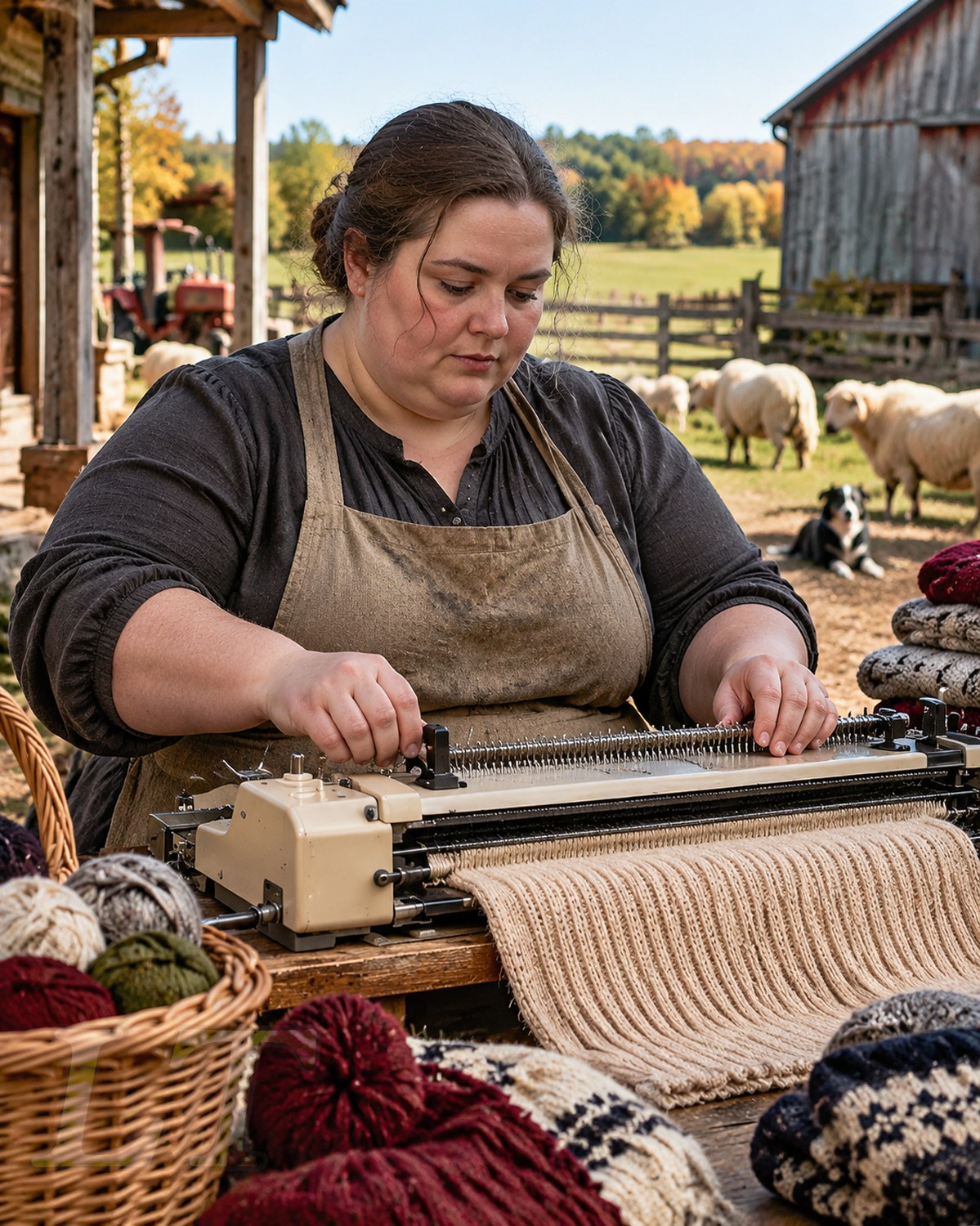
"Put that plate down, Miss Clara," the stranger said. "It was never supposed to leave Pennsylvania."
Tobias stepped between us before I could move.
"Who are you?"
The man standing in the doorway was thin, stooped, and dressed in a dark traveling coat that hung loosely from his shoulders. His beard was nearly white. One side of his face bore a long, pale scar extending from his temple to his jaw.
He looked like a man who had spent several years being poorly treated by the world.
But it was his voice that unsettled me.
I had heard it before.
Not recently.
Not even within the past several years.
Yet something about the way he pronounced my name brought back the noise of machinery, the smell of hot oil, and a narrow office at the Germantown hosiery mill.
"Close the door," he said. "Please."
Tobias did not move.
"You can begin by telling us your name."
The stranger looked past him toward me.
"She knows."
I stared at his face.
The scar had changed him. So had the beard and the deep lines around his eyes.
But beneath those changes was something familiar.
A way of holding his head.
A slight unevenness in his shoulders.
And then I saw his left hand.
Two fingers were missing.
I remembered those fingers.
I remembered the accident.
I remembered the day the entire finishing room had stopped working because a mechanic had been carried out of the mill with his hand wrapped in blood-soaked cloth.
"Samuel?" I whispered.
The man closed his eyes.
"Hello, Clara."
For several seconds, I could not speak.
Samuel Bell had been the chief mechanic at the Germantown hosiery mill.
He was the man who taught me how to replace damaged needles without ruining the cylinder.
He had shown me how to listen for uneven tension and how to recognize a worn gear before it failed.
When I was nineteen, he had told the forewoman that I was capable of operating a machine.
Without him, I might have spent my entire working life closing stocking toes by hand.
And six years earlier, I had been told that Samuel Bell was dead.
Not missing.
Not retired.
Dead.
There had been a notice posted outside the mill office.
A short announcement.
A few lines about an unfortunate illness following his departure from employment.
I remembered standing beside that notice with several other women.
I remembered feeling that the world had lost one of the few men who believed women could understand machinery.
Now he stood in Tobias Reed's kitchen.
Alive.
"Samuel Bell," I said slowly. "They told us you died."
His expression changed.
"I know."
Tobias looked from him to me.
"You know this man?"
"I worked with him."
"Then why did you look as though you'd seen a ghost?"
"Because I thought I had."
Samuel took one step inside.
His boots were muddy. His coat was wet around the hem, and he trembled slightly despite the warmth of the kitchen.
"May I come in?"
Tobias studied him.
Then he closed the door.
"You can warm yourself by the stove. But you'll answer my questions before you go anywhere near Miss Clara's machine."
Samuel nodded.
"Fair enough."
He removed his hat.
His hair was almost entirely gray.
I remembered it being dark brown.
Six years had aged him more than twenty should have.
I placed the brass identification plate on the table.
"How did you find me?"
Samuel looked at it.
"That depends on who else has found you."
I felt a chill.
"What does that mean?"
He turned toward Tobias.
"Has a man named Mercer been asking questions?"
Tobias's face hardened.
"Yes."
"Has he seen the machine?"
"No."
"Has anyone from Boston contacted you?"
"Not yet," I said.
Samuel released a long breath.
"Then there's still time."
"Time for what?"
He looked at the knitting machine.
The unfinished stocking hung beneath the cylinder.
For a moment, his expression softened.
"You bought one."
"Yes."
"I always thought you would."
I almost smiled.
But the brass plate lay between us, and I could not forget the threatening note that had arrived with it.
"Samuel, I need answers."
"I know."
"Then start with why everyone believed you were dead."
He pulled out a chair.
Tobias remained standing.
Samuel noticed.
"I don't blame you for being suspicious, Mr. Reed. If I found a stranger at my door claiming to have returned from the grave, I'd be suspicious too."
"Good," Tobias said. "Then we understand each other."
Samuel warmed his hands near the stove.
When he finally spoke, his voice was quiet.
"I left the Germantown mill because I discovered someone had been changing the machinery records."
My eyes moved toward the brass plate.
"Who?"
Samuel hesitated.
"Edwin Vale."
The name struck me like a hand against the chest.
I remembered Vale standing in the mill office.
His immaculate collar.
His polished boots.
His habit of speaking to workers as though their ignorance were a personal inconvenience.
He had managed inventory records, equipment purchases, and certain correspondence with outside manufacturers.
I had never trusted him.
But distrust was not proof of wrongdoing.
"What was he changing?" I asked.
"Ownership records. Repair records. Transfer documents."
"Why?"
"Because machines were disappearing from the books without disappearing from the factory."
Tobias frowned.
"How does that work?"
Samuel leaned forward.
"A machine might be purchased under one account, repaired under another, and recorded as transferred to a third party. Sometimes the same machine appeared under two different inventory numbers."
"That sounds like poor bookkeeping," Tobias said.
"At first, that's what I thought."
Samuel looked at me.
"Then I found machines that had been sold twice."
The kitchen fell silent.
Outside, the wind rattled the window.
I glanced at my machine.
Ninety dollars.
Every penny I possessed.
"What happened when you reported it?" I asked.
Samuel gave a humorless laugh.
"I made the mistake of reporting it to the man responsible."
"Vale?"
He nodded.
"He told me I had misunderstood the records. When I refused to accept that, he accused me of stealing tools."
Tobias crossed his arms.
"And the mill believed him?"
"The mill believed the books."
Samuel looked down at his damaged hand.
"I'd worked there nearly twenty years. That didn't matter."
I knew how easily a worker could lose everything.
One accusation.
One signature.
One supervisor willing to say the wrong thing.
A woman could be dismissed before she had time to defend herself.
A man could lose his position, his reputation, and the chance of employment elsewhere.
"Why did they say you died?" I asked.
Samuel rubbed his forehead.
"After I left, I went to Philadelphia to find work. I became ill. Badly ill. Someone sent word back to Germantown that I wasn't expected to survive."
"But you did."
"Yes."
"Then why didn't you return?"
His eyes darkened.
"Because by the time I recovered, I learned that Vale had made certain I would never work in another respectable mill."
I thought of the women who had been dismissed after asking about missing wages.
The way rumors followed them.
The way employers spoke to one another.
"Did you try to clear your name?"
"For years."
"And?"
He looked at me.
"Nobody wanted to hear from a disgraced mechanic."
Tobias pulled out the chair opposite him.
"Then why come here now?"
Samuel glanced toward the brass plate.
"Because someone has started using the same records again."
I picked it up.
The metal was cold.
On the front were the words GERMANTOWN HOSIERY MILL and the number 47.
On the back, beneath Samuel's scratched name, were four words written in black ink.
KEEP THE ORIGINAL RECORDS.
I read them aloud.
Samuel nodded.
"I wrote that."
"Why?"
"Because I knew Vale would try to destroy anything that contradicted his books."
"Then why send this to me?"
"I didn't."
I looked up.
"What?"
Samuel held my gaze.
"I didn't send you that plate."
For a moment, neither Tobias nor I spoke.
"The boy said a man at Cobb's store paid him to deliver it," I said.
Samuel shook his head.
"I came directly from the stage stop. I haven't been inside Cobb's store."
Tobias leaned forward.
"Then who sent it?"
Samuel looked troubled.
"I don't know."
I placed the plate on the table.
The threatening note lay beside it.
Two envelopes.
One warning.
One piece of evidence.
Both delivered together.
And now the man whose name appeared on the evidence claimed he had sent neither.
"Someone knew you were coming," I said.
Samuel's face tightened.
"Perhaps."
"Someone knew where I lived."
"Yes."
"And someone knew about the old mill records."
He said nothing.
Tobias rose.
"I'll check the yard."
Samuel caught his sleeve.
"Don't go outside alone."
Tobias looked at his hand.
Samuel released him.
"I'm sorry. But if Mercer is involved, you should be careful."
Tobias's expression became dangerous.
"Mr. Bell, this is my farm. I don't intend to hide inside my own kitchen."
He took the lantern from its hook.
I watched him open the door.
Cold air swept into the room.
He stepped outside.
Samuel waited until the door closed.
Then he turned toward me.
"Clara, where did you buy that machine?"
I told him the dealer's name.
He frowned.
"Did you receive a bill of sale?"
"Yes."
"Do you still have it?"
"Of course."
"Good."
His relief was immediate.
Too immediate.
I studied him.
"Samuel, what aren't you telling me?"
He looked toward the machine.
"Did the dealer explain where it came from?"
"He said it was lawful secondhand equipment."
"Did he name the previous owner?"
"No."
Samuel closed his eyes.
I felt my patience thinning.
"Please don't make me drag every answer out of you."
He opened his eyes.
"The machine you bought may have passed through a warehouse that Vale used to conceal disputed equipment."
I stared at him.
"Disputed?"
"Machines whose ownership records had been altered."
"But I paid for it."
"I believe you."
"Then it belongs to me."
"Morally, perhaps. Legally, we need to establish the chain of ownership."
I looked at the machine.
I had never considered that a piece of equipment could carry another person's dishonesty into the hands of an innocent buyer.
I had examined the needles.
The gears.
The cylinder.
The crank.
I had checked everything except the history hidden in the paperwork.
"Are you telling me I bought stolen property?"
"No."
"Then what are you telling me?"
"That someone may try to make it appear so."
The words settled heavily between us.
I thought of Mercer examining my stockings.
His questions about Pennsylvania.
His warning that small producers often discovered making goods was easier than selling them.
I had assumed he was protecting the interests of local wool dealers.
Perhaps he was.
But perhaps there was another reason he wanted me to abandon the business before it began.
"How does Mercer know Vale?" I asked.
Samuel looked surprised.
"Has Mercer mentioned him?"
"No."
"Then why do you ask?"
"Because Mercer knew where my machine came from."
Samuel was silent.
Then he reached into his coat.
He removed a small notebook wrapped in oilcloth.
Its corners were worn.
The binding had been repaired with thread.
He placed it on the table.
"This is why I came."
I stared at it.
"What is it?"
"A record of the machines I serviced during my last years at Germantown."
He opened the notebook.
The pages were filled with numbers, dates, initials, and mechanical observations.
I recognized his handwriting.
He had always written small, precise letters.
"Vale controlled the official books," Samuel said. "But he couldn't control what I remembered. So I began keeping my own records."
He turned several pages.
"Machine forty-seven."
My heart quickened.
He pointed to an entry.
There was the number.
47.
Beside it was a manufacturer's serial number.
Not 2186.
A different number entirely.
I read it twice.
"Then this plate doesn't belong to my machine."
"Not originally."
"Originally?"
Samuel nodded.
"The plate was removed from another machine."
"Why?"
"That's what I need to find out."
I felt a sudden, sharp anger.
Someone had taken an identification plate from one machine and used its number in connection with another.
Someone had created confusion where none should have existed.
And now that confusion was following me into Vermont.
"Who owned machine forty-seven?" I asked.
Samuel turned the page.
"The mill purchased it through an equipment broker. Later, the records showed it had been transferred."
"To whom?"
"That's the problem."
He pointed to a line where the ink had faded.
"The name was altered."
I leaned closer.
The original writing had been scraped away.
A new name had been written over it.
Edwin P. Vale.
I stared at the page.
"He's listed as the owner?"
"According to the altered entry."
"But you knew that wasn't true."
"I suspected it."
"Who was the real owner?"
Samuel shook his head.
"I never found the original transfer document."
I sat back.
For the first time, I understood the scale of the trouble.
This was not simply a question of whether I had purchased a knitting machine.
It was a question of whether someone had spent years manipulating ownership records.
And whether my machine had somehow become connected to those manipulations.
The door opened.
Tobias returned, carrying the lantern.
"Nothing in the yard," he said. "No tracks except the boy's and ours."
He looked at Samuel.
"Now tell me why a man from Pennsylvania has come all this way to frighten my hired woman."
Samuel stood.
"Because I believe someone intends to take her machine."
Tobias set the lantern down.
"Let him try."
I looked at him.
"Mr. Reed."
"No. I've heard enough."
He pointed toward the machine.
"That thing belongs to Clara. She paid for it. She's worked on it. And if someone wants to claim otherwise, he can come here and explain himself."
Samuel's expression softened.
"I wish it were that simple."
Tobias leaned forward.
"Then perhaps you ought to help make it simple."
For a moment, the two men stared at each other.
Then Samuel nodded.
"I intend to."
We sat together until the fire burned low.
Samuel explained what he knew.
Vale had begun handling machinery accounts after several older managers retired.
He had developed relationships with equipment brokers and manufacturers.
He had acquired influence over purchasing decisions.
And when workers questioned missing records, he had accused them of incompetence.
Samuel had kept copies of certain entries.
But not enough to prove everything.
After his dismissal, he had spent years trying to recover his reputation.
He had written letters.
He had contacted former employees.
He had searched for records.
Most doors had remained closed.
Then, several weeks earlier, he had heard that a woman from the Germantown mill had purchased a circular knitting machine and traveled north.
At first, he had thought little of it.
Then he learned her name.
Clara.
He remembered me.
He remembered my interest in machinery.
And he remembered that Vale had once complained about a young woman who asked too many questions.
"I was afraid you might have bought equipment connected to the old records," Samuel said.
"Why didn't you write?"
"I did."
I stared at him.
"I received nothing."
His expression darkened.
"I sent a letter to the church that helped arrange your employment."
"When?"
"Three weeks ago."
I shook my head.
"No letter reached me."
Tobias frowned.
"Mail sometimes goes astray."
"Sometimes," Samuel agreed.
But his tone suggested he did not believe that was what had happened.
I thought of the envelopes delivered that evening.
Someone knew my name.
Someone knew where I lived.
Someone knew about the machine.
And someone had sent a warning designed to frighten me away from the business I had barely begun.
I looked at Samuel.
"Why would Vale care what I do here? I'm one woman with one machine."
Samuel hesitated.
"Because you may be able to prove something he doesn't want proved."
"What?"
He looked at the machine again.
"That the equipment records were altered."
I shook my head.
"I don't have those records."
"No. But you have something else."
"What?"
"A machine with a history."
I was beginning to dislike that answer.
I wanted facts.
Numbers.
Names.
Documents.
Things I could place on a table and examine.
I did not want hints and suspicions.
"Samuel," I said firmly, "if you know something specific, tell me."
He studied me.
Then he reached into his coat again.
This time he removed a folded sheet of paper.
It was badly worn.
The edges had been repaired with narrow strips of cloth.
He unfolded it carefully.
"This is a partial inventory list from the year I was dismissed."
I leaned forward.
There were several machine numbers.
Dates.
Initials.
And beside one entry, a notation written in red ink.
47.
Below it was a second number.
2186.
I felt my breath catch.
The serial number of my machine.
"Where did you get this?" I whispered.
"I copied it before I left."
"Why are both numbers together?"
Samuel looked at me.
"That's what I came to ask you."
I stared at the paper.
The machine stood only a few feet away.
For months, I had believed its greatest danger was mechanical failure.
A bent needle.
A broken crank.
A worn gear.
Now I was beginning to understand that its greatest danger might be a piece of paper written years before I bought it.
Tobias leaned over the table.
"Does this prove anything?"
"Not yet," Samuel said.
"But it means the machine was recorded under an inventory designation that may have belonged to another machine."
I looked at him.
"Why would anyone do that?"
Samuel's expression grew grim.
"To make one machine disappear while another appeared to remain."
The fire cracked sharply.
I looked toward the window.
Beyond the glass, the night was black.
The farmhouse suddenly felt much farther from the rest of the world than it had that morning.
I folded my hands.
"Then we'll find the original records."
Samuel shook his head.
"That won't be easy."
"Nothing worth doing has been easy."
He looked at me for a long moment.
Then he smiled faintly.
"You haven't changed."
"I hope I have. I'd hate to think twelve years of work taught me nothing."
He laughed quietly.
It was the first warm sound I had heard from him all evening.
Tobias rose to add another log to the stove.
"You can sleep in the barn loft tonight, Mr. Bell. There's clean straw and spare blankets."
Samuel nodded gratefully.
"Thank you."
"And tomorrow," Tobias continued, "you can help us figure out whether that machine is going to cause more trouble than it's worth."
I turned toward him.
"Mr. Reed."
He raised a hand.
"I'm not saying we get rid of it."
"Good."
"I'm saying I'd prefer to know what sort of trouble we're facing."
"So would I."
Samuel gathered his notebook.
But before he could close it, I noticed something.
A small notation near the bottom of the page.
Two initials.
S.M.
I pointed to them.
"Who is that?"
Samuel looked down.
His face changed.
"Where?"
"Here."
He stared at the initials.
Then he slowly closed the notebook.
"That's not important."
I felt a sudden certainty that it was very important indeed.
"Samuel."
He looked away.
"Clara, there are some things I need to confirm before I tell you more."
I studied him.
The man who had taught me how to repair machinery was now withholding information.
Perhaps he believed he was protecting me.
Perhaps he feared being wrong.
Or perhaps he knew something that would make the entire situation worse.
I did not press him.
Not yet.
He was exhausted.
His hands trembled.
And whatever had happened to him during the past six years had left scars that were not all visible.
Tobias showed him to the barn.
I remained in the kitchen.
The machine stood silent.
I touched the iron housing.
Then I opened my notebook and began writing down everything Samuel had told us.
Edwin Vale.
Machine forty-seven.
Serial number 2186.
Altered inventory records.
Missing transfer documents.
Silas Mercer.
A letter that never arrived.
I drew lines between the names.
Some connections were clear.
Others were only suspicions.
But one fact troubled me more than the rest.
The brass plate had arrived before Samuel.
Someone had wanted me to see it.
Someone had wanted me to know that the number forty-seven mattered.
And someone had wanted me frightened.
I examined the plate again.
The scratches on its back were deep.
Samuel's name had been carved into the brass.
Below it, the four handwritten words remained.
KEEP THE ORIGINAL RECORDS.
I turned the plate beneath the lamplight.
Near the bent corner was another mark.
Not a letter.
Not a number.
A tiny symbol.
Two intersecting lines inside a circle.
I recognized it.
It was the mark used by the mill's inspection department when equipment had been removed from ordinary production.
I remembered seeing it on machinery waiting for repair or disposal.
But this plate carried no date.
No repair notation.
Only the symbol.
I wondered whether Samuel had noticed it.
Then I remembered something else.
At the mill, equipment marked for disposal was supposed to be recorded in a separate register.
A register kept in the office.
A register Edwin Vale had controlled.
I set down the plate.
The answer might be in Pennsylvania.
But I was in Vermont.
And I had no money to travel back.
I looked toward the stairs.
My trunks were upstairs.
My papers were inside them.
Perhaps the dealer's receipt contained more than I remembered.
I took the lamp and climbed to my room.
The floorboards creaked beneath my boots.
I opened the trunk.
Beneath folded clothing lay the packet of papers I had carried from Pennsylvania.
I untied the string.
There was my bill of sale.
The dealer's receipt.
A letter from the church.
Several old wage records.
And a small envelope I had not opened since leaving Germantown.
I recognized the handwriting on the front.
It belonged to the dealer who sold me the machine.
I had forgotten about it.
At the time, he had told me to keep the envelope with my purchase papers.
I had assumed it contained another receipt.
Now I wondered why he had sealed it separately.
I opened it carefully.
Inside was a single folded sheet.
The paper bore the dealer's signature.
Beneath it was a statement identifying the machine by its manufacturer's serial number.
2186.
My hands tightened.
Then I read the next line.
The dealer had purchased the machine from a private seller.
The seller's name was written clearly.
I stared at it.
I read it again.
Then I lowered the paper.
The name was not Edwin Vale.
It was not Samuel Bell.
It was someone I had known at the mill.
Someone who had disappeared shortly before Samuel's dismissal.
Someone whose absence had never been properly explained.
I sat on the edge of the bed.
For several seconds, I could hear nothing but the wind.
Then footsteps sounded on the stairs.
Slow.
Careful.
I folded the paper.
The footsteps stopped outside my door.
"Clara?"
It was Samuel.
His voice sounded strained.
"Yes?"
"I need to tell you something."
I looked toward the door.
"What is it?"
He did not answer immediately.
Then he said, "I wasn't entirely truthful downstairs."
My heart began to pound.
"About what?"
"About why I came."
I stood.
The paper trembled slightly in my hand.
"Samuel, what are you saying?"
His voice dropped almost to a whisper.
"Someone followed me from Pennsylvania."
I stared at the door.
"Who?"
A floorboard creaked.
Then another voice spoke from the hallway.
A voice I had not heard in years.
"That would be me, Miss Clara."
The doorknob began to turn.






Comments 0