"Ruth Whitaker," Samuel whispered.
The woman standing in the kitchen doorway did not answer him.
She looked smaller than I remembered. Her dark hair had turned almost entirely gray, and her face was drawn so tightly over her bones that the spectacles resting on her nose seemed too large. She wore a black wool coat with one button missing and carried a narrow traveling bag.
But I knew those eyes.
I had seen them watching the mill floor from behind the glass partition of the Germantown office.
I had seen them lower whenever Edwin Vale entered a room.
And once, years ago, I had seen them fill with tears as she quietly returned three cents to a girl whose wages had been wrongly reduced.
"Ruth," I said.
She looked at me.
"I'm sorry, Clara."
Tobias stepped forward.
"Miss Warren?"
Her mouth trembled.
"That was the name I gave you."
"You were living in my house."
"Yes."
"And now you've come back through the kitchen passage without so much as knocking?"
She glanced toward the rear door.
"It was unlatched."
Tobias's expression hardened.
"That's something I'll be seeing to."
I looked down at the letter in my hand.
The final sentence seemed to burn against my fingers.
The person who knows where the second record is hidden has been living under Mr. Reed's roof.
Ruth followed my gaze.
"You found the tin box."
"Yes."
"All of it?"
"The notebook. The letters. Your warning."
She closed her eyes.
"I hoped there would be more time."
Margaret rose from her chair.
"Ruth, where have you been?"
Ruth looked at her for a long moment.
Then she said, "Hiding from men who know how to make a woman disappear without ever laying a hand on her."
Nobody spoke.
Eleanor Price stood beside the stove.
Ruth noticed her.
Her face changed.
"Eleanor."
Eleanor took one uncertain step forward.
"You told me you were going west."
"I meant to."
"You gave me the key and said you would write."
"I know."
"You never did."
Ruth lowered her head.
"I couldn't."
Eleanor looked as though she might embrace her or strike her.
Instead, she sat down heavily.
I had never seen so many people in one room who knew one another's histories and yet understood so little of what had happened between them.
Samuel moved toward Ruth.
"Did you write the anonymous letters?"
She nodded.
"Some of them."
"Which ones?"
"The letter that brought Mrs. Price here. The one that directed her to Reed Hill."
I thought of the threatening messages.
"And the warnings sent to me?"
Ruth shook her head.
"No."
"The brass plate?"
"No."
"The false cylinder?"
Her eyes widened.
"What cylinder?"
I watched her carefully.
She seemed genuinely confused.
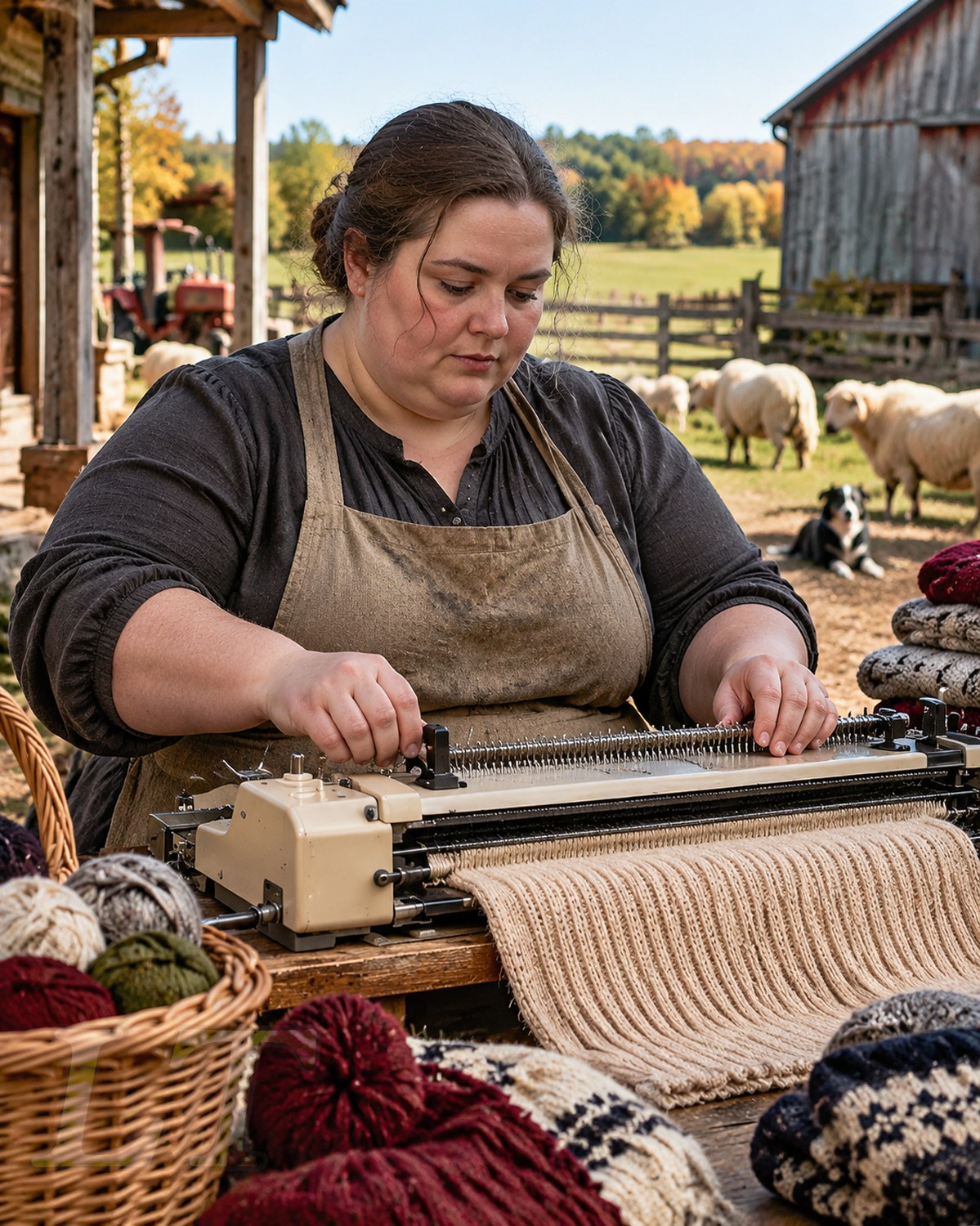
I explained the ticking object that had been placed beside my knitting machine, the empty compartment beneath its base, and the wooden box found in the barn.
As I spoke, Ruth grew paler.
When I mentioned the initials burned into the wooden box, she caught the back of a chair.
"Edwin's box?"
Samuel nodded.
"Yes."
Ruth looked at the table.
"Then someone has begun moving the evidence."
"Who?" I asked.
She did not answer immediately.
Tobias pulled out a chair.
"Sit down, Miss Whitaker."
She obeyed.
He poured water into a cup and placed it before her.
For a moment, she simply held the cup between her hands.
Then she looked up.
"I came because I heard Mr. Vale had found Clara."
"How?" I asked.
"A letter reached me at the boardinghouse where I've been staying. It said a complaint had been filed concerning machine 2186."
"Who sent it?"
Ruth shook her head.
"There was no signature."
I felt a familiar frustration.
Unsigned letters.
Missing records.
False names.
Everywhere we turned, someone seemed determined to speak without being held responsible for their words.
"Ruth," I said, "you wrote that you knew where the second record was hidden."
She looked at me.
"Yes."
"Then tell us."
Her fingers tightened around the cup.
"First I must know whether the original notebook is safe."
Samuel placed it before her.
She opened it.
Her eyes moved quickly over the pages.
Then she stopped at the torn binding.
"Someone removed a sheet."
"We found it that way," I said.
Ruth examined the ragged edge.
Her expression became troubled.
"That page contained the instructions."
"What instructions?"
"How to identify the account that received the stolen payments."
Samuel leaned forward.
"Account forty-seven?"
Ruth nodded.
"But forty-seven wasn't a bank account in the ordinary sense. It was an internal account used to move money between machinery purchases, repair charges, and brokerage fees."
I thought of the brass plate.
"Then why was forty-seven stamped on a machine?"
"Because the number served two purposes."
She looked toward my knitting machine.
"The physical plate identified a piece of equipment within the mill. But Vale used the same number in a separate ledger to conceal payments. Anyone examining one set of records would assume the entries referred only to machinery."
Samuel rubbed his forehead.
"That's why the figures never balanced."
Ruth nodded.
"Exactly."
Margaret moved closer.
"Did the owners know?"
Ruth hesitated.
"One of them suspected something."
"Which one?"
"Mr. Ashcroft."
I remembered the name.
Henry Ashcroft had been one of the Germantown mill's senior partners.
He rarely visited the workrooms.
When he did, the supervisors hurried to straighten their coats and the girls were ordered not to speak unless addressed.
"What happened to him?" I asked.
"He became ill. His son took over much of the business."
Samuel frowned.
"And the son trusted Vale."
"Yes."
Ruth looked at Eleanor.
"That was when the machinery transactions became more frequent."
Eleanor's face hardened.
"And my money disappeared."
Ruth lowered her eyes.
"Yes."
I watched her.
There was something in the way she said it that troubled me.
Not merely sorrow.
Guilt.
"Ruth," I asked quietly, "did you help Vale?"
She looked at me.
The room became very still.
At last she nodded.
"I entered the figures."
Eleanor rose.
"You what?"
Ruth did not look away.
"I entered the figures he gave me."
"You knew they were false?"
"Not at first."
Eleanor stepped closer.
"And later?"
Ruth's voice broke.
"Later, yes."
The silence was terrible.
I looked at the woman who had once returned three cents to a frightened mill girl.
The woman who had risked everything to preserve records.
The woman whose hidden notebook might save my machine.
And I understood that she had not always been brave.
Perhaps none of us had.
"What did you do when you knew?" I asked.
Ruth looked down at her hands.
"I copied the entries. I tried to warn Mr. Ashcroft. I wrote to the supplier."
"Why didn't you go to the police?"
She gave a bitter little laugh.
"With what? Copies of records I had helped prepare? Against a man who controlled the originals and could accuse me of theft?"
Eleanor turned away.
Ruth continued.
"Vale told me that if the accounts were questioned, he would say I had made the entries without authorization."
Samuel nodded slowly.
"He did the same to me."
Ruth looked at him.
"I know."
"You knew?"
"I heard him planning it."
Samuel's face changed.
"Then why didn't you warn me?"
Ruth began to cry.
Not loudly.
There was no dramatic collapse.
Only tears sliding down her cheeks as she stared at the table.
"Because I was afraid."
Samuel stood motionless.
Then he sat down.
For a long time, nobody spoke.
I thought of the mill.
Of the women who worked through illness because they feared losing their wages.
Of girls who accepted unfair deductions because the alternative was dismissal.
Fear had been the mill's most reliable employee.
It worked without wages.
It never took a holiday.
And it kept people silent long after they had escaped the building.
At last Tobias spoke.
"Well, you're here now."
Ruth looked up.
He folded his arms.
"That doesn't put right what happened. But if you've come to tell the truth, we'd best hear it."
She nodded.
I looked at Eleanor.
Her face remained hard.
But she sat down again.
Ruth drew a breath.
"The second record is not in the farmhouse."
I leaned forward.
"Where is it?"
"At Josiah Pratt's mill."
I stared at her.
"Josiah's mill?"
"Yes."
Tobias frowned.
"How would it get there?"
Ruth looked at him.
"Last spring, while I was staying here, I asked whether there was an old mill nearby where papers could be stored safely."
Tobias thought for a moment.
"I remember. You said you were looking for a dry place."
"Yes."
"And I told you about Pratt's mill."
She nodded.
"I visited it while Mr. Pratt was away."
I felt uneasy.
"Did you enter without permission?"
"No. His nephew was repairing the wheel. He let me look around."
"Then what did you hide?"
"A sealed packet of copied records."
"Where?"
Ruth looked toward the window.
"In a compartment beneath the old weighing platform."
Samuel straightened.
"The platform beside the carding room?"
"Yes."
I remembered it.
A broad wooden platform set into the floor.
Josiah had once used it to weigh sacks of wool before processing them.
It stood near the entrance to the carding room, where dust gathered beneath the beams.
"Why there?" I asked.
"Because the platform had a loose board, and the space beneath it was dry."
Tobias rubbed his jaw.
"Josiah's been working around that mill for years."
"He had no reason to lift the board."
Samuel looked at me.
"We should go."
I nodded.
"At once."
But Tobias raised a hand.
"Not all of us."
I turned toward him.
"Why?"
"Because somebody's been watching this farm. Somebody attacked Mrs. Price. And somebody put a false cylinder in our kitchen."
He looked at Ruth.
"If that packet is important, we shouldn't announce our intentions by taking a wagon full of people to Pratt's mill."
Samuel nodded.
"He's right."
I wanted to protest.
Instead, I considered the problem.
We needed the records.
But we also needed to protect the people who knew about them.
"Then who goes?" I asked.
Tobias looked at me.
"You and I."
Samuel leaned forward.
"I know the mill machinery."
"And you're exhausted," Tobias said.
Samuel opened his mouth.
Then closed it.
Tobias continued.
"Miss Whitaker can tell us exactly where to look. The rest of you stay here and keep the doors locked."
Margaret nodded.
"I'll watch the house."
Eleanor looked troubled.
"Shouldn't we tell the constable?"
"We will," Tobias said. "But first we need to know whether the packet is still there."
Ruth looked at me.
"Clara, there's something else."
I turned.
"What?"
She hesitated.
"The packet is wrapped in oilcloth. But it isn't the only thing I left at the mill."
My heart quickened.
"What else?"
She looked toward Samuel.
"A letter."
"To whom?"
"To the person who was supposed to receive the records if I failed to return."
I stared at her.
"Who?"
Ruth lowered her eyes.
"I don't know whether that person is still alive."
Samuel's face tightened.
"Ruth, stop speaking in riddles."
She looked at him.
"Samuel, I wrote the letter to Henry Ashcroft."
The old mill partner.
The man who had suspected the accounts.
The man whose illness had allowed Vale to tighten his control.
Samuel stared at her.
"Why?"
"Because I believed he was the only owner who might listen."
"Did he receive it?"
"No."
"Then why leave it at Pratt's mill?"
"Because I hoped one day someone could place it in his hands."
I thought of the distance between Vermont and Pennsylvania.
A letter hidden beneath a weighing platform seemed an uncertain way to reach a sick man hundreds of miles away.
But perhaps Ruth had been desperate.
Perhaps she had not known what else to do.
"Is the letter sealed?" I asked.
"Yes."
"Then we'll bring it back."
Ruth nodded.
"And Clara?"
"Yes?"
"Do not open it unless you must."
I looked at her.
"Why?"
She hesitated.
"Because I wrote down something I had never dared say aloud."
Before I could ask more, Tobias went to prepare the wagon.
I gathered my shawl.
Margaret brought a basket with bread and cheese.
Samuel checked the road from the window.
Ruth remained beside the table, her hands folded tightly.
As I passed her, she caught my sleeve.
"Clara."
I stopped.
She looked at me with such sorrow that I felt my anger soften.
"I never meant for you to become involved in this."
I looked toward my machine.
"Then why did you leave a letter for me?"
"Because I knew you might be the one person who would refuse to surrender it."
I stared at her.
She continued.
"At Germantown, you once argued with Vale over a deduction of six cents."
I remembered.
A young girl named Annie had been charged for broken needles.
The needles had been defective.
I had argued until Vale threatened to dismiss me.
I lost the argument.
Annie lost the money.
But Ruth had been watching.
"You remember that?" I asked.
She nodded.
"I remember thinking that you were either very brave or very foolish."
I smiled faintly.
"Perhaps both."
Ruth touched my hand.
"Perhaps."
Then she let me go.
We left the farmhouse shortly after noon.
The sky was gray.
Snow lay in patches along the road.
The horse moved carefully over frozen ruts.
Tobias drove in silence.
I sat beside him, holding the lantern between my boots.
After a while, I said, "You should have told me about Ruth."
He looked at me.
"I didn't know she was Ruth Whitaker."
"I know."
"But you still think I should have mentioned her."
"Perhaps."
He nodded slowly.
"Fair enough."
I looked toward the fields.
The sheep on Reed Hill had become familiar to me.
I knew which ewe limped when the ground was hard.
Which lamb had a habit of slipping through the lower rails.
Which old ram disliked anyone who carried a bucket.
The farm had begun to feel like a place where I belonged.
Yet there were still parts of Tobias's life I did not know.
A woman had lived in my room.
She had kept his accounts.
She had disappeared.
And he had never thought to tell me.
I felt foolish for being hurt.
He had not owed me every detail of his past.
But I had begun to trust him.
And trust made silence more noticeable.
"Clara," he said quietly.
I turned.
"I didn't keep it from you because I wanted to."
"I know."
"I thought she was a sick woman who needed a place to rest."
"Yes."
"And when she left, I thought she wanted to be forgotten."
I looked at him.
"Did you ever wonder what happened to her?"
"Of course."
"Then why didn't you search?"
He was silent for a moment.
Then he said, "Because she asked me not to."
I thought about that.
Tobias Reed had spent years respecting other people's wishes even when those wishes left him with questions.
Perhaps that was one reason he had allowed me to bring a machine into his kitchen.
He did not always understand my plans.
But he had never tried to own them.
I looked at his hands on the reins.
They were rough.
Red from cold.
Marked by years of work.
"Mr. Reed," I said, "I don't think you did anything wrong."
He gave a small laugh.
"That's generous."
"I'm serious."
He looked at me.
For a moment, the expression in his eyes made me forget the cold.
Then he turned back toward the road.
"We'd better get those papers before the snow comes."
I nodded.
But I felt warmer than I had a moment before.
We reached Josiah Pratt's mill in the middle of the afternoon.
The building stood beside the stream, its weathered boards dark against the snow.
Smoke rose from the small chimney.
The waterwheel moved slowly.
I could hear the machinery inside.
For the first time since arriving in Vermont, the old mill sounded alive.
Josiah opened the door before we reached it.
"Well, if it isn't my two favorite troublemakers."
Tobias smiled.
"How's the spinning frame?"
"Running."
My heart leaped.
"Truly?"
Josiah stepped aside.
"Come see."
We entered.
The carding room smelled of wool and oil.
The repaired belt moved steadily.
A spindle turned.
And on a wooden reel, pale yarn gathered in neat loops.
I stared.
"Josiah."
He smiled proudly.
"Not bad for a machine everybody said was finished."
I touched the yarn.
It was slightly uneven.
A little coarse.
But strong.
Warm.
Useful.
I held it between my fingers.
For a moment, the legal troubles seemed far away.
This was what I had come to Vermont to do.
Turn wool into something worth more than the price a dealer offered.
Give local women work.
Help Tobias save his farm.
I looked at Josiah.
"It's beautiful."
He laughed.
"Well, I wouldn't go that far."
"I would."
Tobias stood beside me.
He examined the yarn.
"Can you make more?"
Josiah nodded.
"If the belt holds and we keep the frame fed."
I looked at him.
"How much?"
"Enough for a trial run. After that, we'll see."
I felt hope rise.
Then I remembered why we had come.
"Josiah, there's something we need to ask."
He looked at me.
"What?"
"Did a woman visit your mill last spring?"
He frowned.
"Plenty of women have visited."
"Small. Dark hair. Spectacles. Quiet voice."
His expression changed.
"Ruth Warren?"
Tobias nodded.
"Yes."
Josiah rubbed his chin.
"She came once. Asked about the weighing platform."
My heart quickened.
"Did she leave anything?"
"Not that I know of."
I looked toward the old platform.
It stood near the wall, half covered by empty sacks.
"May we examine it?"
Josiah looked puzzled.
"Why?"
Tobias stepped closer.
"There's something important we may need to recover."
Josiah studied us.
Then nodded.
"All right."
We moved the sacks.
The platform was broad and heavy.
Its boards had been worn smooth by years of use.
Tobias knelt.
He examined the edges.
I held the lantern.
Josiah watched.
"There used to be a loose board near the back," he said.
My heart began to pound.
"Where?"
He pointed.
"There."
Tobias pressed the board.
It shifted slightly.
He worked the tip of a screwdriver beneath it.
The wood lifted.
Beneath was a narrow space.
Dark.
Dry.
Empty.
I stared.
"No."
Tobias reached inside.
His hand moved along the bottom.
Nothing.
He withdrew it.
"There's nothing here."
I felt my hope collapse.
Ruth had been certain.
She had hidden the packet.
She had left the letter.
But someone had reached the compartment before us.
I looked at Josiah.
"Has anyone else been near this platform?"
He frowned.
"Not that I know of."
"Anyone unusual?"
He thought.
Then his expression changed.
"A man came yesterday."
Tobias straightened.
"What man?"
"Well dressed. Dark coat. Said he was looking for a parcel."
My stomach tightened.
"Did he give his name?"
Josiah shook his head.
"He said he was acting for a business concern in Boston."
Tobias swore.
"Did you let him inside?"
"Only for a moment."
"Did he come near the platform?"
Josiah looked troubled.
"I was working on the spinning frame. He may have."
I felt cold.
Boston.
The same city named on Vale's complaint.
The same city associated with Charles Benton.
The same city from which a representative would later arrive to challenge my machine.
"Did he take anything?" I asked.
Josiah shook his head.
"Not that I saw."
Tobias looked at the empty compartment.
"Then he may have found it."
I stared at the dark space.
The evidence had been within reach.
And we had arrived too late.
I felt anger rise.
Not at Josiah.
Not at Tobias.
At the man who had spent six years making sure honest people never possessed the papers that could protect them.
I stood.
"Then we need to find him."
Tobias looked at me.
"Clara—"
"No."
My voice was sharper than I intended.
I took a breath.
"We cannot keep arriving one day after someone else."
Josiah looked between us.
"What's all this about?"
Tobias explained enough for him to understand.
The old machinery accounts.
The missing records.
The legal claim.
The danger to my machine.
Josiah listened without interrupting.
When Tobias finished, the old miller looked toward the spinning frame.
Then he said, "Well, I'll tell you one thing."
We turned.
"Whoever came here yesterday wasn't interested in wool."
"Why?" I asked.
Josiah frowned.
"Because he didn't ask about the mill's work. Didn't ask about prices. Didn't even look at the yarn."
He pointed toward the weighing platform.
"He asked whether the floor had ever been repaired."
I felt a chill.
"He knew where to look."
Josiah nodded.
"Seems that way."
Tobias examined the compartment again.
Then he noticed something.
"Clara."
I knelt beside him.
"What?"
He pointed to the inner edge.
A narrow strip of cloth had caught beneath a nail.
I reached for it.
The fabric was dark blue.
Wool.
Fine quality.
Not the sort of cloth a farm laborer usually wore.
I thought of Charles Benton's coat.
Then I looked closer.
A small thread of red silk ran along the edge.
I had seen that trim before.
On the sleeve of the man who had accompanied Vale to the farmhouse.
"Benton," I whispered.
Tobias looked at me.
"Are you sure?"
"No."
I held up the cloth.
"But I think it came from his coat."
Josiah frowned.
"Then perhaps we should tell the constable."
Tobias nodded.
"We will."
I placed the cloth carefully inside my notebook.
Then I looked at the empty compartment.
Something troubled me.
The space was narrow.
Barely large enough for a packet.
But Ruth had said she left two things.
The records.
And a sealed letter.
If Benton had found them, he might have taken both.
Yet the compartment seemed deeper than necessary.
I leaned closer.
The rear wall was made of thin wood.
There was a small gap along one edge.
"Mr. Reed."
He knelt beside me.
"What?"
"Look."
I pressed the rear panel.
It moved.
Only slightly.
Tobias examined it.
Then he smiled grimly.
"Well, Miss Clara, perhaps we're not finished."
He used the screwdriver to lift the panel.
Behind it was a second compartment.
Smaller.
Hidden.
And inside lay a narrow oilcloth packet.
My heart leaped.
"There!"
Tobias reached in.
He pulled it free.
The packet was dry.
The string around it was intact.
I held it with both hands.
For a moment, I could scarcely breathe.
Ruth had hidden the records twice.
One compartment to be discovered.
Another to protect what mattered.
I looked at Tobias.
He smiled.
"Seems she was a clever woman."
I nodded.
"Very."
Josiah brought us to his small office.
We placed the packet on the desk.
Tobias closed the door.
I untied the string.
Inside were several folded sheets.
A small ledger.
And a sealed envelope.
The envelope bore Henry Ashcroft's name.
I set it aside.
Then I opened the ledger.
The first pages contained machinery entries.
Numbers.
Payments.
Transfers.
I recognized the pattern.
But these records were different.
They included full names.
Not initials.
Not false account designations.
Full names.
I turned a page.
There was Edwin P. Vale.
Beside him, a series of payments.
Then Silas Mercer.
More payments.
Then Charles Benton.
I stared.
The Boston lawyer.
His name appeared beside a fee recorded years before he claimed to represent the machinery concern.
Tobias leaned closer.
"What's that mean?"
I shook my head.
"I don't know yet."
I turned another page.
A heading appeared.
PRIVATE DISBURSEMENTS — ACCOUNT 47.
Beneath it were several entries.
The amounts were large.
Far larger than the wages of any woman I had known at Germantown.
I traced the figures with my finger.
Then I reached the final page.
There was one last name.
A name I recognized.
Not from the mill.
From Vermont.
I stared.
My heart began to pound.
Tobias noticed my expression.
"Clara?"
I could not speak.
He leaned closer.
Then his face changed.
"That can't be right."
I looked at him.
"Do you know this person?"
He nodded slowly.
"Yes."
I felt cold.
The name belonged to someone who had been helping us since the day I arrived.
Someone who knew the farm.
The wool dealers.
The mill.
And the roads through the valley.
I looked at Tobias.
"Mr. Reed, we need to get back to the farmhouse."
He nodded.
"Now."
I closed the ledger.
Then I reached for the sealed envelope.
The wax bore a small mark.
Two intersecting lines inside a circle.
The same inspection symbol stamped on the brass plate.
I stared.
Tobias looked at the seal.
"What's wrong?"
I swallowed.
"That mark."
He leaned closer.
"I've seen it before."
"So have I."
I held the envelope toward the light.
Beneath Henry Ashcroft's name was a second line of writing.
Small.
Almost hidden.
I read it.
Then my blood turned cold.
The letter was not addressed to Henry Ashcroft alone.
It was addressed to the person named on the final page of the ledger.
The person who had been helping us.
The person who might have known everything.
Tobias reached for the envelope.
"Clara, let me see."
I handed it to him.
He read the name.
His face went white.
Then he whispered, "No."
I stared at him.
"Who is it?"
He looked toward the mill door.
Footsteps sounded outside.
Slow.
Deliberate.
Someone stopped on the other side.
Then a familiar voice said:
"Clara, I believe you have something that belongs to me."
The door handle began to turn.
Comments 0