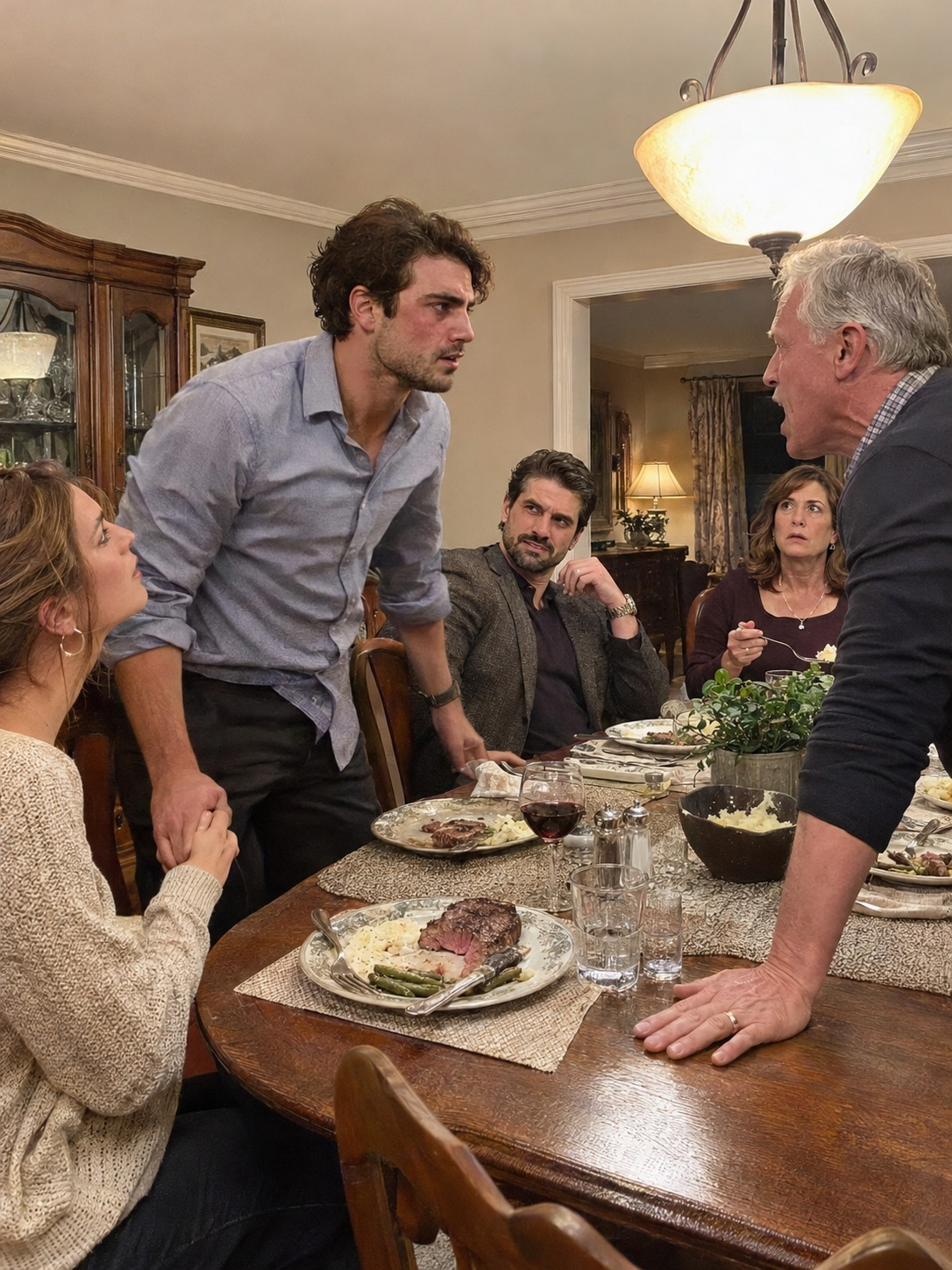
"Isaac, your father wasn't the only person who had access to the original ownership documents."
Robert Hayes's voice sounded strained.
I stared at the filing history on my laptop.
"Who authorized the changes?"
He hesitated.
Then he answered.
"Your brother."
I closed my eyes.
For several seconds, I couldn't speak.
"Are you certain?"
"Yes. I have a copy of the original authorization request. Omid contacted the restructuring team before your father formally announced his retirement."
I gripped the edge of my desk.
"What did he ask them to do?"
"He wanted the ownership structure revised so that he would receive a majority interest. He also requested that your operational responsibilities be classified as administrative rather than executive."
I looked at the organizational chart.
Operations and Financial Administration Associate.
My new title.
"Did my father approve it?"
"Initially, he questioned the proposal. But eventually, he authorized the preliminary review."
I swallowed.
"And the waiver?"
"That came later."
"Who requested it?"
Robert paused.
"Your father."
I leaned back.
So the truth was more complicated than I had imagined.
Omid had initiated the restructuring.
Dad had approved it.
And somewhere along the way, documents had been prepared using my name without my consent.
"Why didn't you tell me earlier?"
"Because I didn't have the complete records. I also didn't want to make accusations without evidence."
I understood that.
But I was beginning to realize how many people had known pieces of the story while I remained outside it.
"Robert, why is your name on the filing?"
He exhaled.
"That's the part I need to explain."
I waited.
"During the original governance review, I signed a document confirming that the preliminary ownership proposal had been delivered to Dalton's management team. I did not certify your signature, and I did not approve the later waiver."
"Then why does the filing say you confirmed the supporting authorizations?"
"Because someone attached my earlier acknowledgment to a different submission."
I stared at the screen.
"Can you prove that?"
"Yes. I have the original email and the dated copy of the document I signed."
I thanked him.
Before ending the call, he said something else.
"Isaac, there's one more thing. The restructuring consultant received instructions to complete the transfer before the next board review."
"When?"
"Three days from now."
My stomach tightened.
"Can they complete it?"
"That depends on the governing documents and whether the necessary approvals are valid. But the deadline is real."
I immediately called Daniel.
He listened without interrupting.
When I finished, he asked me to forward Robert's correspondence.
Then he said, "We need to move carefully. No more informal discussions about ownership. I'll prepare a formal objection and request that the transfer process be paused pending verification."
"Will that stop it?"
"It may help prevent the company from treating the disputed documents as settled. I cannot guarantee the outcome, but we have grounds to challenge the authorization."
I thanked him.
For the first time, the situation felt urgent in a way I could no longer ignore.
Three days.
That was how long remained before my brother might receive control of the company.
I sent Jennifer a message asking whether she could meet that evening.
She replied immediately.
When she arrived, I showed her Robert's email and explained what he'd told me.
She read everything carefully.
"So Omid started the restructuring?"
"Apparently."
"And your father approved it?"
"Yes."
She sat down.
"That explains why your father kept defending him."
I looked at the screen.
"Not entirely. Dad could have stopped it."
Jennifer nodded.
"You're right."
I closed the laptop.
"I keep thinking about the years I spent there. Every time something went wrong, they called me. Every time something succeeded, Omid stood beside Dad."
She reached for my hand.
"You don't have to keep proving that you deserved better."
I looked at her.
"I know."
She hesitated.
"Isaac, I also need to apologize again."
I remained quiet.
"I should have called you before signing that acknowledgment. Even if your father convinced me it was harmless, I should have asked you directly."
"Yes. You should have."
She nodded.
"I can't change that."
"No."
I didn't want to punish her.
But trust wasn't something I could restore simply because someone regretted a decision.
She understood.
We spent the rest of the evening discussing the next steps.
The following morning, Daniel sent a formal letter to Dalton's legal department.
It challenged the disputed ownership waiver and requested preservation of all records relating to the valuation and succession process.
It also stated that I did not acknowledge signing away any ownership interest.
I reviewed the letter carefully.
Then Daniel submitted it through the appropriate legal channels.
At 10:17, Patricia Wells called.
"Isaac, I've received your attorney's letter."
"All right."
"Your father would like to speak with you."
"About what?"
"The proposed transfer."
I glanced at the calendar.
"Then he can speak with Daniel."
Patricia paused.
"Your father believes this matter can still be resolved internally."
"I've already tried that."
"I understand."
"Do you?"
She was quiet.
Then she said, "I think there are questions that should have been addressed earlier."
It was the closest thing to an acknowledgment I'd heard from anyone inside Dalton.
I thanked her and ended the call.
At noon, Dad arrived at my office.
He didn't knock.
He walked straight to my desk and closed the door.
"What are you trying to accomplish?"
I looked up.
"Protecting my position."
"You're putting the company at risk."
"No. I'm asking the company to verify its own documents."
He paced toward the window.
"Do you understand what happens if this becomes a legal dispute?"
"Yes."
"Contracts could be delayed. Clients could become concerned. Employees could lose confidence."
I nodded.
"Then perhaps the people responsible for preparing these documents should have considered that."
He turned.
"Your brother made mistakes."
I stared at him.
"You're admitting he was involved?"
Dad rubbed his forehead.
"He was trying to secure the future of the business."
"By changing the ownership structure before completing the required review?"
"He thought he was doing what I wanted."
"And you?"
Dad looked away.
"I wanted the company to remain in the family."
"It already was in the family."
He shook his head.
"You don't understand the pressure I've been under."
I almost laughed.
"Neither did I when I was thirteen, sitting in the office every Saturday while Omid worked outside."
Dad said nothing.
I continued.
"You asked me to stay because you needed me. You praised my work when it helped the company. But when it came time to decide who deserved ownership, suddenly my brother needed the security more than I did."
His expression hardened.
"I thought Omid would become a better leader."
"Then you should have trained him."
"I did."
"Not enough."
Dad lowered his voice.
"You've always believed you're better than him."
"No. I've always believed that work should matter."
He looked at me for a long moment.
Then he placed a folder on my desk.
"Your brother wants to meet."
I didn't touch it.
"Why?"
"He wants to explain."
I glanced at the folder.
"Then tell him to explain the documents."
Dad left without another word.
I opened the folder.
Inside was a new ownership proposal.
The ten-percent offer had been replaced.
The revised document offered me fifteen percent of Dalton.
There was also a clause stating that I would receive an annual performance bonus if I remained with the company for three years.
In exchange, I would waive any objections to the previous succession process.
I read the clause twice.
It was an attempt to make the disputed documents disappear behind a new agreement.
I photographed the pages and sent them to Daniel.
His response came quickly.
Do not sign. This proposal does not resolve the existing issues.
I placed the folder in my drawer.
That afternoon, Omid called.
"Can we talk?"
"About what?"
"The company."
I looked at the clock.
"Come to my office."
He arrived twenty minutes later.
He closed the door and sat opposite me.
For once, he wasn't smiling.
"I know you're angry."
"That's not really the issue."
He nodded.
"Okay. Let's talk about the documents."
I folded my hands.
"Did you request the restructuring?"
He looked down.
"Yes."
"Did you request that my role be reduced?"
"I asked for a clearer management structure."
"Did you know about the waiver?"
He hesitated.
"I knew there was a document."
"Did you know it carried my name?"
"I thought Dad had handled that."
I stared at him.
"You thought Dad had handled it?"
He raised his hands.
"I didn't sign it."
"That's not an answer."
Omid sighed.
"Isaac, I wanted to run the company. Dad told me he was going to retire, and I didn't want to spend another ten years waiting for him to make a decision."
"So you decided I shouldn't have an ownership interest?"
"I never said that."
"You requested a majority transfer."
"Because I was supposed to lead."
"That doesn't explain the waiver."
He leaned forward.
"Look, I knew you didn't want to be president."
I almost laughed.
"Nobody asked me."
"You were always talking about engineering and project systems. I thought you wanted to focus on that."
"I wanted to build a career. I was already building one at Dalton."
He looked away.
For the first time, I saw something resembling embarrassment.
Then he said, "Dad told me you were okay with the arrangement."
I stared at him.
"And you believed him?"
Omid didn't answer.
I stood and walked toward the window.
"Do you know what the worst part is?"
He looked up.
"I could have accepted a smaller ownership share if the arrangement had been fair. I could have worked under you if you had earned the position and understood the business."
He shifted in his chair.
"But you wanted the title before you understood the responsibility. And Dad wanted me to keep doing the work while pretending that was a privilege."
Omid looked down.
"I didn't think you'd leave."
That sentence stayed with me.
I turned around.
"Why not?"
He shrugged.
"Because you've always been here."
I nodded slowly.
That was probably the most honest thing he'd said.
He had never considered that I might walk away.
He had assumed my loyalty was permanent.
Omid stood.
"I want to fix this."
"Then start by telling the truth."
He looked at me.
"About what?"
"Everything you know about the waiver, the valuation, and the vendor payments."
His face changed.
"What vendor payments?"
I watched him carefully.
"The three transfers to the company connected to Dad's old holding structure."
He stared at me.
Then he said, "You don't know what those payments were for."
"Then explain them."
He shook his head.
"I can't."
"Why?"
"Because Dad handled that."
I looked at him.
"Then perhaps you should ask him."
He picked up his jacket.
Before leaving, he turned.
"Isaac, the board meeting is Friday."
"I know."
"Whatever happens, I hope you understand I'm not trying to destroy the company."
I didn't answer.
He walked out.
That evening, Daniel called with an update.
Robert had provided the original governance documents, including the email in which he explicitly stated that the proposed ownership structure remained subject to independent valuation and beneficiary approval.
The later filing had used his earlier acknowledgment as though it supported the completed transfer.
Daniel believed the discrepancy strengthened our position.
He also said Patricia had agreed to preserve the original electronic records.
"Can the board still approve the transfer on Friday?" I asked.
"They can consider proposals, but the disputed documents are now formally challenged. The board should not treat the waiver as verified."
I nodded.
"What happens if they try anyway?"
"Then we respond through the appropriate legal process."
The next two days passed slowly.
I continued working.
I completed the courthouse cost report.
I attended the consultancy's second interview.
And I began preparing for a possible departure from Dalton.
Karen Mitchell called me on Thursday.
She offered me the senior construction operations position.
The salary was significantly higher than my current pay.
The position also included direct responsibility for a team of project managers and authority over procurement planning.
I thanked her.
Then I asked for a day to consider the offer.
She agreed.
I sat at my desk afterward, looking at the contract.
It was the first professional opportunity I'd received that didn't depend on my family's approval.
I called Jennifer.
She was happy for me.
"Whatever you decide, make sure it's because you want that future, not because you're trying to escape this one."
I smiled.
"I'll think about that."
Friday morning arrived.
The board meeting was scheduled for ten.
I arrived early.
Dad was already in the conference room.
Omid sat beside him.
Patricia was arranging the documents.
Several directors had joined remotely.
I took my seat.
Patricia began by explaining the purpose of the meeting.
She outlined the proposed ownership transfer and described the concerns raised about the valuation certificate and waiver.
Then Daniel's formal objection was entered into the meeting record.
Dad looked irritated.
Omid kept his eyes on the table.
One of the directors asked whether the original succession agreement had been independently verified.
Patricia said the review was ongoing.
Another director asked whether the company had obtained the necessary valuation.
She said the submitted certificate was being examined.
The director frowned.
"Then why are we voting on a transfer that depends on that certificate?"
Nobody answered.
Dad finally spoke.
"We need to move forward. The company cannot remain in uncertainty forever."
I listened.
Then I asked to speak.
Patricia nodded.
I stood.
"I want to make one thing clear. I am not asking the board to give me control of Dalton Construction. I'm asking the board not to treat documents carrying my name as proof of decisions I never made."
I explained that I had never signed the ownership waiver.
I had never authorized the valuation certificate.
And I had never agreed to surrender my original interest.
I also explained that I had spent years managing the operational and financial systems that supported the company's growth.
I didn't exaggerate.
I didn't accuse anyone.
I simply presented the records.
When I finished, the room remained silent.
Then one of the directors spoke.
"Mr. Dalton, do you have evidence that your signature was used without your permission?"
Daniel had prepared a written statement.
I handed it to Patricia.
It included the university examination records, the original email timeline, and the electronic submission discrepancies.
Patricia reviewed it.
Then she looked toward the board.
"I recommend postponing the ownership vote until the independent review is complete."
Dad stared at her.
Omid shifted in his chair.
One director supported the recommendation.
Then another.
The board agreed to postpone the transfer decision.
I sat down.
For the first time in months, I felt the pressure ease slightly.
But the meeting wasn't over.
Patricia opened another folder.
"There is one additional matter concerning the financial records."
She looked toward Dad.
"We've received a request to review three payments made to an associated vendor."
Dad's expression changed.
Omid stared at the table.
Patricia continued.
"The payments were approved through executive administration and may affect the company's reported valuation."
I looked at the directors.
One of them asked who had authorized the original transactions.
Patricia opened the final page.
Then she slowly turned it toward the room.
"The approval record identifies two individuals."
My father.
And my brother.
Omid immediately stood.
"That's not what happened."
The chairman raised his hand.
"Please sit down."
Omid remained standing.
Then Patricia placed another document on the table.
It was an email dated four months earlier.
The sender was Omid.
The recipient was the restructuring consultant.
I watched him read the first line.
His face turned pale.
Because the email didn't merely request a majority ownership transfer.
It contained an instruction about the three questionable payments.
And the final sentence read:
Once Isaac's waiver is accepted, nobody will have a reason to examine the original transfers.






Comments 0