The name written in red ink on my father's bank statement was Thomas Whitaker.
My grandfather's attorney.
The man who had handled his estate seven years earlier.
And the date beside his name was the exact day my inheritance had supposedly been transferred to pay for Micah's medical expenses.
I sat at my kitchen table, staring at the photograph Micah had sent.
The bank statement was folded across the middle, but I could see enough to recognize the amount.
$38,500.
My entire inheritance.
For seven years, I'd believed that money had helped keep my brother alive.
Now I was looking at a withdrawal connected to an attorney who had nothing to do with Micah's medical treatment.
My phone trembled in my hand.
I called Micah immediately.
It went straight to voicemail.
I tried again.
Nothing.
Then I sent him a message.
Where did you find this?
No response.
Micah, are you okay?
Still nothing.
I looked at the photograph again.
The statement appeared to be several years old. The paper had yellowed slightly, and someone had circled the withdrawal amount in blue pen.
The red writing looked newer.
I enlarged the image until the letters became blurry.
Thomas Whitaker.
I hadn't heard that name in years.
But I remembered him.
He was a quiet man in his late fifties when Grandpa died, with silver-rimmed glasses and a habit of tapping his pen against the table while thinking.
He'd been at the funeral.
He'd shaken my hand afterward and told me that Grandpa had been proud of me.
At the time, I'd been twenty-three.
I'd just started a job that paid barely enough to cover rent.
When Dad told me Grandpa had left me money, I cried.
Not because I was greedy.
Because for the first time in my life, I thought I might have enough savings to make a decision without asking anyone's permission.
I wanted a small house.
Nothing extravagant.
Two bedrooms.
A porch.
Maybe a little garden.
Somewhere I could finally stop feeling as though my life was temporary.
But three weeks after the funeral, Dad called me into his office.
He had medical bills spread across his desk.
Micah's condition had worsened.
There were appointments, medications, tests, and expenses Dad said insurance wouldn't cover.
He told me the family needed help.
I remember asking how much.
He said, "Whatever you can give."
When I mentioned Grandpa's inheritance, Dad looked relieved.
He told me I was doing something beautiful.
He said Grandpa would have wanted the money used to save Micah.
And because I wanted to believe him, I agreed.
Dad handled the transfer.
I signed the estate paperwork I was given.
A few weeks later, he told me the money had gone toward medical expenses.
I never asked to see the bills.
Why would I?
He was my father.
That was the answer I kept coming back to.
He was my father.
And apparently, that had been enough to make me stop asking questions.
I opened my laptop and searched for Thomas Whitaker.
His law office was still operating.
The website showed a small brick building downtown, with his name above the entrance.
Whitaker & Associates.
Estate Planning and Probate.
I stared at the phone number.
Then I looked at the clock.
It was almost nine in the evening.
Too late to call.
I wrote the number in my notebook anyway.
Below it, I wrote three questions.
Where did Grandpa's money go?
Why was Dad's bank statement marked with Whitaker's name?
What did Micah find?
I added a fourth.
Why is Dad so afraid of me speaking to anyone outside the family?
That question stayed with me long after I closed the laptop.
I barely slept.
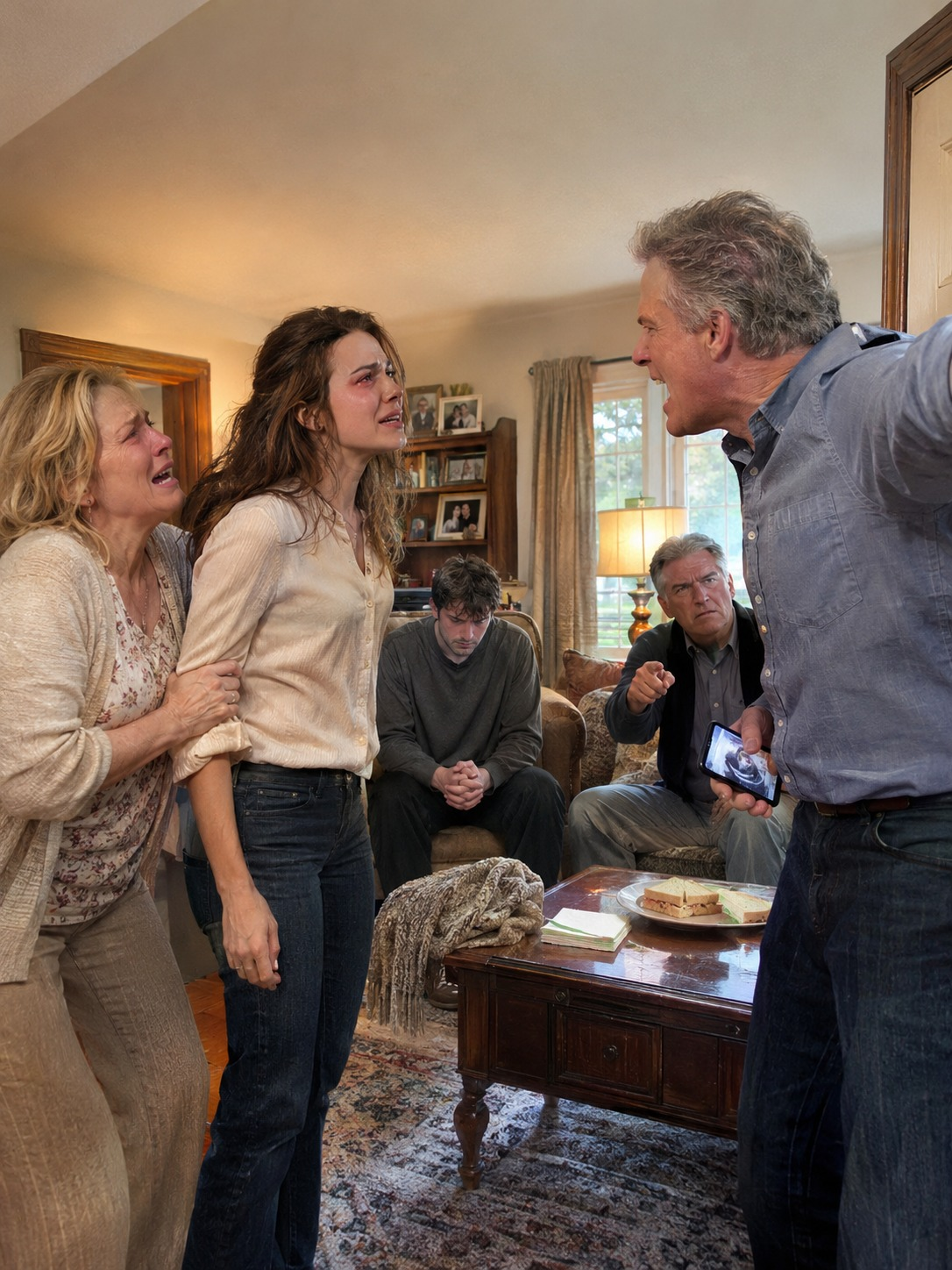
Every time I closed my eyes, I saw Dad standing in front of the door.
His face red.
His shoulders squared.
His phone held inches from mine.
Too late to refuse.
At three in the morning, I got up and checked my messages.
Nothing from Micah.
I sent one more.
Please just tell me you're safe.
Then I sat on the kitchen floor until sunrise.
At eight thirty, I called Whitaker's office.
A receptionist answered.
"Whitaker & Associates. How may I help you?"
"My name is Claire Bennett. Mr. Whitaker handled my grandfather's estate several years ago."
"Of course. What was your grandfather's name?"
"Samuel Bennett."
There was a brief pause.
"One moment, please."
Soft music played.
I stared at the wall.
After nearly two minutes, the receptionist returned.
"Ms. Bennett, Mr. Whitaker is available for a brief call."
My heart jumped.
"Thank you."
A man's voice came on the line.
"Claire?"
"Mr. Whitaker?"
"Yes. It's been a long time."
I swallowed.
"I'm sorry to call unexpectedly."
"There's no need to apologize. How can I help?"
I took a breath.
"I have some questions about my grandfather's inheritance."
The line went quiet.
Then he said, "All right."
"I was told he left me thirty-eight thousand five hundred dollars."
"That's correct."
I gripped my pen.
"And that the money was transferred to my family for medical expenses."
Another pause.
"Who told you that?"
"My father."
Mr. Whitaker exhaled slowly.
"Claire, I can discuss the estate records and documents you were entitled to receive. But I want to be careful not to speculate about what happened after the distribution."
"I understand."
"Your grandfather left you a specific cash bequest. The estate records show that the distribution was processed according to the instructions we had at the time."
I looked at the photograph.
"Did the money go directly to my father?"
"Not as an ordinary distribution to him, no."
I sat straighter.
"What does that mean?"
"There was an account designated for your benefit, and there were subsequent instructions concerning how the funds would be handled."
My stomach tightened.
"Instructions from whom?"
"That's something I'd prefer to review with the original documents in front of us."
"Can you send them to me?"
"We can arrange for you to obtain copies of the relevant estate records."
I closed my eyes.
For the first time, someone was offering me actual paperwork instead of demanding that I trust a family explanation.
"Thank you."
"Claire?"
"Yes?"
"Do you remember signing a direction authorizing your father to manage those funds?"
I frowned.
"I remember signing papers after Grandpa died."
"Do you remember what they said?"
"No."
"Did anyone explain them to you?"
I thought about Dad's office.
The medical bills.
His hand resting on the documents.
The way he'd pointed to the signature lines.
"He said they were necessary to release the inheritance."
Mr. Whitaker was silent.
Then he said, "I think we should review the records together."
My mouth went dry.
"Is something wrong?"
"I don't want to reach a conclusion without examining the documents. But you should understand exactly what you signed and what authority, if any, was granted."
I looked at my notebook.
"What do I need to do?"
He offered me an appointment the following afternoon.
I accepted.
Before hanging up, I asked about the bank statement.
"Mr. Whitaker, did you ever receive a payment of thirty-eight thousand five hundred dollars from my father?"
"Not personally."
"Could it have gone to your firm?"
"I'd need to review our records before answering that."
I hesitated.
"Do you think my father used my inheritance for something other than Micah's medical bills?"
He was quiet for several seconds.
Then he said, "Claire, I think you deserve to see the documents before anyone asks you to believe another explanation."
After the call, I sat very still.
My grandfather had trusted me enough to leave me money.
My father had convinced me that giving it away was the right thing to do.
And now an attorney was telling me there were documents I needed to examine.
I wanted to call Dad.
I wanted to demand answers.
But I remembered Jenna's advice.
Keep everything.
Ask questions.
Don't let him control the conversation.
So instead, I called the kidney specialist's office.
Dr. Reyes's receptionist answered.
I explained that I was Micah Bennett's sister and wanted information about becoming a potential living donor.
The receptionist asked whether I was calling to begin an evaluation.
"Not exactly," I said. "My family says I've already been identified as the only compatible donor."
There was a pause.
"Have you been evaluated by a transplant center?"
"No."
"Have you completed any blood testing?"
"No."
"Then no one could have established your compatibility through a donor evaluation."
I closed my eyes.
It was the same answer I'd found online.
But hearing it from someone connected to medical care made it feel more real.
"My father says surgery is scheduled next month."
"I'm sorry, but I can't verify another patient's medical arrangements without appropriate authorization. However, living donor evaluation requires the donor's own participation and informed consent."
"Could my parents schedule surgery without me?"
"Not a legitimate living donor transplant involving you. You would need to be independently evaluated and provide your own informed consent."
I pressed my hand against my forehead.
"Thank you."
The receptionist offered to explain how I could contact a transplant program if I wanted to explore donation voluntarily.
I wrote down the information.
Then I asked whether I could leave a message for Dr. Reyes.
I explained that I had accompanied Micah to an appointment years earlier and had been listed as a family contact.
The receptionist said she could pass along my request, but that any discussion of Micah's private medical information would depend on his authorization.
I understood.
I wasn't asking anyone to break rules for me.
I was trying to find out which rules my family had already broken.
After the call, I went to work.
Jenna noticed me the moment I walked in.
"You look terrible."
"Good morning to you too."
She handed me a coffee.
"Did you sleep?"
"Not really."
I told her about the bank statement.
Then about Thomas Whitaker.
Her expression changed.
"Claire, that's a lot of money."
"I know."
"And your dad said it all went toward Micah's care?"
"Yes."
"Did you ever see receipts?"
I shook my head.
She leaned back in her chair.
"Okay. You need to separate what you know from what you suspect."
I frowned.
"What do you mean?"
"You know your mother signed your name without permission. You know the financial authorization was flagged. You know your father told people you'd agreed to surgery when you hadn't."
I nodded.
"But you don't know what happened to the inheritance yet."
"No."
"And you don't know what Micah found."
"No."
She folded her arms.
"Then don't give your father a chance to explain everything away before you have the documents."
I looked at her.
"You're starting to sound like a lawyer."
"My sister's a paralegal. Some of it rubbed off."
Despite everything, I smiled.
It was the first time I'd smiled in two days.
Then my phone buzzed.
A message from Mom.
Your father is very hurt that you contacted people outside the family.
I stared at it.
How did she know?
I hadn't told anyone at home about Melissa.
Or Whitaker.
Or the clinic.
I showed Jenna.
She frowned.
"That's strange."
I typed:
Who did I contact?
Mom replied:
You know exactly what I'm talking about.
I felt a chill.
I wrote:
I have a right to ask questions about documents with my name on them.
Her response came immediately.
Your father says you're making a terrible mistake.
I put the phone face down.
Jenna watched me.
"Don't answer."
"I wasn't going to."
But my hands were shaking.
At lunch, I called Micah again.
Voicemail.
I sent another message.
I'm not angry with you. I just need to know you're okay.
Nothing.
By late afternoon, my worry had become difficult to ignore.
Micah usually answered eventually.
Even when he was exhausted, he sent a short message.
A thumbs-up.
A joke.
A complaint about hospital food.
Something.
Now there was nothing.
I considered calling Mom.
Then I remembered how quickly Dad had taken the phone from her.
Instead, I called the number of a neighbor who had known our family for years.
Mrs. Patterson lived two houses down from my parents.
She had watched Micah and me grow up.
She used to bring us cookies when Mom worked late.
I hadn't spoken to her in months.
She answered warmly.
"Claire, sweetheart! What a surprise."
"Hi, Mrs. Patterson."
"How are you?"
"I'm okay. I was wondering if you've seen Micah today."
"Your brother?"
"Yes."
She paused.
"I saw your father's car leave early this morning."
"Was Micah with him?"
"I couldn't tell. I was watering the flowers."
My heart sank.
"Okay. Thank you."
"Is everything all right?"
I hesitated.
"There's been some family tension."
"Oh, honey."
Her voice softened.
"I don't want to interfere."
"I understand."
"But your mother came over yesterday looking terribly upset."
I sat straighter.
"She did?"
"Yes. She asked whether I'd seen you leave."
I frowned.
"Why?"
"She seemed worried about something."
"What did she say?"
Mrs. Patterson hesitated.
"She asked whether you looked angry."
I stared at the wall.
"Angry?"
"Yes. And then she said something odd."
"What?"
"She said she hoped you wouldn't go digging through old family business."
My stomach tightened.
I thanked her and ended the call.
Old family business.
That phrase had nothing to do with kidney donation.
It sounded like something else.
Something my parents had been afraid I'd discover for years.
That evening, I returned home and opened every folder I had from Grandpa's estate.
I found old birthday cards.
A photograph of Grandpa standing beside the lake.
A handwritten recipe for his favorite apple pie.
And a letter he'd sent me when I graduated high school.
I unfolded it carefully.
His handwriting was uneven but familiar.
Claire,
You have always been the one who notices when someone else needs help.
That is a wonderful quality.
But I hope you remember that your dreams matter too.
I stopped reading.
My eyes filled.
Grandpa had written those words before I gave up my scholarship.
Before I turned down the job.
Before I surrendered the inheritance.
I read the next paragraph.
Don't spend your whole life trying to earn a place at a table where you already belong.
I pressed the letter against my chest.
For several minutes, I cried.
Not loudly.
Not dramatically.
Just the quiet kind of crying that happens when someone finally says something you've needed to hear for years.
When I could breathe again, I placed the letter beside my laptop.
Then I checked my messages.
Still nothing from Micah.
I opened the bank statement photograph.
This time, I looked beyond the large withdrawal.
There were smaller transactions beneath it.
Several payments.
Different dates.
Different amounts.
One description caught my attention.
Loan servicing.
I frowned.
Another payment had the same description.
Then another.
My father had told me the inheritance went toward medical expenses.
But these transactions looked like debt payments.
I enlarged the photograph.
The account numbers were partly obscured.
I couldn't identify the lender.
Still, something was wrong.
Very wrong.
At eight forty-five, my phone rang.
Unknown number.
I answered.
"Hello?"
"Claire?"
It was Micah.
His voice sounded weak.
I stood immediately.
"Micah! Where have you been?"
"Sorry."
"Are you okay?"
"Yeah."
He coughed.
"Just tired."
"Why weren't you answering?"
"Dad took my phone for a while."
I froze.
"What?"
"He said I needed to rest."
"Micah, you're twenty-nine."
"I know."
His voice sounded defeated.
"Where are you?"
"In my room."
"Is Dad there?"
"Downstairs."
I heard him take a shaky breath.
"Claire, I found something else."
My heart began pounding.
"What?"
"After Dad left this morning, I went into his office."
"Why?"
"Because I wanted to know what happened to the money."
I gripped the counter.
"And?"
"There were folders in the bottom drawer."
"What kind of folders?"
"Bank papers. Loan statements. Letters."
I waited.
"Micah?"
He swallowed.
"One of them had Grandpa's name on it."
My chest tightened.
"What did it say?"
"I couldn't read everything. Dad came home before I finished."
"Did you take pictures?"
"Some."
"Send them."
A pause.
"Claire, there's something else."
"What?"
"I don't think Dad was paying my medical bills with your money."
I closed my eyes.
"Then what was he paying?"
Micah didn't answer immediately.
When he finally spoke, his voice was barely audible.
"I think he was trying to keep the house."
I stared at the wall.
"The house?"
"Yeah."
"But Mom said the mortgage was paid off years ago."
"I know."
I felt a cold knot forming in my stomach.
"What did you find?"
"A notice from the bank."
"What kind of notice?"
"Something about default."
I gripped the counter harder.
"Micah, listen to me. Don't confront Dad. Just send me whatever you have."
"Okay."
"And please be careful."
"I will."
Then I heard footsteps.
Micah stopped breathing.
A door opened somewhere near him.
My father's voice sounded through the phone.
"Micah?"
My brother whispered, "I have to go."
"Wait—"
The call ended.
I stood frozen.
A few seconds later, photographs began arriving.
One.
Two.
Three.
A mortgage statement.
A letter from a lender.
A page covered in handwritten calculations.
Then a fourth photograph appeared.
It showed a document with my grandfather's name at the top.
Beneath it was a property description.
And near the bottom was a signature line.
My father's signature was there.
But beside it was another name.
Mine.
I enlarged the photograph.
The document was dated six years earlier.
The year after Grandpa died.
At the top, in bold letters, were the words:
PERSONAL GUARANTY AGREEMENT
My breath caught.
I had never signed a guaranty agreement.
I had never agreed to secure anyone's mortgage.
And I had never known my name was connected to my parents' house.
Then another photograph arrived.
This one showed the final page.
There was a handwritten note attached with a paper clip.
I recognized my father's handwriting immediately.
It contained one sentence.
If Claire ever finds out, everything falls apart.
I stared at the words.
Before I could move, my phone rang again.
This time, the caller ID displayed a name I hadn't expected to see.
Thomas Whitaker.
I answered with trembling hands.
"Mr. Whitaker?"
His voice was tense.
"Claire, I'm sorry to call you this late."
"Is something wrong?"
"I've been reviewing the estate records."
I held my breath.
"And?"
He paused.
Then he said, "I found a document that was never included in the copies your father received."
My heart began pounding.
"What document?"
"A letter your grandfather left specifically for you."
I closed my eyes.
"Can you tell me what it says?"
"Claire, there's something you need to understand first."
I gripped the phone.
"What?"
"Your grandfather knew your father was having financial problems."
I stared at the mortgage statement.
"He knew?"
"Yes."
"Then why did he leave me money?"
Mr. Whitaker hesitated.
"Because he was trying to protect you."
I couldn't speak.
He continued.
"And Claire, the money wasn't the only thing he left you."
I stood completely still.
"What else?"
There was a long silence.
Then he said, "I think you should come to my office tomorrow. There's something in the estate file that changes what you were told about your grandfather's wishes."
I looked at the photographs Micah had sent.
The mortgage.
The forged guaranty.
My father's handwritten warning.
"What is it?" I whispered.
Mr. Whitaker lowered his voice.
"It's a sealed envelope. Your grandfather instructed me to open it only if you ever questioned how your inheritance had been handled."
I felt the room tilt.
"Why would he do that?"
The attorney didn't answer immediately.
Then he said, "Because he was afraid your father would do exactly what he's done."
I stared at the phone.
And just as I opened my mouth to ask another question, Mr. Whitaker said something that made my blood run cold.
"Claire, there's one more thing. Your father called me an hour ago."
I stopped breathing.
"What did he want?"
"He asked whether you'd contacted me."
My heart pounded.
"What did you tell him?"
"Nothing confidential."
Then his voice became very serious.
"But he also asked me to destroy something."
I gripped the edge of the counter.
"What?"
Mr. Whitaker took a slow breath.
"The envelope your grandfather left for you."
I stared at the wall.
Then he said, "Claire, I think your father knows what's inside."
Before I could respond, my apartment doorbell rang.
Once.
Then again.
I looked toward the hallway.
My phone vibrated with a new message from Dad.
I know you spoke to Whitaker.
The doorbell rang a third time.
Then someone knocked.
Three slow knocks.
And my father's voice came through the door.
"Claire. Open up. We need to talk."






Comments 0