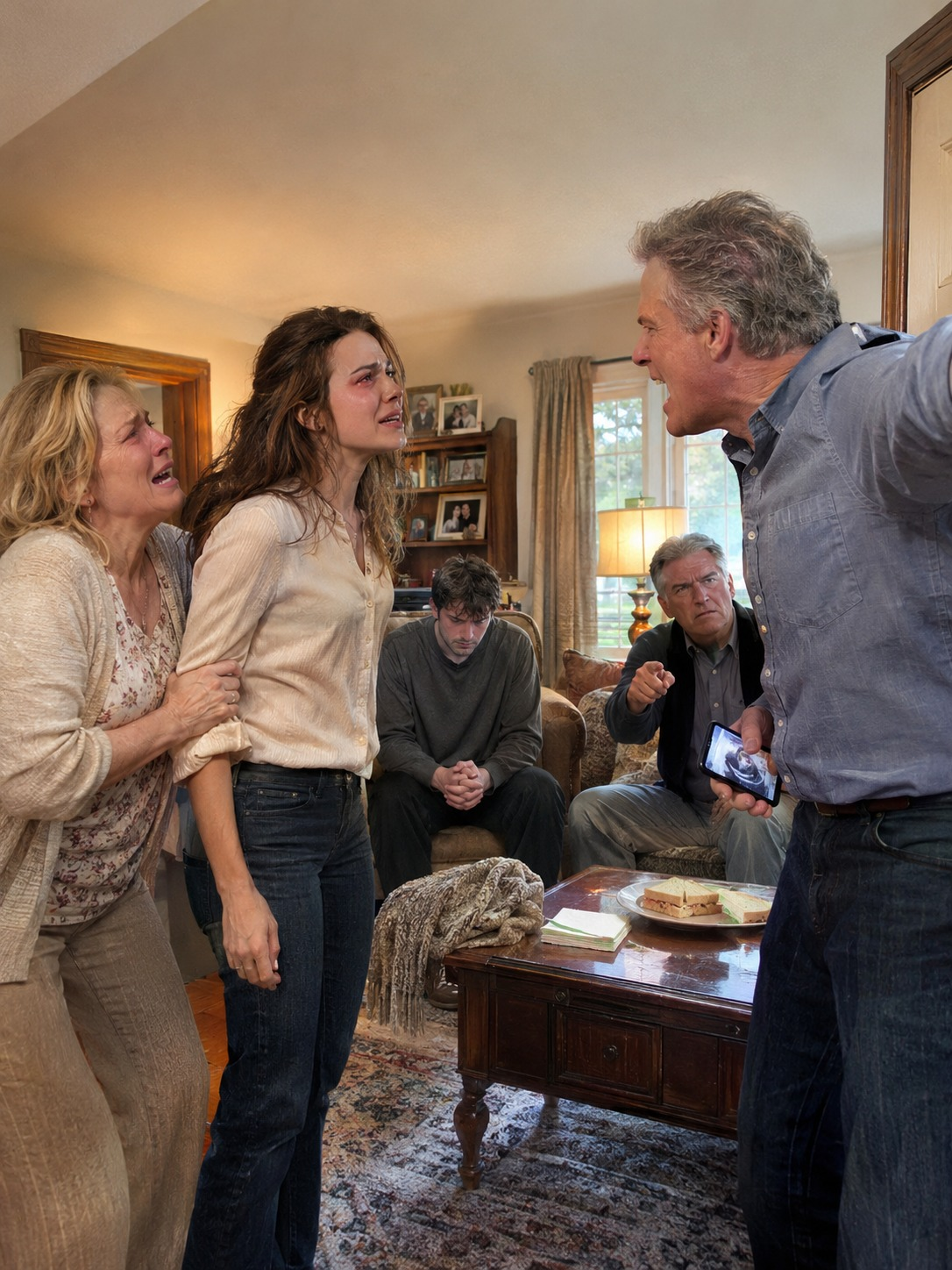
Micah stared at the photograph on my phone.
For several seconds, he didn't move.
Then he whispered, "That's my name."
I looked at him.
"Did you sign this?"
He shook his head.
"No."
"Are you sure?"
He turned toward me so quickly that I immediately regretted asking.
"Claire, I would remember signing something like that."
I looked back at the screen.
The document was titled Irrevocable Power of Attorney.
Below the heading was a paragraph identifying Micah Bennett as the person granting authority.
My father's name appeared farther down.
Richard Bennett.
The document was dated six years earlier.
The same year my name had appeared on a guaranty agreement I had never signed.
The same year Grandpa had started documenting suspicious financial transactions.
And the same year Micah's kidney disease had become serious enough to require dialysis.
I enlarged the photograph.
The signature looked like Micah's handwriting.
Almost.
But the final letter was wrong.
My brother had always written the last letter of his name with a sharp upward stroke.
This signature ended in a smooth curve.
I showed him.
"Look."
He leaned closer.
"That's not how I write it."
"I know."
His breathing became uneven.
"Why would Dad need power of attorney over me?"
I didn't answer immediately.
I knew that powers of attorney could allow someone to act on another person's behalf in certain matters.
But I also knew the title of a document didn't prove it was valid.
And the word irrevocable didn't mean my father could automatically do whatever he wanted.
Still, seeing Micah's name on that paper frightened me.
Especially because he hadn't known it existed.
"Who sent this?" he asked.
I looked at the number.
Unknown.
"I don't know."
"Can you call it?"
I pressed the number.
The call went straight to a recorded message saying the number was unavailable.
I tried again.
Same result.
Then another text appeared.
Your father has more than one copy.
I stared at it.
Micah leaned toward the screen.
"What does that mean?"
Before I could answer, a third message arrived.
Ask him what he used Micah's signature to obtain.
My stomach tightened.
I looked at my brother.
He looked terrified.
"Claire, what is happening?"
I wanted to tell him everything would be okay.
I wanted to promise that Dad hadn't done anything worse than what we'd already discovered.
But I couldn't.
Not anymore.
"I don't know," I said. "But we're going to find out."
We sat in the parked car for several minutes.
Neither of us spoke.
Then Micah reached for his phone.
"I'm calling Mom."
I caught his wrist gently.
"Wait."
He looked at me.
"Why?"
"Because Dad may be standing right beside her."
Micah lowered the phone.
He remembered the call.
Mom crying.
Dad demanding the phone.
The sudden silence.
I took a breath.
"Let's get upstairs first."
He nodded.
I helped him carry his bag into my apartment.
He moved slowly, and I could see how tired he was.
I wanted him to rest.
But I also knew he was frightened.
I made him comfortable on the sofa and brought him a glass of water.
Then I called his dialysis clinic with him beside me.
He explained that he was temporarily staying with his sister and needed to make sure his next treatment would not be interrupted.
The staff member asked several questions and explained that his care team would need to coordinate any changes.
Micah agreed.
He also asked about his medications and what he should do if he felt worse.
By the time the call ended, we had a plan for contacting his regular treatment center and arranging transportation.
It wasn't a solution to everything.
But it was one problem we could address without Dad's permission.
Micah leaned back against the cushions.
"Thank you."
"For what?"
"Not treating me like I'm helpless."
I sat beside him.
"You're not helpless."
He gave a tired smile.
"Sometimes I feel like it."
I looked at his hands.
They were thin.
His knuckles stood out more than I remembered.
I hated what his illness had done to him.
But I hated even more that Dad had turned that illness into a reason to control both our lives.
"Micah," I said carefully, "do you remember signing any documents when you first started dialysis?"
He frowned.
"A lot."
"Did Dad explain them?"
"Sometimes."
"Did you read them?"
He looked embarrassed.
"Not all of them."
I nodded.
"I understand."
"I was sick, Claire. Half the time I was exhausted or scared. Dad would bring papers and say they were for insurance or billing."
My stomach tightened.
"Did you ever sign a power of attorney?"
He thought for a moment.
"I remember signing something that let him talk to the insurance company."
"Was it a power of attorney?"
"I don't know."
I looked at the photograph.
"Did you ever agree to let him borrow money in your name?"
Micah's eyes widened.
"No."
"Use your credit?"
"No."
"Open accounts?"
"Claire, no."
His voice cracked.
I reached for his hand.
"Okay."
He looked away.
Then he whispered, "You think he did."
I didn't answer.
Because the truth was, I was starting to think my father had done things neither of us could imagine.
That afternoon, I called Mr. Whitaker.
He answered on the second ring.
"Claire?"
"I received another document."
"What kind?"
"A power of attorney with Micah's name on it."
There was a pause.
"Does your brother remember signing it?"
"No."
"Can you send me a copy?"
I forwarded the photograph.
While he examined it, I explained the anonymous messages.
He listened carefully.
Then he said, "Claire, this raises additional concerns, but we need the complete document and any evidence of how it was used."
"Could it be fake?"
"Possibly. It could also be a copy of a document that was altered or improperly executed. We shouldn't assume which without examining the original."
I nodded.
"Does the word irrevocable mean Dad controls everything?"
"No. The scope and validity of any power of attorney depend on its terms and applicable law. The title alone doesn't establish that your father has unlimited authority."
I exhaled.
That helped.
A little.
"What should Micah do?"
"He should speak with an independent attorney who can review the document and advise him about any authority he may have granted. If his identity was used without permission, he may also need to review his financial records."
I looked toward the living room.
Micah was staring at the ceiling.
"Can you recommend someone?"
"Yes."
He gave me the name of a local attorney who handled financial disputes and identity misuse.
I wrote it down.
Then I asked about the anonymous number.
"Do you think Dad sent the photograph?"
"I can't know that."
"Could it be Mom?"
"Possibly."
"Or Uncle Dale?"
"Also possible."
I rubbed my forehead.
Everyone in my family seemed to know a different part of the truth.
And nobody wanted to tell me all of it.
Before hanging up, Mr. Whitaker said, "Claire, one more thing."
"Yes?"
"Your grandfather's records include references to a second loan."
I froze.
"A second loan?"
"Yes."
"How much?"
"I'm still reviewing the documents."
I closed my eyes.
"Was it connected to Dale's company?"
"It appears to have been associated with the same period, but I don't want to give you an incomplete answer."
I stared at the wall.
"Okay."
"Please don't confront your father alone."
I swallowed.
"I won't."
After the call, I sat at the kitchen table and opened my laptop.
I searched for the company listed on the old investment documents.
Harbor Ridge Development Group.
The first results were unremarkable.
An old business listing.
A dissolved registration.
A few archived property records.
Then I found a public filing showing that the company had been administratively dissolved several years earlier.
Uncle Dale was listed as a manager.
My father appeared in another filing as an authorized representative.
I stared at the names.
They had been business partners.
Not just brothers helping each other.
Partners.
And they'd hidden it from the rest of the family.
I opened another record.
The company had once listed an address on the outskirts of town.
I recognized the street.
It was near a commercial development Dad used to talk about constantly.
He'd called it his big opportunity.
I remembered him telling Mom that one day they'd never have to worry about money again.
I'd been in college.
At the time, I thought he was talking about a promotion.
Now I wondered whether he'd been talking about Harbor Ridge.
I wrote down the filing dates.
Then I searched for the property.
The records showed a series of transfers and liens.
I couldn't understand every entry.
But I recognized the names.
Richard Bennett.
Dale Bennett.
Harbor Ridge Development Group.
The same names kept appearing.
And the dates lined up with the period when Dad had started asking me for money.
I sat back.
For years, I had believed our family's financial problems began when Micah got sicker.
But the records suggested Dad and Dale had been making risky decisions long before the worst of Micah's medical expenses arrived.
I felt a wave of anger.
Not because my father had failed at a business venture.
People failed.
People lost money.
People made bad investments.
But my father had turned his failure into our responsibility.
And he'd done it without telling us the truth.
My phone rang.
Jenna.
I answered.
"Hey."
"How did the meeting go?"
I looked at the papers spread across my table.
"Complicated."
"That bad?"
"Worse."
I told her about the blue folder.
Grandpa's letter.
The loan.
Uncle Dale.
And the document with Micah's signature.
Jenna was quiet for a long moment.
Then she said, "Claire, have you checked your credit reports?"
I froze.
"No."
"You should."
I looked toward the living room.
Micah had fallen asleep.
"Why?"
"Because if somebody used your name on a guaranty agreement, you need to know whether any accounts or debts are showing up under your identity."
My stomach tightened.
I hadn't thought of that.
I'd been so focused on the inheritance and the kidney donation that I hadn't considered what else Dad might have done with my information.
"Can I check them online?"
"Yes. Use the official credit report site. And if you find anything you don't recognize, document it and consider freezing your credit."
I thanked her.
Then I opened my laptop again.
My hands trembled as I completed the identity verification process.
I requested my reports.
When the first one appeared, I scanned the accounts.
My credit card.
My car loan.
An old student loan.
Everything looked familiar.
Then I reached the inquiries section.
There was a hard inquiry from a lender I didn't recognize.
The date was from six years earlier.
I stared at it.
The same year as the guaranty agreement.
The same year Grandpa had died.
The same year Dad had supposedly used my inheritance to help Micah.
I checked the next report.
Another inquiry.
Different lender.
Same period.
Then I opened the third.
My stomach dropped.
There was an account listed under my name that I had never opened.
A personal loan.
The balance was more than $18,000.
I stared at the screen.
For a moment, I couldn't move.
Then I checked the original loan amount.
$30,000.
My heart began pounding.
Thirty thousand dollars.
In my name.
Without my knowledge.
I scrolled down.
The account had been opened six years earlier.
Payments had been made for a while.
Then they became irregular.
The most recent status showed the account was seriously delinquent.
I covered my mouth.
My father had been telling me I needed to sacrifice more for the family.
Meanwhile, someone had apparently been using my identity to borrow money.
I took screenshots.
Every page.
Every date.
Every account number.
Then I called the lender using the contact information on its official website.
After navigating the automated system, I reached a representative.
I explained that an account appeared on my credit report and I did not recognize it.
The representative verified my identity and explained the process for disputing a potentially fraudulent account.
She couldn't tell me who had opened it without further investigation.
But she confirmed the account existed.
And that it was associated with my personal information.
I felt cold all over.
"Can you tell me where the statements were mailed?"
She paused.
After completing additional verification, she gave me the mailing address recorded on the account.
I closed my eyes.
It was my parents' house.
I thanked her and wrote down the dispute instructions.
When the call ended, I sat motionless.
My father's house.
My father's loan.
My name.
My credit.
I looked toward the living room.
Micah was still asleep.
For years, I'd sent money to help my family survive.
Now I was discovering that someone had been borrowing money in my name while I was working overtime to pay my own bills.
I wanted to scream.
Instead, I opened a new document and began listing every suspicious account and signature.
Then I placed a credit freeze request with the major credit bureaus and started the formal dispute process.
I wasn't going to wait for Dad to explain.
I wasn't going to ask his permission.
And I wasn't going to let him tell me that protecting myself was selfish.
An hour later, Micah woke up.
He came into the kitchen rubbing his eyes.
"Hey."
"Hey."
He looked at my laptop.
"What are you doing?"
I hesitated.
Then I turned the screen toward him.
"I found a loan in my name."
He stared at it.
"Is it yours?"
"No."
His expression changed.
"Claire..."
"The statements went to Mom and Dad's house."
He sat down slowly.
"Oh my God."
I nodded.
For several seconds, neither of us spoke.
Then he whispered, "Do you think there's one in my name too?"
I looked at him.
"I think we should check."
He swallowed.
"Okay."
We went through the process together.
I helped him navigate the official site, but he answered his own identity questions and reviewed his own records.
At first, everything looked normal.
A credit card he'd opened years ago.
A small medical financing account he remembered.
Then he reached the installment loans.
His face changed.
"Claire."
I leaned closer.
"What?"
He pointed at the screen.
There was a loan.
Original amount: $45,000.
Opened five years earlier.
He stared at it.
"I didn't do this."
My stomach dropped.
"Are you sure?"
He looked at me.
"I was in the hospital that month."
I felt sick.
We opened the account details.
The loan was associated with a lender I'd never heard of.
The mailing address was our parents' house.
Micah began shaking.
"How could he do this?"
I reached for his hand.
"We don't know exactly who submitted it yet."
He looked at me.
"But you know."
I didn't answer.
Because I did know who had controlled our paperwork.
Who had kept the mail.
Who had told us not to worry about bills.
Who had insisted that family members should trust one another without asking questions.
Micah covered his face.
"I thought Dad was helping me."
I moved beside him.
"He may have helped you with some things."
He looked up.
"But that doesn't excuse this."
His eyes filled.
"I don't even know what's real anymore."
I put my arm around him.
"Neither do I."
We sat together for a long time.
Then Micah looked at the photograph of the power of attorney.
"Claire?"
"Yeah?"
"What if he used that to get the loan?"
I stared at the screen.
It was possible.
Not proven.
But possible.
And the thought made my stomach twist.
I reached for my phone.
"I'm calling the attorney Mr. Whitaker recommended."
Micah nodded.
"Good."
I left a message explaining that we needed help reviewing disputed signatures and possible identity misuse.
Then I emailed Mr. Whitaker the credit report information.
He replied within twenty minutes.
Please preserve all records. Do not sign any settlement or acknowledgment without independent legal advice.
I read the message twice.
Then I closed my laptop.
Outside, evening had settled over the city.
The apartment was quiet.
For the first time in days, Dad hadn't called.
Mom hadn't texted.
Uncle Dale hadn't appeared with another document.
I should have felt relieved.
Instead, I felt as though we were waiting for something.
At nine fifteen, my phone rang.
An unfamiliar local number.
I answered.
"Hello?"
"May I speak with Claire Bennett?"
"This is Claire."
"My name is Rachel Morgan. I'm calling from the compliance department of a financial institution."
I sat straighter.
"Okay."
"We received an inquiry involving your name and a disputed authorization."
My heart began pounding.
"Which authorization?"
"I'm not able to discuss the details until we complete verification."
I went through the process.
Then she said, "Ms. Bennett, our records indicate that a document bearing your signature was submitted in connection with a recent application."
I closed my eyes.
"Another one?"
There was a pause.
"Are you saying you did not authorize the application?"
"No."
I heard her typing.
"Thank you for clarifying."
"What kind of application?"
She hesitated.
"A secured financing request."
My stomach tightened.
"Secured by what?"
"I'm reviewing that information now."
I gripped the phone.
"Please tell me."
She paused.
Then said, "The application references a residential property."
I stared at the wall.
"My parents' house?"
"That's the property address listed."
I closed my eyes.
Of course.
Dad was still trying to save the house.
And he was still using my name.
"How much money?" I whispered.
Rachel hesitated.
"The requested amount is substantially larger than the previous obligations you've described."
My heart began pounding.
"How much?"
She gave me the figure.
$210,000.
I felt the room tilt.
Two hundred and ten thousand dollars.
In my name.
Connected to my parents' house.
I gripped the edge of the table.
"Please tell me it hasn't been approved."
"The application is under review."
I exhaled shakily.
"Good."
"However," she continued, "there's another issue."
I closed my eyes.
"What?"
"The application includes supporting documentation identifying you as having an ownership interest in the property."
I froze.
"That's impossible."
"Ms. Bennett?"
"I don't own my parents' house."
There was a pause.
Then Rachel said, "According to the documents submitted, you do."
I stared at the wall.
"What documents?"
"A recorded property instrument."
My mouth went dry.
"Can you send me a copy?"
"I can explain the process for obtaining the documents available to you."
I grabbed my notebook.
As she spoke, I wrote everything down.
Then she gave me the recording reference.
The county.
The date.
And the document type.
I stared at my notes.
It was a deed.
A deed I had never seen.
A deed that apparently connected me to my parents' house.
I thanked her and ended the call.
Micah stood in the kitchen doorway.
"What happened?"
I looked at him.
"Someone applied for another loan."
His face went pale.
"How much?"
"Two hundred and ten thousand."
He stared at me.
"Claire..."
"And they used a deed that says I own part of the house."
Micah slowly sat down.
"But you don't."
"I know."
I opened my laptop.
Using the county recording reference, I searched the public property records.
The document appeared almost immediately.
I clicked it.
A scanned deed filled the screen.
My father's name appeared near the top.
Then my mother's.
Then mine.
I stared at the date.
It had been recorded three months earlier.
Long before Dad demanded my kidney.
Long before the family meeting.
Long before the forged medical authorization.
I scrolled down.
There were signatures.
My father.
My mother.
And a third signature.
Mine.
Except it wasn't mine.
Again.
I looked at Micah.
He was staring at the screen.
Then he whispered, "Claire, look at the next page."
I scrolled.
The second page contained a notarization.
A seal.
A date.
And the name of the notary.
I leaned closer.
The name was familiar.
Too familiar.
I had seen it on documents from Grandpa's estate.
I had seen it beside my father's signature.
I had seen it in the blue folder.
And now it appeared on a deed recorded only three months earlier.
The notary was Uncle Dale.
My hands went cold.
Then Micah pointed toward the bottom of the page.
"There's another attachment."
I clicked it.
A new document opened.
At the top were the words:
NOTICE OF PENDING TRANSFER.
Below them was a scheduled date.
Tomorrow.
And beneath the date was the name of the person authorized to receive the proceeds.
Richard Bennett.
My father.
I stared at the screen.
Then my phone vibrated.
A message from Mom.
Claire, your father is leaving for the bank first thing in the morning.
Another message appeared.
He says once the transfer goes through, you won't be able to stop him.
I looked at Micah.
His face was white.
Then the doorbell rang.
We both froze.
A second later, someone knocked.
Not loudly.
Not angrily.
Just three quiet knocks.
I walked toward the door.
Looked through the peephole.
And saw a woman in a dark business suit holding a leather briefcase.
She looked directly at the door.
Then she raised a badge.
"Claire Bennett?" she called.
"My name is Detective Sarah Collins."
She paused.
"I need to speak with you about your father's financial transactions."
Then she added five words that made my blood run cold.
"Your mother has reported a crime."






Comments 0