"Micah Bennett."
The woman on the phone said my brother's name so quietly that I almost missed it.
I stood beside my bed, gripping my phone.
"Could you repeat that?"
"Micah Bennett," she said. "That's the second name on the authorization."
For several seconds, I couldn't speak.
My brother.
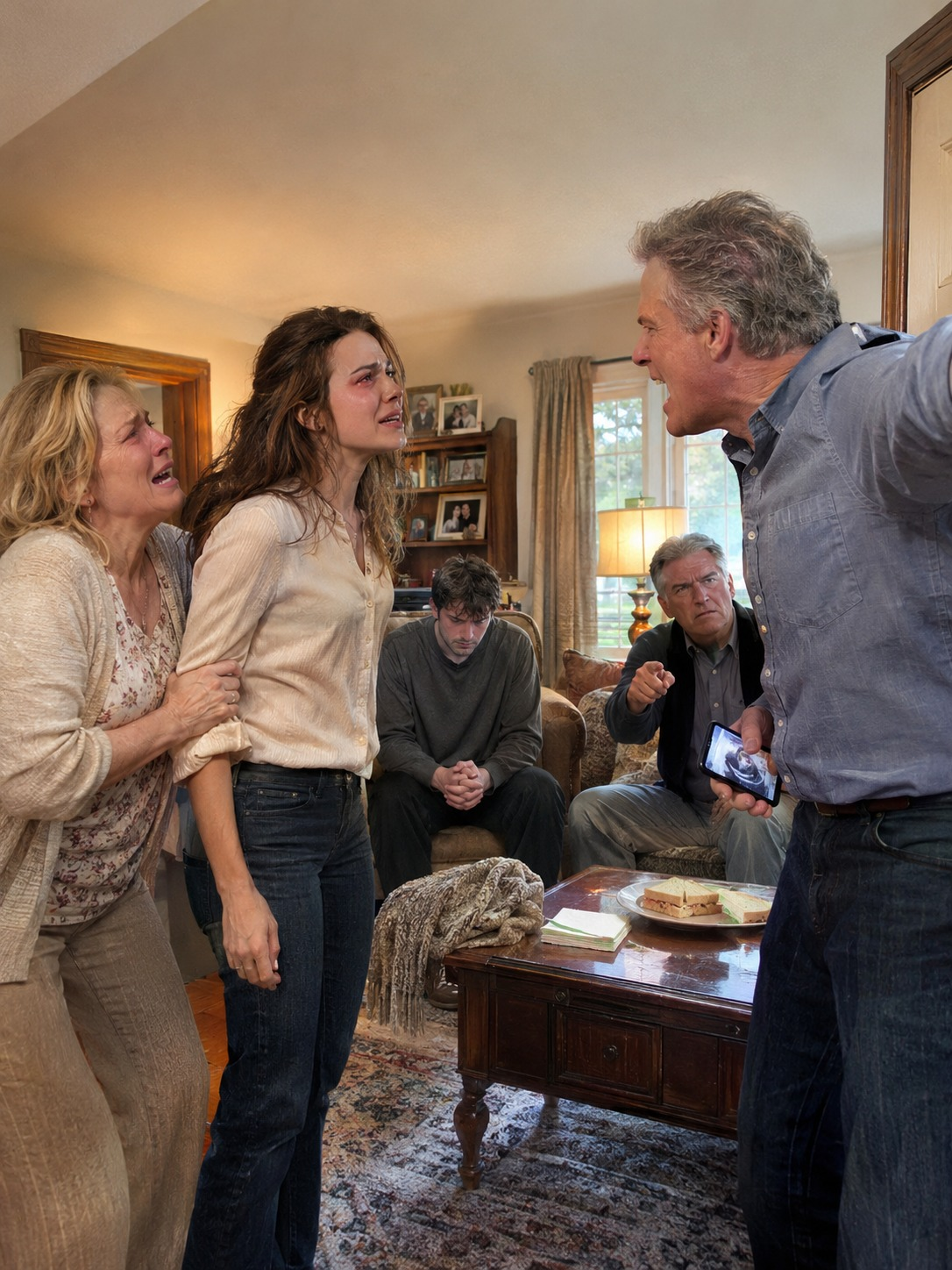
The same brother who had sat in our parents' living room with his head lowered while Dad demanded one of my kidneys.
The same brother who had told me he didn't want to pressure me.
The same brother who had called me the night before and said he didn't know anything about the paperwork.
His name was on the document.
"Ms. Bennett? Are you still there?"
"Yes."
"Do you recognize that name?"
"He's my younger brother."
The woman paused.
"I see."
I sat down slowly.
"What exactly is this document?"
"My name is Melissa Grant. I work in the patient financial services office associated with a medical billing company. We received a request to establish a financial responsibility arrangement connected to your brother's care."
I looked at the photograph Dad had sent.
"Is it a kidney donation consent form?"
"No, ma'am."
The answer came immediately.
I felt my pulse quicken.
"Then why does it say living donor authorization?"
"That's part of the description supplied with the paperwork. It isn't a surgical consent form."
I pressed my free hand against my forehead.
"Can you tell me what I'm supposed to be authorizing?"
Melissa hesitated.
"I can explain the general purpose of the form. Before discussing any account-specific information, we'll need to complete our identity verification process."
"Of course."
She asked several questions.
I answered them.
Then she explained that the document appeared to request my acceptance of financial responsibility for certain expenses associated with a proposed treatment arrangement.
I stared at the wall.
"Financial responsibility?"
"Yes."
"As in paying bills?"
"Potentially. The exact obligations would depend on the terms of an approved agreement."
I felt sick.
For nearly two years, I'd been sending money to help with Micah's medical expenses.
I'd given up savings, postponed purchases, and worked extra hours whenever Mom said the family was struggling.
Now my name was attached to another financial document.
And I hadn't signed it.
"How much money are we talking about?"
"I can't give you a confirmed amount because this arrangement hasn't been approved. But the request references anticipated expenses."
"Who submitted it?"
"The submission identifies your father as the family representative."
I closed my eyes.
Of course it did.
"Was it accepted?"
"No. It was flagged for review."
"Why?"
"Because the signatures and authorization information raised questions."
I looked down at my hands.
They were trembling.
"Did someone notice that my signature wasn't real?"
Melissa chose her words carefully.
"The document was incomplete, and we weren't able to verify that the people named had personally authorized it. That's why I contacted you."
I took a breath.
"Please don't approve anything."
"I understand your concern. The request is on hold. We can document that you're disputing the signature, and our compliance department can review it."
"Can I get a copy?"
"We can explain the process for requesting the records you're entitled to receive."
I reached for a notebook on my nightstand.
For the next several minutes, I wrote down everything she told me.
Her name.
The company.
The reference number.
The date the paperwork had been submitted.
The process for disputing the authorization.
When she finished, I asked one more question.
"Does any of this mean my brother has a transplant scheduled?"
"No, Ms. Bennett. Our office doesn't schedule transplant surgery. I can't confirm anything about his clinical treatment."
I swallowed.
"So this document doesn't prove that I'm a compatible donor?"
"Correct."
"And it doesn't mean I've agreed to donate?"
"Correct."
I looked at the photograph again.
My father had held that paper over my head like a verdict.
He had told me it was too late to refuse.
But the document didn't establish what he claimed.
It wasn't proof of compatibility.
It wasn't proof of surgery.
And it certainly wasn't proof that I'd agreed to give anyone a kidney.
"Thank you," I whispered.
"Ms. Bennett?"
"Yes?"
"I'm glad you called back and asked questions."
I almost cried.
It was such a simple statement.
But after an entire day of being told that asking questions made me selfish, hearing a stranger treat my concerns as reasonable felt overwhelming.
When the call ended, I sat motionless.
Then I looked at the notebook.
Micah's name was written beside mine.
I couldn't stop staring at it.
Had my brother signed something?
Had Dad signed for him too?
Had Micah known that I was being presented as both a potential donor and a financial guarantor?
I wanted to believe he hadn't.
But believing people without asking questions was how I'd ended up here.
I opened our message thread.
My last message from him was ordinary.
Hope you got some sleep.
I typed:
Micah, I need to ask you something important. Did you sign any paperwork with Dad about my kidney donation?
I stared at the message.
Then I sent it.
The little word Delivered appeared beneath it.
I waited.
One minute.
Three minutes.
Five.
Nothing.
I put the phone down and went into the bathroom.
I splashed cold water on my face.
When I looked in the mirror, I barely recognized myself.
My eyes were swollen.
My hair was tangled.
I looked like someone who had spent the night grieving.
In a way, I had.
I wasn't grieving my father.
Not exactly.
I was grieving the version of him I'd spent thirty years trying to please.
The father who taught me to ride a bicycle.
The father who sat through my school concerts.
The father who once drove through a snowstorm to pick me up when my car broke down.
Those memories were real.
That was what made everything so confusing.
He hadn't been cruel every day.
He had been loving often enough that I kept explaining away the days when he wasn't.
I dried my face and returned to the bedroom.
Micah had replied.
What paperwork?
I sat on the edge of the bed.
The financial authorization Dad submitted. Your name is on it.
The typing indicator appeared.
Then disappeared.
Then appeared again.
Finally:
I don't know what you're talking about.
I studied the message.
Did you sign anything yesterday?
No.
Did Dad ask you to?
He had me look at some forms last week.
My stomach tightened.
What forms?
I don't remember. Something about treatment expenses.
I stared at the screen.
Did you sign them?
A long pause.
Then:
I signed one paper. Dad said it was for the insurance stuff.
I closed my eyes.
That explained why his name might be on the document.
It didn't explain mine.
Did you see my name on it?
This time, he called.
I answered immediately.
"Claire?"
"Hey."
He sounded breathless.
"What's going on?"
"I just spoke with someone from a medical billing office."
"Why?"
"Because Dad submitted paperwork with my signature on it."
Micah went silent.
"Micah?"
"I'm here."
"Did you know about that?"
"No."
"Are you sure?"
"Claire, I swear."
His voice sounded frightened.
I wanted to believe him.
"I didn't sign anything," I said. "Mom admitted she signed my name."
"What?"
"She said Dad told her it was necessary."
I heard movement on the other end.
Then a door closing.
"Where are you?" I asked.
"At home."
"Are Mom and Dad there?"
"Dad's downstairs."
"Does he know you're talking to me?"
"No."
The answer came too quickly.
I sat straighter.
"Micah, what did Dad tell you about the transplant?"
He exhaled.
"He said they were trying to arrange something."
"Did he say I'd agreed?"
"Not exactly."
"What did he say?"
Micah hesitated.
"He said you were scared, but you'd come around."
I felt a sharp ache behind my ribs.
"Did he tell you I was the only match?"
"Yes."
"Did your doctor tell you that?"
"No."
"Did anyone from a transplant center contact you about me?"
"I don't know."
"Micah."
"Claire, I don't handle all the paperwork. Dad does."
I looked toward my kitchen.
The small stack of bills on my counter suddenly seemed strangely comforting.
Every one of them had my name on it because I'd chosen to put it there.
"Do you know the name of the surgeon?" I asked.
"No."
"The hospital?"
He hesitated.
"I assumed it would be the same hospital where I get treatment."
"Did Dad actually tell you that?"
"No."
I rubbed my forehead.
"Then what exactly has been arranged?"
"I don't know!"
His voice cracked.
The sudden volume startled me.
"I'm sorry," he said immediately.
"It's okay."
"No, it's not."
I heard him breathing heavily.
"Everybody keeps telling me this is going to happen. Mom's already talking about what I'll do when I can work again. Dad says I should start thinking about getting my old life back."
I closed my eyes.
"Micah..."
"I wanted to believe them."
His voice broke.
"I wanted it so badly."
I felt tears slide down my cheeks.
"I know."
For a while, neither of us spoke.
Then he whispered, "Do you think Dad lied?"
I looked at the forged signature on my phone.
"I know he lied about me agreeing."
Micah didn't answer.
"I don't know what else he lied about."
He made a small sound.
Almost a sob.
"I can't do this again, Claire."
"Do what?"
"Get my hopes up."
My heart broke for him.
Whatever Dad had done, Micah was still sick.
He was still exhausted.
He still needed treatment.
And now he was facing the possibility that the hope our parents had offered him wasn't based on anything real.
"Listen to me," I said. "I'm going to find out what's true."
"How?"
"I'm going to speak with the doctors myself."
He was quiet.
Then he said, "Dad won't like that."
I almost laughed.
"No. He won't."
"Claire, be careful."
Something in his voice changed.
I sat up.
"What do you mean?"
"Just... don't let him get you alone when he's angry."
I stared at the wall.
"Has something happened?"
"No."
"Micah?"
"He gets worked up."
"Has he threatened you?"
"No. Not like that."
I didn't like the way he answered.
But before I could ask more, I heard a muffled voice in the background.
Dad.
Micah stopped speaking.
Then he whispered, "I have to go."
"Wait."
"Claire, please."
The call ended.
I sat holding the phone.
My brother had sounded afraid.
Not just sick.
Afraid.
That frightened me more than I wanted to admit.
I went to work that afternoon because I didn't know what else to do.
I was an administrative coordinator for a small commercial insurance agency.
My job involved organizing records, handling client documents, and making sure people signed the correct forms.
Normally, I liked the predictability.
A document came in.
I checked it.
If something was missing, I sent it back.
There were procedures.
There were rules.
There were consequences for pretending someone had agreed to something they hadn't.
That afternoon, every signature I saw reminded me of the photograph Dad had sent.
At three o'clock, my coworker Jenna appeared beside my desk.
"Claire?"
I looked up.
She was holding two cups of coffee.
"You look like you haven't slept in a week."
"Feels like it."
She set one cup down.
"Want to talk?"
I hesitated.
Jenna and I had worked together for four years.
She knew my family was complicated.
She knew Micah was sick.
But I had never told her how much money I'd given my parents or how often Dad made me feel guilty.
I was embarrassed.
Not because I'd helped my brother.
Because I was beginning to understand how little control I'd had over my own decisions.
"My dad wants me to donate a kidney," I said.
Jenna pulled up a chair.
"Okay."
"He says I'm the only match."
"Have you been tested?"
"No."
She frowned.
"Then how does he know?"
I looked at her.
That was it.
No accusation.
No lecture.
No suggestion that I was selfish.
Just the same question I'd asked in my parents' living room.
And unlike my father, Jenna seemed to think it deserved an answer.
"He doesn't," I said.
Then I told her everything.
The family meeting.
The threats.
The forged signature.
The phone call from Melissa.
Micah's confusion.
Jenna listened without interrupting.
When I finished, she sat back.
"Claire, you need to keep every message."
"I have screenshots."
"Good."
"And I wrote down what Melissa said."
"Good."
She paused.
"Have you spoken with an attorney?"
I shook my head.
"Do I need one?"
"I'm not a lawyer. But somebody signed your name to a financial document. I'd at least want professional advice before this goes any further."
I stared at my coffee.
"I don't want to get my mother in trouble."
Jenna's expression softened.
"I know."
"She was trying to help Micah."
"Maybe she believed she was."
I looked up.
"But that doesn't mean she had permission to sign your name."
I swallowed.
Jenna leaned forward.
"And Claire? You don't have to decide whether to donate a kidney just because somebody else decided you should."
I felt my eyes sting.
"Why does everyone outside my family understand that?"
She didn't answer immediately.
Then she said, "Maybe because we're not asking you for anything."
I looked away.
That sentence stayed with me for the rest of the afternoon.
At five thirty, I left work and drove home.
My phone had been unusually quiet.
No calls from Dad.
No messages from Mom.
Nothing from Uncle Dale.
The silence should have been a relief.
Instead, it made me uneasy.
When I reached my apartment, I checked the lock before going inside.
Then I sat at the kitchen table and opened my laptop.
I searched for Dr. Elena Reyes, the kidney specialist who had treated Micah for years.
I remembered her from an appointment I'd attended with him.
She had been patient and direct.
She explained things without making Micah feel foolish.
Years earlier, I'd driven him to one of his visits, and he'd listed me as a family contact.
I still had the clinic's number saved.
I wanted to call immediately.
But it was after office hours.
I decided to call the next morning.
Before closing my laptop, I looked at the photograph of the document one more time.
The hospital name.
The reference number.
The two signatures.
Then I noticed something else.
At the very bottom of the page was a line of tiny print.
It said that the financial arrangement would not become effective until the named parties completed independent verification.
Independent verification.
That explained why Melissa had called.
My father had submitted a document that couldn't move forward without someone confirming it.
He must have known that.
Unless he hadn't read the form.
Or unless he expected me to cooperate once the office contacted me.
I thought about his message.
Too late to refuse.
Maybe he had believed that if he could make the process look official enough, I would be too frightened to challenge it.
Maybe he'd counted on me doing what I'd always done.
Giving in.
My phone rang.
Mom.
I watched it vibrate.
Then I answered.
"Hi, Mom."
"Claire."
Her voice sounded strained.
"Are you home?"
"Yes."
"Good."
A pause.
Then she said, "Your father wants to apologize."
I stared at the wall.
My father?
Apologize?
"About what?"
"About how things went yesterday."
I waited.
"He's been under so much stress," she continued. "He didn't mean everything he said."
"Did he mean that I was no longer his daughter?"
She began crying.
"Please don't make me repeat those awful words."
"Mom, he said them."
"I know."
"And he sent me a document with my forged signature."
Silence.
Then she whispered, "We can explain that."
"Then explain it."
"Not over the phone."
I felt my stomach tighten.
"Why not?"
"Because this family needs to talk face-to-face."
"We already did."
"Claire, please."
I closed my eyes.
"Mom, I'm not driving four hours back just to be threatened again."
"No one is going to threaten you."
I didn't answer.
She took a shaky breath.
"Your father has something he wants to show you."
"What?"
"Something important."
"Then he can send it."
"He doesn't want to."
"Why?"
She hesitated.
Then she said, "Because he thinks you'll misunderstand."
I stared at the phone.
That phrase again.
Misunderstand.
Apparently, every time my father did something I didn't like, the problem was my inability to understand it.
"Mom, I need to speak to Dr. Reyes."
Her breathing changed.
"Why?"
"Because I want accurate information about Micah's treatment and the donation process."
"Your father already explained everything."
"No, he didn't."
"Claire..."
"I'm calling the clinic tomorrow."
The line went quiet.
Then I heard something in the background.
A chair scraping.
A door opening.
My father's voice.
"Did she say she's calling the doctor?"
Mom didn't answer him.
"Mom?"
Her voice became very small.
"Sweetheart, maybe you should wait."
"Why?"
"Just until we've had a chance to talk."
I stood.
"Mom, what are you afraid the doctor is going to tell me?"
There was no answer.
Then my father spoke.
Not to me.
To her.
"Hang up."
"Richard—"
"I said hang up."
The call ended.
I stood in my kitchen, staring at the dark screen.
My father hadn't sounded angry this time.
He had sounded alarmed.
I opened my contacts and found Dr. Reyes's clinic.
I was about to save the number to my favorites when a text appeared.
It came from Micah.
Three words.
Don't call yet.
I stared at the message.
Then another appeared.
Dad found out.
I began typing.
Found out what?
Before I could send it, my phone rang.
Micah again.
I answered.
"Micah?"
He was whispering.
"Claire, listen carefully."
"What's wrong?"
"I heard Dad talking to Uncle Dale."
My heart began pounding.
"About what?"
There was a noise in the background.
A door closing.
Micah's breathing quickened.
"Micah?"
He whispered, "They weren't talking about my transplant."
I gripped the edge of the counter.
"What were they talking about?"
He hesitated.
Then I heard my father's voice, distant but unmistakable.
"Micah? Who are you talking to?"
My brother's breathing stopped.
A floorboard creaked.
Then he whispered one final sentence.
"Claire, I think the money you sent us is gone."
The line went dead.
I stood frozen.
Then my phone lit up again.
This time, it wasn't a call.
It was a photograph from Micah.
A folded bank statement lay on the kitchen table.
My father's name appeared at the top.
Below it was a series of withdrawals.
And beside the largest withdrawal, someone had written a name in red ink.
I enlarged the image.
It was a name I hadn't seen in years.
And underneath it was a date.
The same date my grandfather's inheritance had disappeared.






Comments 0