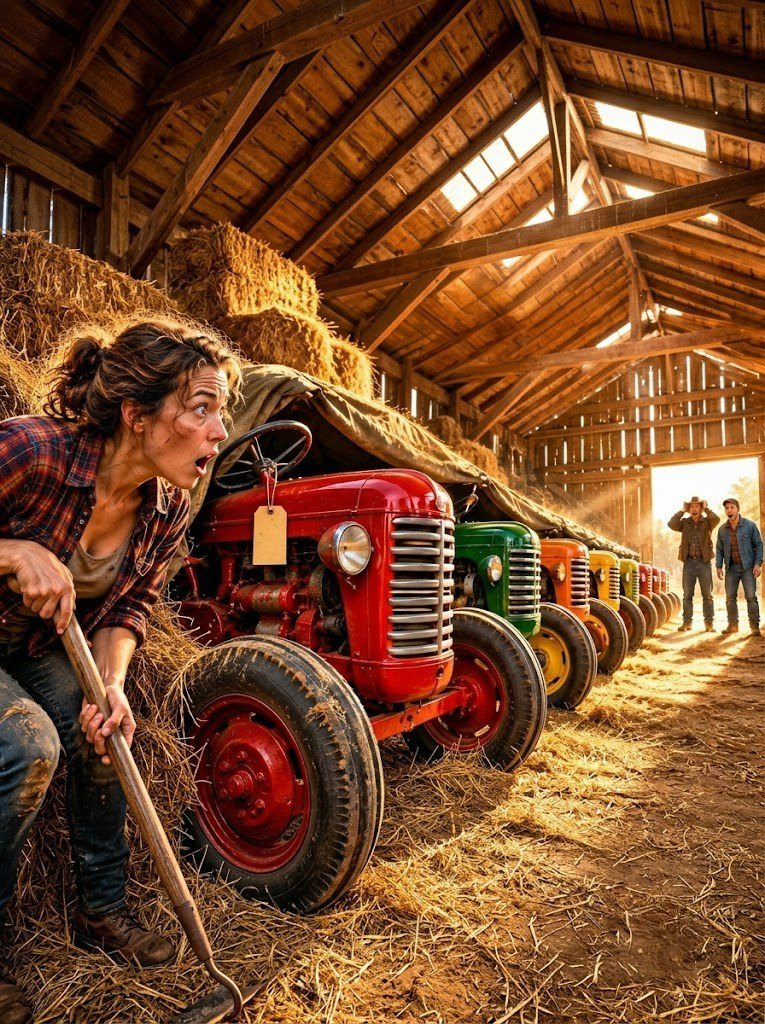
"Ardis, don't believe anything they tell you."
The voice came from the courthouse hallway.
For one impossible second, Ardis Lindquist forgot how to breathe.
Eino.
It sounded like Eino.
The same low, steady voice that had called her in from the barn on winter evenings. The same gentle roughness at the end of a sentence. The same familiar way of saying her name.
But Eino had been dead for twenty-eight months.
Ardis turned toward the doorway.
A man stood beneath the flickering fluorescent light.
He was tall and thin, with a gray beard and a dark winter coat. A wool scarf covered the lower half of his face.
Gordon Niskanen moved immediately between Ardis and the stranger.
"Who are you?"
The man lowered his scarf.
Ardis stared.
It wasn't Eino.
The man's face was longer. His nose was crooked. A pale scar crossed his left cheek.
But the resemblance was unmistakable.
Especially around the eyes.
"Who are you?" Gordon repeated.
The stranger looked at Ardis.
"My name is Paul Lindquist."
The room went silent.
Ardis felt her heart pounding.
"Lindquist?"
He nodded.
"Eino was my cousin."
She stared at him.
"Eino never told me about you."
Paul's expression tightened.
"There's a reason for that."
Gordon stepped forward.
"Then you'd better explain it."
Paul looked toward the open records cabinet.
Then at the photograph in Ardis's hand.
"You found it."
Ardis slowly lowered the photograph.
"The picture?"
He nodded.
"Yes."
She felt anger rising.
"Who is the young man standing beside the tractors?"
Paul took a breath.
"That's my father."
Ardis stared.
"Your father?"
"His name was Daniel Lindquist."
Gordon frowned.
"Eino's uncle?"
Paul nodded.
"And the man who knew why those tractors were hidden."
Carol Jensen closed the records-room door.
Sheriff Daniel Harlan had been contacted and was on his way.
Until he arrived, nobody was leaving.
Ardis sat at the long wooden table.
The photograph lay before her.
Werner Ruona.
Harold Velde.
Martin Kessler.
And a young man she had mistaken for Eino.
Paul Lindquist stood opposite her.
He looked uncomfortable.
Almost frightened.
Ardis studied his face.
The resemblance to Eino was strongest when he lowered his eyes.
She remembered a photograph from Eino's childhood.
A family gathering.
Several men standing beside a farmhouse.
One had been introduced as Uncle Daniel.
She hadn't thought about him in decades.
Now the memory returned.
"Daniel was Anders's younger brother," she said.
Paul nodded.
"Yes."
"Then he was Eino's uncle."
"That's right."
Ardis looked at the photograph.
"And he was there in 1946."
Paul nodded again.
"He worked for the creamery."
Gordon leaned forward.
"Doing what?"
"Maintenance. Deliveries. Whatever needed doing."
Ardis felt a chill.
"Did he help hide the tractors?"
Paul hesitated.
"Yes."
She closed her eyes.
Another secret.
Another Lindquist.
Another person who had known about the machines while she struggled to keep the family farm alive.
"Why didn't he tell anyone?" she asked.
Paul looked toward the window.
"Because he believed telling the truth would destroy several families."
Sheriff Harlan arrived fifteen minutes later.
He entered the records room with a deputy.
His expression was grim.
"Nobody touches anything else until we establish what we've got."
Ardis looked up.
"Did you find the man from the hospital?"
"Not yet."
"Then who was he?"
The sheriff hesitated.
"We believe he was using Richard Kessler's identity."
Gordon frowned.
"But Richard Kessler died in 1988."
"That's what the records indicate."
Ardis turned toward the tall gray-haired stranger who had introduced himself as Richard Kessler earlier.
"And who are you?"
The man sighed.
"My name is James Kessler."
Sheriff Harlan looked sharply at him.
"James?"
The stranger nodded.
"Richard was my older brother."
Ardis stared.
"Then why did you say you were Richard?"
James looked embarrassed.
"I didn't. I said my name was Kessler when I came in. Mrs. Lindquist assumed I meant Richard."
Gordon shook his head.
"You could have corrected her."
"I was trying to explain."
The sheriff raised a hand.
"Enough."
He turned toward James.
"Start from the beginning."
James took a breath.
"My father was Martin Kessler. Richard was my brother. He died in 1988. I've spent years trying to understand what happened with the Ruona dealership."
Ardis frowned.
"And the man at the hospital?"
James looked toward Paul.
"His name is Leonard Voss."
The room went silent.
Ardis stared.
"Who?"
"Leonard Voss. He worked as a junior clerk at First State Bank in 1946."
Gordon looked incredulous.
"That would make him nearly seventy."
James nodded.
"He's seventy-one."
Ardis felt her stomach tighten.
"And he pretended to be Richard Kessler?"
"Yes."
"Why?"
James looked toward the old documents.
"Because he wanted access to my father's private records."
The sheriff sat down.
"How do you know this?"
James removed a folder from his briefcase.
Inside were copies of letters and bank memoranda.
"My father kept records of the Ruona account. After Richard died, some of those papers came to me."
Ardis leaned forward.
"Did they mention the tractors?"
"Yes."
"Did they explain who owned them?"
James hesitated.
"Not completely."
Ardis felt frustration rising.
"Of course not."
He looked at her.
"But they explain why the bank concealed them."
Margaret Bell, who had arrived shortly after the sheriff, moved closer.
"Then let's hear it."
James opened the folder.
"In 1945, Ruona Implement received seven tractors that were supposed to be allocated to local customers."
Ardis nodded.
"We know that."
"The dealership had borrowed money against its inventory."
"Yes."
"Then several customers paid deposits."
Margaret leaned forward.
"And the bank applied those deposits against the dealership's account?"
James nodded.
"That's what my father's notes indicate."
Ardis felt cold.
"So the farmers paid money, but the tractors were never delivered."
"Correct."
"Why?"
James took a slow breath.
"Because Werner Ruona had promised some of the machines to more than one customer."
The room went silent.
Gordon muttered, "Good Lord."
James continued.
"When the discrepancies were discovered, the bank faced a problem. If it seized the machinery, the customers might demand repayment. If it released the tractors, the dealership's financing records would have to be corrected."
Margaret nodded slowly.
"So they stored the machines while negotiating a settlement."
"Yes."
"And the creamery agreed to hold them."
"Yes."
Ardis looked toward the photograph.
"Then why hide them behind a wall?"
James hesitated.
"Because the bank didn't want the public to know the machinery existed while the customer claims remained unresolved."
Ardis felt anger rising.
"Those farmers waited for tractors they had paid for."
"I know."
"And the bank hid them?"
James lowered his eyes.
"Yes."
Ardis stared at him.
"That's not a business mistake."
Nobody answered.
Paul Lindquist stepped forward.
"My father found out what happened."
Ardis turned.
"Daniel?"
Paul nodded.
"He worked at the creamery. He helped move the tractors into the ice room."
"Did he know about the customer deposits?"
"Not at first."
"When did he learn?"
"In 1946, after Werner died."
Paul looked toward the old register.
"Harold Velde told him."
Ardis felt a chill.
"Then Daniel knew the tractors were being hidden from the customers."
"Yes."
"Why didn't he tell them?"
Paul looked ashamed.
"He was twenty-six. He had a wife and a baby. He was afraid of losing his job."
Gordon nodded slowly.
"That sounds like something a young man might do."
Ardis looked at him.
"Maybe. But people suffered because of it."
Paul lowered his eyes.
"I know."
He took a folded letter from his coat.
"My father regretted it for the rest of his life."
Margaret held out her hand.
"May I?"
Paul gave her the letter.
It was dated 1970.
The year before Anders Lindquist died.
Margaret read it carefully.
Then looked toward Ardis.
"This was written to Anders."
Ardis leaned forward.
"What does it say?"
Margaret began reading.
Daniel had written that the seven tractors remained in storage because the bank and dealership had failed to complete the settlement.
He believed the original customer claims had been partly repaid.
But one claim remained unresolved.
The Lindquist claim.
Ardis felt her heart pounding.
"Anders?"
Margaret nodded.
"Apparently."
Paul continued.
"My father believed Anders had purchased the remaining claim from another customer."
"Henry Soderberg?" Ardis asked.
"No."
"Then who?"
Paul looked toward the old register.
"A farmer named Walter Lindquist."
Ardis frowned.
"I don't know him."
Paul nodded.
"He was a distant relative. He died in 1947."
Margaret examined the letter.
"And Anders acquired his claim?"
"Yes."
Ardis looked toward Gordon.
"Then the seventh share belonged to Eino's father."
Gordon nodded.
"And after Anders died, it may have passed to Eino."
Margaret raised a hand.
"Possibly. We still need the estate records."
Ardis sighed.
"Another document."
Margaret gave her a small smile.
"Yes. But we're getting closer."
Carol Jensen returned to the records cabinet.
She examined the index book again.
Then looked toward the sheriff.
"There's something I need to show you."
Everyone turned.
Carol pointed toward the 1946 land transfer.
The creamery cooperative had received certain property rights connected to the old railroad parcel.
But the transfer had never been fully recorded.
A second document had been filed later.
And the name of the grantee had been altered.
Ardis leaned forward.
"Altered by whom?"
Carol shook her head.
"I can't tell from this copy."
Margaret studied the page.
"Is there an original?"
Carol nodded.
"Yes."
"Where?"
"In the county's older deed archive."
Ardis felt her pulse quicken.
"Can we see it?"
Carol hesitated.
"The archive is in the basement."
Sheriff Harlan looked toward the clock.
"Then let's go."
The courthouse basement smelled of dust, old paper, and damp concrete.
Carol led them through a narrow corridor lined with metal shelves.
Fluorescent lights flickered overhead.
Ardis followed Gordon.
Margaret walked beside the sheriff.
Paul and James remained close behind.
At the end of the corridor stood a heavy steel door.
Carol unlocked it.
Inside were rows of archival boxes.
She consulted the index.
Then climbed a short ladder.
She removed a box labeled:
VASA JUNCTION PROPERTY TRANSFERS — 1945–1948.
Ardis felt her heart pounding.
Carol placed the box on a table.
Opened it.
And began sorting through the folders.
Finally, she found a sealed envelope.
It carried the same reference number as the altered deed.
Margaret leaned forward.
"That's it."
Carol carefully opened the envelope.
Inside was the original transfer.
The paper was yellowed.
The ink had faded.
But the signatures remained visible.
Ardis leaned closer.
The document described a narrow strip of land extending from the creamery to the river.
It included a permanent access easement.
And a provision concerning the creamery's water rights.
Margaret read carefully.
Then stopped.
"Oh, my."
Ardis looked up.
"What?"
Margaret pointed toward a paragraph.
"The water rights weren't transferred to the Ruona family."
Ardis stared.
"Then who owns them?"
Margaret continued reading.
"The rights were reserved to the creamery cooperative and its lawful successors."
Gordon frowned.
"Then whoever owns the creamery may have access to the water?"
"Possibly, depending on the terms and later transfers."
Ardis felt a surge of hope.
"The well."
Margaret nodded.
"The old well may be more valuable than we realized."
Ardis looked toward the map.
The creamery.
The railroad strip.
The river.
The proposed access road.
Robert Ruona's company had been trying to acquire all three.
Now she understood why.
But Margaret wasn't finished.
She turned the page.
A second paragraph described an option to purchase the adjoining agricultural property if certain conditions were met.
Ardis felt cold.
"Adjoining agricultural property?"
Margaret looked toward her.
"The Lindquist farm."
The room went silent.
Ardis stared at the document.
"How can a 1946 agreement affect my farm?"
Margaret read the paragraph again.
"It appears the cooperative negotiated an option involving adjacent land."
Gordon frowned.
"But Anders owned the farm."
"Yes."
"And he never sold it."
"Apparently not."
Margaret studied the signatures.
"An option isn't the same as a sale. We need to determine whether it was exercised, expired, or otherwise terminated."
Ardis looked toward the bottom of the page.
There were three signatures.
One belonged to the creamery cooperative.
One belonged to First State Bank.
And one belonged to Anders Lindquist.
Her husband's father.
Ardis felt her stomach tighten.
"Anders signed it."
Margaret nodded.
"Yes."
"Then he agreed to sell the farm?"
"Not necessarily. He may have granted a limited option under specific conditions."
Ardis looked at the document.
"What conditions?"
Margaret turned another page.
Then stopped.
The final page was missing.
Only two torn holes remained near the binding.
Ardis stared.
"Of course."
Gordon looked toward the sheriff.
"Somebody removed it."
Carol nodded.
"It appears so."
Margaret examined the torn edge.
"The missing page may contain the expiration date or conditions."
Ardis felt the old fear returning.
Robert Ruona's company had been planning to acquire her farm.
The creamery.
The railroad land.
And the water rights.
Now an old document suggested there had once been an option involving the Lindquist property.
If Robert could claim that option remained valid, he might try to use it against her.
Even if the claim ultimately failed, the legal fight could cost more than she had.
And she was already facing $94,600 in debt.
Sheriff Harlan examined the archive box.
"Who had access to this room?"
Carol looked uncomfortable.
"County employees. Authorized researchers. Attorneys with permission."
"Anyone recently?"
Carol checked the access log.
Then stopped.
Her face changed.
"What?" the sheriff asked.
She pointed toward an entry.
"Charles Whitcomb."
Ardis felt cold.
Robert Ruona's attorney.
Again.
"When?" Margaret asked.
Carol looked at the date.
"October 28, 1991."
Ardis stared.
"Before the auction."
Carol nodded.
"Yes."
Gordon muttered, "That explains a lot."
Margaret leaned forward.
"Did he request this specific file?"
Carol checked another page.
"Yes."
The sheriff looked toward the torn document.
"Then we'll need to speak with him."
Ardis felt anger rising.
"He's been looking for the same thing Eino found."
Margaret nodded.
"That appears likely."
"And he knew the farm was connected."
"Yes."
Ardis looked toward the old deed.
For years, she had believed her farm was threatened only by debt.
Now she was facing a second danger.
A forty-five-year-old agreement.
A missing page.
And a wealthy family that might be trying to revive a forgotten property claim.
They returned upstairs shortly before closing.
Margaret took certified copies of the documents.
Sheriff Harlan arranged to preserve the archive access records.
Paul Lindquist agreed to provide his father's letters.
James Kessler promised to turn over the remaining bank papers.
Ardis stood near the courthouse window.
Snow had begun falling again.
Gordon approached.
"You all right?"
She gave a tired laugh.
"No."
He nodded.
"Fair enough."
She looked toward the street.
"I thought the tractors were going to save the farm."
"They still might."
"Now they're connected to a document that could help someone take it."
Gordon stood beside her.
"That's not decided."
"I know."
She looked at him.
"But I'm tired of people telling me what isn't decided."
He smiled faintly.
"Then let's find something that is."
That evening, Ardis returned to the farmhouse.
She fed the cows.
Checked the pump.
Then sat at the kitchen table with Eino's old ledger.
She opened it to June 1989.
The names were still there.
Harold Velde.
Dale Mercer.
Martin Kessler.
Anders Lindquist.
Then the note:
Seven shares. Six settled. One outstanding.
She turned the page.
Find release before auction.
Ardis stared.
Release.
Not settlement.
Not ownership.
Release.
She thought of the bank lien.
The creamery transfer.
The missing option page.
The water rights.
And the old railroad parcel.
Then she remembered something.
Eino had kept a separate envelope of farm deeds.
Not in the desk.
Not in the metal box.
But inside a wooden chest beneath their bed.
She hadn't opened it since his funeral.
Ardis stood.
Went to the bedroom.
And knelt beside the chest.
Inside were old blankets.
Wedding photographs.
Eino's army discharge papers.
And a thick envelope labeled:
LAND DOCUMENTS — LINDQUIST FARM.
Her hands trembled.
She opened it.
Inside were the original deed.
Mortgage papers.
Tax records.
And a folded document dated September 1971.
The year Anders died.
Ardis unfolded it.
The heading read:
RELEASE OF OPTION AND TERMINATION OF PROPERTY CLAIM.
Her heart began pounding.
She read the first paragraph.
It referred to the 1946 agreement.
The Lindquist farm.
The creamery cooperative.
And the adjoining water-access parcel.
Then came the crucial sentence.
All rights of purchase under the 1946 option are hereby terminated and released.
Ardis stared.
Released.
Terminated.
The old option had been canceled.
Her farm couldn't be claimed under that agreement.
At least, not if the release was valid.
She looked toward the signature.
Anders Lindquist.
Then another.
A representative of the creamery cooperative.
And a third.
Martin Kessler.
Her hands began shaking.
The same banker.
The same man who had helped hide the tractors.
He had also signed the release protecting the farm.
Ardis felt tears fill her eyes.
"Eino," she whispered, "you found it."
Then she noticed a handwritten note on the back.
It was in her husband's familiar handwriting.
If anyone questions the farm title, show this to a lawyer.
She closed her eyes.
For twenty-eight months, the answer had been beneath her bed.
Ardis telephoned Margaret immediately.
The attorney answered from home.
Ardis explained the discovery.
Margaret listened.
Then asked her to read the heading again.
Ardis did.
A long silence followed.
Then Margaret spoke.
"Ardis, this may be extremely important."
"Does it protect the farm?"
"If it's authentic and legally effective, it could defeat a claim based on the old option."
Ardis felt relief.
"Then we have them."
"Not yet. We need to verify the signatures and recording history."
Ardis sighed.
"There's always another step."
"Yes. But this is a very good step."
Ardis smiled through her tears.
"Thank you."
Margaret continued.
"Bring it to my office first thing tomorrow."
"I will."
"And don't tell anyone else about it tonight."
Ardis looked toward the window.
"Why?"
"Because someone has already removed pages from the county records."
The relief vanished.
Margaret's voice grew serious.
"Keep that document somewhere safe."
Ardis nodded.
"I will."
After hanging up, she placed the release inside the metal box.
She locked it.
Then carried the box into the bedroom.
For a moment, she considered hiding it beneath the bed again.
Instead, she put it inside the old cedar wardrobe.
Behind Eino's winter coats.
She closed the door.
Then returned to the kitchen.
The clock read 10:47 p.m.
Outside, snow drifted across the yard.
The barn light glowed in the darkness.
Ardis poured herself a cup of tea.
She sat down.
And for the first time in weeks, she allowed herself to imagine keeping the farm.
Not selling the cows.
Not losing the land.
Not watching strangers drive up the lane and tell her she had to leave.
She imagined spring.
Green fields.
The old maple tree beside the house.
And perhaps, someday, a restored John Deere tractor sitting proudly near the barn.
Then the telephone rang.
Ardis answered.
"Hello?"
A man's voice spoke.
"Mrs. Lindquist?"
"Yes."
"This is Charles Whitcomb."
Her blood turned cold.
Robert Ruona's attorney.
"What do you want?"
"I understand you've been reviewing old county records."
Ardis stared at the receiver.
"Who told you that?"
He ignored the question.
"I think we should discuss the Lindquist property."
"My attorney can speak with you."
"Of course."
He paused.
"But there's something you should know before tomorrow."
Ardis gripped the receiver.
"What?"
"Your husband's father signed an agreement in 1946."
"I know."
"An agreement that may affect the title to your farm."
"I know that, too."
Whitcomb sounded surprised.
"Then perhaps you understand the seriousness of the situation."
Ardis looked toward the bedroom.
The release was hidden in the wardrobe.
She felt a sudden surge of confidence.
"Mr. Whitcomb, I understand more than you think."
There was a pause.
Then he spoke quietly.
"Mrs. Lindquist, I wouldn't be so certain."
She felt cold.
"Why?"
"Because the document you're relying on was never recorded."
Ardis stared.
"How do you know what document I have?"
Whitcomb didn't answer.
Instead, he said:
"And there's another problem."
Her heart began pounding.
"What problem?"
He took a slow breath.
"The man who signed that release on behalf of the creamery had already been removed from office."
Ardis felt the room tilt.
"What?"
"The cooperative's board voted him out three weeks earlier."
She stared at the receiver.
Whitcomb continued.
"If that's correct, he may have lacked authority to sign."
Ardis gripped the table.
"Then we'll let the court decide."
A faint laugh came through the line.
"Perhaps."
She felt anger rising.
"Is that all?"
"No."
He paused.
"There's something else you should understand."
"What?"
"The creamery cooperative didn't simply hold the tractors."
Ardis felt cold.
"It held something else."
She looked toward the acquisition map.
The railroad parcel.
The river.
The well.
"What?"
Whitcomb's voice dropped.
"An agreement concerning the water supply."
Ardis stared.
"What agreement?"
"The one your husband discovered before he died."
Her heart pounded.
"Then why didn't he tell me?"
Whitcomb hesitated.
"Because he knew what it meant."
Ardis felt anger rising.
"Stop speaking in riddles."
There was a long silence.
Then Whitcomb said:
"Mrs. Lindquist, the creamery well is connected to a larger underground water source."
Ardis froze.
"What?"
"And your farm sits directly above part of it."
She stared toward the dark window.
The failing well.
The creamery.
The railroad land.
The river.
Suddenly, the acquisition map made sense.
Robert Ruona's company hadn't simply wanted seven antique tractors.
It wanted control of the water.
Ardis gripped the receiver.
"How much water?"
Whitcomb didn't answer.
Instead, he said:
"Enough that certain people are willing to pay a great deal for the land."
Ardis felt cold.
"Then why are they trying to take mine?"
Whitcomb paused.
"Because they believe they already have the right."
She looked toward the bedroom.
The release.
The old deed.
The missing page.
Everything depended on the documents.
And someone had been trying to destroy or steal them.
Ardis took a breath.
"Mr. Whitcomb, I'm not selling my farm."
There was a long silence.
Then he answered:
"Mrs. Lindquist, by tomorrow morning, you may not have a choice."
The line went dead.
Ardis stood motionless.
Then she heard something outside.
A vehicle.
Moving slowly along the driveway.
Headlights swept across the kitchen window.
She turned.
A dark pickup stopped near the barn.
The engine remained running.
Ardis reached for the telephone.
But before she could dial, the barn light went out.
The yard fell into darkness.
She stared toward the window.
A figure stepped from the pickup.
Then another.
Both men moved toward the barn.
Ardis felt her heart pounding.
Her cows were inside.
Her livelihood.
Everything she had left.
She grabbed her coat.
Then stopped.
Because she heard a sound from the bedroom.
A soft click.
The cedar wardrobe door.
She turned slowly.
The bedroom was dark.
But someone was standing inside.
And in his hands was the metal box containing the only document that might save her farm.






Comments 0