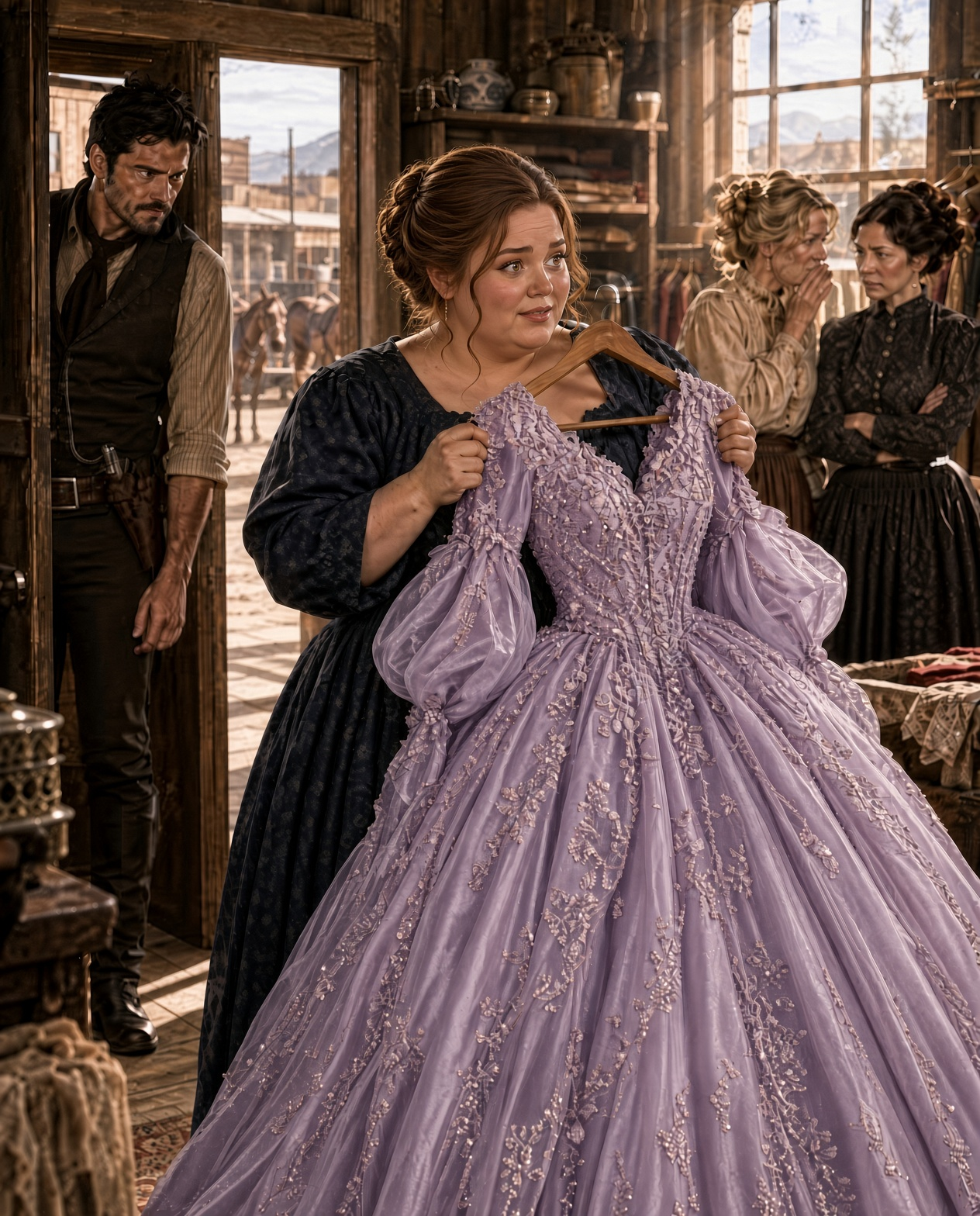
"MARTHA, GET AWAY FROM HIM!"
Nathaniel Ward's scream tore through the quiet room at Mercy House.
My wife froze in the doorway.
Her father stood halfway out of his chair, one trembling hand gripping the windowsill, the other pointing toward the hallway behind us.
His face had gone white.
For one terrible moment, I thought he was pointing at me.
Then I turned.
Thomas stood just beyond the doorway, leaning on his cane.
Beside him was Caleb, holding the satchel containing the documents we had recovered from the freight station.
Nathaniel stared at my brother.
"No," he whispered. "No, they told me you were dead."
Thomas took a cautious step forward.
"Mr. Ward?"
The old man's knees buckled.
I rushed toward him, catching his arm before he fell.
"Easy, sir."
He struggled against me.
"Don't let them take him!"
Martha hurried into the room.
"Papa!"
The sound of her voice stopped him.
He looked at her.
Really looked.
And suddenly the terror in his eyes gave way to something so heartbreaking that I felt my own throat tighten.
"Martha?"
She nodded, tears streaming down her cheeks.
"It's me, Papa."
His lips trembled.
"My little girl?"
She crossed the room and fell to her knees before him.
Nathaniel reached for her face with both hands.
He touched her cheeks.
Her hair.
Her shoulders.
As though he could not believe she was real.
"Oh, sweetheart."
His voice broke.
"My beautiful girl."
Martha began sobbing.
"Papa."
He pulled her into his arms.
And I watched a father hold the daughter he had spent years believing he might never see again.
There are moments in a man's life when words become useless.
This was one of them.
I stepped backward.
Thomas stood beside me, his own eyes filled with tears.
For a long time, neither of us spoke.
We simply watched.
Nathaniel pressed his cheek against Martha's hair.
"I tried to come home," he whispered.
She clung to him.
"I know."
"I tried, baby girl."
"I know, Papa."
His shoulders shook.
"They told me you were gone."
Martha lifted her head.
"Who told you?"
Nathaniel looked toward the doorway.
His eyes found Thomas again.
And once more, fear crossed his face.
I knelt beside him.
"Mr. Ward, this is Thomas Mercer. My brother."
Nathaniel stared.
"Thomas?"
My brother nodded.
"It's me, sir."
The old man covered his mouth.
"But they said..."
"I know."
Nathaniel began crying.
"They said you were dead."
Thomas approached slowly.
"So did everyone else."
The old man reached toward him.
Thomas took his hand.
For several seconds, they held on to each other.
Then Nathaniel whispered, "I thought they killed you because of me."
Thomas shook his head.
"No, sir. They tried because we were getting too close to the truth."
Nathaniel looked at Martha.
Then at me.
His expression softened.
"And who are you?"
I removed my hat.
"Gideon Mercer, sir."
His eyes widened.
"Thomas's brother?"
"Yes."
He looked toward Martha.
She smiled through her tears.
"Papa, Gideon is my husband."
Nathaniel stared.
Then his face crumpled.
"You're married?"
Martha nodded.
"Six months."
He reached for her hand.
"Oh, sweetheart."
His voice broke.
"I missed your wedding."
She shook her head.
"You're here now."
He began crying again.
I moved closer.
"Mr. Ward, I wish I could give you those years back."
He looked at me.
I swallowed.
"But I can promise you this. Your daughter has a home. She's loved. And she'll never have to face hardship alone again."
Nathaniel studied my face.
Then he reached for my hand.
"Thank you for loving my girl."
I shook my head.
"No, sir."
He frowned slightly.
I looked toward Martha.
"She's the one who taught me what love is supposed to look like."
We spent the next several hours listening to Nathaniel Ward tell the story of his disappearance.
It was worse than anything I had imagined.
Arthur Bellamy had not merely stolen his land.
He had destroyed his reputation, threatened his family, and arranged for him to be held at the abandoned freight station until he surrendered the documents proving the fraud.
Nathaniel had refused.
For weeks, he had been confined in the cellar.
The marks we had found carved into the wall were his way of counting the days.
When he finally agreed to surrender what Bellamy demanded, the banker discovered the papers had already been entrusted to Thomas Mercer and Sarah Whitcomb.
Bellamy was furious.
Nathaniel had been moved from place to place, kept under guard, and told that his wife and daughter would suffer if he attempted to escape.
"Then one winter," Nathaniel said quietly, "a freight driver helped me get away."
Martha held his hand.
"What happened?"
"I was sick. Weak. I barely knew where I was."
He looked toward the window.
"The driver took me north. I stayed with a family for a while. But I was frightened of returning."
His voice trembled.
"Every time I thought of coming home, I remembered what Bellamy's men had threatened."
Martha wiped her cheeks.
"Did you know Mama died?"
Nathaniel closed his eyes.
"Not until years afterward."
He covered his face.
"I never got to say goodbye."
Martha moved into his arms.
They cried together.
I looked away.
There was nothing I could do to lessen that pain.
Some losses could not be repaired.
Some wounds would always remain.
But at least they no longer had to carry them alone.
When Nathaniel had recovered enough to travel, he had tried to return to Cheyenne.
By then, his wife was gone, and he had been told Martha had left the territory.
The information had come through a man claiming to act on behalf of the Bellamy estate.
Samuel Porter.
I felt my jaw tighten.
"He lied to you."
Nathaniel nodded.
"He told me my daughter had died during a fever outbreak."
Martha gasped.
I stared at the old man.
"Samuel told you Martha was dead?"
Nathaniel lowered his head.
"Yes."
I felt a cold fury rise inside me.
For years, Samuel had watched Martha walk into his store.
He had sold her flour.
Helped her arrange deliveries.
Praised her generosity.
All while knowing her father was alive and believed she had died.
I wanted to ride back to Cheyenne and drag the man from his cell.
Instead, I looked at Martha.
She was holding her father's hands.
Her face was wet with tears.
But her voice was steady.
"Papa, I'm here."
Nathaniel looked at her.
She smiled.
"I'm alive. And you're alive."
He began crying again.
She pressed his hands against her cheeks.
"We found each other."
Before we left Mercy House, Nathaniel showed us the small collection of belongings he had kept through the years.
There was a pocket Bible.
A faded photograph of his wife.
A worn leather purse.
And a blue ribbon.
Martha recognized it immediately.
"That's mine."
Nathaniel smiled through his tears.
"You wore it when you were little."
She touched the ribbon.
"I thought I'd lost it."
He shook his head.
"Your mother gave it to me before I left."
Martha's eyes filled.
Nathaniel continued.
"She said if I ever felt too far from home, I should remember the little girl who used to run through the kitchen singing."
Martha laughed through her tears.
"I was a terrible singer."
Nathaniel smiled.
"You were the finest singer in Wyoming."
I chuckled.
Martha looked at me.
"Don't you dare agree with him."
I raised both hands.
"I wouldn't dream of it."
For the first time since entering Mercy House, Nathaniel laughed.
It was a weak sound.
But it was real.
And I knew then that laughter would become part of our home again.
We brought Nathaniel Ward back to the Mercer ranch three days later.
Dr. Bennett examined him and recommended rest, nourishing meals, and a gradual return to ordinary activity.
Nathaniel protested.
He had spent too many years being treated as helpless.
But Martha was determined.
She prepared his room herself.
Placed fresh blankets on the bed.
Set his photograph of her mother beside the window.
And arranged a chair where he could sit in the afternoon sunlight.
When he saw the room, he began crying.
"Martha, this is too much."
She shook her head.
"No, Papa."
He looked at her.
She smiled.
"For once, let somebody take care of you."
I stood in the doorway.
And I could not help smiling.
Because those were almost exactly the words I had been saying to her for months.
The weeks that followed brought changes to Cheyenne that few people would have believed possible.
Samuel Porter and Elias Rusk faced formal charges.
Benjamin Cole testified about the fraudulent accounts and the attempts to silence witnesses.
Amos Fletcher gave a complete statement about his involvement in Thomas's disappearance.
The county records were examined.
Land transfers were challenged.
Several families received legal recognition that their debts had been improperly recorded or their property unlawfully taken.
The courts moved slowly, as courts often do.
But the truth could no longer be hidden.
The evidence had survived.
The witnesses had spoken.
And the people who had once been dismissed as poor, foolish, or dishonest finally had a chance to reclaim their names.
Eleanor Bellamy surprised nearly everyone.
She hired an attorney to examine the property she had inherited from her father.
When the records showed that several parcels had been obtained through fraud, she agreed to surrender her claims.
The old schoolhouse property was among them.
She also contributed money toward repairing the building.
Some people said she was trying to protect her reputation.
Perhaps she was.
But I remembered Martha's words.
Then prove it by helping the families your father hurt.
And Eleanor had begun to do exactly that.
One afternoon, she came to the ranch.
Martha met her on the porch.
I remained nearby, uncertain whether my wife wanted me to intervene.
Eleanor wore a simple gray dress.
Her injured ankle had nearly healed.
She looked nervous.
"Martha."
My wife nodded.
"Eleanor."
For a moment, neither spoke.
Then Eleanor reached into her handbag.
She removed a small package wrapped in brown paper.
"I brought something."
Martha looked surprised.
"What is it?"
Eleanor handed it to her.
Inside lay a silver thimble.
Old.
Slightly dented.
Martha stared.
Her lips parted.
"Where did you get this?"
Eleanor swallowed.
"It belonged to your mother."
Martha's hands began trembling.
Eleanor continued.
"My father kept some of the household items seized from your family. I found this among them."
Martha touched the thimble.
Her eyes filled.
"Mama used this."
Eleanor nodded.
"I thought you should have it."
Martha pressed the little object against her chest.
For several seconds, she said nothing.
Then she whispered, "Thank you."
Eleanor began crying.
"I'm sorry for what I did to you."
Martha looked at her.
"I know."
Eleanor wiped her cheeks.
"I was cruel."
"Yes."
"I made you feel ashamed."
Martha nodded.
"You did."
Eleanor lowered her head.
"I don't expect you to forgive me."
Martha was quiet for a long moment.
Then she said, "I don't want to carry hatred for the rest of my life."
Eleanor looked up.
Martha continued.
"But forgiveness doesn't mean what happened was acceptable."
"I understand."
"And it doesn't mean we have to become friends."
Eleanor nodded.
"I understand that too."
Martha looked down at the thimble.
Then back at her.
"I hope you become someone who never treats another girl the way you treated me."
Eleanor began crying again.
"I'll try."
Martha nodded.
"Then that's where you begin."
I watched Eleanor leave.
And I realized my wife had done something I was still learning to do.
She had offered mercy without surrendering her dignity.
Thomas remained at the ranch while his strength returned.
At first, I found myself watching him constantly.
Every time he walked into a room, I felt a strange fear that he might vanish.
Sometimes I woke in the night and went downstairs simply to make certain he was still there.
One evening, he caught me standing in the hallway outside his room.
"Gid."
I froze.
He smiled.
"You checking whether I'm alive again?"
I looked embarrassed.
"Maybe."
He chuckled.
"Come here."
I entered.
He was sitting beside the fire, a blanket across his knees.
For a while, we talked about ordinary things.
Horses.
Cattle prices.
The terrible coffee Caleb insisted on making.
Then Thomas grew quiet.
"Gideon."
I looked at him.
"I'm sorry."
I frowned.
"For what?"
"For leaving you with all that grief."
I shook my head.
"You didn't choose what happened."
"I know. But I should have come home sooner."
I sat beside him.
"Thomas, we both made mistakes."
He looked at me.
I swallowed.
"The last time we argued, I told you that helping strangers would ruin you."
He smiled sadly.
"I remember."
"I was wrong."
Thomas shook his head.
"You were worried about me."
"I was angry."
"That too."
We both laughed softly.
Then I looked at him.
"I thought you were wasting your life."
His expression softened.
I continued.
"But you were doing something important. You were helping people nobody else wanted to see."
Thomas looked toward the fire.
"I couldn't save everyone."
I remembered his words from years ago.
"No," I said. "But you saved some."
He looked at me.
"And Martha."
I nodded.
"Yes."
My throat tightened.
"You helped her family long before I knew her."
Thomas smiled.
"She was a good girl."
"She's a remarkable woman."
He nodded.
"You chose well, Gid."
I smiled.
"For once."
He laughed.
Then he reached for my hand.
And after seven years of grief, I finally had the chance to tell my brother I loved him.
Spring came slowly to Wyoming.
The snow melted.
The creeks began running again.
Green appeared along the hills.
And the old schoolhouse, once a place of fear and hidden secrets, became a place of hope.
With the disputed land restored to lawful ownership and then dedicated to the community, the people of Cheyenne began rebuilding.
Ranch hands donated timber.
Carpenters volunteered their labor.
Families brought food.
Teachers gathered books.
Eleanor Bellamy paid for new windows.
Thomas helped plan the repairs, though Martha repeatedly scolded him for lifting anything heavier than a hammer.
Nathaniel Ward sat beneath a cottonwood tree and watched the work with tears in his eyes.
And Martha—
My Martha—
She organized everything.
Food deliveries.
Clothing.
School supplies.
Help for widows.
Medicine for sick children.
She no longer hid her charity behind returned dresses.
She no longer slipped through the back entrance of Samuel Porter's store.
Instead, she stood before the townspeople and asked for help.
And people answered.
The relief fund was named the Whitcomb-Ward Community Fund, honoring Sarah Whitcomb's work and Nathaniel Ward's courage.
Thomas insisted that Sarah's name come first.
Martha agreed.
Mrs. Whitcomb cried when she saw the sign.
Annie Whitcomb, fully recovered from her injury, was among the first children to enter the rebuilt classroom.
She ran straight toward Martha.
"Mrs. Mercer!"
Martha caught her in a hug.
"Annie!"
The little girl grinned.
"Look! I can walk without limping!"
Martha laughed.
"I can see that."
Annie looked toward the schoolhouse.
"Are you going to teach us?"
Martha shook her head.
"Miss Harper is your teacher."
Annie frowned.
"But you know everything."
I laughed.
Martha gave me a warning look.
I raised my hands.
"Not a word."
Annie giggled.
Then she leaned close to Martha.
"When I grow up, I want to be like you."
My wife's eyes filled.
She hugged the child again.
And I knew that if Martha never received another compliment in her life, those words would be enough.
One Saturday afternoon, several months after Nathaniel came home, I found Martha in our bedroom.
She was standing before the wardrobe.
The door was open.
Inside hung three dresses.
Blue silk.
Green silk.
Crimson silk.
I had purchased them again.
Not secretly.
Not as a surprise meant to prove anything.
I had asked Martha whether she wanted them.
And for the first time, she had said yes.
Now she stood looking at them with a strange expression.
I stepped into the room.
"Something wrong?"
She turned.
"No."
I smiled.
"You look worried."
She glanced at the dresses.
"I don't know which one to wear."
I laughed softly.
"That's a problem I never expected us to have."
She smiled.
Then looked back at the wardrobe.
"The blue one reminds me of Mama."
I moved beside her.
"Then wear blue."
She touched the fabric.
"But the green one is beautiful too."
"It is."
"And the red..."
She looked at me.
I grinned.
"The red one was always my favorite."
She laughed.
Then grew quiet.
"Gideon?"
"Yes?"
"Do you really think I look beautiful in them?"
I turned toward her.
For a moment, I remembered the first time I had seen her return a dress.
The way she had lowered her eyes.
The way Eleanor had laughed.
The way Martha had believed she was too large, too old, too ordinary to deserve something lovely.
I took her hands.
"Martha, look at me."
She did.
I smiled.
"You are beautiful when you're wearing silk."
Her eyes filled.
"You're beautiful when you're wearing wool."
I touched her cheek.
"You're beautiful when you're covered in flour because you've been baking bread for half the county."
She laughed through her tears.
"And you're beautiful when you're angry with me for forgetting to bring in the firewood."
She shook her head.
"Gideon."
I pulled her close.
"But the dresses don't make you beautiful."
She looked up.
"They never did."
I kissed her forehead.
"They're simply beautiful things that belong to a beautiful woman."
Martha began crying.
I held her.
Then she whispered, "I think I'll wear the blue."
I smiled.
"I was hoping you would."
That evening, we attended the dedication of the rebuilt schoolhouse.
The entire town seemed to have gathered.
Children ran across the grass.
Families carried baskets of food.
Lanterns hung from the porch.
Music drifted through the open windows.
Martha wore the blue silk dress.
It fitted her beautifully.
Her auburn hair was pinned with a simple silver comb.
Around her neck hung a small pendant made from one of Sarah Whitcomb's wildflower brooches.
The other remained with Mrs. Whitcomb, who had given it to Annie for safekeeping until she was grown.
Nathaniel Ward stood beside his daughter.
When he saw her in the blue dress, he stopped.
His eyes filled.
"Martha."
She turned.
"Papa?"
He looked at her for a long moment.
Then whispered, "Your mother would have loved this."
Martha began crying.
Nathaniel reached for her hand.
"She always said blue was your color."
Martha laughed through her tears.
"I remember."
He smiled.
"She wanted to make you a dress like that."
Martha nodded.
"I know."
Nathaniel touched the fabric.
"She would have been so proud of you."
My wife leaned into her father's arms.
I watched them.
And I felt something inside me settle.
For so long, Martha had carried grief as though it were a debt she could never repay.
Now she had her father.
Her home.
Her community.
And the freedom to remember her mother without believing she had failed her.
Later that evening, the townspeople gathered outside the schoolhouse.
Sheriff Reeves spoke first.
Then Miss Harper.
Then Thomas, who insisted his remarks would be short and proceeded to speak for nearly fifteen minutes.
Everyone laughed.
Finally, Martha was asked to say a few words.
She looked startled.
"Me?"
Annie Whitcomb shouted from the front row.
"Yes, you!"
The crowd laughed.
Martha looked at me.
I smiled.
"Go on."
She took a breath.
Then stepped onto the porch.
For a moment, she looked out over the faces gathered before her.
Families she had helped.
People who had once ignored her.
Children who had known hunger.
Men and women who had lost homes, reputations, and years of their lives.
Her hands trembled slightly.
Then she began.
"When I was younger, I thought being worthy meant being someone other than myself."
The crowd grew quiet.
"I thought I needed to be prettier. Thinner. Richer. More fashionable."
She glanced toward me.
Her eyes softened.
"I thought that if I could become the kind of woman people admired, perhaps they would stop laughing."
I felt my throat tighten.
Martha continued.
"But I learned something from the people in this town."
She looked toward Ruth Carter.
Mrs. Miller.
The Henderson family.
Mrs. Whitcomb and her grandchildren.
"Kindness doesn't ask whether someone is fashionable."
She smiled.
"It doesn't ask whether their clothes are new or whether their shoes have holes."
A few people nodded.
"It asks whether they are hungry. Whether they are cold. Whether they are lonely. Whether they need someone to stand beside them."
Her voice grew stronger.
"For years, I believed I had very little to give."
She looked toward the rebuilt schoolhouse.
"But I was wrong."
She smiled through her tears.
"We all have something."
A hand to hold.
A meal to share.
A word of encouragement.
A little time.
A little courage.
Martha looked toward her father.
"And sometimes, the greatest gift we can give someone is the truth."
Nathaniel wiped his eyes.
She looked toward Thomas.
"And sometimes, it's refusing to give up on people when everyone else has forgotten them."
Thomas lowered his head.
Finally, Martha looked at me.
"And sometimes, it's loving someone until they learn to believe they deserve to be loved."
I could no longer see clearly.
The crowd stood.
Applause rose across the schoolyard.
Martha looked startled.
Then she began laughing and crying at the same time.
Annie ran up the steps and hugged her.
Soon the other children joined her.
And my wife disappeared beneath a tangle of small arms and happy faces.
I stood beside Nathaniel Ward.
He looked at me.
"That's my girl."
I nodded.
"Yes, sir."
He smiled.
"And yours."
I looked toward Martha.
"Yes."
My voice broke.
"Mine too."
When we returned home that night, the ranch was quiet.
The stars shone above the Wyoming prairie.
A warm breeze moved through the cottonwoods.
Martha stepped onto the porch and removed her gloves.
I stood beside her.
For a while, we watched the moon rise over the fields.
Then she looked at me.
"Gideon?"
"Yes?"
"Do you remember the first dress you bought me?"
I smiled.
"The blue one."
She nodded.
"I returned it."
"I remember."
She looked down.
"I was so afraid you'd be angry."
I took her hand.
"I was confused."
She smiled sadly.
"I thought if you knew what I was doing, you'd think I was foolish."
I shook my head.
"Martha, I was the foolish one."
She looked at me.
"I kept buying you beautiful things because I wanted you to know how much I loved you."
Her eyes softened.
I continued.
"But I didn't understand that you needed something else."
"What?"
I touched her cheek.
"To know you were loved without having to become anyone different."
Martha began crying.
I pulled her into my arms.
For a long time, we stood beneath the stars.
Then she whispered, "I love you, Gideon Mercer."
I smiled.
"I love you, Martha Mercer."
She laughed softly.
"Even when I give away half the food in the pantry?"
"Especially then."
"Even when I bring home stray children and injured animals?"
I chuckled.
"Even then."
She looked up at me.
"And even when I wear the same old brown dress three days in a row?"
I kissed her forehead.
"Sweetheart, you could wear a flour sack and I'd still think you were the prettiest woman in Wyoming."
She laughed.
Then she kissed me.
And in that quiet moment, I knew that the life we had built together was richer than anything money could purchase.
The following morning, I woke to sunlight spilling across our bedroom.
Martha was already awake.
She stood beside the wardrobe, wearing her old brown work dress.
I smiled.
"Not the blue silk?"
She turned.
"Not today."
I raised an eyebrow.
"Why not?"
She grinned.
"Because Mrs. Carter needs help planting her garden, Annie wants me to teach her how to sew, and Papa has decided he's strong enough to repair the chicken coop."
I laughed.
"Sounds like a busy day."
"It will be."
I climbed out of bed.
"Then I'd better get dressed."
She looked surprised.
"Why?"
"Because I'm coming with you."
Martha smiled.
"You don't have to."
I crossed the room.
"I know."
I took her hand.
"But I want to."
She looked at me for a long moment.
Then she smiled the smile I had fallen in love with.
Warm.
Gentle.
Full of life.
I kissed her.
And together, we walked downstairs to begin another ordinary day.
An ordinary day filled with work.
With family.
With laughter.
With people who needed us.
And with the kind of love I had once been too blind to recognize.
Years earlier, I had believed that giving my wife beautiful silk dresses would make her happy.
I had imagined her standing beside me in town, admired by strangers, wearing the finest things money could buy.
But the woman I loved had never needed silk to make her beautiful.
She had needed kindness.
Respect.
A place where she could be herself.
And the freedom to give love without being ashamed of receiving it.
In the end, the greatest gift I ever gave Martha was not a dress.
It was the promise that she would never again have to earn her place beside me.
And the greatest gift she gave me was the understanding that a man's wealth was not measured by the land he owned, the cattle he raised, or the money he kept.
It was measured by the people who felt safe in his presence.
By the hands he reached for when someone fell.
By the doors he opened when others had nowhere to go.
And by the woman who stood beside him, not because she needed rescuing, but because they had chosen to build a life together.
That afternoon, I found Martha in the garden behind the ranch house.
She was kneeling beside Annie Whitcomb, helping the little girl plant the first flowers of spring.
Nathaniel sat nearby, laughing at something Thomas had said.
Caleb was repairing the fence.
Mrs. Whitcomb had brought a basket of fresh bread.
The air smelled of earth and sunshine.
Martha looked up when she saw me.
Her cheeks were flushed.
Her hands were covered in dirt.
A loose strand of auburn hair had fallen across her face.
She smiled.
"Gideon!"
I walked toward her.
She held out her hand.
I took it.
And as I helped her to her feet, I thought of the frightened woman who had once stood in a dress shop, convinced she was too ordinary to deserve beautiful things.
I wished I could go back to that day.
Not to stop her from returning the dress.
Not to tell her she was wrong for helping others.
But simply to take her hand and tell her what I knew now.
That she had never been too ordinary.
That she had never been too much.
That she had never been less deserving of love because of her age, her shape, her clothes, or the cruel words of people who could not see her heart.
She had always been enough.
And she always would be.
Martha slipped her arm through mine.
"What are you smiling about?" she asked.
I looked at her.
"Just thinking how lucky I am."
She laughed.
"To have a wife who keeps giving away your money?"
I smiled.
"No."
I kissed her cheek.
"To have a wife who taught me what it means to be rich."
She leaned against me.
And together, we walked toward the house, where our family was waiting.






Comments 0