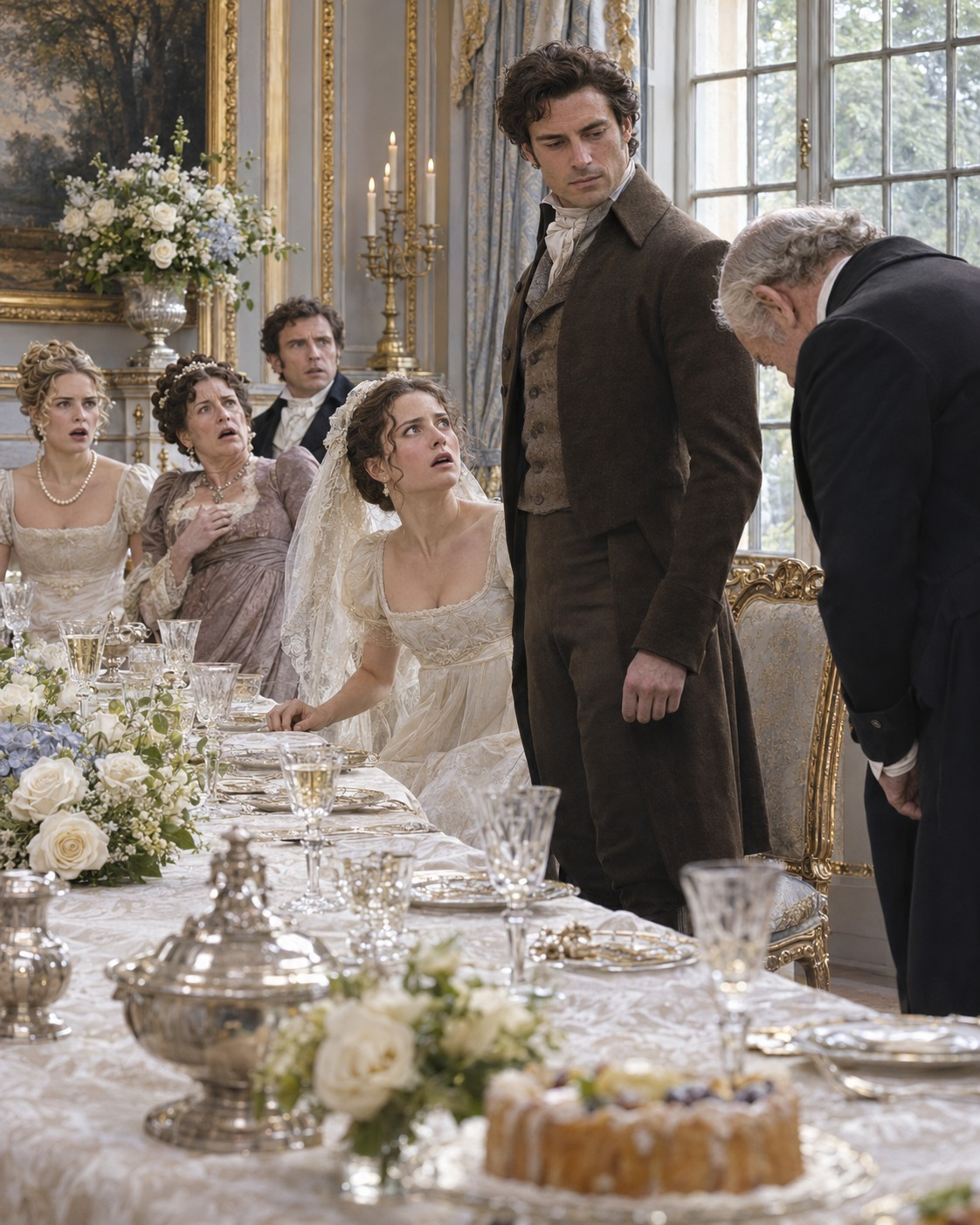
The woman standing in the doorway looked at me as though she had been waiting her entire life for this moment.
“Hello, Clara,” she whispered. “I am the daughter they buried before you were born.”
I could not move.
Her dark traveling cloak was wet from the rain. A few strands of brown hair had escaped her bonnet, and her gloved fingers trembled around a small silver locket.
She was perhaps thirty years old.
Her eyes were gray-green.
My mother's eyes.
My eyes.
And yet there was something else about her face that made my heart ache.
A familiarity I could not explain.
A resemblance not to one person, but to several.
I took a breath.
“Who are you?”
She looked toward Matthew Reed.
He lowered his head.
Then she answered.
“My name is Lydia Margaret Bellamy.”
The name struck me.
Lydia.
Margaret.
Bellamy.
Three names that had haunted every document we had uncovered.
I stared at her.
“But Lydia Reed was buried in my mother's coffin.”
The woman nodded.
“Yes.”
“And Margaret Bellamy was declared dead on the same day.”
“Yes.”
I felt the room spin.
“Then who are you?”
She stepped forward.
“I was born at Blackthorn House. My mother was Margaret Ashton Bellamy.”
I stopped breathing.
Margaret.
My mother's younger sister.
The woman whose death certificate had been concealed.
The woman whose body had supposedly been buried under my mother's name.
The woman whose daughter had been taken away.
I looked at Matthew.
“Is this true?”
He nodded.
“Yes, Your Grace.”
I turned back toward the stranger.
“Then you are my cousin.”
Her eyes filled.
“Yes.”
For a moment, neither of us spoke.
Then she whispered, “I was told you died before you were born.”
I stared.
“What?”
“My mother was told her sister's child had not survived. I was raised to believe there were no living Ashtons left.”
I felt tears burning.
Another lie.
Another stolen childhood.
Another woman who had spent years believing she was alone.
Edmund stepped beside me.
“Who raised you?”
The woman looked at him.
“A family in France. The Delacourts. They were paid to take me in and never ask questions.”
“By whom?” Edmund asked.
She looked down at the locket.
“Sir Alistair Pembroke.”
My heart tightened.
“Then why have you returned?”
She lifted her eyes.
“Because he sent for me.”
Silence.
I stared at her.
“He sent for you?”
“Yes.”
“Why?”
Her expression changed.
“Because he is dying.”
We found Sir Alistair Pembroke in the old chapel.
The magistrate stood near the altar with two constables. A physician had been summoned, and a small fire burned in the grate of the adjoining vestry.
Pembroke sat in a wooden chair beneath the stained-glass window.
He looked nothing like the powerful solicitor I remembered.
His face was gray.
His hands shook.
His expensive coat hung loosely from his shoulders.
When he saw me, he closed his eyes.
“Clara.”
I stopped several feet away.
“Sir Alistair.”
He opened his eyes.
Then looked toward Edmund.
“Your Grace.”
Edmund said nothing.
Pembroke's gaze moved to the woman beside me.
His expression crumpled.
“Lydia.”
She stood very still.
“I am here.”
He covered his face.
For a moment, I thought he might cry.
Then he lowered his hands.
“I never expected you to come.”
Lydia's voice was cold.
“You sent a letter saying you would finally tell me who my mother was.”
He nodded.
“Yes.”
“And that my mother had died because of you.”
His eyes filled.
“Yes.”
I stepped forward.
“Then begin.”
The magistrate looked toward me.
“Your Grace, I must caution that—”
“I have spent nine years being cautioned to remain silent.”
The words came out sharper than I intended.
I turned toward Pembroke.
“You will tell the truth now.”
He looked at me for a long moment.
Then he nodded.
“Yes.”
Pembroke began with the settlement.
Not the altered copies.
Not the documents Beatrice had kept.
The original agreement.
He explained that Sir Jonathan Vale, my mother's maternal grandfather, had established a trust intended to protect the women of his family and compensate the Reed household for financial losses suffered through an earlier fraud.
The arrangement was complicated.
Its principal beneficiaries were Eleanor Ashton and her descendants, but the Reed family retained a separate, enforceable claim.
The trustees had been forbidden from using the funds for their own estates.
Pembroke had ignored that restriction.
He had begun taking small sums years before my birth.
Then Arthur Bellamy discovered the missing money.
Instead of exposing him, Arthur demanded a share.
Together, they forged accounts.
Altered registers.
Invented debts.
And used false marriages and identities to conceal the movement of money.
I listened without interrupting.
Beside me, Edmund stood rigid.
Pembroke continued.
“When Eleanor discovered the discrepancies, she threatened to take the accounts to London.”
I felt my heart tighten.
“What did you do?”
He looked down.
“I persuaded Arthur to delay her.”
“Delay her?”
Pembroke closed his eyes.
“Confine her.”
My stomach twisted.
“You imprisoned my mother.”
“Yes.”
“For nine years.”
He nodded.
I felt anger rise so violently that I had to grip the back of a chair.
“Do you know what those years cost her?”
Pembroke looked at me.
“No.”
“Do you know what they cost me?”
His eyes filled.
“No.”
I stepped closer.
“She believed I was dead.”
He lowered his head.
“I know.”
“And I buried another woman believing she was my mother.”
He whispered, “Yes.”
I stared at him.
“You made two living people mourn each other.”
He began crying.
But I felt no desire to comfort him.
His tears could not restore the years.
His confession could not erase the nights I had spent wishing for my mother's voice.
I looked at the magistrate.
“Record every word.”
The man nodded.
“I shall.”
Pembroke's account of the false burial was worse than I had imagined.
When my mother attempted to escape Hatherleigh, Marianne Reed and her younger sister Lydia helped her.
Arthur discovered them.
During the struggle, he struck Lydia.
She fell against the hearth and died.
Pembroke arranged for her body to be prepared as Eleanor Ashton.
Beatrice supplied the clothing.
Dr. Vale was threatened into signing the false certificate.
Silas Crowe was paid to bury the body without further questions.
The locket placed in the coffin had belonged to Marianne, who had secretly married Pembroke years earlier.
I turned toward the woman standing beside Matthew.
Marianne's face was pale.
Pembroke looked at her.
“I should have protected you.”
She did not move.
“You should have protected Lydia.”
He closed his eyes.
“Yes.”
“You should have told the truth when she died.”
“Yes.”
“You should never have allowed me to mourn my sister without knowing where she lay.”
His shoulders shook.
Marianne looked away.
I understood then why she had carried his portrait.
Not because she still loved him.
Because she had once believed he was a man worthy of love.
And because the truth of his betrayal had taken years to become bearable.
I turned toward the magistrate.
“Lydia Reed deserves her own grave.”
He nodded.
“She shall have one.”
I looked at Marianne.
“We will see to it.”
Her eyes filled.
“Thank you.”
Then came the question of my mother's first daughter.
Georgiana.
Or Evelyn Eleanor Reed.
Pembroke admitted that Eleanor had loved Thomas Reed before her marriage to my father.
Their relationship had been concealed because Thomas's position made him an unsuitable match in the eyes of Eleanor's family.
When Eleanor became pregnant, Arthur Bellamy learned the truth.
He pretended the child was his.
He promised to arrange a respectable marriage.
Then he took the infant.
“Why?” I demanded.
Pembroke looked at me.
“Because the eldest daughter had a claim under the settlement.”
I stared.
“So he wanted control of her inheritance.”
“Yes.”
“And Beatrice raised her.”
He nodded.
“Under the name Georgiana.”
I closed my eyes.
Georgiana.
The girl who had spent her life competing with me.
The girl who had believed I was the favored daughter.
The girl who had tried to take everything I possessed.
She had never known that the woman she called her mother had stolen her from her real parents.
I opened my eyes.
“Does Arthur know Georgiana is Thomas Reed's daughter?”
Pembroke nodded.
“Yes.”
“And Lord Fenwick?”
His expression changed.
“Yes.”
I felt cold.
“Then Fenwick knew she was my sister.”
“Yes.”
“And he still agreed to marry her?”
Pembroke lowered his head.
“He was promised access to her inheritance.”
I felt sick.
Two daughters.
Two fortunes.
Two possible marriages.
The same men attempting to control both.
I looked toward Edmund.
His face was hard with anger.
Then I turned back.
“What about the third child?”
Pembroke looked toward Lydia Margaret Bellamy.
She stood beside the chapel door.
Her expression was unreadable.
He swallowed.
“She was Margaret's daughter.”
I stared.
“Then why was her birth concealed?”
“Because Margaret discovered the fraud.”
My heart tightened.
Pembroke continued.
“She threatened to expose Arthur. He had married her legally, then pretended to be free to marry Eleanor.”
I felt sick.
“Margaret knew?”
“Yes.”
“And she wanted to leave him.”
Pembroke nodded.
“She intended to take her daughter and escape to France.”
I looked toward Lydia.
Her eyes filled.
Pembroke continued.
“Arthur took the child first.”
I stared.
“And sent her away.”
“Yes.”
“Why did you help him?”
Pembroke looked down.
“Because he threatened to expose my thefts.”
I felt disgust.
“So you allowed a child to be taken from her mother.”
“Yes.”
“And Margaret?”
His voice broke.
“She tried to find her daughter.”
I felt my heart hammer.
“What happened to her?”
Pembroke closed his eyes.
“Arthur confined her at Hatherleigh after Eleanor was taken away.”
I stared.
“Then Margaret did not die that night?”
He shook his head.
“No.”
My breath caught.
“The death certificate?”
“False.”
I looked toward Edmund.
His expression changed.
Another document.
Another lie.
I turned back.
“Then where is Margaret?”
Pembroke swallowed.
“She died three years later.”
Silence.
Lydia made a small sound.
I turned.
Her face had gone white.
Pembroke continued.
“She was ill. She had been weakened by confinement. By the time Arthur allowed a physician to see her, it was too late.”
Lydia covered her mouth.
For a moment, I could not speak.
Then I stepped toward her.
She looked at me.
“My mother?”
I nodded.
Tears filled her eyes.
I reached for her hand.
She took it.
We stood together while Pembroke told the magistrate where Margaret had been buried.
A small churchyard near the southern coast.
Under the name Mary Bell.
No family marker.
No proper record of her life.
Only another false name.
I squeezed Lydia's hand.
“We will bring her home.”
She began crying.
And I held her.
The final confession concerned Edmund's father.
Edward Ashton, the Third Duke of Ravensmoor.
Pembroke admitted that Edward had discovered the stolen accounts and attempted to rescue Eleanor.
The payment of ten thousand pounds had not been made to arrange her permanent disappearance.
It had been ransom.
A desperate attempt to secure her release.
Arthur had altered the wording in the surviving copy to make Edward appear responsible for her imprisonment.
I looked at Edmund.
His face changed.
For months, he had carried the fear that his father had been involved.
Now the truth stood before him.
Edward had tried to save my mother.
And he had died because of it.
Pembroke continued.
“Beatrice placed the poison in the wine.”
Edmund's jaw tightened.
“On whose instructions?”
Pembroke looked down.
“Arthur's.”
“Did she know it would kill him?”
“Yes.”
The word was quiet.
Final.
Edmund closed his eyes.
For a moment, I thought he might collapse beneath the weight of it.
Then he opened them.
His expression was grave.
“Did my father know he was dying?”
Pembroke swallowed.
“He suspected.”
“Did he leave a message?”
Pembroke hesitated.
Then reached into his coat.
The constable stepped forward.
Pembroke slowly withdrew a sealed envelope.
It bore the Ravensmoor crest.
He held it toward Edmund.
“Your father gave me this before he lost consciousness.”
Edmund stared.
“You kept it.”
“Yes.”
“For three years.”
Pembroke lowered his eyes.
“I was afraid of what it contained.”
Edmund took the envelope.
His hands trembled.
I moved beside him.
He looked at me.
For a moment, I saw the boy he must once have been.
The son who had lost his father.
The man who had inherited a title and a promise he did not fully understand.
I touched his hand.
“Read it.”
He broke the seal.
Inside was a single sheet.
He read silently.
Then his face crumpled.
I felt tears burning.
“Edmund?”
He handed me the letter.
The handwriting was strong at first.
Then uneven.
My son,
If this reaches you, I have failed to bring Eleanor home.
I have discovered that the trust was stolen and that Clara Ashton remains in danger.
Do not allow anyone to use marriage to control her inheritance.
Do not let her become a prisoner of the title she may one day carry.
If you can help her, do so.
But remember this above all else: protection without freedom is another form of captivity.
I stopped reading.
Tears blurred the page.
The final lines were addressed directly to Edmund.
You may be able to save her life.
Only she can choose what to do with it.
Be a better man than the ones who have failed her.
Your loving father.
I looked at Edmund.
He was crying.
Quietly.
Without shame.
I stepped closer.
He wrapped his arms around me.
For a long moment, we held each other beneath the chapel window.
Then he whispered, “I thought I had honored him.”
I shook my head.
“You tried.”
“I lied to you.”
“Yes.”
“I took away your choice.”
“Yes.”
He pulled back.
His eyes searched mine.
“Can you ever forgive me?”
I looked at him.
At the man who had stood beside me through every discovery.
At the husband who had learned to listen.
At the duke who had risked his life to save my mother.
I touched his cheek.
“I already have.”
His breath caught.
“But I will never pretend the lies did not matter.”
He nodded.
“I would not ask you to.”
I smiled through tears.
“Then perhaps we can begin again.”
He stared.
“Begin again?”
I nodded.
“As ourselves.”
The arrests began that afternoon.
Arthur Bellamy was taken into custody for murder, unlawful imprisonment, forgery, and conspiracy.
Sir Alistair Pembroke surrendered his records and gave a full sworn confession before the magistrate.
Beatrice was brought downstairs under guard.
Her shoulder was bandaged.
Her face was pale.
But she walked without assistance.
When she saw me, she stopped.
“Clara.”
I looked at her.
For years, that voice had commanded me.
Corrected me.
Humiliated me.
Now it held no power over me.
“Beatrice.”
Her eyes moved toward Edmund.
Then toward my mother, who stood beside Marianne.
For a moment, her face changed.
She looked almost frightened.
Eleanor stepped forward.
“Margaret Vane.”
Beatrice flinched.
The name seemed to strip away the last of her disguise.
My mother looked at her.
“You took my home.”
Beatrice said nothing.
“You took my daughter.”
Her eyes filled.
“You took nine years of my life.”
Beatrice lowered her head.
“I know.”
Eleanor's voice remained steady.
“You cannot return them.”
“No.”
“You cannot undo what you did to Edward.”
Beatrice began crying.
“No.”
My mother stepped closer.
“Then tell the truth.”
Beatrice looked up.
For a moment, she seemed ready to deny everything.
Then her shoulders sagged.
And she confessed.
She admitted helping Arthur forge documents.
She admitted arranging the false burial.
She admitted concealing Georgiana's birth.
She admitted administering the poisoned wine to Edward Ravensmoor.
And she admitted that her marriage to my father had been arranged through deception, after my mother's disappearance, to give Arthur and Pembroke continued access to the Ashton estate.
I listened.
Every word hurt.
But every word also freed something.
The lies were finally being spoken aloud.
The secrets were no longer theirs to control.
When the constables approached, Beatrice turned toward me.
“Clara.”
I met her eyes.
“Tell Georgiana—”
I shook my head.
“You will tell her yourself.”
Her face crumpled.
“I don't think she will want to see me.”
“Then you will accept that.”
Beatrice lowered her head.
For once, she had no answer.
Lord Fenwick was arrested two days later.
The documents Matthew Reed had given me proved his agreement with Arthur.
His marriage to Georgiana had been arranged to secure control of her inheritance.
He had known that I was intended to die after our proposed marriage.
And he had willingly participated in the scheme.
When Georgiana learned the truth, she did not cry.
Not at first.
She sat very still in the drawing room at Hatherleigh.
I sat opposite her.
My mother stood near the window.
Marianne waited by the door.
Georgiana looked at the baptismal record.
Then at the blue ledger.
Then at me.
“You're saying Beatrice isn't my mother.”
I swallowed.
“Yes.”
“And Margaret Bellamy isn't my mother either.”
“No.”
Her expression changed.
“Then who is?”
I looked toward Eleanor.
My mother stepped forward.
“Georgiana.”
She stopped.
Her voice broke.
“My darling girl.”
Georgiana stared.
For a moment, she seemed unable to breathe.
Then she stood.
“No.”
My mother stopped.
“Please—”
“No.”
Georgiana shook her head.
“You cannot simply come here and tell me everything I know is wrong.”
Tears filled her eyes.
“Beatrice raised me.”
“I know,” Eleanor whispered.
“She held me when I was ill.”
“I know.”
“She taught me to read.”
My mother began crying.
“I know.”
Georgiana looked at me.
“And you hated me.”
The words struck me.
I opened my mouth.
Then closed it.
Because there was truth in them.
I had resented her.
Envied her.
Blamed her for Fenwick's betrayal.
I took a breath.
“I did.”
She flinched.
I continued.
“I hated the way you treated me. I hated the way Beatrice favored you. I hated how easily you accepted the future I thought was mine.”
Tears slid down her face.
I stood.
“But I did not know you were being deceived too.”
Georgiana looked away.
I stepped closer.
“You did hurt me.”
She nodded.
“I know.”
“And I cannot pretend it never happened.”
She began crying.
“I know.”
I swallowed.
“But you are my sister.”
Her face crumpled.
For a long moment, she stared at me.
Then she whispered, “I don't know how to be your sister.”
I felt tears burning.
“Neither do I.”
She gave a broken laugh.
I held out my hand.
“Perhaps we can learn.”
She looked at it.
Then slowly, she took it.
And for the first time in our lives, we stood beside each other without competing for something.
The trial took place in London several months later.
By then, my mother had begun to recover.
Her strength returned slowly.
Some days she tired easily.
Some nights she woke frightened, certain she was still locked inside Blackthorn House.
But she was no longer alone.
Georgiana visited her every morning.
At first, their conversations were awkward.
They spoke about books.
Flowers.
The weather.
Then childhood memories.
Then the years they had lost.
I watched their relationship grow.
Not quickly.
Not perfectly.
But honestly.
Lydia Margaret Bellamy remained at Hatherleigh while the records concerning her mother's estate were restored.
We brought Margaret's remains from the churchyard near the coast and buried her beside her family.
Marianne's sister Lydia Reed was also given a proper grave.
Samuel and Matthew stood together at the service.
For the first time, the names on the stones matched the lives of the women beneath them.
The trial lasted several weeks.
Arthur Bellamy was convicted of murder, conspiracy, unlawful imprisonment, and multiple acts of fraud.
He received a sentence of death for the murder of Lydia Reed, later carried out after his appeal failed.
Sir Alistair Pembroke was convicted of fraud, conspiracy, and his role in concealing the crimes. His confession helped establish the truth, but it did not free him from responsibility. He was sentenced to imprisonment and forfeiture of the property acquired through the stolen trusts.
Beatrice Vane was convicted for her participation in Edward Ravensmoor's poisoning and the conspiracy surrounding my mother's imprisonment. She received a sentence of death, which was commuted to lifelong imprisonment after the court considered her cooperation and the circumstances of Arthur's threats.
Lord Fenwick was convicted of conspiracy to defraud and participation in the planned murder of his intended bride.
He lost his position, his reputation, and his freedom.
Georgiana obtained a legal separation and, after the fraudulent circumstances of the marriage were established, a decree declaring the marriage invalid.
The settlement was restored under independent trustees.
The Reed family's rightful compensation was paid.
The charitable funds were returned to their intended purposes.
Georgiana's inheritance was placed under her own control.
Lydia Margaret Bellamy received the property and income that should have passed to her through her mother.
And the documents that had once been used to imprison us became the evidence that secured our freedom.
One year after my wedding, I stood in the gardens at Ravensmoor.
The morning was bright.
Roses climbed the stone walls.
The air smelled of lavender and fresh grass.
My mother sat beneath a white canopy, reading a book.
Georgiana sat beside her.
They were laughing.
The sound made me stop.
For a moment, I simply watched.
My mother laughing.
My sister smiling.
Two things I had once believed impossible.
Across the garden, Lydia Margaret Bellamy spoke with Samuel Reed about the school she had established for girls who had lost their families.
Marianne supervised the servants arranging tables for the afternoon gathering.
Matthew Reed, no longer hiding behind the name Purvis, had become the administrator of the restored charitable trust.
He looked happier than I had ever seen him.
Dr. Vale had recovered from his wound and returned to practice. His son was safe, and the physician had helped establish a small infirmary funded by the trust.
Silas Crowe had testified bravely at the trial. He had returned to his wife and retired from undertaking.
The people who had once lived in fear were beginning to live ordinary lives again.
I watched them.
Then I felt a familiar hand settle gently at my waist.
“Your Grace.”
I smiled.
“Your Grace.”
Edmund stood beside me.
He wore a dark blue coat and a white cravat.
His gray eyes were warm.
There was a faint scar near his wrist from the night he fought Arthur Bellamy.
I touched it.
He caught my hand.
“Thinking?”
“Always.”
He smiled.
“Dangerous habit.”
I laughed.
He looked toward the garden.
“They seem happy.”
“They are.”
He turned toward me.
“And you?”
I looked at him.
For a moment, I thought of the woman I had been one year earlier.
The daughter who believed her mother was dead.
The stepsister who believed she had lost everything.
The bride who walked toward a man she thought was a poor steward.
I remembered the humiliation.
The fear.
The anger.
Then I remembered Edmund standing at our wedding breakfast.
The moment everyone bowed.
The moment I discovered my husband was a duke.
I had believed that revelation would change my life.
It had.
But not in the way I expected.
I looked at him.
“I'm happy.”
His expression softened.
“Truly?”
I nodded.
“Truly.”
He smiled.
Then he reached into his pocket.
I raised an eyebrow.
“What are you doing?”
He withdrew a small velvet box.
My heart began to race.
“Edmund.”
He opened it.
Inside was a simple gold ring.
Not the elaborate ring I had worn on our wedding day.
This one was plain.
Beautiful.
Engraved with two small words.
By choice.
I stared.
Tears filled my eyes.
He took my hand.
“Clara Ashton.”
I smiled through tears.
“Yes?”
He looked directly into my eyes.
“One year ago, I asked you to marry me while hiding the truth about who I was.”
I swallowed.
“Yes.”
“I believed I was protecting you.”
“I know.”
“But I understand now that love cannot begin with a decision made on someone else's behalf.”
My eyes filled.
He continued.
“So today, with no secrets between us, I want to ask you something.”
I began crying.
He smiled gently.
“Will you choose me?”
I laughed through tears.
“Edmund.”
He waited.
I looked at the ring.
Then at the man holding it.
The man who had learned to tell the truth.
The man who had stood beside me without trying to silence me.
The man who had given me the freedom to decide what our marriage would become.
I took a breath.
“Yes.”
His eyes filled.
“Yes?”
I laughed.
“Yes, Edmund. I choose you.”
He slipped the ring onto my finger.
Then kissed me.
And this time, there was no audience waiting for a revelation.
No hidden title.
No frightened bride.
No bargain made behind closed doors.
Only a husband and wife who had chosen each other.
That evening, we held a small celebration in the great hall.
Not a grand ball.
Not a gathering designed to impress society.
Only family.
Friends.
And the people who had helped us survive.
My mother wore a pale blue gown.
Georgiana had helped her choose it.
Lydia Margaret Bellamy stood beside Samuel and Matthew.
Marianne wore a silver brooch that had belonged to her sister.
Dr. Vale raised a glass to the restored trust.
Mr. Pritchard supervised the servants with an expression of solemn satisfaction.
I stood beside Edmund beneath the chandeliers.
For a moment, I looked around the room.
Then my mother approached.
“Clara.”
I turned.
“Mother.”
She took my hands.
Her eyes filled with tears.
“I have something for you.”
She opened a small wooden box.
Inside lay the silver comb I had found in the hidden passage beneath Hatherleigh Hall.
The initials E.A. were still engraved along its handle.
I stared.
“You kept it.”
She smiled.
“It was mine.”
“I know.”
She placed it in my hands.
“And now I want you to have it.”
Tears filled my eyes.
“Mother—”
She touched my cheek.
“I missed so much of your life.”
I shook my head.
“We have time now.”
She smiled.
“Yes.”
Then she looked toward Edmund.
“And I believe you have chosen well.”
I laughed softly.
“He was rather difficult at first.”
Edmund approached.
“I heard that.”
My mother smiled.
“You were.”
He bowed his head.
“I cannot disagree.”
We laughed.
For a moment, I looked at them.
My mother.
My husband.
The family I had believed lost.
The family I had chosen.
And I felt something I had not felt in years.
Not triumph.
Not revenge.
Peace.
Later that night, after the guests had departed, Edmund and I walked through the gardens.
The moon hung above the trees.
The windows of Ravensmoor glowed warmly behind us.
I wore the plain gold ring beside my wedding band.
Edmund held my hand.
We walked without speaking.
Then he stopped beside the fountain.
“Clara.”
I looked at him.
“Yes?”
He smiled.
“Do you remember what you said on our wedding day?”
I laughed.
“I said many things.”
“You told me that if I expected a grateful wife, I would be disappointed.”
I covered my face.
“Oh, heavens.”
He laughed.
“I remember it rather fondly.”
I looked at him.
“You deserved it.”
“I did.”
He stepped closer.
“And now?”
I smiled.
“Now I think you are a tolerable husband.”
He raised an eyebrow.
“Tolerable?”
“Occasionally.”
He laughed.
Then he drew me gently into his arms.
I rested my head against his chest.
For a long moment, we stood beneath the moonlight.
I thought of Hatherleigh Hall.
Of the locked rooms.
The hidden passages.
The letters written in fear.
The graves that held the wrong names.
The children who had been given false identities.
The women who had been silenced.
And the men who believed money and titles gave them the right to decide other people's lives.
They had been wrong.
My mother had survived.
My sister had found her name.
My cousin had recovered her history.
The stolen inheritance had been restored.
And I had found a love that did not require me to surrender myself.
Edmund kissed my hair.
“What are you thinking?”
I looked up.
“That I used to believe home was a place.”
He smiled.
“And now?”
I looked toward the illuminated windows.
Then toward the man standing beside me.
“Now I think home is where no one asks you to become smaller in order to belong.”
His expression softened.
He touched my cheek.
“You will never have to make yourself smaller for me.”
I smiled.
“I know.”
He leaned down.
And kissed me.
When we finally returned to the house, the great hall was quiet.
The candles had been extinguished.
The servants had retired.
Our footsteps echoed softly across the marble floor.
At the foot of the staircase, I stopped.
Edmund turned.
“What is it?”
I looked at him.
Then smiled.
“Nothing.”
He raised an eyebrow.
“Nothing?”
I shook my head.
“Only that I am glad I married the poor steward.”
He laughed.
“I shall endeavor to remain worthy of the position.”
I took his hand.
“Good.”
And together, we climbed the stairs.
Not toward another secret.
Not toward another locked door.
But toward the life we had chosen.
A life that belonged to us.






Comments 0