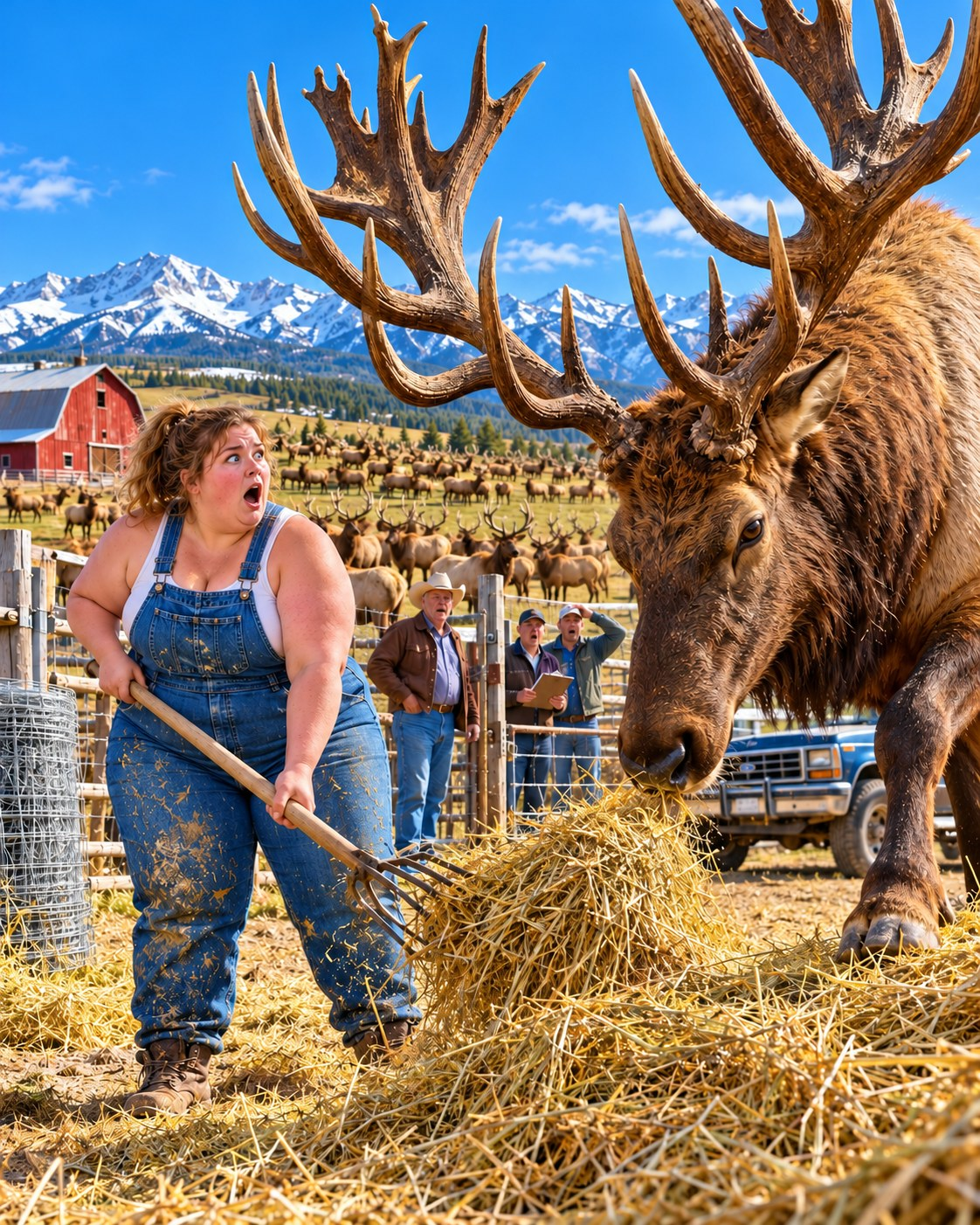
The man standing beside the black pickup held Daniel Quinn's signature book against his chest.
Mara recognized him immediately.
It was Arthur Bell, the former records clerk at the Bitterroot Valley Game Preserve.
He was nearly seventy now, with thinning gray hair and a deeply lined face. His hands trembled as he approached the porch.
Behind him, Everett Voss stepped out of his vehicle.
Mara looked from one man to the other.
"You're the person who signed the statement accusing my husband?"
Arthur lowered his eyes.
"Yes."
"Then why are you carrying his signature book?"
Arthur swallowed.
"Because I know what your husband was trying to protect."
Everett walked toward them.
"Arthur, give me the book."
The older man stepped backward.
"No."
Everett's expression hardened.
"Don't make this worse."
Arthur looked at Mara.
"Your husband wasn't responsible for the theft of those animals. He was the person who tried to stop it."
Mara felt her throat tighten.
"Then why did you sign that statement?"
Arthur opened the book.
Inside were pages of handwriting, dates, and old financial entries.
He turned to a marked page.
"Because Everett told me that if I didn't, he would make sure my family lost everything."
Everett laughed bitterly.
"You're a frightened old man. Nobody is going to believe you."
Arthur lifted his head.
"Perhaps they will believe the original records."
He placed the book in Mara's hands.
And for the first time since Daniel's death, Mara felt that she was finally holding an explanation for the secrets her husband had carried alone.
Arthur sat at Mara's kitchen table.
Margaret Bellamy sat opposite him.
Robert remained near the window, watching the driveway.
Dr. Sloan had arrived shortly after Arthur, bringing copies of the genetic reports.
Earl stood beside the door.
Nobody spoke until Mara placed Daniel's signature book in the middle of the table.
"Start at the beginning," she said.
Arthur nodded.
"In 1986, the Voss family began transferring the Ruona foundation animals. They claimed the original preservation trust had been dissolved. I was responsible for maintaining the transfer records."
Margaret interrupted.
"But the trust was never dissolved."
"I know that now."
"You knew it then," she said.
Arthur lowered his eyes.
"Yes."
Mara looked at him.
"Why did you participate?"
Arthur explained that Everett's grandfather had threatened to expose financial irregularities involving the preserve.
Arthur had been responsible for several incomplete tax records and unauthorized payments.
He feared prosecution.
The Voss family offered to protect him if he helped process the transfer.
He agreed.
But the arrangement became more complicated when Ruth Bellamy discovered the altered paperwork.
Ruth confronted Arthur.
She showed him the original trust agreement and explained that the animals were protected under a permanent preservation arrangement.
She also told him that the Voss family intended to destroy the original breeding records.
Arthur had panicked.
He contacted Daniel Quinn.
"Your husband was the only person who listened without threatening me," Arthur said.
Mara stared at him.
"How did Daniel know about the herd?"
"His father had worked with Werner Ruona. Daniel had spent time around the original preserve when he was younger. He understood the importance of the breeding program."
Mara remembered Daniel's old stories about wildlife ranches.
She remembered his habit of studying animal behavior.
She remembered how he had insisted that certain pieces of land were worth more than their purchase price suggested.
Arthur continued.
"Daniel discovered that the transfer documents had been falsified. He also discovered that the original foundation male and female had been hidden."
Mara leaned forward.
"By Ruth?"
Arthur nodded.
"She trusted Earl to move the animals. Daniel helped arrange their long-term protection."
Earl looked down.
"I knew there was something important about those animals. I just didn't understand how important."
Arthur turned toward him.
"Ruth told Daniel that you had kept your promise."
Earl wiped his eyes.
"She was a brave woman."
Margaret nodded.
"She was."
Arthur opened Daniel's signature book.
Several pages contained handwritten notes about the original trust.
Others contained dates of veterinary visits, feed purchases, and property measurements.
Then Arthur turned to a page dated March 1989.
At the top, Daniel had written:
SOUTHERN ACCESS PROPERTY — PURCHASE PLAN.
Mara stared.
"That's our ranch."
Arthur nodded.
"Daniel knew the land was important."
He explained that the original Ruona preservation estate had been divided into several parcels over the years.
The Voss family had acquired most of the surrounding property through leases and purchases.
But the southern access corridor remained privately owned.
Daniel had purchased the 240 acres because he wanted to prevent the final connection between the northern and southern grazing areas from falling into Voss control.
He had never told Mara the entire story.
He had simply said the property was good land.
Mara touched the page.
"Why didn't he tell me?"
Arthur answered carefully.
"Because he didn't want you involved in something that could become dangerous."
Mara looked toward the window.
For two years after Daniel died, she had believed the ranch was simply the last piece of their shared life.
Now she understood that he had chosen it deliberately.
He had not only left her a home.
He had left her a responsibility.
Arthur turned another page.
"This is the document I was looking for."
He removed a folded sheet from the back of the book.
It was a signed statement dated August 1990.
Daniel had written that the original trust remained active and that the surviving foundation animals must never be transferred into private commercial ownership.
Beneath his signature was another name.
Arthur Bell.
Mara looked at him.
"You signed this?"
"Yes."
"Then why did you later accuse Daniel?"
Arthur looked ashamed.
"Because Everett threatened me again. He said he had enough evidence to send me to prison. He told me that if I didn't cooperate, my daughter would lose her home."
Robert stepped forward.
"My father did the same thing to me."
Arthur nodded.
"I know."
Robert looked toward the table.
"I signed nothing. He copied my signature."
Arthur opened another envelope.
Inside was a handwritten note from Everett's father.
It contained instructions for creating a false transfer authorization using the retired trustee number.
It also instructed Arthur to prepare a statement claiming that Daniel had helped remove the animals.
The plan was to make Daniel appear responsible for the missing foundation herd.
Mara read the note twice.
Then she looked at Arthur.
"Why bring this to me now?"
Arthur answered quietly.
"Because I saw the photograph of your auction purchase in the newspaper. I recognized the animals. I knew Everett would try to take them again."
He paused.
"And I realized that if I stayed silent any longer, the last thing Daniel protected would be destroyed."
The following morning, Arthur accompanied Mara to the sheriff's office.
Deputy Thomas Reed took his statement.
He also collected the signature book, the original financial records, and the false transfer documents.
Robert provided a separate statement confirming that his signature had been forged.
Margaret submitted the original trust agreement and the 1979 amendment.
Judge Whitaker reviewed the evidence.
The fraudulent seizure application was formally withdrawn.
The county suspended the pending transfer proceedings.
An investigation into the forged court order and the falsified trustee authorization began.
Everett Voss was summoned to answer questions about the documents.
He initially denied involvement.
But the evidence was overwhelming.
The old financial records showed payments made to Arthur Bell.
The original trust documents contradicted the ownership claims.
The forged signature was identified by independent handwriting experts.
Most importantly, the 1986 transfer papers contained a series of alterations that could be traced to the Voss family office.
The county also discovered that Everett had used his company's influence to pressure local hay suppliers into refusing sales to Mara.
Those transactions were legal in isolation.
But the communications accompanying them revealed a deliberate attempt to force her into selling her ranch.
The same property he had tried to purchase twice before.
For the first time, Everett could no longer hide behind his reputation.
Three weeks later, Mara attended a formal hearing concerning the Ruona preservation trust.
The room was full.
Local ranchers, wildlife officials, attorneys, and several members of the Dry Creek community had gathered.
Everett sat at the opposite table.
He looked older than he had at the auction.
His confidence had disappeared.
Judge Whitaker opened the proceedings.
The first issue was the validity of the original trust.
Margaret presented the 1945 agreement.
She then introduced the 1968 renewal and the 1979 amendment.
The documents established that the trust had remained active.
The second issue concerned the identity of the surviving foundation animals.
Dr. Sloan presented the genetic findings.
His report confirmed that the fifty-two elk purchased by Mara belonged to the protected Ruona breeding population.
The two animals recovered from the Jensen property belonged to the missing foundation branches.
Together, the animals represented the surviving core of the original herd.
The third issue concerned the future keeper.
Judge Whitaker reviewed Mara's veterinary records, feeding logs, fencing improvements, and pasture rotation maps.
He examined the reports documenting the recovery of the animals from starvation.
He also reviewed the county inspection records.
Mara had passed the required veterinary and management standards.
The judge then asked Margaret to explain the original keeper provision.
Margaret stood.
"Werner Ruona believed that the animals should be protected by someone who understood their needs. The keeper was never intended to become their private owner. The position existed to preserve the herd for future generations."
The judge nodded.
"Who do the surviving trustees recommend?"
Margaret looked toward Mara.
"Mara Quinn."
A murmur passed through the room.
Everett stood abruptly.
"That's ridiculous."
Judge Whitaker raised his hand.
"Mr. Voss, you will have an opportunity to speak."
Everett looked around.
"She bought those animals at a bankruptcy auction. She has no experience managing a six-thousand-acre preservation estate."
Sloan stood.
"She has demonstrated the ability to rehabilitate fifty-two severely malnourished elk under veterinary supervision. Fifty-one survived the first winter. The additional foundation animals have since been examined and successfully integrated into the preservation program."
Everett turned toward him.
"That's not the same as running a wildlife estate."
Sloan answered calmly.
"No. It is evidence that she understands what the animals need."
Everett sat down.
The judge reviewed the final documents.
The six-thousand-acre preservation boundary was confirmed through the original property descriptions and historical land records.
The southern access corridor, including Mara's 240 acres, was recognized as a critical connection.
The court determined that the Voss family had held administrative authority over portions of the estate but had never acquired unrestricted ownership of the protected foundation herd.
The false transfer authorization was declared invalid.
The fraudulent emergency seizure application was dismissed.
The court also ordered the preservation records to be transferred to an independent trust archive.
Then came the decision everyone had been waiting for.
Judge Whitaker looked toward Mara.
"Mrs. Quinn, the surviving trustees have nominated you as the permanent keeper of the Ruona preservation herd."
Mara stood.
"Do you accept the responsibility?"
She looked toward the documents.
Then toward Margaret.
Finally, she remembered Daniel.
"I do."
The judge signed the appointment.
He also approved a management arrangement that protected the animals from commercial sale, unauthorized transfer, and future division of their genetic lines.
The trust would receive independent oversight and annual veterinary inspections.
Mara would manage the daily operation.
She would not own the elk.
She would protect them.
It was exactly what Werner Ruona had intended.
And for the first time, Everett Voss had no legal means to take them away.
The consequences for Everett did not end with the hearing.
The investigation into the forged court order continued.
His attorney cooperated with investigators after discovering that several documents had been submitted without proper authorization.
Arthur Bell's testimony confirmed the original scheme.
Robert provided the correspondence from his grandfather and the financial records found in his father's safe.
The authorities also examined the improper use of the retired trustee number.
Everett eventually agreed to a settlement concerning the false ownership claims and the costs of the preservation estate.
He relinquished his family's remaining administrative claims over the Ruona herd.
He also agreed to compensate the trust for documented losses caused by unauthorized transfers and interference with the preservation property.
The legal process took several months.
But the result was clear.
The original trust survived.
The animals remained protected.
And the Voss family lost the control it had spent decades trying to maintain.
Robert testified fully about his father's actions.
He also helped identify other properties that had been improperly included in the original Voss holdings.
He did not ask Mara for forgiveness.
He simply told her the truth.
For Mara, that was enough.
Spring arrived in Dry Creek.
The snow retreated from the hills.
Willows began showing fresh green shoots.
The elk moved through the newly restored grazing areas.
The two missing foundation animals had adjusted to the larger herd.
The older female with the distinctive left-ear notch became one of the most closely observed animals in the preserve.
Sloan named her Ruth.
Margaret cried when she heard.
The mature bull received the name Werner.
The original fifty-two animals had become fifty-three after one surviving calf was born that spring.
The herd was no longer merely recovering.
It was growing.
Mara continued rotating the animals through carefully managed paddocks.
She improved the western fence line with approved eight-foot game fencing.
The final inspection was completed without violations.
The water system was upgraded.
New mineral stations were installed.
And the hay supply was secured through a cooperative arrangement with several neighboring farms.
Earl Maddox supervised the replacement of his southern fence.
Mara had not forgotten her promise.
When she offered him payment, he refused.
"You already paid me," he said.
"How?"
He looked toward the elk.
"You kept them alive."
Caleb became increasingly involved in the preserve.
He kept detailed observations of the herd.
He recorded births, feeding patterns, and movement between paddocks.
He also helped Sloan organize the historical identification records.
One afternoon, he brought Mara a notebook.
"I think I found something."
Mara smiled.
"What?"
He showed her a list of the original breeding numbers.
Several animals had been matched to their surviving descendants.
At the bottom, Caleb had written:
The Ruona herd has a future.
Mara looked at him.
"That's good work."
He shrugged.
"Grandpa Daniel would have wanted us to finish it."
Mara felt a familiar ache.
But this time, the memory did not hurt in the same way.
She placed her hand on Caleb's shoulder.
"Yes. He would."
In June, Margaret arranged a small ceremony at the northern entrance of the preserve.
She invited the remaining members of the original trustee families.
Eleanor attended.
Sloan came with his veterinary team.
Earl stood beside the old transport truck, which he had cleaned and repaired.
Robert arrived carrying a framed copy of the original trust agreement.
Mara stood beside Caleb.
The ceremony was simple.
There were no expensive decorations.
No speeches about wealth or influence.
Only the people who had helped restore something that had almost disappeared.
Margaret addressed the gathering.
"My sister Ruth spent the last years of her life protecting these animals. Werner Ruona created the trust because he believed the herd belonged to something larger than any individual family. Daniel Quinn protected the land because he understood that the animals needed a future."
She paused.
"Today, that future is no longer uncertain."
She handed Mara a small wooden plaque.
It read:
RUONA WILDLIFE PRESERVATION ESTATE
PERMANENT KEEPER: MARA QUINN
Mara accepted it.
She looked toward the pasture.
The elk were moving together along the northern ridge.
The older cows led.
The younger animals followed.
And the mature bull stood watch over the group.
For a moment, Mara imagined Daniel standing beside her.
She could almost hear his familiar voice.
They still care about the world, Mara. That's how you know they haven't given up.
She smiled.
Not because everything had been easy.
But because the animals were still there.
The financial situation that had nearly destroyed Mara's ranch also began to improve.
The preservation trust provided a management payment for her work.
It was not a fortune.
But it was reliable.
The bank agreed to restructure her mortgage after reviewing the new long-term preservation contract.
The outstanding medical debt left by Daniel's final illness was settled through a combination of the preservation payment, the compensation recovered from the unlawful transfers, and a negotiated arrangement with the hospital.
Mara did not sell her property.
She did not surrender the animals.
And she did not have to leave Dry Creek.
The cooperative hay agreement also gave several small farmers a dependable market.
Instead of one powerful rancher controlling the local supply, multiple farms now participated.
Earl's trucking business received regular work transporting feed and veterinary supplies.
Caleb's education was secured.
And the Quinn ranch became the center of a preservation project that brought new employment and resources into the valley.
People who had once laughed at Mara began stopping by the ranch.
Some apologized.
Others simply asked how they could help.
Mara never demanded either.
She had learned that the most important things were not the opinions of people watching from the auction seats.
They were the animals standing in front of her.
One evening in late summer, Mara walked alone to the old cottonwood tree.
The place where she had discovered the buried wooden box.
The grass moved gently around her boots.
She carried Daniel's letter in her jacket.
She had read it dozens of times.
The final lines remained her favorite.
You may not understand why I bought that land. You may think I was being stubborn again. But if the day comes when the animals need someone, I hope you will know that you already have everything necessary to protect them.
Mara folded the letter.
For years, she had believed Daniel's death had left her with a life she could barely afford to maintain.
Now she understood that he had left her something else.
A purpose.
Not a burden.
Not a secret that would destroy her.
A promise that had waited patiently for the right person to discover it.
Caleb appeared along the fence.
"Mom!"
She turned.
He pointed toward the northern pasture.
"Ruth has a calf!"
Mara hurried toward him.
Sloan was already standing beside the enclosure.
The older female was resting beneath a willow tree.
A small calf stood close to her side.
Its legs trembled as it tried to balance.
Sloan smiled.
"Healthy. Strong lungs. Good movement."
Mara watched the calf take its first uncertain steps.
"What's its identification number?"
Sloan checked his clipboard.
"Twenty-two."
Mara looked at the animal.
"Then let's make sure it has a good name."
Caleb thought for a moment.
"Hope."
Mara looked at him.
"Hope?"
He nodded.
"Because everyone thought the herd was finished."
Mara smiled.
"Hope it is."
By October, exactly one year after the auction, Dry Creek held a small gathering at the Quinn ranch.
Some of the same people who had laughed when Mara raised her bidder card returned.
This time, nobody laughed.
A local reporter interviewed her beside the pasture.
"Mrs. Quinn, people called your purchase the worst decision of the year. What would you say to them now?"
Mara looked at the elk.
Then she looked toward the old auction photograph displayed in the ranch office.
"I didn't buy fifty-two starving animals because I believed I could become rich."
She paused.
"I bought them because they were still fighting to survive."
The reporter asked another question.
"Do you regret spending your last available money on them?"
Mara shook her head.
"Not for a single day."
Across the pasture, Caleb was showing several children how to recognize the animals by their identification markers.
Earl was repairing a gate.
Sloan was recording the health of the young calf.
Margaret sat beside Eleanor, watching the herd.
Robert stood near the fence, quietly helping with the new records.
It was not a perfect life.
There were still bills to pay, fences to maintain, inspections to prepare for, and winters to survive.
But Mara no longer faced those problems alone.
And the herd was safe.
That evening, after the visitors had left, Mara walked into the dining room.
The kitchen table was covered with records and veterinary reports.
She placed Daniel's letter beside the original trust agreement.
Through the window, she could see the elk gathering near the northern ridge.
The older cows stood together.
The younger animals rested nearby.
Werner watched from the edge of the group.
Ruth stood beside her calf.
Mara remembered the auctioneer dropping the price.
Three thousand dollars.
Two thousand.
Fifteen hundred.
Then eleven hundred.
She remembered the laughter.
Everett's confident smile.
The men who believed she had bought herself a disaster.
They had been wrong.
But the greatest victory had never been proving them wrong.
It had been giving the animals another chance.
Caleb entered carrying two cups of coffee.
He placed one beside her.
"Are you coming outside?"
Mara looked at him.
"In a minute."
He glanced at the letter.
"Still thinking about Dad?"
She nodded.
"Yes."
Caleb sat beside her.
"Do you think he knew all this would happen?"
Mara considered the question.
"I don't think he knew exactly what would happen."
She looked toward the pasture.
"But I think he knew someone would need to finish what he started."
Caleb leaned against her shoulder.
For a while, neither spoke.
Then Mara closed the folder.
She switched off the kitchen light.
Together, they walked outside.
The evening air was cool.
The elk stood quietly beneath the fading light.
Mara stopped beside the fence.
She watched Ruth's calf take another small step toward its mother.
Then she looked across the valley.
For the first time since Daniel's death, the future did not look like something she had to survive.
It looked like something she could build.
She had bought fifty-two starving elk for eleven hundred dollars.
She had nearly lost her ranch.
She had faced a powerful man who believed money could purchase anything.
But she had protected the animals, restored the trust, recovered the stolen bloodline, and preserved the land Daniel had chosen for them.
The ranch remained hers.
The herd remained protected.
Caleb had a future.
And the valley had its lost wildlife legacy back.
Mara rested her hand on the wooden fence.
"You're home now," she whispered.
Across the pasture, the herd moved together toward the sheltering trees.
And this time, nobody was coming to take them away.






Comments 0