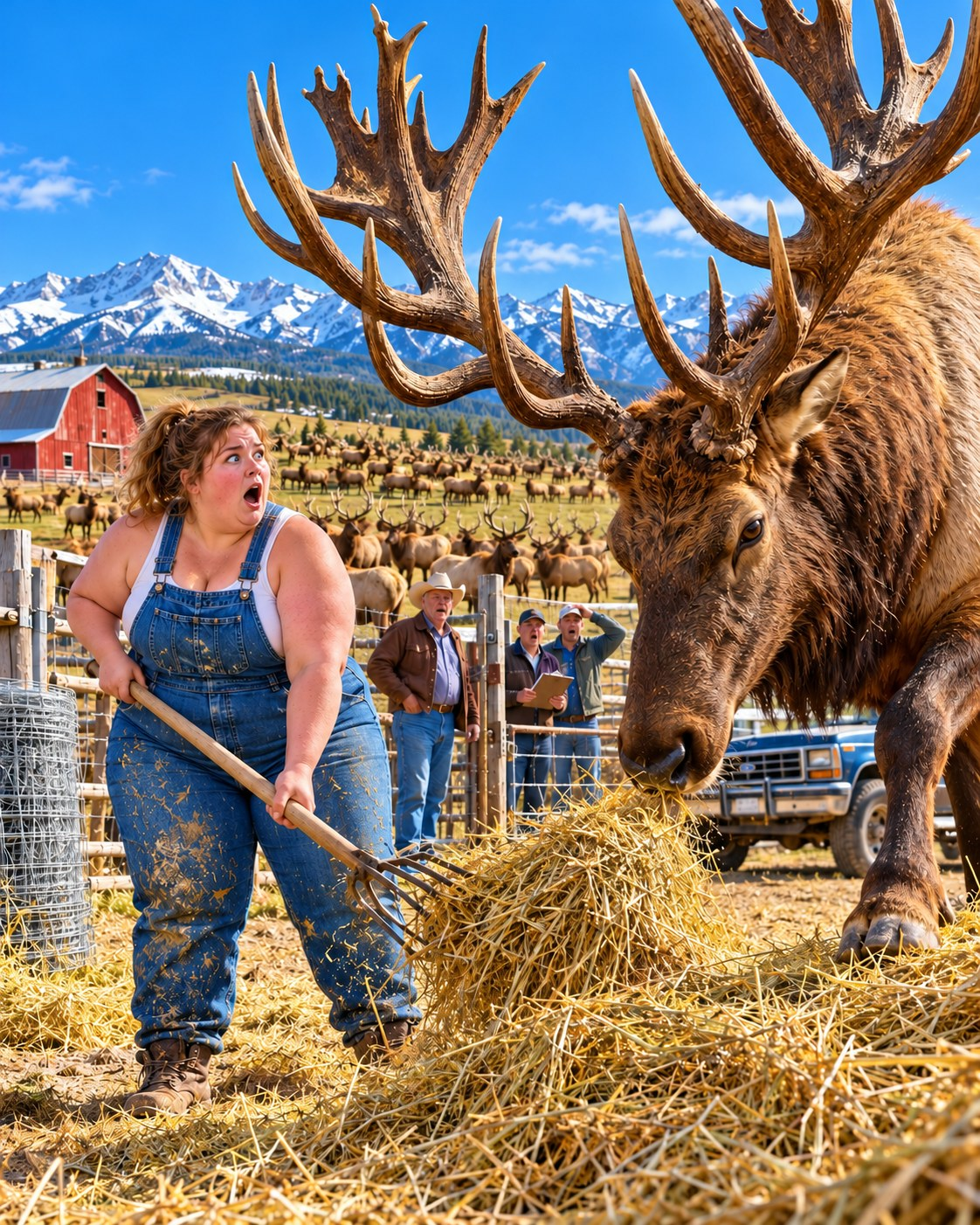
"Don't open that door!"
The voice came from beneath the abandoned building.
Mara Quinn froze, her flashlight pointed toward the metal entrance.
Everett Voss stood several feet behind her, his face pale with anger.
Dr. Henry Sloan slowly turned toward the sound.
Then someone knocked three times from underneath the floor.
A woman's voice followed.
"Is that you, Mara Quinn?"
Mara felt her stomach tighten.
She had never met the woman.
Yet the stranger knew her name.
Everett suddenly stepped forward.
"Get away from that entrance!"
Mara turned toward him.
"Who is down there?"
Everett didn't answer.
Instead, he looked at the two men accompanying him.
"Open the truck. We're leaving."
One of the men hesitated.
"Mr. Voss, you said—"
"I said we're leaving!"
The second man immediately walked toward the vehicle.
Mara watched Everett carefully.
For months, he had behaved as though he owned every conversation, every business transaction, and every person in Dry Creek.
But now something had changed.
He was frightened.
Not irritated.
Not angry.
Frightened.
The woman beneath the building knocked again.
"Please," she called. "I don't have much time."
Mara stepped toward the entrance.
Everett grabbed her arm.
"Don't."
She looked down at his hand.
"Take your hand off me."
He released her.
For several seconds, they stared at each other.
Then Mara turned toward the metal door.
"Who are you?"
The answer came immediately.
"My name is Eleanor Ruona."
Dr. Sloan looked at Mara.
Neither of them spoke.
The woman continued.
"And if Everett Voss is standing beside you, don't let him near the records."
Everett's face lost what little color remained.
The entrance was partially hidden beneath a wooden platform attached to the old administration building.
Sloan examined the metal locking mechanism.
It appeared to have been installed decades earlier, although several components had recently been replaced.
Mara looked toward Everett.
"How long have you known someone was down there?"
He said nothing.
"Everett."
He finally answered.
"I don't know who that woman is."
A voice came from below.
"That's a lie."
Everett flinched.
Mara noticed.
Eleanor continued speaking.
"He knows exactly who I am. His grandfather spent years trying to make sure I never came back here."
Sloan crouched beside the entrance.
"Mrs. Ruona, are you injured?"
There was a pause.
"My leg is hurt. I can walk, but not very well."
"How long have you been down there?"
"Long enough."
Mara looked at Sloan.
"We need to get her out."
He examined the locking mechanism.
"Let's make sure this structure is safe first."
Everett stepped closer.
"You cannot enter that building without authorization."
Mara turned.
"Your attorney told me the same thing."
"Because it's private property."
"Whose property?"
Everett's jaw tightened.
"That's a legal matter."
Sloan stood.
"Then perhaps we should let the sheriff determine that."
Everett looked toward the road.
His two men were waiting beside the truck.
For a moment, Mara thought he might leave.
Instead, he stepped closer to the entrance.
"Eleanor, if you're down there, you need to understand something."
Her reply was sharp.
"I understood it seventy years ago."
Everett stopped.
"You have no idea what you're doing."
"I know exactly what I'm doing."
There was another pause.
Then Eleanor spoke again.
"I kept the original register. I kept Werner's letters. And I kept the document your grandfather thought he had destroyed."
Everett stared at the door.
Mara felt the pieces moving into place.
The old reserve.
The fifty-two elk.
The missing breeding records.
The extraordinary offers.
The threats.
It had all led here.
Dr. Sloan contacted the sheriff's office.
Deputy Thomas Reed arrived with another officer shortly before noon.
They examined the entrance and interviewed everyone present.
Everett immediately claimed the building belonged to Voss Wildlife Enterprises.
Mara produced the newspaper articles from the Kettle Rapids library.
Sloan showed them the historical identification marker.
Robert's copies of the old documents were still safely stored at Mara's ranch, but the evidence already established a connection between the Ruona family and the abandoned reserve.
Deputy Reed listened carefully.
"Mr. Voss, do you have documentation establishing ownership of this building?"
Everett adjusted his coat.
"The property was acquired through a series of historical business transactions."
"Can you provide those records?"
"Not here."
"Then we need to establish who has legal authority to enter."
Mara pointed toward the entrance.
"There's a woman injured underneath the building."
Reed nodded.
"Emergency services are on their way."
Everett looked irritated.
"You're making this much more complicated than necessary."
Reed turned toward him.
"An injured person is not a business complication, Mr. Voss."
The second officer examined the door.
There was a narrow gap beneath the metal frame.
A faint light could be seen inside.
He called down.
"Mrs. Ruona, can you hear me?"
"Yes."
"We're going to get you out."
"Please be careful with the cabinet."
Mara leaned closer.
"What cabinet?"
Eleanor answered.
"The original breeding register is inside a metal cabinet. Don't let anyone move it until you've photographed everything."
Everett closed his eyes briefly.
The officer noticed.
"Mr. Voss, is there something you want to tell us?"
"No."
But his answer came too quickly.
It took nearly an hour to secure the entrance.
The old mechanism was difficult to operate, and the surrounding structure had deteriorated.
The officers called for additional equipment.
Sloan insisted on checking the stability of the wooden supports before anyone entered.
Mara waited near the entrance.
She could hear movement below.
Occasionally, Eleanor spoke.
Sometimes she asked whether the snow had stopped.
Sometimes she asked about the animals.
Finally, she called out again.
"Are the elk still there?"
Mara crouched beside the door.
"Yes. All fifty-two are safe."
There was silence.
Then Eleanor began to cry.
Not loudly.
Just a quiet, exhausted sound.
"Fifty-two?"
"Yes."
"Did they survive the first winter?"
Mara swallowed.
"Fifty-one survived the winter. One elderly cow died."
Eleanor was silent for several seconds.
Then she whispered:
"That means the line survived."
Mara looked at Sloan.
He had heard it too.
"What line?" Mara asked.
"The Ruona line."
Eleanor took a shaky breath.
"Werner believed those animals could survive conditions that destroyed ordinary commercial herds. He spent his life preserving their characteristics."
Mara looked toward the pasture.
"Why didn't anybody tell us?"
"Because the people who wanted the animals never wanted the truth."
Sloan leaned closer.
"Mrs. Ruona, can you explain the breeding program?"
"Not until I'm out of here."
The officers finally released the locking mechanism.
The heavy metal door shifted.
A wave of cold air rose from the underground space.
Then the officer called down.
"Mrs. Ruona, we're opening the entrance."
A weak voice answered.
"Wait."
Everyone stopped.
Eleanor spoke again.
"Is Everett still there?"
Deputy Reed looked toward the rancher.
"Yes."
"Then tell him I remember what his grandfather did."
The underground room was larger than Mara expected.
A narrow staircase led down to a concrete floor.
The walls were lined with shelves, storage boxes, and old metal cabinets.
A single electric lamp hung from the ceiling.
Its weak light illuminated a wooden table covered with documents.
At the far end of the room sat an elderly woman.
She wore a dark wool sweater and a thick blanket around her shoulders.
Her silver hair was tied loosely behind her head.
One leg was wrapped in a makeshift bandage.
A metal walking stick rested beside her chair.
Mara descended carefully.
"Mrs. Ruona?"
The woman looked up.
Her eyes moved from Mara to Sloan.
Then they stopped on Everett.
For several seconds, she said nothing.
Finally, she smiled without warmth.
"Well, look at that."
Everett remained near the entrance.
"Eleanor."
She gave a short laugh.
"Still using that voice, I see."
Mara approached her.
"We're going to get you medical attention."
Eleanor nodded.
"Thank you."
Then she looked toward the cabinets.
"Before you take me upstairs, I need you to understand something."
Mara followed her gaze.
The largest cabinet had several numbered drawers.
A metal plate on its front read:
RUONA FOUNDATION HERD — ORIGINAL RECORDS.
Eleanor continued.
"Those documents are the reason your elk are worth protecting."
Sloan examined the cabinet.
"Are these the original records?"
"Some of them."
"How many?"
"Everything Werner managed to save before the transfer."
Mara looked at Everett.
He was staring at the cabinet.
Eleanor noticed.
"Still want them, Everett?"
He looked away.
The ambulance arrived shortly afterward.
Eleanor was examined and transported to the county medical center.
Her injury was serious enough to require treatment, but she was conscious and able to speak.
Before leaving, she asked Mara to accompany her.
Mara hesitated.
"I need to check on my son."
"Of course."
Eleanor reached for her hand.
"Then come tomorrow."
Mara nodded.
"I will."
Eleanor looked at her.
"And bring the documents your friend Robert gave you."
Mara stiffened.
"How do you know about Robert?"
Eleanor gave a tired smile.
"Because his grandfather visited me once."
Mara stared.
"What did he tell you?"
Eleanor looked toward the ambulance doors.
"That his family had made a terrible mistake."
Then the paramedics closed the doors.
That evening, Mara returned to her ranch.
Caleb was waiting on the porch.
He ran toward her.
"Mom!"
She hugged him tightly.
"Everything okay?"
He nodded.
"Earl fixed the fence. The elk are fine."
"Good."
Caleb looked at her face.
"What happened?"
Mara took off her gloves.
"We found someone at the old reserve."
"Who?"
"A woman named Eleanor Ruona."
Caleb frowned.
"Is she the person from the old photographs?"
"Yes."
"Did she know about the elk?"
Mara smiled faintly.
"She knows more about them than anybody I've met."
Caleb looked toward the pasture.
"Can she help us?"
"I think so."
He hesitated.
"Then maybe we aren't going to lose them."
Mara placed her hand on his shoulder.
"Not if I can help it."
The next morning, Mara drove to the county medical center.
Eleanor was sitting upright in bed when Mara entered.
Her leg was elevated, and a doctor had informed her that she would need several weeks to recover.
A cup of tea rested on the bedside table.
Eleanor looked up.
"You came."
"I said I would."
"Good."
Mara pulled a chair closer.
"How are you feeling?"
"Old."
Mara smiled.
Eleanor looked toward the window.
"Did you bring the papers?"
Mara placed a folder on the table.
"Copies of everything Robert gave me."
Eleanor opened it.
She examined the handwritten letters carefully.
When she reached the page bearing Werner's signature, her fingers began to tremble.
"Where did you get this?"
"Robert Voss."
Eleanor closed her eyes.
"That poor boy."
Mara frowned.
"Why?"
"Because his grandfather knew the truth. His father knew enough to be afraid of it. And now Robert has inherited the burden."
Mara leaned forward.
"What exactly happened in 1946?"
Eleanor looked at her.
"Werner had built something extraordinary. He wasn't interested in producing the largest animals or the most profitable herd. He wanted animals capable of surviving harsh winters without depending entirely on purchased feed."
"That sounds like what I'm seeing."
"It is."
Eleanor opened another folder.
"Werner selected breeding animals carefully. He recorded their health, weight, reproductive history, behavior, and survival through difficult conditions."
Sloan, who had arrived a few minutes earlier, listened attentively.
Eleanor continued.
"By 1945, he had established several generations of a stable breeding line."
Sloan nodded.
"That would explain the consistency in the old records."
"But the war changed everything," Eleanor said.
"How?" Mara asked.
"Equipment restrictions, transportation regulations, financial pressure. Werner's operation became vulnerable. He trusted people who promised to help him protect the animals."
She looked toward the window.
"One of those people was Everett's grandfather."
Mara felt her jaw tighten.
"What did he do?"
Eleanor looked at her.
"He arranged a transfer that Werner never authorized."
Eleanor explained that her father had discovered discrepancies in the paperwork shortly before his death.
Some animals had been moved under temporary transportation permits.
Others had been listed as permanently transferred.
The records did not match.
Werner had begun challenging the arrangement.
But he died before the dispute could be resolved.
His death left the operation vulnerable.
His family was told that the breeding herd had been legally transferred.
Eleanor had been young.
She had not understood the full significance of the documents until years later.
When she began asking questions, several records disappeared.
She eventually discovered that the Voss family possessed copies of the original transfer paperwork.
But those documents contained irregularities.
Some signatures appeared to have been copied.
Other pages had been added after the original agreements were signed.
"Did your father know?" Mara asked.
Eleanor nodded.
"He knew something was wrong. But he never had enough evidence to prove it."
"What about the breeding records?"
"Werner kept a second register. The official papers described the animals as ordinary commercial stock. The private register documented the actual breeding program."
Sloan leaned closer.
"Where is that register?"
Eleanor looked toward Mara.
"Inside the archive."
Mara felt her heart quicken.
"Then why did you say the cabinet contained only some of the records?"
Eleanor's expression changed.
"Because the most important pages are missing."
"Missing?"
"Someone removed them before I returned."
Mara stared.
"When?"
"About six weeks ago."
Sloan looked at her.
"That would have been before the auction."
Eleanor nodded.
"I came back because I learned someone was searching the old property."
Mara remembered the padlock.
The cleared entrance.
The tire tracks.
"Was it Everett?"
"I never saw his face."
"But you suspected him?"
"I suspected someone working for him."
Eleanor asked Mara to describe the fifty-two elk.
Mara explained their recovery, their behavior, and the older cow who seemed to guide the herd.
When she described the identification marker, Eleanor became unusually attentive.
"Did it have a number?"
Mara took out her photograph.
Eleanor studied it.
Then she pointed to the engraved digits.
"That isn't an ordinary animal tag."
Sloan leaned forward.
"What do you mean?"
"It's a foundation-line identifier."
Mara looked at him.
Eleanor continued.
"Werner used those numbers to identify animals descended from the original breeding females."
Sloan examined the photograph.
"Then the number could help establish ancestry."
"Yes."
"Do you recognize this one?"
Eleanor nodded slowly.
"That's the line associated with the northern foundation female."
Mara looked toward her.
"The older cow?"
"Possibly."
Eleanor examined the photograph again.
"Does she have a small notch in her left ear?"
Mara thought for a moment.
"Yes."
Eleanor's eyes widened.
"Then I need to see her."
Sloan frowned.
"Why?"
Eleanor looked directly at Mara.
"Because that marking was recorded in Werner's original register."
Mara felt a sudden surge of hope.
"Does that mean she's part of the original line?"
"It means she may be descended from the very female Werner spent decades protecting."
Sloan nodded slowly.
"We'll need veterinary examination and genetic confirmation."
Eleanor agreed.
"Of course."
Then she added:
"But there is something else."
She opened a small drawer beside her bed.
Inside was a folded piece of paper.
She handed it to Mara.
"This was given to me by Werner shortly before he died."
Mara unfolded it.
The handwriting was faded.
There were only a few lines.
If the northern line survives, the original record must remain with the animals. Never let the Voss family become its keeper.
Mara read it twice.
Then she looked at Eleanor.
"Why did he write this?"
Eleanor's eyes filled with tears.
"Because he knew they would come back."
Later that afternoon, Mara returned to the ranch.
Dr. Sloan had arranged to examine the older cow the following morning.
Robert was waiting near the barn.
He looked exhausted.
Mara walked toward him.
"You should have told me about your grandfather."
"I didn't know."
"Your family has been involved with the Ruona property for decades."
Robert lowered his eyes.
"I know."
"Your father was there yesterday."
"I heard."
"Did you know he was paying someone to watch the place?"
Robert nodded.
"I found the records."
Mara crossed her arms.
"Why didn't you bring them sooner?"
"Because I was afraid."
"Of your father?"
"Of what he might do."
Mara studied him.
Robert was not like Everett.
He did not have his father's confidence.
He looked like a man who had spent years trying to convince himself that silence was the same as loyalty.
"Robert, your father has threatened my operation. Someone damaged my fence. Someone entered my property. And now an elderly woman has been living beneath an abandoned building because she believes your family will take the evidence."
Robert closed his eyes.
"I know."
"Then help me."
He looked up.
"I will."
He handed her a second folder.
"I found this in my grandfather's personal papers."
Mara opened it.
Inside were copies of several financial transactions.
The dates matched the old transfer records.
There were payments to a transportation company.
Payments to a private security contractor.
And one document that appeared to be an agreement between Everett's grandfather and Werner Ruona.
Mara turned the page.
Her eyes stopped on the final paragraph.
It stated that the original breeding herd would remain under Ruona family control.
The signature beneath it was clear.
Werner Ruona.
But there was another signature.
A witness.
Mara recognized the surname.
Voss.
Robert pointed toward the bottom of the page.
"There's something you should know about that signature."
Mara looked at him.
"What?"
Robert swallowed.
"My grandfather never signed that document."
Mara stared at the page.
"Then who did?"
Robert opened his mouth.
Before he could answer, his telephone rang.
He looked at the screen.
His expression changed immediately.
It was his father.
Robert answered.
"Hello?"
Everett's voice came through loudly enough for Mara to hear.
"Come home. Now."
Robert looked toward Mara.
"What happened?"
Everett's answer was immediate.
"Your grandfather's original ledger has just been found."
Robert went pale.
Then Everett added five words that made Mara's blood run cold.
"And your name is written inside..."
That night, Mara placed the documents in a locked cabinet.
She checked the western fence twice.
The fifty-two elk were together in the northern pasture.
June was resting near the feeding area.
The older cow stood beside the mature bull.
Mara watched them through the window.
For the first time, she understood that the herd's value might be far greater than the land she had purchased.
But the truth was still incomplete.
Someone had falsified a signature.
Someone had removed pages from the original register.
And someone had written Robert's name into a ledger that had supposedly been missing for decades.
At 11:18 p.m., her telephone rang again.
It was Dr. Sloan.
"Mara, I need you to come to the clinic."
"What happened?"
"We received the preliminary identification results."
"About the older cow?"
"Yes."
There was a long silence.
Then Sloan spoke.
"Her identification number matches the original foundation register."
Mara sat upright.
"Are you certain?"
"There's something else."
"What?"
"The genetic results came back this evening."
Mara held her breath.
Sloan lowered his voice.
"The older cow isn't merely descended from the Ruona line. She's the last surviving direct descendant of the original northern foundation female."
Mara looked through the window.
The older cow had raised her head.
Then Sloan said:
"And Mara, the laboratory found something in the genetic profile that shouldn't be there..."






Comments 0